What UKIP Does Well

nigelfarage

The normal model for distracting media attention away from your political party when negative stories start swamping the agenda goes something like this:

1. Party member says or does something offensive

2. The media picks up on the story and it becomes widely circulated

3. If the political party is small, the received wisdom is that the story is a symptom of the party’s immaturity and extremism. If the political party is large, the commentary will be that it is a sign of general malaise in the political system

4. Party leader comes out swinging, criticising the media for focusing on sensationalist, insubstantial nonsense rather than serious policy differences

When the big three party leaders (Cameron, Miliband, Clegg) attempt this move for the hundredth time, it sounds formulaic and insincere, an obvious attempt to wrench the media’s attention back to their scripted talking points. But somehow, when Nigel Farage adopts the same strategy, he actually appears convincing. And he had the need to do so yesterday at UKIP’s conference in Torquay, when he was inevitably asked to defend or renounce those members of his party who have strained or flat-out violated the boundaries of political correctness.

James Kirkup praised Farage’s approach in his Telegraph Evening Briefing:

Ukip’s virtues came to the fore when Mr Farage was talking about the curious and colourful views expressed by some of his party. Instead of doing what other politicians do and disowning the off-message stuff, Mr Farage embraces it and turns it into an attack on homogenised political class:

“We’re not career politicians, you’re absolutely right. Unlike [Nick] Clegg, Cameron Miliband, d’you know what? I actually had a job – I worked. And this is obviously fairly extraordinary in modern-day politics when almost everybody goes straight from Oxford University into a research office, they become Members of Parliament in their middle-to-late 20s and they’re all very PC and no one really says anything or stands up for their convictions, and with us you’ve got people from all walks of life. There are 34,000 paid-up members of the party and some people have views that are mildly eccentric. I would have thought that was just consistent with democracy.”

How refreshing it is to hear an honest answer from a political leader, and how sad that examples of this kind are so rare. As I wrote on this subject last year:

And so we have a whole generation of MPs from all parties – people like Chukka Umunna – who are basically airbrushed, well-groomed and telegenic candidates who never really lived in the real world before entering politics and who have no idea what they would do with their lives if they ever had to leave it … [We should not] be looking for the next bland, cookie-cutter candidate who has gone through the 7-step “become an MP by the age of 35″ programme. If a candidate’s life up until that point has been all about gaining political power, what chance is there that they will ever want to relinquish it and do anything else after their first term? Their second? Their third? Their fourth? Until retirement beckons?

Blaming the recent flooding in England on the government’s pro-gay marriage stance, or suggesting that the country has become something akin to a foreign land (as Farage regrettably went on to do later in the same appearance) are ludicrous. But there is something to be said for a big tent political party that doesn’t automatically excommunicate its members for going off-script.

The upcoming European elections will prove a good test of just how much the British electorate values this trait.

UKIP’s Choice

I like the commitment to giving the British people a say on our future membership of the European Union. I like the commitment to stripping away burdensome regulation from business. And I really like the libertarian streak which says (with the shameful and notable exception of opposing gay marriage) that you can do what you damn well like in your eating, drinking or recreational life without fearing either chastisement or prosecution by the government. But the recent scandals and dramas within UKIP are making me realise all over again that having a few really great core principles is simply not enough. Not for a political party with serious national electoral ambitions, at any rate.

In moment of great frustration with British politics and the day-to-day compromise of coalition government I have flirted with the idea of giving UKIP my vote. There are parts of the UKIP agenda – you’ll only find them on the UKIP website, the British media generally fails to report the serious stuff – that make perfect sense and which should appeal to anyone of a conservative-libertarian leaning. And in the past it has frustrated me that the focus on UKIP’s more sensible ideas has been continually taken away by the actions of some of UKIP’s more unhinged, out-of-the-mainstream supporters.

I continued to make this argument in good conscience throughout the Godfrey Bloom saga and then the David Silvester affair, because the first was a nonsense and the second was a nonentity. But not so this time.

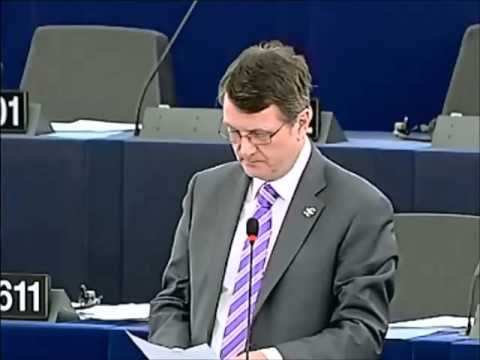
Gerard Batten is a serving MEP and a serious voice within his party – not a swivel eyed lunatic from the fringe. And so when he publicly advocates making Muslims effectively sign an oath of loyalty and nonviolence to prove their harmlessness to the state, this represents a very real problem for UKIP, damages their pro-liberty credentials and alienates many people (myself included) who were otherwise inclined to give them a fair hearing.

gerardbatten

The Guardian gives some of the detail:

Gerard Batten, who represents London and is member of the party’s executive, told the Guardian on Tuesday that he stood by a “charter of Muslim understanding”, which he commissioned in 2006.

The document asks Muslims to sign a declaration rejecting violence and says parts of the Qur’an that promote “violent physical Jihad” should be regarded as “inapplicable, invalid and non-Islamic”.

Critics said his comments represent the “ugliest side of Ukip” and “overlap with the far-right”, in spite of the efforts of party leader Nigel Farage to create a disciplined election machine ahead of the European elections.

Asked on Tuesday about the charter, Batten told the Guardian he had written it with a friend, who is an Islamic scholar, and could not see why “any reasonable, normal person” would object to signing it.

One hardly needs to restate their horror and revulsion at all forms of violence and terrorism in the name of religion before condemning this politician’s attempt to take a redacting pen to the holy book of a faith not his own – but I shall do so anyway. We can abhor the violence, but that does not make it right to propose amendments to the religious texts of a faith that you do not yourself practice. Indeed, if Gerard Batten is to apply his editing skills to every major religious text touting a menu of violent and uncivilised punishments to be meted out to those who accidentally violate the etiquette of their ancient day, he will not only raise Muslim ire but also the outrage of other religions perhaps much closer to his own heart.

Seeing the “I have Muslim friends” card played as a defence by Godfrey Bloom is also quite depressing, and hardly mitigates the fact that he is basically advocating state interference in the workings of a religion, state interpretation of religious texts and state monitoring of compliance with religious teaching.

And in a final flourish, Batten also failed to repudiate his 2010 call for a ban on new mosques in Europe, apparently confirming the suspicions of many that UKIP is concerned about freedom of religion and freedom from religious persecution only when it can be used as an argument to allow certain Christians to continue discriminating against gay people.

The latest UKIP scandal has, naturally and rightly, drawn condemnation from across the political spectrum, with Conservative MP Robert Halfon (of the Jewish faith) describing Batten’s “Islamic code of conduct” as the first step toward making a persecuted people wear a visible gold star on their clothing:

Halfon, who is Jewish and has spoken out repeatedly against Islamic extremism, told the Guardian he considered Batten’s views “unbelievably sinister” and “frightening”.

He tweeted: “Big difference btwn lawful Muslims & extreme Islamists. UKIP MEP Batten’s statement a 1st step to wearing a Yellow Star.”

Sarah Ludford, a Liberal Democrat MEP for London, also criticised the comments, saying they “rip apart Ukip’s pretence” that it treats everybody equally.

“His offensive blanket stereotyping of Muslims speaks volumes about Ukip’s extremism and should warn voters that voting Ukip means associating with hatred and Islamophobia,” she said.

These shenanigans within UKIP must come to an immediate halt if the party is to staunch the bleeding and begin to repair its tarnished reputation. The existing media portrayal of the party as a club for closet racists, little-Englanders and swivel eyed loons is harmful enough without having senior MEPs throwing more fuel on the fire. The fact that some of the provocative statements in question were given in the year 2006 is no defence or mitigating factor here – all that means is that eight years have passed without a public apology and withdrawal of the remarks.

True to recent form, Nigel Farage has been slow to respond to this latest volley of bad publicity – and so, for the moment, Gerard Batten is left to twist in the wind. This, in itself, is unacceptable. This is a time for the leader to lead. Perhaps UKIP wants to be a party of unapologetic Islamophobia and a cheerleader for freedom of religion, but only when Christian freedoms are perceived as being threatened. And if so, that is their choice to make – free speech is still just about protected in this country, and UKIP are entitled to campaign on that platform. In turn, I would also then be freed from the desire to give them any further serious consideration and airtime on this blog, because I would exercise my right to avoid associating myself with such a party.

But if the UK Independence Party actually stands for personal liberty and does not wish to associate itself with religion-specific loyalty tests and bans on practicing Islam (because that is what withholding permission to build new mosques would ultimately mean), with fearmongering or with discriminatory policies, then Nigel Farage needs to speak up and show any recalcitrant members the door.

Newer, less established and experienced political parties eventually have to choose between their fiery, populist rhetoric and the need for sober policymaking; between courting any stray vote that can easily be won and accepting that the votes of some other people are fundamentally undesirable. The Liberal Democrats faced their reality-check on the topic of undergraduate tuition fees, and for better or worse they chose responsible government over delivering on their tuition fee cap bribe to their starry-eyed voters. It increasingly looks as though UKIP will have a dual reckoning – with their attitude to gay marriage on one hand and the decision to condone or condemn Islamophobia on the other.

If Mr. Farage could please make up his mind on these issues and convey the message to his troops, the rest of us will know whether to keep giving UKIP the time of day, or letting them jog on by.

UKIP In The Spotlight

Cognizant of the UK Independence Party’s likely strong performance in the upcoming European Parliamentary elections, some reputable publications have joined the long-established monitors such as UKIP Watch in paying closer attention to the daily goings-on within the resurgent party. Displaying great originality, The Telegraph calls their version…UKIP Watch too. So no possibility of confusion there, then.

To their credit though, The Telegraph’s UKIP Watch redeems itself with some insightful analysis on Day 1, effectively countering the oft-repeated myth that UKIP’s support is comprised almost exclusively of disaffected “grumpy” Tories:

Why is the myth of Ukip as an army of angry, middle-class suburbanites who are obsessed by Europe and having a referendum so widespread and persistent, when the reality is so different? Most likely because of the difference between Ukip’s activists and their voters.

Committed activists and politicians, the kind of Ukipper the media are most likely to encounter, very often are middle-class, Southern and suburban former Tories (particularly the Ukippers you are likely to stumble across in the Westminster village, where most journalists congregate). Add to this the continual fascination in the media with Conservative splits over Europe and it is easy to see how the “Ukip = angry Tories + Euroscepticism” formula has taken hold.

A very good point. Why would UKIP be immune from the phenomena that affects the main three parties, namely that their most strident activists little represent their average voter? It is good to hear this point addressed in the media, and it would be even more encouraging to see the stories about the kooks and crazies in UKIP’s midst covered in the same way – namely that those on the cutting edge, whether for good or bad reasons, tend not to represent the whole.

Godfrey Bloom will be sitting out the next few rounds. Image from ITV News.
Godfrey Bloom will be sitting out the next few rounds.
Image from ITV News.

The column’s authors, Robert Ford and Matthew Goodwin, also make clear that the ‘typical’ UKIP voter is nothing like the cartoonish stereotype of a stuffy, old-fashioned Conservative, and that the retired colonel or Women’s Institute stalwart image is misplaced:

If Spitting Image were still around they would most likely portray the average Ukipper as a ruddy faced, middle-class, middle-aged golf club bore, who lived in a suburban semi-detached house in the Home Counties, wore lots of tweed and bored his neighbours to death by droning on about the evil Eurocrats in Brussels. But this stereotype could scarcely be further from the truth.

Ukip’s supporters look more like Old Labour than True Blue Tories. Ukip’s supporters tend to be blue-collar, older, struggling economically, and often live in poorer, urban areas, with big pools of support in the Labour heartlands of the North. Middle-class suburbanites do not dominate Ukip. They shy away from it.

In fact, Ukip are Britain’s most working-class party. Blue-collar workers are heavily over-represented. Middle-class professionals are scarce. Such voters often express as much hostility to the Conservative party as they do to Labour. This news should not be surprising. Earlier research on Goldsmith’s Referendum Party in the mid-1990s found that they too came from across the spectrum. But despite this research the “disaffected Tory thesis” has become entrenched in the Westminster village, and now dominates misguided coverage of the party.

This, if anything, is the area on which UKIP will need to focus the most if they are to make the perilous transition from successful protest party to a real general election player capable of winning seats in the House of Commons – the fact that the spot in their party reserved for middle-class professionals is currently Tumbleweed Central. These higher-information voters are key to credibility, and they are also primarily the movers and shakers who keep the British economy ticking over. Not having these people in your camp in any significant numbers is a cause for concern, and one that will certainly need to be addressed after the upcoming European elections.

So far, however, UKIP seems to be showing no signs of wilting under the increased scrutiny – indeed, their affable leader Nigel Farage MEP seems to have recovered some of the form which deserted him last week, going so far as to record this spoof weather forecast segment for the BBC’s Sunday Politics show:


Perhaps this further helps to explain the reason for UKIP’s continued popularity and appeal – which of the other party leaders, emerging from a week of very difficult and in some cases embarrassing press coverage, would be so relaxed and willing to poke fun at themselves in so self-deprecating a manner? There is something inherently appealing about a politician who is willing to speak

Nigel Farage is confident, and as more and more of the media is coming to realise, his confidence may be well placed.

On Gun Control In Britain

UKguns


It’s difficult at the moment to know precisely how seriously to take Nigel Farage’s public pronouncements. In a matter of days he has managed to offend a great number of people by suggesting that once you adjust for maternity leave, women working in finance have at least a level playing field with (if not an easier time overall than) men; he appeared to prevaricate when confronted with another loony UKIP local councillor, this one publicly attributing the UK’s recent bad weather to the coalition government’s legalisation of gay marriage; and he publicly disowned the 2010 UKIP manifesto, which he personally helped to launch.

All of this is rather unfortunate, because in many ways Nigel Farage remains one of the most principled and straightforward politicians in Britain today. Aside from some heavy-handed and paternalistic conservative attitudes to social issues such as gay marriage and an excessive obsession with immigration restrictions, the policies currently espoused by UKIP are ones which would appeal to many a libertarian-minded voter grown disenchanted with the Tories under David Cameron – myself included. Therefore, I hope and trust that the PR wobbles of this week will soon be behind him.

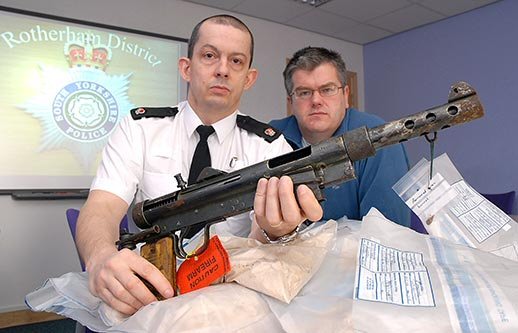
But more importantly, I hope that the current furore does not drown out a more important debate that Farage has initiated – whether or not to relax Britain’s stringent gun control laws and relax the blanket ban on handguns. Farage is of the opinion that to do so is right in accordance with conservative principle, with individual liberty and with common sense.

The Guardian reports:

Asked about gun controls, Farage said: “I think proper gun licensing is something we’ve done in this country responsibly and well for a long time, and I think the kneejerk legislation that Blair brought in that meant that the British Olympic pistol team have to go to France to even practise was just crackers.

“If you criminalise handguns then only the criminals carry the guns. It’s really interesting that since Blair brought that piece of law in, gun crime doubled in the next five years in this country.”

“I think that we need a proper gun licensing system, which to a large extent I think we already have, and I think the ban on handguns is ludicrous.”

The initial arguments brought to bear against Farage are not terribly convincing:

Ian Mearns, Labour MP for Gateshead, said the comments were an example of “how extremely dangerous Ukip are”.

“Families facing a cost-of-living crisis will find it bizarre that one of Nigel Farage’s priorities would be to relax Britain’s tough gun controls,” he added.

So we are told that the policy is “dangerous”, and then fed the old line that the British public believe that politicians can and should only ever focus on one issue at the time, and that the economy must crowd out everything else. When someone leads off with the “why aren’t we focusing on something else?” argument, they generally don’t have much else in the way of persuasive arguments.

As a libertarian-minded voter, given a blank slate and in an ideal world I would like to see the blanket bans on handguns in the UK repealed. While recognising that Britain is very different culturally to America on this issue, where the Second Amendment enshrines the right to bear arms very clearly, I believe that our country (at least the people, if not our government) do also place great value on the freedom to defend oneself with any force necessary if required. The strength of public feeling in the Tony Martin case rather proves my point, no matter how much gun control advocates might desire to wish it away.

Where we differ more substantially is the fact that in America, the Constitution makes clear that the right of the people to bear arms shall not be infringed not only for reasons of protection and self-defence against personal violence, but also against oppression by the government. In Britain, where our rights are granted to us by the government and it is our lot to bow and scrape and be thankful for what we are given by way of freedoms, this is clearly not the case. The government is not ours; rather, it belongs to Her Majesty. This may seem like a quibbling detail, but when looking at issues of civil rights and liberties it is an important one.

As a general principle, I don’t think it should be the government’s business to ban or to allow small arms, or to do many other things. I would be quite happy if the government could content itself with competently undertaking its core functions of defending the nation, protecting property rights, providing law and order and providing a framework for other institutions to deliver much of what currently falls under the welfare state. I have sufficient belief in the goodness of human nature to think that, if properly guided and harnessed, this might be achievable.

However, I also recognise that this is not the seventeenth century, and I am not a stockinged, bewigged colonist in the New World. We do not live in a time of attempting bold new methods of self governance – or bold new methods of doing anything at all, and there is little desire among the public to become the kind of country where such experimentation takes place. And this is where conservative pragmatism comes into play. On the topic of gun control specifically in the UK, I cannot support Nigel Farage’s belief that gun control laws should be repealed.

Guns are not plentiful in the UK as they are in the United States. Making it legal for average members of the public to own firearms again would initially empower those people, but there would be a gradual and inexorable drift of firearms from law-abiding citizens to active criminals. Like almost anything, if you are criminally minded and you want to lay your hands on a gun, you can do it if you invest time making the right connections. But it is difficult to do unless you already have those links with the criminal world, and so guns are not purchased in the UK on a whim, or by ordinary folk for use in a moment of high passion – the supply is small and in the hands of professional criminals, and therefore it simply takes too long for someone not in the know to make the purchase. Why expand the supply and start to make it exponentially easier?

In the United States, the case is very different. Guns are a dime a dozen, and any blanket ban on firearms in America, as well as being grossly unconstitutional, would leave law-abiding citizens defenceless in a country where almost every criminal has ready access to a gun. In short, banning guns in the United States would put the population at risk while the population of the United Kingdom would be more endangered by the legalisation of firearms.

I freely admit that a bulk of conservatism and libertarian opinion may differ with me on this issue. Indeed, The Commentator last year revealed something of the depth of feeling on the repeal-gun-control side:

The choices include term limits for Prime Ministers, a flat tax, a law to encourage the ‘greening’ of public spaces and the repealing of Britain’s hand gun ban. Following the Dunblane massacre in 1996, in which 16 schoolchildren were killed, Parliament passed The Firearms Act of 1997, which essentially banned handguns for the atrocity.

But Britons seem unconvinced by the law. The proposer, known as “Colliemum” asked, “…why should only criminals be ‘allowed’ to possess guns and shoot unarmed, defenceless citizens and police officers?”

While the poll continues, so far over 80 percent of the 11,000+ respondents have told the Telegraph that they want to see the handgun ban repealed.

Unscientific, yes. But also highly emphatic.

I have called often and loudly for a constitutional convention for the United Kingdom, to decide once and for all the powers we are willing to give to the government and those which we insist on keeping for ourselves, as well as to fairly and equally devolve powers to the four home nations under a federal system. Part of the output of such a convention would inevitably be a decision on whether we are happy to continue being granted our rights or having them taken away by the whim of each successive Parliament, or if we want to enshrine certain inalienable rights in a more permanent and unyielding document.

But until my call is heard and a Constitution is written and adopted, there is no document to which we British can point to say that government shall not deprive us of the right to own guns. Neither is there precedent, or a persuasive common sense argument. Ceteris parabus, just as there is no sound or legal way in which American citizens can be deprived of their right to bear arms, so there is no reason rooted in law why the British should have theirs returned.

As the American civil war drew to an end, James Russell Lowell wrote:

Among the lessons taught by the French Revolution there is none sadder or more striking than this, that you may make everything else out of the passions of men except a political system that will work, and that there is nothing so pitilessly and unconsciously cruel as sincerity formulated into dogma.

Sincerity formulated into dogma. We see this a lot today, both in Britain and America. In the United States it is manifested most obviously in the Tea Party and the demands of its more fanatical members to immediately roll back the functions of government regardless of the potential suffering of those who have come – and in many cases been encouraged – to depend on it. Pitiless yes, and often cruel too. And in Britain we see this dogmatic approach, I am sad to say, in Nigel Farage’s call to repeal the gun control laws.

When my libertarianism meets the fact of modern Britain, the conservative in me must side with the real world as I find it, and for that I do not apologise.

Missing The Point On Immigration

They're a' comin...


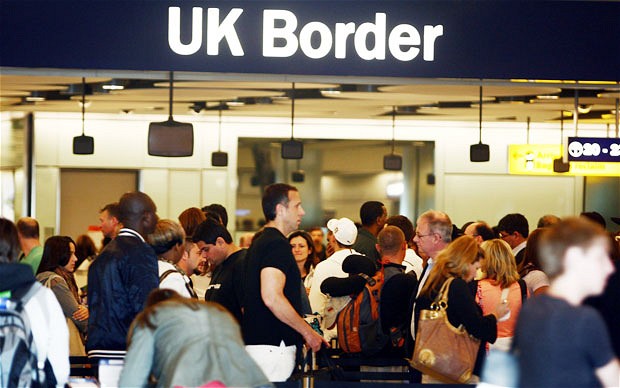
James Kirkup, writing in The Telegraph, asks “How much would you pay to reduce immigration?”, in an article praising UKIP’s Nigel Farage for making the supposedly bold proclamation that he would rather be slightly less well-off in return for lower levels of immigration into the United Kingdom – in other words, that he is willing to pay out of his own pocket to reduce immigration.

[Farage] added: “If you said to me, would I like to see over the next ten years a further five million people come in to Britain and if that happened we’d all be slightly richer, I’d say, I’d rather we weren’t slightly richer, and I’d rather we had communities that were united and where young unemployed British people had a realistic chance of getting a job.

“I think the social side of this matters more than pure market economics.”

Kirkup, who considers this to be a “genuinely interesting” way for Farage to reframe the debate, phrases the quandry this way:

How much economic growth should we give up? How much of your fellow citizens’ prosperity, are you willing to sacrifice in order to cut the number of people entering Britain from abroad?

To be precise, how much — to the nearest £1, please — would you pay to reduce immigration?

Unfortunately, by accepting Farage’s premise that immigration is harmful in all spheres other than the economic – and the idea that immigration must automatically be a negative thing, a cause for concern or something to be ameliorated.

This is yet another argument where the two opposing sides seem to argue back and forth over an irrelevant distraction rather than the main issue. Why is it that immigration has, at times, led to divided communities and fractured society? Why must it be that immigration puts the young British unemployed at even more of a disadvantage? If only we could begin to address and turn around these key issues, surely the matter of net immigration into the UK would cease to be of almost any importance at all.

For example, we should re-examine how Britain can better to integrate and assimilate new immigrants into our society, avoiding the mistakes of countries such as France and learning from those such as the United States. How can we ensure the right balance between providing support and assistance to help new arrivals find their feet and integrate into society, and using “tough love” where necessary to ensure that the state is not enabling immigrant communities to isolate and refuse to become part of British society?

We should take a long, hard look at our education system and parenting culture and ask why it is that a young adult born and raised behind the iron curtain in an economic, political and social environment far less prosperous and nurturing than that of the UK is so often preferable, in the eyes of so many reputable and rational employers, to a British-born young jobseeker who has enjoyed all of these advantages.

And yes, we should look at the topics of welfare and the terms of our relationship with the European Union, and decide whether allowing brand new economic migrants to our shores to benefit from the welfare system that the rest of us have paid into over a longer period is really a cost that we are willing to continue to pay in order to maintain our EU membership in its current form.

None of this debate will happen as long as we accept the premise that economics aside, immigration is an inherently bad thing – to shrug our shoulders and go along with Nigel Farage’s line of reasoning, as James Kirkup and others do so willingly.

How much would people pay to have an informed debate about the real social, educational and economic issues around immigration? More than our politicians and media seem to realise.