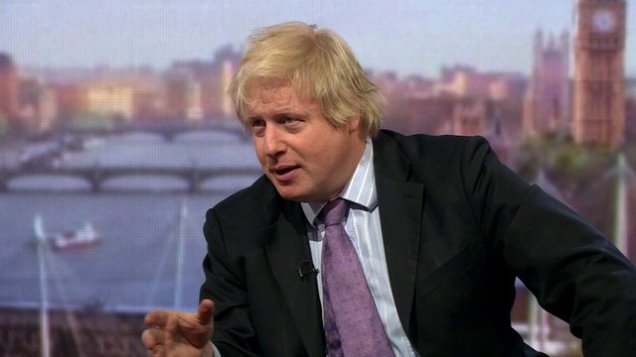
Who cares that Boris Johnson, the current Mayor of London, has finally admitted the blazingly obvious and declared his intention to stand for Parliament in the 2015 general election?
Almost everyone in the commentariat class seems to care, and to have a strong opinion about what is perhaps the most unsurprising revelation in British politics. But precisely why the rest of us should care about this revelation is not so self-evident. There’s obviously something in it for Boris Johnson: the opportunity to compete for the Conservative Party leadership in the event of a 2015 general election or 2017 EU referendum defeat. But what does a potential future Boris Johnson premiership offer the country that merits such a fevered round of speculation and media coverage?
Read any of the articles breathlessly speculating about David Cameron’s annoyance at being outmanoeuvred by Boris whilst on holiday, where the Mayor of London will make his stand as he searches for a constituency, or the pieces imagining the circumstances in which Boris might beat George Osborne and Theresa May to the leadership in the event of Cameron’s early demise, and you will learn everything you possibly need to know about The Decision. Everything, that is, except for why a Boris Johnson administration would be interesting, or different, or especially harmful or beneficial to Britain. But you can’t entirely blame the press corps for the oversight – if they are unable to answer these questions it is because the great man himself is just as uncertain of the answer, and has taken every opportunity to avoid revealing his vision.
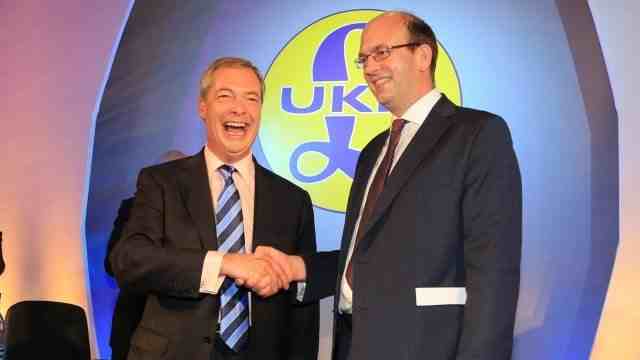
Those people hailing Boris Johnson’s announcement should explain to the rest of us exactly what it is about their man that makes it worth getting excited about. Is it his bold, original policies on this or that? Because precious little has been written about the stark policy differences that distinguish the London mayor from the likes of David Cameron or George Osborne. Is it his approach to the electorate and politics in general? Because the Boris trademark down-to-earth, sometimes frank demeanour is nothing that UKIP’s Nigel Farage does not already offer. Or is it because of his years of executive experience managing the capital city of the world? Because the competencies needed to be a competent mayoral figurehead are not necessarily the same skills of tenacity, diplomacy and coalition-building needed to succeed as prime minister.
In one of the few tangible political divides where Boris Johnson has forcibly expressed an opinion, he has been wrong, and unabashedly part of the problem rather than the solution. At a time when airport capacity in southeast England is under pressure and London’s competitiveness impacted, the British government has done what it does best – handwringing, buck-passing and stalling for time with lengthy enquiries – and London’s mayor has campaigned against the obvious solution of expanding Heathrow airport in favour of a hare-brained scheme to close the UK’s largest airport and replace it with an entirely new facility in the Thames estuary. This blog has repeatedly explained the foolishness behind the mayor’s alternative vision.
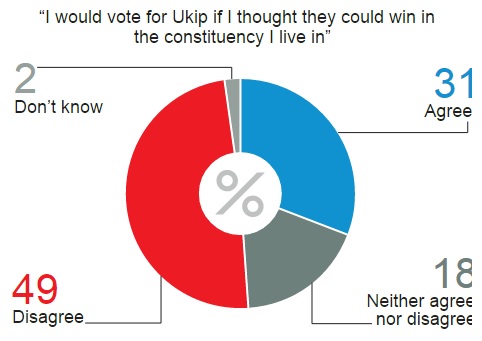
Boris Johnson is also on manoeuvres to distinguish himself from Conservative Party orthodoxy on the thorny subject of Britain’s EU membership, but even here his newfound embrace of euroscepticism is riddled with disclaimers and lacks sincerity. It is particularly telling that when polled, over half of UKIP voters said that if Boris Johnson were to stand for the Conservatives on their local constituency, it would make no difference to their voting intentions. While eurosceptics and believers in nation state democracy should be pleased when any prominent Conservative politician commits to campaigning for a British EU secession in the event that renegotiations fail, in Johnson’s case it does not automatically make up for his previous equivocation and instinctive desire for Britain to remain inside the European Union.
In David Cameron and his coalition government, Britain already has a thoroughly conservative-lite leader, happy to talk the talk about fiscal responsibility and small government while carelessly treading the same uncompetitive, centrist and statist path as his predecessors. If the British electorate is to be asked to vote Conservative again, do they not deserve an upgrade from the Tories’ 2010 offering? Differences of image and style aside, it is very difficult to discern how Boris Johnson represents anything new, let alone an improvement on David Cameron.
And in a surprise twist, one of the few senior politicians (aside from Boris Johnson’s direct competitors for the Tory leadership) to see through the bumbling, affable persona is the usually hapless deputy prime minister, Nick Clegg:
“The thing about Boris Johnson is despite all the clumsiness and bumbliness he’s actually a really, really ambitious politician,” Mr Clegg said.
“He treats his political ambition like he treats his hair. He wants everybody to think he doesn’t really care, but he actually really, really does care.
“His tousled hair, his bumbliness, all that’s great. But behind all of that is someone who is absolutely fixated with his own political ambitions.”
The only thing missing from Nick Clegg’s timely critique is this blog’s concern that there might actually not be anything beneath the populist image and the driving ambition. It would be bitterly ironic if Britain’s next Conservative prime minister turned out to be the polar opposite of his most recent Labour predecessor in every area except for one – that they both shared a burning desire to reach Number 10 Downing Street, but had absolutely no idea what to do with the prize once they had it.
So why should we care that David Cameron’s former classmate has made official his plans to return to Parliament? The onus is still on Boris Johnson to convince us that it matters in the slightest.




 Semi-Partisan Politics