Another Reason To Dislike Gordon Brown

I am only allowed by my wife to rant about Gordon Brown and his toxic impact on British life and politics a maximum of three times per week. Yes, she keeps track, and yes, even I will acknowledge that this has sometimes been necessary. No such restriction applies to this blog, however, which is just as well given recent revelations made by former Labour spin-doctor Damian McBride.

Apparently, Brown’s first instinct upon realising the gravity of the situation brought about by the global economic crisis and Britain’s unique unpreparedness to deal with it (thanks to eleven years of big spending Labour government) was not to issue a heartfelt mea culpa and apology to the British people for the upcoming lost decade that he was unleashing, but instead to start plotting the implementation of martial law on the streets of Britain.
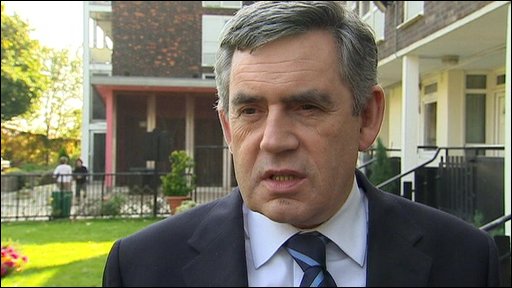
Help to engineer a global financial calamity and then propose banning people from protesting about it - that's the Gordon Brown way.
Help to engineer a global financial calamity and then propose banning people from protesting about it – that’s the Gordon Brown way.

The BBC reports:

Gordon Brown discussed deploying troops on Britain’s streets as news of the 2008 financial crisis became clear, an ex-Labour spin doctor has claimed. In extracts of a book published in the Daily Mail, Damian McBride said the former prime minister feared “anarchy” once the scale of the crisis was known. According to the book, Mr Brown said: “We’d have to think: do we have curfews, do we put the Army on the streets, how do we get order back?”

I am continually accused of being too hard on Gordon Brown. He was a good person, interlocutors on his behalf insist. His heart was in the right place, they plead. He was a simple humble methodist man who just wanted to do good for his country, they tell me. Blah, blah, blah.

This man, uniquely responsible for ensuring that Britain entered the great recession as the least well prepared of all of the major world economies, thought that the best way to deal with the potential fallout would be to deploy troops on the streets to stop us from looting and pillaging our country back to the stone age.

The article continues:

Mr Brown is quoted as saying: “If the banks are shutting their doors, and the cash points aren’t working, and people go to Tesco and their cards aren’t being accepted, the whole thing will just explode.

“If you can’t buy food or petrol or medicine for your kids, people will just start breaking the windows and helping themselves.

“And as soon as people see that on TV, that’s the end, because everyone will think that’s OK now, that’s just what we all have to do. It’ll be anarchy. That’s what could happen tomorrow.”

According to Mr McBride’s book, Power Trip, Mr Brown feared panic from other countries could spread to the UK.

I am genuinely unsure which is worse – the fact that the man brought our nation to a place where such draconian, apocalyptic scenarios even had to be considered, the fact that he thought they might be the best way of tackling the problem, or the fact that his current proteges are this very day standing giving speeches at the Labour party conference in Brighton where they are denying any responsibility for or complicity in Britain’s continuing economic malaise. There are no words or phrases critical enough of the premiership of Gordon Brown.

The book’s author, Damian McBride, does not do himself any great favours as he relates the tale. Grateful as we must be to him for shedding this additional light on the Brown terror, of course McBride was personally supportive of everything that Brown did:

“It was extraordinary to see Gordon so totally gripped by the danger of what he was about to do, but equally convinced that decisive action had to be taken immediately,” Mr McBride wrote.

He claimed the then prime minister understood the situation better than other world leaders, his UK opponents and senior bankers.

And the former spin doctor rated Mr Brown’s actions as “up with those of President Kennedy and his advisers during the Cuban Missile Crisis”.

John F. Kennedy and Gordon Brown – historical equals and political peers. Aside from the fact that they both ghost-wrote books about the meaning of courage, I’m not really feeling the similarity right now.


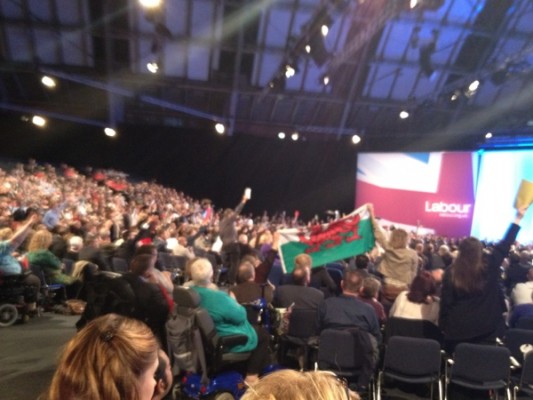
Labour Party Conference 2013 – Reflections

The economy was fine and everything was splendid until 2010 when the Tories came into power, according to Chuka Umunna, Labour's point person on Business


After listening to the various speeches at the 2013 Labour Party Conference this morning, I believe I have detected a theme running through almost all of them.

I don’t mean the usual Labour tunnel-vision and denial of their role in wrecking the British economy and increasing the size of the British state to freedom-crushing, unsustainable levels – that has already been well documented, on this blog and elsewhere.

Nor do I mean the incessant moralising, the endless strictures about how anyone who holds conservative views must be rich, heartless and hold the “common man” in contempt, or the assertions that skepticism about pooling national sovereignty and submitting to an ever-increasing burden of regulations emanating from the European Union somehow equates to a longing for isolationism and a desire to cut off trade and ties with with the world.

I refer instead to the mindset that for every problem, there is a government solution waiting to be proposed, seconded and carried at a Labour conference.

The smug cloud has already enveloped Brighton and is rapidly encroaching on the rest of the country.


There has been an increase on the number of workers on zero-hour contracts in these tough economic times. Gasp! Outrage! Zero hour contracts must be inherently terrible, a product of evil British businesspeople who want to make money on the backs of the poor, and must be outlawed immediately.

A British soldier was violently beheaded in a terrorist attack on the streets of London. Outrage! We need new laws making it a specific offense to attack military personnel, because if only the general laws against beheading people had been supplemented by additional laws prohibiting the beheading of service members, this heinous crime would not have been committed.

Watching the Labour party assemble for their yearly conference is like observing a group of weary, jaded old codgers assemble in a meeting hall to bemoan the state of humanity, how far it has fallen, and what they must do to forcibly drag the rest of us back up to their lofty levels of enlightened tolerance and progressivism.

How thoroughly depressing it must be to perpetually think so little of the human capacity to do good that the only solutions you can ever imagine are found in new regulations preventing people from being themselves, and transferring agency from the free individual to the faceless, bureaucratic state.

And of course, the answer to the societal problems that Labour bemoan can never be found in reducing the power and scope of the state, or empowering individuals to take more responsibility for themselves. It is as though the Labour party is incapable of taking the laissez-faire, hands-off approach to the people that they rightly champion in the social realm and applying it to the economic realm.

And that’s a great shame, because I feel sure that increasingly, the real divide in British politics will not be between the traditional left vs right paradigm, but between people who see government as the answer to everything, and people who are heartily sick of not being able to live their lives freely without continual badgering and preachy interference. Right now, neither party is ideally positioned to capitalise on this shift, but if today’s conference speeches are anything to go by, Labour has much more ground to make up.

List of Shame: Every MP Who Employs a Family Member

Yikes. Guido Fawkes has done a wonderful job of listing all of the sitting Members of Parliament who currently employ one or more family members on their parliamentary staffs at the taxpayer expense. To my mind, the only acceptable scenario for doing so would be if your family member just happens to possess vast prior experience of working on a political staff, or is a renowned expert an a particular issue or cause championed by the MP. This would reduce the number of MPs employing family members to the comfortable single digits, I’m sure. Just look at the list – as Guido says, this is a personal family enrichment scheme being perpetrated by a long and alarming list of our nation’s elected representatives, to the tune of four million pounds a year. This needs to stop. No more employing your husband or wife to be your secretary. I don’t care to hear about individual cases where the husband and wife parliamentary team are wonderful – the risk for fraud and abuse is too great. Only when we introduce strict term limits and ban the practice of MPs hiring their own family to their political staffs can we begin to eradicate the scourge of the career politician, and that even worse phenomena – the career MP who sees their public duty as a free ticket to enrich his or her family at the taxpayer expense.

What Housing is Like in Loony UN Investigator’s Home Country

Guido Fawkes takes UN investigator Raquel Rolnik to task for writing a report condemning the UK’s “bedroom tax” (not really a tax at all) on the grounds that it represents a retrogression of the human right to adequate accommodation, and then leaking her report to the media months before it is due to be published. As Guido correctly notes, the report is quite rich considering that it was written by a national of a country where more than 50 million people live in inadequate housing, and also because Rolnik somehow failed to meet with the government ministers in charge of any of the relevant departments before arriving at her totally unbiased, 100% legitimate and not at all pre-ordained conclusions.

Why Britannia Rules

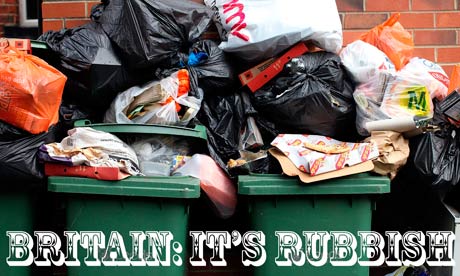
Clearly just a big old pile of rubbish, if today's media naysayers are to be believed.
Clearly just a big old pile of rubbish, if today’s media naysayers are to be believed


We are at that point in the eternal cycle again. Something bad is afoot in the world, the United States of America pricked up its ears and made noises about military intervention, and the world turned to look at Britain to see whether we would leap on board too. And to begin with, everything was proceeding according to the long-established formula. The Prime Minister made the usual belligerent noises, condemned the atrocities taking place (in Syria this time, in case anyone was sitting this round out) and urged the United States to take a strong stance, with the obvious implication that Britain would occupy her usual place in the co-pilot seat.

But then something unusual and unscripted happened – the Prime Minister was manoeuvred into seeking approval from Parliament. MPs, annoyed at being called back from their summer vacations, wary of government intelligence in the wake of Iraq and, as always, looking to protect their own political hides, voted against authorising UK military action. Scandal! Or actually, just democracy working as it should.

And now, all anyone can talk about is how much this foolhardy decision must have diminished us as country, about how we have deteriorated and declined as a nation, and will continue to do so, and how everything is wretched and terrible and how awfully embarrassing it must be for our political leaders to have to represent Britain abroad when Zimbabwe and Somalia are clearly so much better.

Anyone following British television or print media’s coverage of the G20 summit currently taking place in St Petersburg, or the international response to the British parliamentary vote in general, will have been treated to a parade of insecure, snivelling, sometimes self-righteous commentators solemnly telling us that the special relationship between the United States and the United Kingdom has been dealt a death blow, that Britain’s international credibility is in tatters, that we are the laughing stock of the world and that there is little left for our nation to do but limp out to a desolate spot in the north Atlantic and sink ourselves.

What nonsense.

Britain doesn’t sit at the big table because we dutifully follow the United States from one armed conflict to the next. That is not – repeat not – the reason. We sit at the big table because of the hundreds of countries in the world, our economy remains the seventh largest, and one of even fewer lynchpins of the global economy. Many of the world’s greatest inventions and finest companies originated and are based on our shores. Our capital city is the capital city of the world, an indispensable hub for global finance, commerce and culture.

We are a declared nuclear power, and possess one of five permanent, veto-wielding seats on the United Nations Security Council. Our military and intelligence gathering organisations are integrated with their sister organisations in the United States to a degree that no other nation can claim. Our armed forces (despite unwise government cutbacks) are among the most well trained, powerful and deployable in the world, and our country fields one of only three blue water navies to command the oceans.

British popular music, art, literature, film, television and all forms of culture enjoy a popularity and international cultural hegemony second only to the United States. Our people are industrious, friendly, stoic and tolerant. We invented the English language and yes, we speak it better than our transatlantic cousins.

That is why Britain matters, is respected, and is a force to be reckoned with. Not because we go along with Plan X or Plan Y to come floating out of the halls of Washington DC. Sometimes I find myself aghast at the need to remind my compatriots of these simple facts.


Did growing up in unionised, socialist, pre-Thatcher, pre-1979 Britain so affect and wound the collective psyche of our political leaders, journalists and commentariat class that they will disregard these manifold blessings and benefits – attributes that any country would be proud to possess – at the mere sight of a negative headline in an American newspaper or an off-the-cuff remark by a junior American administration official? For shame.

If nervous, wet politicians and journalists want to wring their hands and fret because John Kerry called France the oldest ally of the United States (a historical, verifiable fact rather than a poke in the eyes of the British), so be it. But recall that President Obama, speaking from the Rose Garden of the White House, correctly referred to the United Kingdom as America’s closest ally. Because it is demonstrably true, has been for years, and will continue to be so.


The bottom line is this: Britain can afford to sit out a round or two of military intervention now and then, and with so many other countries in the world who profess to care about human rights, we don’t always have to be the ones spilling the blood and treasure in their defence. Britain is a strong, enduring nation, and does not need to prove this fact to the world by getting actively involved in every military conflict, all the while dividing our population and depleting our treasury. America will not stop taking our calls because we sit out this particular action in Syria.

And since when did an expression of British democracy in action – our elected House of Commons voting “no” to a government motion authorising military action – become something to be ashamed of, or to apologise for? Do those people who fret that Britain’s non-participation will be the end of our global prestige really think that bombing sovereign nations at will without consulting the people is more worthy of respect than consulting the people, and holding back when the peoples’ representatives enforce their will?

I do not care to live in their mental version of Britain. Whilst I ache for a written constitution for the United Kingdom and clearly delineated separation of powers, this parliamentary debate, on the whole, was a moment to be proud of.


It concerns me that even our Prime Minister has difficulty articulating the virtues of Britain and making a robust defence when pressed by interviewers who detect political blood in the water and incorrectly perceive our standing in the world as being diminished whenever we are not in lock-step with the United States. It often seems that all David Cameron can do in response to these interview ambushes is stare at his feet and mumble about how many times a day he speaks to Barack Obama, when what he should be doing is reciting a lusty, more eloquently written version of this very article.

We are British. We are a great country. Our economy may still be in the toilet, and we may be governed at present by dilettantish non-entities in the mode of David Cameron, George Osborne and Nick Clegg, but these things shall pass. And when they do, Britain will still be a great country.

Here’s a closing thought: the world might respect Britain a lot more if we showed ourselves more respect for who we are, what we have done and what we can do as a nation.