The continued efforts by pro-Europeans to distort and misrepresent eurosceptic ideas betrays a lack of confidence – and intellectual depth – in their own
The first of the pro-EU campaign groups, snappily named “Britain Stronger in Europe”, is due to launch later today, and will be headed by ex-Marks & Spencer celebrity CEO Stuart Rose.
At the launch on Monday, Rose will say: “Those of you who know me will know that I am not an uncritical fan of the European Union. Far from it. That’s why I signed a letter arranged by Business for Britain calling for reform of the EU. Wanting reform, however, is not the same as wanting to leave.
“To claim that the patriotic course for Britain is to retreat, withdraw and become inward-looking is to misunderstand who we are as a nation. In this ever-changing and very uncertain world we need to engage with strength.
“I will not allow anyone to tell me I’m any less British because I believe in the strongest possible Britain for business, for our security and our society.”
It seems as though accusations of a failure of patriotism and belief in Britain are finally hitting a nerve. Good – these accusations are entirely valid, and the pro-EU crowd should regularly be made to feel uncomfortable by being confronted with their lack of faith in their own country to survive like nearly every other major country outside of the European Union.
It is continually amazing to witness the extent to which the pro-European forces do Britain down in order to make their flimsy case. The United Kingdom is the sixth largest economy in the world, a cultural powerhouse, a liberal democracy and a declared nuclear power. If a country of our size and influence cannot negotiate satisfactory trading relationships with the rest of the world, then no country can. And of course far lesser countries than Britain do negotiate bilateral and mutual trade deals every year without difficulty, rendering this scaremongering line of argument absurd – not that we have seen the last of it, by any means.
Early signs indicate that the “Safe option = Leave EU” message will be hammered home relentlessly with every single eurosceptic talking point, whether it necessarily fits or not
Today’s campaign email from Vote Leave hammers home the “safety first” option of voting for Brexit even more strongly than before.
As well as having a subtle dig at the rival pro-European campaign group Britain Safer in Europe (which launches today) by referring to them by their unfortunate initials “BSE”, today Vote Leave have this to say on sticking with the status quo of full EU membership:
Which is safer – to vote ‘remain’ and keep giving more power and more money every year to a Brussels bureaucracy that cannot cope with the problems of the modern world, or to take back control and negotiate a new, friendlier UK-EU relationship based on free trade and stronger international cooperation, often at a global (not regional) level? Which is safer – to keep going with the 1950s vision of ever more centralisation of power in the Brussels bureaucracy or to build new institutions that allow faster, more agile cooperation on global challenges? Which is safer – to accept the permanent supremacy of EU law or to trade and cooperate with the EU without accepting the supremacy of EU law, as many other countries in Europe and around the world do? Which is safer – to keep Brussels in charge of negotiating trade deals that affect millions of British jobs or to take back control and negotiate these deals ourselves? Which is safer – to trust big multinational businesses and their lobbyists to make laws over dinner in Brussels, or to take back control? Which is safer – to keep going with the Foreign Office’s hope that eventually Brussels will listen to us, which has failed for 40 years, or take back control and invest in science so we can create and build new industries? A vote to ‘remain’ is not a vote for the status quo. It means handing over even more power and money to Brussels. We need a new UK-EU relationship. The only way to take back control and get a new UK-EU deal is to Vote Leave.
As I pointed out over the weekend, not all of these “which is safer?” questions work very well. In fact, some of them have very little to do with safety or even stability one way or another.
But today’s campaign email is a real marker of intent. It shows that Vote Leave intend to continue pushing this point and throwing up “safety first” scenarios until a couple of them stick. I’m sure they will be conducting polling and focus groups to further test responses to these messages before discarding the ones that do not work, and refining those that do until they become more deadly rhetorical weapons.
At this early stage, the arguments put forward for Brexit lack any real depth or sophistication – not that the pro-EU arguments are any better. Campaigners realised that the “No” vote in the Scottish independence referendum was won party because the Better Together campaign went relentlessly negative, portraying separation from the UK as a leap into the great unknown. And now they want to seize the tool which is most likely to be used against them (arguing that Brexit represents a leap in the dark) before the pro-EU crowd get a chance.
Mission accomplished, so far. But at some point, the effect of both sides yelling “safety!” at the electorate is likely to cancel itself out. And the question then becomes: what does each side have to offer that will speak to the hopes and aspirations of the British people, not just their desire for safety and stability?
This is where the eurosceptic side could (and hopefully will) run away with the show. Those who want to yoke Britain to the EU come what may can offer nothing but a continuation of what we already have – life as part of an antidemocratic federation, where uniformity and harmonisation are relentlessly encouraged just for the sake of it. The eurosceptics can offer so much more, provided that they avoid reciting an endless list of euro grievances and focus strongly on the opportunities and benefits of re-engaging with the world.
This “which is safer?” rhetoric is all very well, but it is the arguments that come next which will win or lose this referendum.
David Cameron’s EU renegotiation is less a firm-handed assertion of Britain’s national interest, and more a collusion with fellow EU leaders to dupe the electorate into believing that real reform is possible
The fact that David Cameron’s key demands and red lines for the EU renegotiation now underway are wilfully vague and almost comically detached from the concerns of British voters is hardly news. But this depressing truth is hammered home even more forcefully today with the leaking of the prime minister’s four-point plan to win concessions from Brussels.
Cabinet sources have told the Telegraph they are confident they can find a way to keep Britain inside the EU with better terms of membership. Their plan involves:
Forcing Brussels to make “an explicit statement” that Britain will be kept out of any move towards a European superstate. This will require an exemption for the UK from the EU’s founding principle of “ever closer union”.
An “explicit statement” that the euro is not the official currency of the EU, making clear that Europe is a “multi-currency” union. Ministers want this declaration in order to protect the status of the pound sterling as a legitimate currency that will always exist.
A new “red card” system to bring power back from Brussels to Britain. This would give groups of national parliaments the power to stop unwanted directives being handed down and to scrap existing EU laws.
A new structure for the EU itself. The block of 28 nations must be reorganised to prevent the nine countries that are not in the eurozone being dominated by the 19 member states that are, with particular protections for the City of London.
Of these, only one point (the final one) comes anywhere close to defending Britain’s national interest and reflecting the concerns of the electorate. Of the others, the first two points are completely irrelevant, while the third is guaranteed to meet stiff resistance from other EU leaders and will likely require so many other concessions from the government that securing it would be the ultimate Pyrrhic victory.
The launch of ‘Vote Leave’ highlights the importance of positive messaging in the battle for Brexit
This week saw the launch of ‘Vote Leave’ campaign group, rival to ‘Leave.EU’ and the start of what Isabel Hardman warns could become a Judean People’s Front battle for legitimacy between like-minded organisations.
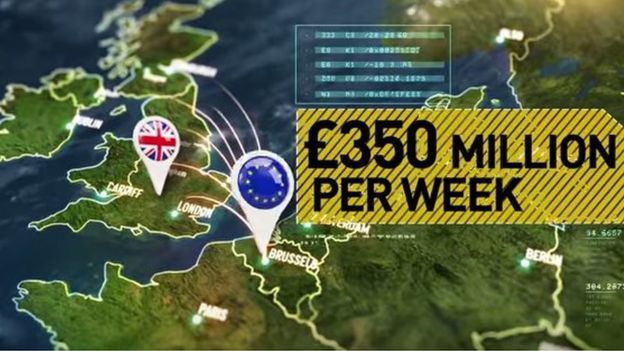
Vote Leave launched with the YouTube video shown above, which is noteworthy in a number of respects:
1. There’s no obsession with immigration. In fact, there is no mention of regaining control of Britain’s borders at all. This is heartening to those of us who believe in Brexit because of the sovereignty principle first and foremost, and find the focus on immigrants to be an often-distasteful distraction. It makes the reasonable assumption that most of those who are dissatisfied with immigration are most likely already going to vote “Leave”, and that the focus now must be to convince those for whom immigration is not a burning priority.
2. There’s no mention of sovereignty either. In fact, this is an immensely pragmatic video in every sense – Britain’s membership of the EU is presented not as a subversion of our democracy but solely as a drain on our national finances. The UK’s daily and yearly contributions to the EU budget is explained in terms of how many schools and hospitals could be built at home for the equivalent sum. While this argument is simplistic (and ignores the fact that some of the money flows back to Britain after having been through the Brussels pork machine), it is nothing if not pragmatic. Much as some of us wish it were otherwise, most voters do not obsess about sovereignty as a point of principle, and therefore pragmatic arguments about allocation of public funds are one potential way to win over different groups of people.
3. The arguments made in support of Brexit are unabashedly left wing. We are told that Britain should leave the EU so that we can spend the money on “our NHS”, and other assorted items of public spending. Sure, we are also told that “we could lower taxation”, but this comes at the very end of a long list.
4. This is not amateur hour. The video is slick and the production quality high. The key visual – of bank notes flowing out of St. Thomas’ Hospital to Brussels, and then flowing back into the hospital if only we vote to “Leave” – is well executed and makes the desired impact. While the older campaigns of UKIP and other eurosceptic groups have at times felt quite amateurish, this video gives off the strong message that ‘Vote Leave’ is a serious, well financed organisation.
5. Neither Vote Leave or Leave.EU have done their homework with regard to a concrete plan for Brexit. What would British secession from the European Union actually look like, what would be the desired end state in terms of trading and diplomatic relations, and how do we get there? Such a plan does exist – it’s called Flexcit and can be found at eureferendum.com – but nobody else seems willing to talk about what would actually happen in the immediate aftermath of a “Leave” vote. People are unlikely to vote for a leap toward the undiscovered country of Brexit without the security of a rock-solid plan, and this is where Flexcit comes in. At some point, the broader “Leave” campaign must either embrace Flexcit or come up with a robust plan of their own.
6. ‘Vote Leave’ are trying hard to position Brexit as the safe choice, the low-risk option compared to staying in the EU. This will be a difficult pitch to make, but it is absolutely necessary if the wider “Leave” campaign is to stand a chance. It must be continuously, relentlessly hammered home that voting to remain will not just doom Britain to put up with the EU’s existing quirks and impositions, but will lock us in to future political integration with an economically stagnating group of countries. While much more work must be done in this area, the tagline “the safer choice” is an encouraging marker of intent.
‘Vote Leave’ hammer this last point home in their press release:
Which is safer – a vote for the permanent supremacy of EU law, or a vote to take back control?
Which is safer – a vote to keep sending hundreds of millions to Brussels every week, or a vote to put that money into science research and the NHS?
A vote to leave is safer than giving Brussels more power and money every year. Vote leave, take control.
It’s good that they are trying, but I’m not sure that just using the word “safer” in random sentences like this is going to deliver the goods. Britain’s subservience to EU law is problematic and antidemocratic, but not primarily for reasons of safety. Likewise, the UK may well be better off spending our EU budget contributions on the NHS, but again this is a question of priorities and public service quality, not safety.
The safety argument works best when tied to the economy – the fact that a vote to remain in the EU is a vote for Britain to chain itself ever more tightly to a group of stagnating economies going nowhere fast, who are about to compound the problem by ushering in ever closer political integration. ‘Vote Leave’ should relentlessly draw attention to French unemployment and negligible economic growth, and make the point that a vote to stay is a vote to belong to a union which actively wants to see French-style regulation and taxation applied across all 28 EU member states.
One launch video on YouTube is not enough to make any firm assessment of Vote Leave’s strategy, but first impressions are cautiously positive. While rival campaign group Leave.EU is more willing to talk up the sovereignty and immigration aspects of the debate, Vote Leave seem to be pursuing a cost-focused, “safety first” approach. Both make valid points, and both must work together to deliver a consistent and coherent message, regardless of which group is ultimately favoured by the Electoral Commission.
Ultimately, two things are clear: firstly, no eurosceptic campaign group has a monopoly on good ideas or smart tactics. Or bad tactics, for that matter. And secondly – given the turf wars and minor skirmishes we have already seen – it will take a huge amount of coordination and message discipline for eurosceptics to win this fight.
–
UPDATE (10 October):
To elaborate on point #3, the email bulletin from Vote Leave today included the following text:
Jeremy Corbyn was elected as Labour leader with the largest democratic mandate in the party’s history. No matter your political views, it is hard to argue with the swell of support he received from people of all ages and backgrounds.
However, his supporters will no doubt be angry to find out that – should he become Prime Minister – rules and regulations dreamt up in Brussels mean that a number of his key pledges will be extremely hard to achieve, and in some cases completely illegal.
Public ownership of the railways? Sorry Jeremy, not today.
Ending the privatisation of the NHS? No can do.
Greater rights for trade unions? Better luck next time.
Appealing to die-hard Jeremy Corbyn fans on the basis that the EU will thwart a future Corbyn government’s attempt to drag the country to the left suggests that Vote Leave are definitely making an open pitch to left-wing voters in their launch week.
Not necessarily a bad idea, especially since Jeremy Corbyn himself betrayed left-wing eurosceptics by agreeing to toe the slavishly pro-European “stay at all costs” Labour line. But it will be interesting to see whether this is matched by equal overtures to the Right.
A small squabble in the European Parliament this week may have solved the quandary of how best to use Nigel Farage in the coming Brexit campaign
The biggest impact on Britain made by French president Francois Hollande thus far has been the steady exodus of financially successful French workers and their families to London, fleeing the sclerotic economy and punitively high taxes across the English Channel.
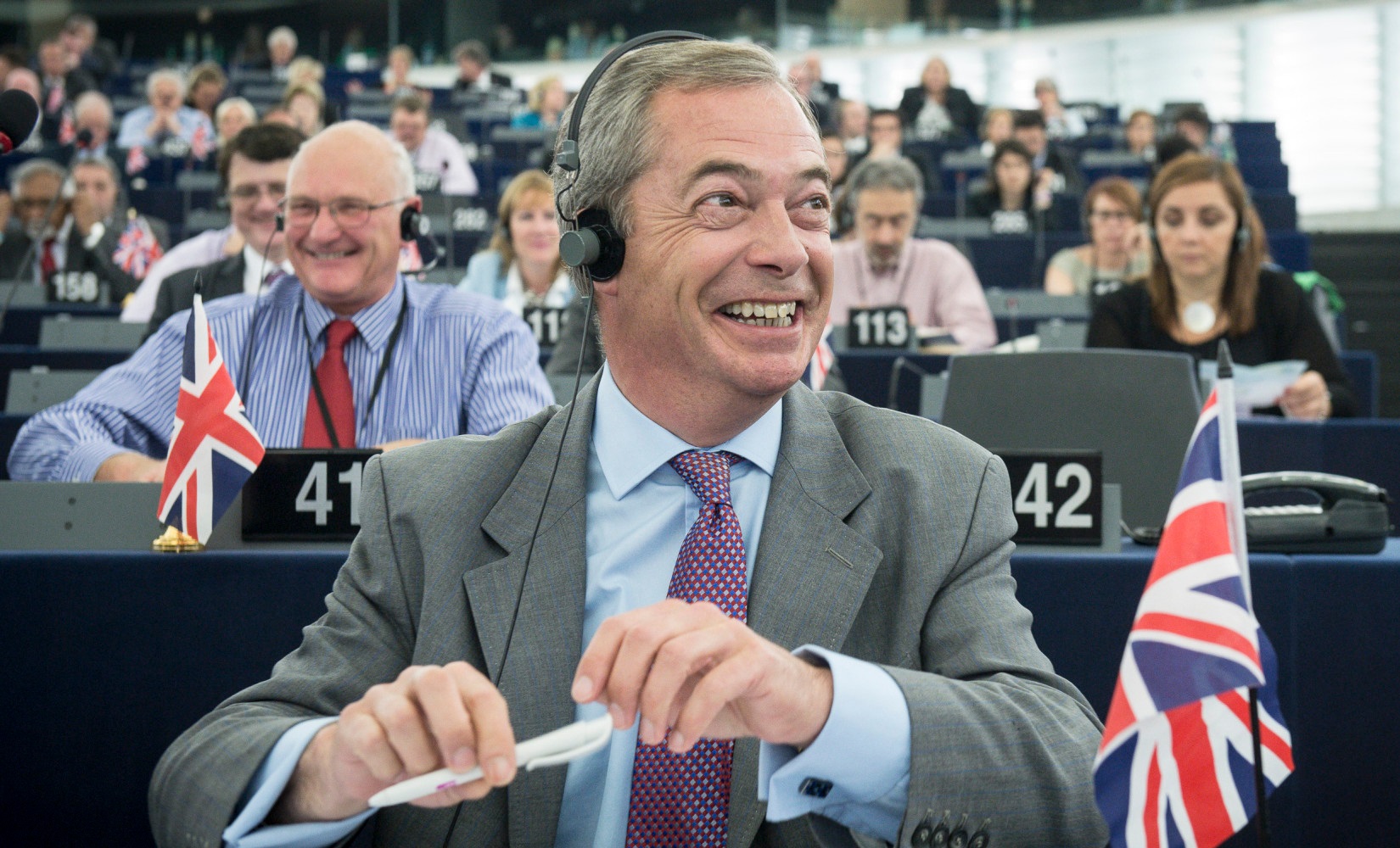
But now Hollande has surpassed himself. This week, France’s president inadvertently revealed a potential answer to the question that has been dogging the various rival “Leave” campaigns of those fighting for British secession from the European Union. That question: how best to utilise Nigel Farage, the man without whom this referendum would not be taking place at all, in a way which does not drive away swathes of other voters for whom the Farage and UKIP brands are toxic?
In Brussels on Wednesday to make a joint address to the European Parliament with Angela Merkel, Hollande allowed himself to become riled up by Nigel Farage’s questioning and posturing, and in doing so the French president let slip something which every other European leader knows, but none will say directly.






 Semi-Partisan Politics