When Is The Islamic State Not The Islamic State?

Islamic State - ISIS - Islam - Daesh

Rather than tackle an intractable issue and mortal enemy, our superficial politicians are quibbling over the language we use in describing it

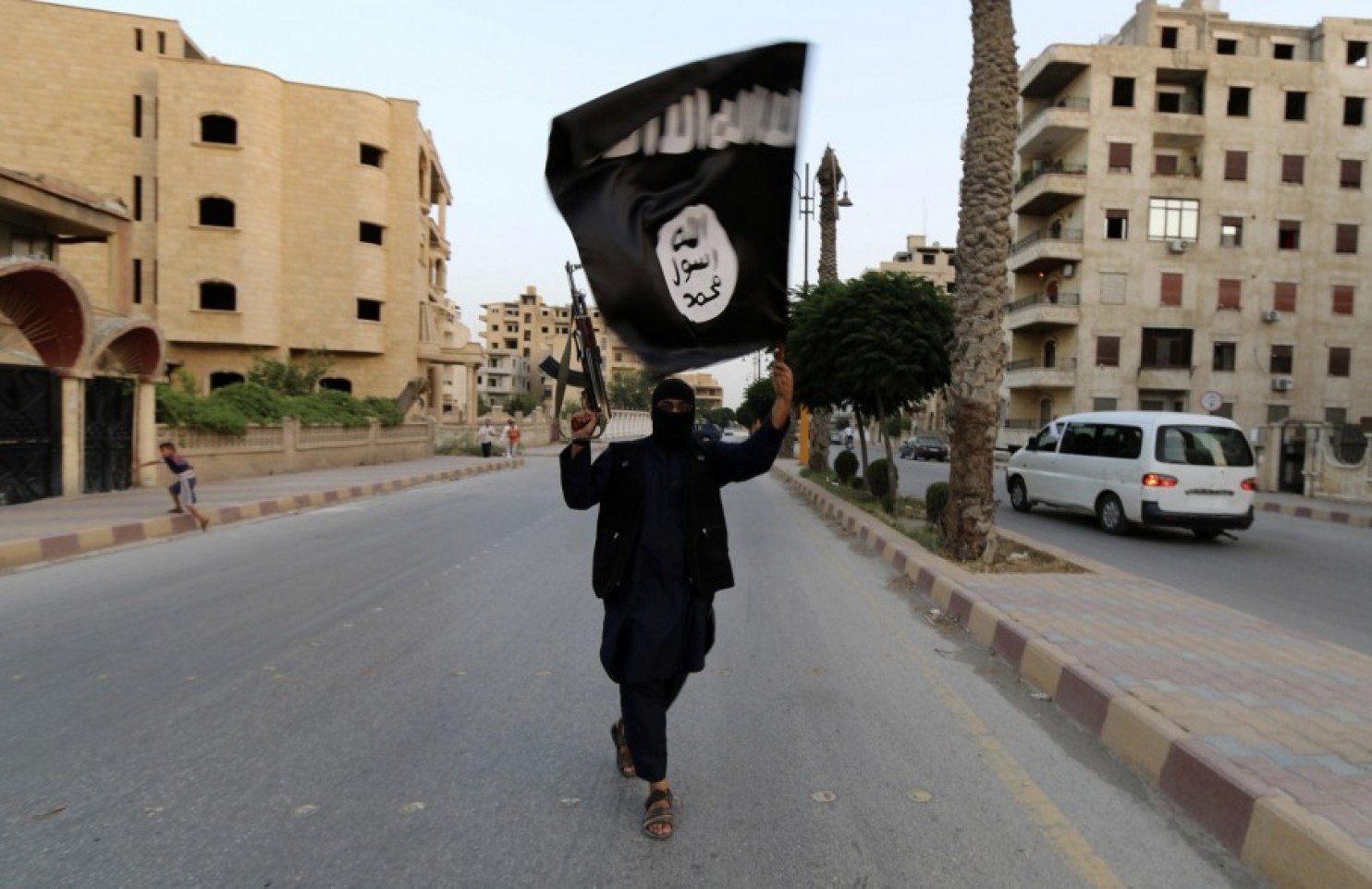
When is the Islamic State in Syria – ISIS – not the Islamic State in Syria?

Apparently the answer to this question is: since a couple of days ago, when the hive mind of lazy politician groupthink decided that we must bend and warp journalistic practice – and the English language itself – in order to make it clearer that the majority of us do not condone the activities of that brutal, backward-looking group of primitive fundamentalists.

My attention has been elsewhere lately – freshly returned from a relaxing and eventful trip to Greece but otherwise more focused on domestic than foreign affairs. So it was surprising to find my attention drawn back by the furious row between the government and the BBC over exactly how the public service broadcaster should refer to the nascent medieval kingdom seeking to establish itself in the middle east.

The Spectator is – quite rightly – having none of it:

‘Isis’ is an acronym of Islamic State in Syria. ‘Isil’ – an acronym of Islamic State in the Levant. Isil is the better translation of the group’s Arabic name al-Dawla al-Islamiya fil-Iraq wa al-Sham – where ‘Sham’ represents greater Syria or ‘the Levant’ as we would say in English.

As for ‘Daesh’, it has the small propaganda advantage of reminding Arabic speakers of Daes (‘one who crushes something underfoot’) and Dahes (‘one who sows discord’). But beyond that childish word association it is no help at all, for ‘Daesh’ is just the Arabic abbreviation of al-Dawla al-Islamiya fil-Iraq wa al-Sham – or the Islamic State in Iraq and the Levant.

All the euphemisms politicians demand we must use to avoid calling Islamic State ‘Islamic State’ therefore call Islamic State ‘Islamic State’. How can they not, for that is its name? And it is no more up to outsiders to change a group’s name than it is up to you to change the names of your acquaintances. Assuming the politicians know what they are doing, they must believe that many voters will not know what ‘Isil’ and ‘Isis’ stand for, or only Arabic speakers will understand the meaning of ‘Daesh’. In other words, they are relying on ignorance and hoping to foster ignorance too.

Never mind the obvious undesirability of government telling the state-owned broadcaster what to report and how to report it – thus proving the central argument against government ownership of the media. Of far more concern is the fact that politicians – specifically our current generation of uncharismatic, uninspiring, superficial leaders – seem to believe that expending time and energy arguing about what to call the Islamic State is more important than doing anything about ISIS in the real world.

Continue reading

Meet Britain’s Compassionate, Homicidal Welfare System

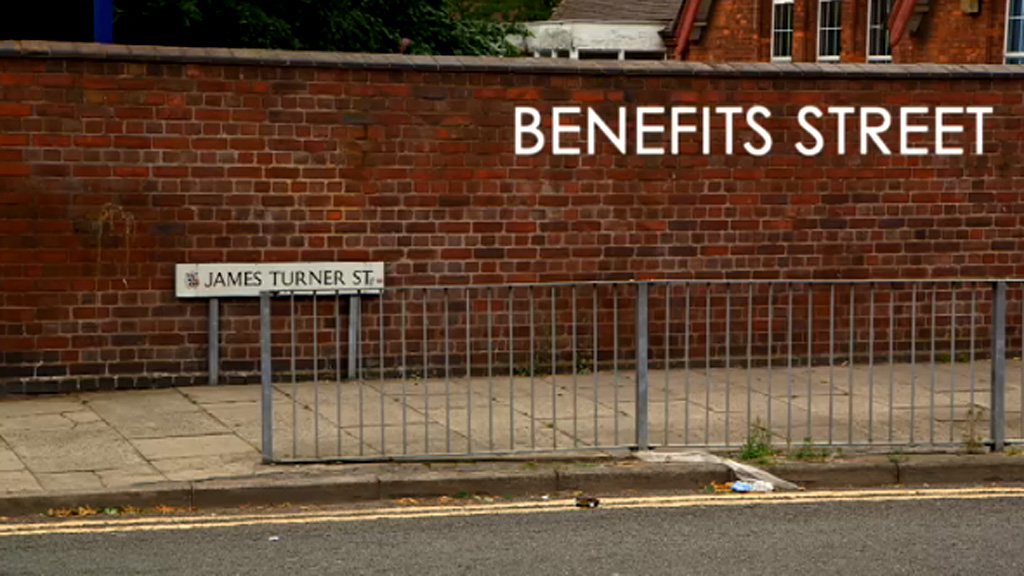
Benefits Street - Welfare Trap - Britain


If you are even moderately well-off and suddenly fall on hard times, Britain’s universal welfare system isn’t like landing in a safety net – it’s more like smacking into a concrete floor from a fifty-foot drop.


People generally talk about the British welfare state as some kind of benign presence, maybe in need of a tweak here or there but basically something of which we can be justifiably proud – Britain’s post-war gift to humanity.

This story makes us feel good, so naturally most of us swallow it unquestioningly, nodding along when the NHS is worshipped in a theatrical Mass during the London Olympic Games opening ceremony, or when Just Another Identikit Politician drones on about the importance of “triple-locking” pensioner benefits.

Sadly, it’s all nonsense. The universal welfare state and its organising principle of non-contributory benefits has proven to be one of the greatest self-inflicted evils we have ever wrought in this country, a vast conveyor belt of human misery leading to an incessant grinding machine in which the lives and dreams of countless thousands of our fellow citizens are destroyed each year, while nearly everyone turns and looks the other way.

Usually it’s good when government does not discriminate. Justice, for example, should certainly be blind, as the old saying goes. But when it comes to social security, we choose to regard our welfare system as a “safety net”. Yet any fisherman knows that different nets are needed for different environments, and likewise a one-size-fits-all safety net for citizens experiencing unemployment or hard times simply won’t catch everybody. Some will slip through entirely and crash to the ground, while others will become ensnared and trapped forever. In other words, when it comes to welfare we should actually want the government to actively discriminate.

Continue reading

Why Jeremy Corbyn’s Labour Leadership Candidacy Matters

Jeremy Corbyn - Labour Leadership - Dan Hodges - Tories4JeremyCorbyn - 1

You don’t have to agree with Jeremy Corbyn to welcome his presence in the Labour leadership contest

It is a pity that the inclusion of Jeremy Corbyn in the Labour leadership race is pretty much only being discussed in the context of the growing #Tories4Corbyn movement.

CapX explains the phenomena:

Putting Corbyn on the ballot paper does have one unintended consequence, which is amusing the Conservatives greatly. Suddenly, there is great interest from senior Tories in helping Labour to elect Corbyn, because they think, rightly, that it would equal oblivion for Labour and a generation of Tory rule.

There is a practical way Tory voters can help, the Conservatives have realised. For just £3 anyone can sign up as a Labour supporter and a get a vote in the party’s leadership contest. On Twitter, Ruth Davidson, the Scottish Tory leader, has already described getting the chance to help make the completely unelectable Jeremy Corbyn Labour leader as a notable bargain.

This Tories4JeremyCorbyn movement could take off. How long before someone establishes a website and Twitter account explaining how Tory voters can win it for Jeremy?

This is all well and good, but it is also a distraction, the type of fun Westminster parlour games that the political class like to play to entertain themselves, leaving the vast majority of Britons either oblivious or turned off. Meddling in the other side’s leadership election might elicit smirks and chuckles in the Westminster Arms, but it hardly does anything to improve the reputation of a political class seen as totally cut off from the people.

Continue reading

There Are Important Priorities Beyond Brexit And The British Bill Of Rights

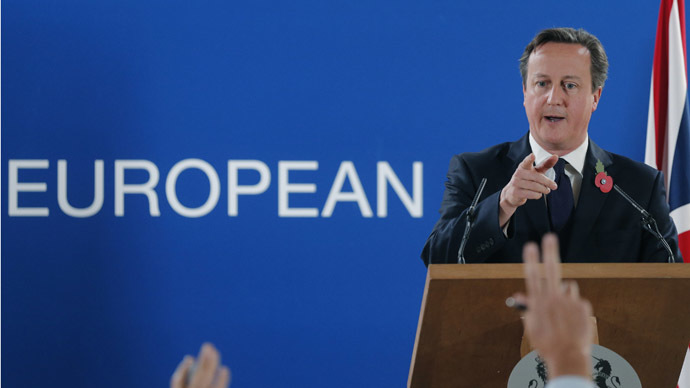
David Cameron - EU Referendum - Brexit - Human Rights Act


Janet Daley has a good piece in the Telegraph today, castigating the Tories for the way in which David Cameron’s government is rapidly turning the serious question of Britain’s future in the European Union into a farcical “pantomime”.

Taking the government to task for letting down those people who ‘kept the faith’ and voted Conservative in May, Daley laments:

But what a dispiriting carry-on it must seem to most voters, especially the ones who were really happy that they had kept their nerve and voted Conservative.

But here’s the money quote:

But our EU membership did not create the non-contributory benefit system in which people who have never paid in receive indefinite support. Nor did it give rise to our unique universal, free at the point of use, rationed health care system. And it certainly was not responsible for the poor educational achievements of so many young British people that companies prefer to import labour rather than cope with the shortcomings of our school standards.

This hits at an important question. Why is it that we want Britain to leave the European Union in the first place? And why do we actually want to unshackle ourselves from an international “human rights” mechanism that has been hijacked and turned into little more than a guarantor of social democratic dogma?

Continue reading

800 Years Of Magna Carta: Still Worth Celebrating, After All These Years

Magna Carta - 800 Years Anniversary - Human Rights - Freedom - Liberty - Britain - England


By Ben Kelly, blogger and editor of The Sceptic Isle.

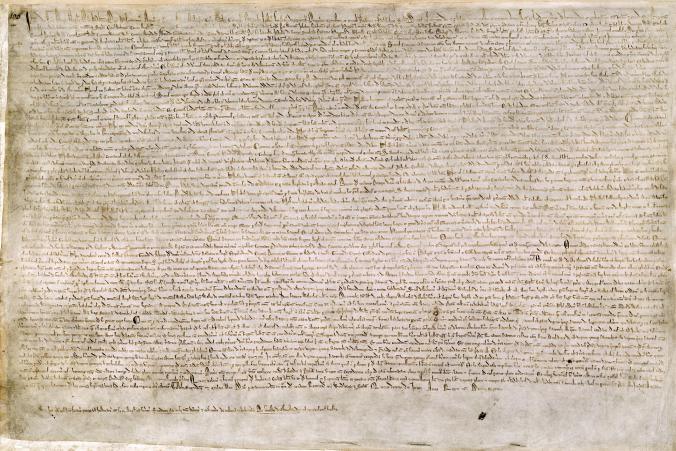
15 June 2015 marks 800 years since a rather famous charter was agreed by the unpopular King John at Runnymede, under pressure from a group of rebellious barons who had backed his failed war against the French and now sought to constrain him.

The severely weakened king had no choice but to bear witness to the sealing of what many now perceive as one of the world’s most important documents. It has become iconic, but it has its detractors. It is a favourite pastime of dry historians and politically motivated lawyers to pick the myth apart and express their disdain for the reverence shown to the old document.

It is quite true that we tend now to view it through rose tinted glasses after much historical revisionism and the creation of a national myth around the event.

The details of the actual event and the passage of the charter into law are often oversimplified or caricatured. The date which we will this year mark, and the document we celebrate, is revered in part because of the manner in which it has been used by those with a political agenda.

Continue reading