British Conservatives Must Show The Courage Of Their Convictions

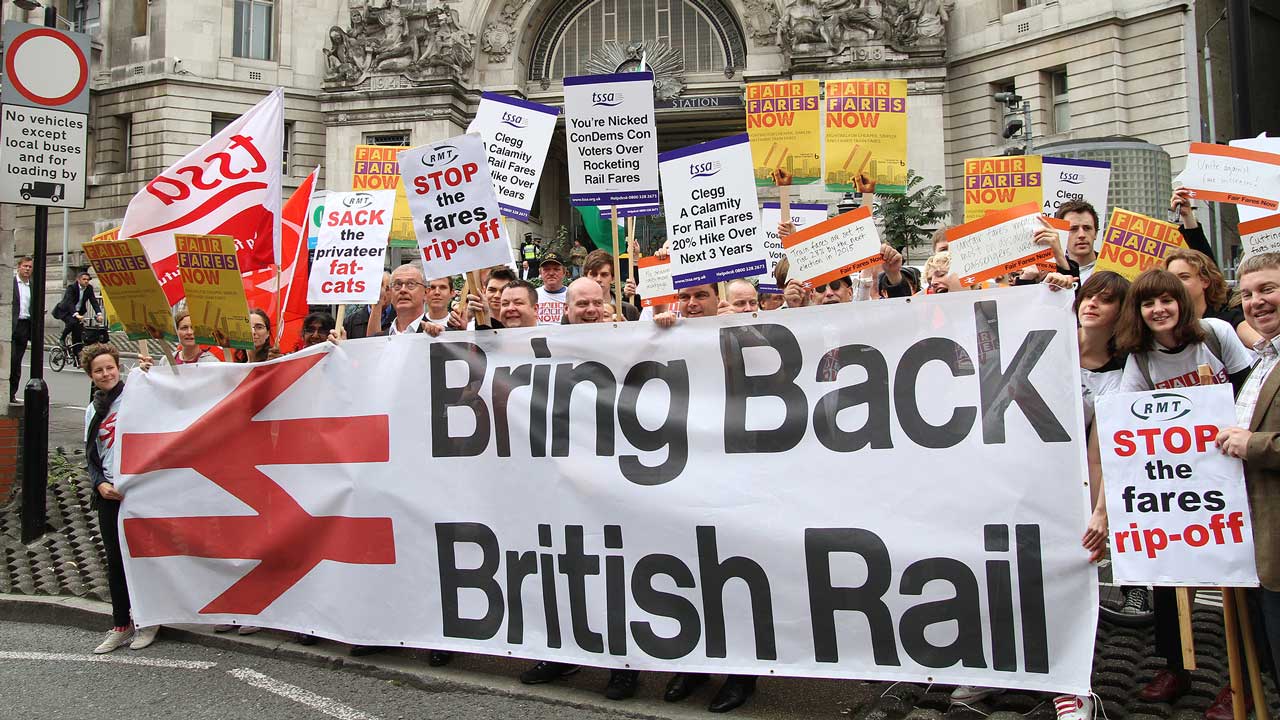
Bring Back British Rail


David Cameron’s cabinet reshuffle dominated the news over the past week – at least, until it was totally overshadowed by world events in Gaza and Ukraine. But the punditry and speculation about who is up and who is down, who succeeded in clawing their way into Cameron’s inner circle and who was excommunicated to the fringes, generally lacked a certain something. Call it relevance.

Beware of anyone offering a neatly packaged, coherent analysis of David Cameron’s cabinet reshuffle so early in its aftermath. There’s a lot of ready made narratives out there – Ken Clarke’s departure heralding the death of the big beasts, the timely promotion of women to the cabinet, the opportunistic promotion of women to the cabinet, the misogynist promotion of women to the cabinet, the triumph of social conservatives, the social conservative purge and the elevation of arch-eurosceptics, to name just a few. The only thing uniting these narratives is that they are quite contradictory, and that they are already out of date.

If you insist on looking for a consistent theme in the Cabinet reshuffle in place of the dull reality (a series of largely independent political calculations by a cautious government), it is not the glaring fact that this was a political reshuffle – paging Captain Obvious – but that it was such a defensive political reshuffle in the run-up to the general election.

With less than a year left of the current coalition government, there was really no point in having a reshuffle at all, from a policy perspective. Little real governing will be done with the coalition partners both manoeuvring to define themselves against each other and take credit for past accomplishments, meaning the only real work left to be done is the cementing and locking down of reforms that have already been made. For all intents and purposes, we are now entering a lame duck session of Parliament.

Given this fact, the most sensible thing for David Cameron to have done – both to achieve the goals of cementing existing government policies and publicly standing behind them – would have been to not have a Cabinet reshuffle at all. But resoluteness and steadfastness was not on David Cameron’s list of priorities. In far too many cases, the personnel changes suggested an apology for successful conservative policy and right-wing thinking in general.

The plain truth is that the conservative agenda – enacted properly and with consideration – works. Privatisation works, welfare reform works (as Fraser Nelson forcefully argued last week), conservative education reform works. Though we should rightly acknowledge and mitigate the negative side effects of weaning people off government aid – and be blunt that these are often counted in terms of human suffering – conservatives should stand unapologetically behind their record, and the ideology which underpins it.

But just when the Conservative Party should be standing up for its beliefs and accomplishments, the coalition government seems more eager to run away from them, to excuse them in the context of “tough decisions to pull the country out of recession”, or to reveal their fear by preventing the proper scrutiny of opposing ideas.

Take the Commons vote to allow the Office for Budgetary Responsibility to audit and pass judgement on Labour Party budget proposals. A confident Tory party that stood behind its accusations of thoughtless left-wing spendthriftery would welcome the harsh spotlight of a non-partisan body like the OBR being shone on official Opposition proposals, but instead the Conservatives made it known (with dubious reasoning) that they were against the proposal.

(It should be noted that in the United States, the equivalent Congressional Budget Office scrutinises draft legislation submitted by both Republicans and Democrats, which further helps to cement its reputation as a non-partisan body).

Look also at the question of railway renationalisation. Pushing an even greater proportion of the British economy into the dead hands of the state is generally a terrible idea, but reflexive Tory opposition to what Ed Miliband and Labour are proposing is counterproductive. Firstly, it glosses over some of the legitimate flaws in the way that the rail privatisation was carried out, and the way in which the privatised railway system is structured. Ignoring legitimate criticism is never the path to good future governance. But secondly, it suggests a lack of confidence in the Tories’ own ideology. If the private sector is so darn efficient and dynamic, what worry should private firms have if the bloated, inefficient state tries to bid for their train franchises, when surely they would lose every single time?

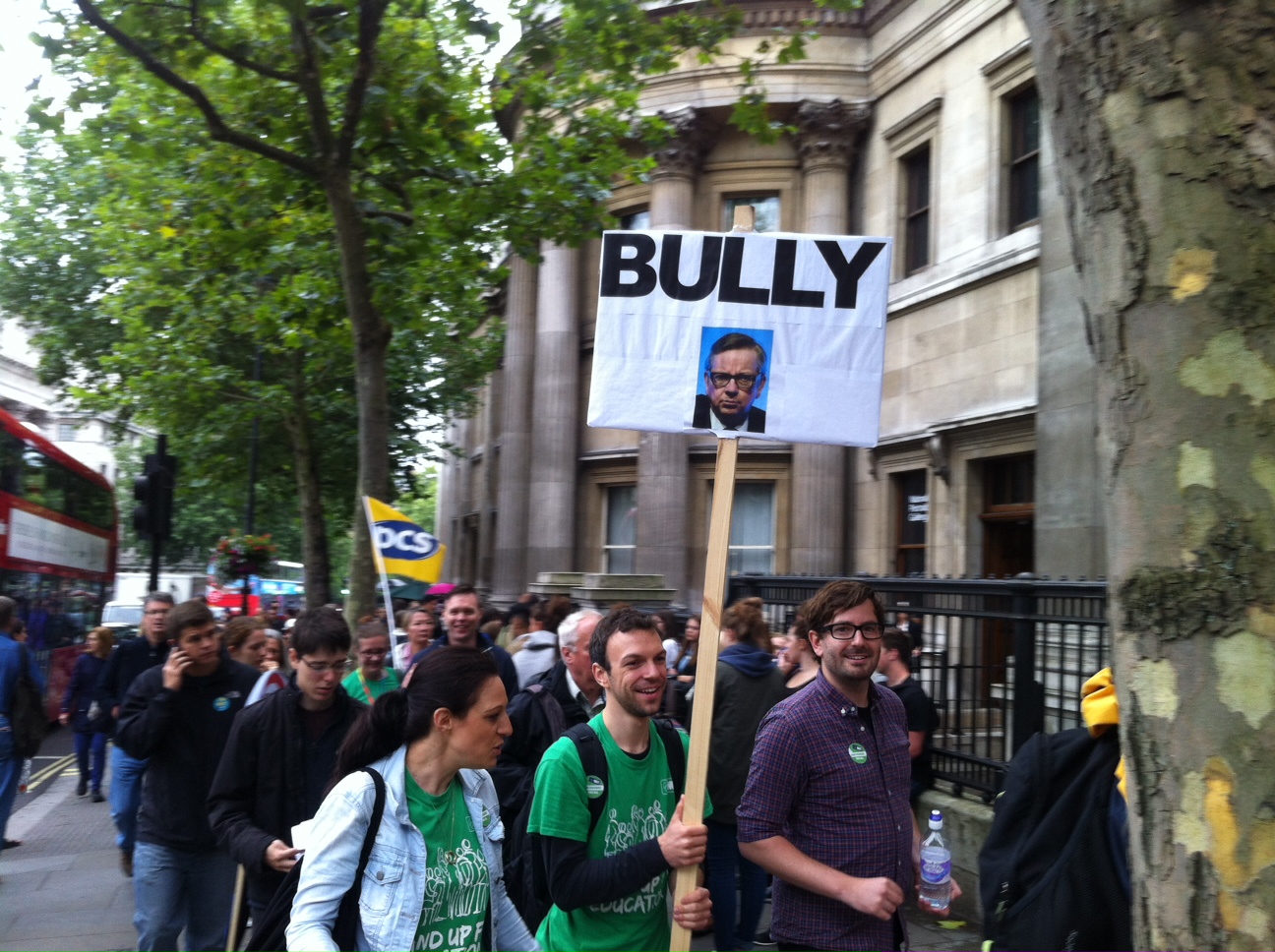
And in the most high profile case of conservative reshuffle apologetics, Michael Gove – one of the few Conservative ministers to successfully enact genuinely bold conservative reforms – was moved away from the Department of Education and demoted to the position of Chief Whip (those arguing that it was not a demotion should compare the salaries of the two roles).

Alarmingly, much of the reaction to Gove’s departure suggested that he was moved on not because his reforms had failed, but because he hadn’t flattered people with enough platitudes while successfully enacting them. The truth about Mr Gove can be discerned by parsing the reaction of Russell Hobby, general secretary of the National Association of Head Teachers. The Telegraph reports Hobby’s view:

“Michael Gove had a radical and sincere vision for transforming education but he often failed to bring the profession with him.

“His diagnosis was frequently astute but his prescriptions were hard to swallow. It is now time to rebuild trust and confidence between government and teachers so that improvements can endure.”

Translated, this means that Gove’s ideas and reforms were quite sound, but he rubbed too many powerful special interests up the wrong way in the course of implementing them. With his removal by Cameron, good policymaking was subordinated to public sector union ego-stroking.

The unions clearly felt that Michael Gove did not respect them – time and time again, in interview after interview with cheerful teachers, this was the constant refrain. After the dust settles, perhaps people will start asking when the pride of the teachers unions and the egos of individual teachers became more important than implementing the best possible education policy for Britain’s children.

At the recent Margaret Thatcher Conference on Liberty, organised by the Centre for Policy Studies think tank, former Australian prime minister John Howard made an important observation. Reflecting on his three successive election victories, Howard said: “The worst way to try to win office is to pretend you’re not too different from your opponents.”

If David Cameron and the Conservative Party are to succeed in their audacious goal of winning an outright majority in the 2015 general election, the path to victory does not lie in pretending to be Ed Miliband’s mollycoddling Labour Party with a small added dose of fiscal realism. If people want a fiscally irresponsible government pledging obsequious servitude to the public sector unions and buying into their pretence of representing the public interest, they will vote for the real thing, not a pale imitation. The Conservative Party must stand behind their limited successful reforms, and promise to double down if they are re-elected to government in 2015.

With the general election less than ten months away, this is no time for small government conservatives to falter.

Strike!

SPS strike protest 0b


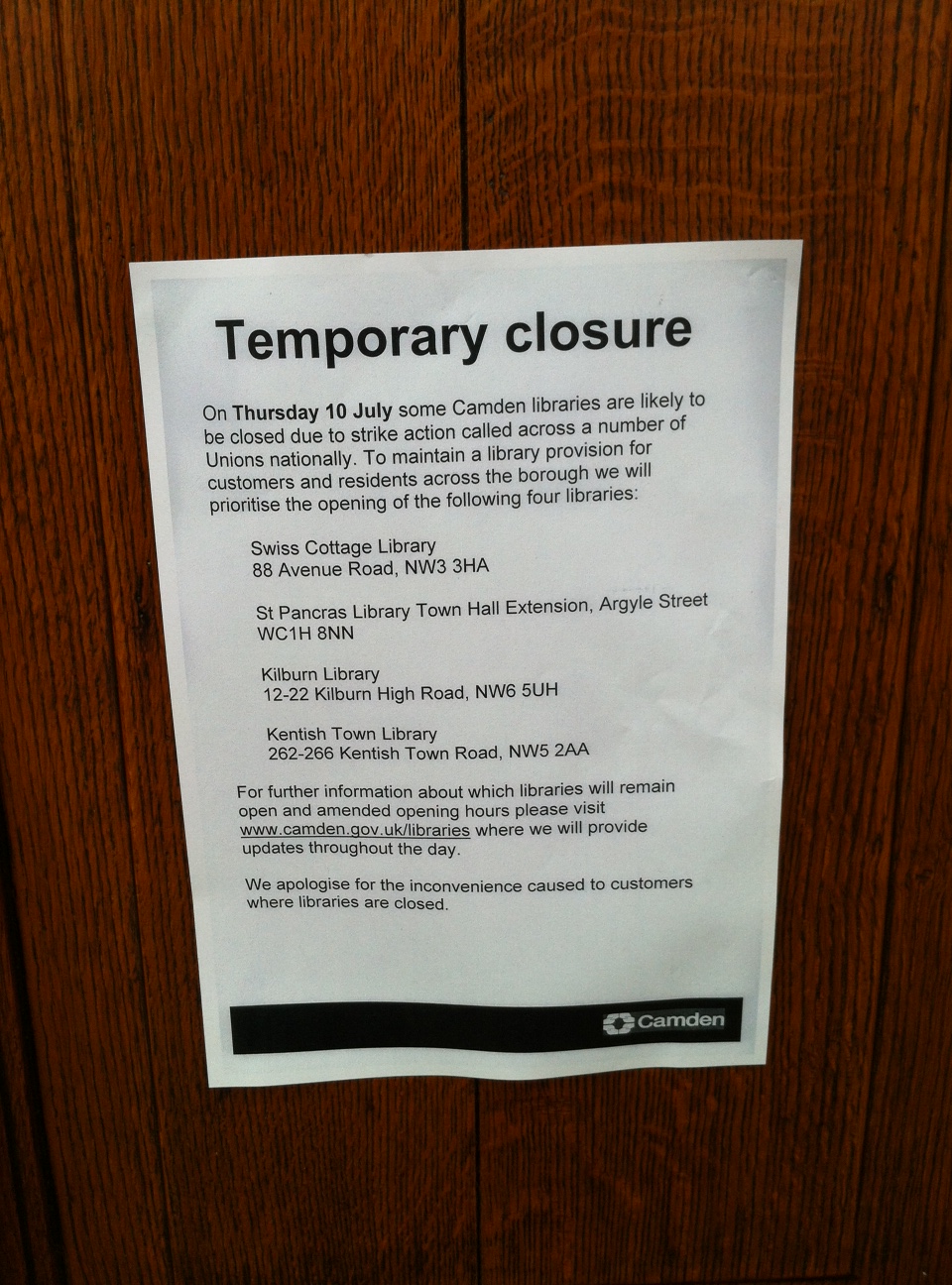
Did life as you know it come grinding to a halt during yesterday’s strike?

Probably not, unless you are a parent who had to make last-minute childcare arrangements because of the teachers walkout and school closures, or you were one of the zero reported cases of people whose houses burned down in the temporary absence of the fire brigade.

The failure of the strikers and the public sector unions to capture the public imagination and win their support is largely down to the fact that the majority of Brits generally accept the need for pay restraint and fiscal conservatism on the part of government, even if they also acknowledge that the clumsy imposition of “austerity” is causing unnecessary hardship and suffering for some of the people most reliant on a big-spending government.

As this blog argued yesterday, it is not enough for opponents of austerity to rail against the “bankers, toffs and Tory scum”, the usual bogeymen of the Left – not if they want to win the next general election. Voters rarely kick out incumbent governments when the economy is on a positive trajectory, and particularly not when the opposition struggles to articulate a convincing vision of how different life would be under their rule.

What, precisely, do the strikers and anti-Austerity demonstrators want? Is it simply a return to pre-austerity 2010 levels of government spending, as though Gordon Brown were still in office? Is it that plus inflation-busting public sector pay raises (at a time when many in the private sector cannot hope for the same)? Or is it something bigger, along the lines of the joyful hippie revolution called for by Russell Brand?

From observing and talking with some of those on strike and others supporting them, it was clear that they have no single answer, no solid idea to rally behind other than to point at the Conservative-led coalition government and say “down with this sort of thing!”

One cannot necessarily expect the grassroots and those on the cutting edge of austerity to be articulate creators of alternative government policy, but from the Labour leadership’s awkward dance around whether they supported the strikes or not, it is clear that they are also stumped for a workable, electorally viable alternative.

With the general election less than 10 months away, the opposition (both official and the activist base) looks and feels very much divided and conquered.

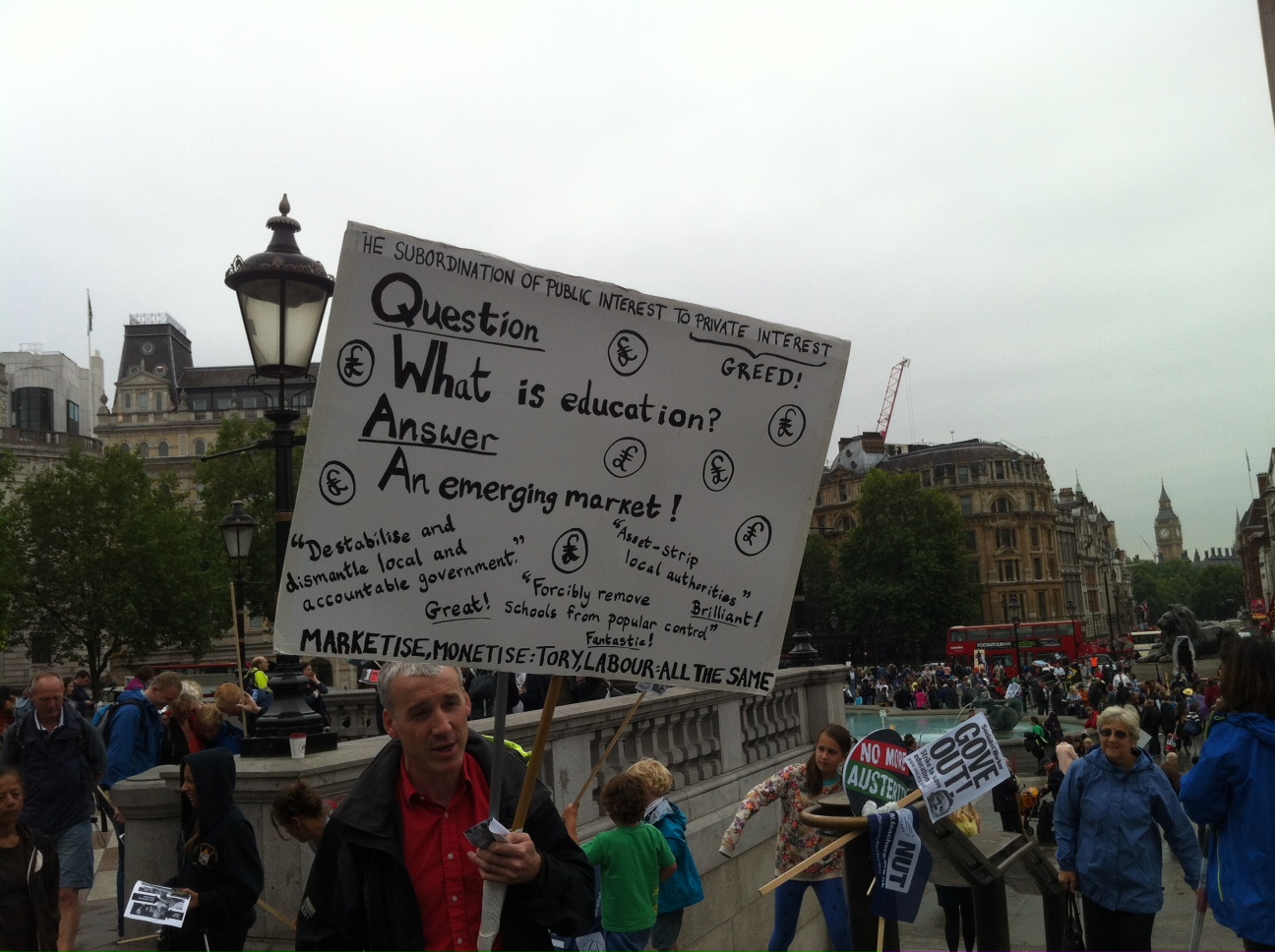
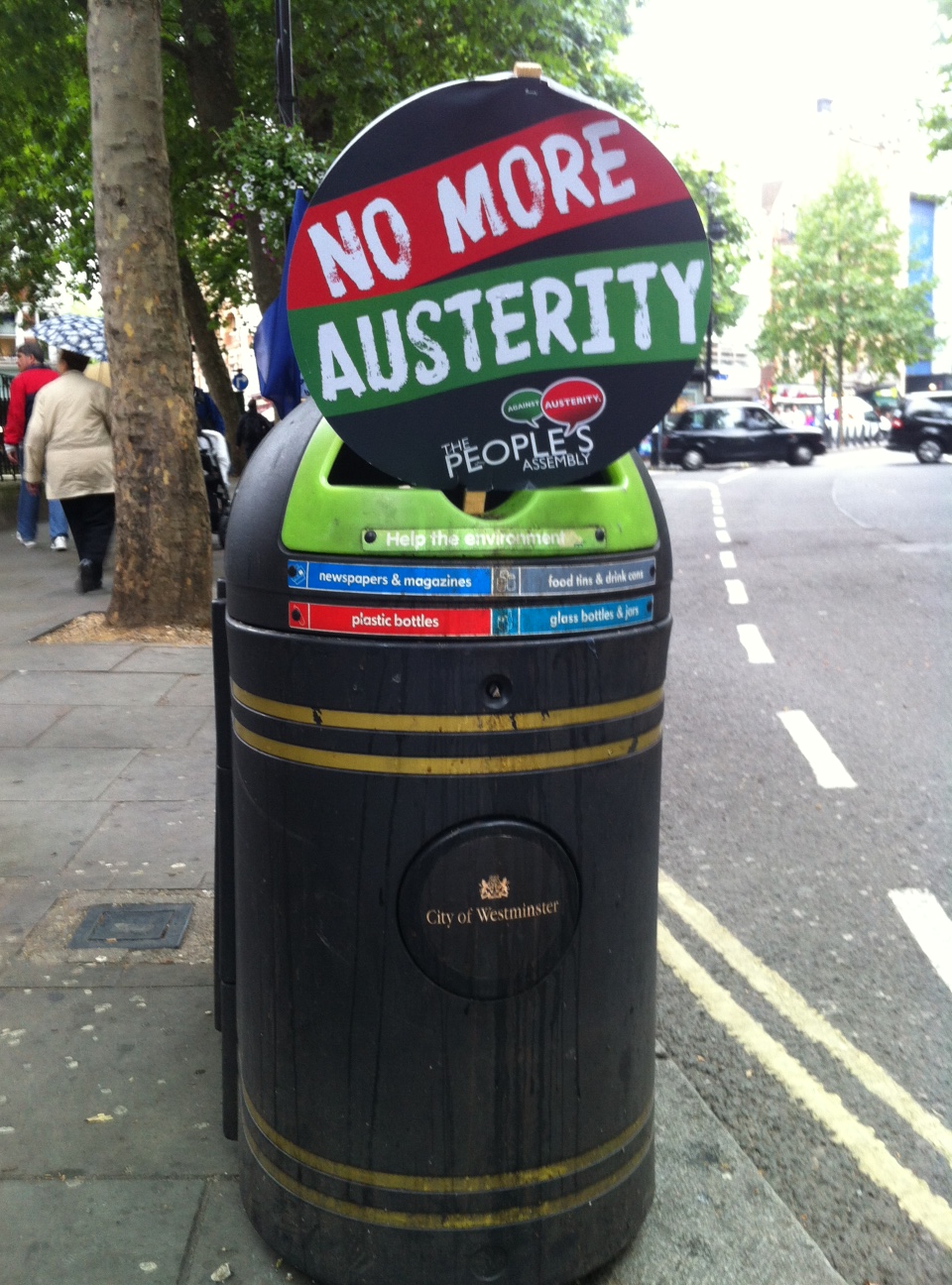
Here are some telling images from the strike which sum up the prevailing atmosphere, taken in London by Semi-Partisan Sam:

SPS strike protest 3 SPS strike protest 4 SPS strike protest 5 SPS strike protest 6 SPS strike protest 7 SPS strike protest 8 SPS strike protest 9

How 50,000 People Marched Through London Unnoticed

SPS austerity demonstration 001


In 2007, satirical news site The Onion reported on the 30th annual Modesto County Ninja Parade, where the townspeople turn out faithfully every year in the futile hope of spotting the stealthy, invisible ninjas as they furtively slip through town.

A similar event took place in London today: the “No More Austerity: Demand The Alternative” protests organised by The People’s Assembly, in which as many as fifty thousand noisy protesters in central London managed to make themselves almost completely invisible. Invisible, at least, to the news media, the general public and the politicians whom they had presumably hoped to persuade.

Even if the resulting headlines were along the lines of “Wealthy Shoppers And Tourists Inconvenienced On Regent Street”, the presence of such a large number of people in central London should have won some attention from the national media, but at this time only the Guardian and Huffington Post UK have carried anything about the event.

This is not a good return on investment on the part of The People’s Assembly, coming in the same week as the ideologically opposite Centre for Policy Studies’ Margaret Thatcher Conference on Liberty, which generated multiple news stories and a strong wake on social media. Something, somewhere is going wrong for the opponents of austerity, and the most convincing explanation involves a fault in both the message and the messenger(s).

First, the message.

Keynote speaker and Green Party MP Caroline Lucas kindly agreed to be interviewed shortly before she took to the main stage to address the crowd in Parliament Square at the end of the demonstration route. As always, she spoke with great empathy about the plight of people living on or beneath the poverty line, but her policy prescriptions seemed inadequate to the change that she wanted to effect:


Calling for higher taxes, a crackdown on avoidance and the scrapping of Britain’s nuclear deterrent – even if you ignore the many side effects resulting from such actions – would only serve to perpetuate an unreformed system of subsidising people who ultimately need (for their sake and the nation’s) to be lifted into self-sufficiency.

When posed with this same question, and the fact that the demonstrators face an up-hill battle in the face of near political consensus from the two main parties (in substance if not in rhetoric), event headliner and spokesperson Russell Brand was only able to repeat his sunny prediction of a joyful, non-violent revolution that would somehow make everything okay:


And this is perhaps the main reason that the anti-austerity protests went almost unnoticed today – the messengers were simply too conflicting, and unable to consistently articulate their cause in a way that could win agreement from sympathisers and respect from opponents.

Owen Jones led the way with his excellent, impassioned speech to the assembled crowds. It was fiercely partisan and occasionally played fast-and-loose with the truth about the origins of Britain’s economic problems, but it was also a persuasive and well delivered speech by a very thoughtful, intelligent, charismatic person.

Shockingly, though, event stewards were tugging at Owen Jones’ sleeves to get him to stop talking and make way for the next speaker almost as soon as he had taken the stage, forcing Jones to bring his remarks to an early conclusion:


By contrast, comedian Russell Brand, given the honour of closing the entire event (save a couple of musical acts to play everyone out), was permitted to speak at length and say whatever he wanted. Consequently, Brand delivered a meandering (if charmingly self-deprecating) address that made little sense when placed under close scrutiny:


“I’ve given you even my vanity”, said Brand after baring his chest as he donned a Fire Brigades Union anti-austerity T-shirt handed to him on stage. But it wasn’t his vanity that The People’s Assembly needed. What they needed was a telegenic intellectual heavyweight with strong ties to the types of people that the demonstrators claimed to represent – the poor, the disabled, the vulnerable and the sick.

The crowd needed someone to tie together the threads of everything that had taken place during the march and rally, drawing together all of the disparate arguments in order to successfully argue that more government spending would actually be a good thing right now (a tough sell when faced with public sentiment and the attitudes of the main political parties).

The speakers at the “No More Austerity” demonstration were well-intentioned (though misguided, in the view of this blog), but a social or political movement that chooses Russell Brand rather than Owen Jones as its figurehead has little ground to complain when their message is met with confusion or indifference on the part of the media and the public.

When celebrities take it upon themselves to become figureheads for a political cause, they have a duty to get to know their topic inside out. To be a good, credible ambassador they must read up not just on the main issues but all of the tangential and second-order considerations so that they are able to engage with politicians and experts as peers and equals.

When Angelina Jolie attended and opened the Global Summit to End Sexual Violence in Conflict in London last week, there was no doubt among anyone present that she knew exactly what she was talking about and was more than qualified to speak on the issue. And so when Jolie stood side by side with William Hague, the British Foreign Secretary, it did not seem the least bit odd or inappropriate (though Hague certainly benefited disproportionately from the Hollywood magic).

Russell Brand, on the other hand, seemed unable to articulate the “alternative” that he and the fifty thousand other demonstrators are demanding. What’s more, he also ignored or trivialised the various political and organisational hurdles that stand in the way of implementing their favoured policies, falling back instead on the denialist notion that a “peaceful, effortless, joyful revolution” will come along and somehow make everything okay. This would be bad coming from a spokesperson, but from one of the supposed leaders of the movement it is completely untenable.

The fact that the alternative was alternately so weakly and idealistically expressed in different ways throughout the day also increases the level of doubt among the public and sceptics (such as this blog) who perhaps believe that the state did expand too far and do too much before the financial crisis, and that some kind of a correction is needed.

By deploying a self-destructive combination of mixed messages and poorly chosen messengers, the people who answered the call to protest today – various trades union, local organisations and interest groups – managed to sabotage their own efforts, becoming virtual ninjas in their own secret parade.

But the sad truth is that many more than 50,000 people in Britain creep meekly through their entire lives, without their struggles, priorities or concerns ever being noticed by the government or others in more fortunate circumstances.

The anti-austerity demonstrators envision a world where a larger, more redistributive and active state perpetually watches over and cares for these people, ensuring their welfare. Others, including this blog, take a different view – that people should be liberated and empowered to the maximum extent possible to flourish on their own, rather than being condemned to an entire lifetime as a “client”, “service user” or “benefit recipient”.

This is an important national debate for Britain to have, one that our elected politicians are poorly placed to lead, occupying the narrow ideological centre ground as they nearly all do. So it is left to the likes of The People’s Assembly and the IPPR on the left, and think tanks such as the Centre for Policy Studies and insurgent parties like UKIP  on the right, to have the proxy debate that would otherwise not take place.

Those on the right might be tempted to rejoice that the “No More Austerity: Demand The Alternative” march received so little attention, and that both message and messenger seem confused and contradictory. But in the long run, it’s not a good thing. The political right cannot test and sharpen their own arguments and ideas when their left-wing sparring partner is struggling even to express itself clearly.

The disorganisation and lack of media awareness shown by The People’s Assembly could well help to ensure that David Cameron’s Conservative Party sneak back across the finish line in the 2015 general election and form another government. But without being held properly to account by the left, the Conservatives will continue to overlook or ignore the needs of some of the weakest and poorest people in Britain (often people who were led down the path of government dependency and then left high and dry by an arrogant Labour government), and fail to help them as best they can with Conservative policies.

Even if the resultant human suffering is not a cause for their concern, the fact that such unaddressed dissatisfaction will eventually bubble up and lead to the Conservatives being punished at the ballot box should make the alarm bells sound.

It was hard, if not impossible, to dislike the people who so stealthily marched through central London today. Setting aside the rightness or wrongness of their policy ideas, it was clear that they genuinely, passionately want the best for the poor, the weak, the dispossessed and for each other.

Laughing, joking or talking earnestly amongst themselves, the only vitriol you were likely to hear from the “No More Austerity” demonstrators was reserved for the usual bogeymen of the left – the bankers, the city fat cats, the multinational corporations and sometimes the inevitable “Tory scum”.

But perhaps the invisible 50,000 should reserve some of their anger for the comrades who organise them, and who craft and articulate their common message. This demonstration, though not huge, should have generated more media coverage, more comment, and more positive action than it did. At present, some of their leaders are badly letting the side down.

And the 50,000 austerity protesters – not to mention the suffering people for whom they claim to speak – cannot afford to have another invisible demonstration.


If you enjoyed reading this article, please take a second to LIKE or SHARE it on social media using the buttons below. Help to spread the word and continue the debate.

Demand The Alternative – The People’s Assembly’s Struggle Against Austerity And/Or Reality

Peoples Assembly No More Austerity

Semi-Partisan Sam will be covering the national demonstration held by The People’s Assembly in London today, entitled “No More Austerity: Demand The Alternative”.

The timing of the protest is somewhat strange, given the fact that we are less than one year away from the 2015 general election and the end of the current coalition government responsible for the “cuts”. Most of the “austerity” policies have already taken full effect and could not be immediately reversed even if David Cameron (and Ed Miliband, who has pledged to stick to the current government’s spending plans should Labour win in 2015) were to witness the crowds at Trafalgar Square and have a sudden change of heart.

In that sense, just like the Judean People’s Front in Monty Python’s Life of Brian, the demonstrators gathering outside BBC Broadcasting House tomorrow afternoon will be engaged in a struggle with reality rather than against a policy that they have any hope of altering in the near future.

One glance at the list of supporters and attendees reveals that the protesters hail from a variety of backgrounds and have a range of different interests at stake, though they are united in their opposition to any government cuts of any kind and for any reason. The People’s Assembly founding statement declares they “support every genuine movement and action taken against any and all of the cuts”.

The lack of nuance in this statement is interesting – centrists and those on the right may be curious to delve inside the minds of people who sincerely believe that the state should only ever grow larger and do more for people, and that any interruption of this trajectory automatically equates to wanton cruelty on the part of callous people with no hearts.

Semi-Partisan Sam hopes to have just this opportunity, and to report back not just on what is drawing people out onto the streets in protest, but also on what their ideal alternative version of Britain looks like.

It’s a question worth asking, because despite Ed Miliband’s manifold weaknesses as leader of the Labour Party, there is a real chance that he could enter Number 10 Downing Street as prime minister in 2015 – and he is entirely sympathetic to the People’s Assembly aims, dovetailing as they do so nicely with his own “new politics” of brutal tax hikes and renationalisation.

Hopefully the answer – and the mysterious “alternative to austerity” being demanded – will be revealed at The People’s Assembly Struggle against Austerity Reality in London later today. Celebrity guest Russell Brand certainly thinks so:

“The People’s Assembly will bring down any government that doesn’t end austerity. Austerity means keeping all the money among people who have loads of it. This is the biggest problem we face today, all other problems radiate from this toxic swindle. We can organise a fairer, more just society than they can, these demonstrations are the start, it will be a right laugh.”

So there you have it. There’s a fixed amount of money in the world, and all that’s needed is to have a “right laugh” together, toss around a few ideas, redistribute the cash a bit and everything will be just fine. It will be like the evil Tories never existed.


Stay tuned to @SamHooper on Twitter for live-tweets from 1PM onwards (London time), and to this blog for discussion and analysis of the demonstration after the fact.

Clarence Darrow vs The Rotten Soul Of Today’s Labour Movement

Kevin Spacey Clarence Darrow 2


What would the famous labour lawyer and anti-death penalty advocate Clarence Darrow say to the late RMT union leader Bob Crow if the two men were to meet in Heaven?

The mental image of their fictional meeting would not leave my mind after I watched Kevin Spacey’s remarkable portrayal of the former unfold in the eponymous one-man play Clarence Darrow at London’s Old Vic Theatre on Friday.

The production – which is well reviewed here, here and here, and in which an elderly Darrow looks back on the many victories and tribulations of his long legal career – gave considerable attention to Darrow’s union activism through his defence of the American Railway Union leader Eugene Debs in the 1894 Pullman Strike, and of the McNamara brothers charged with dynamiting the Los Angeles Times building in 1910, among other famous episodes.

But watching Kevin Spacey portray Clarence Darrow is to see an impassioned and eloquent defence of the rights and dignity of working people that today’s current and recently departed left wing political and union leaders could never hope to equal.

Witnessing the spirit and passion of Clarence Darrow flicker to life on a London stage made it starkly apparent just how close the modern labour movement is to purposelessness and death in the Age of Miliband.

While Darrow in full rhetorical flight could have convinced Ronald Reagan or Margaret Thatcher themselves of the need to concern themselves with the welfare and aspirations of the mother and father working minimum wage jobs on zero hour contracts, today’s left-wing figureheads come across as whiny, self-entitled and spitefully partisan by comparison.

Here are the stirring words of Clarence Darrow in an address to the inmates of Cook County Jail in 1902, the theme of which would be taken up by Ed Miliband and the Labour party in a bold reassertion of conviction politics were today’s labour movement not so politically calculating and intellectually inert:

To take all the coal in the United States and raise the price two dollars or three dollars when there is no need of it, and thus kills thousands of babies and send thousands of people to the poorhouse and tens of thousands to jail, as is done every year in the United States — this is a greater crime than all the people in our jails ever committed, but the law does not punish it. Why? Because the fellows who control the earth make the laws. If you and I had the making of the laws, the first thing we would do would be to punish the fellow who gets control of the earth. Nature put this coal in the ground for me as well as for them and nature made the prairies up here to raise wheat for me as well as for them, and then the great railroad companies came along and fenced it up.

How relevant to today, given the present Labour Party’s focus on the “cost of living crisis” and its apparent determination to freeze consumer energy bills.

But here instead is Ed Miliband warning us of the supposedly mortal threat to the unions posed by David Cameron’s Conservative-led coalition government, in a typically unmemorable speech to the 2013 TUC conference:

We have a Prime Minister who writes you and your members off. Who doesn’t just write you off, but oozes contempt for you from every pore. What does he say about you? He says the trade union movement is a “threat to our economy”. Back to the enemy within.

Six and a half million people in Britain. Who teach our children. Who look after the sick. Who care for the elderly. Who build our homes. Who keep our shops open morning, noon and night. They’re not the enemy within. They’re the people who make Britain what it is.

How dare he? How dare he insult people – members of trade unions – as he does?

Terrible speechwriting aside, Miliband’s suggestion that David Cameron spends his every waking hour plotting against the trade union movement like a modern-day Iago is patently absurd. While the Conservative Party – as one would expect – raises objections to various union policies and rhetoric and their self-interested leadership, you will search in vain to find any evidence of the prime minister “oozing contempt”.

Ed Miliband (in his halting, aggrieved and ineffectual way) and others try hard to continue the life-and-death struggle narrative laid out by Darrow a century earlier, but the fact that their comments are aimed at a modern British audience – even the poorest of whom likely own smartphones, personal computers and enjoy access to universal healthcare via the NHS – renders them ridiculous.

Where Darrow wore his heart on his sleeve and walked the walk of labour advocacy – foregoing a more lucrative career in order to oppose his old railroad bosses who were oppressing their workers – today’s leaders such as Miliband and his union counterparts often hail from the same metropolitan middle and upper-middle classes who form the middle management and ranks of senior civil servants for whom so many working Brits toil. And what’s more, Labour politicians and the management class now talk and sound alike.

Whereas Clarence Darrow stood firmly for worker’s rights without lapsing into sentimental and unworkable socialism, the response of the likes of Ed Miliband, Len McCluskey and Mark Serwotka to our present pale shadow of real austerity has been snarling and misleading hyperbole about the Conservatives “hating” the poor and taking an obscene delight in their suffering.

(It is conveniently forgotten by these anti-Tory crusaders that the suffering was largely created by a gradual bipartisan expansion of the state, and by making so many British people dependent on the government for one thing or another that any retrenchment of spending now has a widespread, painful effect that would not be the case if the government didn’t try to do so much.)

The victories won by organised labour in Clarence Darrow’s day saved lives and liberated millions of people from what William Beveridge would later describe as the five “Giant Evils” in society: want, disease, ignorance, squalor and idleness. And they are immortalised in rights and traditions which endure to this day, such as the annual May Day march and rally in London, and the Labor Day federal holiday in America.

The victories won by the left wing establishment of today (and the debauched, rudderless trades union to whom they are captive) are comparatively petty and trivial, and each passing ‘victory’ incrementally serves either to perpetuate inefficient public sector service delivery or entrench benefits for union members at the expense of the ranks of the budding entrepreneur class, the self employed, the underemployed and the jobless.

The union men of Darrow’s America (and their British counterparts) would be horrified to witness the tanned, bloated, self-satisfied swagger of men like Bob Crow, who delighted in tormenting other ordinary working people with their undemocratic strikes in order to preserve the gold-plated salary and benefits of, say, a tube driver on the London Underground who gets paid well over twice as much as a newly trained Private fighting for his or her country in the British Army.

So how would Clarence Darrow feel upon meeting the likes of Bob Crow?

One can only imagine, but in fairness, it is not unreasonable to think Darrow would first feel immense satisfaction and relief that the causes for which he fought have come to fruition and done so much good, not just in the United States but throughout the Western world.

His heart might swell to know that not only have child labour and the exploitative company towns of his day been cast into history, but that the strength of public sentiment stands firmly against multinational companies who try to take undue advantage of lower standards and regulations in other parts of the world – although there is undeniably still much work to be done.

But a man of such conviction as Clarence Darrow would also likely recoil at the nanny-state socialism, self-entitled smugness and the bitter, envious rhetoric of people like Bob Crow and today’s labour movement leaders, who have casually sauntered in his hard-fought footsteps across what is now much easier political terrain.

And a final bold prediction: A century from now, in the year 2114 – no matter how much the current generation of labour leaders try to portray themselves as intrepid generals locked in an ongoing epic battle for the rights of the downtrodden and the dignity of man – nobody will spend hours queueing for return tickets to a play honouring the life’s work of the likes Ed Miliband, Bob Crow or others of their calibre.

Truly great women and men like Clarence Darrow fought and won ninety percent of the battle before today’s privileged, metropolitan, self-appointed guardians of the common man ever picked up a protest placard or stumbled into their first Labour Students Society meeting.


Clarence Darrow finishes its run at The Old Vic Theatre tonight. Kevin Spacey also portrayed Clarence Darrow in a PBS biopic movie of the same name, the climactic speech of which is shown above.


If you enjoyed reading this article, please take a second to LIKE or SHARE it on social media using the buttons below. Help to spread the word and continue the debate.