This Weak Conservative Government Refuses To Get Tough With The Unions

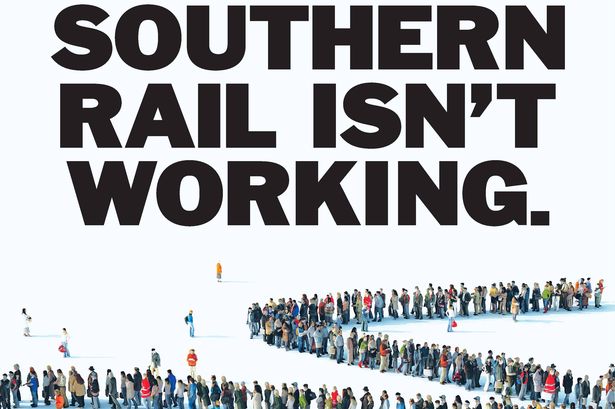
Southern Rail Isnt Working

When even staunch New Labour grandee and columnist John McTernan thinks the Tories are behaving like a weaker version of the Labour Party, British conservatism is in real trouble

As the RMT union’s strike on Southern Rail enters its third consecutive day, inconveniencing hundreds of thousands of commuters while a dithering Tory-lite government watches on, wringing its hands, former New Labour political adviser John McTernan uses his Telegraph column to tear into the Conservative Party.

McTernan writes:

We are in the middle of a five-day rail strike on Southern Rail. Commuters are being massively disrupted. And this is just the latest stage in a dispute in which the Luddite RMT union has made it clear that it is fully committed to fighting against the future.

What about the Government? Where are they in this dispute. It is a crystallisation if all their key themes: investment, modernisation, innovation and productivity. But they are silent.

Well not quite. What we have actually seen is the resignation of the then rail minister Claire Perry, who said:  “I am often ashamed to be the Rail Minister.” And so she should have been – just for her pathetic capitulation to the RMT. This, of course, is just what you would have expected from a Miliband government; but this is a Tory government, with a majority.

There is a famous scene in The West Wing episode about President Bartlet appointing a member of the Supreme Court. He meets Justice Joseph Crouch, whose retirement creates the vacancy, and is angrily addressed by Crouch: “I wanted to retire five years ago. Five years. But I waited for a Democrat. Instead I got you.” The Southern Rail dispute is just like that. Commuters in the Home Counties could be forgiven for thinking: “I waited 23 years for a majority Tory government. Instead I got you.” Where are the core Tory values? Where is the support for management’s right to manage?

This is utterly stunning criticism – shocking not only because it is self-evidently true (the Conservatives in government are a shadow of their glorious best under Margaret Thatcher) but because they are now so bad at governing in a conservative fashion that it has fallen to a former New Labour apparatchik to set them straight.

Why on earth has it fallen to a Labour Party grandee to inveigh against the more militant trades union? Where is the useless europhile Greg Clark, supposedly Secretary of State for Business, Energy and Industrial Strategy during this whole dispute? Where is Chris Grayling, Transport Secretary? Have they all taken lessons from their new boss in the art of disappearing and avoiding the media during scandals affecting their ministerial briefs?

This criticism is particularly damning:

Where are the core Tory values? Where is the support for management’s right to manage?

Where indeed. This blog has wondered the same thing, as the Tories in government behaved like centralising statists, presided over an unprecedented weakening of our national defence, dithered over the housing crisisfailed to get to grips with the nation’s finances, alienated principled conservatives, and as the leader of a supposedly eurosceptic party did all he could to cheat his way to victory for the Remain camp in the EU referendum. Where are the core Tory values?

A Thatcherite government would have stood boldly on the side of consumers over producers, and thus would have been unafraid to plant its flag squarely in the same corner as Southern Rail’s unfortunate commuters. And unlike the Cameron approach to industrial disputes (seemingly applying maximum pressure on businesses to capitulate to union demands, as seen with the London Tube strikes) a Thatcherite government would have recognised the offensive absurdity of the union demands and unashamedly sided against them.

Needless to say, we do not have a Thatcherite government – despite all of the ingredients being in place for another properly ideological right wing government to flourish. The left-wing opposition is hopelessly divided. The Conservatives are under new leadership for the first time in a decade. Boundary review looks set to help the Tories by correcting decades-old biases in favour of Labour, potentially gifting the Tories tens of additional seats. All of these factors stand ready and waiting to be exploited by a radical Conservative government which understands that it has a duty to do more than hold power for the sake of it.

And yet at every turn, the Tories triangulate and tack to the centre. They did so under coalition government (when they had a modicum of an excuse) and they continue to do so now, when they have none. Right now, there is effectively no opposition. A conservative government right now could make a fair stab at privatising pensions and the NHS, and still not be forced out of office so long as the Corbynite and centrist wings of the Labour Party continue their childish tussle for power. The political landscape is ripe for a radical conservative reduction and reshaping of the state, yet there is almost zero evidence that Theresa May’s government intends to attempt any such bold enterprise.

And for what? Will being a centrist clone of New Labour win the Tories any new fans? Of course not. The swivel-eyed Left have long ago convinced themselves that all Tories are “evil” and “vermin”, no matter what they actually do in government.

https://twitter.com/MomentumRugby/status/763072811627872256

We shall win no new fans by trying to adopt the cuddly persona of a young Tony Blair. We will never be liked. Therefore we should focus on being effective, without giving a second thought to winning over the admiration and votes of people who have been raised since birth to despise us. That’s what Margaret Thatcher taught us. And that is the lesson which we seem determined to cast aside in our feverish pursuit of the focus group’s favour.

John McTernan’s quote from The West Wing is very apt. Many conservatives have indeed been waiting for years – since Margaret Thatcher was forced from office, in fact – for another strong Tory leader; somebody committed to conservative, small government principles and willing to fight for them.

Conservatives waited thirteen long years of New Labour government only to get David Cameron. We then endured six years of Cameronism before being presented with the authoritarian Theresa May, foisted on the party in the confused wake of the EU referendum. And whatever electoral success Theresa May enjoys, she may well end up being every bit as much of an ideological disappointment as her predecessor.

But maybe this criticism is premature. Maybe the autumn Conservative Party conference will give birth to a conservative policy platform actually worth voting for. And to be fair to the new prime minister, even Margaret Thatcher bottled her first confrontation with the National Union of Mineworkers, staging a tactical retreat before coming back to finish the job in 1984-85.

But right now, British conservatives are in the ludicrous and humiliating position of being upbraided by a Labour Party grandee – someone from the party of Jeremy Corbyn and Owen Smith, for heaven’s sake – for being insufficiently dedicated to conservative principles.

And when it falls to Tony Blair’s right hand man to tell the Tories how to get tough with the unions, something is clearly rotten with the state of British conservatism.


David Cameron - Coke Zero Conservative - I Cant Believe Its Not Miliband

Support Semi-Partisan Politics with a one-time or recurring donation:

Agree with this article? Violently disagree? Scroll down to leave a comment.

Follow Semi-Partisan Politics on TwitterFacebook and Medium.

On Left And Right, British Politics Is Characterised By Pitifully Small Thinking

Grammar Schools - Conservative Party - Theresa May

Grammar schools and OBEs – anything to distract ourselves from the real, serious political issues facing modern Britain

Of all the issues and circumstances which afflict modern Britain, what policy do you think would make the single most positive difference? Ensuring that Brexit takes place and that we positively reshape our relationship with Europe and the world? Comprehensive healthcare reform? Constitutional reform to reinvigorate our democracy? Freeing higher education from the dead hand of government funding and control? Sweeping simplification and reform of the tax code?

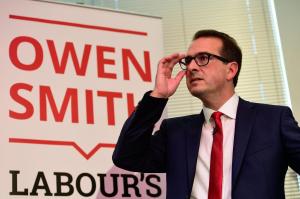
One could debate endlessly (though this blog would prioritise Brexit above all else). But two things almost sure not to make the list would be the two political stories dominating the news this weekend – Labour leadership contender Owen Smith’s ostentatious vow to ban the bestowing of new honours for five years if he becomes leader, and indications that Theresa May’s government is on the verge of overturning New Labour’s spiteful and vindictive ban on the opening of new grammar schools.

From the BBC:

Labour leadership challenger Owen Smith says honours will not be bestowed upon Labour donors, MPs, advisers and staff for five years if he wins the contest.

Mr Smith, who is challenging leader Jeremy Corbyn, said he wants an honours system that rewards “selfless acts, not political and personal patronage”.

Mr Smith, MP for Pontypridd, said Mr Cameron’s list – which included many Downing Street staffers and Conservative donors – was put together with “blatant cronyism”.

“David Cameron’s resignation honours list has brought the system into disrepute and deepened people’s mistrust of politics.

“It’s simply not good enough for [Prime Minister] Theresa May to turn a blind eye to this situation – we need fundamental reform of the honours system so it can reward good deeds and restore people’s trust in politics.”

He also said his proposed five-year honours ban would stay in place until a total overhaul of the system was completed.

This blog does not dispute the fact that the British honours system is hopelessly corrupt and abysmal at recognising exemplary virtue. If Samantha Cameron’s personal stylist is worthy of career-boosting recognition in a gross act of cronyism, what possible grounds are there to deny an honour for every single member of the British armed forces, all of whom risk their lives for very little financial reward compared to that which they could receive in other private sector careers?

While there are many aspects of British imperial tradition which are worth carrying into the present day, the byzantine honours system, with its multiple levels and incomprehensible initials, is not one of them. In fact, it is the ultimate expression of inward-looking elitism, a Country Club tiered membership system which allows its wealthy and well-connected members to compare themselves with one another while excluding thousands of people whose lifetimes of service make them far more deserving of public recognition.

So scrapping the honours system altogether and replacing it a flattened and simplified system – perhaps just one award for civilian life, like a stripped down variant of the Order of Australia – would be a worthy goal, though hardly mission-critical for UK prosperity. Far less impressive, though, is Owen Smith’s dismal suggestion of an arbitrary five-year pause to supposedly review the system.

This is a typically British muddle. When faced with an unacceptable scandal or unethical situation, the establishment’s typical response is to launch a meandering and ultimately fruitless inquiry, kicking the issue into the long grass until public outrage has died down sufficiently that things can go on unchanged. The only way that the rotten system will ever change is either for firm and immediate action to be taken, or for the issue to be folded into a package of further-reaching constitutional reform (by far the better, though less likely option).

Owen Smith, last gasp of the Labour centrists, clearly has no interest in serious reform – of the honours system or anything else. His proposed five-year moratorium is a quintessentially New Labour device, assuaging public anger with a big flashy gesture while doing absolutely nothing to tackle the underlying issue or inequality. This isn’t bold new leadership from somebody worthy of succeeding even Ed Miliband and Jeremy Corbyn. And this is the man who believes he is uniquely gifted to carry Labour back into government?

Not that the Conservatives are any better.

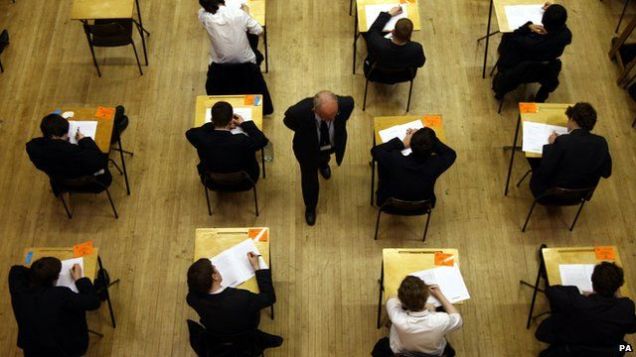
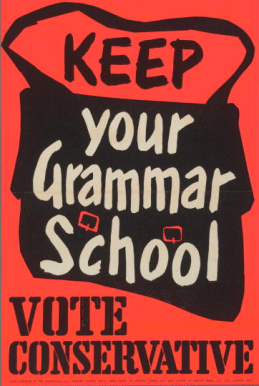
The main news emanating from the Conservative Party this weekend has been the leaked suggestion that Theresa May is planning to announce a repeal of New Labour’s ban on the building on new grammar schools – not unpleasing news, certainly, but concerning (and highly vulnerable to political attack) when not placed in the clear context of wider education reform with a laser focus on raising standards and improving social mobility.

The Guardian reports:

Theresa May has been warned she will face stiff opposition to plans for new grammar schools from some senior Tory MPs as well as Labour and the Liberal Democrats.

The prime minister was facing a backlash after the Sunday Telegraph reported that she will announce a return to more selective schools in England as early as the Conservatives’ autumn conference.

Downing Street made no attempt to dampen speculation that an extension of selection in schools is on the government’s agenda, releasing a statement on Sunday that said: “The prime minister has been clear that we need to build a country that works for everyone, not just the privileged few.

“Every child should be allowed to rise as far as their talents will take them and birth should never be a barrier. Policies on education will be set out in due course.”

The suggestion that May, a former grammar school pupil, will opt for new selective schools after an 18-year ban delighted many Conservative backbenchers. More than 100 Tory MPs are said to support a campaign by ConservativeVoice, a group endorsed by senior cabinet ministers Liam Fox and David Davis in 2012.

In many ways, seeking to lift the ban on new grammar schools is commendable – the ban is a grotesque piece of spiteful, anti-aspirational Labour Party downward social engineering, in which “equality” was to be achieved by hacking away at the ladders to success in favour of dull, uniform mediocrity.

But as a first major flagship Conservative policy under Theresa May, it is disappointing. Yes, it shows more grit than was ever displayed by David Cameron, and yes it will keep restive Tory backbenchers happy – essential if May’s government is to survive the next four years with a notional majority of just 8. But in terms of the overall education reform which Britain needs, grammar schools are but a drop in the ocean.

The proportion of pupils in grammar schools has been under 5% since the late 1970s. Even assuming an aggressive policy of encouraging new grammar schools, it is hard to see this figure substantially increasing within, say, the next decade (i.e. in time to make a measurable difference in the productivity and quality of the British workforce).

Academic selection can be beneficial, and we should certainly aim to stretch the most talented pupils and appropriately enrich their education wherever possible. As a former state school pupil, my own education was in no way enhanced by being grouped together with other children of decidedly mixed ability (and this despite streaming). And I strongly doubt that the less able students benefited greatly from my presence either.

But the real issue in British education is the stunted curriculum, unambitious targets and wildly excessive early focus on specialisation. As a state school student, I had no opportunity to learn Latin, or philosophy or the classics. And no matter what steps I have taken in adult life to fill the yawning gaps in my knowledge, nothing can replace exposure to these topics at an early age. Why should these subjects be the preserve of expensive fee-paying private schools, simply because some dull left-wing bureaucrat decided that “ordinary” students do not need exposure to the classics and the Western canon in order to get jobs working in factories which no longer exist?

Why, too, are fourteen-year-olds expected to know what they want to be when they grow up, and begin dropping subjects like hot potatoes as they begin studying for their GCSE examinations? How on earth is a young teenager, who has perhaps only ever had one teacher in history or geography or modern languages, supposed to know for sure that they will never need whole areas of knowledge in their future lives? For this is exactly what we demand of our young people today.

At a tender age (when frankly, issues of popularity or boredom come into play as much as anything else) we expect young people to drop subjects and constrain their life choices first at fourteen, when they start preparing for GCSEs, and again at sixteen (if they haven’t been encouraged to abandon school altogether by pandering government agencies) when they begin preparing for A-levels. This is ludicrous – and the idea of dropping subjects which one finds difficult hardly instils young minds with a positive attitude towards dealing with life’s inevitable challenges.

Rather than continuing to shoot for the middle with our education policy, contenting ourselves when we just about keep pace with other middle-ranked nations, we should set our sights higher as a country. We should be looking to match and outdo countries like Japan, Finland and South Korea from their perch at the top of world tables in educational outcomes, and improving our schools so that it is no longer just our elite private schools and Oxbridge which are the envy of the world.

Would this be easy? Of course not. Many factors are involved, from daycare and early pre-school education, relative poverty and tackling an often lukewarm culture of aspiration. In some of these areas (particularly around the culture of aspiration and delayed gratification) we can clearly do much more. In other areas, there may be difficult questions over infringement on personal choice and the proper role of the state. But we should at least have the debate and talk about how much power we are prepared to concede to different levels of government (or determined to take back from government) in order to drag ourselves up the educational league tables.

But these are all discussions which will never take place if the focus is taken over by a debate about grammar schools, which make up just one weapon in the fight to improve educational outcomes. We will never have the broader discussion and the complete policy review if Theresa May’s government expends a vast amount of political capital fighting furious Labour and LibDem MPs to an impasse and ends up being defeated in the Commons by a jubilant Jeremy Corbyn.

So here we are – well over a month after the EU referendum, and here we are talking about grammar schools and the honours system.

Of course the machinery of government must grind on, Brexit or no Brexit. And of course this is the slow summer season, when MPs and journalists normally take a break, promising each other that nothing momentous will take place while they try to grab some quality beach time. But the fact that the Labour Party is consumed by yet another leadership election with a challenger whose key selling point is promising to spend five years thinking about changing the honours system, while the Tories play to the backbenches by choosing to fight and die on the hill of grammar schools, is not encouraging.

Maybe party conference season and the return of Parliament will provide more context, or some other sign of hope that Theresa May’s government plans to do more for social mobility than re-litigate a battle from the 1970s, or that Labour’s childish centrist MPs will either accept four more years in the wilderness or finally show some courage and strike out on their own.

Because at present, the policies and preoccupations of Britain’s leading politicians do not seem remotely equal to the scale of the challenges at hand.


Grammar Schools

Grammar School - Conservative Party

Support Semi-Partisan Politics with a one-time or recurring donation:

Agree with this article? Violently disagree? Scroll down to leave a comment.

Follow Semi-Partisan Politics on TwitterFacebook and Medium.

Owen Smith’s “Threat” To Theresa May Reveals The Arrogance Of The Left

Anyone can choose their words poorly under pressure. But the modern Left have made a habit of jumping on the verbal slips of other people and ruthlessly, cynically exploiting them for political gain using the weaponised language of identity politics. So forgive us for being less than sympathetic when one of their own makes the same mistake

In the ongoing, unwatchable carnival of stupidity that is the second Labour leadership contest in the space of a year, this week’s news coverage has been dominated by challenger Owen Smith’s poor choice of words when he spoke about his desire to take the fight to Theresa May and the conservatives.

From the Guardian:

Labour leadership contender Owen Smith has been forced to apologise after saying he wanted to “smash” Theresa May “back on her heels”, during a major speech to outline his policy ideas.

Smith said he wanted to “smash austerity” and pledged a raft of new measures including scrapping the Department for Work and Pensions in favour of a Department for Labour, plans to make zero-hours contracts unlawful and to end the public sector pay freeze during his speech in South Yorkshire.

Those announcements, pitched to the party’s left, were overshadowed by criticism of his choice of language. Arguing that Labour should be going after the prime minister’s policies harder, he said: “It pained me that we didn’t have the strength and the power and the vitality to smash her back on her heels. These are our values, these are our people, this is our language that they are seeking to steal.”

Smith initially defended the comments as robust political language, but a spokesman said later the remarks were “off-script and, on reflection, it was an inappropriate choice of phrase and he apologises for using it”.

A spokesman for the campaign of the Labour leader, Jeremy Corbyn, said: “We need to be careful of the language we use during this contest as many members, including many female Labour MPs, have said they feel intimidated by aggressive language.”

One can feel for Owen Smith. Clearly he has absolutely no desire to walk around the despatch box, cross the floor and physically punch Theresa May in the face, knocking her off her heels. In fact, the Left has a loud and angry tradition of wanting to “smash” anything and everything it happens to find objectionable, be it austerity, racism, sexism or Tory rule, without necessarily wanting to physically do so. It is fairly understandable how such language might therefore have crept in to a speech by this inexperienced leadership contender.

And yet. And yet…

One cannot help taking a small measure of satisfaction from watching somebody from the Party of Identity Politics – a vicious political clan who think nothing of smearing and ruining other peoples’ reputations with allegations of racism, sexism or any other “ism” they can think of when doing so offers them some slight political advantage – come a cropper by falling victim to the very same culture which their actions promoted.

Nobody seriously thinks that Owen smith wants to literally smash Theresa May and knock her off her feet, heels or no heels (in fact it was the heels reference that is actually the slightly more “sexist”, if one must call it that, rather than the threat of violence). But modern Leftist politicians like Owen Smith often end up self-detonating, and deservedly so, after stepping on one of the very same linguistic or cultural land mines that they love to lay across our language and political discourse. And if you make it unacceptable to say enough things, eventually you will trip over your own rules and find yourself convicted of accidentally infringing one of those very same edicts.

If any Tory MP spoke of smashing, say, Liz Kendall back in her heels, you can bet that Kendall would be touring the news studios that very evening, faux-earnestly warning of the violent misogynistic rhetoric being used by mainstream conservatives. But when one of their own does the same thing, as Comrade Smith did with his unfortunate remarks about Theresa May, nobody utters a peep. And while it certainly became a news story, Conservative MPs were not queuing up to make political capital out of the event, let alone those Labour MPs who fancy themselves champions of women.

Smith is too important to centrist Labour’s flimsy plot to prematurely terminate the leadership of Jeremy Corbyn to be brought down by his own violent rhetoric, you see. Besides, everyone knows that Labour are the good guys and that any racist, sexist or anti-Semitic remarks uttered by one of their own must simply be well-intentioned jokes taken out of context by people with sinister motives.

One would hope that Smith’s brush with political danger might force some kind of rethink within the party as to whether weaponising identity politics and making the English language a veritable landmine of things you can’t say / imagery you can’t adopt is really the best way to go. But of course there will be no such rethink. The next time a hapless Conservative MP talks about crushing the enemy or “targeting” Labour MPs, some weepy party apparatchik will be wheeled out to sob to the media about how terribly threatened and triggered they feel. Labour simply stands to gain too much from weaponised identity politics to consider giving it up, even as it poisons our politics and chills our public discourse.

But let us be magnanimous and take heart that Owen Smith does not seem to have suffered unduly from his amateurish speechwriting error. There are many reasons why Smith does not deserve to win the Labour leadership contest – starting with the fact that his 20-point policy pledge seems to be a condensed version of Labour’s disastrous 1983 “longest suicide note in history” manifesto, while the man himself seems to be nothing other than a younger version of Jeremy Corbyn minus the adoring fans.

We all know, those of us with brains and consciences, that Owen Smith does not harbour secret fantasies of karate kicking Theresa May across the floor of the House of Commons. It was an awkward turn of phrase, not a Freudian slip revealing deep-rooted male chauvinism.

And though Owen Smith’s party will never in a million years extend to us the same courtesy and benefit of the doubt, let’s stop talking about this pointless distraction and move on to matters of substance.


Owen Smith - Labour Party Leadership Coup

Bottom Image: Independent

Support Semi-Partisan Politics with a one-time or recurring donation:

Agree with this article? Violently disagree? Scroll down to leave a comment.

Follow Semi-Partisan Politics on TwitterFacebook and Medium.

Theresa May’s Government Should Dramatically Increase Defence Spending

USO lounge airport

It is time to reject David Cameron’s lazy, noncommittal approach to our armed forces and national defence

After a rather assured start as Britain’s new prime minister, will Theresa May act to beef up Britain’s flagging and cash-starved armed forces, making them as steely and formidable as her own carefully cultivated image?

Conservative Home makes the case:

The introductions to British defence reports are characterised by assurances of the UK’s continued global relevance and ambitions. By contrast the bodies of most reports are composed of capabilities we allegedly no longer require. At some point rhetoric and reality inevitably collide.

The Royal Navy now has 19 frigates and destroyers where in 1998 it had 34. The UK has fewer tanks than Switzerland. The British MOD leads the world in operating at the extreme edge of the possible.

Our current defence strategy is largely premised on not having to defend ourselves. The lifecycle of the defence systems and equipment procured today is up to 45 years. Forty-five years ago, in 1971, the Iron Curtain was as firm as ever, Deng Xiaoping was yet to take power and introduce China’s transformative market reforms and Osama Bin Laden was merely a wealthy Saudi teenager. By historical standards these strategic shifts are reasonably minor. Nevertheless government strategic analyses generally assume the relative stability of the last 15 years will continue indefinitely; the 2010 and 2015 defence reviews inexplicably argues the UK will no longer need the capability to deploy an expeditionary force of the size sent to Iraq or to conduct two simultaneous medium sized operations as in Iraq and Afghanistan. Hopefully the 2020s are indeed an exceptionally peaceful decade, but premising our defence policy on an unstated and unjustifiable assumption they will be appears unwise.

Three illusions aid this approach to defence. Firstly over-dependence on Trident; if we continue to rely so heavily on our nuclear capabilities some scenarios will confront us with a choice between launching an immoral first-strike nuclear attack or doing absolutely nothing. Secondly over-dependence on NATO; the British Army is intended to act as an interoperable auxiliary to a much larger US force. Perhaps the US will remain highly committed to the defence of Europe, but Donald Trump is cheered when he denounces NATO and Newt Gingrich has publicly dubbed Estonia to be “a suburb of St Petersburg”. In 2012 Obama’s (largely rhetorical) pivot to Asia attempted to shift the US’s strategic and economic centre of gravity from the Atlantic to the Pacific. In this political environment, it would be unwise to have no plan for US disengagement from Nato. Finally, British defence planning tends to assume lost capabilities can be regenerated rapidly in the event of a crisis. Given the extraordinary logistical hurdles which confronted the Ministry of Defence in the run-up the Invasion of Iraq, a scenario consistent with defence planning assumptions, wide scale attempts to regenerated lost capabilities would probably be impossible except in the long-term.

Fundamentally only a very few voters have any personal contact with the military. Servicemen and women are constitutionally forbidden from protesting. The Ministry of Defence is therefore at a crucial disadvantage in interdepartmental budgetary warfare. Parliamentarians have a duty to compensate by holding the government to account. Of course there is no shortage of Conservative MPs who would favour higher defence spending but they face the challenge of highlighting less deserving areas of spending to cut instead.

Absolutely. And over-reliance on Trident in particular can only lead to a never-ending series of national humiliations, as adversaries test us and find us continually unwilling or unable to respond with conventional forces.

The military in particular needs to start throwing its weight around more, agitating for lost capabilities to be restored and highlighting the risks to Britain if they are not, rather than their current approach of quietly begging for cash behind the scenes but maintaining a brave face to the world. Sometimes, politicians need to be shamed into doing the right thing, perhaps especially when the government is a lily-livered centrist Conservative administration more concerned about pursuing “social justice” than defending the country. Operation Shame should therefore begin now.

ConHome are also right to point out that very few voters have any personal contact with the military. This is in marked contrast to countries such as the United States, where armed forces veterans are not only more visible, but much more highly honoured too. People visiting America for the first time are often struck by the frequent presence of soldiers in transit at airports, USO lounges set aside for them, and veterans being honoured at public events such as sports games or political rallies, often asked to stand as the crowd show their appreciation. Many restaurants and businesses offer a discount to veterans. In nearly every way, American society is geared to respect and honour the military more than is now the case in Britain.

The effects of the armed force’s diminished role in public life are telling. When the military is so invisible to most people most of the time, it naturally loses out in the endless departmental cash grabs every year when the government announces its budget. The NHS has a dedicated army of online priests and priestesses, endlessly and mindlessly singing the praise of the health service from dawn to dusk. Consequently, politicians terrified of electoral retribution throw more money at the NHS every year while rarely standing up to the many entrenched special interests which corrupt the working of the world’s fifth largest employer.

We need to start taking the defence and security of our country as seriously as many of us seem to take defending the NHS from criticism, reform or privatisation by the “Evil Tories”. That means putting great pressure on Theresa May and her government to show a steely resolve when it comes to protecting and growing the MOD’s share of government spending. Somebody needs to send a memo reminding Cabinet that NATO’s 2% of GDP target is a minimum aspiration, and not a level to be particularly proud of.

And we all need to let this government know that whatever other fiscal and political pressures there may be, doing the bare minimum when it comes to our national defence is simply no longer acceptable.


PHOTEX-HMS DIAMOND

Top Image: Nicholas Kralev

Bottom Image: Defence Industry Daily

Support Semi-Partisan Politics with a one-time or recurring donation:

Agree with this article? Violently disagree? Scroll down to leave a comment.

Follow Semi-Partisan Politics on TwitterFacebook and Medium.

Many People In Britain Deserve Sympathy. Labour’s Centrist MPs Do Not.

The sycophantic Westminster media identify and empathise much more with Labour’s centrist MPs than the ordinary people who make up the party membership. And it shows.

In a rather nauseating review of Theresa May’s first outing in Prime Minister’s Questions, The Spectator’s Steerpike column gushes with sympathy for the rebellious Labour centrist MPs perched behind (and around) Jeremy Corbyn:

In recent weeks, Jeremy Corbyn’s popularity has hit a new low with the Parliamentary Labour Party. Things are so bad that he is unable to assemble a full Shadow Cabinet — instead having to assign some people with more than one position.

So, it was an interesting move of the Labour leader to bring up job insecurity and difficult bosses at today’s PMQs. Corbyn suggested that Theresa May had much work to do when it came to making employment rights fairer. Alas, the Prime Minister was unimpressed with Corbyn’s complaints. Channeling her inner Thatcher, May went on to suggest that it was he who was the guilty one when it came to inequality in the work place.

The Spectator goes on to quote the new prime minister’s (admittedly very effective) withering putdown of Corbyn:

‘I’m interested that he refers to the situation of some workers who might have some job insecurity and potentially unscrupulous bosses. I suspect that there are many members on the opposition benches who might be familiar with an unscrupulous boss.

A boss who doesn’t listen to his workers. A boss who requires some of his workers to double some of their workload. Maybe even a boss who exploits the rules to further his own career. Remind him of anybody?’

This is all part of a dismally familiar effort in the Westminster media to paint Labour’s rebellious centrist MPs as the wronged and oppressed group, and Corbyn as their unlikely tormentor in chief (when if anything it is clearly the other way around).

The Spectator – and they are far from alone – expect our hearts to brim over with sympathy for the poor Labour centrists whose ineptitude made Jeremy Corbyn’s rise possible in the first place, and who now stomp around Westminster mutinously, trying to destroy the mirror which Jeremy Corbyn holds up to their faces, showing them their own vacuity.

This is a fawning, sycophantic attitude which screams “screw the people and the Labour Party membership! What really matters are the hurt feelings and stymied career aspirations of 230 members of the Westminster political class, people who didn’t go to Oxbridge, secure prize political internships and shimmy their way up the greasy pole only to find their dreams of a Cabinet career dashed because their party is locked out of power for a generation.”

That’s not to say that Corbyn is some kind of faultless, saintly figure. Far from it. But while his ideology may have been plucked unreformed from the 1970s, it is at least coherent and sincerely felt. The same cannot be said for the restive cohort of centrists who are so busy trying to find an “electable” alternative that policy and passion and principle barely register at all.

Post-Brexit, it seems to be fashionable for well-connected journalists, commentators and intellectuals to publicly muse about the possible reasons for the anti-establishment rage simmering at the surface of British politics. Why oh why have the British people stopped listening to the expert opinion of their betters in the Establishment, goes the frequent cry. Why have the people lost faith in the political class?

Hint to the Spectator: journalists openly fretting about the mental welfare of supposedly poor, downtrodden centrist Labour MPs rather than the genuinely poor and downtrodden squeezed middle and working classes goes a long way toward explaining this impenetrable riddle.


Jeremy Corbyn - PMQs

Support Semi-Partisan Politics with a one-time or recurring donation:

Agree with this article? Violently disagree? Scroll down to leave a comment.

Follow Semi-Partisan Politics on TwitterFacebook and Medium.