The Economic Challenges Beyond Brexit

Bitter, swivel-eyed (and unrepentant) europhile he may be, but the FT’s Martin Wolf makes some valid points in his latest column, warning against any complacency that Britain’s persistent economic weak points will be automatically restored to health upon leaving the European Union.

Wolf writes:

British economic policymakers confront big challenges. They have to manage departure from the EU with the minimum damage. They also need to make the UK economy far more dynamic. The latter cannot be achieved if they do not abandon the myth that Britain is already an economic success, albeit one choked by the dead hand of an over-regulated European economy.

Simon Tilford of the Centre for European Reform provides a far more realistic picture in his Brexit Britain. Measured at purchasing power parity, the rise in the UK’s gross domestic product per head between 2000 and 2015 was smaller than in Germany, Spain and France. Over this period, the UK outperformed only Italy, among the EU’s largest pre-2000 members. In 2015, the UK’s GDP per head was lower relative to the average of the 15 pre-2000 EU members than in 2000: its GDP per head was a mere ninth within this group.

The UK also has the highest income inequality among these countries. Furthermore, notes Mr Tilford, UK real wages fell by 10 per cent between 2008 and 2014, before a tiny uptick in 2015, while German and French real wages rose. In 2015, only London and the South-East had higher GDP per head than the average of the EU-15 countries. Other UK regions were at or below that average. In all, it is hardly surprising so many UK voters feel left behind, as shown in the EU referendum.

True, the increase in French real wages has coincided with high unemployment. But that is not true in Germany. UK workers also work longer hours than those in other EU-15 countries. This is presumably to make up for low real wages, themselves largely due to the UK’s poor productivity. According to the Conference Board’s invaluable “total economy database”, the only EU-15 countries to have lower output per hour than the UK are Greece, Italy and Portugal, while the UK’s productivity per hour has stagnated since 2007. Again, of the biggest five EU-15 members only Italy performed worse on this measure. The UK also now runs the largest current account deficit, relative to GDP, in the EU-15.

The UK, then, has low unemployment. But it also has high inequality, mediocre real incomes, at least by the standards of its European peers, and poor external competitiveness. Above all, recent productivity growth has been truly awful.

These are hard, inescapable criticisms – particularly in terms of productivity growth and purchasing power parity, which is ultimately the only yardstick that matters in terms of whether people actually feel better off.

And concludes:

The implications of a realistic view of the UK economy is that, even without the looming shock of Brexit, the economy suffers from big weaknesses relative to the European economies that many Brexiters despise. Some argue that a real depreciation of sterling is mainly what is needed. If sustained, the post-referendum devaluation should indeed help, though it means a fall in real incomes and wealth. Yet devaluation alone will not cure UK weaknesses.

The UK has to rectify longstanding supply-side failings. The list includes: low investment, particularly in infrastructure; inadequate basic education of much of the population and the innumeracy of much of its elite; a grossly distorted housing market; over-centralisation of government; and a corporate sector whose leaders are motivated more by the share price than by the long-term health of the business. Not surprisingly, given all this, the UK economy is highly dependent on inward foreign direct investment, which Brexit would seem virtually certain to weaken.

If the UK is to thrive economically, it will not be enough for it to manage Brexit, hard though that will surely be. Its policymakers must also start from a realistic assessment of the UK’s mediocre performance. This is no world-beating economy. It is not even a Europe-beating economy, except on creating what are too often low-wage jobs. It will have to do far better if it is to deliver the higher living standards its people want in the tougher environment ahead.

The danger with Brexit was always that the sheer complexity of managing our secession from the European Union would prove too much for a mostly unremarkable generation of politicians and civil servants, nearly all of whom have never known life outside the EU and can scarcely imagine self-government. Even now, three months after the historic Brexit vote, there is little evidence that the government has started to get to grips with the challenge ahead of them.

Therefore, it is not unreasonable to ask – as Martin Wolf does – how much mental capacity will be left to tackle other burning issues like Britain’s low productivity, the low-skill / low-wage segment of the economy or decades-old weaknesses in British management, identified by Thatcher’s Conservatives in the late 1970s but still barely tackled even now.

And I’m not sure there is a quick fix to this problem. Brexit will inevitably dominate the political agenda, probably for the next decade, to the near exclusion of all else. And even if there was excess capacity, there is precious little evidence to suggest that Theresa May’s new government has a blazingly clear vision for reforming Britain anyway – as Isabel Hardman outlines in this excellent Spectator piece.

In short: many of these problems, though long-festering, are probably going to have to wait to be tackled, unless the government surprises us all with its radical zeal and far-reaching reform plans at the upcoming Conservative Party Conference, which seems unlikely at best.

If you wake up to discover your house is ablaze and smoke pouring into the bedroom, you don’t waste precious minutes ensuring that you are beautifully dressed and immaculately turned-out before evacuating the building. Likewise, in whatever shape Brexit ends up happening, Britain will likely emerge from the EU in much the same shape as before, with the same nagging issues and weaknesses clamouring to be addressed.

Inspiring? No. Ammunition for assorted bitter Remainers, EU-lovers and anti-patriots? Sadly, yes. But that is our lot. Brexit is likely to be a grinding, painstaking, lengthy process at the end of which the same Britain will be blinking back at us, largely unchanged, with all the rest of our work to realise the benefits of Brexit still ahead of us.

But does that mean the enterprise is not worth the effort? Hell no. And it is very telling to see those who are prepared to steel themselves for the work ahead, and those who seek to use it as a whinnying justification for giving up.

 

Thousands Of People Take Part In The March For Europe

Support Semi-Partisan Politics with a one-time or recurring donation:

Agree with this article? Violently disagree? Scroll down to leave a comment.

Follow Semi-Partisan Politics on TwitterFacebook and Medium.

Isabel Hardman Is Right To Criticise The Labour Party’s Toxic Brand Of Feminism

Isabel Hardman has a great piece in The Spectator in which she rightly castigates Harriet Harman and the Labour Party for their narrow, possessive and parochial attitude towards feminism and gender equality.

Hardman writes:

Harriet Harman also described the Prime Minister as ‘no sister’, arguing ‘we’ve got a new Tory prime minister – and she’s a woman. But like Margaret Thatcher before her, Theresa May is no supporter of women’.

Now, it’s probably quite irritating for Labour to have to hold a women’s conference while the Tories are still crowing that they’ve got another female Prime Minister. But is this sort of ‘you’re not a real feminist’ moaning very, well, feminist? Naturally, Theresa May has a different interpretation of what a feminist politician should do to some Labour MPs: though perhaps not as different as they might think. After all, she did set up Women2Win, which has increased the number of female Tory MPs in parliament by lobbying the Conservative party and mentoring candidates. And after all, she did do quite a lot of work on domestic violence when in the Home Office, including working with the now Labour MP Jess Phillips when she was working as a national adviser on domestic abuse, and introducing the offence of coercive and controlling behaviour. And she also introduced a number of measures on female genital mutilation and forced marriage. But still, she’s not a Labour MP, so that means that obviously she’s not really a feminist.

Sorry, ladies, but feminism is even more important than partisanship. If you start claiming that only women who meet with your politics are real feminists, then you break into the People’s Front of Judea when feminists haven’t run out of problems to solve. You also alienate those on the right who are feminists but who you tell aren’t welcome in your special exclusive left-wing ladies’ club. Feminism has to span the political spectrum, otherwise it gets stuck in one party. And given the Labour party isn’t going anywhere right now, that’s not much use to the women who still need a politician who’ll show them what a feminist in government looks like.

Amen to that. Feminism (or egalitarianism) is much bigger than the Labour Party – thank God. And Lord knows that it needs to be.

Labour’s brand of feminism views women as weak supplicants and perpetual victims, helpless waifs entirely dependent on government largesse, social protection and financial support from the state.

It is a toxic creed of inferiority which imagines that women cannot make it on their own without help from enlightened white knights in the Labour Party to vanquish their foes and smooth their path in life. And that’s why Harriet Harman and other left-wing feminists hate Theresa May, and hated Margaret Thatcher before her. For here are two unapologetically conservative women who strove and succeeded on their own merits, and and overcame an (at times) extremely sexist culture and workplace by quietly getting on with the job rather than exulting in their own supposed fragility and victimhood.

Harriet Harman views Theresa May as a traitor to Proper Socialist Feminism because Theresa May (and other independent conservative women like her) never asked for Labour’s help on her path to success, and because Britain’s new prime minister is a living, breathing example to girls and young women (and men, for that matter) that success and full equality are not contingent on swallowing Labour’s nasty, backbiting politics of identity and victimhood.

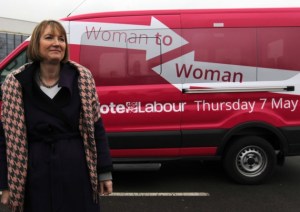
For in reality, it has been the Conservative Party who have put egalitarian and meritocratic principles into practice when it really counted, electing not one but two female party leaders. Labour is the party of the all-woman shortlist, affirmative action, gaudy pink minibuses and thinly-veiled misandry. The Tories are the party of Britain’s two first female prime ministers.

So three cheers for Isabel Hardman reminding us that believing in gender equality should not and does not also require swallowing whole Labour’s politics of grievance, weaponised victimhood and government dependency.

Feminism and egalitarianism are bigger than the Labour Party, which is probably just as well – because Labour’s leading feminists are looking mighty churlish and downright small right now.


harriet-harman-labour-party-pink-bus-feminism-identity-politics

Support Semi-Partisan Politics with a one-time or recurring donation:

Agree with this article? Violently disagree? Scroll down to leave a comment.

Follow Semi-Partisan Politics on TwitterFacebook and Medium.

With David Cameron’s Resignation From Parliament, British Conservatism Can Begin A New, Bolder Chapter

david-cameron-resigns-as-mp-for-witney-parliament-westminster

Finding himself prematurely out of power and seeing no value in life as a mere backbench MP, David Cameron brings the curtain down on a bland, centrist, disappointing and entirely forgettable political career

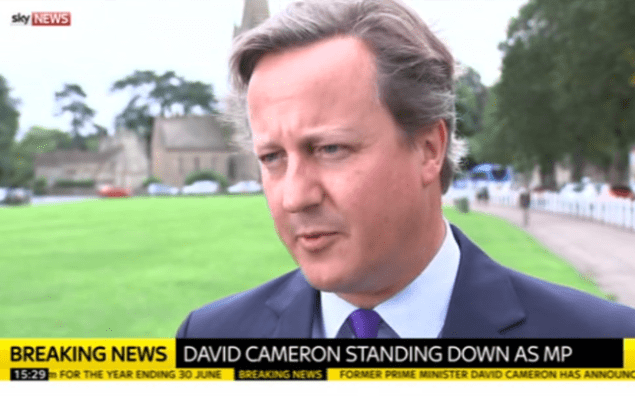
Having successfully completed Tony Blair’s fourth term of office and having a premature end called to his fifth, David Cameron today announced his decision to flounce out of parliament – despite having earlier promised to stay on as an MP after his fall from power.

He took his leave of us with these words:

With modern politics, with the circumstances of my resignation, it isn’t really possible to be a proper backbench MP as a former prime minister. I think everything you do will become a big distraction and a big diversion from what the Government needs to do for our country.

And I support Theresa May, I think she’s got off to a great start, I think she can be a strong prime minister for our country and I don’t want to be that distraction – I want Witney to have a new MP who can play a full part in parliamentary and political life without being a distraction.

[..] I hope I’ll continue to contribute in terms of public service and of course contribute to this country that I love so much.”

[..] I spoke to Theresa May and she was very understanding about this decision. I support her, I support what she’s doing, she’s got off to a cracking start. Obviously I’m going to have my own views about different issues – people would know that. And that’s really the point: as a former prime minister it is very difficult, I think, to sit as a backbencher and not be an enormous distraction and diversion from what the Government is doing. I don’t want to be that distraction; I want Witney to have an MP that can play a full role in parliamentary and political life in a way I think I would find very difficult if not impossible.”

Naturally this has led to speculation that David Cameron somehow disagrees with Theresa May’s loudly-trumpeted plans for new grammar schools and the return of potentially widespread academic selection to the education system.

I find this explanation…unconvincing. If the capsuled history of David Cameron’s premiership and leadership of the Conservative Party has taught us anything about Cameron the man, it is that he has absolutely no core political convictions which he is not more than willing to toss overboard for the sake of political expediency and his relentless desire to engage in centrist triangulation.

Fiscal conservatism? As long as he and George Osborne were able to find some statistical or rhetorical device to falsely claim that they were “paying down Britain’s debts”, Cameron was more than happy to continue spending hand over fist, driving Britain’s national debt ever-upward while exhibiting enormous timidity in reversing many of Gordon Brown’s most draconian tax increases.

Strong national defence? It took his successor, Theresa May, to drive through the parliamentary vote on the renewal of Trident, while under David Cameron’s watch Britain temporarily waived goodbye to our aircraft carrier capability (a true diminution in the eyes of the world) as well as the ability to effectively patrol our own coastline and airspace without the help of allies.

A smaller state? The much-vaunted “Big Society” was dead on arrival in 10 Downing Street back in the spring of 2010, and whatever rearranging of deckchairs the coalition government engaged in, nothing was done to tackle the biggest budget black holes – pensions and the NHS. Under David Cameron, the government preferred to virtue-signal their progressive credentials by spending borrowed money on international aid than get to grips with departmental spending.

So given this singularly unimpressive track record, the idea of David Cameron suddenly discovering an ideological backbone and beliefs strong enough to resign over is frankly ludicrous.

In fact, what really happened is quite obvious. Cast from power unexpectedly and with unexpected speed, Cameron lied when he said that he intended to stay on and complete his term as MP for Witney. To have said otherwise and admitted his intention to resign would have appeared churlish, and more than anything Cameron wanted to cultivate the image of himself as an easy-going happy warrior, ready to relinquish the trappings of office without regret and re-assume a more humble role as a backbencher.

This announcement came as quickly as it possibly could without making Cameron look completely dishonest and reprehensible. At least when Gordon Brown resigned as an MP he had managed four years as a backbencher – albeit four years in which he collected a hefty MP salary while being virtually invisible in Westminster. David Cameron’s brittle ego wouldn’t even permit him to last a year on the backbenches. His top flight political career having been brought to an unexpected end, Cameron saw no reason to stick around as a mere constituency MP.

To politicians like David Cameron, the role of constituency MP is merely a springboard to ministerial power. When the possibility of prize cabinet jobs or the keys to Number 10 Downing Street are no longer an option, wasting time on select committees or dealing with constituents’ issues appears a supreme waste of time – time which could be better spent cashing in on fame and carefully tended relationships while they are still relatively fresh and can bear the most fruit.

James Kirkup is similarly unimpressed with the manner of Cameron’s departure:

On June 27, David Cameron issued this statement: “I will continue with my duties as the MP for Witney. It is an enormous privilege to serve the people of West Oxfordshire.”

So enormous that he could only bear it for a few more weeks, apparently. He’s off, leaving the Commons and triggering a by-election in Witney: some lucky Tory will soon inherit one of the safest and prettiest seats in the country.

What does this tell us about Mr Cameron? Nothing terribly positive, to be honest. Let’s remember, he fought the EU referendum campaign promising not to quit if he lost, then quit when he lost — but only having clung to office as long as possible and having banned the Civil Service from doing any preparatory work for Brexit, thus making it harder for his successor to actually get on with the job.

In between breaking his promise not to resign as PM and breaking his promise not to resign as an MP, the only significant official work he undertook was drawing up an honours list handing an OBE to his wife’s stylist and a knighthood to his press officer.

Not exactly the most dignified departure from office, is it? And certainly not one that’s easy to reconcile with many, many statements from Mr Cameron about the sense of duty he owed to his nation, the selfless service he felt obliged to render.

And Kirkup’s unsparing conclusion:

And this is why flouncing out of Parliament in this way is so telling: it speaks to something fundamental about Mr Cameron’s character and his approach to politics: a lack of seriousness, the absence of real commitment.  Yes, he wanted the job and yes he put the hours in, to the cost of his family.

But he would never die in a ditch for his political beliefs, never shed blood and move mountains to hammer home his arguments. It was always enough to get by, to do just enough to get the top grade and do better than the rest.

Sadly, that describes Cameron perfectly – far more obsessed with optics than reality, and forever in search of the path of least resistance, even when that path ran direct through traditionally left-wing territory.

Ultimately, David Cameron was a weak and instantly forgettable prime minister because he was a centrist triangulator and a technocrat at heart. As prime minister he had no real interest in reforming Britain in his own image, imposing his own worldview or being a statesman. Rather, he was content to campaign and govern as a mere Comptroller of Public Services, the living, breathing symbol of the diminution of our national politics.

With his happy departure from Parliament (en route to a minor footnote in history) one hopes that the ground has shifted under British politics, and that the age of the technocrat might be coming to an end. His successor, Theresa May, while far from being this blog’s preferred choice, at least seems to have some strongly held political views of her own, while Jeremy Corbyn’s imminent re-election as Labour Party leader promises a 2020 general election offering genuine choice to the electorate.

All we need now is for George Osborne to follow his chum David Cameron into political retirement and we may finally be able to turn the page on this most boring and depressing chapter in Conservative history.


David Cameron - Coke Zero Conservative - I Cant Believe Its Not Miliband

Support Semi-Partisan Politics with a one-time or recurring donation:

Agree with this article? Violently disagree? Scroll down to leave a comment.

Follow Semi-Partisan Politics on TwitterFacebook and Medium.

Two Month Report Card – First Thoughts On Theresa May’s Premiership

After an assured and confident start, Theresa May’s government shows welcome signs of moving boldly, if not always in the right direction

To date, this blog has not wasted undue time speculating about Theresa May’s premiership and assessing her early performance – not least because we are only just starting to emerge from summer silly season, and there has not been much yet to judge.

But as somebody who would never have wanted a flinty-eyed authoritarian like Theresa May to become leader of the Conservative Party and Prime Minister of the UK, I must admit that so far I am cautiously impressed.

The relative silence from Number 10 Downing Street over the summer break was refreshing, and the fact that we were not bombarded with press releases, superficial policy announcements and a load of government spin showed the best side of Theresa May – the no nonsense, hardworking operator.

Such rows and dramas as did break out – like the childish playground spat between Liam Fox and Boris Johnson over responsibility for promoting Britain’s commercial interests – were slapped down quickly, while similar turf wars and petty rivalries between SpAds were frequently allowed to fester and spiral into damaging newsworthy wars under David Cameron.

Of course, the worst Big Government, security state instincts of Theresa May are never far from the surface, and soon this blog will likely be riding to battle against the government’s Investigatory Powers Act, due to return before Parliament soon.

And on the most important issue of Brexit, there is still no sense that ministers have even truly begun to wrap their heads around the complexity of what is to come, let alone have an appreciation of the key challenges and opportunities. Theresa May has made a rod for her own back by stating her commitment to significant up-front immigration reductions as a key part of the package, which only makes the vital interim EFTA/EEA transitory option (with controls on immigration in the line of the Liechtenstein model) that much harder to achieve.

And yet there is also good news on Brexit, not least the willingness of our allies in Canada, New Zealand and Australia to lend us the services of their skilled trade negotiators as Britain struggles to regain core competencies in areas of national sovereignty which we allowed to wither and atrophy during our EU imprisonment. Also somewhat heartening is the seeming enthusiasm and energy which the government is throwing into pursuing various assorted “trade deals”.

While the devil will be in the scope and the details, this newfound diplomatic vigour is encouraging to witness, and only emphasises why David Cameron and George Osborne had to go after fighting against Brexit and losing the referendum. This is no time for surly, sulking brooders more keen to prove their Brexit doomsday scenarios true than to faithfully serve the nation to be anywhere near the levers of government. Senior civil servants should take note.

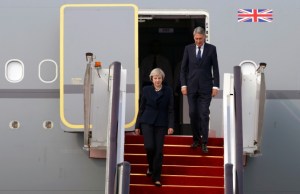
The confident appearance at the G20 summit in Hangzhou, China, also marked a welcome break from the past. Gordon Brown’s desperate, fawning approval-seeking, so unbecoming to the leader of an indispensable nation, and David Cameron’s oleaginous Davos Man act, the coping mechanism of somebody who never really understood what it is to be a statesman, were both beneath Britain. By contrast, Theresa May looked every bit the equal of Barack Obama at their joint press conference, neither Blairite poodle nor Brownite starry-eyed fan. For a country which has too often punched beneath its weight diplomatically (thanks in no small part to our absorption within the EU) it is encouraging to see that Theresa May seems to be taking her marching orders from the British people seriously.

But these are only first impressions. The complexities of Brexit have yet to bite (those daily articles either celebrating the Brexit success or gleefully validating the apocalypse are mindless puff pieces from a Westminster media class which has no interest in getting enmeshed in the details, or learning from those in the know). The migrant crisis remains unresolved. ISIS and the threat of radical Islamist terror remain pointedly undefeated. Domestic policy needs to be given new direction and urgency – preferably, given the Labour Party’s ongoing implosion, in the opposite direction to the Cameron/Osborne march to the political centre.

Looking ahead, this blog hopes and expects to see Jeremy Hunt let off the leash and given authority to tear some much-deserved chunks out of the arrogant BMA and the junior doctors’ dispute which has been a grubby pay dispute and not a high-minded defence of Our Blessed NHS (genuflect) all along.

Sensible measures on tax reform would be welcome too – though the words “daring” and “bold” hardly come to mind when picturing Philip Hammond, it would be good to see the scope of Theresa May’s ambition extending not just to make Britain’s tax regime attractive to foreign investors, but also to rewarding and encouraging individuals and small businesses. The 45% top rate of tax, a partial remnant of the stench of Gordon Brown’s premiership, must certainly go, but we also hope to see something more ambitious than mere tinkering around the edges of the tax code.

A renewed commitment to national defence and the Armed Forces would also turn the page on David Cameron’s willingness to see the UK lose core capabilities. The NATO target of 2% of GDP to be spent on defence should be treated like a minimum requirement, not an aspiration or a triumph to be crowed about. For a seafaring island nation, the Royal Navy is worryingly undermanned, and may struggle to operate even one of its new aircraft carriers, let alone both. Unlike other European powers, our maritime patrol and coastguard capabilities are virtually nonexistent. These and other issues should be remedied.

One would like to add robust support for freedom of speech and civil liberties to this list, and an end to persecution of people at the hands of the criminal justice system merely for the beliefs they hold or the ideas that they express – but let us not kid ourselves. There is no sign yet that a popular rebellion against the state’s efforts to criminalise thought and speech is anywhere near gaining traction. In fact, even many of those who spend half their time praising free speech (when it suits their own purposes) are happy to turn around, play the wounded victim and demand that others are held to account for expressing speech which they dislike.

A nasty authoritarian streak runs through Britain, and by no means only at the level of the political elite. Go to any pub or hipster coffee shop and you’ll hear people of all backgrounds and demographics expressing outrage at something and suggesting that it should therefore be banned by the government. And while Theresa May’s Conservative government is almost certainly likely to be a disappointment on the issues of free speech and civil liberties, they will be no more of a disappointment than many of the British people themselves.

So here we are, nearly two months into Theresa May’s premiership and there are unexpected causes for optimism and good cheer in a number of areas. There are also, inevitably, areas where May’s instincts and political convictions mean that she must be watched like a hawk and opposed where necessary. But over two months since the historic EU referendum and nearly two months into a most unexpected new premiership, Britain does seem to be walking a little taller and more confidently in the world.

Long may it continue.


Theresa May - Philip Hammond - G20 - China

Top Image: International Business Times

Support Semi-Partisan Politics with a one-time or recurring donation:

Agree with this article? Violently disagree? Scroll down to leave a comment.

Follow Semi-Partisan Politics on TwitterFacebook and Medium.

NHS Heresy, Part 1

NHS RIP

Instituting a new feature on this blog, highlighting those rare, brave souls who dare to stick their heads above the parapet and suggest that Our Blessed NHS (genuflect) is no longer a sustainable model for delivering top quality healthcare to the British people

The Telegraph’s Jeremy Warner says the unsayable:

In a tax-funded health care system, the normal, self-limiting rules of supply and demand don’t apply. Where the service is perceived to be essentially “free”, demand can never be sated; it will just keep on growing until it breaks the system.

Three new elements have entered the equation in recent years to make an already grave situation much worse. One is the advent of mass communications. As people become more aware of potential threats to their health, and what treatments might be available to counteract them, they expect better and demand more.

Second, society is ageing. Most health care costs are incurred in the latter stages of life. Current demographics are delivering a double blow; more people are both moving into the high cost cohorts, and once in, they are surviving much longer than they used to.

And finally, there is the ceaseless march of technology, including the advent of “personalised medicine”, procedures and or treatments tailored specifically to the patient’s individual genome. Over time, this approach to medicine ought to become cheaper. It also already promises to make some existing and extremely expensive, treatments obsolete. But right now, it only piles on the costs. A personalised service is also quite alien to the NHS’s culture of uniformity. Even applying it will require radical change, never mind the small matter of how to pay for it.

Warner concludes, hopefully:

If the NHS was ever the “envy of the world” described by popular myth, it has long since ceased to be so. None of this is to denigrate those who work selflessly against the odds in British health care for the betterment of the UK public. It is merely to point out that the post-war model of funding no longer works and needs a radical overhaul. It would be a brave Prime Minister who questioned this sacred cow, but with meaningful Labour Party opposition all but vanished and the challenges and opportunities of Brexit likely to force change across the policy landscape, there could scarcely be a better time for some radical thinking than now.

This blog has no such optimism. Theresa May has earned her reputation as a somewhat traditionalist authoritarian for a good reason. She is already making noises about opening more grammar schools, thus establishing the new prime minister as a reinforcer of traditions rather than a slayer of sacred cows.

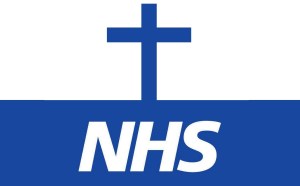
And the NHS, having passed its 68th birthday, is not just a British tradition – it is the British tradition, more integral to who we think we are as a people than Wimbledon, red telephone boxes or the Queen. You will see the monarchy abolished in this land before you see a system of private healthcare replace Our Precious NHS, at least under this government.

More to the point, Theresa May’s government already has its semi-competent hands full coming to terms with the scale of the challenge presented by Brexit. Unlike some of the cowboys in Vote Leave or Leave.EU, this blog never pretended that Brexit would be easy, and Theresa May’s Foreign Secretary and ministers for trade and leaving the EU are just now beginning to realise this fact.

Successfully negotiating the scoping of Britain’s negotiating position and then managing the initial two-year secession negotiations following the triggering of Article 50 will, whether Theresa May likes it or not, expend just about all of the political energy and capital that her government possesses this side of a general election, even if the Labour Party manages to continue being a slow-motion car crash right through til 2020. There simply will not be enough energy left for the fundamental restructuring of British healthcare, especially in the face of howling opposition from the NHS Industrial Complex, that vast web of vested interests which grows around the world’s fifth-largest employer like ivy on a crumbling building.

Neither has Theresa May shown any great interest in touching the super-charged third rail of British politics in any case. She kept Jeremy Hunt on in his role as Health Secretary, hardly a bold marker of intent to pursue a radically different course of action. Neither does a parsing of May’s past speeches reveal a yearning desire to enact healthcare reform bubbling beneath the cold, authoritarian exterior.

After the 2020 general election and in a post-Brexit environment, things may be different. This blog sincerely hopes that this is so – that Britain, buoyed by the fact that Brexit has (hopefully) been achieved without ushering in the apocalypse, might be in the mood to tackle other big challenges. But here we are on extremely flimsy ground – when nobody can comfortably predict the next month in British politics, it is foolish to daydream about what might possibly happen in four years’ time.

Yet everything that Jeremy Warner writes is true. At best, any government – even an NHS-worshipping Labour government under Jeremy Corbyn- could only paper over the cracks in our healthcare system. Relative performance on key metrics (like cancer survival rates) will continue to drift downwards, further away from our continental rivals, while NHS cheerleaders continue to point to value for money studies which suggest, on paper, that their idol is still the “envy of the world”. And the British people will continue to heap unending, unthinking praise on the NHS, literally killing themselves with their devotion to that giant bureaucracy.

It would nice to be able to write something more optimistic, but at this time there are absolutely zero grounds to expect that the situation will change for the better, short of a major crisis or unexpected political shock.


NHS Logo - Cross - National Religion - Worship - Idolatry

Top Image: Express

Support Semi-Partisan Politics with a one-time or recurring donation:

Agree with this article? Violently disagree? Scroll down to leave a comment.

Follow Semi-Partisan Politics on TwitterFacebook and Medium.