The EU Snubs Britain At Its Own Risk

Friendship and cooperation

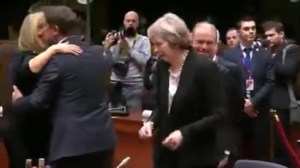
No, Theresa May was not mortally humiliated at the current EU summit underway in Brussels. Somehow, probably after a few nights in intensive care and some trauma therapy, the prime minister of the United Kingdom of Great Britain and Northern Ireland will bounce back from being denied the opportunity to make idle small talk for a few minutes with the likes of Federica Mogherini.

Let’s be serious. Were there non-stop footage of every political leader to ever attend an EU summit, we could undoubtedly find instances where each one of them stood alone with nobody to talk to for a short while, even the sainted Angela Merkel. Keep watching the video beyond the first twenty seconds and you actually see May engaged in several conversations with other European leaders. This is a complete non-story.

But seizing on the footage of Theresa May looking momentarily awkward, however, helps to reinforce a narrative that Remainers (and their friends in the media) are desperate to encourage – that of pathetic, little old Britain being banished to the margins of the world having voted to isolate ourselves “from Europe”.

This is an idiotic and superficial analysis, and it speaks volumes about the people pushing the theory that they seem to take delight in what they see as the humiliation of their own prime minister (who, let’s not forget, represents all of us). If Brexiteers have been too harsh in impugning the patriotism of Remainers, as is sometimes claimed, then now is the time for Remainers to finally take their patriotism out for a spin. They claim that our prime minister has just been insulted on the world stage – therefore they should be encouraging a collective national outrage rather than trying to score smug political points.

Remainers claimed throughout the referendum campaign that the EU is a bastion of rationality, of grown up countries cooperating sensibly with one another. Well, what is grown up and sensible about deliberately ostracising one head of government just because the member state she represents is exercising its right to leave (not that any such ostracisation took place)? What is enlightened and admirable about such childish behaviour? And why is this snarling, punitive and insecure little club something of which we would want any further part?

Iain Martin goes further in a piece for Reaction:

It’s a funny video, although not in the way May’s opponents might think.‎ Funny meaning odd, curious, in that your response to it is probably shaped by your existing view of May and Brexit.

For Leavers – and quite a few Remainers who accept the reality that Brexit will happen and no amount of shenanigans by Blair, Mandelson and Clegg (what a dream team!) will stop it ‎- a British Prime Minister being treated in a rude fashion will only encourage Brits to say “if that’s your attitude then please get stuffed” to the EU.

In that gathering I see a room that‎ is overwhelmingly male – a sausage party of smugness. May is too polite or diffident to charge up to them and start “handbagging” and beating up the boys Thatcher-style, so she hovers. Millions of people, most people, who lack liberal elite social confidence will know the feeling from school or parties ever since. It induces sympathy.

We’re not talking to you, you smell, we don’t like you, is the message. Oh, and ‎the UK is not invited to dinner.

The response all this provokes – in me, anyway – is incredulity at the continuing stupidity of the EU’s leaders in their determination to rough up Britain in a manner that amounts to self-harm. Yes, we voted to leave the EU, which is our right and had been coming for ages, ‎but we cannot leave Europe. That would be a geographic, culinary, cultural, commercial impossibility, thank goodness. That means we are going to have to get along, and find new ways of co-operating and co-existing. Punishing Britain and being rude to Theresa May is simply a waste of time and energy, when the world is changing this fast.

I would caution Iain Martin against going down the identity politics route, trying to drum up additional sympathy for Theresa May by portraying her as a lone female in a room of arrogant and threatening men. I see no evidence that gender has anything to do with this non-story. Martin (I assume) is not a fan of the Cult of Social Justice and Identity Politics, and he should avoid resorting to their tactic of playing the oppression card when engaging in argument.

But that minor quibble aside, Martin is quite right. Many people will indeed empathise with the awkwardness of walking into the middle of a room of people who generally already know each other quite well and who are already engrossed in conversation. Throw in the fact that the television cameras were rolling and May becomes quite a sympathetic character. So if Remainers’ best argument is now “see how they treat you when you scorn them and try to leave the club” then I think it will largely backfire.

If anything, the history of recent British diplomacy has been one of excessive fawning and deference, punching well beneath our weight considering our status as Europe’s second biggest economy, one of only two nuclear powers and possessing the continent’s most deployable and skilled armed forces, not to mention the popularity and dominance of our culture. Martin also picks up on this point:

Britain has the leading listening, intelligence and security capability in Europe, at a time when the place is under assault from jihadist maniacs and the Russians are out to discredit democracy and create mischief in elections in Germany and France. Even in its depleted state, Britain is a leading player in Nato, which is dedicated to the defence of Western Europe. On the cyberwarfare front in particular that defence is now an urgent priority.

The UK also provides in the City of London ‎the capital of the eurozone, which makes the giant debt machine go round. The British economy is growing and we buy a lot of cars and much else from Europe.

What will it take to wake up the countries of the EU? Their post-1989 experiment is in a terrible state, with the euro and open borders proving to be a disaster. They need a bit of humility and a rethink.

I don’t normally go for “we buy lots of cars from them!” style arguments, but it is not wrong, and everything else that Martin says is persuasive.

If anything, the trouble is that our goodwill and cooperation is too easily taken for granted by our partners. We tend to enforce EU laws and directives while other countries skirt, bend or flout them. We generally honour our obligations with little fuss. And so we should, when that behaviour is equally reciprocated. But right now that reciprocity is missing.

The fact that Britain will be a supplicant during the secession negotiations is currently emboldening the leaders of some otherwise quite unremarkable and forgettable countries to “play the big man” and swagger around, lecturing or threatening Britain safe under the wing of Brussels. They would be advised to realise that at some point Brexit will be complete, and that future goodwill and cooperation from Britain – which many of them need – should not be taken for granted if things become too heated or punitive during the exit negotiations.

Martin notes that the shift is already starting to happen:

Away from Brussels the smart Poles have realised that Britain will remain a partner, and are talking of the UK being the key country in the defence and security space in Europe. The Germans too, seem to be waking up to the need for a different way of thinking about these questions. The conversation at a dinner I was at recently with German policymakers and business people was one of the most interesting, open and illuminating things I’ve heard all year.

But Brussels blunders on, playing its usual games, thinking it clever to humiliate the naughty British. Carry on like this and they really can get stuffed.

It is altogether time for less EU-style holding hands beneath a rainbow (which is all fake, anyway) and more good old fashioned self-interest and realpolitik. Immediately following Brexit we witnessed a number of gestures of solidarity and support from true allies outside the EU while our supposed partners and allies within dealt in condescending language and veiled threats. That alone tells us that membership of the European Union has forced us to pour time and effort into nurturing partnerships which were never natural or terribly fruitful while having to ignore closer and more natural alliances beyond the artificial construct of the EU.

But if the EU and its member states are behaving irrationally and emotionally it is only because they remain in thrall to a beguiling, powerful but unachievable vision of continental political union by stealth from which Britain thankfully escaped. Sensing an existential threat to the group delusion, other countries may naturally wish to lash out at Britain, to make us “pay the price” (and there will be a price – serious Brexiteers have never shied away from that fact).

But while this may explain intransigent or punitive behaviour from the European Union, it will not excuse such antics for much longer. The time for childish temper tantrums and playground insults is over. Voters in Britain and across Europe did not elect their politicians with a mandate to create unnecessary drama just because one country chose to reject a rusting mid-century vision of political union and peaceably extricate itself from that union. And unnecessary drama they must absolutely not create.

A deal must be done and the deal will be done. Hopefully it will be a deal based on common sense, achieving the goal of extricating us from the political union we voted to leave while taking a transitory and measured approach (through continued EEA participation) to avoid any cliff-edges or avoidable economic disruption.

But whatever kind of deal emerges, it will not be influenced by video footage of Theresa May standing alone at an EU summit, no matter how much the images may warm the hearts of strangely-motivated Remainers.
 

theresa-may-snubbed-eu-summit-brussels

Support Semi-Partisan Politics with a one-time or recurring donation:

Agree with this article? Violently disagree? Scroll down to leave a comment.

Follow Semi-Partisan Politics on TwitterFacebook and Medium.

Sorry, President-Elect Trump, But You Don’t Get To Choose Britain’s Ambassador To The United States

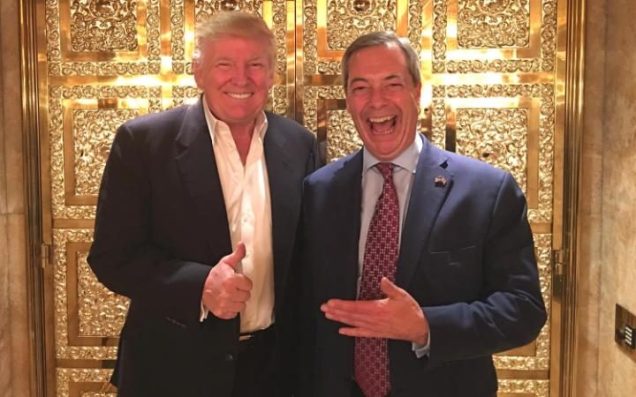
donald-trump-nigel-farage

It was wrong when President Obama sought to interfere in Britain’s EU referendum debate earlier this year, and it is wrong now when President-elect Trump tries to undermine the UK government and install his pal Nigel Farage as a replacement British ambassador

When Barack Obama saw fit to fly to London, stand next to David Cameron at a joint press conference and lecture/threaten the British people that voting to leave the EU would incur not only his personal wrath but also America’s cold shoulder, his behaviour was rightly denounced as an act of arrogant bullying and coercion.

This blog wasted no time in taking President Obama to task for his ignorance and presumption in daring to interfere with our domestic affairs. And UKIP leader and referendum-maker Nigel Farage was also quick to criticise Obama, noting “last time we followed foreign policy advice from a US President was when we went to war in Iraq. We should be wary“, and negatively comparing the American president to Vladimir Putin.

Unfortunately, Nigel Farage does not seem to be consistent when it comes to the principle of staying out of the internal affairs of other countries. Because now his good friend and campaign trail buddy, US president-elect Donald Trump, has made the highly irregular move of suggesting that Farage should become the UK’s ambassador to the United States – even though we currently have an ambassador in place (albeit not a very good one):

The Guardian reports:

The US president-elect, Donald Trump, has suggested that the Ukip leader, Nigel Farage, should be the UK’s ambassador to the US.

“Many people would like to see [@Nigel_Farage] represent Great Britain as their Ambassador to the United States,” Trump tweeted on Monday evening. “He would do a great job!”

In a brief call with BBC Breakfast, Farage said he had been awake since 2am UK time when the tweet was first posted.

The Ukip leader said he was flattered by the tweet, calling it “a bolt from the blue” and said he did not see himself as a typical diplomatic figure “but this is not the normal course of events”.

But a Downing Street spokesman said: “There is no vacancy. We already have an excellent ambassador to the US.”

Now Donald Trump is known to tweet strange and provocative things as and when they drift into his head, but the probability of him having penned this particular tweet without having first at least run it past Nigel Farage (and more likely Trump was acting on a specific request as a favour to Farage) is close to zero. So there goes Farage’s principled opposition to meddling in the affairs of a sovereign nation – he likely encouraged the president-elect of the United States to do what he criticised Barack Obama for back in April.

The Telegraph’s Michael Deacon also spots the hypocrisy:

When Barack Obama said he hoped Britain would stay in the EU, Nigel Farage was appalled. An American president, he said, had no right to meddle in British affairs. Britain was quite capable of making her own decisions, thank you very much. The president, in short, should “butt out”.

Today, however, Mr Farage appears rather more relaxed about political interference from across the pond. When Donald Trump told Britain she should make the on-off Ukip leader her ambassador to the US – even though she already has one – Mr Farage was not appalled. He did not say Mr Trump had “behaved disgracefully”, he did not order him to “butt out”, he did not remind him that the British don’t take kindly to being told “what we should do” by foreign powers.

On the contrary, he welcomed Mr Trump’s intervention. “I would do anything,” he said nobly, “to help our national interest.”

Taking back control from Brussels. And then handing it to Washington.

This episode also shows seriously bad judgement on the part of Donald Trump, though this of course is much less surprising. If offending the UK foreign office by airily suggesting on Twitter that the British ambassador should be replaced is the biggest diplomatic howler committed by the incoming Trump administration then we will be able to count ourselves extraordinarily lucky. Even assuming that Trump assembles a moderately experienced team around him by the end of the transition, the incoming president’s penchant for going off-script and acting unilaterally at 2AM is likely to lead to all manner of gaffes and calamities. But still – offending the government of your closest ally by publicly scorning their present ambassador is arrogant and foolish.

Adam Barnett at Left Foot Forward also has a crack at explaining why Nigel Farage becoming Britain’s ambassador to the United States would be a terrible idea:

Nigel Farage would make a great British ambassador to the US, according to Donald Trump, who will make a terrible President of the United States.

As Downing Street helpfully points out, the position is already filled, though they should have added it’s not Trump’s job to appoint foreign diplomats.

Unfortunately, not one of the reasons that Barnett then goes on to list has anything remotely to do with Nigel Farage’s competence or potential suitability for the role of ambassador. Rather, each is a finger-wagging, morally censorious (and often inaccurate) judgement and demand for Farage’s excommunication from any role in public life, the kind of thoughtless attack sadly now typical fare from the authoritarian, illiberal left.

The Spectator’s James Forsyth does a better job of explaining why Nigel Farage should be nobody’s choice for the role of ambassador, and suggests a better way for the British government to leverage Farage’s close relationship with Trump:

Now, obviously, Farage shouldn’t be the UK’s man in Washington. As Farage has admitted, he’s not a natural diplomat and it is hard to imagine Theresa May trusting him in that role. But it would be foolish of the Foreign Office not to pump Farage for information on Trump and his circle. Whatever information Farage has about who actually has influence with the president-elect would be useful for Britain.

The sensible thing to do would be to have Boris Johnson invite Farage down to Chevening for the weekend and over dinner try and talk out of the Ukip leader everything he knows about Trump world. I suspect that Farage would be both sufficiently flattered by the invitation and keen enough to help, that he would happily reveal all he knows about Trump and the people around him.

This sounds a lot more sensible. Nigel Farage should not become our ambassador, not least because he has no discernable diplomatic skills, nor any specific interest in that role (besides a desire to remain in the limelight and close to power). But the British government would be foolish to squander the relationship he has built with the new president-elect altogether.

After all, who is best placed to nurture that relationship? A bunch of effete, elitist UK civil servants and career diplomats like our current ambassador Sir Kim Darroch, who were all doubtless super-confident “Never Trump” people (as indeed I was) and therefore failed to build any meaningful relationships with the Trump team, or somebody whom the new president considers to be an ideological and perhaps even temperamental soulmate?

In other words, why reinvent the wheel? Why pour time and effort into leveraging a new relationship from scratch when Trump and Farage are clearly already friends and allies? Britain should not waste time emulating this relationship – we should appropriate it and use it for our own ends. Love him or loathe him, Nigel Farage happens to speak Trumpian with a natural accent at a time when we have few other native linguists. That isn’t an advantage you throw away just to express general disapproval of the man.

Now, of course Nigel Frage is a flawed individual – and one can argue about the precise way in which the government puts him to use. Rather than making him ambassador, I would forge a new role, perhaps investigating the possibility of formally seconding Farage to the Trump administration as a gesture of trust and goodwill. Not only would this give Britain valuable eyes and ears in Washington DC, it could greatly aid the future negotiation of a future US-UK free trade agreement.

The details can be worked out later, but one thing is crystal clear for now – Donald Trump has no business interfering in the diplomatic staffing decisions of the British government. The ambassadors we send to Washington D.C. should be chosen by the British government alone, not foisted upon us by an inexperienced not-quite-president.

Donald Trump claims to have great affection for Britain, which is good. But he needs to learn that the best way to display that affection is to respect British sovereignty. If the president-elect insists on appointing his kids as White House advisers and can find his way around the federal anti-nepotism rules, that’s one thing. But we can pick our own ambassadors, thank you, Mr. President-elect.


pop-art-donald-trump-2

Support Semi-Partisan Politics with a one-time or recurring donation:

Agree with this article? Violently disagree? Scroll down to leave a comment.

Follow Semi-Partisan Politics on TwitterFacebook and Medium.

The Virtue-Signalling Left Find Their Ideal Spokesman: A Five Year Old Girl

This five-year-old girl actually makes a better case for Corbynism than many writers at the Guardian, Left Foot Forward or LabourList. Someone give her a weekly column and a podcast!

A few years ago, US comedian Bill Maher brought to our attention a 14-year-old wannabe conservative talk radio host called Caiden Cowger, who had so thoroughly absorbed Republican talking points and mastered the Rush Limbaugh speaking style that to watch him at work was both hilarious and unnervingly realistic.

At the time, Bill Maher made this rather potent observation:

If a fourteen year old can deliver your message, it’s not because he’s gifted, it’s because intellectually you are a child.

[..] When fourteen year old boys sound exactly like you do, and can produce radio shows and books and speeches that sound exactly like yours, maybe you should rethink the shit that’s coming out of your mouth.

Remember the Republican debates we had this year? They applauded for the idea of letting a sick man without insurance die. Herman Cain got cheers for saying he’d electrify the border fence. They booed a gay man serving his country in the military. No wonder fourteen year old boys can do your act, you act exactly like fourteen year old boys. There’s no ideology here. It’s just about being a dick.

Well, now it is the turn of the British Left to produce a young child capable of ventriloquising their entire political philosophy.

Meet Brooke Blair, a five-year-old girl who has been trained by her (undoubtedly) sanctimonious, Corbynite parents to screech about inequality, use the poor as ideological weapons and advocate for ever-more government spending funded through the munificence of the Magic Money Tree.

It’s worth reproducing Brooke Blair’s diatribe in full:

Look. My name is Brooke Blair and I’m five years old. I’ve got something to say to you Theresa May.

Yesterday night I was out on the streets and I saw hundreds and millions of homeless people. I saw one with floppy ears, I saw loads.

You should be out there, Theresa May. You should be [giving] biscuits, hot chocolate, sandwiches and building houses.

Look. I’m only five years old, there’s nothing I can do about it. I’m saving up money, and there’ll never be enough. You’ve got the pot of money – spend some and help people. Yes, that’s what you’ve got to do.

Because we’ve had lots of wars in this country and I do not like that Theresa May. I’m very angry!

So yesterday night a middle class, five year old girl was out on the streets (dodging the bombs and sniper fire from our many ongoing wars), keeping the company of “millions” of homeless people? Righty-ho. And we know that this is a true story because of the rich detail Blair provides, like the fact that one of them had “floppy ears” – are we sure she isn’t confusing the homeless with rabbits?

Naturally, the video has gone viral, borne aloft on a cloud of smug, self-satisfied leftist clicks and shares, all delighting in the fact that this “brave” five-year-old has apparently socked it to our cruel and inhumane prime minister. And what’s not to like, from a leftist standpoint? If you believe that the state should be involved in everything and meddle in all our lives, why shouldn’t the prime minister herself be tasked with roaming the streets at night, handing out cash, biscuits and building materials to homeless people?

Throughout the one-minute video you can just hear the pinch-faced, hectoring, virtue signalling, metro-left parents articulating their own political views through their daughter. Perhaps the only honest part is when Brooke Blair declares “and I do not like Theresa May!” That much I believe. And why would she? This girl is clearly being raised by her parents to blindly and unthinkingly hate the Evil Tor-ees and look to government as the answer to every single problem, rather than one day judging for herself which political philosophy best addresses the opportunities and challenges faced by society.

Of course, Brooke Blair’s parents are free to raise her however they want. And if they want to produce a little Owen Jones Mark II then that is entirely their business. But I would be careful, if I were them. Children have a tendency to rebel against the dogmas and beliefs imposed on them at a young age, so in a decade’s time we could quite possibly be welcoming Brooke Blair into the conservative movement, where there will always be a “safe space” for people who have renounced their former socialist ways.

But for now, the British Left should rejoice. The Labour Party may be imploding, its MPs more interested in stabbing their leader in the back than actually opposing a government which is becoming pretty left-wing anyway, but at least there are five-year olds on YouTube and seven-year-olds with handmade signs who are making the case for socialism every bit as eloquently as the adults ever could.

Jeremy Corbyn can sit out the next few rounds and complete the ongoing shadow cabinet reshuffle at his leisure. Brooke Blair will take it from here.


Postscript: Those actually interested in alleviating the problem of homelessness rather than simply broadcasting their trendy lefty compassion credentials to the world may consider donating to Shelter or the excellent Big Issue Foundation.


Labour - Save Our NHS

Support Semi-Partisan Politics with a one-time or recurring donation:

Agree with this article? Violently disagree? Scroll down to leave a comment.

Follow Semi-Partisan Politics on TwitterFacebook and Medium.


What Conservative Government? – Part 8, Theresa May Is Wrong To Embrace Socialism In Defence Of The Nation State

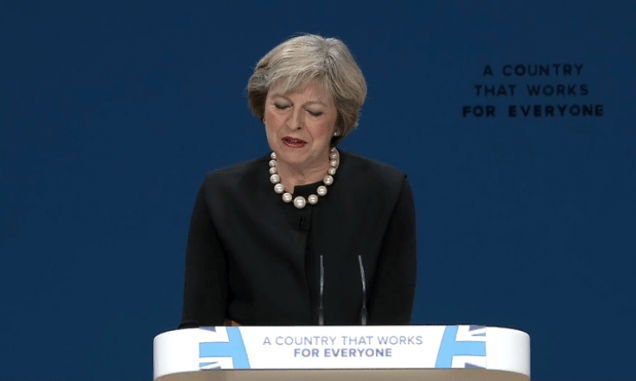
theresa-may-conservative-party-conference-2016-birmingham-2

By openly declaring war on the libertarian wing of the Conservative Party, Theresa May reveals that she cannot tell the difference between defending the nation state (good) and shoehorning the state into every aspect of citizens’ lives (bad)

Why does British politics suffer from the scourge of unambitious, technocratic centrism which does more than anything else to drive voter apathy and disengagement?

Largely because of the enthusiastic and approving reception that such acts of ideological cross-dressing as we saw from Theresa May at Conservative Party Conference yesterday receive from Tory-friendly Westminster journalists who seem to care far more about whether the Conservative Party gains and keeps power than what they actually do with that power while in office.

From Matt Chorley’s Times Red Box morning briefing email today:

Theresa May used her impressive speech closing the Tory party conference yesterday to make a direct appeal to the Labour voters which Ed Miliband used to think he could count on.

Perhaps she just forgot but it was quite something from someone who had been in the cabinet for six years to suddenly declare herself the agent of change. (She used the word 29 times).

The PM promised to go after rogue bosses, tax dodgers, rigged markets and powerful companies giving people a bad deal. “I’m putting you on warning. This can’t go on any more.”

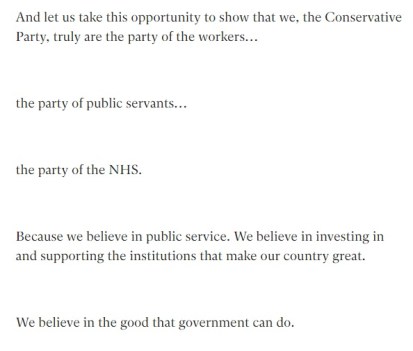
She boasted that the Tories were now the party of workers, the NHS and public servants, claims which would have had Labour HQ spluttering on their lattes. The call for state intervention where government can “do good” will have brought some Tory traditionalists up short too.

The high-wire act was all the more impressive because it also had Ukip fuming about her stealing all of their ideas too. Much of the language might have been to the left but the policy, including grammar schools and tackling immigration, was lifted from the right. May ranged across the political spectrum. Because she can.

While Times columnist Philip Collins notes:

This is a clearer endorsement of state activity than David Cameron would ever make. Throughout the speech there are paeans to the power of government to make the world better which makes for a paradox. “The elite” politicians have featured early on as the problem yet here, ten minutes later, they turn up as the solution.

Typically, political journalist types are impressed with – and subsequently choose to focus on – what they see as clever political manoeuvring rather than matters of substance. They are interested in the game of politics, not its higher purpose.

So never mind that Theresa May’s rhetoric and wholehearted embrace of the state effectively puts the final nails in the coffin of Thatcherism, the ideology which saved this country from previous national decline – instead we are to fawn over the new prime minister for spotting a wide open political goal in the absence of an effective Labour opposition and deciding to shoot left instead of right.

And “semi-socialist Tory” Tim Stanley immediately proceeds to do so:

May understands what Corbyn understands, that people want to be a part of something. Oh the capitalist gifts of a Starbucks mug and a cheap flight to Ibiza are nice, but what about identity? Community? The most appealing parts of Labour’s programme reach back into folk memories of Attlee and the world of unionised factories.

[..] But her sympathies do lie with a Britain that is more suburban or rural than metropolitan, more ancient than contemporary. What is wrong with this? Often I’ve heard Remainers – who will be as irrelevant in a few years’ time as Corn Law advocates or the NUM – saying that Britain risks becoming smaller in outlook. Good! There have been too many wars. Too much hypercapitalism. Too little of the local, of the familiar, of building the kinds of bonds that you get when people know each other and take responsibility for each other. Far too little Christian socialism – which, in the British context, was always more Christian than socialist.

How utterly depressing. It is entirely possible to promote that sense of community and belonging for which people yearn by doing a better job promoting British values and the cultural integration of thousands if not millions of people who have made their homes here yet have no intention of regarding themselves as “British”. Wouldn’t this be a good place to start, rather than responding to the Brexit vote by co-opting Labour’s collectivism and elevation of the state?

As my Conservatives for Liberty colleague Chris Manby laments in his new blog:

Mrs May wants the Tories to be the party of “ordinary working-class people”. That is an admirable ambition, one best delivered through a strong economy.

Libertarians hate poverty too. But we know it is not government that creates economic growth, jobs, and prosperity. It is the actions of millions of individuals living in a free society under the rule of law. Want to eliminate poverty? Free up markets, cut taxes and enforce the damned rule of law.

We’ve been down this road before. The social-democratic consensus of the postwar years left British industry stagnant; British democracy under siege from militant trade unionism; and the British economy a high inflation, high unemployment laughing stock. It took Margaret Thatcher’s hard-fought revolution in the 1980s to restore national confidence. That revolution was left half finished.

The government already does far too much. We pay nearly half our income in taxes. Britain’s tax code is so long and complicated it rewards big business who can afford to pay shrewd accountants and lawyers. Planning restrictions and cheap money drive up the cost of housing and penalise saving. State investment in renewables drives up energy bills. Government borrowing is still out of control.

The problem with staking out the “centre ground” of politics is that you allow your opponent to control the terms of debate. There can be no compromise between good ideas and bad ones. The last female Tory Prime Minister grasped this point. I fear that Mrs May does not.

While Allister Heath warns:

Thirty years [after Thatcher and Reagan] free-market ideas are in retreat. The drift began well before the financial crisis, and was at first camouflaged by the ongoing march of globalisation, technology and consumerism. New Labour increased spending and intervention; likewise George W Bush, who also subsidised sub-prime mortgages; central bankers injected moral hazard into everything; and David Cameron introduced new workers’ rights, property levies and environmental rules. He increased far more taxes than he cut and bashed bankers. Sir John Major’s government was the last to make, if falteringly, the case for markets, competition and choice; and Michael Howard was the last Tory leader to advocate capitalism.

It is in this context that Theresa May’s speech needs to be understood. It was as emphatic a repudiation of the Thatcher-Reagan economic world-view as it was possible to get without actually naming them: time and again, she said that government was the solution, not the problem. She took explicit aim at small-state libertarians: the subtext was that collectivist, paternalistic Christian Democrats, not individualistic classical liberals, are back in charge of the party. She believes in a large, powerful, aggressively interventionist state that can, she feels, regenerate the country and protect ordinary workers. It will have helped Lord Heseltine get over Brexit; ironically, her vision of conservatism is very continental.

And makes an important and welcome rebuttal to Theresa May’s declaration of war on the libertarian wing of her party:

Yet the speech went further than toughening language or extension of policies. Cameron’s Big Society was based on the correct notion that society is separate from the state; May blurs those concepts. Classical liberals and libertarians believe in voluntary action; they believe in the family and communities, in charities and helping those who cannot help themselves. It is a basic error to confuse their philosophy with atomism or extreme selfishness.

Peter Oborne, though, sees Theresa May’s speech in an altogether more positive light:

Here is another, crucial difference between Mrs May and her predecessor. David Cameron was, in essence, a liberal prime minister. Mrs May marks a reversion to traditional conservatism.

She intends her premiership to challenge the liberal internationalism of Cameron and Blair. They assumed that nation states — including Britain — count for less and less in the modern world.

They accepted the liberal dogma that nations are essentially powerless against huge international corporations, mass immigration, the relentless advance of communications, and untrammelled free movement of international capital — the cumulative process often known as globalisation.

But now Mrs May has rejected this consensus, and in doing so she is attempting to define what it means to be British. Her speech amounted to a passionate statement that she believed in the nation state, and she spelt out her reason: that it has a fundamental role in supporting the weak and vulnerable.

I’m not unsympathetic to a lot of what Oborne says. This blog has been banging on about the need to defend the nation state as the primary guarantor of our fundamental rights and freedoms for years now, and I’ll take no lectures in that regard. But supporting the nation state and acknowledging the negative effects of globalisation does not inherently require adopting more left-wing, interventionist policies. Supporting the nation state should not mean advocating for its involvement in every aspect of our lives, especially when small government conservative policies have been proven time and again to be a much better generator of wealth and better for working people.

Furthermore, a full-throated embrace of capitalism needn’t be at odds with the politics of community and national identity. Just look at the United States, that exemplar of capitalism, where small government is celebrated (in theory if not always in practice) yet there is open pride in the flag, the national anthem, the military and shared national holidays and traditions which transcend ethnic or religious lines.

Americans embrace capitalism and have an inherent cultural distrust of an overbearing centralised state, yet they also stand and pledge allegiance to the flag at school, stand for the national anthem before even school sports events and celebrate Independence Day together whether they are white, black, Hispanic, Asian, Christian, Jewish, Muslim, Buddhist, Sikh or atheist. And one of the reasons that the American national identity is strong is because the state does not insert itself into every aspect of life, meaning that there is then more respect and appreciation for the state where it is visible.

What a devastating pity that Theresa May seems (from her hugely concerning conference speech) unable or unwilling to reconcile support for markets and capitalism with support for community and identity. She is turning British politics into a zero sum game, forcing conservatives to choose which core principle – economic freedom or a strong and cohesive sense of nationhood – they wish to preserve. And many voices in the conservative-friendly media seem more than willing to enable the prime minister in her destructive, short-termist scheming.

No good can come of forcing conservatives (or the wider country) into making the arbitrary and entirely unnecessary choice between a strong nation state and freedom from the state in our personal lives – and Theresa May is making a grave mistake by interpreting the Brexit vote as a call for bigger government.


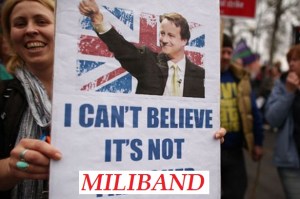
david-cameron-coke-zero-conservative-i-cant-believe-its-not-miliband

Top Image: Carl Court / Getty Images, International Business Times

Support Semi-Partisan Politics with a one-time or recurring donation:

Agree with this article? Violently disagree? Scroll down to leave a comment.

Follow Semi-Partisan Politics on TwitterFacebook and Medium.

What Conservative Government? – Part 7, 2016 Party Conference Edition

theresa-may-conservative-party-conference-2016-birmingham

Fiscal incontinence, a bizarre grammar school obsession and a new crackdown on civil liberties – forgive me for not cheering along as Theresa May’s Conservative In Name Only Party assembles, victorious, in Birmingham

Theresa May would never have been this blog’s choice to be Britain’s new prime minister, but I have tried to maintain a spirit of cautious optimism in the months since the EU referendum toppled David Cameron and upended our national politics.

And there have been some genuinely positive signs along the way. For one, healthy national pride and patriotism – dead and buried for so long, with New Labour the principal executioner – is starting to make a comeback, no longer automatically scorned by all of Britain’s leading politicians.

Indeed, the Telegraph reports that Theresa May made patriotism one of the lynchpins of her keynote speech to Conservative Party Conference in Birmingham today:

The establishment must stop sneering at the patriotism of ordinary Britons, Theresa May will say today.

During her keynote speech to the Conservative conference, the Prime Minister will proclaim that the Tories are now the party of working class people.

In a bid to attract millions of disaffected Labour voters across the country, she will add that concerns about immigration have for too long been dismissed as “distasteful” and “parochial”.

She will attack the condescending views of politicians and establishment figures who are “bewildered” by the fact that more than 17 million people voted for Britain to leave the European Union.

[..] “Just listen to the way a lot of politicians and commentators talk about the public,” Mrs May will say. “They find their patriotism distasteful, their concerns about immigration parochial, their views about crime illiberal, their attachment to their job security inconvenient. They find the fact that more than seventeen million people voted to leave the European Union simply bewildering.”

This is good. While sneering, elitist anti-democrats like Matthew Parris may suffer convulsions any time somebody outside Zone 2 or with an income of less than £100,000 dares to utter a political opinion, great (and deserved) political rewards potentially await a major political party which stops treating working and middle class patriotism like an infectious disease.

And there was more to admire in today’s keynote speech, not least the fact that Theresa May delivered it from behind a lectern while reading from a printed transcript rather than adopting the tiresome Gordon Brown / David Cameron habit of prancing around the stage while reciting from memory, like an over-eager Shakespearean actor or a Silicon Valley executive delivering a TED talk.

But unfortunately, in that same speech Theresa May also declared “I want to set our party and our country on the path towards the new centre ground of British politics”. In other words, gifted a blank canvas and meaningful opposition only from the ranks of Conservative backbenchers, Britain’s new prime minister is going to play it safe and stubbornly occupy the same tedious middle ground marked out by David Cameron and George Osborne, only a couple of steps further to the left.

But the worst part of Theresa May’s keynote conference speech came when she declared:

“A change has got to come. It’s time to remember the good that government can do. Time for a new approach that says while government does not have all the answers, government can and should be a force for good; that the state exists to provide what individual people, communities and markets cannot; and that we should employ the power of government for the good of the people.”

Excuse me, but no. What is this Miliband-esque, woolly Fabian nonsense?

Opinions differ as to what ails modern Britain, but almost nobody remotely serious would suggest with a straight face that we currently suffer because the state is not yet involved enough in our daily lives, or that it is not performing activities which the market could reasonably undertake. Nobody apart from our new prime minister, that is.

With a new Conservative prime minister singing hymns of praise to an activist state constantly meddling in the lives of its dependent citizenry, we may as well be back in the 1970s. At least David Cameron used to talk about the Big Society (even if he never made it a reality), and suggested that there might be a whole world out there beyond the suffocating reach of the public sector. If we take Theresa May at her word, she seems to believe the opposite – that we should expect to rely on the state in all matters of life, and that markets are terminally “dysfunctional”, requiring constant state intervention.

I’m sorry, but this is unforgivably leftist fluff coming from a supposedly Conservative prime minister. One appreciates that Theresa May has come to office at an exceedingly difficult time, with Britain’s EU secession by far the most ambitious enterprise which this country has attempted in decades. But that is absolutely no excuse for kicking ideology and founding principle to the kerb and engaging in what can only be described as flagrant socialist cross-dressing.

Furthermore, Theresa May’s sloppy wet kiss to Big Government presupposes that until now we have somehow been living in a Hayekian, libertarian nirvana, where the government stayed out of our lives, the successful didn’t have to fork over half of their income in taxes and everybody was left to sink or swim according to their merits. This was hardly the case. The terrible “austerity” inflicted by David Cameron and George Osborne was in reality nothing more than the meekest, politest attempt to stem the constant increases in public spending. Six years on and the deficit remains, the national debt is larger and interest on Britain’s sovereign debt rivals our annual Defence budget.

In other words, Theresa May’s speech made it seem as though working British people had up to now been left to starve in some awful libertarian dystopia, when in fact we remain prisoners of the welfare state/public sector prison created decades ago and put on steroids by Tony Blair and Gordon Brown.

And yet the parties of the Left uniformly fail to realise just how lucky they have it with Theresa May in charge of the country. A Britain led by David Davis, Liam Fox or Jacob Rees-Mogg would quite possibly offer a taste of real austerity for those parts of the country which have grown fat suckling on the taxpayer teat, but with Theresa May they don’t have to worry about any of that. For the prime minister is every bit as much of a champion of the state as Tony Blair, Gordon Brown or Ed Miliband ever were.

Not that you would know it, to read hysterical, weepy editorials like this one in Left Foot Forward:

Theresa May’s speech to Conservative Party conference was supposed to showcase her philosophy. And it did.

It showcased a nightmarish new Conservative ideology that cloaks drastic social illiberalism in the language of inclusive economics, panders to one section of the working class in order to marginalise another, and brands anyone who dares to disagree as unpatriotic and sneering.

And it takes the vote to leave the European Union as a justification for extreme, inward-looking and divisive policies, completely disregarding the 16 million people who voted to remain, not to mention all the decent leave voters, who voted for change, not for for xenophobia.

The delicious irony of a weepy leftist complaining about being disregarded and demonised when such flagrant hostility is the default left-wing attitude towards anybody with remotely conservative opinions is almost too much to bear, but it gets better:

However, the truly frightening aspect of this speech was its divisiveness, its aggression towards anyone who doesn’t fit into the prime minister’s definition of ‘ordinary’.

This includes anyone not born in Britain, despite May’s claim to want ‘a country where it doesn’t matter where you were born.’

It comprises most of the 48 per cent of people who voted to remain in Europe — May seems to have forgotten she was one of them — and all those who envision a more progressive approach to crime, immigration, human rights, healthcare or education.

Here is a prime minister who did everything but daub herself in red paint and sing the Internationale right on the stage of the Conservative Party Conference in Birmingham, and still it isn’t enough for the leftists because the Big Mean Scary Lady apparently used “non-inclusive” language. Truly there is no winning with these people.

In fact, the hysterical reaction from the Left only shows how far Labour’s metro-left ruling class have diverged from their party base and from traditional left-wing thought. Theresa May promises German style corporate governance, more wealth redistribution and the state as an overbearing, omnipresent parent – all of which which would have delighted 1980s socialists – yet the modern metro-left pitches a hissy fit because Theresa May didn’t sing paeans of praise to unlimited immigration or bow down before the altar of corrosive identity politics.

The goalposts keep moving and the ratchet keeps tightening and dragging us leftward. But ordinarily one might at least reasonably expect a Conservative prime minister to act as an anchor and a drag on that influence. Theresa May, though, seems eager to beat the centrist, metro-left in a full-on sprint to the left.

Look: I get that Theresa May is not a socialist herself. But the mere fact that she is comfortable using the same woolly, often meaningless language of Ed Miliband should be a real cause for concern among libertarian-leaning conservatives because it shows that she is far more interested in hoovering up centrist Labour voters than making a bold, compelling case for small government, conservative policies. It is undoubtedly the correct approach if one wants to pursue the path of least resistance, but to tack to the authoritarian centre at a time when the Labour opposition has all but disintegrated is an almost criminal waste of an opportunity to radically reshape Britain – not just through Brexit, but in terms of the relationship between government and citizen.

I know I can be a bit of a bore when it comes to analysing political speeches, but it is also depressing to see Theresa May adopt the short sentence / no complex paragraph style also favoured by Ed Miliband.

An excerpt:

theresa-may-conservative-party-conference-2016-speech-transcript


And another:

theresa-may-conservative-party-conference-2016-speech-transcript-2

Put aside for a the obscenity of a Conservative prime minister neglecting to talk about the importance of a flexible labour market to a dynamic economy in favour of trying to outdo Labour in promising counterproductive employment rights, and focus instead on the speechwriting style.

This is the same choppy, disjointed, machine-assembled soundbite speech favoured by Gordon Brown and honed to dismal perfection by Ed Miliband, as this blog explained some time ago:

Behold the short, stunted phrases, written with the news editor’s cropping software in mind while the poor listener’s brain isn’t given a second thought. This is nothing more than a word cloud, a jumble of phrases and platitudes deemed by a focus group to be pleasing or reassuring and then awkwardly bolted together by a computer and beamed onto a teleprompter.

Britain is about to embark on the most complex national endeavour that we have attempted in decades. In seceding from the European Union and deciding to forge our way once more as an independent country, the people of Britain are serving as a case study to the world in how best to maintain and strengthen democracy and accountability in the age of globalisation. Is it really so much to ask that we have a prime minister capable and willing to speak in complete paragraphs rather than ten-word soundbites?

Is it honestly unreasonable to expect that the first major set-piece speech of Theresa May’s premiership should make reference to history, to human endeavour, to our national destiny, rather than simply be a laundry list of bribes to the British people, promising them newer, better public services and an easier life?

This is Milibandism all over again. And while Theresa May is more traditionalist authoritarian than Fabian socialist, alarm bells should be sounding that she intends to govern using the same tired New Labour playbook. May’s conference speech reveals a depressingly small conception of what it means to be the prime minister of the United Kingdom, casting Theresa May as a mere Comptroller of Public Services or a puffed-up cruise ship director rather than a consequential world leader.

Nonetheless, Conservatives seem to be streaming away from Birmingham in a very cheerful mood – some almost outrageously so:

Et tu, Montie?

Yes, libertarian individualism is indeed “THE Tory weakness” if one is trying to appeal to people who love socialism and a big, activist state. Which is why a healthy, virile Conservative Party should either seek to make such people see the error of their ways or else quit pandering to them entirely.

But this is clearly not Theresa May’s approach. She has a different strategy. And what has it wrought thus far?

After three months of reflection over the summer, the Tories are absolutely nowhere when it comes to tackling Brexit, but every indication we have seen suggests that they are toying with the unnecessary self-harm option which would see Britain forsake the single market in a couple of years at the time of EU secession, well before any comprehensive replacement could possibly be negotiated.

We were supposed to be wowed by a so-called “Great Repeal Bill” to undo the 1972 European Communities Act, until five seconds of reflection revealed this grand piece of posturing to be nothing more than a statement of the bleeding obvious – if Brexit is to happen at all, the primacy of EU law and courts must be brought to an end at the moment of departure.

Flagship proposals to build new grammar schools only scratch the surface of problems with British education, but jubilant Tories seem to be treating this policy as the alpha and omega of their plans to create a more educated and skilled workforce when in fact so much more needs to be done to make the British education system the best in the world.

The last Chancellor of the Exchequer was bad enough, with his limp deficit reduction targets, obsession with white elephant infrastructure projects and shameful Brexit scaremongering. But his replacement, Philip Hammond, has taken what little authority the Tories retained on fiscal responsibility and thrown it out the window. Now Conservatives are mocked by John McDonnell of all people – John McDonnell! – for failing to grapple with the public finances, and the national debt will have increased every year after a decade of Tory rule.

And to add insult to serious libertarian injury, Theresa May’s steely-eyed authoritarian side is revving up, with planned new laws to criminalise insulting the army or advocating shariah law for Britain veering from the unworkable to the stupid all the way to the totalitarian.

So I’m sorry, but I can’t get excited about this revamped Conservative In Name Only government. While Theresa May is off to a bright start in terms of tone and temperament, what we have seen so far in terms of policy suggests a shift even further to the economic left than Cameron/Osborne, balanced out by a rise in authoritarianism and government meddling in every aspect of private life.

And for what? To beat Jeremy Corbyn’s Labour Party by a slightly greater landslide in 2020 than is already expected?

Maybe I’m alone in this, but I would rather Theresa May’s government struggle to a 30 seat majority in 2020 based on a really radical, small government manifesto in the model of Thatcher – and then actually go about reshaping the country based on that clear vision – rather than win a 100 seat majority by dressing up in the abandoned clothing of Ed Miliband.

As Margaret Thatcher said in 1968:

There are dangers in consensus; it could be an attempt to satisfy people holding no particular views about anything. It seems more important to have a philosophy and policy which because they are good appeal to sufficient people to secure a majority.

Theresa May clearly disagrees, and there is a very low limit to the respect that this blog can give to a leader who thinks in such unambitious, tactical terms.


David Cameron - Coke Zero Conservative - I Cant Believe Its Not Miliband

Top Image: International Business Times

Support Semi-Partisan Politics with a one-time or recurring donation:

Agree with this article? Violently disagree? Scroll down to leave a comment.

Follow Semi-Partisan Politics on TwitterFacebook and Medium.