Brexit: The (Animated) Movie

A clear, concise and grown-up case for Brexit, in under three minutes

If you do nothing else today, watch and share this video.

Once again, the hard work and inspiration of independent citizen campaigners puts the official Leave campaign to shame in this EU referendum. This video, created by Piffle (real name Matt, a British animator) does a better job summing up the pro-democracy, pro-trade, pro-globalisation case for Brexit in three short minutes than most of the main Leave campaign figureheads put together.

The transcript:

Hello, Britain.

This EU referendum has been made to look really rather confusing, but it’s actually all quite simple. Britain, as a part of the EU, is in a free trade area that spreads from Iceland to Turkey. Free trade is great as it makes trade easier. However, not all countries in this free trade area are EU members, and no one is proposing we would ever leave the trade bloc if we exit the EU – least of all Germany, who earns billions selling us their cars.

Britain voted to join the EEC back in 1973 [Note: Britain joined in 1973 but the referendum was actually in 1975] when it looked like regional trade blocs were the future. This was long before the internet or mass container shipping, and the Soviet empire was in full swing. Technologies have since made the idea of local trading unions completely obsolete, as it is now as cheap and easy to do business anywhere in the world.

Britain’s future is way beyond the EU. Remaining an EU member means we can’t negotiate favourable trade or business deals – we’re stuck with whatever the unelected EU commissioners think is best. In the past decade, our trade with the EU has fallen from 55 percent to 45, and this idea that we must merge our political institutions for the sake of this shrinking minority of our commerce is just frankly stupid.

But is Britain too small to compete? Britain is the fifth largest economy in the world, has the fourth largest military budget, is a founding member of NATO, a permanent seat holder on the United Nations Security Council, the G8 and the G20, has the world’s most widely spoken language, the world’s best universities, and has a cracking history of maritime trade and independence. If Britain isn’t big enough to compete on the world stage, who the bloody hell is?

Those wanting Britain to remain in the EU are using uncertainty and doubt to spread fear. They claim that each British household could lose as much as £3000 every year by leaving. But even if we pretend this idiotic claim were true, would £750 really be all it takes to purchase your democratic rights? Is the ability to hire and fire our lawmakers, democratic freedoms fought for over hundreds of years, now only worth two month’s rent for a studio apartment in Glasgow and a packet of Wotsits? If 28 unelected British plutocrats tried to pull this crap, I’m sure we’d tell them to bugger off, too.

However you vote, everything is going to change. The EU Commission has made it quite clear that they are on the path to closer financial, legal and border integration. Staying on that bus will lead to us having to ditch the pound sterling, our entire common law judicial system and our borders for the euro, bench trials and Schengen in due course.

The Union is of course desperate to maintain its control, but I don’t think that a few measly threats mean we need to commit our future to this authoritarian regime. Besides, we have been getting on wonderfully well trading, emigrating to and allying with other countries without needing to give their government control over our laws.

So let’s use this one chance to wish the EU the very best, be their trading partners, business colleagues, military allies and friends, but let them know we’ll govern ourselves from here on out – thanks all the same.

My emphasis in bold, minor corrections in brackets.

It is almost as though the creative mind behind Piffle is a reader and admirer of eureferendum.com or The Leave Alliance …


European Union - United Kingdom - Britain - Flags

Video:  “Brexit: The (animated) Movie” created by Piffle

Agree with this article? Violently disagree? Scroll down to leave a comment.

Follow Semi-Partisan Politics on TwitterFacebook and Medium.

Flexcit For Newbies – A Comprehensive Plan For Safely Leaving The EU

The Leave Alliance - Flexcit Workshop - EU Referendum - Brexit

There now follows a message from The Leave Alliance…

Richard North announces:

We’re all set up for the big day at the ROSL. The programme is all organised, with an opening address by Christopher Booker, the TED-style talk on Flexcit from me, and then Question Time.

The question-time is one of the key elements of the afternoon. Unlike the typical “talking head” presentation, you the audience are the stars. We’re looking for at least ten volunteers, each to ask a focused question, in a similar format. The questioner makes a short statement from the floor to introduce the subject, and then directs the question at the panel, comprising myself and Booker.

[..] Once we’ve chewed over the answer, the questioner gets a come-back, if they want it, and then we close on that issue and move to the next.  After editing, each becomes a YouTube clip, giving us a steady flow of material to post on the web.

Some of the topics to be addressed by the panel are as follows:

  • What will be the effect of Brexit on farming?
  • How will fishermen benefit from Brexit?
  • In view of the controversy over savings on contributions, how much do you think the UK will save?
  • Why isn’t Flexcit getting more (any) attention from the media?
  • Will expats be forced to return to the UK?
  • What guarantee can you give that the Efta/EEA option would not end up as the final step instead of the first?
  • What would happen if the UK failed to reach a trade agreement before leaving the EU?
  • Would the UK need to re-negotiate all its trade deals after Brexit?
  • Would the UK lose out by not being part of TTIP?
  • Will UK defence and security be damaged by Brexit?

Throughout the afternoon, we’ll have roving cameras, recording for vox pop contributions, with people responding to the simple question: “why do you want to leave the EU?” We’ll edit and collate the responses, which will make for another, and truly historic film clip.

I will be in attendance, representing Semi-Partisan Politics, for what promises to be a great event – and one which will answer many common questions about Flexcit.

The event will be held at the following time and place – do come along if you are able, I understand that tickets will be on sale on the door for £15 which is a small price well worth paying for an afternoon of education on the most important and existential question facing Britain today.


Princess Alexandra Hall

Royal Overseas League

Overseas House, Park Place, St James’s Street

London, SW1A 1LR

Saturday 23 April, 2pm – 6pm


The Leave Alliance - Flexcit

Agree with this article? Violently disagree? Scroll down to leave a comment.

Follow Semi-Partisan Politics on TwitterFacebook and Medium.

The Leave Alliance Grows In Support

The Leave Alliance Launch - TLA - 2

Brexit for grown-ups

Another passionate and articulate voice joins the ranks of The Leave Alliance, recognising that while UKIP may have helped get us the EU referendum, neither they nor the freshly-designated Vote Leave are in a position to do anything more than preach to the converted.

David Taylor writes:

So don’t listen to the formal leave campaigns you see on the TV news or read about in the newspapers. I’m talking about Leave.EU, Grassroots Out, Vote Leave, and of course UK Independence Party (UKIP). I used to be a UKIP member because I wanted a referendum, and now we’ve got one, they are doing more harm than good.

These groups want to take the EU marriage certificate and tear it up in front of the EU, in some sort of dramatic gesture, and then walk away and have a bonfire of regulations, and start from zero, with great bravado, to create a bespoke trade deal with various countries around the world, which would probably take 5-10 years (it has taken Switzerland 16 years and their position is good, but not ideal).

That’s all bollocks, obviously.

This is a referendum, not an election. We are only being asked whether we want to stay in the EU or leave the EU. Nothing more.

If we as a nation decide to leave, nobody gets elected, not Nigel Farage, not Boris Johnson, or anyone else. They won’t even get seconded to some transitional team to work on extricating ourselves from the EU. So don’t even listen to them.

It is the current government who would be tasked with the leave process and the end state. This means Whitehall (civil service) and the FCO (Foreign and Commonwealth Office).

So ask yourself: what process and end state would the current government choose?

I’ll tell you. They would choose to leave by Article 50 of the Lisbon Treaty (sorry to be an anorak), and they would choose to enter the EEA (European Economic Area) as a member of EFTA (European Free Trade Association), of which we were originally a member.

Why? Because that is the solution that most closely resembles the current membership of the EU that we already ‘enjoy’.

What this means is that we would still be a member of the Single Market, we would still pay into the EU budget (about 20% of what we do now, based on Norway), and most importantly, we would still sign up to freedom of movement of people, capital and goods.

It is this last point that is the reason why you have not heard the Norway Option being promoted. UKIP, the progenitor of the leave impetus, is all about immigration, so the Norway Option does not address their issue.

Pick a number, but there are about 30% of people who want to leave, 30% of people who want to stay, and 40% of people who are undecided.

The UKIP immigration concern has a plateau, which has already been reached, and will not win the referendum. The undecided middle listen to all the ridiculous messages from both ends and, when push comes to shove, will probably plump for the devil they know, even though that devil is not a status quo, because the EU is proceeding towards political integration and that’s unstoppable.

So the thing about EFTA / EEA is that it is not a big risk. There is no bonfire of regulations, no loss of access to the Single Market, and no change to freedom of movement. But we do regain our sovereignty and self-determination. That’s the only real change we are after.

It’s a stable, low-risk departure lounge, from which we can consider other matters later.

That’s what the undecided 40% of voters need to know. That’s what will actually happen if the government is charged with leaving the EU.

If you want to know more about my point of view, look for Leave HQ and search for The Leave Alliance.

It is always encouraging to witness others “seeing the light” and coming to support the only Brexit campaign group to possess an actual, robust blueprint for safely and securely leaving the EU while minimising economic uncertainty. And it is particularly pleasing when the new recruit is a long-time, valued reader of Semi-Partisan Politics.

David Taylor, like me, has been on a political journey to reach this point. Readers may recall that I reluctantly gave my vote to UKIP in the 2015 general election, in protest of a thoroughly un-conservative Conservative Party and the desire to reward what I saw as genuine political courage from Nigel Farage’s party in speaking up for a segment of the British public – and for certain ideals – which for too long had been high-handedly ignored by the entire political establishment.

Though I do not presume to speak for him, I believe that Taylor’s journey has followed a similar trajectory to mine, ultimately becoming disillusioned with UKIP’s self-defeating focus on immigration to the detriment of our prospects for winning the referendum, as well as the amateurish infighting which continues to hinder the party.

Such people should be welcomed into The Leave Alliance – despite our growing social media and online reach, it is still not easy for members of the general public to become aware that there is another, better eurosceptic game in town than that offered by the likes of Boris Johnson and Vote Leave.

Our national media holds the independent political blogosphere in something near contempt when they think about us at all, which makes it very difficult to cut through the noise and reach people with our message (it would be altogether impossible without the levelling effect of social media).

The British press will gushingly write up almost anything that BoJo does, but are seemingly incapable of acknowledging the incredible work and research undertaken by The Leave Alliance’s largely unpaid team of citizen bloggers, and so it is up to all of us to amplify the message until it can no longer be ignored.

With UKIP teetering on the brink of civil war, Vote Leave determined to run an amateurish campaign that insults the intelligence of voters and the EU referendum a mere two months away, the need for The Leave Alliance is greater than ever.

If you have strong doubts about Britain’s continued place in the European Union but feel alienated by the superficiality of Vote Leave and worried about the potential economic consequences of Brexit, know that there is an alternative campaign with a compelling, comprehensive plan for safely leaving the EU in a controlled manner.

This pamphlet outlines the basic details.

If you like what you see, make it a daily habit to read eureferendum.com and stay up to date with The Leave Alliance at leavehq.com.

Then come join us in the trenches.


European Union - United Kingdom - Britain - Flags

Agree with this article? Violently disagree? Scroll down to leave a comment.

Follow Semi-Partisan Politics on TwitterFacebook and Medium.

Opposing The EU Is A Calling Based On Evidence, Not Blind Faith

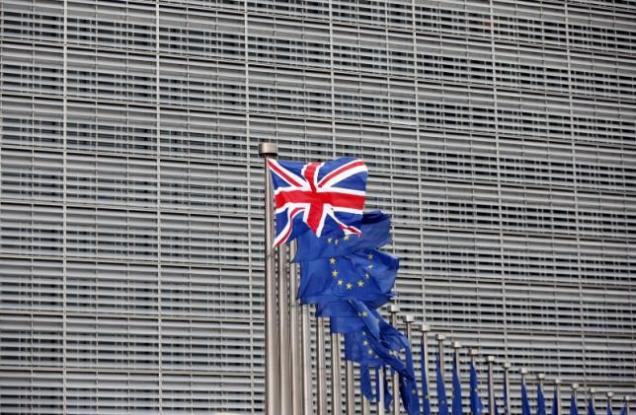
File photo of a Union Jack flag fluttering next to European Union flags ahead of a visit from Britain's Prime Minister David Cameron at the EU Commission headquarters in Brussels

Those who accuse Brexit supporters of being ideologically fixated and closed to alternative ideas are not only hypocritical – they have utterly failed to understand what makes eurosceptics tick

One of the drawbacks of being a committed eurosceptic and Brexiteer is that one tends to be painted as a swivel-eyed ideologue, someone whose opinion is not based on considered deliberation but on flawed, base gut instinct.

Thus the two most common insults hurled at eurosceptics – besides the cries of racism and xenophobia, which are sufficiently stupid that we can safely ignore them – are that we hate the European Union as an article of faith (or religion) rather than reason, and that we are closed minded and impermeable to new information (like David Cameron’s triumphant New Deal with Brussels).

Both of these accusations are unfair, although there is a grain of truth – many of us do indeed feel that our euroscepticism is a calling, or at least a cause important enough that we are willing to devote time, money and effort to its advancement.

When I attended the recent launch of The Leave Alliance, for example, it was one of the few times when I have actually been surrounded by large numbers of like-minded people on the Brexit issue, and it was rather humbling to be in the company of people whose curiosity and passion have led them to become experts on the history of the EU and the workings of international trade and regulation. Where it differs from religion, though, is the fact that our understanding of and distaste for European political union is not based on gut instinct or faith, but on a close reading of primary materials – treaties, statements, declarations, meeting minutes, autobiographies, trade journals, news articles – which those who support the European project can rarely match.

(I should note that I hardly consider myself to be such an expert – but through my involvement with The Leave Alliance I now have access to much better information and have shed much of the woolly thinking which clouded my previous euroscepticism).

So yes – we take our euroscepticism seriously. And those who see this as a flaw or a point of ridicule have generally failed to understand what it is about the European Union which offends us so greatly. They rhetorically ask what concessions might prompt us to change our minds – what it would take for us to stop worrying and love Brussels – thinking that by asking the question, they are revealing our blind, unthinking animosity to the harmless idea of countries coming together to trade and cooperate with one another.
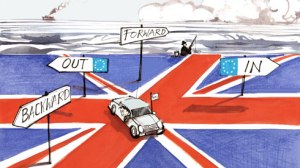
Britain in Europe

In answer to this charge, Pete North has an excellent blog post from January, in which he begins with a simple fact – the signing of a protocol by Georgia and Turkey governing the electronic exchange of customs data for goods shipping – and masterfully spins it into a damning case against the European Union, proving that a harmonisation and integration-obsessed EU is actually a barrier to the kind of global co-operation which leads to economic growth and wealth creation.

Read the whole piece – entitled “The EU is not a trade bloc – it’s a power cult“.

Here is the key extract, which I will quote at length:

At the heart of it is a paranoia that without the EU the nations of Europe will once again be at war thus have set about creating a Europe that deprives nations of their democratic will to the ends of creating a single supreme government for Europe – one which actively prevents European nations speaking on their own behalf and getting the best for themselves and Europe.

And so when the question is posed as to what it would take for us hardline leavers to change our minds, we would have to address the central issue. Supranationalism. Were the EU to abandon supranationalism, to dismantle the institutions and cultural programmes designed to engender a single European demos, culture and government, to instead become a common forum for international progress, then I could change my mind. But then I would want to see it as a more open forum where our trading partners can also participate and shape the rules rather than having the EU dictating.

There are two basic problems here. Firstly, the entity a properly reformed EU would resemble already exists. It’s called the United Nations Economic Commission for Europe, and secondly, to demand reforms of this nature – of such era defining significance, we would effectively be calling for the dismantling of le grande project forever.

And so it remains the case that we are hard line leavers in that the EU cannot be reformed, will resist any attempt, and will never serve the best interests of its members – or even Europe. The EU is purely about the preservation of the EU political body that serves to advance the supranational agenda of its long dead architects.

The EU is not about trade, it is not about cooperation and it wouldn’t recognise multilateralism in a billion years. Everything it does is with the intent of affording itself more power and more control while passing the responsibility and the consequences on to member states to deal with. It is here where nuisance turns to malevolence and such an affront to democracy, based on a foundation of intellectual sand, should be resisted.

If we examine EU for what it really is, it’s a power cult – and one that will never stop until it holds all of the power. It confiscates our wealth then acts like some kind of benevolent Father Christmas, buying off all the institutions such as academia, NGOs and local authorities who would otherwise oppose it, so that when it comes to a popular vote the establishment will never turn on its paymaster.

It is for this reason true leavers oppose the EU with every fibre of their being. It is why opposing the EU is a spiritual call and a life obsession. It is why the issue will never go away and it is why a referendum will not settle the argument – because for as long as there are those who know what the EU really is, and its modus operandi, there will always be people willing to fight it to the bitter end.

And that pretty much sums up why committed eurosceptics – at least those affiliated with The Leave Alliance – take this issue so seriously, will not change our minds based on the evidence in front of us, and will not rest regardless of the outcome of the referendum on 23 June.

It comes down to the two S’s – supranationalism and sovereignty. Both cannot exist simultaneously – any key competence is either a sovereign matter or it is decided at the supranational level. And the European Union is an avowedly supranational organisation, spurning healthy intergovernmental cooperation in favour of the creation of a new layer of government over and above the member states.

Were the European Union content to fulfil the much more narrow remit claimed by many of its apologists (i.e. facilitating trade and cooperation) then an accommodation could potentially be reached. But as Pete North rightly points out, all of the evidence – and I mean all of it, to the extent that the Remain camp do not even bother to claim otherwise – is that the EU’s ambitions are much grander. They always were – that’s why the organisation which they pretend is just about trade and cooperation has a flag, an anthem and a parliament.

If anybody is being dogmatic and impermeable to patently obvious facts, it is in fact the Remain camp, who possess a superhuman ability to ignore the federalist facts staring them in the face, and somehow pretend to themselves that events of historical record and verbatim quotes from numerous EU officials did not happen and were not said. If one is not an enthusiastic European federalist, one has to be either ignorant or in extreme denial to believe that the EU as it stands is just a trading bloc, or that there is not far more integration planned for the near future.

So who is operating on blind faith here – the Remain campaign or those fighting for Brexit? While there are plenty of loud and ignorant people on both sides, those EU apologists who naively or deceptively cry “nothing to see here!” while all the edifices of a European state are brazenly built around them should be held in particular contempt.

 

European Union - United Kingdom - Britain - Flags

Top Image: REUTERS/Francois Lenoir/Files

Agree with this article? Violently disagree? Scroll down to leave a comment.

Follow Semi-Partisan Politics on TwitterFacebook and Medium.

The Leave Alliance Campaign For Brexit: Citizen Democracy In Action

The Leave Alliance Launch - TLA - 2

This EU referendum is about the people, not the Westminster elite. Fortunately, there now exists a truly independent Brexit group – the only genuinely grassroots campaign fighting the referendum, and the only one with a credible plan for safely leaving the European Union

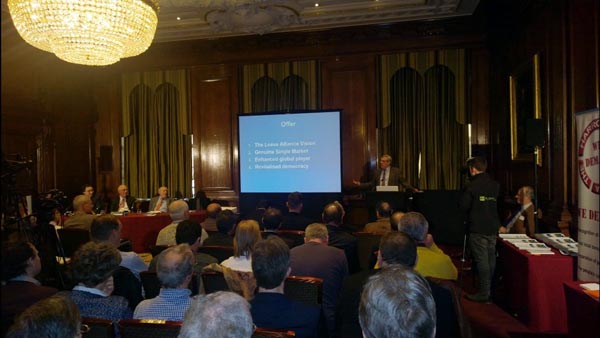
Last week – on Budget day, in fact – the Leave Alliance of individuals and groups campaigning for Britain to leave the European Union held its launch in Westminster.

Don’t worry, you’re not the only one who didn’t realise that anything had happened. The media is still having trouble wrapping their collective mind around the fact that in a referendum, the voices of politicians are no more important than those of ordinary citizens. That’s why every time Boris Johnson opens his mouth to utter his latest half-baked Brexit plan it is considered front page news, but when a group of private citizens and organisations form an independent campaign group to fight a national referendum it is deemed so un-newsworthy that it receives barely a ripple of attention.

Even when that launch takes place in the heart of Westminster, literally down the street from certain venerable news organisations (hello, Spectator), the idea of the Westminster media dispatching a journalist or two to see what was happening in their own back yard is apparently unthinkable. Every last resource simply had to be committed to this year’s Pulitzer Prize-winning coverage of George Osborne’s 2016 Budget, Omnishambles Revisited.

To be fair, The Leave Alliance – of which this blog is an enthusiastic supporterdid register a mention in Christopher Booker’s Telegraph column:

[Boris] Johnson’s empty-headed amateurishness only typifies the fatal failure of any of his allies in the “Leave” campaign to agree on a plausible, properly worked-out exit plan. One after another they come up with their own equally half-baked suggestions, which only demonstrate how none of them have done their homework. This is giving Cameron’s “Project Fear” an open goal, by failing to show how we could practically leave the EU while continuing to enjoy full access to the single market.

The only group that has done so, the Leave Alliance – launched last week with support from the Bruges Group, the Campaign for an Independent Britain and others – is too small to bid for the lead role in the campaign (although I am told on good authority that its expert and exhaustive analysis of all the options has been found very useful by civil servants).

But for a full account of the Leave Alliance launch you have to turn to the blogosphere. Lost Leonardo, writing at the Independent Britain blog, provides this summary:

The Leave Alliance (TLA) is a network of new and established political groups, bloggers and tweeters who are committed to winning the EU referendum for the “leave” side. What makes TLA unique among the declared leave groups is its support for a credible Brexit plan.

Flexcit: The Market Solution is a six-phase plan for recovering Britain’s national independence in stages, as part of a continuous process, rather than as a one-time event. That change of perspective shifts the Brexit debate firmly in the direction of pragmatic and practical politics. The exact form that our post-Brexit deal takes is less important than our vision for what we will do with our national independence. Self-governance means taking responsibility unto ourselves and, if our politicians are any indication, a long process of discovery and rediscovery lies ahead.

So as to short cut the economics- and trade-centred debate that has been allowed (some might say encouraged) to obscure the more important political question—who governs Britain?—the Flexcit plan advocates remaining in the Single Market and then working to create a genuine free trade area in Europe whilst also rebuilding the national policy-making framework and enhancing our democracy by means of The Harrogate Agenda.

This gravity of this referendum on Britain’s EU membership compels us all to think as fully engaged citizens, not merely as frightened consumers or “low information voters” easily manipulated by the cynical propaganda emanating from the major Remain and Leave campaigns. And in this campaign, it is the Remain campaign which benefits from our ignorance and the Leave campaign which is strengthened by knowledge.

When people educate themselves about the European Union, its history and its workings, they almost inevitably become more eurosceptic as the scales fall from their eyes and they realise that the EU is in fact not just a friendly club of like-minded countries who gather together to braid each other’s hair and have a good chat.

As I recently confessed:

Growing up, I was the most ardent European Union supporter and federalist imaginable. I firmly believed that the age of the nation state was over, that patriotism was silly and gauche, and that our only hope of a prosperous future lay in dissolving ourselves into a greater European collective. Adopting the euro, creating an EU army – you name it, I believed in it.

[..] Only when my appreciation for democracy and self-determination (and small-c conservatism) caught up with my authoritarian Utopianism did I realise that the accumulated wisdom of the British people might exceed my own, and that there may be good reasons to be sceptical of the European Union. And only when I came to realise the extent to which the EU is a creation of a small group of European intellectuals and political elites who thought that they knew best – and that the only way to bring about their creation was through stealth and subterfuge, never declaring the ultimate federal destination of travel – did I come to see how profoundly wrong it is.

[..] There is indeed an army of swivel-eyed ideologues in this EU referendum debate. And though they would hate to admit it, it is those on the Remain side who are most likely to be impermeable to facts, and who are least likely to have ever held a different view on the EU and been on an intellectual journey to arrive at their present position.

And as a rule of thumb, it is generally wisest to listen to those who can show evidence of having thought deeply about an issue and been persuaded by the steady accumulation of evidence to revise their thinking, rather than those who were born with their deeply-engrained love of the European Union pre-programmed in their brains.

One of the reasons I am proud of my association with The Leave Alliance is the fact that it is full of other people who, like me, have been on an intellectual journey. Sure, some of us saw through the EU from the beginning, but others – myself included – were won over to the side of Brexit by the steady accumulation of incontrovertible evidence.

We count Britain’s foremost authority on the European Union among our number, as well as several independent writers who possess more patiently acquired knowledge about the global regulatory environment than most of the Westminster media combined.

And if nothing else, the fact that the Westminster media failed to cover something as significant as the Leave Alliance launch – despite the fact that it was happening right in their midst – should be enough to convince anyone of the importance of doing one’s own research on Brexit, and not relying on any one single source or campaign when making this most important of decisions.


European Union - United Kingdom - Britain - Flags

Agree with this article? Violently disagree? Scroll down to leave a comment.

Follow Semi-Partisan Politics on TwitterFacebook and Medium.