Syria Vote: Hilary Benn, Saviour Of The Labour Party?


Despite deep division within Labour, Hilary Benn’s excellent speech in the Syria debate made David Cameron look very small indeed. But it changes nothing in terms of Jeremy Corbyn’s leadership

Is Hilary Benn the saviour of the Labour Party, the chosen one sent to lead the party out of the Corbynite darkness?

People are starting to say so – first as a result of Benn’s determined stance in the crunch shadow cabinet meeting yesterday, and especially now, after that electrifying speech in the Syria debate.

The speech was undoubtedly a good one. Here’s a key excerpt:

So the question for each of us – and for our national security – is this: given that we know what they are doing, can we really stand aside and refuse to act fully in our self-defence against those who are planning these attacks? Can we really leave to others the responsibility for defending our national security when it is our responsibility? And if we do not act, what message would that send about our solidarity with those countries that have suffered so much – including Iraq and our ally, France.

And the stirring peroration:

Now Mr Speaker, I hope the house will bear with me if I direct my closing remarks to my Labour friends and colleagues on this side of the House. As a party we have always been defined by our internationalism. We believe we have a responsibility one to another. We never have – and we never should – walk by on the other side of the road.

And we are here faced by fascists. Not just their calculated brutality, but their belief that they are superior to every single one of us in this chamber tonight, and all of the people that we represent. They hold us in contempt. They hold our values in contempt. They hold our belief in tolerance and decency in contempt. They hold our democracy, the means by which we will make our decision tonight, in contempt.

And what we know about fascists is that they need to be defeated. And it is why, as we have heard tonight, socialists and trade unionists and others joined the International Brigade in the 1930s to fight against Franco. It’s why this entire House stood up against Hitler and Mussolini. It is why our party has always stood up against the denial of human rights and for justice. And my view, Mr Speaker, is that we must now confront this evil. It is now time for us to do our bit in Syria. And that is why I ask my colleagues to vote for the motion tonight.

The House erupted into rare and sustained applause (which is apparently okay these days, so long as it is not SNP Members of Parliament doing the clapping), while social media and the blogosphere lit up with praise for Benn and hopeful talk that this speech might represent the reassertion of the centrist Left and the high water mark for the Corbynite flood.

Here’s Dan Hodges, waxing lyrical:

Hilary Benn’s speech. It is about to become the House of Commons “where were you when Kennedy was shot” moment. Where were you sitting. Who were you with. What were you thinking.

It was a truly incredible moment. He did not just captivate the House, he inverted the House. Hilary Benn did not look like the Shadow Foreign Secretary. He did not look like the leader of the opposition. He looked like the prime minister. And by extension, his party, which for the past few days has appeared broken and beaten, looked like the government.

Most amazing of all was the effect on the real Leader of the Opposition. Though we may as well now refer to him as the former leader of the opposition. Jeremy Corbyn started by looking agitated. Then he appeared uncomfortable. Then he began to shrink. It was like watching the witch from the Wizard of Oz who has just had a bucket of water thrown over her. All the talk of his “mandate”. All the talk of his legions of new activists. They were destroyed in an instant. Crushed by Hilary Benn and 100 years of the Labour party’s accumulated moral authority.

If only that were so.

Of course Hodges would talk up Hilary Benn, or anyone else from the Labour front bench who managed to sound eloquent while undermining Jeremy Corbyn – and fair enough. The praise is deserved, if somewhat excessive. People will not long remember this speech, and only people within the Westminster bubble and the highly politically engaged will have paid it any note at all. We should not allow ourselves to get carried away by the adrenaline of the moment.

While Hilary Benn’s speech may have been extraordinarily cathartic for centrist Labour types who have had little cause for hope since Jeremy Corbyn (or even Ed Miliband) won the leadership of their party, there is little reason to believe that one speech will dramatically change the fortunes of the Labour Party.

Most people do not watch parliamentary debates, even moderately iconic ones (and this one has certainly been hyped out of all proportion, with politicians and the media talking up the extension of existing airstrikes as some kind of paradigm-shifting declaration of war). Few people will have actually seen Hilary Benn grow in stature, or Jeremy Corbyn shrink a little next to him on the green benches last night.

Martin Kettle acknowledged as much in his own piece praising Benn’s speech:

Wednesday was certainly a reminder that speeches can still make a difference in politics. It was, though, a Victorian political event in a digital age. Benn’s speech was electrifying in the chamber. It triggered an instant Twitter storm among what may have been several hundred BBC Parliament watchers. But most people watch other things. Most people still don’t know who Hilary Benn is, let alone that he made a well regarded speech. And the sleepless digital news caravan has already moved on.

While it’s great that the dignified, sober part of the Labour Party briefly asserted itself – by thwarting Corbyn’s desire to whip the Syria vote, and in Hilary Benn’s speech – it does little to change the cold, hard calculus facing the Labour Party.

Jeremy Corbyn is still not going anywhere – he smilingly said as much on the Andrew Marr show last weekend. His supporters are still growing in influence within the Labour Party, and their memories are long – the current talk of deselections will not have been forgotten by the time the 2020 general election rolls around. And while Benn’s speech was excellent, it only further highlighted the division within the shadow cabinet. That’s the message that most people will take away – that on an important decision about committing British armed forces to action, the Labour Party is no longer able to come to a common position.

Hilary Benn may have displayed his leadership credentials last night, but there is no escaping the fact that Jeremy Corbyn retains firm control of the party, and that any effort to remove Corbyn will produce a nuclear backlash from the activist party base.

The Labour Party needs more than one man with a good speech in his pocket and centrism in his heart. If the goal is to recapture the centre ground of British politics, Labour needs a new wave of members to dilute and counteract the thousands of left-wing activists attracted by Corbyn. And while Hilary Benn gave a good speech on foreign policy, there is no evidence that he is beloved by the public or capable of attracting legions of centre-left supporters back to the party.

Labour Party centrists are desperate for a saviour, and that is understandable. But Hilary Benn is not the answer – not even if ten of his clones sat in Jeremy Corbyn’s shadow cabinet.

To change course, the centrists don’t need one Hilary Benn. They need one hundred thousand new people to be inspired enough by Benn’s words to pick up the phone and join the Labour Party. And that’s simply not going to happen.

The Labour Party needs a new membership before it can even begin to think about choosing a new leader.

Hilary Benn - Syria Speech

Agree with this article? Violently disagree? Scroll down to leave a comment.

Follow Semi-Partisan Politics on TwitterFacebook and Medium.

Labour’s EU ‘Remain’ Campaign Launches With Their Weakest Argument

Alan Johnson - Labour - In for Britain - EU Referendum - Brexit

Claims that Britain being in the EU “keeps us safe” are completely without basis. Nations are more than capable of co-operating on national security without dissolving into the same flawed political union

If the slavishly europhile “Remain” campaigns are putting their best feet forward and leading with their strongest arguments then perhaps there is hope for we eurosceptics after all.

Last month, the farcical launch of Britain Stronger in Europe was tarnished by the somewhat unwilling presence of Lord Stuart Rose as campaign chairman, and then rendered ridiculous by “youth ambassador” June Sarpong’s confused non-endorsement in the press.

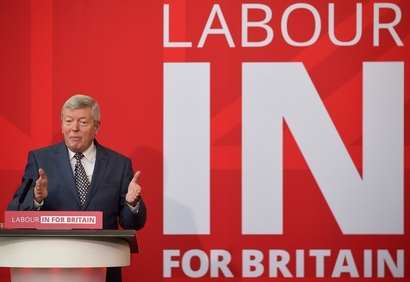
And now, with today’s launch of Labour In for Britain, the Labour Party’s own pro-EU campaign group, the europhiles decided to lead with the weakest of all their weak arguments – that leaving the EU would somehow be injurious to Britain’s national security. And they are quite willing to exploit the recent shocking terrorist attacks in Paris to do so.

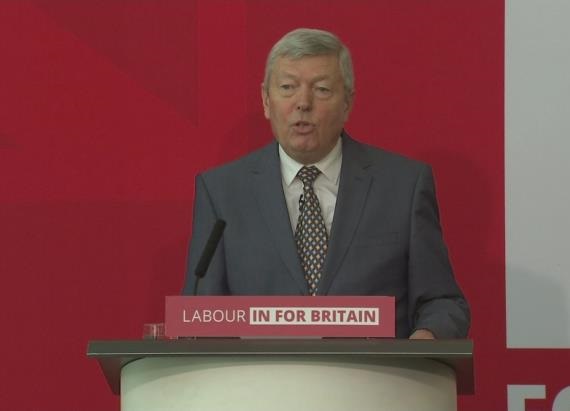
Alan Johnson, chairman of the Labour In for Britain campaign, writes in the Mail:

We should be in no doubt that these are dangerous times. 

The tragic events in Paris, and the government’s recent confirmation that seven terror plots have been foiled in the UK in recent months, have underlined the threat that violent extremism poses to us here at home.

For some, the answer to this is to withdraw from Europe and to try to combat the threats we face on our own. 

So no positive vision, then. Just a lot of scaremongering followed by the reassurance that we can avoid being blown up in our favourite clubs and restaurants for the low, low price of the surrender of our democracy, sovereignty and right to self-determination.

Of course, Johnson never explains why leaving the explicitly political construct known as the EU would mean that Britain has to withdraw from Europe the continent, or Europe the home of our friends and allies. But then it is very much in his interest to conflate all of these things and falsely imply that leaving a political union means cutting ourselves off and standing alone in the world.

From a man who is constantly lauded as one of the Labour Party’s finest assets, a fundamentally decent man of irreproachable morals, this is really dirty and opportunistic stuff from Alan Johnson. Apparently there is no moratorium on using a mass killing for political gain when the people taking advantage of our shock and grief are do-gooder left wing types who think they know best for us.

Johnson continues:

Our campaign will focus on the economic security of British workers – the millions of British jobs that are linked to trade with Europe, and the employment rights that are enshrined in EU law. 

But we will also be laying out the ways in which Europe protects British citizens and keeps us safe.

First, working with our European partners provides us the best way to stop would-be terrorists entering Europe [..]

Second, thanks to the European Arrest Warrant, pushed through in 2004 under a Labour government, we are able to more effectively bring would-be terrorists to justice [..]

Finally, it should not be forgotten that Islamist terrorism is not the only threat we face. At a time of deep instability on Europe’s borders, Britain benefits from its ability respond collectively.

The Brexit campaign group Vote Leave are also pushing the security aspect quite hard, so it is unsurprising that the pro-EU groups want to cut them off by claiming that it is their position which will keep Britain safe. Unsurprising, but wrong.

And Johnson concludes:

By sharing intelligence, pooling resources and working together, European countries add value to each others’ efforts to keep the peace. A Brexit would leave us all more vulnerable.

Damningly, it is never explained why all of this co-operation is dependent on Britain remaining part of an ever-tightening political union with its own parliament and courts and government.

Alan Johnson never explains why our intelligence and security services rely on our EU membership every day to protect us from terrorist attacks. Because they don’t. This co-operation – and any other matters of vital national security – would go on regardless of our future relationship with the EU, because that’s how mature democracies work. Europe will not simply go off in a sulk and stop sharing intelligence with us simply because we decide that we no longer want to be just a star on the EU’s flag, because they need our military support and intelligence capabilities far more than we need theirs.

Don’t forget – Britain’s closest military ally and intelligence sharing partner is not any one of the European Union countries, but rather the United States. We host US air bases on our territory, we embed our own armed forces with theirs (and vice versa) on active operations and we buy and sell weapons and equipment to America. On the intelligence front, GCHQ and the NSA work together hand in glove – sometimes too closely, to the extent that they conducted mass surveillance without our knowledge – and are indispensable partners.

The closest of military allies and vital partners in global intelligence sharing – somehow the UK and US are able to maintain this partnership without a joint legislature handing down laws to Congress and Parliament, a judiciary sitting above our own respective Supreme Courts, or a shadow government running a large and expensive bureaucracy on our behalf.

And yet the europhiles will declare with a straight face that we desperately need this cumbersome, irrelevant and antidemocratic sideshow just to be able to ensure military and intelligence sharing co-operation with a country separated from us by just twenty miles English Channel. What nonsense.

So, Alan Johnson: why is it that Britain is able to maintain our closest and most strategic partnership in the world with the United States without ourselves becoming the 51st state, while a lesser degree of co-operation with the other countries of Europe is somehow impossible unless we dissolve ourselves into the same ever-tightening political union with them?

Truly, the security aspect is the weakest of all the pro-EU arguments, and yet it is the one with which Labour chose to lead. And the only possible calculus for doing so must have been the belief that people were still so shocked and traumatised by the recent terrorist attacks in Paris that they would be susceptible to scaremongering tactics which openly suggested that a vote against the European Union is a vote for more Paris-style attacks on our own city streets.

That tells you a lot about the intellectual weakness and desperation of pro-EU case and the “Remain” campaign as a whole. But it tells you even more about today’s grasping, manipulative and utterly shameless Labour Party.

Alan Johnson - In for Britain - EU Referendum - Brexit

Agree with this article? Violently disagree? Scroll down to leave a comment.

Follow Semi-Partisan Politics on TwitterFacebook and Medium.

The Daily Toast: Weaken The Nation State, Breed More Extremism

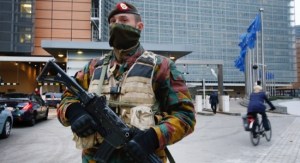
Brussels Lockdown - EU Building 2

When there is no healthy sense of national identity or commonly valued institutions, people inevitably start looking for different groups or subcultures to belong to. We should not be surprised that some turn to radical Islam

Why is one neighbourhood in Brussels rapidly becoming Europe’s chief exporter of homegrown terrorists, the Silicon Valley of Islamist extremism?

Daniel Hannan gives the most convincing answer by admitting something that many others have been furiously ignoring – that Belgium is essentially a “failed state”. It may be an advanced economy and home to the EU bureaucracy, but there is no real sense of national unity for first or second generation immigrants to embrace. And this lack of shared identity provides the fertile ground where extremism inevitably grows.

Hannan writes:

When Americans are afflicted by terrorism, they fly their flag. When Paris was violated, it turned red, white and blue. But in Belgium, you rarely see the national tricolor except on a state building.

Perhaps there is a connection between this lack of national feeling and the readiness with which several second-generation Belgians turn against their adopted country. Many Western European states have disaffected immigrant populations, but none has sent such a high proportion of its nationals to Syria. Molenbeek, the dreary quartier where most of the Paris murderers were raised, is Europe’s jihadi capital.

All human beings crave a sense of belonging. When they get no such sense from their nation, they cast around for more assertive identities. And what could be more assertive, more self-confident, than the monstrous cult of Islamic State?

And goes on to explain why this is a particular problem in Belgium:

The problem is especially severe in Belgium because Belgium is, so to speak, a mini-EU, a multi-national state whose political system is held together largely by public spending. There is no Belgian language, no Belgian culture, no Belgian history. The country is divided between a Dutch-speaking north, containing some 60 per cent of the population, and a French-speaking south. The two communities read separate newspapers, watch separate TV, vote for separate parties. To adapt René Magritte, one of those elusive famous Belgians, ceci n’est pas un pays.

[..] Unsurprisingly, the two communities have turned in on themselves. But where does this leave, say, a Moroccan-origin boy in Molenbeek? What is there for him to be part of? Neither Flemish nor Walloon, his every interaction with the Belgian state will have taught him to despise it. If he got any history at all in school, it will have been presented to him as a hateful chronicle of racism and exploitation. Is it any wonder that he is in the market for something stronger, more assertive?

The frightening thing here is that as goes Belgium, so will go the rest of Europe – at least if the master planners of European unity have their way. They have long regarded the nation state and patriotism as something gauche and vaguely embarrassing, and longed for the time when national identities and borders ceased to matter. Belgium’s unique circumstances mean that they are slightly further along the road to oblivion than the rest of us, having not had a very solid or cohesive identity even before the European Union project landed in their laps. But the same forces are at work in France and Germany and Sweden and Britain, too.

If there is no sense of common identity and purpose in a country, soon it will begin to fracture into an angry group of competing special interests and subcultures, each jostling for favour and becoming increasingly hostile to one another. Only last year, we saw how decades of failing to inculcate a sense of Britishness nearly led to Scotland voting to leave the union. And those kind of consequences are the best case scenario.

The worst case scenario – if we do not get serious about promoting and celebrating our values – is that we see more and more Paris style attacks, committed by people who went to school with us and who carry the same passports as us, but feel absolutely no connection or affinity with us.

We fail to promote and defend British, Western and enlightenment ideas at our peril.

Brussels Lockdown - EU Building

Agree with this article? Violently disagree? Scroll down to leave a comment.

Follow Semi-Partisan Politics on TwitterFacebook and Medium.

The Daily Toast: The Right Reasons For Britain To Bomb ISIS In Syria

Britain - Airstrikes - ISIS - Islamic State - Syria - David Cameron - Francois Hollande

Building the case for military action against ISIS in Syria solely on the proposition that it will make us safer at home is over-optimistic, unprovable and damaging to the other, less alarmist (but stronger) arguments in favour of intervention

In his Telegraph piece today, Fraser Nelson understands that airstrikes and other military action against ISIS in Syria are nothing like a magic bullet method of keeping us safe from terrorist attacks, but that they are nonetheless the right thing to do.

Nelson goes on to echo this blog’s concern that building a case for military intervention in Syria based solely (or even primarily) on the overly-optimistic proposition that it will make the streets of London safer will only undermine the other, better reasons for attacking ISIS:

This is a political mission more than a military one. For years, Britain has been haemorrhaging influence in Washington – diplomats there have been shocked to hear France being mentioned as America’s most reliable European partner. Our absence from the Syria campaign stands out – and sends worrying signals about our reliability as a partner. With our troop numbers being cut back, we need partnerships. And this means stepping up to join alliances when the time comes.

This is harder for the Prime Minister to explain. It’s fairly easy to talk in terms of Britain bombing Isil into submission before sending in a 70,000-strong army. It’s harder to admit that bombing hasn’t really worked, and that that army doesn’t really exist and that a better strategy is needed. But if we want a chance of influencing that strategy, we need to join the US-led coalition.

The best case for intervention in Syria yesterday was made not by any minister but by Bob Stewart, a former colonel and now a Tory MP. He had been talking to senior officers in France, he said, and they told him that the country feels attacked and would very much appreciate the support of its closest ally. So it’s time, he said, for a “highly potent gesture” to let our allies see that we’re fully behind them. It’s a less dramatic case for war, but it’s more credible. And far more likely to give the Prime Minister the parliamentary vote that he so badly needs.

Obviously Britain cannot base the decision of whether or not to intervene militarily in another country solely on the affect our participation (or non-participation) will have on the esteem of our friends and allies. There must also be both a legitimate and compelling reason for intervention and a reasonable chance of a satisfactory outcome in order to justify such a grave decision. And though it is very hazy, on balance Britain probably can make a positive contribution if we work with our allies toward a clearly agreed strategy.

But Fraser Nelson is right – equally important in this debate is the way that Britain views its own role on the world stage, and (I would add) the degree to which we continue to live in the fearful shadow of the second Iraq war.

Britain has indeed become an “unreliable ally” over the past few years, not just because of the previous vote against military action in Syria but because of the degradation of our armed forces by a nominally conservative government with messed up priorities. We pared back the army by a magnitude of thousands of experienced, veteran soldiers. We greatly weakened the RAF with cutbacks. And we decommissioned our existing aircraft carriers years before the new ships come on stream, seriously weakening our ability to project force in distant places.

Those brutal cutbacks sent a message. They reeked of a country which had lost faith in its values, its power, its effectiveness and its ability to robustly defend both our allies and our own vital national interest. They spoke to a country which has lost its way, led by politicians more interested in being seen as competent technocrats administering decent public services than fighting evil or changing the world for the better.

Hopefully that shameful time is now finally coming to an end.

The time has come for the British government to show as much commitment to fighting evil and supporting our allies as it does to ramping up the autocratic surveillance state in the dubious name of national security. The time has come to wield the stick abroad where necessary once again, and ease up on the draconian policies which have come to typify our national security response at home.

But first and foremost – as this blog argued yesterday – the time has come for Britain to get up off the mat post-Iraq, and reassert our place in the world. The conflicts of the first decade of this century – with their weak justification and unclear objectives – must not colour our present day judgement to the extend that we freeze in indecision when decisive action and engagement with our allies is needed.

And while nobody can truthfully promise that striking ISIS in Syria will significantly reduce the terrorist threat in Britain, we can say with reasonable certainty that dithering and failing to act against the murderous death cult responsible for attacking our good ally France – slaughtering scores of innocent people in Paris – will help consign Britain to the ranks of middling, introspective and insignificant nations at the mercy of world events rather than shaping them.

This nuanced argument is much harder to make than simplistic pledges about keeping us safe from terror, especially when trying to build support for military action in a cynical and war-weary country. But it is the right argument.

As Fraser Nelson argues – and this blog concurs – it is far better to be upfront about the real motivations for intervention, and trust the British people to understand that it is in all of our interests to ensure that Britain continues to be taken seriously as a major player on the world stage.

Britain - Airstrikes - ISIS - Islamic State - Syria - RAF


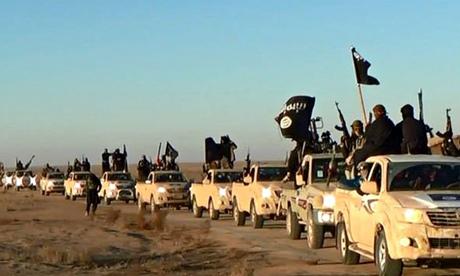
ISIS Convoy Syria

Agree with this article? Violently disagree? Scroll down to leave a comment.

Follow Semi-Partisan Politics on TwitterFacebook and Medium.

Should We Bomb ISIS In Syria?

ISIS Syria - France Airstrikes - Paris Attacks

When considering whether Britain should join airstrikes against ISIS in Syria, listen to anyone except those people preaching certainties

Should Britain join the group of countries launching airstrikes against ISIS in Syria?

On balance, yes. But not in the hope or expectation of “keeping us safe from terror”, which is the justification currently being touted by the government. And only as part of a broader strategy, a serious international military campaign and a real commitment to the people of Syria, who are caught in the middle of a ghastly civil war and – in the case of those stranded in ISIS territory – subjugated by one of the most barbaric, theocratic death cults in the history of the world.

I don’t advocate the use of force lightly. This blog rarely ventures onto topics of foreign policy, and for good reason – I’m far from an expert, and unlike some others I am not willing to confidently parrot the opinions of other people out of partisan loyalty or ideological entrenchment.

Today I re-read “I Was Wrong” by Andrew Sullivan, my favourite writer and blogger – sadly now retired from daily blogging. Sullivan was one of the loudest drum-beaters for the second Iraq war, and made the gradual transition from neoconservative warmonger to fierce Bush critic as he realised the gravity of his error – America and Britain’s catastrophic mistake. “I Was Wrong” is a collection of Sullivan’s blog posts from 2001-2008, charting that awful realisation.

I wanted to re-read Sullivan because I wanted to be sure that supporting military action in Syria was in no way a fear or anger-based reaction to recent acts of terror, to the Paris attacks – or the fear of a similar attack in Britain. And it is not. After 9/11, many people were willing to blindly lash out, and were too quick to put their faith in leaders who they mistakenly trusted to identify the real threats and the correct targets. Sullivan himself bravely admitted that he fell prey to this tendency. But in the year 2015, the shock of Islamist terror striking Western cities is no longer what it once was. And we are all more cynical and jaded, both about what our leaders tell us, and what we are capable of accomplishing when we decide to intervene in another country. In short: this is not Iraq all over again.

Today, David Cameron made the case for British military action against ISIS in Syria. The Telegraph sums up David Cameron’s 7-point plan:

  1. Protect the UK at home by maintaining robust counter-terrorism capabilities
  2. Generate negotiations on a political settlement, while preserving the   moderate opposition
  3. Help deliver a government in Syria that can credibly represent all of the Syrian people
  4. Degrade and ultimately defeat Isil, through Coalition military and wider action
  5. Continue leading role in humanitarian support and forestall further migratory flows towards Europe
  6. Support stabilisation already underway in Iraq and plan for post-conflict  reconstruction in Syria
  7. Work in close partnership with allies across the Middle East to mitigate the impact of Isil and other violent extremist groups

There are valid and compelling arguments for military action against ISIS in Syria, but this seven point plan does a poor job of making the case.

Point 1 is immediately ludicrous. Yes, there is the possibility that Syrian refugees may find their way across the continent of Europe to our shores, where they then go on to commit a terrorist atrocity. But we should be far more concerned about that stubborn rump of alienated British Muslims who already live among us and carry our passports, but feel no connection with or fidelity to our country. The 7/7 bombings in London proved definitively that we are perfectly capable of incubating our own terrorists in this country, with no need to import them.

David Cameron’s claim that Syria airstrikes will “protect the UK at home” should be treated extremely sceptically, because there is no compelling evidence that destroying the current overseas rallying point for Islamist extremism will do anything to tamp the fires of extremism within our own borders.

Points 2 and 3 sound suspiciously like nation-building. And again, no matter how accurate the RAF’s Brimstone guided missiles may be, they are not nimble enough to bring sworn enemies to the negotiating table or forge the beginnings of a political settlement. Regrettably, Britain and America have a weak track record when it comes to nation-building. And we can hardly be said to have learned the full lessons of Iraq when the publication of the Chilcot Report is shamefully delayed so as to allow those who come in for criticism the opportunity to airbrush their mistakes and imperfections from the public record.

Points 6 and 7 have a moderate chance of success at best. But with the exception of Israel, it is by no means certain that Britain’s so-called allies in the Middle East remotely share our objectives. Some of them actively fund and give succour to the same extremists who threaten us. The War on Terror has driven the United Kingdom into the arms of that repressive, barbaric kingdom, Saudi Arabia – a medieval land where lashings, crucifixions and beheadings are still deployed against blasphemers, and where many a terrorist ideology has been incubated.

In an ideal world, Britain would have nothing to do with the whole benighted region, diplomatically, until they achieve democracy and freedom on their own – but since necessity forces us to suck up to Saudi Arabia and other such Utopias in exchange for morsels of intelligence about the very same terrorist plots that they tacitly support, we will likely continue to make more enemies than friends in the Middle East.

Only points 4 and 5 of Cameron’s list are realistically achievable. Yes, we can degrade and defeat ISIS as an organisation. If Britain, America, France and other powers are determined then we can rain down fire on enough ministries, military posts, safe houses and supply routes that ISIS lose the majority of their territory and cease to be a potent regional presence. Clearly ground troops will be required to do the work that drones and missiles cannot, but whether the 70,000 potential Free Syrian Army fighters will be of sufficient number or quality to do the job without outside reinforcement is uncertain.

But the radicalised Muslims who flocked to the ISIS banner will not awaken as if from a trance the moment that David Cameron and François Hollande land on the flight deck of the Charles de Gaulle to declare “mission accomplished”. They will not suddenly see the light and re-embrace Western enlightenment values. They will simply cast around for the next group to join. And be assured, another group will come to fill the vacuum – just as ISIS is eclipsing Al Qaeda, and Al Qaeda eclipsed its jihadist predecessors.

None of these flaws in David Cameron’s 7-point plan for successful action in Syria are reason enough to reject military action. But they do show that bombing alone will not be enough – while the West may not have the appetite to pour in the blood, effort and money required to finish the job.

ISIS Convoy Syria

So when it comes to weighing the decision about whether to bomb Syria, beware of anyone offering cast-iron certainty on either side of the argument – be it Momentum and Stop the War on the left, or David Cameron and the hawks on the right.

For the truth – once the ideological blinkers and two-dimensional worldviews are stripped away – is that this decision is an impossibly close call, and one in which the absence of counterfactuals means that we will likely never know for certain whether we were right to intervene or not.

All that we can say for certain is that it is not the binary question of Yes/No which will make a success or failure of Western policy in Syria. What matters is not the decision about whether to bomb or not to bomb, but rather how the military action unfolds if it is authorised, what our tactics are, and how it fits into a broader plan to defeat the Islamist threat.

The military question itself is relatively straightforward in all of this. If we really wanted to defeat ISIS specifically as an organisation and wannabe state, the Western powers and their allies – working closely with the Free Syrian Army and others – are physically more than capable of doing so, if we put our minds to it.

But that does nothing to solve the broader jihadist threat. Where once we feared groups like Islamic Jihad, now we fear Al Qaeda and ISIS. And tomorrow, when ISIS is gone, we will tremble at the thought of some other bronze age group based in another unstable country, wreaking chaos with twenty-first century technology. The recent history of our efforts to defeat Islamist extremism can best be described as Terrorist Whack-a-Mole. You hit one organisation and another pops its head up somewhere else.

So don’t support bombing ISIS in Syria because it will help to keep us safe from terror attacks, because it won’t. In the short to medium term it will make no difference at all. A bomb next month in Leicester Square will not condemn the decision any more than another year without a major terrorist attack on British soil will vindicate the decision to begin striking ISIS in Syria. And beware opportunists who suggest otherwise.

The only real criteria which should be met in order to support military action in Syria are:

  1. Reasonable cause to hope that such action will materially defeat ISIS
  2. Fewer civilians expected to be killed or radicalised as a result of such action than would be the case without further intervention
  3. Confidence that the vacuum left by ISIS will not be filled with something even worse

Above all, this must be an humanitarian mission. In order to get public buy-in it will almost inevitably be couched in the language of “keeping us safe” in Britain – or fighting them over there so that we don’t have to fight them on the streets of London, as Matthew Hancock said this evening on Question Time (perhaps unwittingly channelling President Bush). But this is an unrealistic promise, one which sets the target for success so high that it will inevitably be missed. Even total victory in Syria will not end the Islamist threat, which is just as potent within Europe’s borders as it is in the Middle East. And we can hardly bomb Brussels or the slums around Paris.

A humanitarian mission is something achievable – if we work very, very hard, we can probably get ourselves to a place where we can say with some confidence that fewer people were killed, maimed or brainwashed than would have been the case had we done nothing. That’s likely to be as good as it gets – but those are the messy realities of our world.

That may not be enough for some, who either oppose military action because it is not the magic bullet for ending Islamist extremism or support it believing that it will. Both viewpoints allow perfection to become the enemy of the good – or the tolerable. There is no perfect solution on the table.

The anti-war Left need to drag themselves out of the shadow of Iraq and remember that Britain has a proud history of previous military and humanitarian interventions around the world which were right and justified and successful. And they must realise that there can be no negotiation with ISIS, and no realistic diplomatic solution in Syria until a military victory is won.

The terrorism-thumping Right need to appreciate that decimating ISIS militarily will in itself do nothing to defeat the ideology behind it – and in fact, any military action may exacerbate that aspect of the problem. Therefore, Britain should not take another step toward further armed involvement in Syria until something resembling a long-term plan is agreed between all of the major powers currently intervening in the region.

And both sides must remember that this is not Iraq all over again. The “something must be done” brigade are not leading us down an obviously wrong path as they did after 9/11 – we know precisely what is currently happening in Syria, and we are in no danger of precipitating a bloody Iraq-style civil war through our actions, because one is already bubbling along quite nicely without us.

Lastly, both sides should remember the best traditions of Britain as a force for good in the world. We remain one of the great economic and military powers of the world, with unique capabilities that we could bring to bear against ISIS. The mistake of Iraq must not allow us to abrogate our responsibility to project our power in defence of liberty and freedom where there is a compelling case to do so.

It’s time Britain got up off the mat after Iraq, and started fulfilling our responsibilities to the world once again.

David Cameron

Agree with this article? Violently disagree? Scroll down to leave a comment.

Follow Semi-Partisan Politics on TwitterFacebook and Medium.