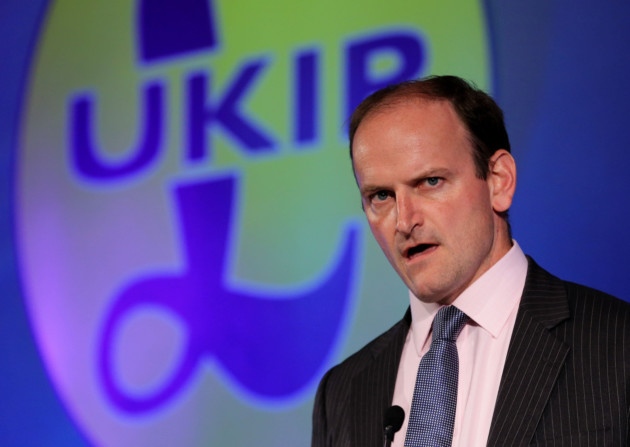
Interview With Nigel Farage

UKIP leader Nigel Farage on UKIP’s post-election party conference, and the long term prospects for the party beyond the EU referendum

While covering the 2015 UKIP party conference in Doncaster last month, I was able to grab a quick interview with the party leader, Nigel Farage, fresh from the stage after delivering his keynote speech.

This was immediately after what was a successful but fairly unremarkable speech by Farage’s standards, and before Day 1 of the UKIP conference was overshadowed by the row between donor Arron Banks and the party’s sole MP, Douglas Carswell.

As with my interview with Douglas Carswell, I wanted to get Farage to open up about his thoughts for the party looking beyond the Brexit referendum, and how UKIP’s current diverse coalition of different voters could be held together once the unifying goal of the EU referendum has been and gone.

Here is a transcript of my interview with Nigel Farage:

QUESTION: A different tone to this year’s conference. Obviously last year we had the defection of Mark Reckless, looking forward to the election, a bit different this year. Are you pleased with how it went, and are you pleased with the shape of UKIP as you’re fighting the referendum, looking ahead?

NIGEL FARAGE: The general election was very tough for us, you know, a massive amount of effort. Four million votes, very creditable in the circumstances and one seat, so pretty tough. And we’ve had, you know, a summer of regrouping and getting our finances back in shape, we’re now rocking and rolling and ready to go, we’ve got loads of elections to fight next year, but I think winning the referendum matters more than anything and I felt the response I got from the party membership is that they feel the same way too. And we’re going to join hands with the Arron Banks consortium Leave.EU and there’s going to be a united front for those who want to leave the European Union.

QUESTION: Obviously the referendum looms large at the moment, but looking beyond that, how well is UKIP positioned do you think to keep together its diverse support base of ex-Tories, ex-Labour types, libertarians, after the election when that common thread of the referendum is no longer there to hold everyone together?

NIGEL FARAGE: Well you know, there are still plenty of things that will unite us beyond just the European question. A society in which people can aspire to do well, a society where through selection in education we can narrow some of the class gaps, there are lots of things that unite UKIP and I actually think that with Mr. Corbyn as Labour leader there is an even bigger potential marketplace for us there.

To be fair, Farage did not deflect the question, or seek to answer it with some pre-rehearsed talking point. So kudos for that. But his responses did little to change my overall impression of the conference – that UKIP (or at least the party leadership) are so fixated on achieving their long-cherished goal of British secession from the EU that they are willing to let some of the divisions and inherent contradictions within the party go unaddressed for the time being.

From my summary in Day 1 of my UKIP Conference live blog:

There is definitely a degree of Matthew 6:34 to this particular conference (“Take therefore no thought for the morrow: for the morrow shall take thought for the things of itself. Sufficient unto the day is the evil thereof”). And one can understand the strong desire to strive onward to the long-cherished goal of gaining independence from the EU. But I can’t help wondering if UKIP might not pay a price in 2017 or beyond for failing to pay enough heed to the type of party they want to be – and the type of supporters they want – by the time of the next general election.

Time will tell whether this strategy is correct.

Interestingly, both Nigel Farage and Douglas Carswell mentioned the newly-elected Labour leader Jeremy Corbyn, quite unprompted by me. UKIP clearly sees massive potential to win over even more ex-Labour voters, people who may never vote Tory in a million years but who are concerned and repulsed by Labour’s leftward march under Corbyn.

UKIP of course is already the runner-up in well over 100 constituencies, many of them Labour seats in the Midlands and the North. If UKIP are able to stay organised and maintain message discipline – by no means guaranteed – then Labour may well have something to fear on this count.

My live blog from Day 1 of the UKIP 2015 party conference is here.

My live blog from Day 2 of the UKIP 2015 party conference is here.
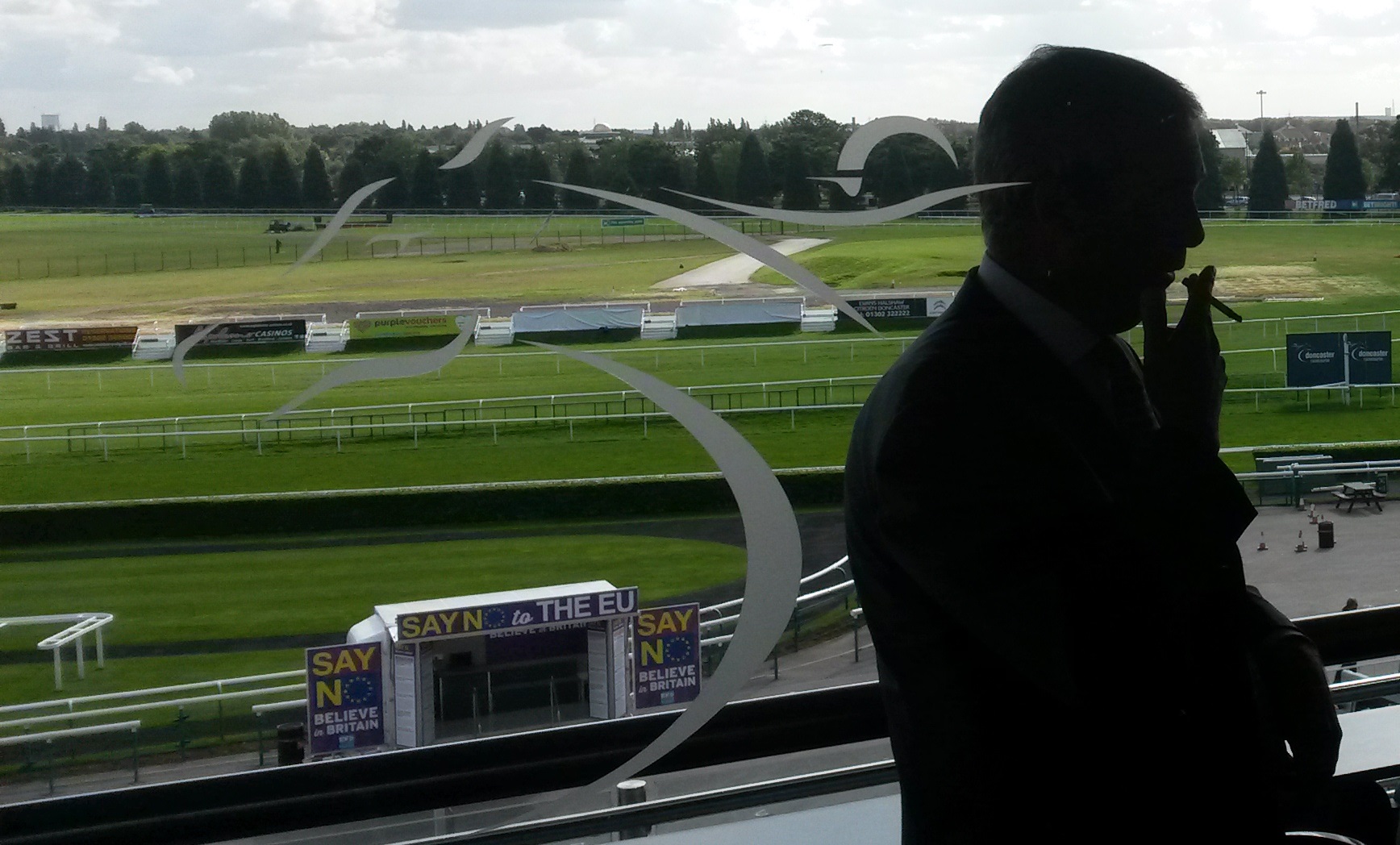
Nigel Farage - UKIP Conference 2015 - Silhouette - 3

Follow Semi-Partisan Politics on TwitterFacebook and Medium.

The “In” Campaign Reveal Their Best Argument: Cheap International Calls

European Union - Mobile Phone Roaming Charges - 2

It’s official: the leader of the “In” campaign declares that cheap mobile phone calls from the continent are the best reason for Britain to remain a member of the EU

Five months ago, when columnist Mary Riddell revealed that her love of the European Union is based on the fact that open borders allow her to motorbike around eastern Europe with ease, I wrote:

We see this emphasis on narrow self-interest in other areas too, such as the EU’s plan to ban mobile phone operators from charging exorbitant roaming fees for making calls from other member states, as though the ability of predominantly middle class holidaymakers and business travellers to call and text more cheaply somehow makes up for the erosion of our democracy and national sovereignty.

[..] The Left’s anguish over the prospect of British secession from the European Union has nothing to do with any overriding concern about Britain’s future, or the plight of the unemployed or the working poor. No, it’s simply a collective howl of outrage from a cosseted and sheltered middle class clerisy, terrified at the prospect of losing out on a raft of perks which disproportionately benefit themselves at the expense of everyone else.

Little did I know then that the “Remain” campaign would be so intellectually bankrupt, so totally lacking in good ideas or a positive argument for greater European integration, that the cheap gimmick of cheap international phone calls would be raised up as their openly stated chief benefit of staying in the EU.

As if their “youth spokesperson” June Sarpong had not embarrassed the pro-EU side enough with her ambivalent, paint-by-numbers endorsement in the pages of the Telegraph this week, the chairman of Britain Stronger in Europe – nepotism beneficiary Will Straw – has been working his magic in The Mirror:

Here are eight ways that the British economy and British families are stronger in Europe.

1. Cheaper mobile fees

The cost of using your mobile abroad dropped by 73p for every pound between 2005 and 2011 thanks to an agreement on roaming charges .

And they will be scrapped entirely by June 2017 after the EU forced companies to give a fairer deal.

Unimpeded bike rides and cheap mobile phone calls. This, apparently, is the best that the pro-EU side can muster as both sides fire their opening shots of the Brexit referendum. This, together with the gradual re-emergence of left-wing euroscepticism as a noteworthy force in British politics, give me hope that the eurosceptics may yet carry the day.

Brexit campaigner Pete North does an excellent job of pouring cold water on the europhiles’ claim that the EU is nothing more than a beneficent provider of cheap international roaming charges:

[..] with the advent of smartphones and wifi which is free to use, while it’s a marginal benefit to have no roaming charges, I don’t see why this comes to the top of their list of reasons to stay in the EU. It certainly benefits the eurocrats on large salaries jetting off to Brussels and Strasbourg once a month, but I really couldn’t give a tinkers damn.

But then the fact this comes to the top of their list actually tells you something more fundamental about Will Straw and the Remain campaign. I remember well the campaign mounted by the europhiles to get us to join the ill fated euro currency. They pulled the same trick then saying that it would save us all the inconvenience of having to change money when we go on holiday. The message here is that you are an ignorant pleb incapable of understanding the larger ramifications of surrendering our currency and will vote for it on the basis of convenience when we take our package vacations to Spanish seaside resorts. As patronising as it is, is actually shows these misanthropes really do hold us in contempt. Do they really think we’re going to base our vote on whether we can make a cheap phone call?

I’m with Pete. Is this really the best that the pro-EU side can do?

Do Will Straw and the shambolic “Remain” campaign really think that the British people are so stupid that their votes can be bought with the cheap bauble of low cost mobile phone calls? And worse still, if they really mean what they say, are they really willing to barter away British sovereignty – our right to national self determination – over such trinkets as these?

At best, this is an argument for continued European and international competition, and of the importance of removing barriers to trade and competition. But why do we need a European Parliament – a legislature being the quintessential expression of a nation state – to successfully co-operate to bring about cheaper phone calls? Why do we need European Courts which can overrule our own UK Supreme Court on any matter in order to liberalise energy markets?

Is Will Straw really so dense that he cannot see the ulterior motive at play? Does he honestly not see that the warm, fluffy waffle about international co-operation is just a smokescreen for the deliberate construction of a European superstate with all of the functions and institutions of a nation state?

Of course not. Will Straw knows exactly what the EU is now, and what it is very likely to become in ten, twenty, thirty years’ time. But he also knows that the British people would never vote for this vision of Europe – of Britain as nothing more than a small star on the EU’s flag. So Will Straw has to lie about it. He has to pretend that the political union currently in the process of devouring twenty-eight sovereign countries is a happy, friendly creature which does nothing but bring low-cost flights and cheap mobile phone calls.

That’s what the “In” campaign think of the British people and their capacity to grasp what is at stake in this referendum.

Take what you want from that lesson.

European Union - Mobile Phone Roaming Charges

Agree with this article? Violently disagree? Scroll down to leave a comment.

Follow Semi-Partisan Politics on TwitterFacebook and Medium.

For Eurosceptics, June Sarpong Is The Gift That Keeps On Giving

June Sarpong - Britain Stronger in Europe - EU Referendum - Brexit

The faded TV presenter’s confused endorsement of Britain Stronger in Europe exposes the tawdry, deceitful tactics of the “In” campaign

For eurosceptics, the shambolic launch of Britain Stronger in Europe is the gift that keeps on giving.

And for those of us who spend our time writing about the EU referendum and the prospect of Brexit, it is nice when the europhiles do our work for us, which is exactly what June Sarpong managed to do in her (no doubt partly ghost-written) column in today’s Telegraph.

Two of the “In” campaign’s most basic tactics are quite simple:

  1. Talk and write consistently about “Europe” rather than the European Union, to plant the seed in voters’ minds that eurosceptics harbour some irrational fear of an entire continent and their people, and
  2. Make it seem like leaving one particular political union which happens not to suit Britain’s purposes would be akin to pulling up the drawbridge and becoming Fortress Britain, a quivering nation of agoraphobes who recoil from any form of international co-operation

It’s not rocket science and its success relies entirely on the British people being far more fearful and foolish than they are, but it is all the pro-Europeans have, so it is not surprising to see them running with it.

Unfortunately, put these basic weapons in the hands of June Sarpong and she handles them so ineptly that their clumsy and laboured use makes the tawdry strategy behind them pop uncomfortably into focus.

Continue reading

Interview With Douglas Carswell

Douglas Carswell on UKIP’s momentum after a bittersweet 2015 general election result, and the long term prospects for the party beyond the EU referendum

While covering last month’s UKIP party conference in Doncaster, I caught up with Douglas Carswell, UKIP’s sole MP at present, as he roamed the conference venue chatting with delegates and posing for the inevitable selfies.

I was interested to hear the MP for Clacton’s thoughts on how UKIP might regain its momentum after a stratospheric rise in support was kept unfairly in check by the UK’s first-past-the-post electoral system, as well as what future the party might have following the referendum, once Britain has either voted to leave the European Union or repudiated UKIP’s entire world view by voting to remain.

Here is a transcript of my interview with Douglas Carswell:

QUESTION: What would constitute a win for UKIP conference this year? Obviously it’s a bit lower-key this year than last year when you were able to announce the defection of Mark Reckless, so what’s the ultimate goal this year?

DOUGLAS CARSWELL: Well actually, the interesting thing is everyone said it was going to be quite low key. I’ve been here for ten minutes and it’s been pretty full on, there’s a real buzz. I think there’s a feeling of real excitement. We’re going to have this referendum. We’ve been campaigning for it for twenty years, and it’s happening, and we can win, but we can only win if we work together and I think that is beginning to happen and it’s incredibly exciting, it’s wonderful to be here.

QUESTION: So looking beyond the referendum, in five years at the next post-election conference the referendum will have happened, we might have another government. What does UKIP need to do to stay relevant in that time, other than the Brexit referendum?

DOUGLAS CARSWELL: There are a whole range of policy areas from forced adoption to a lack of bank reform to the great energy cartel – there are a whole range of policy issues that we need to address, and we are addressing. And we’re making it clear that Comrade Corbyn’s Labour Party doesn’t offer any credible change, the Conservative’s won’t change because they are part of the cartel, UKIP stands for change. These are a whole range of areas besides the Europe question, but you know we were founded twenty-something years ago to ensure that Britain left the European Union. Let’s rise to the occasion and win that referendum.

QUESTION: And finally Douglas, UKIP is an interesting coalition of different voters at the moment. You’ve got disaffected Labour voters, you’ve got right wingers and libertarians and others. How do you keep that coalition together once the unifying factor of an EU referendum is passed?

DOUGLAS CARSWELL: It’s actually surprisingly easy. If you look at some data that appeared in the New Statesman recently, it showed very clearly that the Labour voters that Jeremy Corbyn needs to connect with actually have a view on the free market that is far more closely aligned to the unapologetically free market views of UKIP. We are in a much better position to appeal to ordinary working class people in this country who will never vote Conservative but who realise that Jeremy Corbyn’s welfare-ism, open borders policies and deficit denial are not credible. UKIP can come up as a credible voice for change, as a party that will break open the political cartel and tackle the corporatist economic injustices that are so prevalent in the country today. But the way to do that is not to offer reheated socialism – not Ed Miliband Mark Two. The way to do that is to be unapologetically free market.

You’re filming this from an iPhone. An iPhone that is the collective endeavour of tens of thousands of people across the planet. We need to be a party that believes in the market, in free trade, in taking the best and the brightest from around the world in order to raise living standards. And that is something that I think people right across the political spectrum recognise as credible.

My live blog from Day 1 of the UKIP 2015 party conference is here.

My live blog from Day 2 of the UKIP 2015 party conference is here.

Douglas Carswell - UKIP Party Conference 2015

Follow Semi-Partisan Politics on TwitterFacebook and Medium.

We Need More Political Organisations Like Momentum

Momentum - Jeremy Corbyn - Labour Party - Facebook Page

We should welcome the creation of campaign groups like Momentum, not fear their potentially disruptive effect

When the last meeting of the Parliamentary Labour Party descended into an acrimonious shouting match audible to journalists listening outside, it was partly due to widespread suspicion of Momentum, the rebranded “Corbyn for Leader” campaign group which intends to continue agitating within Labour for left-wing policies as a kind of anti-Progress organisation.

Yes, there were other reasons why restive Labour MPs vented their frustrations at the PLP meeting, not least the fact that their Shadow Chancellor seems to have the political intelligence of a ten year old. But the incompetence and hard left-wingery could all be forgiven if only the bulk of centrist MPs were not terrified that Momentum might serve as a vehicle for Jeremy Corbyn to conduct a purge of the moderates, sweeping them aside in order to make room for more of his ideological soulmates.

The Telegraph’s Kate McCann reported at the time:

Senior Labour MPs have warned a new campaign group, set up by supporters of Jeremy Corbyn, is a “threat to sitting MPs” and will “undermine” the party.

Momentum, a collective set up with the backing of the Labour leader and the Shadow Chancellor John McDonnell, aims to influence party policy but MPs are worried it is the beginning of a purge of moderate members who don’t support the leader.

One Shadow Cabinet Minister said: “They are setting up a party within a party and I fear that they will use it to take control of conference, policy-making and mount a purge.”

Much of the reporting of Momentum has thus been framed in terms of the threat the organisation might pose to centrist Labour MPs and other enemies of Jeremy Corbyn, which is interesting enough, but overlooks the more important question of whether new political campaign groups like Momentum are a good or bad thing for our democracy in the first place.

Continue reading