Election 2015: Why Won’t David Cameron Talk More About Europe?

David Cameron - Conservative Party- Brexit - Britain and Europe - General Election 2015


We need to talk about Europe.

With Labour and the Tories deadlocked in the polls and Britain on course for a hung parliament, The Spectator asks an interesting question: in an effort to break the deadlock, why won’t David Cameron and the Conservative Party start “banging on about Europe”?

From The Speccie’s leading article:

It is hardly as if the issue of an in-out referendum has been neutralised. David Cameron, in committing himself to such a poll, seemed to be in a strong position over Ed Miliband, who has declined all pressure to follow suit. Cameron can justifiably say to anti-Europeans that a vote for him is the only way to ensure that the country has a chance to reject EU membership. For EU supporters, he is offering the chance to settle the matter of Britain’s membership for a generation to come. And for sceptics in the middle who want to be part of the EU, but a reformed one, he is promising renegotiation of Britain’s terms.

Ed Miliband’s position, by contrast, is simply one of denying the people a say on an issue which divides the country — on the basis that voters cannot be trusted with such questions. It is entirely believable, should Labour come to some sort of pact with the SNP after the election, that we will end up having two referendums on the subject of Scottish independence, with the EU question remaining unresolved. Even the pro-EU Greens want an in-out referendum on the — for them, unusually solid — grounds that the issue of Britain’s membership will be an issue until it is seen to have renewed democratic legitimacy.

The Spectator concludes:

David Cameron ought to be turning European turmoil to his electoral advantage. With Ukip at around 13 per cent, he would win a strong Conservative majority if only he could persuade a quarter of Ukip’s potential voters over to his side. Contrary to talk about the left being in advance, the conservative parties (the Tories plus Ukip) between them are registering a substantially bigger slice of the vote than in 2010.

But this is where the Spectator’s analysis falls down – the misplaced assumption that if only David Cameron talks more naturally about his personal beliefs and the Conservative Party’s official policy on the European Union, hordes of recently defected UKIP voters would return to the Tory fold.

People don’t generally support UKIP just because they want Britain to go through the democratic exercise of holding a referendum on our membership of the EU, letting the chips fall where they may. They support UKIP because of all Britain’s non-extremist political parties, Nigel Farage’s gang is the only one that unequivocally disagrees with remaining in the European Union under more or less any circumstances. Gaining popular consent may be great, but the goal is Brexit – and UKIP are the only party who are committed to that end.

From this perspective, David Cameron’s pitch to the electorate is little better than Ed Miliband’s – both say that they want to get the “best deal” for Britain in Europe (whatever that may be), but when push comes to shove, neither of them believe the EU to be a fundamentally flawed, undemocratic or threatening to British interests. If they did, we wouldn’t be talking about a referendum, Britain would secede tomorrow.

Why would UKIP’s growing ranks of supporters vote Conservative when they know that they will get a Prime Minister and government that may honour their promise to hold a referendum, but then in all likelihood campaign for Britain to remain part of the EU after the largely cosmetic “renegotiations” are complete? More to the point, why would a rational voter vote for wishy-washy feigned euroscepticism when there is another party (UKIP) and another leader (Nigel Farage) who still trusts the British people to have their say, but is actively committed to campaigning for Brexit?

UKIP supporters have generally made up their minds that the EU – with its growth-sapping regulation, control-freakish infringement on national sovereignty and persistent undermining of the nation state through common security and borders policies – is a bad thing. They may understand that the rest of the country needs a little more time to educate itself and arrive at the same conclusion, but they do not expect the party they vote for on 7 May to have to go through the same tortuous process. Ukippers want out, as soon as possible, because they believe that this would be best for the country – the clue comes in large letters on the front page of their manifesto, titled “Believe in Britain”.

So to answer the Spectator’s original question, there is a very good reason why David Cameron has not spent – and will not spend – more time in this election campaign “banging on about Europe”. True eurosceptics, especially the ones who have made the leap to UKIP, know that David Cameron’s offering of a referendum is a move intended only to placate his party’s right wing, not a promise borne of a personal desire to free Britain from the EU. Therefore, every day that David Cameron spends talking about Europe is another day he alienates the Europhiles and the politically indifferent, while winning back only a small fraction of the UKIP vote.

You can observe the deafening silence from the Conservative Party on Europe and admire David Cameron’s political radar and message discipline, or you can despair that the Prime Minister simply doesn’t see Britain’s emancipation from the European Union machine as a cause worth fighting and risking political office for. But either way, it’s no accident that the EU is the non-issue of the 2015 general election campaign.

EU Referendum: Don’t Trust The Party That Doesn’t Trust The People


What to do when the political party you support and spend every waking moment campaigning for adopts a stance which is not only breathtakingly arrogant, but which runs completely contrary to the fundamental principles of democracy and respecting the will of the people?

Well, if you’re the socialist website Left Foot Forward and the case in question is whether or not Britain should hold a referendum on leaving the European Union, you simply convince yourself that the public are dangerous idiots who can’t be trusted to know what’s best for themselves, thus justifying your benevolent left wing dictatorship.

The editors of Left Foot Forward, clearly feeling a little uneasy that their man Ed Miliband is actively campaigning on a platform of denying the British people a say on their future governance, decided to do some unofficial polling to make themselves feel better. And sure enough, it transpires that 63% of their readers are also opposed to letting the British people decide.

But the left need some reasons, however flimsy, to shore up their indefensible position, and Left Foot Forward staff writer Ruby Stockham comes armed with plenty of them:

EU-sceptic Conservatives say that the knife-edge balance of public opinion means it is undemocratic to block a referendum. There are several problems with this argument. The first is that it’s cherry picking: we do not hold referendums on most public issues. There has not been one, for example, on TTIP; there was not one on military intervention in Syria or Libya.

The reason for this is that most of the electorate do not have a deep understanding of the intricacies of these issues; to build up a full picture of the economic, social, or security benefits and disadvantages of both sides would be a full-time job. What the electorate are exposed to is the simplified bias of parties like UKIP or the Eurosceptic press, who present an easily digested one-sided argument. The government cannot decide whether or not something is democratic based on whether or not it suits their aims.

Actually, the reason that EU-sceptic conservatives want a referendum is nothing to do with the fact that the public opinion is on a “knife-edge”. It’s more to do with the fact that power has been continually given away from Westminster to Brussels, from democratic British institutions to their opaque and largely undemocratic EU counterparts, without the British people ever having granted their permission for this to happen.

The 1975 referendum doesn’t count – the British people voted to join what was then known as the European Economic Community because as its name suggested, it was presented as a matter of free trade. Since that time, “common” European policies have sprung up in all manner of areas which impact British life, and which are traditionally fall to the nation state to control. Therefore, to present the question of Britain’s continued membership of the EU as being the same as any run-of-the-mill government decision – like raising taxes or deploying the military – is an entirely misleading comparison.

Stockham then tries to suggest that the British people are too ill-informed to make an educated decision. But this would be the whole point of a referendum campaign – to educate the British people on the pros, cons and detailed implications before letting the people render their judgement. Of course it does not suit Stockham’s purpose for the British people to become more educated on the subject of Europe, because then they would realise the extent to which the common market is just a façade for the far more wide-reaching European political union which was always the end goal.

And it is certainly not the case that the public would be overtly swayed by the “simplified bias of parties like UKIP”, as Ruby Stockham so haughtily suggests. If anything, the simplified bias is all on the pro-EU side. The majority of big businesses (who are naturally risk averse) are for the status quo – funny how the opinion of big business matters to the left on the topic of Europe, but nowhere else – as are all of Britain’s political parties, besides UKIP. In terms of funding and finding suitable mouthpieces for their talking points, the pro-Europeans would have no problems whatsoever – but of course it suits Left Foot Forward’s aims to portray themselves as the underdog.

But Ruby Stockham saves her best argument against holding an EU referendum for last:

Fourthly, the European Union has over 500 million citizens. A UK exit would affect all of them. It is truly undemocratic to allow the UK minority to dictate the future for all EU citizens.

That’s right. According to Left Foot Forward, the British people are not entitled to determine their own future because to hold a referendum would infringe on the rights of people in Lisbon and Warsaw – nearly all of whom would be supremely indifferent in any case – to keep Britain tied up in an unwanted political union.

Truly, no argument is too desperate when it comes to the British political left trying to find excuses to override the will of the people.

To quote a much younger Tony Blair: Weak, weak, weak.

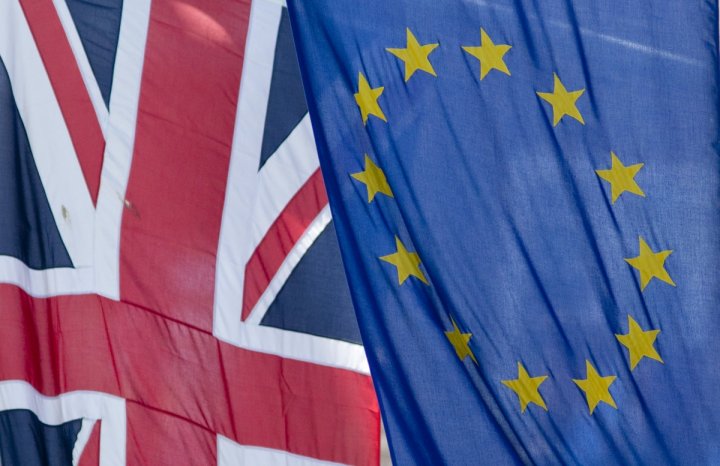
EU UK Flags

“If you don’t vote, you’re taking the colour out of Britain” – A Horribly Divisive And Misguided Message

Operation Black Vote - The Sceptic Isle - 1


By Ben Kelly, blogger and editor of The Sceptic Isle.

The Operation Black Vote campaign is, in some ways, quite admirable. Sadly, their latest campaign sends out the wrong message entirely. It seems to me to be rather tasteless, divisive and pandering to the prevailing concept of identity politics.

A multi-racial Britain needs to be unified to be at ease with itself. It needs to be unified to facilitate the inclusion of minority groups. The dream must be that all who believe in our virtues as a nation and make up our diverse society are British, we are one nation and one people. Identity politics divides creates a victim mentality and weakens our social and political bonds. This latest “whiting up” campaign is good intentioned, but seems to create a divide between Black Britons and white Britons in a way that is counter productive.

“You’re taking the colour out of Britain”, next to the whitened face of a black man seems to put across a strange message that by not participating in the election you are allowing “the whites” all the power. Is it sensible or moral to divide us like this? It seems to create a sense of victim-hood, bitterness and resentment. It aggravates a sense of otherness rather than encouraging inclusivity in the British identity.

Once you enter the polling booth it does not matter if you are white, black, Asian, male, female, rich or poor. All these minority groups and all classes of people become indistinguishable. In that booth you are a British citizen voting in the democratic process to decide the government of your country. It is the great equaliser, one person, one vote. When we have the lamentable situation of rotten boroughs rife with electoral corruption, MPs that target racial groups for their own gain, government communicating with certain minority groups through “community leaders”, that is the ideal that we should be striving for.

Are we British? Or are we white British, black British, Asian British, female British, male British, gay British, trans British, etc. This is where identity politics leads and it is this inglorious tradition that the “taking the colour out of Britain” is perpetuating.

Continue reading

Election 2015 Uncertainty Makes Everyone A Fair Weather Constitutional Reformer

UK Britain Constitution General Election 2015


With just sixteen days to go until we cast our votes in the 2015 general election, politicians and commentators of all stripes are suddenly waking up to the realisation that the party they hate most – be it Labour, the Evil Tories, the nationalist parties or UKIP – may very easily end up in government despite failing to win anything close to a popular mandate, thanks to some unpredictable and largely unstoppable backroom deal following a hung parliament.

In response, every commentator in the land seems to be turning into a bad-weather constitutional reformer, bemoaning the impending political chaos now that it is nearly upon us, despite having taken almost no interest in these dull, un-sexy  constitutional issues when there were other, more fun things to write about.

Here is Philip Johnston’s contribution for The Telegraph:

If neither Mr Cameron nor Mr Miliband were able to put together a viable government, a second election would normally follow; but the Fixed-Term Parliaments Act 2011 complicates matters. It provides for a dissolution of Parliament only when there is a specific vote of no confidence in the government or if two thirds of all MPs vote for an election. This makes the prospect of another early general election less likely. In any case, the parties may have little appetite for one given the expense and the prospect of losing support in a fresh contest.

Without a dissolution we would have a legislature but no government, a bit like Belgium, where the prime minister resigned in April 2010 and no new parliamentary majority could be established for almost two years. The country was run by a former prime minister brought out of retirement and a caretaker administration. It didn’t do them much harm. A report by academics at the University of Leuven noted that the government continued to make “legitimate decisions” on urgent matters of public finance and national security while MPs squabbled. They concluded that “in mature democracies, a power vacuum is taken care of in a constructive, creative, and responsible way”. Do we have such virtues? We might be about to find out very soon.

One thing is clear: a minority Labour government, with fewer seats than the Tories, running the country while in thrall to a nationalist party that has only 2 or 3 per cent of the total UK vote, would test our constitutional structures to breaking point, and maybe beyond. More than that, it could test our creaking, centuries-old Union to destruction.

Isn’t it funny how Britain’s growing ranks of amateur constitutional scholars and reform zealots have only come crawling out of the woodwork now that they are faced with the prospect that the party they dislike might end up calling the shots while not being the largest party in terms of either vote share or seats?

Continue reading

George Osborne’s Lloyds Bank Share Sale Pledge Is Cynical And Short-Sighted

George Osborne - Lloyds Bank - Lloyds Banking Group Share Sale - General Election 2015


It isn’t always easy defending Conservative policies. While left wing parties have the luxury of flaunting their “compassionate” credentials with every unfunded pledge and extravagant promise to spend other people’s money, those on the right have the trickier task of explaining that a smaller, less interventionist state and a safety net reserved for those in real need is the only true path to a happier, more self sufficient population.

Visit any left-leaning website or listen to any left-wing activist speak, and it won’t take long before you hear a tirade against the “Evil Tories”, who in the minds of their accusers are not just wrong, but positively eager to hurt the poor and hound the vulnerable. Whether it’s on healthcare and the NHS, welfare reform, tax policy or public services, British conservatives always begin every argument ten points behind, having to battle against the widely-held assumption that conservative policies are motivated only by greed and a desire to protect the interests of those at the top.

Countering this false, pernicious narrative is hard enough at the best of times. And it really doesn’t help when patrician-sounding Conservative politicians like George Osborne announce the “sale” of partly nationalised Lloyds Bank to the public at a discounted price, a giveaway for the middle classes, the politically engaged and the financially literate at the expense of everyone else.

From George Osborne’s triumphalist announcement, published in the Telegraph:

Continue reading