Rotherham & Cologne: A Tale Of Two Cities Betrayed By Political Correctness

Cologne - Sexual Harrassment Abuse - Virtue Signalling

High-handed elites with their fear and contempt for ordinary people are the greatest internal threat now facing our society

If Western civilisation does ever collapse in upon itself, it will not be the fault of radical Islam, UKIP, Jeremy Corbyn, Donald Trump or Kim Jong-Un’s home-made H-bomb.

It is becoming increasingly clear to me that the fastest route to national or civilisational decline is for our elites to persist in their policy of signalling their virtue by furiously ignoring inconvenient realities, and having infinitely more fear and contempt for their fellow citizens than any real, external threat to our freedom and security.

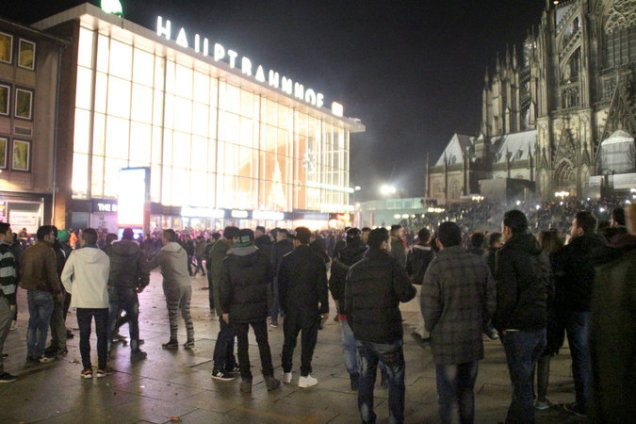
Consider the scandal now unfolding in Germany, where city officials and the media stand accused of covering up important news about a spate of sexual attacks in the city of Cologne, for reasons of political correctness and a painful reluctance to highlight a potential link between these attacks on women and the immigrant population.

From the New York Times:

The tensions simmering beneath Germany’s willingness to take in one million migrants blew into the open on Tuesday after reports that scores of young women in Cologne had been groped and robbed on New Year’s Eve by gangs of men described by the authorities as having “a North African or Arabic” appearance.

[..] The assaults initially were not highlighted by the police and were largely ignored by the German news media in the days afterward.

[..] The descriptions of the assailants — by the police and victims quoted in the news media — as young foreign men who spoke neither German nor English immediately stoked the debate over how to integrate such large numbers of migrants and focused new attention on how to deal with the influx of young, mostly Muslim men from more socially conservative cultures where women do not share the same freedoms and protections as men.

Shockingly, this story has only received significant traction over the past couple of days, despite the events taking place a week ago.

One can almost imagine the terrified police officials and news editors in Germany, sitting on this story of unquestionable public interest, yet paralysed into inaction by the all-consuming fear of appearing in any way racist – as though it were not perfectly possible to report the news in a sober and measured way, giving the facts without casting aspersions on an entire ethnic group or community.

But to the minds of many people in authority – not only in Germany, but across Europe – reporting a story which amounted to a question of public safety for the women of Cologne was remarkably not an open-and-shut case, but rather a morally ambiguous grey area fraught with hazard and difficulty.

The reason for this moral and professional failure is twofold. Firstly, there was the ever-present impulse to be seen as virtuous, progressive and in no way racist (as though noting the ethnicity of a criminal suspect is somehow smoking gun evidence of prejudicial thought). One cannot underestimate the corrosive effect that this pressure to be seen not just as tolerant but blindly uncritical of other cultures has on people who hold positions of trust in our society.

But secondly – and even more insidiously – there is the fear of “we the people”, and the nervous contempt with which elements of our political class view their fellow citizens. It is the mindset which whispers in the ear of police chiefs and news editors that they cannot possibly report a story about mass sexual harrasment in a major European city, because the particulars of the case might drive the ordinary “sheeple” into committing a murderous, anti-immigrant pogrom. It holds the people in such low regard that they are seen as mindless automatons liable to do anything suggested by Evil Mass Media.

Both of these noxious ideas are complete nonsense, of course. It is perfectly possible to report a pertinent social or ethnic dimension to an important news story without giving in to base racism or crude stereotyping, and most people are perfectly capable of watching or reading such a story without themselves being motivated to commit criminal acts against people who share the same appearance or ethnicity as the alleged suspects. Yet these are the poisonous ideas influencing people in positions of civic leadership throughout Europe.

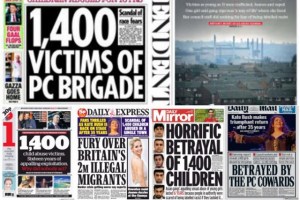
In some ways, the scandal emerging out of Cologne resembles the Rotherham sexual abuse scandal in the UK, which finally made news headlines in Britain in 2013. Obviously there is no comparison in terms of the scale of the atrocity committed – in Rotherham, hundreds of girls were systematically abused and raped by gangs of men while the authorities turned a blind eye – but the first response of those in positions of civic authority has been startlingly similar. As in Rotherham, officials in Cologne first chose to bury their heads in the sand and wish the problem away rather than risk the reputational harm (or imagined public disorder) that would have arisen had they sounded the alarm.

As Mick Hume notes in his powerful and timely book “Trigger Warning: Is The Fear Of Being Offensive Killing Free Speech?“:

Why did the local authorities try to close down media reporting and public debate of the child sex scandal? Not because the council and police in Rotherham had some sort of soft spot for sex criminals. It was because they were afraid of being accused of racism, and exacerbating community tensions, by allowing it to be said that Asian men were abusing white girls. They did not want to suppress the story because it was false. They wanted to suppress it because it was true.

[..] In other words they feared the reaction of local people if the media were permitted to report the truth and people were allowed free discussion of the facts. Or to put it more bluntly, they suspected that the Rotherham public were a malleable lynch-mob-in-waiting, a collection of puppets that could be inflamed into race riots by a spark from a Home Office report or a newspaper investigation.

[..] The authorities feared that there might be race riots in Rotherham if locals heard a bad word about child sexual exploitation from the press or right-wing politicians. So interfering in the right of the public to know the facts and judge for themselves became the first instinct of liberal-minded officials and politicians. Rather than have uncomfortable truths in the public domain, they tried to keep the free-speech genie in the bottle.

Inevitably, this “liberal” interference only serves to make matters infinitely worse by allowing problems to fester unresolved.

And yet the consequences of allowing the people to hear or know the uncomfortable truth are never as calamitous as the elites always fear, as Mick Hume points out with respect to Rotherham:

This was not done in the name of restricting free speech of course, but of protecting the innocent and maintaining community cohesion. Whatever they called it, the result of interfering with free speech and limiting debate was, as always, to make matters worse. When the long-suppressed truth finally came out there were no race riots in Rotherham – people are not the mindless automatons that some appear to believe. But the scandal left deep divisions and scars that threatened to sink, never mind rock, the multicultural boat.

If this problem manifested itself only in cases of sexual abuse going unreported and unaddressed it would of course remain a horrendous sickness in our society and a grave failure of the state to protect half of its population. But it would not be an immediate, existential threat to large, modern countries like Britain and Germany.

However, this worrying trend is by no means limited to the sexual abuse of women, or the dereliction of duty by civic leaders in provincial cities. All around Britain – and indeed Europe – we see the same failure to tackle non-integration and non-assimilation with Western norms by recent migrants or their children. Even when the lack of commonly held British values and a shared common identity leads to whole families upping and departing for Syria to fight for ISIS against the country which gave them life and liberty, many of us refuse to face the problem square on.

It’s not just Rotherham. There is a festering crisis of British and Western values, and a determined unwillingness from some quarters – for reasons of political correctness and fear of the masses – to challenge cultures and behaviours which fall short of our hard fought, painstakingly-built commitment to freedom of speech, freedom of (or from) religion, respect for the role of law and equality for women.

But it is not the child rapists or locally-grown terrorists who are even the greatest problem. Evil as those deplorable crimes are, the people who currently present the bigger threat to our society are those in the political elite or positions of civic leadership who seek to make a public virtue out of their tolerance-at-all-costs approach to multiculturalism. Some of these people may mean well. But their misguided dogma threatens our country and our liberties with a slow death by a thousand cuts.

And it is this corrosive attitude – whether expressed in Cologne or Rotherham, London or Brussels – which we must fight against first and foremost.
Rotherham Sexual Abuse Scandal - Cologne Sexual Harrassment

Agree with this article? Violently disagree? Scroll down to leave a comment.

Follow Semi-Partisan Politics on TwitterFacebook and Medium.

Gay or Straight, The Robert Dyas Christmas TV Ad Is Cheap and Cynical

https://www.youtube.com/watch?v=_YS2dSa-Ud0


Don’t praise Robert Dyas for their awkward, virtue-signalling Christmas television commercial. Condemn them for exploiting the hard-won civil rights accomplishments of others for monetary gain

If any further proof was needed that tolerance and equal rights have morphed from being simply the right thing to do into just another opportunity for ostentatious virtue-signalling, you need look no further than the bizarre Christmas television commercial recently released by Robert Dyas.

In the ridiculous TV advert – a parody of a 2009 satirical video by Rhett and Link – various Robert Dyas staff members are shown confessing their sexuality before going on to plug completely unrelated products stocked by the retailer.

(The original video showed black and white employees explaining how the products in their furniture shop were suitable for both black and white customers).

From the Telegraph:

The minute-long film, described as “the weirdest Christmas advert ever”, shows men and women declaring whether they are straight, gay or bisexual while describing unrelated products in the store.

In the clip filmed in one of the chain’s branches, a member of staff introduced himself by saying: “Hi, my name’s Marcus, I work at Robert Dyas, and I’m gay.”

Before showing off a large inflatable yellow Minion toy, he adds: “I like going out with my friends and playing volleyball. I also like showing our gay and straight customers a funky range of our Christmas gifts.

[..] The confusing advert then comes to a close with a shot of staff members and customers standing at the shop’s counter, and announcing in unison: “Robert Dyas – where gays and straights can buy drills and much, much more”.

Like all clever television adverts, this was clearly designed to be controversial and to generate discussion which would expand Robert Dyas’ marketing reach well beyond the number of people who will ever see the commercial on television. And as with the creepy John Lewis “Moon Hitler” commercial, also released this year, much of the weirdness is intended to get people talking – so mission accomplished.

But in this case it is worth taking the bait, because the message of the Robert Dyas commercial is symptomatic of a wider trend sweeping Anglo-American society, whereby it is no longer enough to quietly practice the principles of tolerance and non-discrimination in one’s own life, but rather we are continually encouraged to make ostentatious public displays of conformity with the new enlightened PC dogma.

Of course people of any sexual orientation should be treated with respect and dignity at all times, including people either working for or shopping at large chain retailers. But since when did it become the job of hardware shops to start preaching about social issues? How does the spectacle of individual staff members inexplicably revealing their sexuality help to advance equal rights? And what of those customers of traditional (or bigoted, depending on your view) beliefs, who do not agree with the message? Are they worthy of no respect, or magnanimity in the face of now-inevitable ideological defeat?

The Robert Dyas affair is not dissimilar to a similar action taken by Starbucks in the United States following the shooting of unarmed black teenager Michael Brown in Ferguson, Missouri. Following that tragic death, Starbucks became possessed by the idea that they were going to make a meaningful contribution to race relations in America, and encouraged their baristas to “start a conversation about race” with customers while serving them in store.

In other words, Starbucks decided that it was no longer enough for private citizens to be non-racist themselves, and engage in whatever activism or campaigning on the issue that their hearts dictated in their roles as private citizens. Now, Starbucks – that beacon of moral enlightenment – would “help them along” by prompting them with guilt-tripping conversation openers about white privilege.

Quite how initiating a serious conversation about Ta-Nehisi Coates’ “The Case for Reparations” with a bleary-eyed morning commuter might meaningfully help the country was never fully explained. And no sooner was the proposal announced in a blaze of sanctimonious publicity than it was then quietly dropped in the face of public scepticism and mockery.

The Robert Dyas affair is much the same – an ostentatious display of “right on” progressivism from a corporate retailer, who rather than being lauded for their enlightened position on civil rights should be condemned for co-opting the still serious issue of discrimination against gay people and exploiting it in service of their viral Christmas marketing campaign.

Of course Robert Dyas has the right to say anything they like in their television commercials – that much is an issue of free speech which should be protected and defended at all times. But not every PC pronouncement is made for the “right” reasons, and we should be smart enough to see through the virtue signalling of the social justice warriors and the cynicism of the business interests, which are more about self aggrandisement or monetary gain than advancing important social issues.

Real social change – positive or negative – comes from the ballot box, the picket line, the popular culture, the academy and the hearts and minds of private citizens.

Real social change does not come from the marketing department of Robert Dyas or their advertising agency – though thanks to their cynical marketing they do stand to reap financial rewards from the hard-won accomplishments of others.

UPDATE – 14 December: As the sharp-eyed commentator below points out, the Robert Dyas video is a parody of a 2009 satirical internet commercial by Rhett and Link, which is very similar – except that gay and straight are replaced by black and white. Top of the piece is now updated to make this clear, though I don’t think this necessarily changes the validity of my argument. Robert Dyas still chose to make and release the parody, and their motivations were still likely to be as described, half viral quirkiness and half virtue signalling – only now we can add unoriginality to the list of faults.

Robert Dyas have yet to comment on the video.

Robert Dyas - Christmas TV Advert - Gay

Agree with this article? Violently disagree? Scroll down to leave a comment.

Follow Semi-Partisan Politics on TwitterFacebook and Medium.

In Defence Of Andrew Neil’s Anti-ISIS Rant – Political Journalism At Its Best

No, Andrew Neil’s magnificent anti-Islamist rant was not a violation of the BBC’s commitment to impartiality

It’s a strange world where I find myself writing in support of Andrew Neil twice in the same week, but then these are very strange political times.

Nick Cohen sings Andrew Neil’s praises in The Spectator this week, before going on to condemn Neil’s rousing anti-ISIS monologue at the start of his This Week programme – a speech which this blog strongly supported – on the puzzling grounds that it broke the rules on journalistic impartiality.

Cohen writes well as always, but there are so many mistaken premises and inaccurate comparisons in this piece that a proper rebuttal is needed.

His criticism of Neil begins:

Everywhere you look you can see broadcasters following Neil and Snow and pushing against the fuddy-duddy rule that they must show ‘due impartiality’. The Church of England is joining in, and pushing against equally antiquated restrictions on political and religious advertising.

They must be stopped. However admirable Neil and Snow’s sentiments are, and however inoffensive the Anglican’s celebration of the Lord’s Prayer was, we have to shut them up. The BBC and Channel 4 should never have broadcast their interviewers’ opinion. The cinema chains were right to tell the Church of England it was not welcome on their screens.

Britain is a country with rules to prevent wealthy politicians buying votes and wealthy televangelists buying converts. We are also a country that has fought to maintain the principle that broadcasters must be politically neutral – not always successfully, I grant you.

Three points here. First, the requirement for broadcasters to show ‘due impartiality’ applies to news programmes, and not to commentary – least of all when we are nowhere near a general or local election, the time when the rules governing broadcaster impartiality are at their strictest. The BBC’s This Week is a political magazine show, not a straight-laced news bulletin. Of course one would not expect Evan Davis, Kirsty Wark or Huw Edwards to pepper their delivery of the news with caustic criticisms or sarcastic asides – that would be highly improper. But a political magazine show is by definition an opinion-based show, relying for its content on a parade of partisan guests from different political parties and the media.

Cohen attempts to lump Andrew Neil’s tirade against ISIS along with Jon Snow’s coverage of the Israeli siege of Gaza, but this is comparing apples and oranges – one is a daily news bulletin required to be impartial, and one is a weekly talk show where opinions and partisan debate are essential ingredients.

Second, this is Andrew Neil we are talking about – a seasoned veteran journalist and businessman with a vast political Rolodex and a personal “brand” all of his own. Neil was also editor of the right-leaning Sunday Times for over a decade, is chairman of the company which owns the reliably Tory-friendly Spectator, and in previous life was a researcher for the Conservative Party. Neil was never supposed to be an anonymous newsreader, nor is he marketed as one – people watch This Week because Andrew Neil presents the show, and they know exactly what they are getting when they do so. The BBC are fine with that, and there is nothing to suggest that either the letter or the spirit of the rules are not being followed.

And thirdly, while Cohen’s assertion that Britain is “a country with rules to prevent … wealthy televangelists buying converts” might plausibly be true, we are also a nation with an established state Church – one whose grasping tentacles reach into nearly aspect of our politics and our national life. The ongoing row about the Church of England’s cinema advert is a separate issue, but we should not pretend that our United Kingdom is a nation where we even pay proper lip service to the concept of separation of powers.

When meddlesome bishops speak out in parliamentary debates without a shred of a democratic mandate, and when there are still scenarios whereby the Queen might conceivably end up picking the next government, we should not act as though there is some ancient and grave constitutional requirement for television stations to broadcast opinionless, equivocating platitudes 24/7.

BBC Values - Impartiality

Cohen continues:

Broadcasters themselves know a dirty secret newspaper editors understand too well: extreme opinions sell. They confirm the partisan in their beliefs and draw in outraged opponents.

[..] Broadcasters want a piece of that action. Opinion is cheap. News is expensive. The public watched Andrew Neil and Jon Snow’s polemics in their millions. What possible justification is there for insisting on balance, accuracy and impartiality?

It may be the case that news is expensive while opinion is cheap, but without the forceful expression of political opinions there could be no This Week in the first place – indeed, there could be no Question Time or Newsnight interviews either, let alone the crucible that is Radio Four’s Today Programme. And if Cohen is saying that the host should always be impartial even on political magazine shows then he sets a standard which can simply never be met, since every raised eyebrow, incredulous glance, rude interruption or “gotcha moment” will be seized on as evidence of deepest bias. Far better that we have good presenters with transparent histories like Neil, and then allow the public to adjust their perceptions accordingly.

Besides, this is not a question of political neutrality, at least as we traditionally understand the matter. Britain is not at war with a sovereign nation, however much ISIS may try to strut and pose as such. We are in conflict with a nihilistic, totalitarian death cult which seeks to spill the blood of everyone who does not adhere to their harsh, warped interpretation of Islam. They stand for nothing save creating hell on Earth to please their petty, jealous and vindictive god. Why shouldn’t the presenter of a serious political talk show be able to say that which we all know to be true?

And since when did expressing an opinion prevent something from being “real journalism”? Is Cohen himself not a journalist because his Spectator piece failed to strike an impartial position between Andrew Neil and himself? Whenever a broadcast news presenter reports on a “horrifying murder” or a “tragic death” they are making a value judgement and presuming to speak on behalf of the 99.5 percent of people who will agree with them. There is no moral or statutory requirement for the newsreader to treat criminal and victim alike in their tone and description, nor should there be. Similarly, ISIS are torturers, rapists and murderers. They break the law every moment of every day in their campaign to spread hatred and ignorance around the world. What’s wrong with saying so?

If ISIS were a legitimate, functioning state or political party and Andrew Neil went on a two minute tirade about their fiscal policy or industrial strategy then there might be grounds to accuse him of political bias. But that is absolutely not the case. Andrew Neil saw ISIS (or Islamist Scum, as he now calls them) take their patented formula of death and suffering, and smear it across the bright lights of Paris one unsuspecting Friday night, and he called it what it was – an act of savage murder that history suggests is doomed to fail in its stated goals.

If ISIS supporters were greatly offended by Neil’s words and lack of objectivity then by all means they can submit a complaint via OFCOM or the BBC Trust. I rather hope that they try.

But they do not need Nick Cohen – or anyone else – to help them out.

BBC - British Broadcasting Corporation

Agree with this article? Violently disagree? Scroll down to leave a comment.

Follow Semi-Partisan Politics on TwitterFacebook and Medium.

Time For A Woman To Lead The Labour Party? Yes, But Not Like This

Andy Burnham - Labour Leadership - Sexism - Feminism - 2

Andy Burnham’s Labour leadership campaign has its flaws, but these grasping allegations of sexism are cynical, shameful and unfounded

I dearly hope that one Andy Burnham rally was not all it took for me to become “part of the change” or whatever desperately lame slogan his supporters are now using, but today I actually find myself defending the man.

I have to take exception to the storm of manufactured outrage swirling around social media simply because Andy Burnham failed to agree – when asked on the radio – that he should effectively step aside from the leadership contest so that a woman can win.

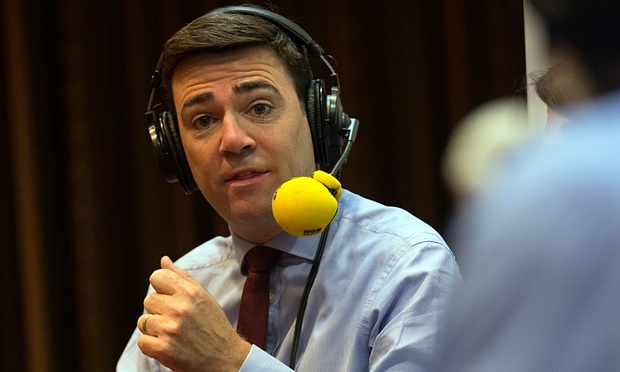
During BBC Radio 5 Live’s Labour leadership hustings today, Andy Burnham was asked whether it would be “great” if Labour chose a female leader. And Burnham, realising that to say yes would be to effectively denigrate his own campaign, replied “When the time is right, when the right leader comes along”, clearly meaning when the future woman leader did not have to win at his own expense.

But in today’s charged and cynical atmosphere – fed at all times by the virtue signalling Twitterverse – you would think that Burnham had ordered his two female leadership opponents out of the leadership contest and back to the kitchen.

Continue reading

The Road To Rotherham – When Political Correctness Trumps Child Welfare

alexis jay rotherham


Professor Alexis Jay’s report on child sexual abuse in the town of Rotherham contains truths and revelations so shocking and awful, and on such a scale that it is scarcely possible to believe them.

From the report:

“No one knows the true scale of child sexual exploitation in Rotherham over the years. Our conservative estimate is that approximately 1,400 children were sexually exploited over the full inquiry period, from 1997 to 2013.

It is hard to describe the appalling nature of the abuse that child victims suffered. They were raped by multiple perpetrators, trafficked to other towns and cities in the north of England, abducted, beaten, and intimidated.

There were examples of children who had been doused in petrol and threatened with being set alight, threatened with guns, made to witness brutally violent rapes and threatened they would be next if they told anyone.”

Horrific cases of abuse and neglect going unstopped because of the lethal combination of a failed bureaucracy and individual failings are, of course, nothing new. We see such horror stories only too often, most notably in the death of Baby Peter.

But tragedies such as these are on a far smaller scale than the slow-burning atrocity which took place in Rotherham over a period of sixteen years. The needless death of one child is an abhorrence. The scarring of up to 1500 children’s lives is almost unfathomable.

At times such as this, when we are not too busy breast-beating, it is fashionable to urge calm and wait for the various investigations – 32 of which are already underway in Rotherham – to finish their course. At the other end of the response spectrum, we can expect to see highly emotive calls for the immediate sacking of every public sector worker in the town who was even tangentially connected to the case.

In this case, Yorkshire and Humber’s UKIP MEP, Jane Collins, eagerly stepped up to the plate:

“I categorically call for the resignation of everyone directly and indirectly involved in this case. The Labour council stand accused of deliberately ignoring child sex abuse victims for 16 years. The apologies we have heard are totally insincere and go nowhere near repairing the damage done.

“These resignations should include South Yorkshire’s police and crime commissioner, Shaun Wright. I also call for a criminal investigation by a force not directly linked with this scandal into all those implicated in this scandal. There is no place for these people in public life.”

Fine. This blog will be the last to plead clemency for those at the top who presided over this horror show before moving on to other well-remunerated jobs, especially if their lack of action during the period in question casts doubt on their ability to perform well in their new roles, or to keep the public’s trust. This would certainly include Shaun Wright, the police and crime commissioner.

But the report hints at something far deeper and more insidious which must also be tackled if we are to prevent a recurrence of this scandal, one which is certainly not limited to the Yorkshire town.

The Spectator’s Isabel Hardman, citing Professor Jay’s report, lays it out:

There seemed to be a fear of man rather than of wrongdoing, perhaps even a true definition of political correctness gone mad, that led the council to ‘tiptoe’ around the issue of child sexual exploitation in the Pakistani-heritage community. The report found that there were just two meetings in 15 years about CSE – and they took place in 2011 when the abuse stretched back into the late nineties.

How did this go on for so long? The Jay report is worth reading in full, if only to get a measure of the way apparently well-organised organisations apparently working in a joined-up way managed to fail 1,400 children (at least). But something removed the urgency and made fear of breaking a taboo and being labelled politically incorrect the bigger thing. It was a fear of consequences, of anyone more important and powerful finding out that repeated allegations and internal reports were being ignored and someone being held responsible. ‘An issue or responsibility that belongs to everybody effectively belongs to nobody, and in the case of sexual exploitation of children in Rotherham, accountability was key,’ said the report.

Aside from the usual bureaucratic failures, exercises in self preservation and groupthink which are always offered up as excuses at times like this, it is the apparently terrifying, suffocating fear instilled by a climate of political correctness which emerges as the main culprit in the Rotherham scandal.

When an issue or cultural pathology presents itself in any British community, civic leaders should be able to talk about it directly and work swiftly to address it without fear of reprisal or backlash – though they should also be of sufficient character and moral fibre that they are willing to incur such a backlash. Rotherham, apparently, lacked both attributes – there was a heavily stultifying culture of political correctness which dictated which issues could be examined and tackled, and there was a lack of quality local leadership at any level willing to take on the toxic culture.

This is despite the fact that many people in the local Muslim community were equally outraged by the contents of the report, and declared that they would have willingly participated in efforts to stamp out sexual abuse within their community if only the council had made them aware of the nature and extent of the problem. Once again, the real enemy seems not to be the minority community itself, but rather people within society at large who are trying to curry favour from goodness knows where by wilfully and falsely equating scrutiny with racism.

Consider, by contrast, the lectures and condescension which British politicians are only too happy to dole out to members of Britain’s black community. Echoing similar calls made by President Barack Obama in the United States, David Cameron has been happy to go on record calling for a “responsibility revolution” among black families and black fathers in particular, in order to stem the tide of gun and knife crime in British cities. In these sermons there is no reflection on the socioeconomic circumstances which might lead to higher instances of family breakdown and absentee fathers, just an assignation of blame and a call to do better.

Tumbleweeds gently roll in place of the admonitions that David Cameron and his ministers consistently fail to dole out to other communities facing particularly acute problems of their own. And in the only comparable example, calls by British politicians for the British Muslim community to do more to watch out for and prevent radicalisation and extremism among their disaffected youth, there has been extremely heavy pushback from many prominent people in the media.

This is the insidious power of political correctness gone too far. Often borne out of a genuine desire to be inclusive and avoid giving undue offence, too often it becomes a self-policing dogma that rewards total, unthinking loyalty and the holding of “politically correct” thoughts and positions while punishing and excluding those who are unsure, or who question the status quo.

In these politically correct fiefdoms, groups which enjoy the benefit of politically correct protection are free to live and act unchallenged and unimpeded, while those less astute or well-represented are subject to the laws and rigorous oversight that governs the rest of us. Professor Jay’s report leaves little doubt as to which particular group and community enjoyed de facto immunity from the law in Rotherham.

Of course, the child sexual abuse scandal was not entirely limited to the Pakistani heritage community in Rotherham. And the last thing that anyone should want is to encourage the Britain First-style “Muslim paedos off our streets” marches and battle cries that are becoming increasingly common in the far right community. But where there is a festering problem in any of Britain’s ethnic or religious communities, we need to be able to talk about it frankly and openly without being labelled intolerant or racist. And local authority after local authority, Britain is currently failing this test.

The other most recent example of Britain’s failure to hold all of our diverse religious and ethnic sub-communities to the same standards of behaviour was the Birmingham schools Trojan Horse scandal, which rumbles on and which compromised the educations of thousands of children, who were willfully exposed to some very un-British values at the expense of the taxpayer. As the first concerns were raised and the investigation began, false accusations of racism and Islamophobia not only hampered the work of the Department of Education and thwarted the will of law-abiding non-extremist parents, they also served to sow divisions in the community which persist to this day.

But a compromised education can be repaired. Theocratic teachings and hardline conservative approaches to music, gender inequality and other unwelcome imports from the fifteenth century can, in time, be unlearned. What cannot be undone is the systematic rape and sexual abuse of thousands of British children, some of Pakistani heritage themselves, by malicious adults from their own community – all of which took place under those nose of a local government machine that is big and powerful and only too happy to proactively intervene in citizens’ lives when not constrained by a veto from the forces of political correctness.

Many articles will be written about how this came to happen, and many politicians will say “never again”. But the core enabler of this sexual abuse epidemic is not hard to fathom. The road to Rotherham began when it was made implicitly clear to those in power that political correctness trumps child welfare.