Sometimes it is good to quit things. Like heroin, or the European Union…
The latest drivel to ooze from the Britain Stronger in Europe campaign is a recent clip of the prime minister, filmed at last week’s Sky News Q&A, doing his creepy “I’m so passionate” thing and suggesting that those of us who want Britain to leave the European Union to retake our rightful global role are “quitters”.
(Of course, back on planet reality there is no greater demonstration of being a quitter than for people to cling to their membership of that ragged self-help group for countries who have lost their self confidence known as the EU.)
But David Cameron insists that “Britain is a leader, not a leaver” – the logical extension of which is that we must doggedly persist with every single decision we ever make as a country, never acknowledging our errors and never stepping back from the precipice of decline, because to admit that past choices are no longer working for us (or never worked for us at all) would be to appear weak and indecisive.
What we should be doing instead, of course, is taking that “leading role in Europe” that David Cameron and his new best buddies on the political Left continually tell us is our rather dubious birthright.
And we shall show our leadership by cowering inside an anachronistic, decaying, dysfunctional and parochial regional political union dreamed up in the early 20th century and hopelessly inadequate to the challenges and opportunities of globalisation in the 21st.
It makes perfect sense, if you start from a position of rabidly and unthinkingly wanting Britain to stay in the European Union at all costs, and then carefully cherry-pick your facts and news sources in order to receive a constant stream of confirmation bias-inducing Utopian propaganda.
Stronger In, everyone!!!!!111!!!one1!
–
Agree with this article? Violently disagree? Scroll down to leave a comment.
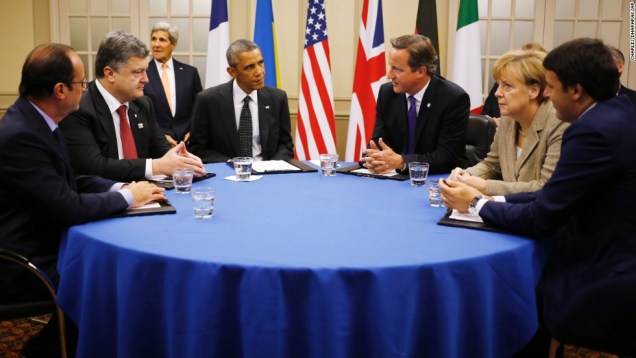
The importance of the UK as a key figure inside the EU club will be symbolically underscored when Obama again meets David Cameron, Angela Merkel, Mario Renzi and François Hollande in Hanover, Germany, on Monday to discuss Syria, Libya and the consequent migration crisis. The implicit message is that the UK outside the EU would not have been invited to such a high-level transatlantic conclave.
Oh gosh! How kind of Italy and France to allow Britain to take part in their Super Important Meeting with Germany and the United States. Of course, puny little Britain – the fifth largest world economy and pre-eminent European military power – would never normally be allowed to sit around the table with François Hollande and “Mario” Renzi, but for the fact that we are part of the same supra-national political union.
Is the Guardian serious? Sometimes it is hard to tell whether this dismal, miserablist attitude toward Britain is entirely genuine, or an attitude which is affected purely for the purposes of keeping our self-esteem just low enough that we don’t get ideas of national independence above our station.
The trouble, though, is that the Guardian is very much a thought leader in this area. Where the Guardian sighs, tuts and shakes its head at the hopeless prospects of puny, pathetic Britain, so many of its readers have been conditioned to automatically do the same. I’m frequently amazed by the number of conversations I have with otherwise intelligent, knowledgeable people who genuinely believe that Britain is a small and inconsequential nation.
It is almost as though someone distilled Britain’s despairing psyche when we were at our 1970s nadir into its purest, bleakest form, and then injected that dismal serum into half of today’s population. Once the infection takes hold, the feeble country that these National Inferiority Virus sufferers hallucinate bears absolutely no relation to the objective reality of modern Britain.
And these are the people who will be voting in the referendum on 23 June. These are the the pessimistic, resigned views which millions of people sympathetic to the Guardian’s position will carry with them into the polling booth. Citizens of a nuclear power, a P5 UN Security Council member, the world’s fifth largest economy and home to the financial and cultural capital city of the world, who nonetheless believe that it is only our membership of the EU which gives Britain’s prime minister the undeserved privilege of being in the same room as the leaders of Germany, France and Italy.
We don’t need to change our national anthem, or create a separate one for England. We just need to make much better use of the one we already have
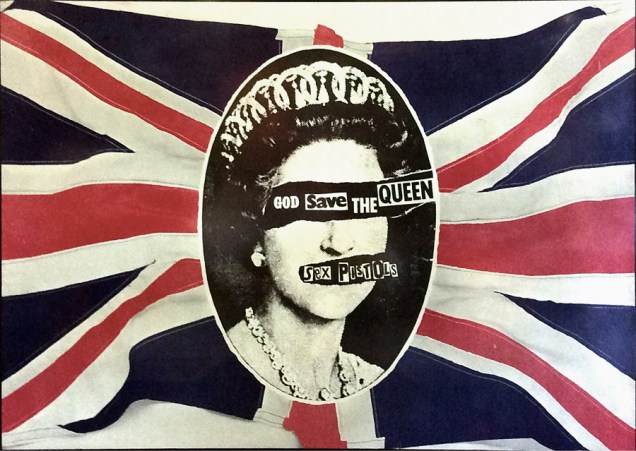
Is it time that England asserted herself by choosing a new national anthem of her own, separate and distinct from “God Save The Queen”, which supposedly represents our whole United Kingdom?
MPs seem to think so – the House of Commons has just voted in favour of an English national anthem, with a strong movement emerging to make Jerusalem England’s new anthem. But was Chesterfield MP Toby Perkins right to table the motion in the first place, and would we be right to ultimately adopt his idea?
In short, no. Much as this blog is generally in favour of full parity between the four home nations – best expressed through a federal structure brought about as the result of a full constitutional convention – calls for a separate English national anthem are particularly unhelpful at this time.
Our United Kingdom is already fraying at the seams. Having narrowly avoided dissolution as a result of the Scottish independence referendum last year, now is hardly the time for further measures which emphasise the relatively slight differences between England, Wales, Scotland and Northern Ireland. And no matter the temptation to poke swivel-eyed Scottish nationalists by meeting their quasi-religious fervour with a matching level of English nationalism, any step in this direction is likely to do more harm than good.
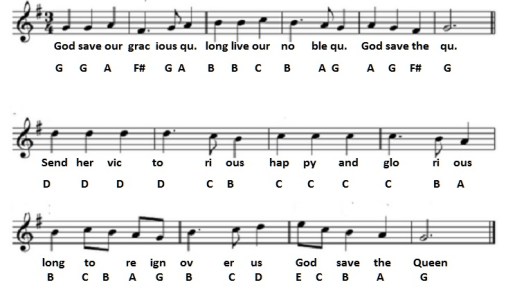
Is “God Save The Queen” a great anthem? Sadly not. Though as one commenter said on the BBC Daily Politics last night, it would have sounded less turgid sung lustily and at twice the speed, as apparently it once was. But there is no escaping the fact that Britain’s national anthem is a dusty and somewhat dull affair, especially set against the rousing, martial Marseillaise, the strutting, operatic Italian anthem or the ever-inspirational Star-Spangled Banner.
But much that is “wrong” or unsatisfactory with “God Save The Queen” can be remedied by performing it better. That means much less Lesley Garrettwarbling away in a high soprano, and more beautiful arrangements like the heart-stopping Benjamin Britten version which has been given a new lease of life in recent years at the Last Night of the Proms:
The hushed opening, stately and noble tempo and beautiful harmonies, slowly building to an impassioned climax in the (too rarely heard) second verse, “Thy choicest gifts in store…”, actually make those who have only ever heard bad recordings of our national anthem stop and reconsider its merit.
And this sense of a fresh look is possible with contemporary performances too. We all know how the Americans pinched the tune to our national anthem and rebranded it as a patriotic song entitled “My Country, ‘Tis Of Thee“. Well, in the right hands it can sound incredibly moving – again showing that we British fail to make the best use of the source material at our disposal.
It is quite possible to listen to this beautiful arrangement – with Clarkson accompanied by the US Marine Corps band – and get quite emotional, before thinking “wait – I recognise that tune!”
Yes, that amazing performance which had you on your feet was none other than “God Save The Queen”, re-branded and given a glitzy makeover by a people who are a bit less hesitant to wear their emotions on their sleeves. Once again, we could learn a thing or two from our American cousins.
But of course, there is no escaping the fact that the words of Britain’s national anthem are written to glorify one person – the monarch – rather than our country itself, or her people. For some with republican leanings, it is impossible to get past this obstacle, whatever their other feelings on the subject. I can sympathise with this position. But as someone who greatly admires the Queen, has enormous respect for our country’s history and heritage but who increasingly thinks that the monarchy should be gently separated from our constitution once the second Elizabethan age is over, I still sing our national anthem with pride, thinking of my country rather than just my Queen.
The temptation to meddle – to change things, supplant or supplement them – is always going to be present, because nothing we do or create will ever be perfect. But “God Save the Queen” has been with us since 1745. It is very much a part of our history. In the past year alone it has seen us through two world wars, a cold war, as well as technological and social revolutions which have utterly transformed Britain – nearly always for the better.
Could we adopt Parry’s “Jerusalem” instead? Yes, of course. Nobody doubts that it is a fine composition, with a century of its own history and lyrics – it is a setting of a poem by William Blake – in its favour. It also has the advantage of glorifying a country, or at least an idea of a country, which is what national anthems are if anything supposed to do.
But is the satisfaction we might feel by doing so worth adding to the factors which are undermining our United Kingdom from within and without? Is taking what would be a very bold step toward the reassertion of separate English identity worth potentially destroying our union. I do not think so.
Should we change our national anthem, or create a new anthem specifically for England? Absolutely not. Not now. We should just make much better – and more musical – use of the anthem we already have.
–
Agree with this article? Violently disagree? Scroll down to leave a comment.
I’m currently back in the United States to celebrate Christmas with family in Texas. These short “Postcards from America” will document a few of my thoughts as I escape the political whirlwind of Westminster and look back at Britain from the vantage point of our closest ally
–
A musical contrast between Britain and America
I have been trying to find a way to describe the feeling I always get when I arrive back in the United States of America, a land I consider to be my spiritual home even though I am not yet a citizen (though married to one).
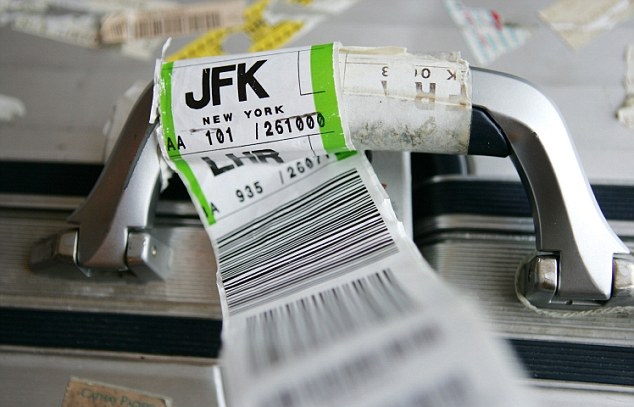
It is very difficult to put into words the emotion that wells up even before exiting the airport, whether it be New York JFK, Chicago, Cleveland, Dallas, Houston, Miami, Seattle or any of the other gateways I have used on my well over fifty arrivals here. The feeling of having arrived in a land of promise and possibility, an electricity in the air and a repose for the spirit which I feel even while waiting to collect the suitcases from the carousel.
But when words fail, music sometimes speaks. And the best way I can find to describe the difference experienced when travelling from the United Kingdom to the United States is with this musical analogy.
Two performances of the same piece of music, recorded by two legendary artists. Prelude no. 3 in C Sharp Major, BWV 872 fromThe Well-Tempered Clavier by Johann Sebastian Bach, performed first by Sviatoslav Richter and then by Glenn Gould, my favourite pianist.
Imagine that this first recording represents life in Britain:
This is the Richter version of the Bach prelude. Languid and undeniably beautiful, yes, with the edges softened by extensive use of the pedal. You can almost sense the nearly three centuries spanning the prelude’s composition and the present day in this warm but muffled recording.
Now imagine moving from this setting to the utterly different world of the Glenn Gould version, representing America:
The two recordings could hardly be more different.
The musical notes are the same, just as Britain and America share a common language and very similar cultures by virtue of our shared history. But the two interpretations are worlds apart, just as everything from local culture to local government is different on either side of the Atlantic.
Nobody had ever played the music this way until Glenn Gould came along. Prior to Gould, playing Bach on the piano was a dry and dusty affair, characterised by performances and recordings which shrouded the intellectual beauty and emotional resonance with thick layers of stultifying sameness. And then Glenn Gould turned things upside down and showed that Bach’s keyboard music did not have to be a revered but inherently boring exercise; that by engaging with the music with a creative mind, it was possible to bring dead music to life.
The Gould version is bright and clear. The first half of the prelude is strutting and unselfconscious, while the second part takes off like a rocket – joyful, vibrant and carefree. The individual lines of both the prelude and fugue are more clearly articulated and easier to distinguish, while still contributing to a powerful and musically convincing whole. E pluribus unum. That’s America, right there in this recording.
To my mind, this is the experience of moving from Britain to the United States. From an ancient land of history and heritage – the mother country – to the bright promise of the newer, bold and assertive superpower. The place where even in these difficult times, all things still seem possible.
A land where the sun shines infinitesimally brighter (my first action on arriving in Louisiana was to purchase new sunglasses. In December.) A land where the sky literally seems bigger, and the horizon wider. A land where the flavours are bolder, the entertainment glitzier, the music more vibrant and the people unfailingly friendly.
A country whose best features and deepest flaws are both so much more exaggerated than is the case in Britain – whether it be the remarkable philanthropic and community spirit on one hand, or the endemic tragedy of gun violence on the other.
But more than that, a country which still feels consequential in terms of shaping human events. A country whose politics and politicians – however glib and anti-intellectual they can sometimes be – still possess the aspiration and self-confidence to deal with weighty matters, to forge ahead in search of the best pathway to freedom and prosperity. And whose people still believe in their country as a force for good in the world, when they stay true to their values.
You can see the difference by comparing the raucous presidential primary debates currently underway here in America with the spirit-crushingtelevised encounters in Britain ahead of the May general election. In America, issues like healthcare, immigration, government surveillance and foreign intervention are debated fiercely in public – with both sides making reference to that most wonderful of things, a written constitution which makes the people sovereign and grants government strictly limited powers, rather than the other way around.
On existential matters like Britain’s place in the world, the best way to promote economic growth or to ensure future national security, the British political debate during the election campaign could not have cared less – and there was virtually no difference in the statist paternalism of the two main parties, other than in rhetoric. No political party had the courage to suggest that our outdated, 1940s model of state healthcare delivery might need serious reimagining in the twenty-first century, and only a handful of us cared enough to call them out for their craven refusal to acknowledge this difficult truth, and many others besides.
Fewer than four million of us believed strongly enough in the principle of national democracy and sovereignty that we cast a vote for the one party which explicitly objected to the gradual absorption of Britain into the supranational state known as the European Union.
And through it all, this blog has felt like something of a voice in the wilderness, with no politician or party to champion the causes of personal liberty, free markets and national sovereignty upon which everything else rests – but which too many other people seem happy to forsake in exchange for a chimerical, temporary measure of security and prosperity.
Here in the United States, for the precious couple of weeks until we go home, I don’t have to think about any of that. Of course America has issues of its own – big, intractable problems and burning injustices which befit a country of her size and consequence to address and overcome. But at least Americans still (just about) know who they are. At least they have not yet fractured into a messy coalition of competing special interest groups, to the extent which Britain has now splintered.
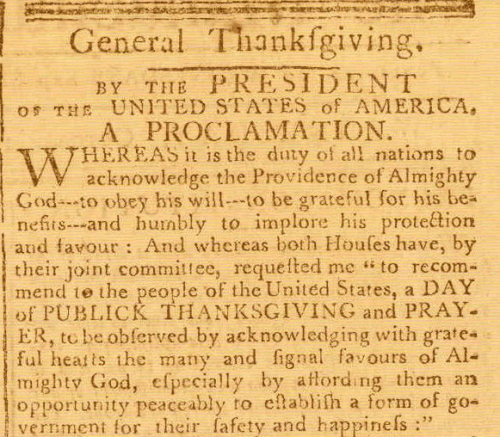
Patriotism and love of country still mean something in America. Yes, sometimes the sentiment expresses itself badly, through an ignorance of the rest of the world and the lazy assumption that America is always the best at any given thing. But perhaps unnoticed by many in Britain, there is also here an abundance of that quiet patriotism – the celebration of Independence Day and Thanksgiving, the flags flown in school classrooms without the ludicrous fear that it might “offend” someone of minority ethnic heritage, or the way that veterans are honoured and soldiers in uniform routinely invited to fill empty first class seats on airplanes – symbols and gestures which are the bedrock of a strong and cohesive society.
Of course debates rage fiercely in America – over Donald Trump, Hillary Clinton, the Koch brothers, the Tea Party, the Iraq war, the ISIS threat, birtherism, abortion, LGBT rights, church and state, the mainstream media and much more. The many are not always one. But when it really counts, they are one people. They bleed red, white and blue together.
America the beautiful: this is where I come to recharge my spiritual batteries. And as I prepare to throw myself into the battle for Brexit – defending the country of my birth and the concept of the nation state itself from an insidious form of supranational governance whose advocates have repeatedly failed to explain how democracy will be preserved in their brave new world – I will need all the power I can muster.
God bless Texas.
God bless America.
God save the Queen.
–
Agree with this article? Violently disagree? Scroll down to leave a comment.








 Semi-Partisan Politics