
Many people, Semi-Partisan Sam included, receive at least one round-robin letter, trumpeting the glittering achievements and detailing the tribulations experienced by far-flung branches of the family, in the run-up to Christmas each year.
Folksy newsletters of this kind have long-attracted a mixture of ire, derision and pity, but we grudgingly read them because were it not for this (and the real-time bragging that takes place on Facebook), we would otherwise have absolutely no idea what’s new with Aunt Cersei and Uncle Jaime in Kings Lynn or cousin Arya in her gap year travels around the world.
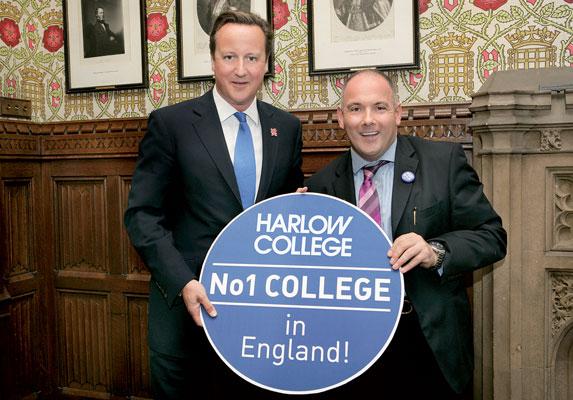
But the one thing we round-robin recipients never do is boast about having received the same mail-merged missive as every single one of our other extended family members. This only makes it more odd that Robert Halfon, the Conservative MP for Harlow, took to Facebook today with evident pride to share a letter purportedly written and sent by David Cameron to celebrate the government’s achievements in the year to date.
The mediocre, mail-merged round-robin letter is shown in its banal entirety below:

Cameron’s attempt at a morale-boosting letter is full of the meaningless platitudes about securing a “brighter future for Britain” that one might expect from a tired politician going through the motions on a local radio interview at 6AM, but it is doubtful that the prime minister personally authored the letter whilst away on vacation in Portugal. Far more likely that the job was delegated to a junior special adviser or some other paint-by-numbers Downing Street aide.
But what is truly interesting about this seemingly dull letter is the fact that the only identifying marker tailoring the letter to Robert Halfon is the inclusion of his name after the word “Dear” at the top. From that point onwards, David Cameron’s missive takes a lazy ramble across the current political landscape, touching on high-level achievements rather than the particular work or campaigning issues of Halfon and his fellow backbenchers.
The prime minister proudly acknowledges the “difficult decisions” that were taken to stabilise and return the British economy to growth. With a fanfare he takes credit for reducing the deficit by a third – some credit, considering that the government fell far short of its target on deficit reduction, and that the national debt continues to grow.
In his summer hubris, Cameron goes on to take personal credit for falling unemployment, reduced immigration (again, far from achieving the targets set out in the 2010 general election campaign), improved schools and, at probability’s furthest stretch, the supposed repatriation of previously outsourced and off-shored jobs to Britain. And the memo ends with a limp call to action, exhorting the prime minister’s Westminster foot soldiers to continue fighting the good fight to keep Ed Miliband out of Number 10 Downing Street (and Cameron on the business side of the famous black door).
But would it really have been so hard to add even a dash of customisation before firing out these letters? The recipient in question, Robert Halfon, is a relative newcomer to Westminster having joined the 2010 parliamentary intake, and so does not have a huge stable of stories, anecdotes, policies or victories for a hapless intern to research. But he does have several solid achievements and bold stances to his name that could have been used, had anyone been bothered.
The top paragraph of the Cameron-O-Gram might have approvingly mentioned the successful Fair Fuel campaign led by Halfon, conveyed thanks for leading the way in advocating more youth apprenticeships, or pledged to work with the Harlow MP to address the problem of prohibitively high car parking prices at NHS hospitals. But it did none of these things. In fact, the standardised email to lowly backbenchers went even further in demonstrating its ignorance or indifference to the work of individual MPs by prominently hedging its bets:
“So a big ‘thank you’ for everything you have done to get us this far. And thank you too for your campaigning this past term – whether that be in the local and European elections in May, or in Newark last month, where our Party came together to win our first by-election in government for 25 years.”
“Whether that be…”? Shockingly, David Cameron and his office seem entirely ignorant as to which MPs contributed the most and the least to recent campaigns, despite Grant Shapps’ threat to shame and punish any MP who failed to pull his or her own weight on the campaign trail. People accuse Ed Miliband’s office of being out of control and unable to properly co-ordinate, but now it seems as though the Conservatives are rapidly falling to a similar dull point.
“Letter-gate” reveals a picture of a prime minister and a government that not so long ago fawned over restive backbench MPs to keep them sweet, but which now believes that they can be treated with any amount of contempt given the fact that they will need help from CCHQ to survive the 2015 general election, and will overlook the snub.
And there can be few better ways to showcase this contempt than spamming hardworking backbench MPs with a cheesy, internal and non-specific campaign memo – ostensibly to give thanks for backbench loyalty – which is hardly different to the regular mailing list bulletins “written” by various Tory ministers and still received by Semi-Partisan Sam as a former member of the Conservative party.
At this point in the life cycle of government, a proactive and attentive leader might take the time to properly shore up morale and accrue some goodwill among his troops heading into party conference season. At the very least, a good party leader might feign an interest in the constituency work or personal causes of their MPs. But Cameron seems unable to even fake this enthusiasm.
Ironically, the earnest and hardworking MP who was so delighted to receive this piece of junk mail from Number 10 – the political equivalent of a pizza delivery leaflet shoved through the letterbox – was chastising his constituents, charities and community groups for spamming / petitioning MPs and adding to their workload in precisely this automated fashion only 30 months ago. In February 2011, Halfon wrote:
So what’s the best way to persuade an MP to support your cause? It’s simple. When I get an invite to visit the local branch of an organisation, I will always go. When I get a personalised letter, hand-signed from a chief executive (as opposed to public affairs officer) that contains local statistics and information, how can I not fail to be interested? When a local constituent calls me asking for a meeting, to talk about his or her involvement in her charity, I will always do it. I remember particularly how I was recently lobbied directly in the Commons by a resident who was involved with a breast cancer charity. She had a profound effect on me. I was only too pleased to support her cause.
So my final advice to charities and the voluntary sector is this: forget the impersonal emails, move away from computer generated email campaigns, stop sending reams of paper by post. Make it personalised and local, and you will not just have my real support, but that of many other MPs as well.
To counsel constituents against using inappropriate forms of communication while lauding precisely the same impersonal tactics when executed by 10 Downing Street, as Halfon seems to be doing, is puzzlingly contradictory to say the least. And at a time when Conservative MPs defending narrow majorities most need the help of their leader to retain their seats in 2015, it is especially odd that at least one backbencher is not more offended at being condescended to in this manner.
As the sweltering Parliamentary summer recess rolls on, the question we are left asking is this: With potent threats from both UKIP on the right and Labour on the left, how on earth does David Cameron expect to lead the Conservatives party to a majority and victory in 2015, when he clearly has so little respect for his generals in the field?
A postcard from Portugal would have cost so little, but said so much more.






 Semi-Partisan Politics