UKIP Conference 2015: Confronting Missed Expectations, Looking Ahead

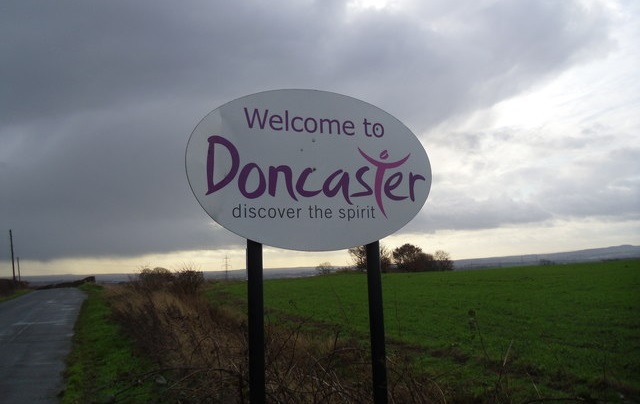
Welcome To Doncaster - Road Sign

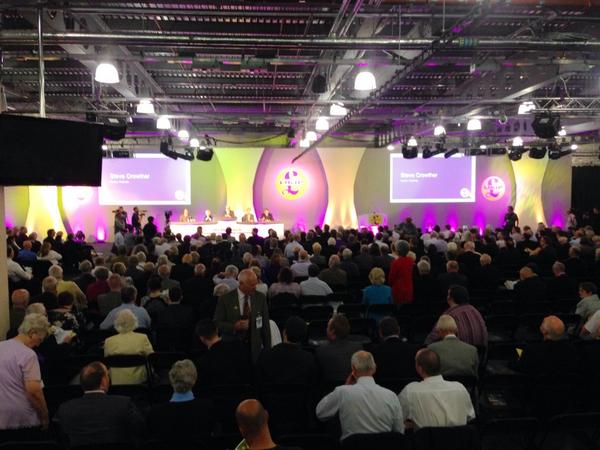
Much less hype around the start of this year’s UKIP party conference in Doncaster.

It’s only to be expected – this time last year, UKIP went into their party conference buoyed by a historic victory in the European elections, as well as the recent defection of respected MP Douglas Carswell from the Tories. In 2014, UKIP had all to play for going into next year’s general election. In 2015 – after many of those high hopes were dashed by the cruelties of the first-past-the-post electoral system – there is a danger that UKIP may one day look back on that conference as the high water mark of their achievement as a political party.

In a sign of how much the political landscape has changed since then, in 2014 Nigel Farage brought the UKIP party conference to Doncaster in order to “park their tanks on the lawn” of then Labour leader, Ed Miliband. Twelve months later and Ed Miliband represents his Doncaster constituency from the backbenches, having spectacularly lost the general election and resigned from the leadership, opening the door for the Jeremy Corbyn earthquake. But as Nigel Farage admitted on an interview with BBC Yorkshire News just now, sometimes things happen in politics that nobody can predict or control – and under the circumstances, Farage insisted that he remains proud of UKIP’s four million votes.

Nonetheless, the sense of hype and occasion around this year’s conference feels considerably less than last year. Aside from this blog’s preview of UKIP Conference 2015, there has been little advance coverage, with most media focusing on the imminent carnival that will be Labour’s first party conference under the leadership of Jeremy Corbyn.

Continue reading

UKIP National Conference 2015: What To Expect

UKIP Doncaster 1

Last year’s party conference saw UKIP fresh from victory in the 2014 European elections, and boosted by the shock defection of former Conservative MP Mark Reckless. Twelve months and one agonisingly unfair general election result later, what surprises can UKIP offer this time around?

Twelve months ago, the current British political landscape would have been completely unrecognisable, the stuff of fantasy.

The Labour Party had not yet imploded in a shower of more-compassionate-than-thou moralising. The SNP’s Westminster surge was beyond even the Scottish nationalists’ wildest expectations following the “No” vote in the Scottish independence referendum. In fact, there was only one political party which could claim to have any real momentum and be making tangible progress of any kind.

That party was UKIP. Twelve months ago, when Nigel Farage teased the UKIP 2014 conference delegates by telling them that a Tory MP would be speaking to them in his place – that MP being Mark Reckless, who then defected to UKIP live on stage to enormous cheers – there was a very real possibility that the second defection of a serving Member of Parliament from the Conservatives to UKIP might unleash the floodgates. At that time, it was entirely possible that UKIP could have ended the summer with a small handful of motivated, eurosceptic ex-Tory MPs, and a real Westminster presence.

Continue reading

Where Is The Conservative Party’s Jeremy Corbyn?


Where is the Conservative Party’s Jeremy Corbyn? I don’t mean an ornery old relic from the 1970s with dubious facial hair – the Tories have plenty of those. But where is the charismatic Tory personality who – like Corbyn does for his supporters – makes their fellow conservatives walk a little taller?

Owen Jones is happy at the moment. Cheerfully, blissfully happy. Almost too happy for someone who only months ago felt trapped in a Thatcherite, “neo-liberal” dystopia ruled over by the faceless, unaccountable grey men of the Establishment. But what a difference a few months and a resounding election defeat makes. What a difference Jeremy Corbyn’s presence on the ballot makes.

Read or listen to Owen Jones now and the excitement is palpable. This is not Cleggmania revisited, where the former LibDem leader briefly surged in the 2010 general election campaign by simple virtue of sounding like a human being (in contrast to the wooden Gordon Brown and the plastic David Cameron).

Nick Clegg’s brief spell of popularity was based on style, on appearing like a decent bloke. But Jeremy Corbyn’s surge in the Labour leadership election is the product of style and content – of sounding authentic, but also refusing to draw from the same deck of centrist policies automatically adopted by nearly everyone else.

No wonder a generation of young people who came of age during the tyranny of Consensus Politics, when holding strong political beliefs and refusing to apologise for them mark a politician out as a heretic unfit for high office, are finally sitting up and taking notice.

Continue reading

Are You A Populist Simpleton?

Populism - British Politics


Ukippers and Jeremy Corbyn supporters have often been steadfast in their political views for years, and as a result have languished in the political wilderness while those willing to bend, flatter and shapeshift their way toward sanitised focus group approval have been richly rewarded with power and success


Are you a populist simpleton?

I am, according to the Telegraph’s Janet Daley, because I am guilty of expecting more from politics than two shades of the same old drab consensus.

It’s a shame – I thought I had an ally in Daley, who is absolutely right in identifying the dull managerialism that now defines British politics, where dull technocrats reign supreme and general elections are fought over which party leader would make the best Comptroller of Public Services.

From Daley’s Telegraph piece, in which she attempts to compare the rise of Jeremy Corbyn with Donald Trump’s temporary ascendancy in the Republican Party’s presidential primary race:

There is no doubt that the politics of Western governing has become consensual and centrist. It is now a cliché – but no less important for that – to say that the arguments on which democratic choice revolve are puny and marginal. Parties and their leaders are reduced to debating the detail: a bit more of that, a bit less of this. No basic principles are at stake because they are all pretty much settled. The slogans are quite deliberately boring: recession is to be tackled with a “long-term economic plan”. It doesn’t quite have the ring of “Workers of the world unite! You have nothing to lose but your chains.” It often seems as if party strategists are having to thrash around desperately for some semblance of a compelling vision to distinguish themselves from their opponents.

Daley’s analysis of the problem is spot on, echoing what this blog has been saying for over a year. And yet Daley seems to hold in contempt those of us who have also identified the problem, but seek to redress it by supporting politicians who do not conform to the centrist mould.

Continue reading

Labour Leadership Candidates United By Arrogance On Europe


Anyone hoping that Labour Party’s haemorrhaging of northern votes to UKIP or the EU’s sacrifice of Greece to preserve the Euro might lead to a reconsideration of Labour’s reflexive, metropolitan pro-Europeanism must be sorely disappointed with the four candidates jostling for the honour of leading the party to defeat in 2020.

Although there is a groundswell of euroscepticism building across the country – and even though many prominent left-wingers are now calling for “Lexit”, including the ubiquitous Owen Jones – those who aspire to lead the Labour Party remain wedded to their desperate belief that the EU is somehow good for Britain.

Even as the contrary evidence mounts and public pressure for a left-wing eurosceptic political outlet grows, the Labour Leadership candidates prefer to stick to their increasingly hollow-sounding scripts, proclaiming the dubious virtues of political union and the supposed horrors that would befall Britain if we were to regain our independence.

This much became clear during the LBC radio Labour Leadership hustings, when a certain “Nigel from Kent” (yes, that one) phoned in with a question, asking the candidates whether there were any scenarios in which they could envisage campaigning for Britain to leave the EU and voting “no” in the Brexit referendum.

The responses were predictably depressing.

Continue reading