The SNP Government Is Unilaterally Creating Its Own Foreign Policy

Humza Yousaf - Scottish National Party - SNP - Foreign Policy

Grandstanding SNP politicians do not have the right to unilaterally set British foreign policy

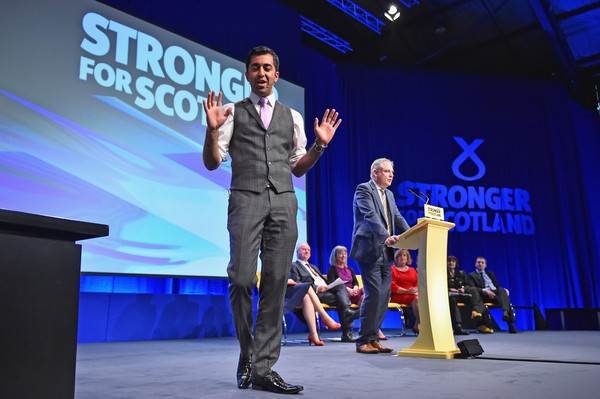
In a concerning report by the Herald Scotland, it transpires that the SNP government north of the border is attempting to create its own mini foreign policy, not aligned with nor cleared through the Foreign and Commonwealth Office in Westminster.

More concerning still, the fact that the Foreign Office quite rightly asked the Scottish government to cease and desist from this irresponsible behaviour is being portrayed as the real scandal, rather than Nicola Sturgeon’s back-of-an-envelope attempt at statecraft.

From the report:

The Foreign Office in Westminster is demanding to vet Scottish Government dealings with other countries on human rights, according to correspondence seen by the Sunday Herald.

The UK foreign minister, James Duddridge, has asked the Scottish international development minister, Humza Yousaf, to clear all his letters to foreign governments with the UK government before raising concerns about human rights infringements and other matters.

The move has infuriated Yousaf. “It beggars belief that the Tories – who are in the midst of scrapping the Human Rights Act – want to vet the Scottish Government’s letters raising human rights concerns abroad,” he said.

“I am proud of the SNP raising concerns about human rights without fear or favour – and certainly will take no lessons from the Tories on this,” he added.

“Whilst we are happy to share correspondence with Westminster, as we have done to date as a matter of courtesy, we certainly will not be asking or seeking permission before raising legitimate concerns about human rights.”

And for context:

Yousaf wrote to Duddridge and the Malawian High Commission, Kena Mphonda, on December 16 2015 raising concerns about the arrest of two Malawian nationals, Cuthbert Kulemela and Kelvin Gonani, for alleged homosexual offences.

Duddridge replied on January 7 2016, saying that following representations from the UK government, charges against the two men had been dropped. “You mention that you have written to the Malawian High Commissioner on this matter,” he wrote.

“While it may be useful that the Malawi High Commission is aware of your concern about this issue, I would be grateful if correspondence with governments on human rights and other reserved matters be cleared through this department.”

There is no grey area or room for interpretation here – this was a completely irresponsible act on the part of the devolved Scottish government. Foreign and defence matters are reserved to the UK government and Westminster parliament as you would expect in any country even remotely based on the principle of subsidiarity. It is not the job of any of the devolved assemblies – in Wales, Scotland, Northern Ireland or indeed England, if there was one – to enter into sensitive diplomatic correspondence with other sovereign nations.

Imagine for a moment that one day California or Texas decided to start acting as an independent agent on the world stage, raising all manner of issues with foreign governments, and maybe even negotiating their own trade deals or bilateral arrangements. The federal government in Washington, D.C. would rightly never tolerate such an arrangement, as it would undermine the very sovereignty and credibility of the United States. The same goes for Scotland.

Whether the SNP government had a point is immaterial. In this case, the SNP and their buccaneering international development minister Humza Yousaf (again, a role which should not exist in a Scotland which remains part of the UK) are probably on the right side of the issue. Malawi has a very concerning record on LGBT rights and the persecution of individuals, and the concerns raised were valid. But being right on this one occasion does not validate the wholly offensive principle of Scotland creating its own mini foreign policy behind the UK’s back.

In typical virtue-signalling SNP fashion, Yousaf tries to fold this issue into their pitched battle against the Heartless Evil Tories in Westminster, saying he will “take no lessons from the Tories” on human rights. But this isn’t about human rights. It is about the structure and proper running of our country. If we now establish the principle that self-regarding Scottish politicians can make interventions like this with foreign countries, what is to say that they cannot one day scupper a sensitive trade, security or intelligence negotiation by blundering onto the scene and undermining the UK’s position?

Even if the Scottish government happens to be right, any differences of opinion on foreign policy matters should be discussed and settled behind the scenes, so that the UK government can speak with one voice. Anything else will see the UK mercilessly divided and conquered by our foreign negotiating partners.

The Scottish people voted in 2014 to remain part of the United Kingdom on the understanding that certain additional domestic powers would be devolved from Westminster. Whether or not you believe that the UK government has delivered on those pledges, at no time was the idea of an alternative Scottish foreign policy raised for debate. There was no expectation that the Scottish government should be an independent actor on the world stage any more than the governor of Iowa or Texas can sign treaties with North Korea.

But as with so many other matters, a repeat of instances like this can only be prevented if we decide once and for all what kind of country we want to live in, and how the various parts of it should work together. And that means holding a constitutional convention as soon as possible. Given the approaching EU referendum, some time shortly after 23 June would seem to be a good time.

If we are to truly resolve the roiling questions about the future of the United Kingdom and our democracy and settle these issues for a generation or more, we need to collectively agree a fair and equitable devolution of powers to the four home nations on an equal basis. The question of whether England is treated as a home nation or a group of regions is of secondary importance, though this blog strongly believes that for true parity, England must be treated as a single entity just like Scotland. But this discussion must take place soon, within the wider context of a full constitutional convention.

Such a convention would give us the opportunity to debate and agree which powers should properly reside at each level – the federal UK government in Westminster, the devolved assemblies in the home nations, and county and town councils. We can simultaneously reform our legislature, ideally making the House of Lords democratically elected and ejecting the Lords Spiritual so that Britain no longer ranks alongside Iran as the most prominent technical theocracy in the world.

If this all seems ambitious and unlikely, then this is only a failure of our imagination. There is no good reason why we should not have such a debate (well, there is one reason – the future of the monarchy – which will be discussed in a future blog post). And as Pete North argues, why should we not be ambitious in terms of the future governance of our country?

Do nothing, and we can be sure that more of these instances will occur in the future, with ambitious Scottish politicians looking to make a name for themselves and burnish their human rights, national security or trade credentials by taking advantage of our lack of a written constitution and designing their own far-reaching roles on the world stage, with no oversight and no accountability.

Enough. No more SNP diplomacy by numbers. Whether they happen to be right or wrong on a given issue, for so long as Scotland is part of the United Kingdom, diplomacy and foreign policy should be a reserved matter for our shared government in Westminster and not hijacked by the Scottish nationalists.

That is the settlement which the people of Scotland signed up for in the 2014 referendum, and that is what they should now get.

UK Scotland Flags

Agree with this article? Violently disagree? Scroll down to leave a comment.

Follow Semi-Partisan Politics on TwitterFacebook and Medium.

Don’t Blame Anti-Establishment Politicians For Vile Online Abuse

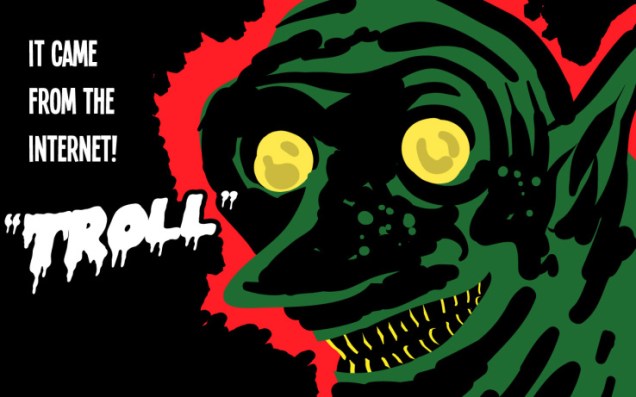
Internet Troll - Cyber Online Abuse

Taking offence in the behaviour of a politician’s online supporters says a lot more about your view of that particular politician than the uniquely “hateful” nature of their fans

What do Jeremy Corbyn, Nicola Sturgeon, Bernie Sanders, Donald Trump and Nigel Farage all have in common?

Nothing to do with their political views, obviously – you would be hard pressed to imagine four more different politicians, both in terms of style and substance. But they do share something more fundamental in common: the fact that their supporters are uniquely derided as being angry and intemperate, even sexist or racist trolls, especially when compared to the supporters of their more established rivals.

How many times have you heard a wounded, thin-skinned Westminster media type complain in hurt tones that they have received “vile online abuse” from crusading Ukippers or SNP-supporting Cybernats? And this is nearly always followed by the accusatory observation that the journalist or media star in question has never been so insulted or abused by supporters of the other mainstream parties or candidates.

You have likely seen or read this lament numerous times in one form or another. Typically, they will conclude – either explicitly or by inference – that there must be something uniquely awful and unacceptable about that particular party or candidate’s views, something which either attracts a disproportionate number of crazy people, or else makes otherwise good people behave in reprehensible ways.

Here’s the Telegraph’s James Kirkup raising an eyebrow after receiving a less than loving and nurturing response from online UKIP supporters, in a piece rather preciously titled “Why are UKIP supporters so rude and horrible?”:

A brief glance through the comments sections of the Telegraph website will show this is not an isolated incident; hostile and personal remarks are a common feature of online discussion about Ukip-related stories and columns. My email inbox tells a similar story.

I’m not alone here. There is nothing unique or special about me, no individual quality that attracts such strong feelings. All of my colleagues who cover Ukip and Mr Farage regularly receive such vitriol, and several of them get it in much larger volumes than me.

[..] I’m increasingly convinced that Ukippers are one of the political groups whose members are disproportionately likely to go in for online bile. (Scottish Nationalists are another; I haven’t had the pleasure of their electronic company for a while, but in a previous job I got to know the “cybernats” fairly well.)

Kirkup’s piece is actually fairly generous – he goes on to praise Ukippers for their passion and commitment, although it comes across in a rather condescending way.

But there is no such generosity in this farewell to the Labour Party from Barbara Ellen, who took her leave after finding herself unable to cope with the fact that her preferred centrist wing of the party finds itself temporarily out of favour for the first time in decades.

Smarting from the “howling gales” of disagreement she encountered, Ellen raged:

Still the Corbynista circus refuses to leave town, with one troubling result being that the term “moderate” is starting to look tarnished and devalued – deemed too centrist, restrained, temperate, cautious. Never mind that this describes most of Britain – or that this culture of moderate-baiting is hounding people like myself (lifelong Labour voters) out of the party. Like many in the great disenchanted Labour diaspora of 2015, I don’t feel remotely “Tory lite”, but nor do I feel that there is a place for me in this brutal and monochrome, but also silly and over-simplistic, “with us or against us” regime.

And maybe there’s a faint hope that by leaving, by voting with your feet, you’ll finally quietly reasonably (moderately!) make your voice heard. It’s a sad scary moment when “moderate” starts feeling like a insult. I’d have thought that moderates were the bricks and cement of any political party – without them, the extremes become unmoored, sucked into howling gales of their own making. The leftier-than-thou can taunt the departing “boring”, “gutless”, “Tory lite” moderates all they like. In the end, we were necessary and we’ll be missed.

The media’s hysteria about boisterous and sometimes deeply unpleasant online political discourse reached its peak with their coverage of the Jeremy Corbyn campaign, with endless finger-wagging remarks about how the actions of a few anonymous knuckle-dragging trolls supposedly make a mockery of Corbyn’s “New Politics”.

Here’s the Spectator’s Sebastian Payne rending his garments in anguish at the fact that some unhinged Corbyn fans happen to say some very unpleasant things online:

It was meant to be about open debate and discussion, consensus through dialogue. But so far, Jeremy Corbyn’s leadership of the Labour party and the arrival of the so-called New Politics has resulted in division and a lot of abuse and bad feeling. In light of last night’s vote on Syria airstrikes, Twitter and Facebook have been exploding with extraordinary levels of comments and abuse that no one, MPs or otherwise, should be subjected to.

For example, hard-left groups such as Lefty Unity, have been using Twitter to stir up agitation against the MPs they disagree with.

The article goes on to cite a tweet listing the names of Labour MPs who voted for military action in Syria, and calling for party members to deselect them. Remarkably, Payne presents this as some terrible affront to civilised behaviour rather than precisely what should happen in a democracy: MPs making decisions in public, and the public judging MPs based on those decisions. The horror!

Unfortunately, our default reaction is increasingly not just to sit back and mock the individual trolls (justified), but to then also make the lazy assumption that the internet trolls somehow speak for the wider movement or supporter base (much less justified). Everyone enjoys seeing an ignorant verbal abuser put back in their box, but we are being intellectually lazy if we then go on to believe that people like the anonymous idiot silenced by JK Rowling are representative of general UKIP or SNP opinion.

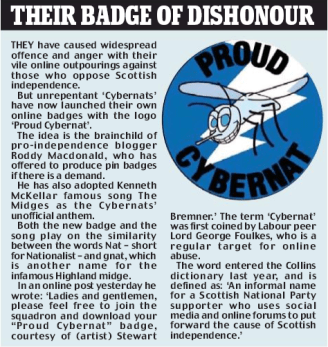
Cybernat - Online Abuse - Trolling

Exactly the same phenomenon can now be seen in the United States, where supporters and media cheerleaders of Democratic establishment favourite Hillary Clinton are lightning-quick to accuse their opponents of sexism, and to refer disparagingly to supporters of socialist rival Bernie Sanders – alas, a white male – as the “Bernie Bros”.

Glenn Greenwald does a superb job of debunking the myth that Bernie Sanders supporters are uniquely sexist or misogynistic among political supporters over at The Intercept, writing:

Hillary Clinton is the establishment candidate. Therefore, she has far more supporters with loud, influential media platforms than her insurgent, socialist challenger. Therefore, the people with the loudest media platforms experience lots of anger and abuse from Sanders supporters and none from Clinton supporters; why would devoted media cheerleaders of the Clinton campaign experience abuse from Clinton supporters? They wouldn’t, and they don’t. Therefore, venerating their self-centered experience as some generalized trend, they announce that Sanders supporters are uniquely abusive: because that’s what they, as die-hard Clinton media supporters, personally experience. This “Bernie Bro” narrative says a great deal about which candidate is supported by the most established journalists and says nothing unique about the character of the Sanders campaign or his supporters.

And the same blindingly obvious truth hits closer to home with the media’s reaction to – and coverage of – Jeremy Corbyn’s campaign for the Labour leadership:

This exact media theme was constantly used against Corbyn: that his supporters were uniquely abusive, vitriolic, and misogynistic. That’s because the British media almost unanimously hated Corbyn and monomaniacally devoted themselves to his defeat: So of course they never experienced abuse from supporters of his opponents but only from supporters of Corbyn. And from that personal experience, they also claimed that Corbyn supporters were uniquely misbehaved, and then turned it into such a media narrative that the Corbyn campaign finally was forced to ask for better behavior from his supporters.

Time and again we see establishment candidates and their fans in the media reaching for the smelling salts and clamouring to tell us how insulted and distressed they are, simply because something they said or wrote happened to tap into the coarsing vein of popular anger against a political establishment which grows remoter and more self-serving by the day. But we should recognise this for what it is – a cheap attempt to shut down the debate by rendering certain political ideas unthinkable or unsayable.

It is very much in the interests of centrists within Labour and the Conservative Party that people should fear policies with a genuine ideological twist to them, be they from the Right or the Left. When their entire pitch to the electorate consists of fatuous promises to be the most competent managers of our public services, as thought Britain were nothing more than a rainy island of hospitals and job centres, anything which attempts to inject some inspiration, ambition or bold thinking into our political debate is to be greatly feared, and thwarted at all costs.

Hence the continual efforts to portray Jeremy Corbyn’s left-wingery, something which would have been considered perfectly normal in 1986, as beyond the pale of acceptable thought in 2016.

Hence the sneering, virtue-signalling attacks on Ukippers, who have been shamefully portrayed by the media as a bunch of grunting, uneducated, economically “left behind” losers who wrap themselves in the Union flag because they are somehow more scared of change than a “normal” person.

Hence the apocalyptic predictions of those opposing Scottish independence, warning that Scotland would become some kind of tartan-clad North Korea if they went their own way.

Now, this blog believes that Jeremy Corbyn’s left wing policies are utterly wrong for Britain, that UKIP does have a certain unsavoury element within it, and that Scottish independence and the breakup of the United Kingdom would be a tragedy. But I don’t for a moment assume that the virtue of these ideas can be judged in any way by the behaviour of their most crude and sociopathic advocates. And nor do I attempt to suppress the expression of those ideas by linking overheated rhetoric on social media to any one particular idea, candidate or party.

All of which makes you wonder: If the establishment are so self-evidently right, if the centrist parties and politicians do indeed have a monopoly on Good and Pragmatic Ideas, and if anybody who proposes the slightest departure from the status quo is a juvenile dreamer or a tub-thumping populist, why not let the arguments speak for themselves?

If the establishment have the facts so overwhelmingly on their side, why do they not limit themselves to patiently explaining why Bernie Sanders, Jeremy Corbyn, Donald Trump and Nigel Farage are wrong on the issues? And at a time when political engagement is falling and faith in democracy ebbing, are the Corbyn critics and Farage haters really saying that they would rather people were disengaged than back a radical candidate?

This blog would argue that there is a certain nobility in all of the populist insurgencies currently roiling the political landscape in Britain and America. Whether one agrees with them or not (and there is often much to vehemently disagree with), they are at least attempting to drag us out of a stale and timid political consensus which has delivered prosperity for many but also failed too many of our fellow citizens.

Or as this blog remarked last year:

It is very easy to sit smugly on the sidelines, throwing the occasional rock and taunting those who risk hostility, ridicule and contempt as they struggle to find a way to make our politics relevant to the people. Anyone can be a stone-thrower. But it’s another thing entirely to roll up your sleeves, join the fray, pick a side or – if none of the available options appeal – propose new political solutions of your own.

Ukippers and Jeremy Corbyn supporters have often been steadfast in their political views for years, and as a result have languished in the political wilderness while those willing to bend, flatter and shapeshift their way toward focus group approval have been richly rewarded with power and success.

The “Bernie Bro” phenomenon in the United States and the centrist Labour hysterics about the antics of a few offensive people are nothing but a choreographed backlash from the establishment, whipped up by people who are happy to hijack issues like feminism and use them for their own short-term political advantage, or do anything else to disguise the yawning chasm where sincerely held convictions and beliefs should reside.

So, when you see a bunch of prominent, well-connected people feigning horror at the way in which people with whom they disagree are comporting themselves on the internet, your first thought should not be to dismiss the idea or candidate whom the obnoxious trolls support, but rather to question the real motives of the people weeping and rending their garments because they have been spoken to rudely on social media.

It may turn out that the trolls are still wrong, as well as being obnoxious and offensive. But many times, it will likely transpire that the people making the most fuss about the way that a particular candidate or party’s supporters are behaving also happen to have the most to lose in the event that those ideas gain a wider following. And their sudden desire for comity and a more respectful public discourse is cynical at best.

So what do Jeremy Corbyn, Nicola Sturgeon, Bernie Sanders, Donald Trump and Nigel Farage all have in common?

They are all flawed.

They are all willing to say things which make them wildly unpopular with large swathes of people.

Without their boldness and tenacity, few of us would still be discussing their top issues and obsessions – be it genuine socialist politics, Scottish independence, immigration or the coming EU referendum – and our politics would be left to the stale old two-party duopoly.

And none of these politicians, whatever their flaws, deserve to be judged by the online behaviour of their most angry, antisocial supporters.

Bernie Sanders - Refutes Bernie Bros

Top image: “#GamerGate is the future of troll politics”, Techcrunch.com

Agree with this article? Violently disagree? Scroll down to leave a comment.

Follow Semi-Partisan Politics on TwitterFacebook and Medium.

Nicola Sturgeon And The SNP Are Trying To Blackmail Britain

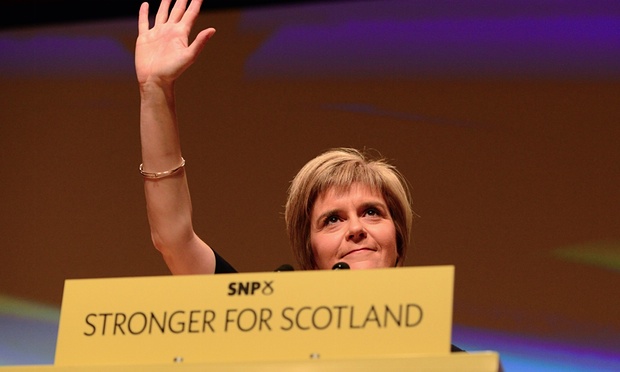
Nicola Sturgeon - SNP - Scottish Independence - IndyRef - Blackmail

First published at Conservatives for Liberty

For the sake of everyone else in the United Kingdom, 2016 must not be another year of coercion and blackmail by selfish Scottish nationalists

Nicola Sturgeon, First Minister of Scotland, has presumed to tell the elected Prime Minister of the UK that our country is on “borrowed time”, and that if we do not mend our ways and immediately start enacting left-wing policies which were comprehensively rejected in the 2015 general election, we will lose the pleasure of Scotland’s company in the United Kingdom.

From the Telegraph:

Ms Sturgeon has prompted speculation about a quick second referendum by promising the SNP’s 2016 Holyrood election manifesto will contain details of potential “triggers” for another vote, such as the UK leaving the EU, and a timescale.

However, amid warnings it would be the nationalists’ last chance, she has made clear she will only call another vote when she is sure of victory.

[..] she warned David Cameron that Scots would weigh up independence “against the alternative” of Westminster rule and warned that he was “living on borrowed time” thanks to his refusal to listen to their views on Trident, austerity and greater devolution.

Nicola Sturgeon needs to learn her place. With all its new powers, the SNP has governed Scotland poorly; its policies on policing, education and tuition fees have failed. The economic success of Scotland – including high employment – is facilitated by the union.

Continue reading

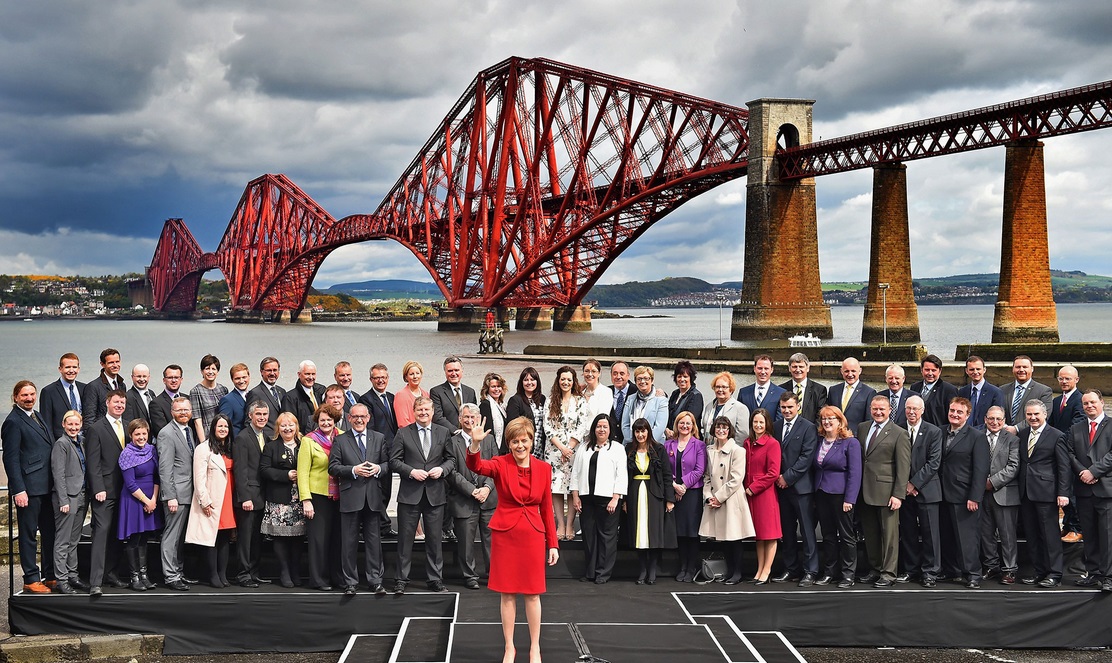
Westminster Must Brace Itself For The Arrival Of The Tartan Tea Party

2- SNP - Scottish National Party - General Election 2015 - Tartan Tea Party - Nicola Sturgeon


When parliament reconvenes, an astonishing fifty-six Scottish National Party MPs will take their seats in the House of Commons.

Despite having gained their 56 MPs on a vanishingly small 4.7 per cent of the national vote (as compared to UKIP, who achieved 12.6 per cent of the national vote but only 1 MP), Nicola Sturgeon is claiming some kind of mandate to influence government and oppose Evil Tory austerity.

This is mostly hubris. The SNP will be sitting on the opposition benches, which means that they actually get to sit things out for the next five years, spectating rather than playing some kind of deep and meaningful role in government – that particular dream died the moment that Ed Miliband’s Labour Party self destructed north and south of the border.

But though the SNP landslide is largely thanks to irrational voting by Scotland – a collective hissy fit from a nation who increasingly consider themselves more enlightened and progressive than their southern neighbours, demanding higher government spending paid for by anyone but themselves – there will naturally be an impact on the way that Westminster operates.

In terms of accepting the new reality, this piece from Alex Massie in The Spectator is right on the money:

The referendum taught us that Scotland is a place beginning to dream bigger things; yesterday’s results confirmed that. The SNP’s victory is a reminder that trust is the most valuable commodity in politics. Because the SNP are trusted – rightly or not – to put Scotland’s interests first they are forgiven their sins, contradictions and inconsistencies. They are held – fairly or not – to a different standard than that applied to other parties. There is little point in whining about this; it is just the way it is.

Continue reading

BBC Election Debate: A Smug Festival Of Left Wing Groupthink, Plus UKIP

BBC Challengers Debate - Leaders Debate - General Election 2015 - Nigel Farage Stands Alone


“Work with us to keep the Tories out of government!”

“If we work together, we can lock Cameron out of Number 10.”

“We have a chance to kick David Cameron out of Downing Street. Don’t turn your back on it, people will never forgive you…”

Rabble, rabble, rabble.

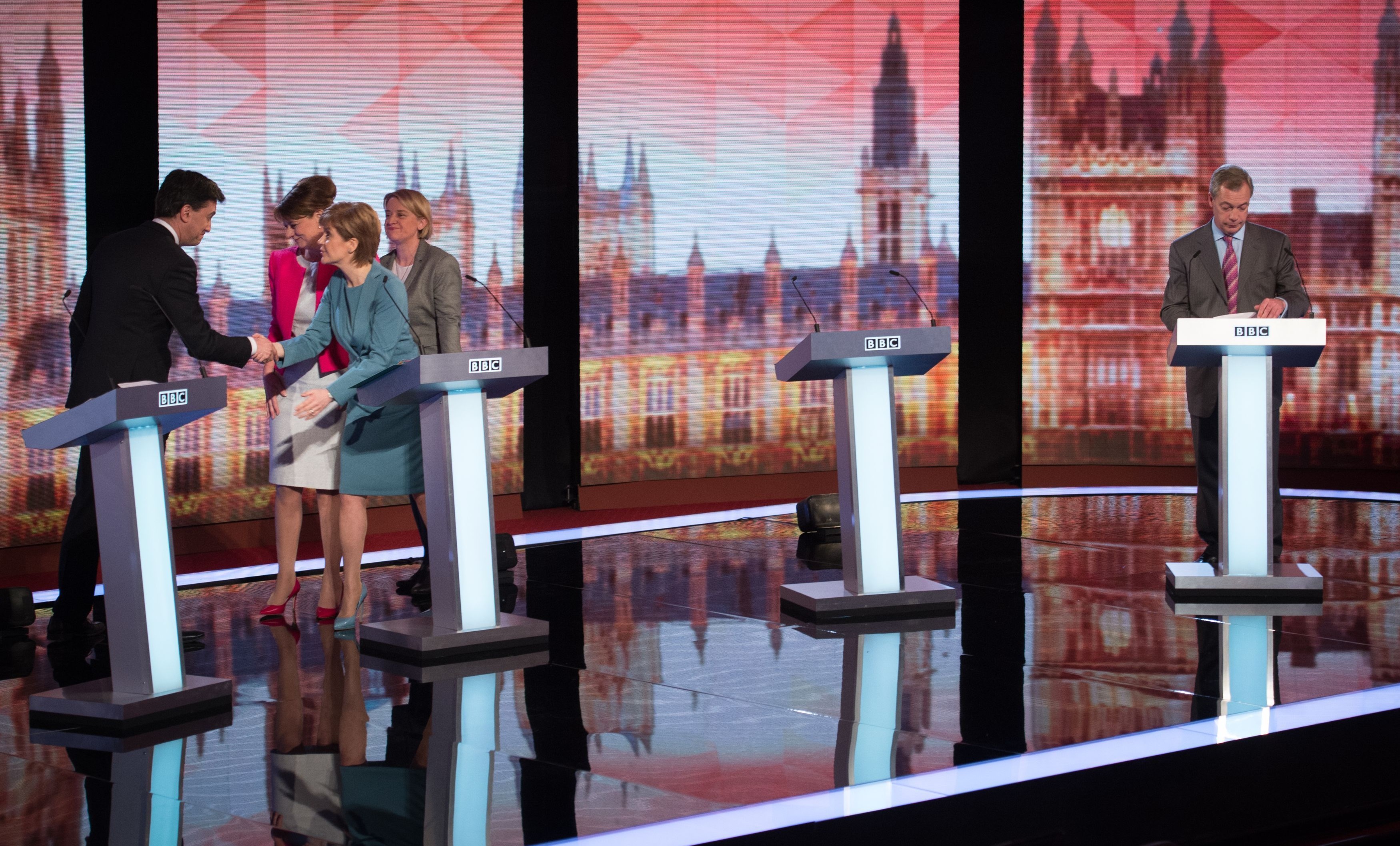
To watch the leaders of Labour, Plaid Cymru, the SNP and the Green Party plead with the audience – and each other – at last night’s BBC Election “Challengers” Debate, you would think that Britain faced the awful prospect of some fascist or totalitarian party seizing power on 8 May this year, thus requiring all decent people to put aside their differences and band together in solidarity against a visceral, urgent threat to our way of life.

But the hideous spectre conjured by Ed Miliband, Leanne Wood, Nicola Sturgeon and Natalie Bennett is not a latter-day Adolf Hitler or Joseph Stalin – or even a contemporary African tin-pot dictator. No, we are asked to believe that the mortal threat to Britain and her people comes  in the pale, patrician form of David Cameron – who has already held the top job for five years without successfully summoning the apocalypse – perhaps propped up by the equally unthreatening Nigel Farage (Nigel being just the type of fearsome name that strikes terror into the heart of even the bravest soul).

The British left is used to preaching to the choir and percolating in its own intellectual laziness, having long ago purged from the bubble anyone who doesn’t reflexively Hate the Tories and abhor right-wing ideas. But today we witnessed Britain’s four left wing party leaders construct and imprison themselves in a bubble of their own making, right on the stage at Westminster Central Hall.

From the BBC’s account of the debate:

Continue reading