Nicholas Kristof Admits Illiberal Leftist Overreach In Purging Conservatism And Dissenting Views From Academia

nicholas-kristof-academia-conservatism-illiberalism-intolerance-identity-politics

“I say unto you that likewise more joy shall be in Heaven over one sinner that repenteth, than over ninety and nine just persons who need no repentance” – Luke 15:7

In the email introduction to his Sunday column in the New York Times, Nicholas Kristof writes:

My Sunday column will probably provoke a number of you to roll your eyes or curse me under your breath. I’m sure many will disagree with it, but here goes.

[..] I’ll get a torrent of angry emails and indignant comments, but as you read this I’m actually in southern Africa reporting a story. If the criticisms get too bad, I’ll seek asylum.

Such are the delicate eggshells that commentators on which the American Left must tread whenever they even think about holding up a mirror to the behaviour of their own side and calling out flawed thinking or bad behaviour.

What is the subject of Kristof’s column? You can probably guess. With great trepidation, Nicholas Kristof is asking his readers to consider the possibility – just the possibility – that the atmosphere of seething intolerance for conservative voices or opinions on the university campus may be a negative thing with potentially harmful consequences.

Kristof writes:

After Donald Trump’s election, some universities echoed with primal howls. Faculty members cancelled classes for weeping, terrified students who asked: How could this possibly be happening?

I share apprehensions about President-elect Trump, but I also fear the reaction was evidence of how insular universities have become. When students inhabit liberal bubbles, they’re not learning much about their own country. To be fully educated, students should encounter not only Plato, but also Republicans.

We liberals are adept at pointing out the hypocrisies of Trump, but we should also address our own hypocrisy in terrain we govern, such as most universities: Too often, we embrace diversity of all kinds except for ideological. Repeated studies have found that about 10 percent of professors in the social sciences or the humanities are Republicans.

We champion tolerance, except for conservatives and evangelical Christians. We want to be inclusive of people who don’t look like us — so long as they think like us.

I fear that liberal outrage at Trump’s presidency will exacerbate the problem of liberal echo chambers, by creating a more hostile environment for conservatives and evangelicals. Already, the lack of ideological diversity on campuses is a disservice to the students and to liberalism itself, with liberalism collapsing on some campuses into self-parody.

One can already imagine thousands of triggered New York Times readers spitting out their morning coffee and clicking away from Kristof’s column in disgust at having their worldview and prejudices challenged instead of flattered.

And Kristof continues in a similar vein:

Whatever our politics, inhabiting a bubble makes us more shrill. Cass Sunstein, a Harvard professor, conducted a fascinating study of how groupthink shapes federal judges when they are randomly assigned to three-judge panels.

When liberal judges happened to be temporarily put on a panel with other liberals, they usually swung leftward. Conversely, conservative judges usually moved rightward when randomly grouped with other conservatives.

It’s the judicial equivalent of a mob mentality. And if this happens to judges, imagine what happens to you and me.

Kristof goes on to recommend to his readers a number of prominent American conservative personalities to follow on social media, so as to get a taste of arguments and perspectives which may otherwise have been long ago purged from Facebook timelines and Twitter streams. Again, this is a good thing – other publications have preferred to ensconce their readers deeper in the bubble by publishing hysterical lists of “fake news” publications which cannot be trusted because they do not reflect the Democratic Party’s view of the world.

And he concludes:

I fear the damage a Trump administration will do, from health care to foreign policy. But this election also underscores that we were out of touch with much of America, and we will fight back more effectively if we are less isolated.

When universities are echo chambers, they become conservative punch lines, and liberal hand-wringing may be one reason Trump’s popularity has jumped since his election.

It’s ineffably sad that today “that’s academic” often means “that’s irrelevant.” One step to correcting that is for us liberals to embrace the diversity we supposedly champion.

This blog has not always been a fan of Nicholas Kristof, having only recently taken him to task for comparing the American Left’s coming endurance of Donald Trump to the agonies of somebody suffering from addiction and receiving treatment through a 12-step programme.

But as a reader pointed out at the time, the people who need to hear this message are not likely to accept it from people like me and blogs such as this, with a proud tradition of beating up on “liberal” intolerance and the Cult of Social Justice and Identity Politics.

Nicholas Kristof is clearly one of their own, however, as evidenced by the fact that he thought it was appropriate to compare surviving the Trump administration to attending AA. When somebody with otherwise impeccable social justice credentials like Nicholas Kristof questions the culture and dynamic on the American university campus, people might actually listen, and so one cannot entirely dismiss his work.

Overall, this is a positive development. Nicholas Kristof is a prominent and celebrated left-wing columnist and commentator, as well connected to the establishment as a writer can be. If he is now expressing reservations about the oppressive climate for academic freedom on campus, then there must truly be disquiet growing about the takeover of academia by the Cult of Social Justice and Identity Politics.

The Right cannot hope to win this fight on their own, but finally it looks as though we may be gaining a few unexpected allies. May many more follow in Kristof’s footsteps.


Postscript: At present, there are 93 comments to Kristof’s column, the majority expressing angry incredulity that anybody might think that hostility toward conservatism on American university campuses is in any way a bad thing. However, there are exceptions. One reader, a professor at a university I happen to know very well, writes:

An example: I am a professor at a university (Washington University in St. Louis) that brandishes “prestige” it doesn’t quite have—an Ivy League wanna-be. My web page contained some semi-controversial essays—arguing that science is a terrible career choice, that perhaps Summers’s ideas are worth consideration, “diversity”, “political correctness”, that some moral responsibility attaches to the movements that gave us the AIDS epidemic.

My essays, clearly marked as personal opinion, were censored—kicked off my university web page. As expressions of personal opinion, they didn’t belong in the classroom, and were never mentioned there. As thought-pieces on current issues, they are part of being a public intellectual, part of a professor’s job. Academic freedom? Not here.

As Yale University proved with the whole Halloween costume saga of 2015, Ivy League universities are often the worst offenders, so from that perspective Washington University in St. Louis is absolutely heading in the right direction.

Back in the real world, however, they are hurtling off a cliff, and threatening to take what is left of academic freedom down with them.

 

Danger Unsafe Space Sign - The Koala - UCSD


Safe Space Notice - 2

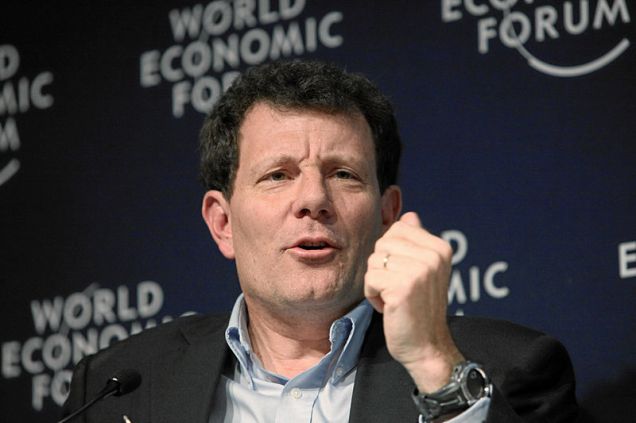
Top Image: World Economic Forum / Wikimedia Commons

Support Semi-Partisan Politics with a one-time or recurring donation:

Agree with this article? Violently disagree? Scroll down to leave a comment.

Follow Semi-Partisan Politics on TwitterFacebook and Medium.

What It Is Like To Be A Donald Trump Supporter On Campus

The New York Times (in a rare change of perspective) publishes a first-hand account of what it is like to be a moderate, unenthusiastic Trump voter at college.

K.N. Pineda writes:

The presidential election was the last thing on my mind on Nov. 8. I had essays to write and Italian vocabulary to learn. Sure, I kept New York Times and Wall Street Journal tabs open on my laptop, but I was uninterested in indulging in conversation about an election that most everyone could agree was a time bomb.

As a student at New York University and the daughter of a civil servant at the United States Department of State, I am familiar with political unrest and its potentially disastrous outcomes in the arms of ignorance and hysteria. I did not hold any particularly strong opinions about Donald Trump or Hillary Clinton. If I had voted, however, I would have picked Mr. Trump. I was focused on school. I had no idea that a few days later I would be dismissed as a “Trump supporter” and a person of “privilege” who “reflected an us versus them mind-set” in an essay by my college roommate in this publication — an essay that would go viral and change my life.

I did not feel that I should lie to my new college friends, especially at N.Y.U., where we are supposed to be open to hearing opposing views, able to discuss them and put any bias aside. I never tried to persuade my roommate to accept my side, my choice or my views. I even agreed with some of her opinions about Mr. Trump, who has said divisive things about Muslims and other minority groups. As an independent, my feelings toward the campaign were very mixed. I felt strongly that as a country we needed to focus on domestic issues, and for me, the Republicans were more prepared to do that.

My roommate has since apologized to me, but in the meantime I have felt the glare of her friends and been heckled on campus by other students. I have been labeled “racist,” “sexist” and “xenophobic” on Facebook. I have been called a “white without a conscious,” a “misogynist,” a “bigot” and a “barbarian” online by people all over the country.

This tale should make the allied anti-Trump forces stop and think firstly about how they are treating their own friends and neighbours, but more importantly about the image they are projecting to the wider country, and thus feeding into America’s future political discourse.

Presumably those most upset about Donald Trump’s election victory would quite like many of his supporters to vote for somebody else, maybe somebody from the Democratic Party, in four year’s time. They should stop and ask themselves whether this goal is more likely to be achieved by seeking genuine dialogue and understanding with people who voted differently, or by loudly and repeatedly accusing them of complicity in bringing fascism to America.

The enhanced cold-shoulder received by K.N. Pineda is also depressing given her own family background:

Here’s my story. My father is Hispanic. My extended family lives in Southern California and New Mexico. Many of my family members are not native English speakers. My maternal grandmother is an Italian immigrant who holds a green card. Her husband died after struggling with drug addiction and alcoholism; she had to work two jobs to make ends meet. My mother was raised by her stepfather, who is African-American and the only maternal grandfather I have known. He is a kind, devout man whom I love dearly. My family and friends come from all ethnicities, religions and sexual orientations.

Attending New York University was my dream. My dad grew up in a trailer home, and my mom was homeless for a period of time. My parents were the first in their families to graduate from college. They have struggled to provide the best for me and my brother. They have sacrificed financially and worked hard to give us a good life. I came to N.Y.U. partly on scholarship and am accruing debt to pay my tuition.

As minorities, my mother, father, grandparents and I have experienced racial hate. My skin may be light, but I understand discrimination. I may not know each person’s individual experience, but am able to empathize with others.

So not a dumb, ignorant redneck then (incidentally, one of the last groups of people that it is okay to openly mock and denigrate in polite society). Rather, Pineda has Hispanic heritage and so is expected to toe the line and adopt all of the political opinions now expected of that racial demographic by the Identity Politics Left, voting one’s own conscience is seen almost as a “betrayal” of one’s ethnic heritage. This is what the identity politics embraced by the American Left hath wrought, at a time when it otherwise ought to be subsiding – electoral segregation.

Pineda’s conclusion makes one wonder why it has fallen to a freshman college student to express these sentiments so eloquently, and exactly what the American media and commentariat think they are playing at with their own coverage:

I know the fear that the election has inflicted. I comprehend the hurt that people feel. We all have reasons for casting our votes. What I do not understand is hatred toward one another. Supporters of both parties have misunderstood and fueled hate out of reckless emotion and ignorance.

The answer is not to further the divide by labeling and dehumanizing one another. We should fight the “us versus them” mind-set. We have spent too much time in our own bubbles, and we need to begin a dialogue that will allow us to understand one another.

Blind fear and hatred are far more powerful than any candidate. How can we assume we know someone based on the color of their skin, their religion, or their political choices? Why should we be afraid to express our opinions? If we see one another not as a Clinton supporter or a Trump supporter, but as human, perhaps we can discover empathy in the troubled nation in which we exist.

The narrative should be one of inclusiveness, openness, respect and love. It is not only about making “America Great Again,” it is about making America home again.

I think it is fair to say that the New York Times could have found far more unpleasant and even harrowing tales of political persecution on campus had they searched, or possessed the political will to do so. Young conservatives were well used to public opprobrium and seeing their free speech rights constrained while left-wing identity politics activists were given the run of campus by craven university administrators long before the election. And Donald Trump’s surprise election victory has only enraged and emboldened these tormentors all the more.

The American Left, (sometimes justifiably) outraged on behalf of the various minority groups for whom they claim to speak, should bear in mind that in the rarefied surroundings of the college campus, they are very much in the majority – an oppressive majority, one might even say, to use the current social justice parlance.

And there is a notable, shameful irony in the way that many anti-Trump activists on the Left are so ostentatiously welcoming of every kind of difference and diversity, save diversity of political opinion.


pop-art-donald-trump-2

Support Semi-Partisan Politics with a one-time or recurring donation:

Agree with this article? Violently disagree? Scroll down to leave a comment.

Follow Semi-Partisan Politics on TwitterFacebook and Medium.

Donald Trump Victory Reaction: Nicholas Kristof Compares Surviving President Trump To Suffering From Mental Illness

donald-trump-election-victory-protest-your-vote-was-a-hate-crime-banner

No, processing Donald Trump’s election victory is not like recovering from addiction

One of the more painful aspects of Donald Trump’s shock election victory, for me, has been having to watch journalists and commentators whom I have previously respected gradually lose all sense of perspective and become almost offensively hysterical in their overwrought catastrophisation of the election result.

This blog was also very much against a Trump victory, but much of the mainstream media commentary seems to have descended into a nationwide, mutually-reinforcing panic attack, like a group of young kids watching a scary movie at a sleepover and then seizing on every nighttime creak or rustle to convince one another that they are being haunted by the monster from the television.

Godwin’s Law is now being proved with such regularity – by supposedly serious journalists writing above the line, and not just the online commentators beneath it – that cataloguing individual instances of Donald Trump victory catastrophisation has become pointless.

And we are not just talking about the more sensationalist, web-based outlets here. One expects little better from the Huffington Post, Buzzfeed or the likes of Everyday Feminism. But now even the New York Times has fallen victim to the great national hysteria – star columnist Nicholas Kristof can presently be found comparing the forthcoming suffering of American leftists under the incoming Trump administration to the pain of people suffering from addiction and mental illness.

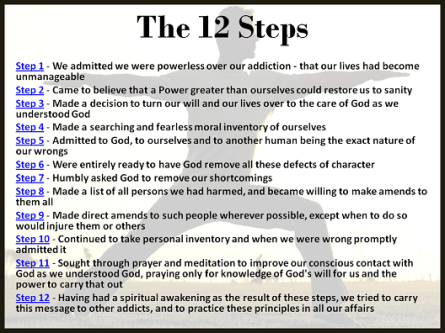
I’m not joking – Kristof has just published a column in which he outlines his own patented “twelve-step program” for coming to terms with a Donald Trump presidency.

Kristof begins:

Traumatized by the election results, many Americans are asking: What now? Here are steps that any of us can take that can make a difference at the margins. Onward!

Traumatised? Really? Isn’t that a word that might be better reserved for veterans who watched their friends killed in action or had their own limbs blown off by IEDs, or the victims of sexual assault and other violent crime? Do we really want to extend that term to encompass the tears and frustration of Hillary Clinton supporters as Donald Trump made a mockery of the opinion polls and won a four-year term as US president?

Some highlights from the Kristof 12-steps:

2. I WILL try to do small things in my own life, recognizing that they are inadequate but at least a start: I will sign up on the Council on American-Islamic Relations website, volunteering to fight Islamophobia. I’ll call a local mosque to offer support, or join an interfaith event. I will sign up for an “accompany my neighbor” list if one exists for my area, to be an escort for anyone who is now in fear.

Because in the blink of an eye and before Trump has even taken office, America has become such a seethingly dangerous place that minorities can no longer walk the streets unaccompanied? Has Nicholas Kristof given absolutely zero thought to how this alarmist, apocalyptic language might be contributing (or indeed be the largest contributor) to the fear which he describes?

3. I WILL avoid demonizing people who don’t agree with me about this election, recognizing that it’s as wrong to stereotype Trump supporters as anybody else. I will avoid Hitler metaphors, recognizing that they stop conversations and rarely persuade. I’ll remind myself that no side has a monopoly on truth and that many Trump supporters are good people who want the best for the country. The left already has gotten into trouble for condescending to working-class people, and insulting all Trump supporters as racists simply magnifies that problem.

Credit where it’s due. Kristof manages something close to magnanimity here, but his call for fellow progressives upset at the election to avoid demonising Donald Trump supporters would be all the more convincing if it didn’t come in the middle of a hysterical article comparing a Trump presidency to living with serious mental illness.

More:

5. I WILL support groups like the Southern Poverty Law Center that fight hate groups, and back the center’s petition calling on Donald Trump to disavow bigotry. Depending on my interests, I’ll support an immigration rights group, the A.C.L.U. or Planned Parenthood. And I’ll subscribe to a newspaper as one way of resisting efforts to squelch the news media or preside over a post-fact landscape — and also to encourage journalists to be watchdogs, not lap dogs.

That would be the same Southern Poverty Law Center which has utterly capitulated to ideological leftist Islamism-deniers, and which has the nerve to place tireless fighters against extremism such as Maajid Nawaz and Ayaan Hirsi Ali on a list of supposed anti-Muslim bigots, in a desperate bid to placate and appeal to goodness knows who.

The ACLU of course does some vital work defending civil liberties, but it too has started to crumble under pressure from the Cult of Social Justice and Identity Politics, and is now just as zealous about protecting non-existent positive “human rights” as defending genuine civil liberties and Constitutional protections. One can still make an argument for joining the ACLU in an attempt to change it from within (it is less far gone than, say, the UK’s Liberty) but somehow I don’t think that this is what Kristof has in mind.

More:

7. I WON’T let it slide if a friend makes degrading comments about a minority or women. Even if it’s over Thanksgiving dinner, I’ll push back and say something like: “Come on! You really think that?!” Similarly, I may not be able to prevent a sexual predator from reaching the White House, but at events I attend, I may be able to prevent a sexual predator from assaulting a drunken partygoer.

8. I WILL resist dwelling in an echo chamber. I will follow smart people on Twitter or Facebook with whom I disagree. I will also try to enlarge my social circle to include people with different views, recognizing that diversity is a wonderful thing — and that if I know only Clinton supporters, then I don’t have a clue about America.

Again, credit where credit is due. We should all have the courage to take a stand where we see overt racism or sexism occurring in front of us. Confronting these bad ideas and exposing them to the unforgiving light of public ridicule is one of the best means of defeating them. But Kristof has clearly attended one “rape culture” seminar too many, and would have us all patrol every party we attend with a pocket breathalyser, pouncing on amorous couples to ensure that no alcohol has been consumed and that the appropriate consent forms have been signed.

It is also laudable that Kristof encourages people to look beyond their own ideological echo chamber and acknowledge the legitimacy and fundamental decency of those Americans who hold sincere political differences. However, one gets the feeling that this “step” might be the stumbling block for many leftists, just as some recovering addicts pause when confronted with Steps 8 and 9 (making amends to those they have harmed). It does not come naturally to many people to expand their social circles to incorporate those with different viewpoints and values – indeed, many people assiduously prune their social circles to achieve the precise opposite in the quest for ideological homogeneity.

More:

11. I WILL take on sexism and misogyny, which in forms like domestic violence, sexual assault and sex trafficking affect women and girls across the country. Even today, Republicans and Democrats should be able to work together to get funding for women’s shelters or to prosecute pimps.

Even today? What is that supposed to mean? That however bad Donald Trump and Republicans may be, with the right outreach it may just still be possible to convince these heartless conservatives that sex slavery, rape and domestic violence are bad things? Well, I should hope so. This wouldn’t even need saying, were it not for the fact that many people who read Kristof’s column have been fed a steady diet of propaganda suggesting that Donald Trump is about to make his own unreconstructed attitude towards women compulsory for all men in the country.

And finally:

12. I WILL not lose hope. I will keep reminding myself that politics zigs and zags, and that I can do more than shout in the wind. I can fight for my values even between elections, and even at the micro level I can mitigate the damage to my neighbors and attempt to heal a social fabric that has been rent.

“A social fabric that has been rent” – a nicely passive way of describing the division in America, as though the Kristof-reading American Left had absolutely nothing to do with the rending of America’s social fabric.

Look: the offensive thing here is not necessarily the content of Kristof’s article or the sentiments he expresses. As I have acknowledged, many of the points are actually very laudable calls for all of us to be better, more engaged citizens – something that this blog heartily approves of, and has long called for. What is really offensive is the fact that Kristof felt it in any way appropriate to compare the disappointment of losing an election with the torment of addiction, that he packaged this collection of decent advice and condescension in the guise of a 12-step program.

Imagine for a moment that Nicholas Kristof had written an article encouraging disappointed Clinton supporters to view the next four years as a painful course of chemotherapy. Imagine the outrage which would rightly be prompted by comparing the pain of electoral defeat with the ravages of cancer. But when it comes to addiction and mental health, apparently everything is fair game. It is perfectly acceptable for wealthy, pampered Manhattanites to compare their suffering to that of people suffering from mental illness.

Or imagine that the positions were reversed and a right-wing columnist had compared the suffering of conservatives under a Clinton administration to people trying to recover from addiction. Again, that columnist would immediately be hauled over the coals by the perpetually outraged Left.

This is another one of those occasions where the decadent metro-left grants itself a waiver from the outrage and opprobrium it would rain down on anybody of more conservative persuasion who dared to do the same thing. It’s fine for Nicholas Kristof to talk about processing a Democratic electoral defeat as though it is in any way similar to working through mental health issues, because he does it for the Greater Good of the leftist cause, but heaven forfend that anybody else speak too casually about a “traditionally marginalised group”.

Do these people have any conception of how hysterical and arrogant they sound?

Go back to Step 3 and do it right this time. Because this is NOT how America will knit back together after the election. Nicholas Kristof should be heartily ashamed of himself.


twelve-12-steps-addiction

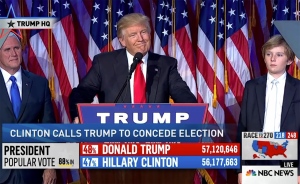
donald-trump-presidential-election-victory-speech

Support Semi-Partisan Politics with a one-time or recurring donation:

Agree with this article? Violently disagree? Scroll down to leave a comment.

Follow Semi-Partisan Politics on TwitterFacebook and Medium.

Donald Trump Victory Reaction: Clutching At Normality In The Age of Trump

white-house-oval-office-carpet

Using positive reinforcement to steer Donald Trump in a better direction might just work, but only if we stop the blanket hysteria

It is fair to say that the New York Times – which, it always pleases me to remember, not so long ago showed such fawning deference to executive power that they forced their journalists to warp the English language, describing the same actions as “torture” when committed by swarthy foreigners but merely “enhanced interrogation” when conducted by Our Boys – has not taken well to the election of Donald Trump as 45th president of the United States.

But the preface to today’s Opinion Report from the Times, written by David Leonhardt, strikes the right tone and gives some sound advice:

If you opposed Donald Trump’s candidacy, it’s easy to be angry about almost everything he now says or does. When he does something outrageous — like appoint a promoter of racism to a top job — it confirms your fears. And when he does something reasonable — like say he wants to improve the lives of all Americans — it feels hypocritical.

Yet I would still urge people to welcome any step he takes toward democratic normalcy, including those that feel hypocritical.

Trump ran a campaign that was opposed in important respects to American democratic values — and he won. The question that now confronts us is whether our values will change or whether Trump will begin to change.

One of the main reasons that President Obama and Hillary Clinton have reacted to his victory as positively as they have is their desire to move the country back toward democratic normalcy. It’s the right instinct.

I think this is good advice. The endless catastrophisation of Donald Trump’s victory – extending well beyond those areas where we have good reason to fear a Trump presidency toward those where there are no suggestions he intends to make backward steps – is now in danger of doing real harm, not only to the reputations of some of Trump’s most hysterical critics (those who railed against Trump for not committing to accept the election result, and are themselves now refusing to accept the election result) but more importantly to Americans’ faith in their own democracy and electoral system.

During the press pool at their first White House meeting, one could sense the look on Donald Trump’s face that the realisation of what he has wrought is now finally starting to hit. The man who probably didn’t seriously believe he would be in this position, either on the day he announced his candidacy or the day before the election, is rapidly coming to terms with the vast amount of institutional and bureaucratic machinery which he must master, and which will inevitably constrain whatever plans made during the campaign he was serious about enacting.

The mere fact that President Obama spent 90 rather than 15 minutes in that initial meeting walking Donald Trump through the basics (oh to have been a fly on the wall during that American Government 101 session) and plans to hold many more such remedial governance classes with an apparently grateful Trump suggests that the president-elect is finally beginning to accept that there are many things he does not know, and many areas where his administration will need to be guided by the advice and precedent left by history.

And as a reader of this blog pointed out, Americans (and the world) have thrown themselves into a panic before about incoming Republican administrations – with similar accusations of naivety, ignorance and incompetence – only to later have to grudgingly concede that the resulting presidencies were quite good, even historic.

Now, to be clear: I have no such expectations of Donald Trump, who is a tiny fraction of the man that Ronald Reagan was, and certainly nowhere near as faithful a friend to conservatism or the cause of liberty. Real, visceral concern about Trump’s presidency is entirely warranted, especially where it can be eloquently articulated (as opposed to inchoate paranoia) and particularly where its expression closes off doors to some of the more obviously dangerous Trumpian flights of fancy. And of course public protest has an important place in expression opposition to the Trump agenda. But let’s spare the sackcloth and ashes, particularly those of us with public platforms either large or small.

If the goal (for everybody) is to survive the next four years intact and to make Donald Trump’s presidency a successful one for America in spite of the man himself, then we need to ask whether mass hysteria, Trump catastrophisation and total implacable opposition to everything the new administration tries to do is really the best approach, or whether it might be better to provide affirmation and support where Trump does something right combined with forceful dissent and opposition where he or his team stray from an acceptable path, in the hope of teaching the new president some boundaries.

It is quite clear to this blog which is the better option. Keep screaming that everything Trump now does is tantamount to fascism will be like crying “wolf!”, causing the president-elect himself to block out the just criticism along with the superficial, and his supporters to harden in their support for him. We saw just how well that approach worked during the election campaign. Let’s not now make the same mistake during the transition and on into the new administration.

Where Trump does the right thing – even if it means walking back on previous, extreme campaign positions – it wouldn’t hurt to try giving credit where credit is due, at least for a trial period. If we know anything of Donald Trump’s character, it is that while he will take any publicity, good or bad, he much prefers people to think well of him.

And while the Democratic Party and intra-GOP opposition take their time to get organised, Donald Trump’s desire to be admired and respected may turn out to be a very useful constraining factor on his behaviour on office.

Those of us with real concerns about Donald Trump’s presidency should not throw away that potentially vital lever of control in our haste to criticise absolutely everything about the incoming president.


donald-trump-presidential-election-victory-speech-2

Support Semi-Partisan Politics with a one-time or recurring donation:

Agree with this article? Violently disagree? Scroll down to leave a comment.

Follow Semi-Partisan Politics on TwitterFacebook and Medium.

Politicians Aren’t Entitled To Their Own Facts, But Neither Is The Media

An independent political press corps with the knowledge and authority to call the shots and confidently call out lies when politicians tell them – rather than giving equal credence to two diametrically opposed crazy positions – is a great idea. If only our media was sufficiently trustworthy and capable of performing such a nuanced, sensitive role

Something funny seems to have happened to the New York Times.

For the past week or so, the newspaper which once twisted itself into a risible-looking pretzel trying to justify calling the practice of waterboarding “torture” when inflicted by America’s enemies but “enhanced interrogation” when conducted by American forces has discovered a new passion for clarity and bold truth-telling.

Peter Beinart explains, over at The Atlantic:

Last Saturday, The New York Times published an extraordinary story. What made the story extraordinary wasn’t the event the Times covered. What made it extraordinary was the way the Times covered it.

On its front page, top right—the most precious space in American print journalism—the Times wrote about Friday’s press conference in which Donald Trump declared that a) he now believed Barack Obama was a US citizen, b) he deserved credit for having established that fact despite rumors to the contrary and c) Hillary Clinton was to blame for the rumors. Traditionally, when a political candidate assembles facts so as to aggrandize himself and belittle his opponent, “objective” journalists like those at the Times respond with a “he said, she said” story.

Such stories, according to the NYU journalism professor Jay Rosen, follow this formula: “There’s a public dispute. The dispute makes news. No real attempt is made to assess clashing truth claims in the story … The symmetry of two sides making opposite claims puts the reporter in the middle between polarized extremes.”

[..] But the Times, once a champion practitioner of the “he said, she said” campaign story, discarded it with astonishing bluntness. The Times responded to Trump’s press conference by running a “News Analysis,” a genre that gives reporters more freedom to explain a story’s significance. But “News Analysis” pieces generally supplement traditional news stories. On Saturday, by contrast, the Times ran its “News Analysis” atop Page One while relegating its news story on Trump’s press conference to page A10. Moreover, “News Analysis” stories generally offer context. They don’t offer thundering condemnation.

Yet thundering condemnation is exactly what the Times story provided. Its headline read, “Trump Gives Up a Lie But Refuses to Repent.” Not “falsehood,” which leaves open the possibility that Trump was merely mistaken, but “lie,” which suggests, accurately, that Trump had every reason to know that what he was saying about Obama’s citizenship was false.

In other words, the New York Times has sporadically started to report objective facts and truth, rather than doing what has long been traditional among the political press corps – walking a neutral tightrope between two partisan positions of staggeringly obvious falsehood or stupidity.

Despite his protestations and evasions, Donald Trump has been one of the key players in the birther movement from the beginning – picking up from the memorably loopy Orly Taitz – and has certainly been the conspiracy movement’s most public face. I remember blogging about it over four years ago, back in 2012.

Given the context of a presidential election and the extra scrutiny on media bias, it is surprising and rather heartening to see the Times displaying the courage to report fact rather than controversy; the same headline a month ago might easily have read “Trump Withdraws Birther Allegation”, with no reference to the established facts and outcome of the story.

Jon Stewart (formerly of The Daily Show) must be smiling. Since 2004 and even earlier, Stewart railed against political coverage which ginned up conflict in pursuit of ratings and incessantly reported issues through the prism of Left vs Right, Democrat vs Republican without ever seeking to either restrict coverage to facts or move beyond partisan talking points to get to the truth. The video at the top of this article shows Stewart’s memorable appearance on CNN’s Crossfire show, in which he castigated the hosts for “hurting America” by injecting partisanship and sucking nuance out of the political discourse.

Obviously the New York Times does not inhabit quite the same infotainment space as Crossfire, but the basic operating principle has been very much the same of late – present two or more strongly opposing partisan viewpoints, let the talking heads (or journalistic sources) slug it out in defence of their respective positions, and then move on without ever really applying any kind of judgment as to the respective merits of the contrasting positions.

Nowhere is this approach better summed up than the slogan of the Fox News Channel – “we report, you decide”. It is a relativist worldview which suggests there is no truth in even quite straightforward binary debates, and that we are free to pick our own facts and construct our own reality in accordance with our personal biases and interests.

Now, there is yet more evidence that the New York Times is moving away from this risk-averse and rather cowardly stance – yesterday the newspaper described as “false” Donald Trump’s claims that Hillary Clinton has sinister plan to destroy the Second Amendment:

In justifying his remarks, Mr. Trump falsely claimed that Mrs. Clinton wants to “destroy your Second Amendment,” apparently a reference to her gun control policies.

My emphasis in bold.

At face value this is a good development – the “he said she said” approach to political coverage is what has enabled so much of the spineless print journalism and sensationalist, conflict-stoking television news reporting in Britain and America. Seeing a “respectable” institution finally buck that trend and push back against the toxic idea that reality is malleable and truth exists only in the eye of the super-partisan beholder is, in theory, a very good thing.

Peter Beinart certainly seems to think so:

A certain etiquette has long governed the relationship between presidential candidates and the elite media. Candidates stretch the truth, but try not to be too blatant about it. Candidates appeal to bigotry, but subtly. In turn, journalists respond with a delicacy of their own. They quote partisans rather than saying things in their own words. They use euphemisms like “polarizing” and “incendiary,” instead of “racist” and “demagogic.”

Previous politicians have exploited this system. But Trump has done something unprecedented. He has so brazenly lied, so nakedly appealed to bigotry, and so frontally challenged the rule of law that he has made the elite media’s decorum absurd. He’s turned highbrow journalists into referees in a World Wrestling Entertainment match.

Last Saturday, the Times answered Trump’s challenge. He’s changed the rules, so it did, too.

But this analysis only holds if one has reasonable grounds to trust the journalistic institution or media outlet doing the reporting; will they reserve their merciless news analysis features for instances when there really is a right and wrong binary perspective, or will editorial judgment and personal bias cloud the picture?

Remember, the New York Times was happy to characterise the EU referendum and the Brexit campaign as being motivated not out of concerns for democracy and sovereignty but primarily by xenophobia and anti-immigrant prejudice. And while there were highly visible elements of the latter, under the “News Analysis” model what would prevent the Times deciding that the entire Leave campaign was based on racism and then reporting this skewed perspective to their readers as simple, self-evident “truth”?

While the “he said, she said” ra-ra approach may be divisive and unseemly, it at least offers a right of reply to those whose views are misinterpreted or deliberately slandered by shameless opponents. And while conventional wisdom might hold that it is more often conservative voices who live in a sealed bubble of their own facts, in reality we would all be vulnerable to a style of news reporting in which reporters and editors are given sweeping new authority to pass what often amount to value judgments on behalf of readers. At some point in the future, any one of us could find our unpopular, minority opinion almost entirely  frozen out of the public discourse.

So this blog will cautiously cheer along with Peter Beinart at the New York Times’ sudden willingness to call out lies – provided that this is to be genuinely bipartisan new scrutiny rather than merely a one-sided club with which to bash the Trump campaign.

But we should be aware that we are at the top of a slippery slope here. Smacking down candidates and their statements is a positively good thing when we are dealing with easily proven questions of who said what, and when. But the temptation to apply this swashbucklingly assertive style of journalism to more subjective debates (like economic policy, immigration or foreign affairs) may prove to be irresistible for journalists with human biases and editorial boards with agendas.

In case they hadn’t noticed, the mainstream media doesn’t presently enjoy a particularly enviable trustworthiness rating among the general public. Abuse “news analysis” by using it as a blatantly partisan cudgel and they will drive that rock-bottom rating still lower.


donald-trump-fox-news

Support Semi-Partisan Politics with a one-time or recurring donation:

Agree with this article? Violently disagree? Scroll down to leave a comment.

Follow Semi-Partisan Politics on TwitterFacebook and Medium.