Mothergate: Andrea Leadsom Means Well, But Does Not Yet Have The Temperament To Be Prime Minister

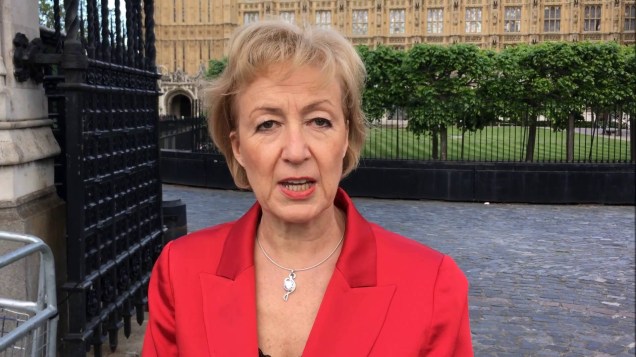
Andrea Leadsom - Conservative Party - Tory Leadership

In choosing a new Tory leader and prime minister, promise and potential are not enough – experience and temperament matter too

A new candidate profile in the Telegraph paints a sensitive – and very human – portrait of Conservative Party leadership candidate Andrea Leadsom.

In the wake of the rather ludicrous ‘mothergate’ drama, Allison Pearson interviewed Leadsom and reports:

When Andrea Leadsom came on the phone yesterday afternoon I could tell from her voice that she’d been crying. After what had happened, the last thing she wanted was to talk to another journalist, but she agreed, with great trepidation, to speak to me as we’d planned.

Following what she thought was a friendly, professional meeting with a Times reporter on Friday, she found herself accused in a banner headline of saying that, as a mother she had the “edge” over the childless Theresa May in the race to be prime minister.

[..] When I ask if she would like to apologise to Mrs May, she says: “I’ve already said to Theresa how very sorry I am for any hurt I have caused and how that article said completely the opposite of what I said and believe.”

She refuses to say how the message was conveyed to the Home Secretary, but she admits she has felt “under attack, under enormous pressure. It has been shattering.”

[..] It’s been a brutally hard week which makes you wonder why anyone would go into politics. On the phone, I asked Andrea Leadsom when she last cried. There is a pause. “Twenty minutes ago,” she admits with a wobble. But, don’t worry, it’s not a sob story. She doesn’t believe in those. Meanwhile, she’s off to make a roast chicken stretch for the children’s friends who just turned up unexpectedly. “Lots of roast potatoes.”

Putting on a brave face, making the best of things, and soldiering on, she is much like swathes of Tory voters up and down the land. Will they really ignore her, as all the pundits predict, when it comes to the ballot in September? Not everything has to end in tears.

One feels for Andrea Leadsom, who not only seems like a fundamentally decent human being and with her long previous career outside politics much closer to the ideal of the citizen politician than many of the grey, indistinguishable drones (including Labour leadership challenger Angela Eagle) who have been marinating in the Westminster cesspool for their entire careers.

But it is very concerning that Leadsom has allowed what is essentially a media storm, entirely unconnected with policy or the fate of the country, to affect her so gravely. What we are witnessing is the emotional response of someone who is not used to being vilified in the press and the court of public opinion, and who seems to be shaken to her core at having been misrepresented and criticised.

Such treatment is part of the job description for any British prime minister, particularly in our current polarised age when it is all but guaranteed that any conservative prime minister will immediately be treated like evil incarnate by the socialist half of the country regardless of what they say or do. Such mundane events as being misrepresented by a newspaper or trashed in the press because of a careless choice of phrase ought to be like water off a duck’s back to a seasoned politician. Clearly this is not so for Andrea Leadsom, who has not yet developed the emotional armour to withstand the heat of battle.

Of course, one can argue that this should not be the case; that we cannot simultaneously call for more “normal” people to enter politics and then hold them to the standards of nonchalance in the face of political treachery set by the hardened political class. But sometimes idealism must fall before realpolitik. Even if it is the case that the Westminster media and political class are unnecessarily fratricidal, a British prime minister must still be able to deal with immeasurably complex and fraught issues of domestic security and foreign policy.

This isn’t the Sunday League – with her audacious leadership bid, Andrea Leadsom is asking us to believe that she is capable of playing in the Premier League, an instant promotion spanning several important intermediate steps. A junior minister who has never attended cabinet has a very different sense of what constitutes high stakes than someone who has held one or more of the great offices of state. The latter is almost certain to have wrestled with fiendishly difficult political decisions, the repercussions of which may even be life or death. The ability to do so while maintaining composure and clear thinking is of the utmost importance in a prime minister.

Of course personal temperament is not the only thing that matters. A candidate’s policy beliefs (with attitude toward the coming Brexit negotiations being top of the list right now) also matter enormously, as does their track record. But I get the strong sense that in our justifiable desperation to avoid acknowledging that someone so illiberal and authoritarian as Theresa May is the best of a bad option for leading the country in this difficult time we are sweeping Andrea Leadsom’s naivety, inexperience and rookie temperament under the carpet.

This would not be a mature way to behave. The choice between Theresa May and Andrea Leadsom must be made on the basis of who they are today, the policies they advocate and what they have accomplished, and not based on who they may become or whatever else we try to project on to their respective candidacies.

Andrea Leadsom may show future promise – promise which this blog very much hopes to see nurtured and realised in the coming years – but promise alone is not enough.

The ultimate decision over which Conservative leadership candidate would make the best Tory leader and prime minister must be made based on the best evidence available as to a candidate’s ideology, policy platform, track record, personality and temperament.

And much as it pains this blog to admit it, that choice should be Theresa May.


Theresa May - Investigatory Powers Bill - Mass Surveillance

Agree with this article? Violently disagree? Scroll down to leave a comment.

Follow Semi-Partisan Politics on TwitterFacebook and Medium.

The New Statesman Is Preaching Hatred And Fear Of Conservatives

Jo Cox Tolerance

Be tolerant and respect the sincerely held political views of other people. Unless those people happen to be Tory Scum…

Apparently, as we seek to move on from the EU referendum in the post Jo Cox era, we are all supposed to be more civil to one another and focus on what unites us rather than what divides us.

We know this, because the New Statesman high-mindedly told us so:

I believe the horrific killing of Jo Cox is a moment for this New Generation of us to speak more openly about what has gone wrong and how we must, collectively, tackle it. Fundamentally, I believe we must see this as a moment in our history to re-covenant our respect as a society for politics done well. Democracy can ultimately only be as good as the society it represents. We must all learn once again to value free speech and civilised debate, led by open, accessible and accountable Parliamentarians. We must pledge ourselves to continuing the fight for freedom, for tolerance and for understanding between individuals, nations and peoples. We must ensure that love, hope and understanding will always triumph over hate, fear and despair.

We must reject the politics of alarmist language, personal attacks and fear.

A noble sentiment which surely we can all take to heart – it should certainly be possible for all of us to watch our rhetoric in the heat of debate, as none of us benefit from the current toxic political climate.

So why, then, is the New Statesman now actively trying to whip its readership into a quivering fear at the prospect of Andrea Leadsom winning the Conservative Party leadership contest and becoming prime minister?

Having apparently forgotten their own edict to respect people with different political views, the New Statesman instead lists nine reasons why its readers should be terrified – yes, terrified, that emotion which would be more appropriate if masked intruders had just smashed down their front doors – by this relatively unknown politician.

From “9 reasons you should be truly terrified of Andrea Leadsom becoming prime minister“:

With polls suggesting Andrea Leadsom will be one of the two Tory leadership candidates put to a vote of the members, it’s only natural to be curious about what this potential prime minister believes.

Luckily, she’s been busily keeping a blog for the last decade.

It turns out she has strong views on babies’ brains, and thinks she may have discovered the secret to preventing a repeat of the riots which plagued London in 2011.

So far they seem to be trying harder to make Leadsom seem ridiculous than terrifying.

There then follows a list of generally banal and uninteresting statements which Leadsom has made, or policy positions which she has taken, including:

1. Gay couples to the back of the adoption queue

Back in 2009, Leadsom used an adoption case – in which the two children of a heroin addict were given to a GAY couple (!?!?) – to question just when enough is enough when it comes to gay rights. “And if that weren’t enough, the two strangers are a gay couple, who have been selected ahead of several heterosexual couples.”

and

2. Watch out for those single parents

In 2006, she wrote that “the child of a single parent family is 70 per cent more likely (than the child of a two-parent family) to have problems at school, and even to become a drug addict or a criminal.”

and

3. And that anti-marriage media

“The self indulgence and carelessness of non-committed adult relationships is proving fatal to the next generation,” she wrote in 2008.

and

5. Those baby-brained rioters

“I explained how secure attachment or parental love literally hard wires the baby’s brain,” Leadsom wrote in 2012.

and

6. No money for wind farms

“I completely welcome the announcement from the European Commission made recently regarding the possibility of ending all subsidies for winds farms,” she wrote in 2014.

and, particularly ludicrously

8. Those US presidents getting invites before us

“How can France be hosting the 65th anniversary of the Normandy landings with Sarkozy and Obama (neither of them a twinkle in their father’s eye in 1945) in attendance, and yet the Queen of Britain, Canada, and Australia (who was not only alive, but who also served in the war) was not invited until two weeks ago?”

Now, one can disagree vehemently with one or many of these points. This blog certainly does not share Andrea Leadsom’s reflexive opposition to gay couples adopting children, for example. But sincere political disagreements on social, cultural and economic issues – the full range cited throughout the New Statesman’s tawdry hit piece – should be possible without us becoming physically afraid of one another.

Yet the New Statesman presents these rather pedestrian conservative positions and then exhorts its readers to be “truly terrified” by what they see. The magazine does not encourage them to challenge the validity of Leadsom’s views, much less offer its own point-by-point rebuttal. The fact that Leadsom is wrong is taken for granted, which is bad enough, but worse still is the fact that the New Statesman seeks to provoke an emotional rather than an intellectual reaction.

This is exactly what so many commentators (including that magazine) were telling us we should not be doing in the wake of the murder of Jo Cox MP. Less than a month ago we were being told to respect one another’s opinions and engage in calm, rational dialogue. Yet when it comes to confronting conservatives, many opinion leaders on the Left are more than happy to provoke angry, confrontational responses – whether they take the form of hateful mobs outside the home of Boris Johnson on the morning after the EU referendum or articles instructing people to actively fear conservatives.

This is an exclusively left-wing phenomenon. While there are plenty of nasty, stupid reactionaries on the conservative side, rarely do they treat left-wingers as a physical or emotional threat. The murderer of Jo Cox, to the extent that he was motivated by politics rather than madness, is the great exception to this rule. The Left, by contrast – particularly that part of the Left which has been captured by the Cult of Social Justice and Identity Politics – are starting to treat anybody who does not agree with and actively validate their ideas as enemies, literal enemies who mean them harm. If this atmosphere persists, how long will it be until some mentally unstable left-winger, taught by the commentariat to believe that political disagreement is akin to an act of harm, lashes out at an opponent with potentially tragic consequences?

One way or another, we are all going to have to coexist on this island – at least, those of us who are not bizarrely reacting to the Brexit vote by flouncing off to independent countries without an NHS will still have to deal with each other. Treating half of the country as actively dangerous people of whom we should be terrified is about the least conducive thing to bringing about that spirit of tolerance, and the New Statesman should be ashamed for its part in feeding this atmosphere of hysteria.

And look at some of the things which the New Statesman wants its readers to be terrified about. Andrea Leadsom celebrated the potential end of subsidies for wind farms – how scary! Leadsom wants to invest in “psychotherapeutic support for families struggling with the earliest relationship with their baby” – why, she’s just like Genghis Khan! She didn’t take kindly to President Barack Obama interfering in our internal EU referendum debate, and dared to say so – what an awful, America-hating isolationist!

The disbelieving hysteria which greeted Ed Miliband’s 2015 general election loss and now the 2016 EU referendum result shows that much of the modern Left is already utterly incapable of empathising with those holding other viewpoints – and in some cases simply cannot conceive of their existence. Time and time again we hear tearful sob stories from disappointed lefties that they don’t understand how they lost, because everyone they know voted the “right” way.

But with tawdry articles such as this, the New Statesman seeks to turn that gulf of incomprehension into a gnawing, corrosive and dangerous fear of conservatives, and of any ideas outside of the insular leftist orthodoxy. And this could potentially be disastrous for our country, not to mention for individual conservatives currently being demonised as terrifying, two-dimensional cartoon bogeymen rather than thinking, decent people who just happen to have a different outlook on life.

So how should we respond to opposing political views in the post Jo Cox era? Here’s a tip for the New Statesman and everyone else in the media:

If your article encourages people to learn more about those opposing views, or presents an intellectually grounded rebuttal of them, then you’re doing it right.

If your article is a smug, self-satisfied and fundamentally uncurious exercise in confirmation bias, designed to delegitimise and vilify the sincerely held political views of others, then you haven’t learned a damn thing.


Trigger Warning

Top Image: Herald Scotland

Agree with this article? Violently disagree? Scroll down to leave a comment.

Follow Semi-Partisan Politics on TwitterFacebook and Medium.

Every American Should Support Brexit

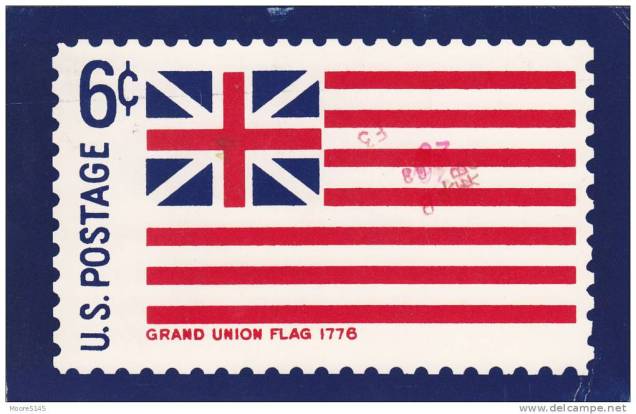
Grand Union Flag

Finally, the democratic case  for Brexit is explained to Americans

With many leading American voices so illogically hostile to Brexit, it is great that one of our own – Ben Kelly of The Sceptic Isle and the Leave Alliancehas seen his concise democratic argument for Brexit published in the New York Times.

Kelly patiently lays out the case for Brexit to an audience which has regrettably proved more likely to skip the democratic question entirely and wrongly view leaving the EU as an illogical, regressive act:

There are worrying levels of resentment in British society. People have little faith in their ability to bring about change through who they vote for and this breeds apathy and represents a grave threat to participatory democracy. And, no, not all of that can be blamed on the E.U., but we have now lost too many policy making powers and essential democratic safeguards. The E.U. maintain exclusive control of our trade policy, fishing and agricultural regulations, and is rapidly gaining power over British policies for foreign affairs, energy, environment, transport and telecommunications.

The E.U. is a supranational government with an executive body in the unelected European Commission, a legislature in the European Parliament and the Council of the E.U., and a powerful judiciary in the European Court of Justice. The “invisible hand” of its power operates through the husks of British political institutions: Our Ministers, MPs and councillors are constrained and must work within imposed parameters that are not conducive to new ideas and innovation. The E.U. hinders effective governance and disempowers and disconnects elected officials from the people who elected them.

When power is so far removed from the people, anger and disillusionment are inevitable. And democracies die when there is little connection between the electorate and those who rule them. Now, there is a pressing need to shift the balance of power back to the people and restore democratic accountability. It is the only hope for rebuilding faith in politics and quelling our current state of discontentment.

Restoring self-governance could inspire British society with a renewed sense of identity, vigor and pride. It means the construction of a new nation and a reversal of the degradation of our political culture. None of this can happen automatically and Brexit is not a silver bullet. But it unlocks the potential for change, and Britain should rise to the occasion.

It should not be necessary to explain these things to Americans, particularly those in the establishment most likely to want Britain to stay in the EU. These people, possessed of a solid understanding of their own nation’s history, should be our natural allies in wanting to free Britain from an increasingly powerful, antidemocratic and unrepresentative supranational government.

The rebellious American colonists because known for the phrase “no taxation without representation”. The EU has not yet – quite – reached the point of directly taxing its citizens, though the day may not be far off. But the phrase “no regulation without representation” applies very well to the Brexit cause. In an age of globalisation, when regulatory harmonisation is important to promote further economic growth, it is more important than ever that the people have an input into the process of making global regulations – particularly when that process has the power to wipe out entire industries at the stroke of a pen.

An independent nation state can wield its “right of reservation” as a last resort, exempting itself from new regulation which it deems particularly harmful to the national interest. A member state of the EU, like Britain, has no such power. The EU has exclusive competency on matters relating to trade, and we must swallow whatever the European Commission agrees on our behalf.

Those roles and institutions within the EU which are directly elected are nothing more than democratic fig leaves. The European Parliament is a toothless rubber-stamping institution which cannot propose new legislation or strike down old. And those who claim that the Council of Ministers or European Council allow national interests to be exerted forget that governing elites from the 28 member states often have far more in common with each other than they do with the ordinary people they represent, and will always face the tendency to do what is best for themselves and the European Union which they serve rather than what is best for the people who put them in office.

In every single way, the European Union as it currently stands should be offensive to the American national psyche. That it is widely popular among American opinion-formers reflects a failure on the part of Brexiteers to do a better job co-opting an important international ally. But more than that it represents a failure of the American elites, who having lost faith and confidence in their own country expect that we should do the same with ours.


USA Declaration of Independence Lying on Grungy Betsy Ross Flag

European Union - United Kingdom - Britain - Flags

Top Image: delcampe.net

Agree with this article? Violently disagree? Scroll down to leave a comment.

Follow Semi-Partisan Politics on TwitterFacebook and Medium.

The Economist Endorses Remain, In A Display Of Bad Journalism And Worse Citizenship

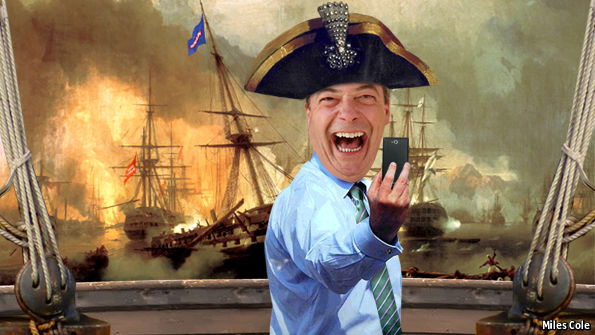
Nigel Farage Show - The Economist

How to suck at modern citizenship, by The Economist

The Economist has, inevitably, now thrown its support behind the campaign to keep Britain in the European Union.

Their endorsement of the EU is full of the usual denial about the EU’s trajectory and bromides about cooperation and not weakening Europe at a time of global uncertainty, but more astonishing is their condemnation of the very campaign in which the Economist – like all other major media outlets – played a major role.

In a separate piece published concurrently with their endorsement of Remain, the Economist declares:

Such has been Britain’s EU referendum. David Cameron first promised the vote in 2013, spooked by UKIP’s success in local elections and importuned by UKIP-inclined MPs on his Conservative benches. The result has been an unedifying campaign that has both bolstered Mr Farage and carried his imprint. It has been divisive, misleading, unburdened by facts and prone to personality politics and gimmicks. What might have been a hard-nosed debate about Britain’s future, about the pros and cons of EU membership, has turned into a poisonous row about the merits of what is ultimately Mr Farage’s vision of England: a hazy confabulation of content without modernity; of warm beer, bowler hats, faces blackened by coal dust; of bread-and-dripping, fish-and-chips, hope-and-glory.

The outcome has been a contest with the logical architecture of an Escher drawing: Remain and (in particular) Leave issuing assertions that double back on themselves, Möbius-strip arguments that lead everywhere and nowhere. Knowledge has been scorned (“I think people in this country have had enough of experts,” huffs Michael Gove, the pro-Leave justice secretary). Basic facts have fallen by the wayside: Mr Cameron claims Brexit would help Islamic State; Leave implies Turkey, with its 77m Muslims, is about to join the EU. The complicated reality of an evolving union and Britain’s relationship with it has been ignored.

[..] To some extent the referendum has revealed things that were already present: the growing void between cosmopolitan and nativist parts of the country, the diminishing faith in politics, the rise of populism, the inadequacy of the left-right partisan spectrum in an age when open-closed is a more salient divide. Yet it is hard not to conclude that the campaign has exacerbated all of these trends. Polls suggest that trust in senior politicians of all stripes has fallen. And that is just the start. If Remain wins on June 23rd, Brexiteers will tell voters they were conned. If Leave wins, Mr Cameron will go and his successor will negotiate a Brexit that does not remotely resemble the promises of the Leave campaign, which trades on the lie that Britain can have full access to the European single market without being bound by its regulations and free-movement rules.

Either way, politics is coarsened. Voters will believe their leaders less. Short of a total reconfiguration of the party-political landscape (possible but unlikely), the existing Westminster outfits will look increasingly at odds with political reality. The currency of facts will be debased, that of stunts inflated, that of conviction sidelined. It will be de rigueur to question an opponent’s motives before his arguments, to sneer at experts, prefer volume to accuracy and disparage concession, compromise and moderation. Mr Farage’s style of politics has defined this referendum. It will live on in the muscle memory of the nation.

It is frankly astonishing that the Economist can survey the dismal scene of this referendum campaign and choose to be dismayed not by the behaviour of our prime minister – a man who has boldly and shamelessly lied, bullied, deceived, threatened and intimidated the country into voting his way – but rather by the now typical antics of an increasingly sidelined Nigel Farage.

The Economist is quite right to point out that politics has been coarsened throughout this debate. This is partly inevitable – we are debating serious, existential issues in a once-in-a-generation plebiscite. And human nature being what it is, distortions will be made and tempers will flare. But it is thoroughly depressing to see the Economist seemingly hold the people in charge of the country on the Remain side to a lower standard of behaviour than those outsiders, typically with less experience of top level politics, who are advocating Brexit. Apparently we should all be aghast at the fact that there are some Little Englanders and conspiracy theorists on the margins of the Brexit movement, but simply accept that the prime minister of the United Kingdom has become a serial liar who happily threatens his own people.

If a certain style of politics is to “live on in the muscle memory of the nation”, as the Economist frets, it will be the style of politics practised by those on the Remain side who have abused their offices of state, their bully pulpits and any sense of common decency to wage a narrow campaign of fear based almost entirely on economic scaremongering. It will be the Tyranny of the Experts, in which the politically motivated verdicts of Highly Credentialed People are shouted louder and louder to drown out dissent – as though a consensus of “experts” has never been wrong about anything before (and as though democracy can be measured in an economic model).

But since the Economist is so willing to overlook the scandalous behaviour of our own prime minister and concentrate all of its fire on Nigel Farage’s personality, it is worth calling into question the Economist’s own role in this referendum campaign. Have they helped to shed light, to inform, to raise the level of debate? No. They have peddled in exactly the same glibly superficial, personality-based lazy journalism as nearly every other major outlet.

All this time, out of sight of the shining ones at the Economist, there was a rich, informative and inspiring debate taking place online which the rest of the legacy media entirely missed because they were so busy quoting each other and hanging on the every last word of Nigel Farage and Boris Johnson.

The bloggers of The Leave Alliance in particular have exposed the fascinating world of international trade and regulation, and the slowly emerging global single market – comprised of the real global “top tables” – of which Britain could be a part, if only we had the national confidence to stop hiding behind the euro-parochialism of Brussels. This is really interesting stuff, when you dive into it – the kind of topic which might make an excellent Economist Special Report, come to think of it, though it is apparently too obscure for their journalists to take the time to learn.

What the Economist (and many other publications) fails to realise is that Nigel Farage and Boris Johnson do not speak for the entirety of the Brexit movement, least of all the liberal Leavers whom the Economist scandalously misrepresents in their sloppy wet kiss to the EU. A few quick Google searches and some basic human curiosity (combined with a willingness to look outside the Westminster bubble for original thinking and writing) on the part of journalists could have completely changed the nature of this EU referendum. Opened it up. Taken it to a higher level, where we actually debated the importance of global regulation and how Britain can best wield our influence in the global bodies which actually hand regulations down to the EU. We could have spent this time debating the meaning of democracy and sovereignty in the 21st century, and how Brexit could just be part of a process of democratic renewal in Britain.

In short, the Economist has no right to scorn the very referendum campaign in which they were themselves utterly complicit. They could have sought out other, more informed voices and given them a platform and a sceptical but fair hearing. But all they wanted to hear from the Brexit side was the ranting of Nigel Farage, so that is all they did hear. The Economist wanted to see the Brexit campaign as a Little Englander movement spurred by nostalgia, insularity and xenophobia and they made sure to pay attention only to those facts and those voices which reinforced that viewpoint.

And in so doing, the Economist gave its readers exactly what most of them wanted to read – people in that prized demographic too busy being captains of industry with glittering international careers (and buying the Patek Philippe wristwatches advertised on the back cover) to really care much about democracy or how we exercise control over our leaders. Why would they care? They are generally doing very well, thank you very much. Most of them don’t see any need for things to change, or for people to be held to account for bad decisions in government which only ever affected “other people”, very different to themselves.

You can call that what you will. The Economist are certainly very proud of themselves. But to my mind it is shoddy journalism, and a truly rotten form of citizenship.


European Union - United Kingdom - Britain - Flags

Top Image: Miles Cole, The Economist

Agree with this article? Violently disagree? Scroll down to leave a comment.

Follow Semi-Partisan Politics on TwitterFacebook and Medium.

The Financial Times Makes A Worryingly Stupid Cheerleader For The EU

A company logo hangs on the headquarters of the Financial Times newspaper in London

The slavishly pro-EU Financial Times often displays a childlike level of understanding of how the European Union – and global regulation – actually works

Apparently the arguments for Brexit “do not add up”.

We have this from the most scrupulous and unbiased of sources, the Financial Times, so of course it must be true. Millions of Brexiteers, The Leave Alliance and little old me can pack up our things and go home, because Martin Wolf of the Financial Times has spoken.

Except that when Martin Wolf speaks on the topic of the European Union, he sounds like an idiot. This is his opening gambit:

If the UK voted to leave the EU, it would almost certainly be outside the arrangement organising the life of our neighbours and principal economic partners forever. Given this, the question is whether the option to leave should be exercised now. My answer is: absolutely not. To see why, let us examine popular arguments in favour of departure.

Oh dear. In his first sentence, Wolf inadvertently describes the overwhelming case for Brexit, before he can even launch in to his promised list of ten rebuttals. For he says that the EU is an organisation which seeks to “organis[e] the life of our neighbours and principal economic partners” – and indeed ourselves, since we are part of the union, too.

This is refreshingly honest, albeit unwittingly so. The EU does indeed seek to organise not only the lives of our neighbours and trading partners at the nation state level, but crucially (and most offensively) at the level of the private citizen too. Why? Because the EU does not see itself as some kind of a trading club. It sees itself as a government of Europe, sitting above national governments but gradually rendering them obsolete and irrelevant. The EU makes no secret of this fact – it is enshrined in the treaties, quotes from senior EU officials and even emblazoned on the wall of the European Parliament Visitors’ Centre, for those who care to look. It is only here in Britain where politicians and assorted EU apologists bury their heads in the sand and lie to themselves (and to us) about the real purpose of the European Union.

So Martin Wolf is quite correct – if Britain leaves the EU, we will absolutely be outside the arrangement which seeks to organise the lives of 500 million European citizens from every single member state. Power will be brought one step closer back to the individual citizen. And the fact that Martin Wolf and the Financial Times see this as a bad thing – that they visibly recoil from the idea that Britain should shed a superfluous layer of supranational government and seek to return power to the people – really tells you everything you need to know about whose side they are on. Hint: it is not the side of we the people.

The article then lurches from bad to worse, with a series of “rebuttals” of the Brexit case each one less supportable than the next. We are assured, for example, that a politically integrated eurozone is unlikely, despite the European Union doing everything but spell out in fireworks their intention to do exactly that.

Some of Wolf’s later points – particularly around immigration and trade agreements – are slightly more accurate. But this is only because he is creating straw man arguments to demolish, aided in his efforts by the hapless official Vote Leave campaign. The various spokespeople and figureheads of Vote Leave say enough stupid things between them to enable Martin Wolf to publish a ten point anti-Brexit rebuttal every day from now until polling day, but that is very different from Wolf managing to disprove or discredit the core arguments in favour of Brexit, most of which he pointedly skirts around.

Specifically, Martin Wolf never appears more out of his depth than when he attempts to show that there is no natural positive alternative to EU membership, and when he attempts to discredit the Norway (EFTA/EEA) option as an interim step. Thus we get utter bilge like this:

Seventh, it would be easy to agree on alternatives to EU membership. Yet those recommending leaving have no agreed position. There are three plausible alternatives: full departure with trade regulated by the World Trade Organisation, which would cost the UK its preferential market access to the EU; Swiss-style membership of a trade arrangement in goods, with bilateral deals in other areas, which is complex and would require the UK to retain free movement of people; and Norwegian-style membership of the European Economic Area, giving full access (except for having to abide by rules of origin in trade in goods) but would deprive the UK of a say on regulations. In all, the more sovereignty the UK wishes to regain, the less preferential access it retains. This trade-off cannot be fudged.

Enter Pete North, with a forensic and merciless dissection of Wolf’s position that genuinely make one wonder how it can be that North is the amateur blogger and Wolf the supposedly prestigious journalist.

North responds:

Wolf says that “There are three plausible alternatives”. This is where we are in straw man territory. He cites the WTO option which does not in any way address the multiple cooperation agreements or issues surrounding non-tariff barriers and in fact would likely cause asymmetric tariffs in the EU’s favour. If Wolf was a halfway credible analyst he would know that much. It’s a non-starter and would in fact case the very chaos that remainers have been talking up. So we are back to the age old question. Ignorance, dishonesty or both?

This means of exit is commonly associated with unilateral withdrawal, which no government intends to do nor would even consider it when faced with the practical ramifications. And so we can say with absolute certainty that we are looking at a negotiated exit.

With regard to the Swiss Option, comprising of membership of a trade arrangement in goods, with bilateral deals in other areas, Wolf is right to say it is “complex” and given that we have only two years under Article 50 to negotiate a settlement, we can safely assume that a bespoke deal is not on the cards. Talks may be extended but the tolerance for uncertainty will be short. Any UK government entering negotiations would rapidly be disabused of any fanciful notions of recreating the relationship from the ground up.

So actually, an off the shelf agreement based on the EEA is looking the most probable exit means and since it is the least disruptive for both parties and the most achievable, that is most likely what will be asked for and the only thing on offer. Having done a scoping exercise in advance of submitting our Article 50 notification, we can say with some confidence that a transitional deal could be arranged inside the mandated two years. To ensure it does not drag on, we will in all likelihood adopt most of the existing cooperation agreements as they are without opening them up fro scrutiny. We will swallow the lot. Wolf has it that the UK would have to retain free movement of people membership of the European Economic Area, which is true, but actually irrelevant.

At the end of negotiations what we end up with is more or less the same access to the single market and no real changes in the business environment. Cooperation agreements continue as before and nothing looks that much different on day one. This renders much of the speculation about Brexit entirely redundant. Wolf as much admits this.

Having taken Wolf to school on the fundamental about the most likely future model for UK-EU relations, North goes on to destroy Wolf’s fatuous but oft-repeated claim that an interim EEA/EFTA solution somehow means having no “say in regulations”:

In any area of regulation you care to look, the EU is a recipient of rules as much as anybody else. Its rules are subordinate to global standards and such standards from the basis of nearly all new EU technical regulation. Brexit not only gives us a right of opt out at the WTO/UNECE level, we would also enjoy EU consultation before any rules went as far as the EU parliament for what they laughingly call scrutiny. What that means is we will never again see the EU abusing its power to foist rules on us that we do not want.

Wolf is right however when he says that there are trade-offs. Asserting sovereignty in regulatory areas does have trade-offs. Because Norway has heavy protections on its own aquaculture and agriculture it is subject to tariffs. It remains that way because that is what Norway chooses to do. Their parliament examined the balance of issues and decided on a case by case basis whether the trade off was worth it. In more areas than one, Norway has concluded that sovereignty matters more. This would be that democracy thing. And the whole point of Brexit as it happens.

And while the regulatory regime doesn’t change that much, it does mean that we are free to change it where we deem change is appropriate. It categorically does not mean a huge administrative undertaking to establish a separate regulatory system. All it means is we can change it as and when we want to – and when we want regulatory reform, we have a direct line to the global bodies that make the rules rather than having the EU speak on our behalf. The clout we have in that regard in on the basis of what we bring to the table in terms of soft power and expertise which is considerable when you consider the UK’s many assets.

[..] The dinosaur hacks of the FT are fixated on “free trade deals”, many of which are not actually that useful to UK industry and we would benefit more from independent participation on global forums to remove technical barriers to trade. In that respect the traditional bilateral trade deal (or FTA as they insist on calling them) is obsolete. The future is the development of common regulatory frameworks that extend far beyond the confines of little Europe. Being independent of the EU ensures that we put the brake on the EU’s gold plating tendency while having first dibs in the global arena.

In so many ways, Brexit gives us the best of both worlds. The continuity of single market access along with trading agility, free association with global alliances and a functioning veto. All we get from the europhiles is that we can’t have our cake and eat it. It turns out we can eat the cake and ask for seconds if we so choose.

I cannot repeat this often enough: if you want sound analysis of the EU referendum question and an informed understanding what Brexit might look like, it is absolutely no good turning to the legacy media. They simply do not know what they are talking about because they have not invested the time to think through the issues clearly or to update their 1990s-era understanding of global trade and regulation. Worse still, they lack the humility to learn from those who have invested time and do know.

Martin Wolf airily tries to dismiss Brexit as a leap into the unknown, claiming that leaving the EU would entail moving toward one of three unpalatable future relationships, when it actually turns out that there is only one likely future model Brexit state given the political and economic constraints faced by both parties, and that one model preserves the single market access about which the FT and others rightly fret while extricating us from the unwanted political union.

Worse still, Wolf compounds his error by lazily asserting that this “cake and second helpings option” (as North puts it) would mean Britain having no say when it comes to shaping regulations, when in fact it is only by leaving the European Union that we are able to restore our voice at the real “top tables” where the rules are made.

We are now presented with a rather difficult set of possibilities. Either:

1. Martin Wolf and the Financial Times are so thoroughly incompetent and lacking in knowledge about one of the very subjects for which readers pay them for their expertise, or

2. Martin Wolf and the Financial Times do understand how global trade works and the true nature of the European Union, but deliberately keep this information from their own readers for some other sinister purpose (most likely because their corporate readership balks at the increased economic risk which inevitably accompanies any great enterprise worth undertaking – like Brexit)

Incompetence or malevolence. Pick your poison, but the Financial Times is undoubtedly guilty of at least one of these offences, if not both.


European Union - United Kingdom - Britain - Flags

Top Image: Reuters

Agree with this article? Violently disagree? Scroll down to leave a comment.

Follow Semi-Partisan Politics on TwitterFacebook and Medium.