The ongoing public debate about the Snowden NSA leaks and government surveillance was effectively settled once and for all today, as former News of The World editor Andy Coulson informed the world how he would have acted had Edward Snowden approached him – rather than The Guardian’s Glenn Greenwald – with his cache of classified security documents.
The former NoW editor Andy Coulson said he would have rejected the Edward Snowden story if it had been offered to him when he was editing the newspaper, the Old Bailey has heard.
Coulson told the phone hacking trial on Tuesday he felt the news story about US National Security Agency surveillance, based upon a cache of documents leaked by the whistleblower Snowden, would have endangered lives.
Andy Coulson – known by many of his peers as the Saint of Fleet Street – distinguished himself throughout his career by his unimpeachable journalistic ethics, frequently declining to run lucrative stories picked up by other newspapers because he could not be absolutely certain that the information had been gleaned from reputable sources or that its publication would serve the public interest.
Showing the steady, high-handed professional judgement which was the hallmark of his tenure as editor of the News of the World, The Guardian reports Coulson as saying:
“It’s a topical example, Edward Snowden. If they came to me at the News of the World, I think I would have turned them down,” he said, adding that the story on sweeping surveillance by the US government had “a potential for lives to be put at risk”.
The fact that Andy Coulson decided to weigh in on this contentious issue can only add further weight and moral credibility to the government’s argument that it has the unlimited right to take any action in the name of national security without either informing or seeking the consent of the public.
Coulson’s intervention is also a tremendous setback for The Guardian and The Washington Post newspapers, who only yesterday were boasting about their newly-won Pulitzer Prize for reporting on the Edward Snowden NSA leaks. Indeed, the judgement and reputation of the entire Pulitzer Prize committee must surely now be called into question for conferring an award on two newspapers who so egregiously violated what is already becoming known as the ‘Coulson Doctrine’ of fastidiously weighing the public interest before publishing sensational material.
Coulson could not be reached for further comment as he is currently standing trial at the Old Bailey on charges of phone hacking and committing perjury, absurd and hurtful accusations that were probably concocted by jealous rivals who can never live up to Coulson’s exemplary standards of professional and moral conduct.
Above is a screenshot taken from the Politics section of the BBC News website.
There are clear and clickable links leading to separate sections for Northern Irish politics, Welsh politics and Scottish politics. However, the largest nation within the United Kingdom is given the more cryptically condescending heading “Around England”, which cannot be clicked and which does not lead to its own dedicated section.
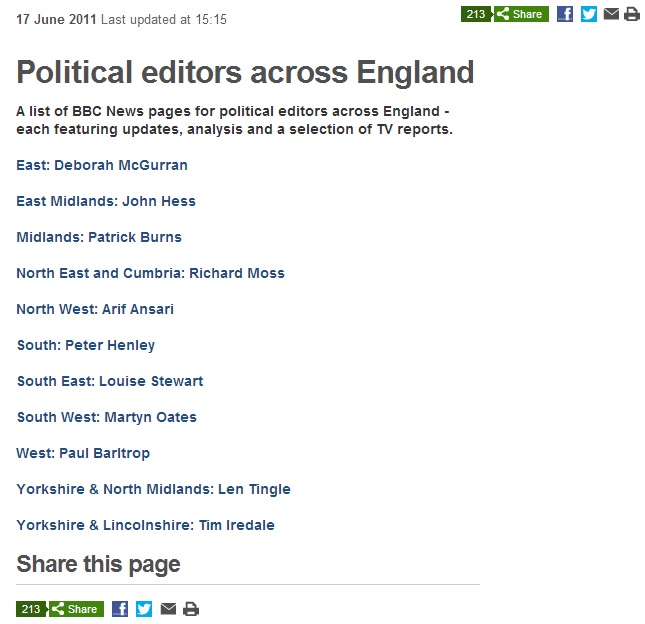
Furthermore, clicking on the obscure “Political analysis around England” link leads to the the following badly laid-out page listing the BBC’s English political editors by region (presumably outdated since it was last updated nearly three years ago):
Who made the decision to slice and dice our United Kingdom in this way when it comes to political coverage? Who decided on behalf of the British population that the Welsh, Scots and Northern Irish should see their politics primarily at a national level, while the English must be given news at a regional basis?
More importantly, is this discrepancy in political coverage a result of organisational efficiency (so that political editors cover “patches” roughly equal in population, for example) or is it for another, perhaps more sinister reason?
The answer, of course, is that the BBC’s way of splitting its political coverage is merely a reflection of the way that the political elite want us to see ourselves – with all of the home nations save England deserving of a degree of individual recognition and autonomy.
But this way of organising news coverage – and structuring our political system – does everyone a disservice. People living in Wales, Scotland or Northern Ireland are denied the chance to view or shape events in their respective nations from anything other than a macro level, while English residents are not given the chance to look at issues which affect England in particular.
At a time when the Scottish people have a referendum to determine their future participation in the United Kingdom, and issues of devolution of power are coming increasingly to the fore, why does the BBC persist with a political reporting structure that is fundamentally out of touch with the sentiment of the country?
On Wednesday 23rd April, England will celebrate – or at least observe – St. George’s Day. This blog would not be surprised if there was a significant popular backlash or uprising of English nationalist sentiment around this time, given the fact that so much of our leaders’ energies are currently taken up talking about how best to cater to the needs of Scotland while the West Lothian question remains – as ever – conspicuously unaddressed.
Of course, if a debate does bubble to the surface around this time, it could well be diffused into obscurity by the BBC’s eleven English regional political editors.
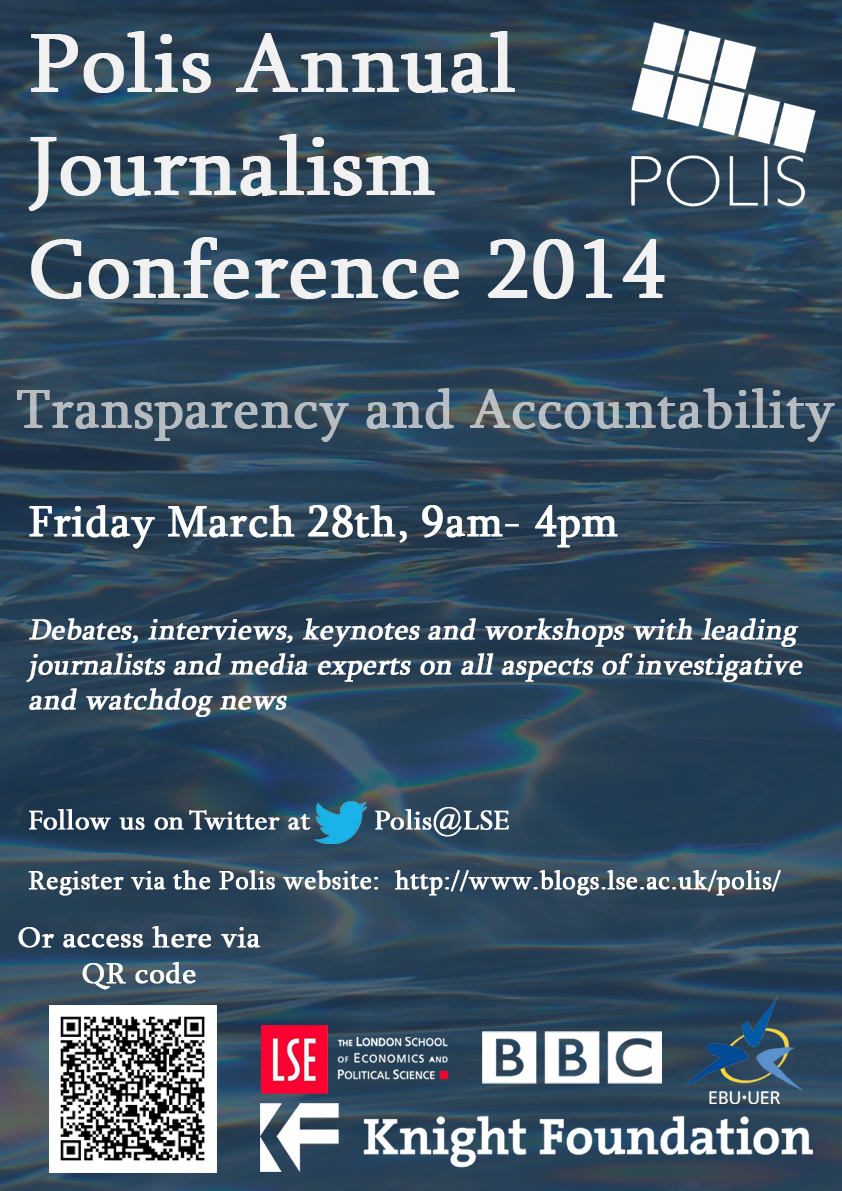
Semi-Partisan Sam will be attending the annual Polis Journalism Conference later today at the London School of Economics for what promises to be a very stimulating day of discussion and debate, featuring – for good or for ill – a Who’s Who of the British media establishment.
Several sessions in particular are especially relevant to the aims and objectives of this blog:
Journalism after Snowden: Watchdog or thug? In the wake of the Snowden story and the Leveson Inquiry into the press, we ask whether British journalism is too supine or too aggressive? Was the publication of state secrets justified?
Taking on the world: The Guardian In the last 12 months The Guardian has published one the biggest scoops in its history. The Snowden revelations brought intelligence officials into its offices to smash up hard-drives. At the same time it is re-inventing itself as the radical liberal journalism platform for the world. Steve Hewlett puts its editor under the spotlight.
The future of transparency journalism A new generation of journalists is emerging, finding fresh ways to hold power to account. What skills do they need? How will their work change? We bring together former top news professionals and journalism educators to debate the way forward.
Holding Europe to account As Europe prepares to go to the polls in a month’s time it is facing a political crisis. How can journalists get citizens to engage with European issues and how should they report on the growth of scepticism?
Stay tuned to @SamHooper on Twitter for live-tweets from the event, and to this blog for discussion and analysis of the conference after the fact.
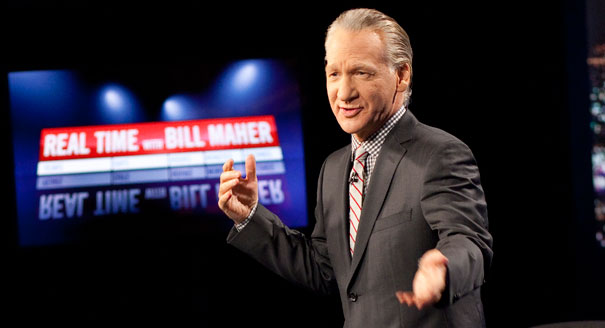
US comedian Bill Maher is publicly ending his romance with the MSNBC news network.
The liberal entertainer and commentator, an unapologetic supporter of President Obama and donator to his Super-PAC, has finally been persuaded to look for love elsewhere because even though they share a similar core ideology, MSNBC has become too strident and partisan in its approach to delivering the news. In short, he claims, MSNBC is becoming Fox News:
Whatever we had is not working any more. You’re obviously interested in another man: Chris Christie. You’re obsessed with him. So I wanted you to hear it from me first. I’m going to start seeing other news organizations. I’ll miss what we had. It was a rocket ship ride. We were both passionate flaming liberals and we didn’t care what the world thought of us. It was a glorious time. We finished each other’s Sarah Palin jokes. But now we never talk about any of the things we used to talk about: global warming, gun control, poverty… All because Chris Christie came along and put you under his spell.
Look at yourself. You’re turning into Fox News. Bridgegate has become your Benghazi, and this isn’t easy to say, but you and I are no longer on the same news cycle. Sure, you read me the results of a recent Gallup poll, but you never really ask me how I’m feeling. It’s not you, it’s… Chris Christie.
While the reality is not quite so black-and-white, it is certainly true that MSNBC’s programming has suffered lately as editorial focus (particularly in January) seized on New Jersey Governor Chris Christie’s political travails at the expense of almost everything else, abandoning any significant discussion of public policy in favour of personality-based and partisan attacks.
Sure, Chris Christie may yet be proven to be at fault in the Bridgegate scandal, and the network’s intrepid main anchor and personality, Rachel Maddow, was covering the story long before it exploded into the national consciousness. But the degree to which the network then seized on the issue, to a far greater extent than other news networks, shows the Fox mentality starting to manifest itself in a very real way at MSNBC.
Bill Maher has long been able to draw laughs from his audience by pointing out the formulaic approach to journalism that lies behind the success of Fox News, as shown in this typical excerpt:
Here is the key quote:
They [Fox News and other populist right wing media outlets] have discovered that there is a fortune to be made keeping a small portion of America under the illusion that they are always under attack, from Mexicans or ACORN or Planned Parenthood or gays or takers or global warming hoaxers…it doesn’t matter. They don’t want a majority, they want a mailing list. A list of the kind of gullible Honey Boo-Boos out there who think that there’s a war on Christmas, and that the socialist policies of our Kenyan president have been so disastrous that the end of the world is coming.
The fact that Maher now sees parallels in MSNBC’s programming should concern anyone who has an interest in promoting a free and principled media providing a service essential to democracy over an array of narrowly-targeted niche outlets, each making their money by reinforcing the existing fears and prejudices of their respective audiences.
And the extent of MSNBC’s decline does not stop there. Any reader of MSNBC’s facebook account would struggle sometimes to distinguish it from President Obama’s. They trumpet the same initiatives, promote the same causes, celebrate (or invite their readers to celebrate) the same successes.
And, increasingly, they are starting to get touchy when called out on it:
Ultimately, the problem extends far beyond Fox News and MSNBC who are only the latest media organisation trying to emulate Fox’s success. The real problem occurs when any news outlet decides that its primary purpose for being is to help “balance the debate” in response to perceived slanting or bias from elsewhere.
The Fox News Channel proclaims itself to be “Fair and Balanced”. But when probed further about specific instances of right-wing bias on-air, Fox’s journalists, editorial staff and managers do not rush to draw public attention to the Fox News editorial guidelines or their policy on political impartiality. Instead, they draw attention to what they see as the liberal bias of the “mainstream media” and describe their role as being to correct the bias by offering an alternative point of view.
But as soon as you start seeing yourself as a counterweight to something else, you can no longer plausibly claim to inhabit the centre. This is what has now happened to MSNBC. That network watched for a long time as Fox News grew, prospered and humiliated them in the ratings by offering their viewers a diet of politically conservative-skewed infotainment, and now appears to have decided to copy and emulate large sections of their business plan, likely out of a twin desire to reap the same success and to give liberal voices an equally brash, punchy voice. Thus, their motto “Lean Forward”, is becoming increasingly descriptive of what they do, and not for the better.
Progressive opinions and ideas can expect to be given more airtime and favourable editorial consideration on MSNBC, while dissenting conservative voices will be fewer and further between. It is true that many of the new generation of Republicans, hailing from conservative gerrymandered districts and used to sympathetic media, are virtually incapable of taking part in real fact and reason-based debate, and shy away from MSNBC anyway. But even more so than has already been the case, when conservatives do feature on MSNBC it will more likely be as the targets of scandal-related investigative journalism along the lines of Bridgegate.
This is not a positive trend. Were it to continue, the only feature of MSNBC preferable to Fox News will be the honesty of their motto. “Lean Forward” at least strongly hints at the network’s political leanings, whereas “Fair and Balanced” is a running joke in the media world, so clearly does it contradict Fox News’ real motives.
There is probably an initial rush of euphoria to be had, discovering and catering to a new, thus far neglected market of strident and angry liberals who are happy to be fed the Obama administration line. And it may be some time until the network misses the favour of Bill Maher and others who are happy to wear their liberalism on their sleeve, but do not wish to be condescended to by being fed a heavily curated and redacted leftward spin on the news.
But, if they do not change course, the time will come when MSNBC regrets taking the low road. Bill Maher was not the first to compare MSNBC to Fox, and he won’t be the last. Perhaps when the two brands become equally synonymous with partisan propaganda, the executives in charge will realise what they have done.
Highly worth reading and watching, reporting about Edward Snowden’s recent interview for German television, courtesy of Jonathan Turley’s blog. This interview has received little coverage in the UK or US media.
Last Sunday, former NSA contractor and whistleblower Edward Snowden was interviewed for the German television network ARD. The interview was big news in Germany and much of the world in both print and broadcast media. However, the interview appears to have been blocked intentionally by US government authorities. In fact, the media in the US appears to have gone to ‘radio silence’ about it. It has been posted on YouTube several times, but is taken down almost immediately. The video site Vimeo has it embedded, but as I write this, Vimeo is under a DDoS attack. LiveLeak also has it, and that video is embedded in this report by Jay Syrmopoulos for Ben Swann’s news page.
Mr. Snowden spoke candidly in a thirty-minute English language interview with the reporter from ARD.







 Semi-Partisan Politics