Postcard From America: When Words Fail, A Musical Analogy

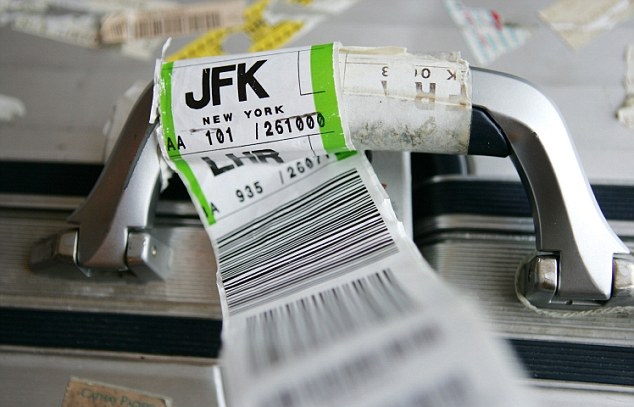
JFK LHR - Britain and America

I’m currently back in the United States to celebrate Christmas with family in Texas. These short “Postcards from America” will document a few of my thoughts as I escape the political whirlwind of Westminster and look back at Britain from the vantage point of our closest ally

A musical contrast between Britain and America

I have been trying to find a way to describe the feeling I always get when I arrive back in the United States of America, a land I consider to be my spiritual home even though I am not yet a citizen (though married to one).

It is very difficult to put into words the emotion that wells up even before exiting the airport, whether it be New York JFK, Chicago, Cleveland, Dallas, Houston, Miami, Seattle or any of the other gateways I have used on my well over fifty arrivals here. The feeling of having arrived in a land of promise and possibility, an electricity in the air and a repose for the spirit which I feel even while waiting to collect the suitcases from the carousel.

But when words fail, music sometimes speaks. And the best way I can find to describe the difference experienced when travelling from the United Kingdom to the United States is with this musical analogy.

Two performances of the same piece of music, recorded by two legendary artists. Prelude no. 3 in C Sharp Major, BWV 872 from The Well-Tempered Clavier by Johann Sebastian Bach, performed first by Sviatoslav Richter and then by Glenn Gould, my favourite pianist.

Imagine that this first recording represents life in Britain:

This is the Richter version of the Bach prelude. Languid and undeniably beautiful, yes, with the edges softened by extensive use of the pedal. You can almost sense the nearly three centuries spanning the prelude’s composition and the present day in this warm but muffled recording.

Now imagine moving from this setting to the utterly different world of the Glenn Gould version, representing America:

The two recordings could hardly be more different.

The musical notes are the same, just as Britain and America share a common language and very similar cultures by virtue of our shared history. But the two interpretations are worlds apart, just as everything from local culture to local government is different on either side of the Atlantic.

Nobody had ever played the music this way until Glenn Gould came along. Prior to Gould, playing Bach on the piano was a dry and dusty affair, characterised by performances and recordings which shrouded the intellectual beauty and emotional resonance with thick layers of stultifying sameness. And then Glenn Gould turned things upside down and showed that Bach’s keyboard music did not have to be a revered but inherently boring exercise; that by engaging with the music with a creative mind, it was possible to bring dead music to life.

The Gould version is bright and clear. The first half of the prelude is strutting and unselfconscious, while the second part takes off like a rocket – joyful, vibrant and carefree. The individual lines of both the prelude and fugue are more clearly articulated and easier to distinguish, while still contributing to a powerful and musically convincing whole. E pluribus unum. That’s America, right there in this recording.

Britain America 1

To my mind, this is the experience of moving from Britain to the United States. From an ancient land of history and heritage – the mother country – to the bright promise of the newer, bold and assertive superpower. The place where even in these difficult times, all things still seem possible.

A land where the sun shines infinitesimally brighter (my first action on arriving in Louisiana was to purchase new sunglasses. In December.) A land where the sky literally seems bigger, and the horizon wider. A land where the flavours are bolder, the entertainment glitzier, the music more vibrant and the people unfailingly friendly.

A country whose best features and deepest flaws are both so much more exaggerated than is the case in Britain – whether it be the remarkable philanthropic and community spirit on one hand, or the endemic tragedy of gun violence on the other.

But more than that, a country which still feels consequential in terms of shaping human events. A country whose politics and politicians – however glib and anti-intellectual they can sometimes be – still possess the aspiration and self-confidence to deal with weighty matters, to forge ahead in search of the best pathway to freedom and prosperity. And whose people still believe in their country as a force for good in the world, when they stay true to their values.

You can see the difference by comparing the raucous presidential primary debates currently underway here in America with the spirit-crushing televised encounters in Britain ahead of the May general election. In America, issues like healthcare, immigration, government surveillance and foreign intervention are debated fiercely in public – with both sides making reference to that most wonderful of things, a written constitution which makes the people sovereign and grants government strictly limited powers, rather than the other way around.

In Britain, by contrast, our leading politicians and political parties competed to be judged the safest custodian of our creaking public services. We went to the ballot box to decide who we trusted most to reduce the budget deficit, make the trains run on time and the bin collections more reliable. In granting David Cameron a second term as prime minister, we didn’t so much elect a world leader as appoint a lowly Comptroller of Public Services, someone to kick when we feel short-changed as passive consumers of state-provided rations.

On existential matters like Britain’s place in the world, the best way to promote economic growth or to ensure future national security, the British political debate during the election campaign could not have cared less – and there was virtually no difference in the statist paternalism of the two main parties, other than in rhetoric. No political party had the courage to suggest that our outdated, 1940s model of state healthcare delivery might need serious reimagining in the twenty-first century, and only a handful of us cared enough to call them out for their craven refusal to acknowledge this difficult truth, and many others besides.

Fewer than four million of us believed strongly enough in the principle of national democracy and sovereignty that we cast a vote for the one party which explicitly objected to the gradual absorption of Britain into the supranational state known as the European Union.

And through it all, this blog has felt like something of a voice in the wilderness, with no politician or party to champion the causes of personal liberty, free markets and national sovereignty upon which everything else rests – but which too many other people seem happy to forsake in exchange for a chimerical, temporary measure of security and prosperity.

Britain America 2

Here in the United States, for the precious couple of weeks until we go home, I don’t have to think about any of that. Of course America has issues of its own – big, intractable problems and burning injustices which befit a country of her size and consequence to address and overcome. But at least Americans still (just about) know who they are. At least they have not yet fractured into a messy coalition of competing special interest groups, to the extent which Britain has now splintered.

Patriotism and love of country still mean something in America. Yes, sometimes the sentiment expresses itself badly, through an ignorance of the rest of the world and the lazy assumption that America is always the best at any given thing. But perhaps unnoticed by many in Britain, there is also here an abundance of that quiet patriotism – the celebration of Independence Day and Thanksgiving, the flags flown in school classrooms without the ludicrous fear that it might “offend” someone of minority ethnic heritage, or the way that veterans are honoured and soldiers in uniform routinely invited to fill empty first class seats on airplanes – symbols and gestures which are the bedrock of a strong and cohesive society.

Of course debates rage fiercely in America – over Donald Trump, Hillary Clinton, the Koch brothers, the Tea Party, the Iraq war, the ISIS threat, birtherism, abortion, LGBT rights, church and state, the mainstream media and much more. The many are not always one. But when it really counts, they are one people. They bleed red, white and blue together.

America the beautiful: this is where I come to recharge my spiritual batteries. And as I prepare to throw myself into the battle for Brexit – defending the country of my birth and the concept of the nation state itself from an insidious form of supranational governance whose advocates have repeatedly failed to explain how democracy will be preserved in their brave new world – I will need all the power I can muster.

God bless Texas.

God bless America.

God save the Queen.
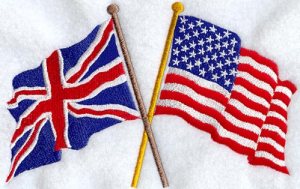
Britain America 3

Agree with this article? Violently disagree? Scroll down to leave a comment.

Follow Semi-Partisan Politics on TwitterFacebook and Medium.

800 Years Of Magna Carta: Still Worth Celebrating, After All These Years

Magna Carta - 800 Years Anniversary - Human Rights - Freedom - Liberty - Britain - England


By Ben Kelly, blogger and editor of The Sceptic Isle.

15 June 2015 marks 800 years since a rather famous charter was agreed by the unpopular King John at Runnymede, under pressure from a group of rebellious barons who had backed his failed war against the French and now sought to constrain him.

The severely weakened king had no choice but to bear witness to the sealing of what many now perceive as one of the world’s most important documents. It has become iconic, but it has its detractors. It is a favourite pastime of dry historians and politically motivated lawyers to pick the myth apart and express their disdain for the reverence shown to the old document.

It is quite true that we tend now to view it through rose tinted glasses after much historical revisionism and the creation of a national myth around the event.

The details of the actual event and the passage of the charter into law are often oversimplified or caricatured. The date which we will this year mark, and the document we celebrate, is revered in part because of the manner in which it has been used by those with a political agenda.

Continue reading

Can The Margaret Thatcher Conference On Liberty Rescue British Conservatism?

Keith Joseph Margaret Thatcher


These are not auspicious times for people who believe in the rights of the individual and the need for a pared-back, smaller, more efficient state.

It says everything about today’s Conservative Party, governing in weary coalition with the Liberal Democrats, that Ed Miliband’s Labour Party find the current Tory spending levels palatable enough that they have vowed to stick to them should they win back power in 2015, while their eurosceptic credentials are now so widely distrusted that UKIP have become the standard-bearers for defending Britain’s national interests abroad.

Just as Gordon Brown agitated for power and eventually deposed Tony Blair without a real agenda for governing (and we all know how well that worked out for him), so David Cameron’s Conservatives stumbled across the finish line and into Number 10 Downing Street with a half-hearted policy agenda built only to address the immediate economic crisis while ‘detoxifying’ the conservative brand rather than building the foundations for twenty-first century Britain.

Meanwhile, the assault on personal privacy and freedom from the surveillance state is gathering speed and momentum. In the United States, those on the side of liberty have at least found voice through whistleblowers such as Edward Snowden and journalists like Glenn Greenwald, forcing American politicians to at least pay lip service to the protections set out in their Constitution.

In the United Kingdom, however, the juggernaut has continued without so much as slowing down. Politicians from David Cameron on downwards have expressed no contrition that such a pervasive surveillance apparatus was constructed without any public debate or approval, while civil servants from the intelligence services remain unrepentant and continue their work without proper Parliamentary oversight.

As this goes on, the British people are assured that there is no reason to worry because we are only being spied on to protect us from terrorists, and that the surveillance takes place under “strict legal controls” – though thanks to the opaqueness of the British legal system and the propensity of the government to interpret laws creatively in their favour, this is of no reassurance at all.

Britain may not yet be facing a new winter of discontent – there may be no widespread industrial unrest, the rubbish may not be piling up uncollected in the streets and the economy may not be in freefall – but you would have to be mad not to pick up on the sense of pessimism and foreboding. The economic recovery remains an “order book recovery” at present, its benefits not yet felt by many financially squeezed families.

And now we are told to rejoice that six years after the financial crash, Britain’s economic output has finally caught up with where it was in the heady days of 2008. More than half a lost decade.

No, these are not auspicious times.

Paul Goodman agrees, writing at Conservative Home:

50 years on from the new social freedoms of the 1960s, and 30 years on from the new economic ones of the 1980s, liberty has decreased, not increased.  What we drink, what we smoke, what we speak, how we drive, how we bank, how we live: all these are far more restricted by law than was the case in the 1970s.  The reasons for curtailment may be contestable – health and safety, Islamist terror, the Dunblane atrocity, NHS costs – but the direction of travel is clear.

While there is no major existential threat to Britain at present as there was in 1979 – the unions having been tamed and the Cold War won – there is still an urgent need for radical conservative thinking and policy solutions, just as there was in 1979 when Britain stood at the abyss.

All those years ago it was the (then) new think tank, the Centre for Policy Studies, that served as the intellectual engine behind the incoming Conservative government under Margaret Thatcher. No mere talking shop, the CPS developed ideas that changed Britain for the better once put into practice, as John O’Sullivan reminds us in the Telegraph:

This stream of pamphlets argued for limited government, reduced public spending, control of the money supply as a means controlling inflation, an end to prices and incomes control, the abolition of exchange controls, the privatization of industry, the scrapping industrial subsidies and the wider dispersal of wealth. Study groups, at one time numbering more than twenty, were set up. One of them, the Trade Union Reform Group under the chairmanship of Sir Len Neal, a former trade union leader, laid the foundation of the legislation later introduced to reform trade union law. Another pamphlet was inspired by Keith’s vision of the wider ownership of wealth; it led to PEPS (later restructured to become ISAs).

In 2014, the CPS is now celebrating its 40th birthday with a major international conference, the Margaret Thatcher Conference on Liberty.

It should be encouraging that the organ which did so much to inform and influence Thatcher’s government is riding to the rescue once again, but a glance at the agenda for today’s event hints more at the degree to which Britain has fallen back from the ‘peak’ of liberty achieved by Thatcher than it offers hope for bold new policy initiatives ready to be rolled out.

The first order of conference business, after the introductory speech by Sir V S Naipaul, is ditheringly titled: “The EU and the Big Corporations: are they ganging up against liberty and its protector, the nation state?”

After everything that has happened in Europe and Britain over the past several months, with the electorate’s rejection of the pro-European integration status quo and the rise of parties like UKIP, is this still a question that really needs to be asked? A forward-looking conference would be debating the best way to take advantage of the public’s growing scepticism and antipathy toward undemocratic supra-national institutions in order to either enact radical reform or achieve freedom from them, not half-heartedly speculate about whether the EU and the Brussels lobbying industry pose a threat in the first place.

And at the risk of venturing into conspiracy theorist territory, the fact that a number of conference attendees will participate in a session entitled “Big Government, Big Corporations: what chance for small business and innovation?” having come fresh from the Bilderberg 2014 meeting in Copenhagen, where big government gets together with (you guessed it) big corporations to the exclusion of everyone else does not speak very well of their legitimacy to discuss such matters.

One gets the sense that the Margaret Thatcher 2014 conference agenda was devised in order to fit the specialist knowledge and talking points of those special guests who accepted their invitations rather than the more fearless approach, which would have been to identify the most pressing trends facing Britain and the West, determining what needs to be discussed, and then engaging the support of those high-profile individuals who can best offer and promote policy solutions.

And while CPS is eager to promote the credentials and resumes of the conference’s star panellists, some of the luminaries scheduled to impart their wisdom – conservative celebrities though they may be – have decidedly questionable records when it comes to standing up for liberty in action.

If the Centre for Policy Studies is serious about rejuvenating conservatism and ushering in a new birth for freedom (to paraphrase Abraham Lincoln), the honoured guests from America should include the likes of libertarian standard-bearer Senators Rand Paul of Kentucky, or Ted Cruz of Texas (abrasive and odious though he may sometimes be) or at the very least Congressman Paul Ryan of Wisconsin.

If this conference really is to recapture the success of 40 years ago and spark some new ideas, there should be representation from that force which is doing the most to upend the stale conservative status quo across the Atlantic, the American Tea Party.

But instead, the Margaret Thatcher Conference on Liberty 2014 will be hearing from discredited, neo-conservative fossils the likes of Jonah Goldberg, who has never seen a war that he was not in favour of launching (though not personally participating in, of course), and Rich Lowry, who openly and unapologetically fantasises about the populist, proudly anti-intellectual Sarah Palin.

Sure, these big-name commentators may talk the talk when it comes to small government – at least, if you consider relentlessly hammering away at a “no new taxes, ever” message whilst simultaneously seeking to shrink the deficit and ringfence government spending on generous benefits for senior citizens or America’s bloated defence budget to be a “principled” form of conservatism – but it all goes out the window when it comes to foreign policy, national security and the surveillance state. On these issues, the likes of Goldberg and Lowry whine and clamour for big government louder than most die-hard left-wingers.

These people are Believers in Liberty in Name Only – or BLINOs. What insights and advice are they expected to give that they do not already regurgitate week after week in their National Review columns?

People like Jonah Goldberg – neo-conservative nepotism beneficiary extraordinaire – should be pariahs at a rejuvinated, forward-looking Centre for Policy Studies conference, not guests of honour.

It is curious that while some of the CPS’s American invitees are both out of power and widely discredited, their British counterparts are currently in power but are struggling to make a noticeable impact on an otherwise very centrist, pro big state, pro-Europe government.

Michael Gove, due to attend, is a formidable intellect and the closest that the Cabinet has to a libertarian (his bravura performance when giving evidence at the Leveson Inquiry saw him at his best); but Gove has achieved all that he feasibly can at the Education Department, and has recently made a series of political missteps that could harm his chances of winning another major government brief in the upcoming reshuffle.

Likewise, the Conservative MEP Daniel Hannan is an articulate advocate for the eurosceptic cause, and yet his caucus did not do enough by way of defending Britain’s national interest to stop the rising tide of public fury at the antidemocratic European Union, which saw the Conservatives’ European Parliament group leader, Martin Callanan, lose his seat.

John O’Sullivan, writing in The Telegraph, notes:

As Henry Kissinger points out, senior people in modern government are simply too busy and too tired to think creatively about the problems facing them. If they haven’t used opposition to do some fresh thinking, they have to fall back on the ideas of their opponents.

The Margaret Thatcher Conference on Liberty 2014 has the advantage of throwing together conservative thinkers in power (albeit the dying days of coalition with the Liberal Democrats) with those in the wilderness of opposition (as President Obama’s administration inches closer to its lame duck days). According to Kissinger, this should be the best of both worlds – a combination of Tory blue sky thinking and hard nosed pragmatism from the coal-face of government.

Such a conference could do more than generate headlines for one day in a slow news season – it could provide the spark that finally drags British conservatism out of its introspective, apologetic, New Labour Continued stupor.

But the conference is heavy on has-beens and light on rising stars. Instead of conservative thinkers like Andrew Sullivan, we get demagogues like Jonah Goldberg. Instead of rising political stars like Marco Rubio or Rand Paul, we will hear from elderly statesmen like former Australian prime minister John Howard. Instead of someone, anyone with a post-Snowden mindset on national security, we get former CIA director General David Petraeus.

That’s not to say that there will be no people of interest to watch – Michael Gove will be attending, along with Daniel Hannan, Estonian prime minister Taavi Rõivas and intellectual heavyweights such as Niall Ferguson. But nothing sums up the tightrope walked by the Centre for Policy Studies more starkly than the fact that Margaret Thatcher’s biographer, Charles Moore, is also a guest of honour at today’s conference.

British conservatism needs to look forward, but too much of the guest list suggests that the focus is on the past, not the future. Margaret Thatcher was right for her time and place – Britain in the eighties. But the next transformative British conservative leader will not look or sound like Thatcher; nor will he or she share the same priorities or advance the same policy goals. In the year 2014 Britain faces different challenges requiring different, bold solutions.

Tempting though it may be to sit back and reminisce about that day forty years ago when the Centre for Policy Studies was founded, there is too much work to be done in the present if British conservatism is to save itself.

And that work needs to start today.

Growing Up In The Age Of Facebook

Facebook Password

There’s an interesting piece in The Daily Telegraph today about a 12-year-old girl from Minnesota who is taking her school to court because she was forced by the school authorities, against her will and without the expressed permission of her parents, to divulge her Facebook password and allow school officials to read her private messages.

I read this article and my first thoughts were – thank God for the Americal Civil Liberties Union, who are bringing the case on her behalf. Much maligned by the American right wing because they defend those rights that conservatives would actually quite happily squash (flag burning, mosque building, same-sex marriage) while they hypocritically parade around acting like the last stalwart defenders of freedom, you can usually rely on the ACLU to defend the cause of liberty, even if it means holding up a mirror to society and making us ask ourselves some difficult questions sometimes.

The article goes on to mention some additional egregious instances of personal privacy violations by schools and employers, including the following:

“The ACLU recently forced the Department of Corrections in Maryland to stop requiring applicants to provide their Facebook passwords when applying for jobs.”

As if such a practice should ever have been attempted in the so-called land of the free! And:

“In an recent investigation, the TV station MSNBC found that many university sports departments now require students to “friend” their coach, giving officials access to their “friends-only” posts. The University of North Carolina handbook reads: “Each team must identify at least one coach or administrator who is responsible for having access to and regularly monitoring the content of team members’ social networking sites and postings.”

Such actions are a total affront to privacy, and organisations that deal in such underhanded and coercive tactics deserve to be named, shamed and sued. Though many of us now live a substantial portion of our lives online in terms of our Facebook and Twitter accounts etc., this only makes the need to enforce a boundary between one’s personal and work lives even more important. There are many ways that a person can bring their family, church, school or employer into disrepute, but just as your boss cannot invite himself round for dinner to make sure you aren’t complaining to your family and neighbours about work at the end of the day, neither can your employer eavesdrop on the digital footprints you leave on social media. No ifs, no buts – it’s wrong.

But moving beyond this issue, we must recognise that growing up and going through school today is surely more different for today’s generation of schoolchildren than most people can ever appreciate. Facebook and Twitter, and the fact that everyone has a mobile phone from about the age of seven these days certainly makes socialising more fun and exciting, but can also take the damage that is caused by “run of the mill” bullying and increase it exponentially. Sadly there are already cases of teenage suicides precipitated by social media-related bullying, and the problem has attracted enough attention that Facebook and other social networks have had to take steps to make it easier to report such behaviour. Faced with this new threat to the wellbeing of young people you can therefore understand the school’s alarm, and perhaps understand (if not accept) the action that they took in this instance. However, I truly would have expected a story about the forced divulgence of personal passwords and the snooping by authorities on a school pupil’s online identity to have originated from Britain, and not the United States.

And it should not have to fall to the ACLU to argue the blindingly obvious in court – that schools, employers and other such authorities have no remit to spy on a private citizen’s online life.