No, Jeremy Corbyn’s Labour Leadership Candidacy Is Not A Disaster


It’s encouraging to see the Telegraph’s Rupert Myers echo this blog’s view that the presence of Jeremy Corbyn in the Labour leadership contest is a good thing, and not the unmitigated disaster that conventional wisdom and repetitious Labourite talking heads continue to say it is.

From Myers’ column today:

A Corbyn victory would allow the free democratic choice not between two shades of middle, but between what could properly be definied as the left and the right. Angry voices calling for true, radical alternatives to capitalism would (we can pray) be silenced for a generation (or at least a few months) if Jeremy had the chance to present a bold, socialist agenda for Britain. Floating voters would have the opportunity not to pick between politicians with similar manifestos, but to decide a political battle waged in technicolour. The Corbyn ultimatum would bring the far left from out of the shadows of a Labour HQ intent on fussing about how to win elections, and test the rhetoric of a legion of angry young socialists against the wisdom of the electorate.

Voters like a real, solid, discernable choice. If Labour pick Jeremy Corbyn and Tom Watson to head their efforts between now and 2020, I predict a renaissance of political engagement. Rather than spend the next five years arguing about the threshold of tax allowances, we could argue the merits of state ownership of the railways, banks, fast food industry, and the Premier League.

Instead of bureaucratic tinkering with foreign aid, we’d be debating whether to drop our borders to allow the unrestricted movement of people. PMQs could be a discussion on how to cap pay to the level of tube drivers, to be set at £200,000 a year. New Labour might not like the image which emerges, but at least Corbyn would turn the contrast button up to full and then rip it off the set.

Absolutely. It’s long past time we had a proper political debate in this country again, instead of these interminable, finickity squabbles about negligible ideological differences.


Continue reading

The Opportunity Labour Is Failing To Grasp

Tristram Hunt - Labour Leadership - Labour Party


As their uninspiring leadership contest rumbles on, the Labour Party is in the process of missing a massive opportunity, an existential moment which could very well determine whether the party of Keir Hardie exists at all in fifty years time.

Tristram Hunt – one of the real intellectual and political heavyweights who realised that Labour’s renewal could not be completed in time for the 2020 election, and decided to keep their powder dry for the next leadership contest – admits as much in a revealing interview with the Guardian today.

From the piece, entitled “Labour needs a summer of hard truths“:

Rather than developing detailed policy on childcare, housing, or education, Labour’s debate should be about how government can help people to tackle massive economic, technological and social change.

“The party should be arguing for a progressive and interventionist state to support citizens and communities in confronting the challenges of globalisation. What are we for? We are for giving people the capacity to deal with a period of incredible socio-economic change and the advent of digital technology, migration flows, global capital flows.”

As the Tories trim back the state, they fail to address such questions. “Representing Stoke-on-Trent, you see the seismic change of the last 30 years. It is almost anthropological in terms of the taking away of traditional systems. The role of a Labour party and social democratic parties is to help communities get through that and thrive on the back of it.”

Here, in a nutshell, is the leadership contest which the Labour Party should be having, but is not. Watch any of the hustings or listen to the bickering between the candidates and their badly behaved proxies and you will soon see that (with the partial exceptions of Liz Kendall and Jeremy Corbyn respectively), and you will be struck by two facts about the conversation taking place in the party:

Continue reading

Meet Britain’s Compassionate, Homicidal Welfare System

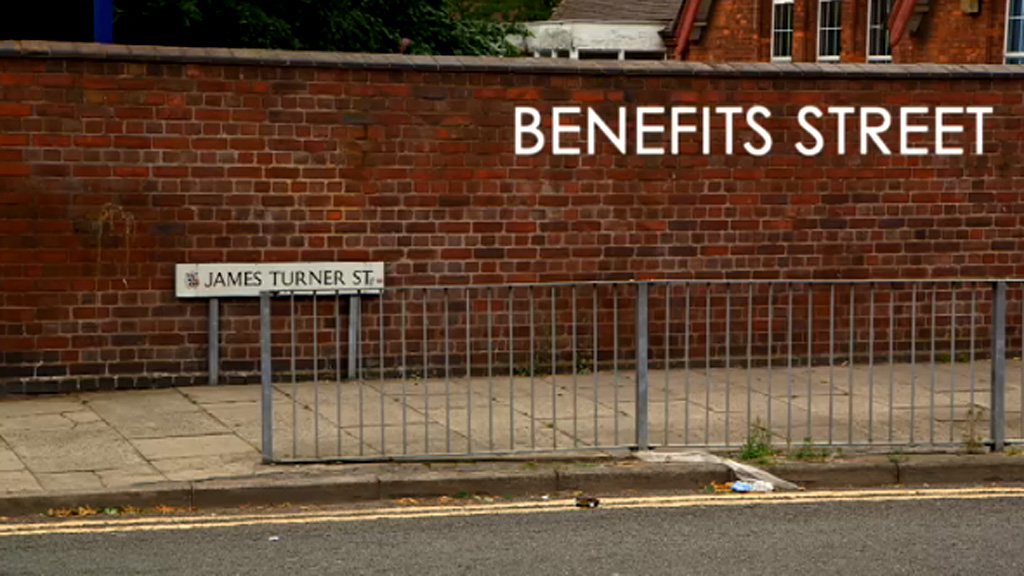
Benefits Street - Welfare Trap - Britain


If you are even moderately well-off and suddenly fall on hard times, Britain’s universal welfare system isn’t like landing in a safety net – it’s more like smacking into a concrete floor from a fifty-foot drop.


People generally talk about the British welfare state as some kind of benign presence, maybe in need of a tweak here or there but basically something of which we can be justifiably proud – Britain’s post-war gift to humanity.

This story makes us feel good, so naturally most of us swallow it unquestioningly, nodding along when the NHS is worshipped in a theatrical Mass during the London Olympic Games opening ceremony, or when Just Another Identikit Politician drones on about the importance of “triple-locking” pensioner benefits.

Sadly, it’s all nonsense. The universal welfare state and its organising principle of non-contributory benefits has proven to be one of the greatest self-inflicted evils we have ever wrought in this country, a vast conveyor belt of human misery leading to an incessant grinding machine in which the lives and dreams of countless thousands of our fellow citizens are destroyed each year, while nearly everyone turns and looks the other way.

Usually it’s good when government does not discriminate. Justice, for example, should certainly be blind, as the old saying goes. But when it comes to social security, we choose to regard our welfare system as a “safety net”. Yet any fisherman knows that different nets are needed for different environments, and likewise a one-size-fits-all safety net for citizens experiencing unemployment or hard times simply won’t catch everybody. Some will slip through entirely and crash to the ground, while others will become ensnared and trapped forever. In other words, when it comes to welfare we should actually want the government to actively discriminate.

Continue reading

Why Jeremy Corbyn’s Labour Leadership Candidacy Matters

Jeremy Corbyn - Labour Leadership - Dan Hodges - Tories4JeremyCorbyn - 1

You don’t have to agree with Jeremy Corbyn to welcome his presence in the Labour leadership contest

It is a pity that the inclusion of Jeremy Corbyn in the Labour leadership race is pretty much only being discussed in the context of the growing #Tories4Corbyn movement.

CapX explains the phenomena:

Putting Corbyn on the ballot paper does have one unintended consequence, which is amusing the Conservatives greatly. Suddenly, there is great interest from senior Tories in helping Labour to elect Corbyn, because they think, rightly, that it would equal oblivion for Labour and a generation of Tory rule.

There is a practical way Tory voters can help, the Conservatives have realised. For just £3 anyone can sign up as a Labour supporter and a get a vote in the party’s leadership contest. On Twitter, Ruth Davidson, the Scottish Tory leader, has already described getting the chance to help make the completely unelectable Jeremy Corbyn Labour leader as a notable bargain.

This Tories4JeremyCorbyn movement could take off. How long before someone establishes a website and Twitter account explaining how Tory voters can win it for Jeremy?

This is all well and good, but it is also a distraction, the type of fun Westminster parlour games that the political class like to play to entertain themselves, leaving the vast majority of Britons either oblivious or turned off. Meddling in the other side’s leadership election might elicit smirks and chuckles in the Westminster Arms, but it hardly does anything to improve the reputation of a political class seen as totally cut off from the people.

Continue reading

Bonfire Of The SpAds: How The Bright Young Things Ruined British Politics

2 - Ed Miliband - EdStone - General Election 2015 - Ed Stone

Bring back the big beasts – young, arrogant and ignorant politicos are to blame for modern Britain’s soulless politics, and Labour’s resounding general election defeat

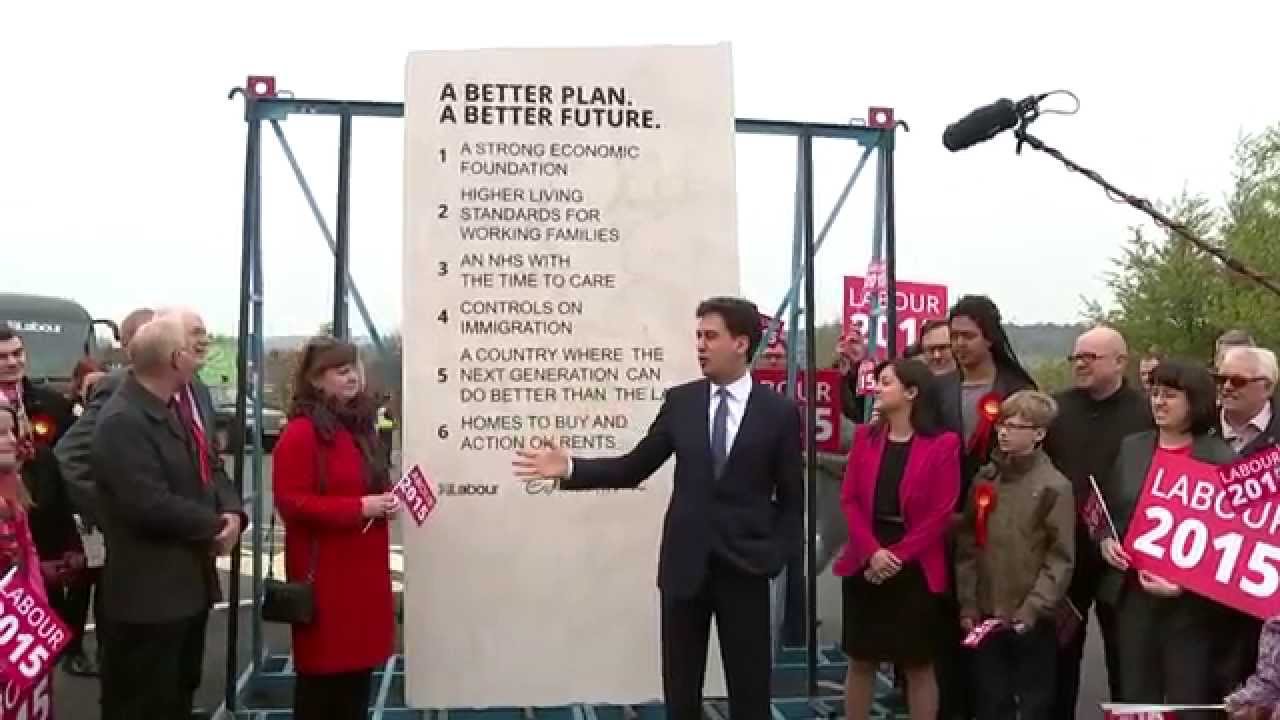
When Ed Miliband stood in a field last month and unveiled his universally mocked policy monolith – swiftly renamed the EdStone by political journalists who couldn’t quite believe their luck – the brains behind the doomed operation was a young whippersnapper named Torsten Henricson-Bell, a 32-year old special advisor and Oxford grad described by one MP as being “totally devoid of any politics”.

A few days later, when the #EdStone fiasco forced the Labour Party into full damage control mode, it was 40-year old campaign manager and Miliband acolyte Lucy Powell – another politico without a day’s real-world work experience to her name – who managed to make things even worse by suggesting that Ed Miliband shouldn’t actually be expected to keep the vague pledges he had taken the effort of carving into tablet form.

The rise of these people is hardly limited to the Labour Party. A former policy unit apparatchik and ministerial bag carrier from the John Major administration now sits in Number 10 Downing Street, re-elected to serve a second term as Prime Minister having transformed the Conservative Party into an ideologically rootless but effective vote-winning machine. The difference between David Cameron and Torsten Henricson-Bell is only one of competence, not of kind.

Nearly a month after the ideologically barren, soul-sappingly irrelevant general election – and Labour’s abject defeat at the hands of David Cameron’s Coke Zero Conservatives – it is time to face facts: the Bright Young Things of British politics, the embryonic career politicians shimmying up the greasy pole in search of a safe Westminster seat courtesy of their party machines, are the symptom, not the cure, of Britain’s political ills.

Continue reading