PMQs In The Jeremy Corbyn Era

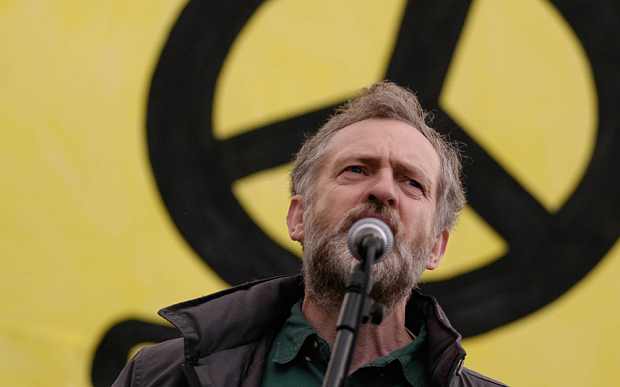
Jeremy Corbyn - PMQs - 3

Jeremy Corbyn’s first outing in Prime Minister’s Questions was not the humiliating car crash predicted by some of his opponents – in fact, there were promising glimpses of what a refreshed PMQs could yet become

There was a quiet dignity to the way that Jeremy Corbyn, newly-elected leader of the Labour Party, got to his feet as Leader of the Opposition and asked his first question of David Cameron.

To the extent that optics matter, Jeremy Corbyn looked smart, in a friendly old professor sort of way – watching Corbyn, it almost feels as though there must be a bag of fuzzy unwrapped Werther’s Original sweets hidden somewhere in his jacket pocket. And for a man who has never held a front-bench role before taking on this most high profile one, Corbyn did not sound the slightest bit nervous. In fact, his voice seemed deeper and more resonant than it has at times on the campaign trail.

But enough of the fluff – it’s the substance that counts, not the presentation. And on this front too, Corbyn acquitted himself perfectly well for a first outing at PMQs. In fact, he rose to the occasion, following through on a pledge to use his time to ask questions submitted by members of the public.

This could easily have been gimmicky and awkward, an act of political spin straight out of The Thick Of It. But in fact it was actually quite moving, in a strange way – those of us who watched PMQs today saw the voices of the people brought into Parliament’s highest profile set-piece event, the type of direct advocacy normally reserved for backbenchers at sparsely-attended debates.

Continue reading

Stop Criticising Jeremy Corbyn’s Speeches And Focus On His Ideas

Jeremy Corbyn detractors have been criticising the Labour leader’s early speeches for not being conciliatory enough, and for rambling. They would do better to focus on his ideas

Remember that great speech Ed Miliband once gave?

The really inspiring one, that time where he not only lifted the spirits of committed Labour Party activists but also reached out to the whole country, convincing millions of British people that a bright and appealing future lay just around the corner, ours for the taking under a Labour government?

You know, that barnstormer of a speech, one of those rare moments when human rhetoric rises to meet a momentous occasion; when hard-nosed political journalists were momentarily awed, and even cynical television pundits choked up. Surely you must remember?

No? Neither can I. Because it never happened. And yet corners of the British press are currently in the process of excoriating Jeremy Corbyn for failing to wow them with a good enough speech, having won the Labour leadership contest only days ago.

Corbyn’s victory speech was high-handed, amateurish, rambling, unstructured and not conciliatory enough, according to the verdict of various pundits. Matthew D’Ancona was particularly unimpressed with the strategic aspect:

Continue reading

Can Jeremy Corbyn Redeem Himself On Tackling Extremism?

Jeremy Corbyn - Foreign Policy - Appeasement

Can Jeremy Corbyn rehabilitate his two-dimensional, anti-British foreign policy worldview?

Jeremy Corbyn’s red-blooded socialist domestic policies are generally flawed and counterproductive, but we can forgive him for that because he represents a legitimate strand of political thought that for too long has been marginalised and shut out of the political conversation in favour of the quisling, centre-left socialism of the likes of Ed Miliband.

What is much harder to forgive, however, are some of Jeremy Corbyn’s stances on foreign policy, where he has frequently espoused views and shared platforms with people of highly questionable character and motive. Whether it’s concerning Northern Ireland, Israel/Palestine or the Iraq war, too often Jeremy Corbyn’s public positions have drifted across the line separating conscientious objection from something much worse.

But now that Jeremy Corbyn is the leader of Her Majesty’s Opposition and burdened with one of the formal offices of state, what chance is there that reason, patriotism and propriety might assert themselves to moderate his well-known public stances?

Jonathan Russell, political liaison officer at the Quilliam anti-extremism think-tank, remarkably sees cause for hope:

Continue reading

Jubilant Trade Unions Are Wildly Misreading Jeremy Corbyn’s Mandate

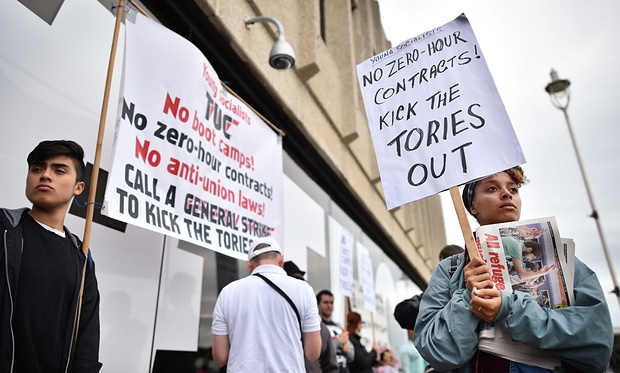
TUC Conference - Young Socialists - General Strike

Trade union activists may be delighted by Jeremy Corbyn’s triumph in the Labour leadership contest, but they should not mistake the scale of his victory for widespread demand for socialist and pro-union policies among the wider British public

Can you imagine a British general strike taking place in the year 2016, ninety years since the last, with workers from every industry downing tools (or leaving their public sector office desks, as it would be today) to bring the entire country grinding to a halt?

No, of course you can’t – no person with a single foothold in reality can take the prospect seriously, let alone countenance the circumstances whereby a general strike might now be justified. But Britain’s trade union leaders can – and now that Jeremy Corbyn has been installed as Labour leader, they fully intend to make it a reality.

The Daily Mail strikes a suitably alarmist tone:

It would be the first time that there had been a General Strike since 1926, when work was halted for nine days.

Unite, led by ‘Red Len’ McCluskey and one of Mr Corbyn’s biggest supporters, is calling for ‘a broad, militant and imaginative campaign’ against the Trade Union Reform Bill.

It even proposes breaking the law, saying the TUC should be open ‘to giving maximum possible political, financial and industrial support to those unions that find themselves outside the law’.

But on this occasion they are right to be alarmed. The Telegraph reports that Britain’s favourite union leader, Mark Serwotka, sees Jeremy Corbyn’s Labour leadership victory as only the start:

Continue reading

Jeremy Corbyn Is Leader Of The Labour Party: This Is A Political Earthquake

Labour Leadership Election Result - 2

The result of the Labour leadership contest is an earthquake, shaking British politics to its very foundations

At last, we live in politically interesting times.

Because Jeremy Corbyn has led the polls and been treated by the media as the presumptive winner for many weeks now, it is easy to overlook just what a remarkable thing has occurred today. But this is a result that was never meant to happen.

In an age when nearly every politician in a senior position appears perfectly manicured, perfectly briefed and perfectly on-message at all times, it is genuinely astonishing to see a real conviction politician – someone whose beliefs and values have remained fixed and  unchanged even as Britain has changed a great deal – achieve any degree of success.

You don’t have to agree with Jeremy Corbyn to appreciate the significance of his victory. And you certainly don’t have to want Corbyn to be the next Prime Minister of the United Kingdom.

Assuming that Corbyn does not go on to become Prime Minister – and he won’t – what harm has possibly been done today, other than to the short term 2020 electoral prospects of the Labour Party?

Continue reading