The Daily Smackdown: Jeremy Corbyn’s Anti-Americanism

https://www.youtube.com/watch?v=joeC31QDkBE

Instead of calling for a more “independent” foreign policy, Jeremy Corbyn should simply admit that he hates America and wants Britain to sever links with our closest ally

Jeremy Corbyn took to Facebook over the weekend to demand that Britain chart a new, more “independent” foreign policy.

This came off the back of a speech that Corbyn had wanted to deliver last week blasting Britain’s close alliance with America, but was forced to postpone because of the Paris terror attacks.

Corbyn finally gave the speech he was itching to give at the Labour Party’s South West Region conference in Bristol, where he said:

The third pillar of our vision for Britain is a different kind of foreign policy – based on a new and more independent relationship with the rest of the world. A relationship where war is a last resort.

For the past 14 years, Britain has been at the centre of a succession of disastrous wars that have brought devastation to large parts of the wider Middle East. They have increased, not diminished, the threats to our own national security.

Few would now seriously argue that Western interventions in Iraq and Libya did anything other than deplete our resources and further inflame the region. But Corbyn’s professed desire for a “more independent relationship with the rest of the world” is pure nonsense.

Jeremy Corbyn does not want Britain to pursue a more “independent” foreign policy. He is simply unhappy with our existing foreign policy and allegiances – where Britain recognises the many shared mutual interests we have with the Anglosphere and other Western powers, and seeks to build on those natural alliances which inevitably form where there is such a close fit of culture, history and legal systems.

If Jeremy Corbyn really wanted Britain to pursue a truly independent foreign policy, his first act as Labour leader would not have been to cravenly roll over and submit to the rabid europhiles within his party, who insisted that he follow their lead and slavishly promise to campaign for Britain to stay in the European Union come what may.

This decision is all the more surprising given Corbyn’s subsequent willingness to enrage his own backbenchers – and even his shadow cabinet – on almost every other question, from air strikes on Syria to hiring controversial and divisive staff and flip-flopping on George Osborne’s fiscal charter. Clearly Jeremy Corbyn is happy walk his own path on nearly every policy other than the pressing question of Britain’s future sovereignty.

How can Corbyn claim to want Britain to pursue an “independent” foreign policy when he has committed Britain to remaining in the EU and being part of the Common Foreign and Security Policy? How can Britain claim to be an independent diplomatic force when the EU’s High Representative for Foreign Affairs, Federica Mogherini, is more active and visible on the world stage than our own Foreign Secretary?

You can argue the rights and wrongs of whether Britain should pool so much of our diplomatic clout into a single European voice – over which we exert only 1/28th of the influence. But the one thing you absolutely cannot do with a straight face is to call the resulting foreign policy an independent one.

But of course Corbyn does not really want Britain to pursue a truly independent foreign policy. What he really means by this dog-whistle to Stop the War types and extremism sympathisers is that he wants Britain to specifically forsake the United States of America, and cease our friendship and co-operation with our closest ally in the world.

Jeremy Corbyn doesn’t look at the special relationship between Britain and America and see an unparalleled alliance which spilled blood and treasure in defence of democracy twice in the last century, and whose embrace of the free market has pointed the way for other nations around the world to achieve prosperity.

No, Jeremy Corbyn looks at the special relationship and sees Britain yoked against her will to the Great Satan – an awful, dystopian, capitalist war machine, economically and militarily subjugating the countries which Corbyn would much rather call his friends. He sees no good in the United States because his “friends” in Hamas, Stop the War and the far Left in general spend every waking hour ranting about just how evil and immoral America is.

Yet on Europe, Corbyn is firm: Britain should remain a member of this relentlessly tightening political union come what may – regardless of David Cameron’s cosmetic renegotiation, and regardless of the direction the EU is heading in the future. The Labour leader succumbs to the same negative, pessimistic view of Britain’s capabilities and international stature as the other europhiles, believing that Britain is too pathetic and ineffectual to do what Australia and Canada manage to do every day – engage with the world as an independent nation.

Jeremy Corbyn’s foreign policy simultaneously views Britain as being so weak and pathetic that our only pathway to influence on the world stage is to have the same sliver of influence over a common European Union foreign policy as tiny Malta or Slovenia, but also so potentially dangerous to the world that we must terminate the one alliance which has been the bedrock of our foreign policy since the second world war.

It is a risible, childlike worldview – one which would be funny if only a Corbyn premiership would not see Britain giving moral and tangible succour to some of the most odious regimes in the world.

Corbyn is right to point out our own moral failures in foreign policy, such as our close partnership with the brutal Saudi regime, working closely with that dictatorship in exchange for scraps of intelligence about the various terror plots that they are themselves funding and encouraging. But he undermines his own point by letting his actions and statements imply that there is any moral equivalence between regimes like Saudi Arabia and the United States.

Or as Nick Cohen put it in this week’s Spectator:

Corbyn, along with too much of ‘progressive opinion’, has a mistrust bordering on hatred for western powers. They do not just condemn the West for its crimes, which are frequent enough. They are ‘Occidentalists’, to use the jargon: people who see the West as the ‘root cause’ of all evil.

Their ideology is in turn genuinely rootless. They have no feeling for the best traditions of their country, and their commitments to the victims of foreign oppression are shallow and insincere. They rightly condemn western support for Saudi Arabia. But if the Saudis were to become the West’s enemy tomorrow, their opposition would vanish like dew in the morning sun.

Before concluding:

Jeremy Corbyn and the left he comes from cannot campaign for office by saying what they really think or they would horrify the bulk of the population. They say enough to keep their ‘base’ happy, and then dodge and twist when they speak to the rest of us. Far from being authentic, Jeremy Corbyn is one of the most dishonest politicians you will see in your lifetime.

If Jeremy Corbyn wants to be taken seriously as a straight-talking, honest politician he should admit that he has absolutely no desire for Britain to pursue an independent foreign policy – or an independent anything else, for that matter – and that all of this posturing is just his way of signalling to a certain audience that he disapproves of one country in particular.

Jeremy Corbyn: Anti-Austerity, Anti-America.

That’s a campaign slogan people might actually believe.
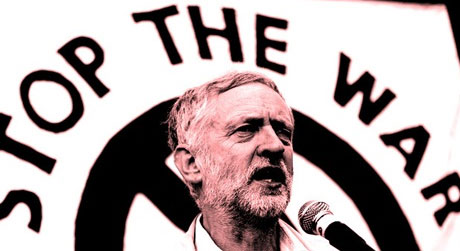
Jeremy Corbyn - Stop the War - Anti American

Further reading:

The anti man

The threat of Jeremy Corbyn’s radically anti-American agenda

Jeremy Corbyn isn’t anti-war. He’s just anti-West

Agree with this article? Violently disagree? Scroll down to leave a comment.

Follow Semi-Partisan Politics on TwitterFacebook and Medium.

The Daily Toast: Ken Livingstone, Mental Health And The New Politics

Ken Livingstone.png

Ken Livingstone’s attack on Kevan Jones’ depression is typical of the hard activist Left. They are happy to use the poor, the sick and other minorities as cynical campaign props, but hate it when they dare to speak for themselves

Today’s Daily Toast goes to James Kirkup for his furious, relentless evisceration of Ken Livingstone in the Telegraph.

Some context: When Red Ken was unexpectedly appointed to co-lead the Labour Party’s upcoming defence policy review (bringing his open minded attitude toward vital questions like Trident renewal), the Labour MP Kevan Jones – who had previously spoken out in a parliamentary debate, attempting to reduce the stigma of mental illness by revealing his own struggles – raised political concerns about whether Livingstone was the right person for the job.

And in response to Kevan Jones airing his political concerns, Livingstone responded with an extraordinarily personal attack:

Mr Livingstone told the Mirror: “I think he might need some psychiatric help. He’s obviously very depressed and disturbed.

“He should pop off and see his GP before he makes these offensive comments.”

So this is the New Politics that we were promised with the Jeremy Corbyn era – more of the same coarse, unbecoming personal insults that we have always had.

It’s no surprise. Because many on the Left see themselves as the only virtuous people in town – the sole custodians of the nation’s morals – they think that somehow it “doesn’t count” when they say rude, aggressive, condescending, racist or sexist things. They believe are allowed to get away with it because they spend their careers policing the debate and controlling the language, casting out anyone else who says or thinks the wrong thing. Just like a corrupt cop might consider themselves above the law, so the egotistical leftist believes that they have carte blanche to cross any of the lines that they draw to constrain the rest of us.

All of which makes Kirkup’s takedown of Livingstone so satisfying – and worthy of the Daily Toast:

I believe in civilised debate and generally try to avoid throwing around personal abuse when writing about politics. But there’s no way of being polite or restrained about this. Ken Livingstone’s words are vile, a poisonous act that would leave him consumed by shame if he had a shred of decency.

Yet he’s standing by those comments. He told the London Evening Standard: “It doesn’t matter what disorders he’s got, he doesn’t have the right to be rude … to be constantly undermining Jeremy Corbyn.”

This is utterly hateful. Mr Livingstone he hasn’t just grotesquely insulted Mr Jones, denigrating his suffering and his bravery, he has sent a brutal message to anyone else who suffers mental illness: stay quiet or you’re fair game.

Even if he wasn’t part of a leadership team that had so piously promised a nicer, kinder politics and to embrace open political debate, Mr Livingstone’s behaviour would be disgusting. The staggering hypocrisy involved just compounds his disgrace.

And if Mr Corbyn does not act quickly and firmly, by dropping Ken Livingstone into the deep dark hole of political obscurity where cockroaches like him belong, he deserves to share every bit of that disgrace.

Ken Livingstone was eventually forced to apologise for his behaviour, but was unable to stay contrite and was soon walking back his apology with justifications and angry asides to journalists.

The Labour Party – and the British Left in general – can’t have it both ways. They can’t spend half the time prancing around pretending to be high-minded emissaries of the New Politics, holding hands and singing Kumbaya, and then spend the other half acting like vicious thugs, smearing people because of their mental health conditions or whipping their activists up into a Tory-hating, phlegm-lobbing rage. It’s time to pick a side.

And yet Ken Livingstone is perfectly entitled to say mean or ignorant things about his fellow MPs in public if he chooses. That much is a fundamental free speech issue, so let’s see no talk about Parliament needing to be a “safe space” where coddled MPs need to be praised and affirmed at all times.

However, the question here is not one of free speech, but one of hypocrisy. Ken Livingstone and much of the virtue-signalling Left love to use the mentally ill, the poor and other groups as cynical campaign props, showering them with ostentatious sympathy in order to make themselves look good and pick up votes. But as soon as one of those same people becomes a threat – whether it’s a former welfare recipient questioning the welfare state or a fellow MP simply raising a political objection – suddenly the tribal thuggishness comes out and the Left’s feigned concern for the disadvantaged is revealed as the sham that it is.

That’s the real story here. Yes, Ken Livingstone’s behaviour was boorish and inexcusable, but he’s a left wing bruiser and unlikely to change his ways any time soon. But this incident was just the most high profile recent example of behaviour that is not uncommon on the Left: behind the friendly faces, the talk of inclusivity and a new, kinder politics, too often there lurks a hardened, egotistical ideologue who always responds to criticism by lashing out.

So by all means let’s haul Red Ken over the coals – certainly Corbyn should publicly condemn Livingstone if the Labour Party’s newfound passion for mental health is to be taken seriously – but let’s not pretend that this incident is anything other than standard behaviour from a certain segment of the activist Left.

Agree with this article? Violently disagree? Scroll down to leave a comment.

Follow Semi-Partisan Politics on TwitterFacebook and Medium.

The Daily Smackdown: Jeremy Corbyn’s Non-Clarification On ‘Shoot To Kill’

Jeremy Corbyn - Paris Attacks - Terrorism - Appeasement

Why is it so hard for Jeremy Corbyn to say that the police should kill terrorists in the process of committing a massacre?

Sensing the storm that was about to break over the Labour Party following his catastrophically weak  response to a simple question on the merits of shooting terrorists in the act of attacking innocent civilians, Jeremy Corbyn reluctantly scrambled to contain the damage.

Yesterday, on Corbyn’s Facebook page, the Labour leader took the opportunity to scold everyone for supposedly misinterpreting his remarks:

I am therefore disappointed that comments I made yesterday in regard to a “shoot to kill” policy have been taken out of context [..]

Nonetheless, I would like to clarify my position. As we have seen in the recent past, there are clear dangers to us all in any kind of shoot to kill policy. And we must ensure that terrorist attacks are not used to undermine the very freedoms and legal protections we are determined to defend.

But of course I support the use of whatever proportionate and strictly necessary force is required to save life in response to attacks of the kind we saw in Paris.

Here, Corbyn is trying to pull off a classic bait-and-switch. Yes, of course we must ensure that terrorist attacks are not exploited as an excuse to clamp down further on already-threatened civil liberties – this blog has consistently said the same thing, and did so again following the Paris attacks.

But that’s a side issue. People were not angry with Corbyn because he was taking a plucky stance in defence of civil liberties, they were simply incredulous that the Leader of the Opposition – when presented with a golden plated opportunity to come out on the side of human decency and rebut some of the criticism that he is soft on terror – point blank refused to countenance the shooting of armed terrorist gunmen actively engaged in committing a massacre.

Even in his so-called clarification, Jeremy Corbyn remains unable to force the words “kill” and “terrorist” from his lips in the same sentence, giving only the bland statement that he supports “proportionate and strictly necessary force”. This might be sufficient coming from another politician, but the trouble is that in Corbyn’s case, the public strongly suspects that his idea of a “proportionate and necessary” response to a terrorist massacre might mean sitting down with a cup of tea and talking about our feelings rather than eliminating a clear and present threat to the British public.

Look: nobody expects Jeremy Corbyn to be the man in the SWAT flak jacket kicking down doors, throwing flash-bang grenades and pulling the trigger in these situations. If Corbyn wants to follow his absolutist pacifism in his own private life, that’s fine. But it is not okay for the Leader of the Opposition, the holder of an important official constitutional position in our national life, to take such a fundamentalist stance when the security of our country and our citizens is at stake.

When the man seeking to become Britain’s next prime minister can’t even bring himself to utter the words “kill” and “terrorist” in the same sentence, it naturally raises questions as to what possible group of people – which vitally important constituent base – he is desperate to avoid offending by giving a more full-throated response. And as this blog noted yesterday, sadly there is only one plausible answer: the people Corbyn is unwilling to offend, is even willing to take a political hit in order to avoid offending, are those people who think that maybe Paris and the West had it coming on Friday the thirteenth.

But even putting this distasteful fact aside, Corbyn needs to learn that not every crisis or event needs to be a teaching moment for the British people in the ways of pacifism and non-violence. When Laura Kuenssberg asked Jeremy Corbyn yesterday if he would be happy for the police to take down an active terrorist, the answer should have been a simple “yes, of course”. Case closed.

But instead, the Labour leader – and the army of online Corbyn fanboys and fangirls blindly backing him up – decided instead to quibble sanctimoniously about whether “happy” was the right choice of word, bring up misleading comparisons like the mistaken shooting of Jean Charles de Menezes when no terrorist attack was underway, and generally refute the premise of the question.

That’s the kind of behaviour that would just about be tolerable from a smarmy sixth-former. It’s the kind of behaviour that has become eye-rollingly predictable from a far-left backbencher. But it is most definitely not the kind of behaviour acceptable from somebody who plans to stand before the British people and ask them to make him prime minister.

Jeremy Corbyn - Paris Attacks - Terrorism - BBC Interview

Agree with this article? Violently disagree? Scroll down to leave a comment.

Follow Semi-Partisan Politics on TwitterFacebook and Medium.

Jeremy Corbyn’s Paris Attack Response Proves He Is Unfit To Lead

Jeremy Corbyn - Paris Attacks - Terrorism - French Flag - Tricolour

Jeremy Corbyn refused to say that he would order the police to kill active terrorist gunmen if the Paris attacks were to be repeated in London. Anyone unable to see this stark issue in clear moral terms is unfit to lead the Labour Party, let alone their country

Jeremy Corbyn was asked a very straightforward question today.

While giving an interview to the BBC about the terrorist attacks in Paris, the Labour leader was asked:

“If you were prime minister, would you be happy to order people – police or military – to shoot to kill on Britain’s streets?”

To be clear: this wasn’t about armed robbers, car thieves or crazy people with knives – it was specifically about a future terrorist attack like the bloodbath in Paris on 13 November.

And the Leader of the Opposition – our alternative prime minister in waiting – responded:

“I’m not happy with a shoot to kill policy in general. I think that is quite dangerous, and I think can often be counterproductive. I think you have to have security that prevents people from firing off weapons where you can. There are various degrees of doing things as we know, but the idea you end up with a war on the streets is not a good thing. Surely you have to work to try and prevent these things happening, that’s got to be the priority”.

So that’s a no, then. If armed terrorists killed innocent Londoners having dinner at a restaurant before going on to commit a massacre at a West End theatre, authorising the use of lethal force to subdue the terrorist attack and save the victims would be “counterproductive”.

If a politician equivocates or dodges a simple question, it is usually because they know that giving an honest answer or revealing their true thoughts on a subject will offend or alienate a critical voter bloc, special interest group or audience.

When David Cameron refuses to explicitly say that he might campaign for Brexit if he does not get the concessions he wants from his EU renegotiation, it is because he wants to appear tough to eurosceptics while desperately trying to avoid scaring pro-European Tories and his EU partners.

And when Chuka Umunna says that he supports the junior doctors but opposes their planned strike action, he is willing to endure looking ridiculous on national television is because he is determined to suck up both to NHS workers who want to strike and to his constituents, who do not want to see their health service disrupted. It’s Boris Johnson’s policy on cake all over again.

So what group of people could Jeremy Corbyn possibly be so desperate to avoid offending that he point-blank refused to say that the British police should shoot to kill any hypothetical terrorist gunmen on the rampage in London?

Exactly who is Corbyn trying to appease or placate by twisting himself in such rhetorical knots and avoiding giving the answer that 95% of the British public want and expect to hear? There can only be one answer. And it is a sickening one.

Jeremy Corbyn can’t publicly say that he would definitely order British police to kill armed terrorist gunmen in the middle of carrying out an attack because the people he is desperate to avoid offending – the constituency he is trying to court but cannot do so out in the open – are either those who might themselves one day decide to go on the rampage with a Kalashnikov on Oxford Street, or those who would cheer them on from the couch. Just like his Shadow Chancellor John McDonnell could never find a bad word to say about the IRA, because they were secretly his constituency.

I’ve spent most of the afternoon and evening since that interview in a state of incredulity, trying to think of another possible reason for Corbyn’s long-winded evasion, and I have come up short. There is no other explanation. Jeremy Corbyn’s core constituency – the ones who must never be questioned, insulted or offended – are the people who watched Death shroud the City of Light last weekend while cheering with glee.

I was wrong. I supported Jeremy Corbyn in the Labour leadership contest after a navel-gazing general election campaign focused almost exclusively on domestic policy and lacking any compelling vision for Britain’s future. In that context, it seemed that having a major party leader planted firmly outside the stale, centrist political consensus could only be a good thing.

I hoped that a left wing true-believer at the head of the Labour Party might force David Cameron’s Coke Zero Conservative government to rediscover its ideological backbone and make a real dent in the bloated British state. It was a noble dream, even though I caveated my endorsement of Corbyn at the time by pointing out that Corbyn’s foreign and defence policies were utterly wrong:

For all that Jeremy Corbyn has done to breathe life into a stale political scene, his foreign policy positions are indefensible and often dangerous. Where there should be simplicity – like abhorring the murder of British soldiers by terrorists – Corbyn sees great moral complexity. And where there is genuine complexity – like tackling extremism and radicalisation in modern Britain – Corbyn sees simple solutions which demand nothing of those most likely to forsake their British freedoms and take up arms against us.

But Corbyn’s foreign and security policies are not just wrong – they are downright dangerous. Never mind the sixth-form naivety behind his desire for unilateral (and unreciprocated) British nuclear disarmament. Never mind his desire to run down the Armed Forces to a degree that would make David Cameron look like a neoconservative defence hawk. Jeremy Corbyn cannot even look the British people in the eye and tell them that he would authorise the use of deadly force to save them from an ongoing terrorist attack. Because he would much rather negotiate with the gunmen instead.

There’s nothing to say in defence of that sentiment, of that ludicrous, naive stance. It blows any and all arguments in favour of Jeremy Corbyn’s leadership – and there are some, despite what those who have been against him from day one may say – clean out of the water. It embarrasses and shames those of us who supported Corbyn hoping that an unapologetically left wing voice at the top level of British politics might reinvigorate the domestic debate. And it should make us all very, very angry.

This blog strongly disagrees with Dan Hodges’ call for more government surveillance in the wake of the Paris attacks, but he is dead right in his assessment of the political reality now faced by the Labour Party.

Neither [Jeremy Corbyn or John McDonnell] actively supports terrorism. But their world view, their instincts and their need to appease a constituency that views Isil and “Western imperialism” as different sides of the same coin means that were they ever called on to confront the terrorists practically, they would falter. Reduced surveillance. Reduced global anti-terror cooperation. No airstrikes against Isil in Syria or Iraq. No drone strikes anywhere. Direct Stop The War input into UK security policy.

We have heard a lot from Labour MPs about the difficulties of finding a way of removing Jeremy Corbyn. Tough. They will have to find a way.

Because if they don’t, then it’s not just Corbyn and the terror appeasers who will pay the price. Every member of the shadow cabinet, every Labour MP and every Labour activist will find themselves tainted by the Tory charge that Labour cannot be trusted to keep this country safe. And they will be tainted with it because it will be true.

Nearly every politician can count some unsavoury groups or individuals among their supporters and core constituents, be it Big Tobacco, Big Pharma, media conglomerates, the firearms industy (in America) or others. And to some degree that’s the cost of doing business in our jaded political world – it shouldn’t happen, but it is very difficult to stamp out without draconian campaign finance reform.

It’s bad enough for a politician to legislate in favour of a certain industry when they receive campaign contributions from that group, essentially allowing our democracy to be bought and sold to the highest bidder. But it is even more of an outrage for a senior politician to advocate extreme pacifist policies toward aggressors when that politician already has a reputation for channelling the narrative of the group that most stands to benefit from a weak Britain.

The only public figure who might reasonably suggest – if taken literally – that we should turn the other cheek as we are being mown down in a hail of automatic weapons fire is that other, more famous pacifist and JC – Jesus Christ. But while Jeremy Corbyn’s election as leader of the Labour Party was many things, the second coming it certainly was not.

The Lord is allowed take an absolutist position on violence, and we should be inspired by His words as far as we can practically follow them. But Jeremy Corbyn – and British politicians in general – operate not in the spiritual realm, but rather the temporal world. They have a duty to preserve our country and protect our citizens – those of all faiths and none – above everything else.

Jeremy Corbyn is not a rabble-rousing backbencher any more. He is the Leader of the Opposition, and one of the most high profile politicians in the country. And therefore when he says that he is “not happy” with a shoot first policy when it comes to terrorist gunmen, we must take him at his word.

And then, once our shock has abated, we should immediately stop taking seriously anything else that Corbyn and his party have to say on foreign and security policy.

Jeremy Corbyn - Paris Attacks - Terrorism - BBC Interview

Agree with this article? Violently disagree? Scroll down to leave a comment.

Follow Semi-Partisan Politics on TwitterFacebook and Medium.

The Daily Toast: Hugo Rifkind On The Dilemma Of Labour Party Centrists

Labour Centrists

Why don’t those members and activists who hate the new direction of the Labour Party simply leave?

It’s hard to bring yourself to leave an organisation when you have convinced yourself that everyone outside of it is hateful, immoral and evil. That’s the point Hugo Rifkind makes in his latest piece for the Spectator, a reflection on why there has been no hint of a centrist exodus from the Labour Party in the Age of Corbyn, despite much grumbling and plotting.

Rifkind wonders out loud:

What is wrong with these people? It’s like they’re children. Part of the madness comes, I suppose, from social media, whereby every utterance is ‘campaigning’, even if you’re just doing it in the office, on the loo. The bulk of it, though, is the idea that Labour people have to be Labour forever, even if they completely disagree with Labour, or else they’re not Labour. It’s weird and it’s needy and it’s anti–intellectual, and it makes no sense at all. They went big on this during the leadership election, when a host of people with politics virtually indistinguishable from Jeremy Corbyn’s were kicked out on the basis of prior support for the Greens or the Scots Nats. Because, of course, if they were true Labour they’d support Labour even while disagreeing with Labour, because that’s what Labour does.

Why does it? Nobody else behaves like this. Nobody else turns party into a tribe, not just putting loyalty over policy, but feigning a virtue with it, too. In any other party, anyone who disagreed with the party line as often as Corbyn has might have been expected to resign at least once, if only out of embarrassed deference to the voters who had blithely ticked the ‘Labour’ box. Perhaps due to its history, though, Labour is not merely a jumble of policies in the manner of other parties. Labour is a ‘movement’ and if you aren’t with it, you’re against it. No matter which direction it currently happens to be moving in.

An interesting argument, but it’s hardly as if the other main political parties are chock full of people who resign in fits of pique and then come crawling meekly back in rhythm with party policy. The only really noteworthy defections of the past few years are those of Mark Reckless and Douglas Carswell – both from the Tories to UKIP.

So while the gulf between the Corbyn left and the Blairite centre of the Labour Party may be particularly large, right-wing Tory MPs such as John Redwood and Bill Cash – with no frontbench career aspirations of their own to worry about – are just as unlikely to leave the Conservative party in disgust at David Cameron as Chuka Umunna or Andy Burnham are about to forsake Labour out of despair with Corbyn.

Rifkind closes by admonishing the centrists:

This is what happens when you brainwash yourself into believing that your lot are the only good guys; when you forget that it’s not the club that matters, but what the club does. This is what happens when you grow so used to feeling superior to everybody outside Labour that you can no longer properly believe such people are proper, moral humans at all. It’s not a church. It’s not a sin to go somewhere else for a bit if you need to. Not when the nuts do it, and not when you do either. Pull yourselves together. People are laughing.

This part is very true, and speaks to a sickness at the heart of the Labour Party – and the British Left in general – which this blog was one of the first to report on, and the most consistent in highlighting.

There are many reasons why Jeremy Corbyn’s leadership of the Labour Party is not yet provoking an exodus. First, there is the hope that Corbynism may yet prove to be a passing phase, and that a couple of years of underperformance or a 2020 general election defeat will shock the Left back to its senses. Second, there is the self-protective instinct most Labour MPs have over their political careers – breaking away to start a new political party rarely leads to career advancement and power. But thirdly, there is what Hugo Rifkind calls the “tribal” instinct – that same stubborn unwillingness to leave which kept Jeremy Corbyn in the Labour Party for all his long wilderness years, and which now keeps the centrists grimly hanging on.

Would it be so hard for the centrists to step away from the Labour Party had they not grown up telling themselves that the Evil Tories represent everything bad about Britain, that Britain’s greatness can be summed up by the output of our public services alone, and that Labour have a monopoly on both wisdom and compassion? Probably not. But they did, and they still do.

Back when the Labour leadership contest was still raging, this blog argued:

If Jeremy Corbyn is not the answer to Labour’s irrelevance, whoever ends up taking the party forward will need to explicitly make peace with capitalism, and undo the bad blood created by Gordon Brown’s brooding statism and the hand-wringing “predators vs producers” equivocation of Ed Miliband. And this will require explicitly praising the virtues of capitalism, and potentially letting the Jeremy Corbyn-led wing of the party split off and float away back to the 1970s.

This does not mean that the remaining rump of the Labour Party should then cast itself as just another centrist alternative to the Tories – British politics desperately needs real ideological variety and choice. But the future ideological lines will be drawn over how to make capitalism work for all the people, with laissez-faire small government types on one side, and bigger government interventionists on the other.

[..] Sniping at capitalism while conspicuously enjoying the fruits of all that it provides has proven to be a deeply unconvincing platform. And it won’t become any more convincing, or win Labour any new voters, by the time of the next election.

So can a Labour Party at peace with the free market still stand for anything, and be a party of clear principle and ideological coherence? Absolutely. But it won’t happen by chance, it will require careful and determined consideration.

But Jeremy Corbyn did win the contest, and it is clear that the Labour Party will not “make peace” with capitalism so long as he remains leader. And in some ways that’s fine – I supported Jeremy Corbyn’s candidacy precisely because I wanted to end the stale centrist consensus which currently grips British politics.

However, it does leave those centrists in a bind: disagreeing with nearly everything their leader says, used to attacking capitalism themselves in their lazy campaign rhetoric, but increasingly coming to appreciate capitalism the more they look at Corbyn’s alternative.

If Corbyn looks as though he will stay in power up to the 2020 general election, at some point the centrists will have to jump. And when they do, they will be ruthlessly attacked and vilified by precisely those voices who currently believe that virtue and salvation can only be found within the Labour Party.

But if the centrists wish to stay in politics and be taken seriously, what other choice will they have?

Jeremy Corbyn - Labour Leadership Election - Victory Nears

Agree with this article? Violently disagree? Scroll down to leave a comment.

Follow Semi-Partisan Politics on TwitterFacebook and Medium.