A Chuka Umunna Leadership Bid Now Would Destroy The Labour Party

Chuka Umunna Labour Party Champagne Socialist 2

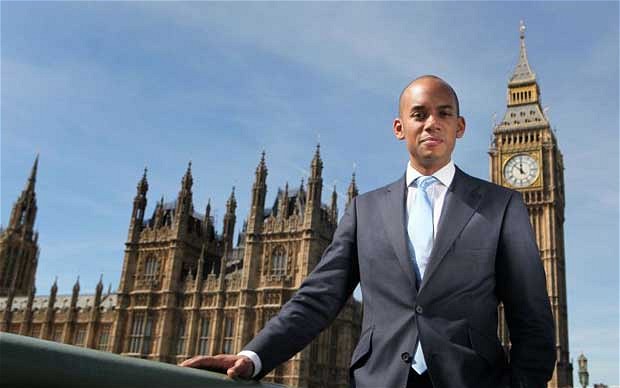
The current Labour Party will not transition seamlessly from Jeremy Corbyn to Chuka Umunna, and any leadership coup proposing an Umunna-like replacement for Corbyn will make the Republican Party presidential primary look like a model of restraint and civility

Clearly the EU referendum and upcoming Budget are not providing enough excitement for Fraser Nelson, because he is also busy agitating for an immediate (and almost certainly ill-fated) coup to depose Jeremy Corbyn from the leadership of the Labour Party and replace him with exactly the kind of person who the Labour grassroots detest with every fibre of their souls.

Yes, that would be Chuka Umunna:

It’s the Ides of March today, and there are pitifully few signs of a Labour plot. I was on ITV’s The Agenda last night with Chuka Umunna, one of the putative successors to Jeremy Corbyn, who was teased by Tom Bradby about his ambitions. He came out with the usual hedged denials (“there’s not a vacancy.,, I’ve said I would never say never”) but then came out with the rationale for ousting Corbyn.

The problem: most Labour members were not members this time last year. The party has been taken over by Corbynistas and while Labour MPs could technically change the leadership it’s harder to change the membership. Chuka agreed- but then gave the democratic case for deposing Corbyn, in defiance of the wishes of party members.

“Clearly, Jeremy has a very strong support amongst our membership. But then if you look at the parliamentary Labour party they have a direct mandate from 9.3m Labour voters. If you look at the research on things like Trident the parliamentary party would be closer to the views of the voters than the members and there’s that tension.”

So how to resolve the tension? I do hope the Labour moderates come up with a way soon, and bring this sorry pantomime to a close. PS At the end of The Agenda, guests are invited to present a fantasy front page. Mine was intended to give some encouragement to the Labour moderates.

Fraser Nelson’s pitch for a Chuka Umunna leadership bid consisted of this rather unlikely picture:

My views on Chuka remain unchanged until new evidence (of the non-hagiographic kind) prompt me to revise them:

Just what the Labour Party needs. Another dazed and confused London career politician stumbling shell-shocked and bewildered beyond the M25 in a belated effort to understand why so many working and middle class people – Britain’s strivers – spurned his party at the general election, totally unconvinced by a Labour manifesto and message conceived in Islington but barely embraced even in Hampstead.

At a time when David Cameron is building an inclusive Tory cabinet which conspicuously harnesses the talents of women and MPs from working class backgrounds, for Labour to respond by crowning a well-moneyed, metropolitan, UKIP-hating elitist such as Umunna would only serve to confirm everyone’s worst suspicions about the party.

And those suspicions are that the modern, virtue-signalling, style-over-substance Labour Party would rather dwindle to an angry, self-righteous, ideologically pure talking shop for the London dinner party set than do the hard work of rebuilding in order to actually help the people it claims to represent; that it lacks the wisdom to recall its ideological roots or the humility to reach out to its scorned party base.

The notion that the Labour Party as it is presently constituted could go from being led by Jeremy Corbyn to the stewardship of someone like Chuka Umunna without about three transitional leaders to ease the way is absolute fantasy. While New Labour centrists and wistful media types may wish it were otherwise, the Blairite Labour Party is in a state where it cannot simply be rejuvenated with a click of the fingers and a telegenic new leader.

At this point, even managing to replace Corbyn with somebody like Ed Miliband (himself considered unpalatably left wing by much of the country) would be a major achievement, and even that is highly unlikely. The fact that Dan Hodges – the columnist whose finger is closest to the pulse of Labour Party plots – thinks that the party’s current greatest hope is Angela Eagle, of all people, shows just how far the ground has shifted to the Left under Labour.

Fraser Nelson was hopefully just making a lighthearted joke when he suggested that Chuka Umunna succeed Jeremy Corbyn after a leadership coup which would be sure to enrage over half of the party’s membership. Because to even attempt to go from Jeremy Corbyn to Chuka Umunna in one step would precipitate such a period of rancour and infighting that it would make the Republican Party’s rage at its ongoing takeover by Donald Trump look like the model of civility and restraint.


Chuka Umunna - Labour Party Leadership Bid - General Election 2015

Agree with this article? Violently disagree? Scroll down to leave a comment.

Follow Semi-Partisan Politics on TwitterFacebook and Medium.

Tony Benn And The Left Wing Case For Brexit

What is the left wing case for Brexit? The same as everyone else’s case: democracy and self-determination

In this response to a student’s question at the Oxford Union, the late Tony Benn makes a calm but passionate argument for Brexit which anybody of any political leaning should be able to embrace:

When I saw how the European Union was developing, it was very obvious that what they had in mind was not democratic. I mean, in Britain you vote for the government and therefore the government has to listen to you, and if you don’t like it you can change it. But in Europe all the key positions are appointed, not elected – the Commission, for example. All appointed, not one of them elected.

[..] And my view about the European Union has always been not that I am hostile to foreigners, but that I am in favour of democracy. And I think out of this story we have to find an answer, because I certainly don’t want to live in hostility to the European Union but I think they are building an empire there and they want us to be a part of that empire, and I don’t want that.

Typically, the left-wing argument against the EU and for Brexit consists of lamentations that EU rules prevent the government from renationalising industries, erecting protectionist barriers to trade and entry, or otherwise meddling in the free market. Jeremy Corbyn would be busy making such arguments right now, were it not for his colossal failure of political courage in rolling over to the demands of the die-hard pro-Europeans the moment he became Labour Leader.

Such arguments are all well and good, if you are one of the small minority of the population for whom the British government’s current inability to renationalise the energy sector keeps you awake at night in a cold fury. But such people are few and far between.

When asked his own thoughts about the European Union, Tony Benn did not do what most contemporary Labour Party personalities do, and talk about the virtues of undemocratically imposing more stringent social and employment laws on Britain (an irritatingly less social-democratic country than our continental friends). Because Tony Benn understood that the left-wing case against the European Union was about democracy, democracy and more democracy.

Tony Benn understood that some things are more important than whether Britain might happen to move in a slightly more left or right wing direction as a short and medium term consequence of Brexit. He understood that self-determination and democracy – particularly the ability for the citizenry to remove people from office – is the first and most important consideration in determining the democratic health of a country.

And Benn understood that living in a democracy where his own side would sometimes win and sometimes lose was far preferable to living in a dictatorship where his own preferred policies were implemented through coercion with no public redress.

Jeremy Corbyn also seemed to understand these things, until he most unexpectedly ascended to the leadership of the Labour Party, which loves the European Union with a blinkered fierceness with which there can be no reasoning.

Indeed, there are now so few high profile left-wing eurosceptics that the bulk of the heavy lifting in this EU referendum will inevitably be done by those on the centre-right. Their challenge – our challenge – will be to make a positive case for Brexit as a desirable thing in and of itself, and not as part of a partisan political agenda.


Jeremy Corbyn - European Union - EU Referendum - Capitulation

Agree with this article? Violently disagree? Scroll down to leave a comment.

Follow Semi-Partisan Politics on TwitterFacebook and Medium.

David Cameron Is At His Arrogant Worst When He “Wins” PMQs

David Cameron - PMQs - Prime Ministers Questions

Since he has proved himself incapable of cleansing the Tories of their unfair reputation as the “nasty party”, what exactly is the point of David Cameron?

The media is abuzz today with talk of David Cameron’s withering put-down of Jeremy Corbyn at Prime Minister’s Questions.

The Spectator breathlessly reports that “Cameron delivers a knockout blow to a struggling Corbyn“:

This could have been a tricky PMQs for David Cameron. Instead, it will be remembered for Cameron ventriloquising his mother and telling Corbyn ‘put on a proper suit, do up your tie and sing the national anthem’.

What gave this jibe its potency, is that it sums up what a lot of voters think of the Labour leader. It was not quite as Flashmanesque as it sounds. For it came in response to a Labour front bench heckle asking what Cameron’s mother would say about cuts in Oxfordshire.

Even before Cameron floored Corbyn with that line, the Labour leader was struggling. He chose to go on the NHS and the junior doctors’ strike. But even on this subject, he couldn’t make any headway. Worryingly for Labour. Corbyn’s PMQs performances are—if anything—getting worse. You can tell that Cameron is now just cruising through the Labour leader’s questions.

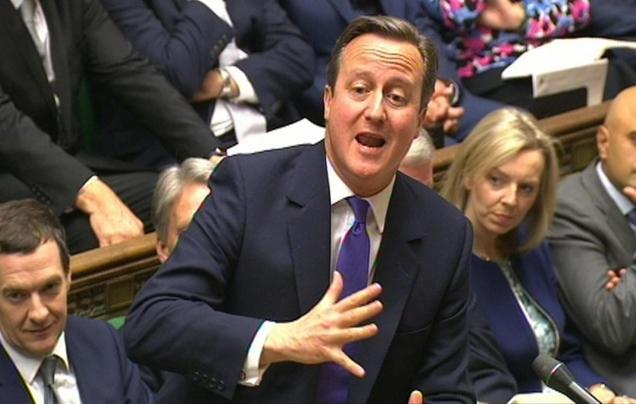
Responding to a heckle from the Labour benches about his mother, Mary Cameron (who signed a petition opposing local public service cuts), the prime minister let loose with all of the pent-up frustration he feels at Jeremy Corbyn’s refusal to play the traditional role of Generic PMQs Sparring Partner.

Here’s Cameron’s quote in full:

“I’ll ask my mother. Oh I think I know what my mother would say, I think she’d look across the dispatch box and she’d say put on a proper suit, do up your tie and sing the national anthem.”

If this is what “winning” Prime Minister’s Questions now looks like, then both the tone and content of our political debate – even by the low standards set by Parliament – is in far worse a state than even I have been lamenting.

And Tim Montgomerie’s decision to leave the Conservative Party is vindicated, as David Cameron’s latest flash of temper reminds us that under his leadership, the Tories are not interested in enacting radical conservative reform in the model of Thatcher, but rather seek to wield power just for the sake of it, while ridiculing everybody else from their lofty perch. Why else refuse the opportunity to respond directly to criticism and defend his record in favour of delivering smarmy, schoolboy jaunts directed at the Leader of the Opposition?

People who defend David Cameron’s rootless, opportunistic leadership of the Conservative Party love to claim that by steering such a centrist, New Labour-friendly course, the prime minister is in some way helping to “de-toxify” the Tory brand.

The clear implication of this is that we should shut up and accept the fact that there is almost nothing conservative about this Conservative government, because bland centrism and the failure to advance conservative principles is the price we have to pay whilst conservatism’s reputation is cleansed of the “stain” of Thatcherism. And to be fair, with so little else to recommend Cameron’s government other than the fact  it is not Ed Miliband’s government, they have a point. Detoxification is all that the Tories have going for them at the moment.

Except they don’t even have that. We live in a political climate where anti-Tory activists will daub “Tory Scum” on war memorials, spit at innocent people attending the Conservative Party conference and indulge in all manner of overblown rhetoric about the heartless Evil Tories coming to take away your human rights and cast your disabled relatives out onto the streets to die of exposure. If the past few years are supposed to have been an exercise in image rehabilitation for the Tories, they have been the most abject failure and waste of political capital.

Yet David Cameron is supposed to be our Great White Hope, the man who delivers Conservative majority governments at general elections by running away from any policy or principle which might be seen as “nasty” or right wing.

It is all the more surprising, then, that Cameron consistently chooses to be so nasty and unnecessarily aggressive at PMQs – not just putting his points across or counter-attacking forcefully, as PMQs requires, but actively relishing in delivering the most personal put-down or remark possible. Less Tony Blair’s devastating but above-the-belt “weak, weak, weak” jibe at John Major’s expense, and more “you’re too poor to buy nice clothes”.

Seriously, how did David Cameron think that his “proper suit” comment would play once it seeped beyond the Westminster and media echo chamber and into the public consciousness? Sure, it won a big laugh and sustained mockery of Corbyn in the House of Commons chamber, but replayed on television it just looks like a cheap and nasty stunt from a man who would rather resort to personal insults than answer a straightforward question.

People sitting at home – those few who actually pay any attention to the outcome of Prime Minister’s Questions, at any rate – will not have seen a clever and likeable prime minister slapping down an angry, extremist left-winger. They will have seen a haughty, self-important Old Etonian standing at the dispatch box and making cutting personal remarks about the sartorial choices of a slightly befuddled but harmless-looking professor type.

Even when David Cameron “wins” Prime Minister’s Questions (as he did today) he loses, because he is fundamentally incapable of winning his exchanges with the Leader of the Opposition without morphing into the most ridiculous caricature of a snobbish public school boy imaginable in order to do it.

And hey presto, Labour’s work is done for them – smoking gun evidence that the Tories are a party of arrogant toffs, and that if they had their way then politics would only be for impeccably dressed people from establishment families, wearing Savile Row suits and speaking the Queen’s English. And all Jeremy Corbyn had to do in order compound this perception in the public consciousness was wince through David Cameron’s latest smarmy insult.

Remind me: what was David Cameron’s essential winning quality, again?


Jeremy Corbyn - PMQs

Agree with this article? Violently disagree? Scroll down to leave a comment.

Follow Semi-Partisan Politics on TwitterFacebook and Medium.

Tony Blair And The Shell-Shocked Centrists: The Fears Of A Fading Elite

Tony Blair - New Labour - Centrism

Pity Tony Blair. Unloved and discredited in his own country, he still fails to understand the role he played in the anti-centrist backlash on both sides of the Atlantic

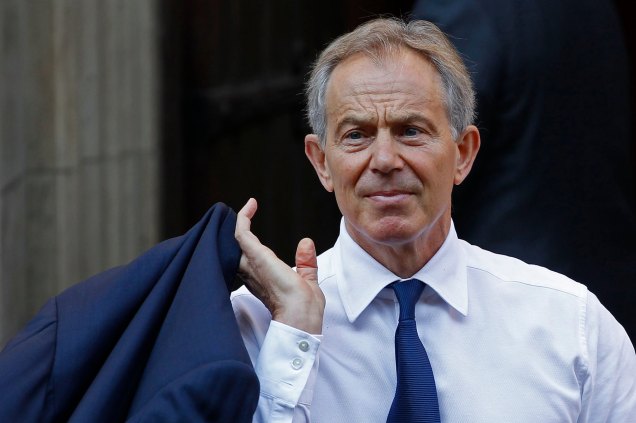
A panicked, uncomprehending Tony Blair is struggling to understand the appeal of left-wing insurgents such as Bernie Sanders and Jeremy Corbyn, LabourList reports:

Tony Blair has said he finds it difficult to understand the surge to prominence of Jeremy Corbyn and Bernie Sanders amid doubts over both men’s capacity to win general elections.

The former prime minister said the two veteran left-wingers faced a “question of electability” but admitted that stagnating living standards for people on lower- and middle-incomes had generated anger at elites in Britain and the US.

Blair also warned political parties they would be powerless to help people unless they “selected someone who is electable”.

[..] Blair, who was speaking to The Guardian and The Financial Times, said candidates who could “rattle the cage” were emerging, in a reference to Corbyn, who came from the left fringe to easily beat the party establishment to claim the Labour leadership, and to Sanders, who hopes to emulate him by winning the Democrat nomination ahead of Blair’s friend Hillary Clinton.

“It’s very similar to the pitch of Jeremy Corbyn,” Blair said. “Free tuition fees: well, that’s great, but someone’s going to have pay for it. An end to war, but there are wars.”

Where to begin?

Let’s start with Tony Blair’s “pass the smelling salts!” terror at the supposedly unhinged and crazy far-left politics of Bernie Sanders. That’s the same Bernie Sanders who would be chased out of Britain with flaming torches and pitchforks for being too right-wing, were he the UK prime minister, thanks to his support of private sector-delivered healthcare and the right to bear arms.

The interesting thing – and Todd Gillespie at Spiked has also picked up on this – is that with his support for civil liberties and the rights of the individual over the big guy (corporation or government), Bernie Sanders is in some ways a better conservative standard-bearer than most of the people currently squabbling for the US presidency – and certainly far more so than our own Coke Zero Conservative prime minister, David Cameron.

In many ways, when Tony Blair comes charging into the US presidential contest in support of Hillary Clinton and against Bernie Sanders, he is not making the principled case for a pragmatic, centre-left policy platform capable of winning elections, as he so smugly claims. After all, the American Right is also tearing itself apart at the moment, and there is nothing to say that Sanders could not defeat one of the more inexperienced or unpalatable GOP candidates still standing.

No, what Tony Blair is doing here is siding with the political elite – of which he is very much a part – and the tired old orthodoxies which people have grown so heartily sick of that they are now desperately casting around for alternatives in people like Donald Trump and Bernie Sanders. A former Labour prime minister who remembered anything at all about his party’s roots might not be quite so quick to publicly embrace a US presidential candidate awash in Wall Street donations and influence.

But Blair genuinely can’t see the problem with consistently, publicly and unapologetically siding with globalisation’s winners and richest beneficiaries while either ignoring or actively harming those who are left behind. And he cannot understand why this fawning deference to money and power is creating a populist backlash which has changed the course of his party.

Which brings us on to Jeremy Corbyn. LabourList’s report of Tony Blair’s comments continues:

He suggested the sudden rise of Corbyn and Sanders, each after years spent toiling in relative obscurity on the left of their parties, reflected a loss of faith in the centre-ground of politics as well as the changing technology of political communications.

“I think there is a combination of factors behind these movements which are happening both sides of the Atlantic. Part of it is the flatlining of lower and middle income people, the flatlining in living standards for those people, which is very frustrating. It’s partly an anger for sure at the elites, a desire to choose people who are going to rattle the cage.

“And it’s partly also about social media, which is itself a revolutionary phenomenon which can generate an enormous wave of enthusiasm at speed. When I first started in politics, these things took so long to build up momentum; your decision points were well before that moment was achieved. But it’s also a loss of faith in that strong, centrist progressive position and we’ve got to recover that…

“One of the strangest things about politics at the moment – and I really mean it when I say I’m not sure I fully understand politics right now, which is an odd thing to say, having spent my life in it – is when you put the question of electability as a factor in your decision to nominate a leader, it’s how small the numbers are that this is the decisive factor. That sounds curious to me.”

Blair is absolutely right that there has been a loss of faith in centrist politics. But centrist politics is not an innocent victim. Centrist politics has delivered a cross-party political consensus which was defiantly pro-European in face of public euroscepticism, which doggedly refused to talk about immigration even as a centre-left New Labour government spurned transitional controls and allowed hundreds of thousands more economic migrants a year into Britain without ever consulting the people, which sought to label anyone who questioned this policy as racist, and which trotted out the same tired old tropes about Our Beloved NHS and precious public services while doing almost nothing new or radical to reshape them for the twenty-first century.

Many people in Britain yearn for more genuinely left-wing solutions to be offered by a political party. Many would like the railways renationalised, and the energy companies too. This blog believes that such moves would be hugely regressive and statist, and very quickly result in poorer service and less choice for consumers. But those who believe in nationalisation deserve a voice in the political debate – a voice which Labour studiously excluded for many years. If Tony Blair seriously believed that high-handedly shutting people out of his party would store up no resentment for the future and possibly one day result in a backlash, then he is quite delusional.

Blair acts as though the rise of Jeremy Corbyn is merely a function of social media, and angry far-leftists hijacking the conversation. But it goes far deeper than that. The rise of Corbyn on the British Left, Sanders on the American Left and Trump on the Right are not an inchoate expression of public rage, but rather an indicator that a fully rational public has finally realised that the political consensus of the main political parties is not delivering what they need – be it middle class job security or success on the world stage.

The growth and prosperity delivered by the centrist political consensus in Britain has not been experienced uniformly by all citizens. That much is understandable – different policies will impact different socio-economic groups differently. What is unacceptable, though, is the fact that the centrists from both main parties never made a concerted effort to tweak those policies to help people who were left behind. They simply advocated more of the same.

More European Union. More government spending on the bloated, unreformed welfare state. More uncritical praise for the NHS. And more of the depressing view of Britain as nothing more than a nation of schools, hospitals and public services rather than a great nation built on our commercial, private sector initiative, and with boundless untapped potential.

Choose to treat the people like mindless, avaricious consumers rather than thinking, engaged citizens with a stake in their world, and you had better make damn sure that you deliver sufficient prosperity to keep everyone happy and distracted. This is how the centrists have treated us for years – essentially saying “you leave the global governance and great ideological questions to us, and in exchange we will deliver you a cheap supply of flat-screen TVs and other consumer goods”.

But when not everybody can afford the flat-screen TV or the iPhone or to scramble on to the property ladder, they start to look around them and notice things. Awkward things. Things like the fact that they no longer have the final say in issues affecting them, because sovereignty has been outsourced to the European Union. Or things like the character of their towns and cities – even their whole country – visibly changing because of levels of immigration about which they were never consulted. Or things like a broken welfare state which ensnares some people in lifelong dependency while allowing others to fall straight through the safety net to their deaths.

Brendan O’Neill picks up on this point – the fact that it is those who have not benefited economically from centrist consensus politics who are most likely to recognise that all is not well with our democracy – in his excellent piece in the Spectator:

The Third Wayists are quaking in their boots. The middle-class, middle-of-the-road technocrats who have dominated politics for the best part of three decades are freaking out. These people who bristle at anything ideological, are disdainful of heated debate, and have bizarrely turned the word ‘moderate’ into a compliment feel under siege. And no wonder they do, for on both sides of the Atlantic their very worst nightmare — a revenge of the plebs — is becoming flesh.

You can see this sometimes clumsy but nonetheless forceful reassertion of pleb power in everything from Trumpmania to the staggering back to life of Euroscepticism — or what snooty moderates call ‘Europhobia’, because every point of view that runs counter to their own must be a mental illness, right?

[..] In both Middle America and Middle England, among both rednecks and chavs, voters who have had more than they can stomach of being patronised, nudged, nagged and basically treated as diseased bodies to be corrected rather than lively minds to be engaged are now putting their hope into a different kind of politics. And the entitled Third Way brigade, schooled to rule, believing themselves possessed of a technocratic expertise that trumps the little people’s vulgar political convictions, are not happy. Not one bit.

And with regard to euroscepticism specifically:

We’ll see more of this in the coming months, more defamation of those who dare to say: ‘I don’t like Brussels.’ But Euroscepticism represents, not some swirling, xenophobic disgust with Europeans, as it has been pathologised by the pleb-fearing PC lobby, but a people’s feeling of exhaustion with the ossified oligarchy of the Brussels machine. It speaks to a desire among ordinary people to take back some control over their lives and destinies. And as The Economist pointed out, this Eurosceptic urge is strongest among the less well-educated — that is, the plebs, those tired of being treated as welfare, nudging and paternalism fodder by the new political elites.

So bring it on, this revenge of the plebs. Let’s cheer their rude, intemperate injection of ideology into the flat, lifeless sphere politics has become over the past 20 years. And let’s enjoy the squirming of an aloof political class and commentariat who mistakenly thought they had put the pesky masses and their troublesome views out to pasture.

If Tony Blair does not understand the anger and disillusionment directed not just at him but toward consensus politics in general – and there is no reason to doubt that his bewilderment is genuine – then one has to ask: what happened to the political nous of the man who won three consecutive general elections for Labour?

Why, when he has one foot firmly planted on each side of a massive new fault line emerging in our politics – not between Left and Right but between consensus politics’ winners and losers – is Tony Blair unable to understand his own starring role in precipitating the earthquake?
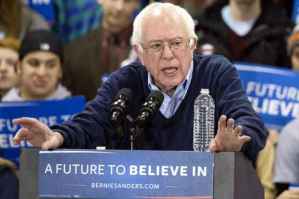
 

Bernie Sanders - Refutes Bernie Bros

Agree with this article? Violently disagree? Scroll down to leave a comment.

Follow Semi-Partisan Politics on TwitterFacebook and Medium.

What do Jeremy Corbyn And Tim Montgomerie Have In Common?

Tim Montgomerie - Jeremy Corbyn

Martin Kettle tells us in his latest Guardian column:

Tim Montgomerie and Jeremy Corbyn make unlikely bedfellows. The Tory activist and journalist – founder of ConservativeHome.com – is a self-proclaimed admirer of Margaret Thatcher. She’s the reason Montgomerie went into politics. For the leader of the Labour party, on the other hand, Thatcher embodies everything he would like a Labour government to dismantle, reverse and bury.

Yet the two men agree about one thing. Montgomerie tore up his Tory party card on Thursday, protesting that there is very little that David Cameron and George Osborne are doing, not least in Brussels this week, that Blairites or Cleggites could object to. When Corbyn ran for the Labour leadership last year, he made pretty much the same charge. What’s more, he won the contest because a lot of supporters agreed with him.

Montgomerie and Corbyn see the world very differently. But they both now belong to the growing part of the British public that believes parties must stand for more sharply defined aims that reflect a distinct view of the world. Many of this group believe, in addition, that the voters are crying out for such a change to be offered to them.

Kettle goes on to reach wildly different conclusions than this blog – his piece ends with an implied warning that ideology of either side should be kept firmly in the box, lest we end up with a British version of the US Republican Party. But in terms of surveying the scene, he is absolutely right.

Most recently, the backlash against centrism has been more a phenomenon of the Left than the Right. The Labour leadership contest blew open long-suppressed divisions and resentments about the direction of the party, and (remarkably) actually saw the long-subjugated old-school socialists regain control. The Right, by contrast, has not been so divided. Sure, we’ve had the rise of UKIP as a serious threat on the eurosceptic and traditionalist fronts, but most Tories have been so happy just to be back in majority government that there has been no real disquiet over what David Cameron is actually getting their party to do while in power.

But this could all be about to change. The EU referendum on 23 June will pit Tory against Tory as each of us confront the existential question facing our country. As Chris Deerin warned a year ago based on his experience of the Scottish independence referendum, the coming battle will be bitter and divisive. And only a hopeless optimist could think that once this internal Conservative warfare starts, other issues will not quickly be dragged into the debate – deeply suppressed differences over fiscal policy, housing policy, defence, welfare, energy and climate.

Kettle’s piece suggests that he would disagree, but I regard all of this to be an extremely welcome thing. The ridiculously narrow Overton window staked out by our two main political parties has left many millions of British people without a voice on some of the greatest issues of our day. Worse still, it stinks to high heaven – whether it is always the case or not – of an establishment collusion to protect the interests of the political class over and above the good of the country.

Anything which helps to break open the stranglehold of centrist, consensus politics on our public discourse should therefore be welcomed. That’s why this blog supported Jeremy Corbyn’s leadership of the Labour Party despite disagreeing with him on virtually every issue of substance. And it is why I will enthusiastically cheer any development which causes stress and discomfort to David Cameron, who – as Tim Montgomerie lamented – has undone nearly all of Thatcher’s radical influence on the Conservative Party.


Read my take on Tim Montgomerie’s resignation from the Conservative Party here, as part of the “What Conservative Government?” series.


Tim Montgomerie

Agree with this article? Violently disagree? Scroll down to leave a comment.

Follow Semi-Partisan Politics on TwitterFacebook and Medium.