On Loyalty and Anzac Biscuits

The British coalition government continues to act in an entirely clueless and dysfunctional way when it comes to planning the events to commemorate the upcoming centenary of the First World War. In addition to beginning a pointless and unnecessary argument about why the war was fought, the government has seemingly now decided that it will be beneficial to snub Australia and New Zealand by minimising the contribution that they made to the Allied war effort.
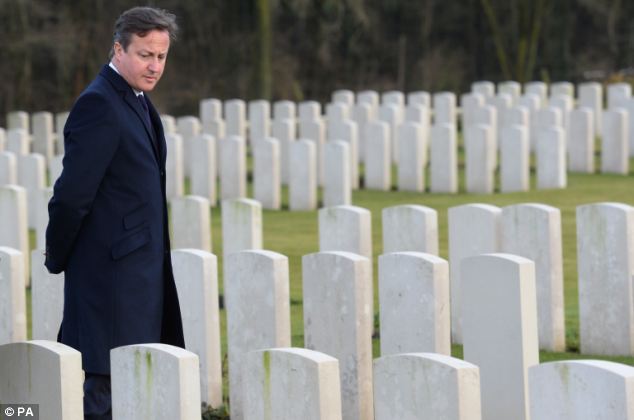
Apparently Australia and New Zealand don't count.
Apparently Australia and New Zealand don’t count.

The Telegraph reports:

The latest row follows a briefing to Australian journalists by Whitehall officials that no events were being planned to mark their country’s contribution and that internal discussions on the plans do not mention Australia or New Zealand. The briefing disclosed, instead, that officials were concentrating on promoting the role played by so-called New Commonwealth countries, those which achieved independence since 1945.

The countries singled out for promotion were India, Bangladesh and Nigeria, along with other west African nations. The reports state that this is to promote “community cohesion” in the UK.

This is unacceptable.

It’s one thing to foolishly overlook an arcane point when conducting international diplomacy, but that is not what we are talking about here. It seems instead that the government has taken a deliberate decision to snub two of our closest allies and Commonwealth partners, and then to brief the precise details of this snubbing to the press. A greater diplomatic faux-pas and insult to our friends can scarcely be imagined.

16,000 Australians and 18,000 New Zealanders gave their lives in support of the Allied cause in World War 1. This, to me, is not a contribution of blood and treasure that can justifiably be overlooked for any reason.

Let us compare this brazen ingratitude and ignorance on the part of some within the British government with the words of the Australian Minister for Defence at the outbreak of war in 1914:

“Australia will recognise that she is not merely a fair-weather partner of the Empire, but a competent member in all circumstances.”

And the Leader of the Opposition, Andrew Fisher:

“Should the worst happen, after everything has been done that honour will permit, Australians will stand beside the mother country to help defend her to our last man and our last shilling.”

And, most poignantly, the Treasurer, Sir John Forest:

“If Britain goes to her Armageddon, we will go with her. Our fate and hers, for good or ill, are as woven threads.”

If it is the honest view of the British government that social cohesion in our country is so bad that we now need to snub some of our closest friends and allies in order to curry favour with any particular group for the ominous and opaque purpose of “community cohesion” then we should all be a lot more worried about the true state of our nation.

As a long-time lover of Anzac biscuits and someone who cares deeply about Britain’s international relations and wants to see Britain nurture its relationships with proven and time-tested allies, especially those with whom we share such obvious historical and cultural bonds, I hope that a swift apology and a 180 degree U-turn on this foolish and gravely insulting stance to be quickly and publicly forthcoming from the government.

Given the government’s recent ability to shoot itself in the foot, however, I hold out limited hope.

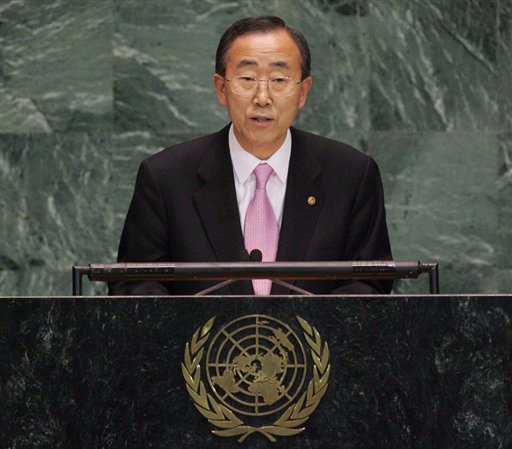
The UN Plods Toward Irrelevance

To much internal fanfare, the United Nations is trailing the release their super official, totally comprehensive report into the alleged use of chemical weapons in Syria. Though the report is (amazingly, still) not to be published until next week, the Telegraph reports that this did not stop Secretary-General Ban Ki-Moon from hinting at its contents:

Mr Ban did not say that Syrian government forces had carried out the suspected chemical arms attack near Damascus last month that was investigated by UN experts, but chose to point out that the Syrian leader had “committed many crimes against humanity”.

“Therefore, I’m sure that there will be surely the process of accountability when everything is over,” he said on Friday, in remarks that will increase the pressure on the Syrian regime and could even hamper high-level negotiations.

A UN team is expected to send its report on the Aug 21 attack to Mr Ban on Monday. He stressed that he still did not have the report, but predicted: “I believe the report will be an overwhelming report that the chemical weapons were used.”

While it is nice to see that the official machinery and bureaucracy of the UN is finally about to acknowledge the fact that chemical weapons were used, the glacial speed at which they reached even this laggardly point bodes very ill for the usefulness of the United Nations in any future conflict, or indeed any global event that moves faster than cold molasses on a winter day.

Three weeks after the fact, he begins to suspect that something naughty may have taken place in Syria.

This is a problem, because everyone else in the world – from Russia to the Pope to anyone who saw the videos of victims writhing on the ground and thought to themselves “hmm, those don’t look like gunshot wounds” – has already acknowledged the use of these weapons of mass destruction, and moved onto the question of culpability (which is also nearly resolved, save for Russia who have chosen to disguise their flagrant opportunism and self interest as principled skepticism).

So what do we do when the United Nation takes three weeks longer to determine something that is already a glaring and acknowledged fact in the real world? Clearly, this situation cannot be allowed to continue, when so many of the future problems that are likely to beset the world – military grade cyber attacks, border skirmishes, internal separatist rebellions and pan national natural disasters – will require a rapid response in order to prevent massive and unnecessary escalation of the conflict at hand, or the deaths of more innocent civilians.

This is not to impugn the work of the UN chemical weapons inspectors, who I am sure did an entirely professional and competent job collecting and analysing the evidence taken from the chemical attack sites. And if a comprehensive suite of laboratory tests takes a couple of weeks to complete, then there is little that can be done to hurry it along.

But we should be clear that the problem faced by the United Nations is not to do with technology or resources, but entirely to do with the workings of the institution itself. The truth is that the United Nations, despite the good that it has done in some areas, faces a massive challenge to its credibility, from skeptical people in all nations.

From fact that the five key victors from the Second World War enjoy exalted status as permanent, veto-wielding members of the security council (as a Brit, I wouldn’t want to give that up; who would?) to the fact that countries with truly odious records frequently hold rotating membership of important committees on human rights or climate change, to the fact that many UN apparatchiks seem more keen on jetting around the world lecturing sovereign governments and trying to impose their preferred left-wing policies on a bemused population, the UN has lost any claim it ever really had to a democratic mandate or moral legitimacy.

Despite these manifold institutional failings, we cannot simply brand the UN “unfit for purpose” and leave the organisation – we still need some system in place, a forum where the countries of the world can meet to resolve conflicts and tackle pan-national issues. But the United Nations either needs to start moving faster in response to developing global crises, or we all (individuals, politicians and governments) need to stop holding aloft the will or approval of the UN as the official moral or legal stamp on any action that is taken around the world.

Given recent and not-so-recent events, that rosy image of the UN is tarnished beyond repair.

Putin Takes Charge

In an unusual development, Vladimir Putin and the Russians have taken over the drivers seat when it comes to the international response to the use of chemical weapons in Syria. This shift has been met either by gushing praise over President Obama’s deft handling of a fluid situation, or condescending scorn that Obama allowed the United States to be upstaged and outplayed in the diplomatic arena by an old arch-enemy.

This should be interesting.

Regardless of where the truth really lies between these two extremes, two things are certain:

1. The ball is in Russia’s court. They have seized the initiative, they have the ear of Syria, and they are now in the best position to force Bashar al-Assad to comply with demands to turn over his chemical weapons to the international community.

2. Russia is already flunking the test, and their first shot at global responsibility.

Rather than getting to work immediately to establish an architecture and process for the international community to verify the safe removal and decommissioning of Syria’s chemical weapons, President Putin is spending his time writing op-ed pieces in the New York Times, arguing the lonely and discredited position that the Syrian rebels were responsible for the chemical attack on themselves, and urging the American people (not that much urging is required) to speak out against any future military strikes against the regime. Furthering Russia’s own interests rather than trying to solve a global problem.

From the outset, Russia has advocated peaceful dialogue enabling Syrians to develop a compromise plan for their own future. We are not protecting the Syrian government, but international law. We need to use the United Nations Security Council and believe that preserving law and order in today’s complex and turbulent world is one of the few ways to keep international relations from sliding into chaos. The law is still the law, and we must follow it whether we like it or not. Under current international law, force is permitted only in self-defense or by the decision of the Security Council. Anything else is unacceptable under the United Nations Charter and would constitute an act of aggression.

Ah yes, Russia – tireless, stalwart defenders of the rule of law, at home and abroad. And then we get this:

No one doubts that poison gas was used in Syria. But there is every reason to believe it was used not by the Syrian Army, but by opposition forces, to provoke intervention by their powerful foreign patrons, who would be siding with the fundamentalists.

It makes a change to see Vladimir Putin peddling a “false-flag” conspiracy theory rather than being the subject of one.

Newsflash, Vladimir – the military option is off the table for the time being. You helped to do that (though certainly not out of high-minded, altruistic pacifism). Tempting as it must surely be to rub the Obama administration’s face in your steaming pile of diplomatic cunning, it would be far more helpful to keep military action off the table, not by performing a valedictory lap in the media, but by buckling down and taking action on the new commitment that you have just made for your country. Your time is not well spent testing the patience of the United States and her allies  by stalling and prevaricating, especially when Obama has made clear (just like all other US presidents in recent history) that constitution be damned, he seeks neither congressional approval or public support to attack another sovereign nation.

And to those who side with President Putin and crow that there was a diplomatic solution at hand the whole time if only the warmongers had been looking for one, it should be remembered that without the credible threat of force emanating from  the United States, the present reset of diplomatic efforts would not have been possible. You don’t need to have supported military strikes to understand this – I was against military strikes without the rest of the international community joining us on the moral and financial hook, but I still appreciate that it was only the determination to proceed with strikes on the part of the Obama administration that ultimately led Damascus to seize so gratefully on the Russian proposal.

So, the responsibility for achieving a meaningful disarmament now lies with the Russians. As Putin concludes his op-ed:

A new opportunity to avoid military action has emerged in the past few days. The United States, Russia and all members of the international community must take advantage of the Syrian government’s willingness to place its chemical arsenal under international control for subsequent destruction. Judging by the statements of President Obama, the United States sees this as an alternative to military action.

I welcome the president’s interest in continuing the dialogue with Russia on Syria. We must work together to keep this hope alive, as we agreed to at the Group of 8 meeting in Lough Erne in Northern Ireland in June, and steer the discussion back toward negotiations.

If we can avoid force against Syria, this will improve the atmosphere in international affairs and strengthen mutual trust. It will be our shared success and open the door to cooperation on other critical issues.

I have grave doubts that Russia is serious about this. But if they are, then we must wish them every success. Whether motivated purely by self interest or not, Lord knows we need more mature actors on the world stage.

The President Makes The Case

Andrew Sullivan, who a week ago was tearing his hair out at what he saw as the Obama administration’s collapse into the same neo-conservative, interventionist sinkhole as his predecessor, is now waxing eloquent about how well President Obama has engineered a situation whereby the Russians are forced to take responsibility for their wayward client state and help to enforce international norms and agreements. Fair play to him – my views on Syria have also been evolving, so I do not begrudge him that – though it is interesting that a week ago, Sullivan appeared fairly dismissive of readers who put forward the idea that Obama might be playing a tactical long game. Personally, I feel that Sullivan is giving Obama too much credit for a serendipitous outcome that appears to have sprung quite unexpectedly from an off-the-cuff remark by his jetlagged Secretary of State, John Kerry. One line in particular was too much for me: “Yes, he’s still a community organizer. It’s just that now, the community he is so effectively organizing is the world.” Really, Andrew? I think that this goes a little too far. The outcome may be encouraging, but the process by which we got there certainly was not. If Assad relinquishing his chemical weapons to the international community is enough to prevent US attacks on Syria, why was this not mentioned before everyone started dusting off the Tomahawk missiles?

Andrew Sullivan's avatarThe Dish

That was one of the clearest, simplest and most moving presidential speeches to the nation I can imagine. It explained and it argued, point after point. Everything the president said extemporaneously at the post-G20 presser was touched on, made terser, more elegant and more persuasive.

The key points: it is an abdication of America’s exceptional role in the world to look away from the horrific use of poison gas to wipe out civilian populations and kill rebels in a civil war. Given that the world would have ignored August 21 or engaged in meaningless blather about it, Obama took the decision to say he would strike. Since such a strike was not in response to an imminent threat to our national security, Obama felt he should go to the Congress, and reverse some of the strong currents toward the imperial presidency that took hold under Dick Cheney.

As that moment…

View original post 603 more words

Happy Gibraltar National Day!

Rather than continuing their futile and unwanted efforts to pick off British territories close to their shores, perhaps certain countries should be focusing on more pressing domestic problems much closer to home (a 27% unemployment rate, for example)… Should it not tell these countries and their jingoistic leaders something that despite the potential benefits (and lack of future harassment) that could come from being governed by the country closest to their shores, the Gibraltarians and Falklanders overwhelmingly choose to associate with Britain? That should make certain leaders extreme pause for thought, not go running to the UN.