
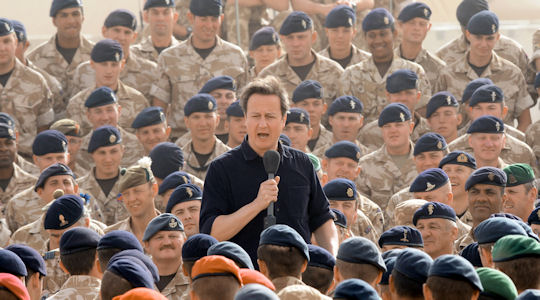
And so, with a confusing breakfast cereal metaphor, David Cameron announced in an interview with the BBC’s James Landale that he would not seek to run for a third term as Prime Minister should he cling on to the post at the 2015 general election.
From James Landale’s own analysis:
David Cameron’s admission that he will not serve a third term in Downing Street will provoke a flurry of speculation. What was he hoping to achieve? What message was he trying to send?
First things first. I asked him a question and he answered it. It was not something that a helpful Downing Street official had suggested I might ask with a heavy hint that I might get an interesting answer. It was just one of many speculative questions that political journalists like me ask in the hope that just occasionally they might get an answer. And this time it did.
Second, Mr Cameron’s overt aim was to get across the message that he would serve a full second term. He wants to quash speculation that he might stand down early in 2017 after a referendum on the UK’s EU membership.
But by emphasising that he would do another five years, he inevitably has to address what he would do after that. And his answer was clear. Terms in Downing Street, he said, are like Shredded Wheat: “two are wonderful, three might just be too many.”
This is all very interesting, and certainly we should keep an eye on what might happen in the year 2020 and beyond. There is already plenty of good analysis off the back of David Cameron’s off-the-cuff revelation, from the Spectator here, the Times of London here and here, the Guardian here, and Conservative Home here.
But of far more interest than who will be jockeying for position to replace David Cameron (a largely uninspiring field of Theresa May, George Osborne and the unthinkable Boris Johnson) is the more pressing question: who will replace Ed Miliband if Labour lose the election on 7 May?






 Semi-Partisan Politics