Is Microsoft Voluntarily Censoring The Internet?

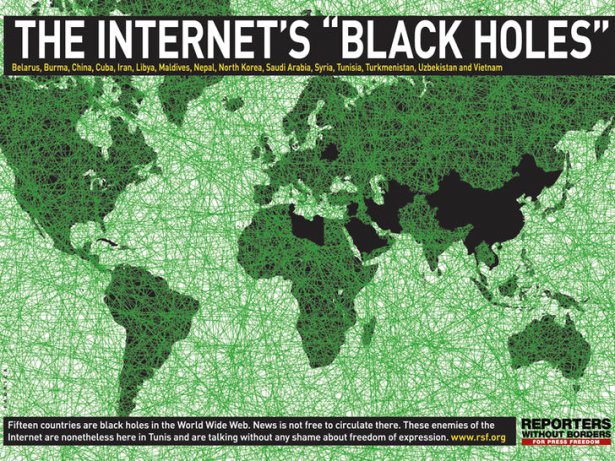
There was once a debate about whether large Western multinational corporations – particularly the newly rising high tech companies such as Google, Twitter and Facebook – should do business in countries such as China, where governments are openly hostile to the concept of free speech, a free media and unregulated access to information for their citizens.

That debate was settled some time ago, the winners being those who advocated expanding into China and then perhaps doing a little bit of agitating or talking up the virtues of freedom when time and decorum allowed. And though there has been precious little lobbying of the government in favour of free speech by those multinationals, the investment in China has, by and large, been a good thing.

Having long ago lost the argument that it is not their place to participate in Chinese government efforts to filter and censor the web when operating in China itself, everyone was bobbing along quite merrily in a morally dubious equilibrium, where the big tech companies would parade their wholesome, consumer-oriented credentials around in front of anyone who would listen or take down quotes, while also co-operating with Chinese censorship requirements and allowing the NSA ready back-door access to personal information held on their servers.

Enter Microsoft.

It is now believed that in addition to complying with the Chinese government’s demands that search engine query results originating from mainland China are filtered and censored, Microsoft’s also-ran search engine, Bing, has been applying those same censorship algorithms to searches in the Chinese language originating from anywhere on the planet. In other words, Microsoft, either in their zealousness to please the Chinese regime or out of sheer laziness and unwillingness to maintain two separate protocols, has apparently been applying Chinese-style censorship to internet searches not just where the Chinese government has geographical jurisdiction but anywhere in the world, whenever the user happens to be searching in Chinese.
chinese-authorities-force-businesses-to-help-censor-the-web-pg

The Telegraph reports:

According to research by Greatfire.org, an anti-censorship campaign blog, Microsoft’s Bing search engine filters Chinese-language results around the world, in the same way as it does in mainland China

Searches for potentially controversial terms such as “Dalai Lama” produce very different results when they are carried out in Chinese than they do in English, even if both searches are carried out on US soil, Greatfire said.

Its claims are likely to raise questions about whether Beijing is trying to extend its censorship regime to the Chinese populations of other countries, and whether Microsoft is making inappropriate concessions.

This is inappropriate to say the very least. The Chinese government’s policy of filtering the internet for its citizens so as to effectively pretend that certain viewpoints, ideologies or historical events are not real is bad enough, as is the fact that Western technology companies have complied with it in order to gain access to Chinese markets while demanding and extracting no concessions or easing of restrictions in exchange. But this allegation, if correct, suggests that corporate malfeasance has been taken to a much more worrying level.

One of the great advantages of globalisation and the free movement of people is that people from different countries can be exposed to different ideas, practices and ways of working. Even though the internet is restricted in mainland China, Chinese citizens could access the full, uncensored internet when traveling abroad, just as they could read the free press. In turn, exposure of Chinese citizens to new and contradictory ideas from outside could ultimately increase pressure on the government to relax their draconian policies.

Basing internet censorship on language rather than geography, as Microsoft appears to be doing, completely destroys this premise and removes the potential for this to happen. As the Telegraph rightly indicates, it would appear that Microsoft is aiding and abetting efforts by the Chinese government to extend their control over expatriate Chinese populations in other countries. In countries such as Britain this may merely be an odious and shameful act, but in other countries such as America, where the right to freedom of expression is constitutionally enshrined, a plausible legal argument could potentially be made that Microsoft is committing a First Amendment violation and breaking the law.

This revelation also contrasts Microsoft very negatively with Google, whose own search engine results for sensitive topics prime for Chinese censorship remain similar whether the search is conducted in English or Chinese, when outside of the Chinese mainland:

Users searching for “Dalai Lama” in Chinese were offered a link to information about a documentary produced by CCTV, the Chinese state-owned broadcaster, before any other search results of results linked to two entries on Baidu Baike, a heavily-censored online encyclopedia. Yahoo, whose search engine is powered by Bing, produced the same results.

By contrast, Google produces broadly similar results for web searches conducted in the US, regardless of whether the terms are searched for in Chinese or English.

But it is Greatfire, the online transparency and pressure group, who pose the ultimate question to Microsoft:

But whose law is dictating the manipulation of search results for Americans who are using Bing in the United States? Or French who are using Bing in France?

It is one thing to prostrate oneself to the laws and whims of a foreign government when negotiating terms to do business in that country. But if incompetence or monetary greed has led Microsoft to start applying Chinese censorship laws to citizens of other countries, then they have a big case to answer.

Where else are Chinese web censorship algorithms lurking?

Satya Nadella, Microsoft’s new CEO, may only be one week into his tenure in the top job, but this is a potential crisis of image and trust that needs to  be nipped in the bud and resolved – yesterday.

Microsoft has gone silent in response to the allegations from Greatfire so far. When the firm eventually comes up with an official story and breaks the silence, it will be very interesting indeed to hear their excuses.

The Christian Persecution Complex Stands In The Way Of Revival

Public fretting about the supposed War on Christmas may be behind us for another year, but that does not mean that the sound of wailing and gnashing of teeth emanating from certain grumpy Christian quarters has ceased entirely.

There is always some new perceived slight or attack to form the next rallying point for indignant protest at the assault on religious freedom (which can be translated as the end of state-sponsored primacy for one religion over all others, or none). And if nothing is currently happening to cause new outrage – no matter, they can quite happily argue their case to anyone who will read or listen without a clear jumping-off point.

Step forward Cristina Odone. The redoutable Odone has taken to her Telegraph column to bewail the “disappearance of the Bible from our children’s lives”:

Almost a third of children do not know their Adam from their Noah or that David slew Goliah. The Good Samaritan is a stranger and the Nativity just a Christmas play.

The latest Bible Society findings prove that the West has erased its Christian heritage from public life. I’m not surprised – only saddened that No God Zone, my e-book on the subject, has been vindicated. After decades of concerted efforts by secularist zealots, the Bible is a truly alien subject. Future generations will look on “the greatest story ever told” and think it is a 1965 movie starring Charlton Heston and Max von Sydow.

At fault, of course, is the ever-present, ever-menacing atheist brigade, who want nothing more than to tear down her church, prohibit her from celebrating her religious holidays and re-educate her to worship at the altar of multiculturalism:

A few faith schools still teach “the Good Book”; but they are under fire from the atheist brigade, and many feel that they will only survive if they promote a multicultural syllabus that stars Gandhi and Mandela rather than Abraham and Jesus.

The extraordinary, subversive book, with its lessons on charity, compassion and respect for others inspired generations to rebel against tyrannies of all kinds – dictators, addictions, vices. Men and women dedicated their lives to its teachings – and were ready to die for it. But today it seems that a host of martyrs lost their lives in vain: the Bible is just another book that sold more than the Hunger Games trilogy at some point.

How very melodramatic.

No longer the exclusive preserve of Bill O'Reilly and the Fox News Channel.
No longer the exclusive preserve of Bill O’Reilly and the Fox News Channel.


Odone worries about the children, but really it is the adults and parents who should be the focus of her concern – two thirds of British adults have no connection with the Christian church at present, half of whom having left at some point and the other half never having had any involvement at all.

As a practicing Catholic this saddens me, but unlike Cristina Odone it is not my first instinct to go lurching off to the government for redress, to make them make people behave the way that I want them to. Indeed, it speaks very poorly indeed of Odone’s supposed conservative credentials that she thinks that such a thing would be at all appropriate. A religion that requires government promotion makes itself immediately vulnerable to government influence, interference and control – something that no supporter of religious liberty should wish upon themselves.

If there is to be a Christian, or any type of religious revival in this country, it will not come about by going back to what Cristina Odone clearly sees as the “good old days” of having the Church of England shoehorned into every conceivable tradition or aspect of British life. Singing Christian hymns at public school assemblies, cramming public squares with nativity scenes or erecting stone carvings of the Ten Commandments outside courthouses are not going to make a blind bit of difference to church attendance or the practicing of Christian teachings.

Maybe Odone would rather tie the awarding of jobseeker’s allowance to church attendance rather than the claimant’s willingness to take remedial literacy and numeracy training where required – I would love to watch her make that argument, just for the fireworks that it would create. But short of extremely heavy-handed government coercion such as this, I am at a loss as to exactly what external actions she thinks should be taken.

Rather than looking outside for help that will never arrive, people of faith would be far better off engaging with their local churches, parishes or faith groups and helping them in their work to serve their communities and make themselves more relevant to the people whom they serve. For it is only through this bottom-up approach that any meaningful progress will be made.

My own track record in this area is far from impressive – very occasional bouts of deep involvement in parish life followed by months or years of either lazily sitting back in the pews or not attending church at all. But this is exactly the point – if I can only halfheartedly and sporadically muster the will to do something, why should I expect the government to enforce it on people who may have different beliefs and have no desire to follow along at all?

A parallel argument – perhaps better suited to the boardroom than the church hall, but perhaps not – would be that is it not far better to have a smaller, leaner church that is filled with more committed members and does more to show God’s love and do His work in the community than a bloated, lazy, state-supported church, topped up with unwilling attendees and with no clear direction other than to keep pleasing the government on which it depends for survival?

I believe that a strong argument can be made for just such an adaptation, one that is in any case well underway – for just as businesses must retrench and refocus during economic recessions, so too, perhaps, must religious organisations during times of spiritual recession.

Yes, the church and the values that it professes (love, understanding, charity – I’m less worried about society’s rejection of archaic cultural rules about gay people, wearing garments made from multiple types of cloth or the eating of shellfish) have experienced an unbidden and unwelcome decline, and this is a legitimate cause for concern. But if it also provides space for a sober reassessment and recalibration of our understanding as to the role of faith in our society, is there not also a great opportunity to be exploited as well? Sometimes, after all, it is necessary to go backwards first in order to move forward.

There are parts of the world where Christians really are being persecuted, quite terribly. Cristina Odone’s leafy corner of west London is not one of them, and she would do well to acknowledge this and to give thanks that she lives in a place where she is free to openly practice and profess her faith.

Then we can talk about Christian revival.

American Businessman and Leading Blogger Shown On Chinese State Television in Mao-Like Confession

Jonathan Turley writes an excellent expose and analysis of the terrible forced confession and public shaming of Charles Xue, an American businessman and influential blogger. These public shaming rituals are so difficult to watch, not only because of the tremendous pity one feels for the person involved, but because it makes ones blood boil to think of the abuse of state power taking place. Tea Partiers and others who see tyranny and despotism behind every move that President Obama makes would do well to look at this case and remind themselves what true tyranny and absence of the rule of law looks like. If our occasional polemics on blogs, radio and television were directed against the Chinese leadership rather than the American or British political class, many of us would also be sitting in a prison cell. Though it may not help Xue at all, we can at least take some small measure of comfort from the fact that China’s rising middle class, with their ever greater accustomisation to a high standard of living and their increasing exposure to other cultures, will not tolerate the government’s paranoid meddling in their lives indefinitely.

jonathanturley's avatarJONATHAN TURLEY

Charles Xue appears to confess 'involvement in prostitution'130px-Mao_Zedong_portraitChina appears to be returning to the Cultural Revolution with public confessions of dissidents as a warning to all those who would challenge the ruling party. Chinese viewers were exposed to a truly sad and transparent confession of American businessman and leading Chinese blogger, Charles Xue. The Chinese recognize the Internet as the greatest threat to the totalitarian regime. Xue was therefore rolled out to degrade himself before the Chinese people — begging forgiveness for forgetting his place in objecting to such things as contaminated water. He admits to feeling like the “emperor of the Internet” and apologizes for spreading rumors against the ruling party leaders.

View original post 259 more words

Live-Blogging The Leveson Enquiry

22.38 – I’ll live blog about something worth covering next time

15.13 – Tony Blair’s evidence has finished, and immediately the BBC stops caring. I guess I missed all the “interesting” stuff.

15.11 – There are people who go out in the world and do things, and accomplish stuff, and change peoples’ lives for the better (or the worse), but leave an impact either way. And then there are the people sitting in this room at the Royal Courts of Justice. Tony Blair is the former; everyone else…not so much

15.09 – I DON’T KNOW WHAT’S HAPPENING OR WHY I AM PAYING FOR ALL THESE PEOPLE TO SIT HERE

15.07 – Oh geez, why don’t you just get a hotel room and invite Blair up if you like him so much, Leveson? Enough pointless flattery, let’s accomplish something today!

15.06 – Tony Blair is a broken man. William Hague and David Cameron at their fiery best never exacted such a toll on the former PM as Leveson’s pointless question

15.05 – Why is Leveson at pains to say he has no interest in imperilling the freedom of expression in the press? Isn’t the whole point of this goddamn enquiry to hear evidence from other people, not to hear this gasbag preening in front of a load of TV cameras? His so-called “question” just lasted 10 minutes

15.05 – Leveson has heard of the internet! He mentioned twitter and the internet just now! Gosh, isn’t he modern? Looking at all of the angles on press and media regulation here

15.04 – Why can’t Leveson just join his local bowls club like most old people? It seems cruel to the general population of the UK to devise this elaborate and boring way of keeping him occupied

15.03 – So glad I’m not a lawyer (sorry, solicitor or barrister), especially in this country

15.02 – I wish the director would show the expression on Tony Blair’s face as Leveson’s multi-part non-question enters its fifth minute…

15.01 – Leveson postulating about some bizarre scenario about what to do if someones’ leg is going to be chopped off. No idea.

14.59 – Leveson clearly thinks he is being paid by the word, God only knows what he is talking about at the moment.

14.58 – BBC News is showing rolling coverage of Tony Blair’s evidence to The Leveson Enquiry,  set up to analyse and recommend changes to press regulation in the wake of the “phone hacking” scandal. This is such a freaking exciting topic, and such great stewardship of our taxpayer money, that it seems to be the perfect candidate for the first live blog on SemiPartisanSam.