A Move Toward Transparency On Tax

Image from ConservativeHome.com


It may be a small, mostly cosmetic change, but for once it is a change that small government and libertarian-leaning conservatives can really get behind.

Ben Gummer MP, who has made tax transparency a major focus of his parliamentary career, is today proposing that National Insurance be renamed the “earnings tax”.

The Telegraph reports:

National Insurance, a 100-year old charge on employers and employees, will be renamed “earnings tax”, the Chancellor has signalled.

The change, which will be proposed in legislation to be published on Tuesday, is the first step towards merging income tax with National Insurance.

Ben Gummer MP, a rising star Tory backbencher who has been campaigning on tax transparency, will propose the change in a Commons Bill on Tuesday.

On the face of it, perhaps nothing to get too excited about. After all, nothing is being done here to address the punishingly high rates or the legacy of fiscal drag that has seen people on relatively standard incomes being taxed at the top rate.

But Gummer’s proposal is significant because it is the first step toward the government finally and explicitly admitting the obvious – that National Insurance is a second income tax in all but name. The money collected is vast, all goes into the same pot, and is in no way strictly reserved for specific purposes as the “insurance” moniker suggests.

At the present time, Ed Miliband and Ed Balls are able to rail against the Conservative/Liberal Democrat government and accuse them of enacting “massive tax cuts” for the rich – by which they mean reversing half of Gordon Brown’s gargantuan tax increase – and keep a straight face while doing so.

Using the innocuous term “50p” tax which evokes the small sum of fifty pence rather than the cold reality – half of each additional pound earned, for top band taxpayers – is bad enough. But high tax advocates such as those in the Labour Party are also aided by the fact that discussion of income tax alone does not come close to recognising the full tax burden.

The Telegraph shows the full extent of this second income tax:

National Insurance rakes in billions every year for the Treasury. Anyone who is employed and earns between £149 and £797 a week pays 12 per cent of their income in National Insurance. A further 2 per cent is paid on all earnings over that level.

It is doubtful whether, if asked, most people would correctly identify the top rate of tax as being 59% – a staggeringly high level that immediately makes Britain’s anaemic economic growth statistics much more understandable.

Therefore, from a fiscally responsible and small government-advocating stance, anything that helps the public consciousness to start to recognise income tax and national insurance as nothing but two sides of the same coin can only be a good thing.

ConservativeHome also recognises the importance of this seemingly small proposal:

There’s a fundamental, sound principle here – which has been championed by the TaxPayers’ Alliance among others.

It is clearly unfair and immoral for taxpayers to be misled about the level and function of taxation. National Insurance is income tax in disguise, but many people still think it actually pays into a pot for their own social security.

Hopefully the Chancellor will listen to Gummer, and it will be a step on the road to merging NI with Income Tax altogether.

Indeed, merging NI (or whatever name it ultimately goes by) and Income Tax should be the end goal. Just as Ben Gummer successfully campaigned for taxpayers to receive a yearly statement showing exactly how their tax contributions were split up to fund the operations of government

The proposal will doubtless meet with strong resistance, primarily from those on the left who continue to support high taxation and high spending with such fervour that they almost seem to be an end in themselves. It is not in the interests of such people for the public to have full visibility of the amount of tax they pay – the more confusing it is, the more easily their distortions and rhetorical sleights of hand about the tax burden are believed and accepted.

ConservativeHome also notes this fact:

There’s a test for Labour here, too. They will instinctively dislike the idea, given that it will make it harder for future governments to raise taxes by stealth. But Ed Miliband rails against opaque, complex and misleading charging by companies as a rip-off which harms consumers – surely they should hold the taxman to the same principles?

Surely they should hold the taxman to the principle of transparency, perhaps, but inevitably in practice they do not – a century of experience tells us so.

While transgressions by the private sector are immediately jumped on, the failures and mistakes of the public sector are excused or overlooked time and time again, and are then counter-intuitively used as justification for increasing spending and expanding the public sector even more. Private sector failure and opacity, in other words, is punished while public sector opacity is encouraged and rewarded.

Transparency is the ultimate antidote to the big tax/big spending status quo, and to the policies of those who continue to view fiscal policy as a tool for punishing success. Britain needs Ben Gummer’s medicine, and the government should now give tax transparency its full-throated support.

Let’s Unleash Britain’s Great Cities

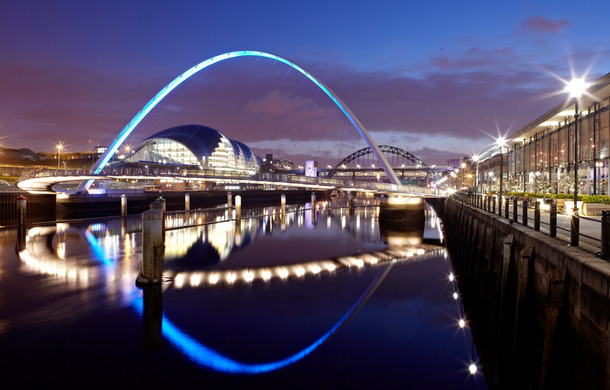
newcastle

London may be the centre of the universe, but that is no longer any reason for the British government to ignore the provinces and our other major cities.

Thus far, recognition of this important fact has come mostly from London envy and the desire to drag the capital city down a peg or two – not a very sensible policy as far as the national interest is concerned. But the debate is gradually coming to be seen in terms of helping the UK’s other cities to grow and to prosper. In essence, the debate is moving away from a Labour-style “let’s drag everyone down to the same mediocre parity” argument and towards a “let’s create opportunities for innovation and growth and see what happens” proposal. This is most welcome.

The economist Jim O’Neill, writing in The Telegraph, has half of a good idea when he proposes merging northern cities and devolving fiscal powers to them in order to spur economic growth:

After considerable discussion, and for primarily practical reasons, we settled on what we are describing as the 15 largest “metro regions”. This is not to downplay the importance of other cities, towns or villages, but to emphasise – as many experts have concluded – that it is the largest urban areas that usually generate the most economic activity. We need to concentrate our efforts there; evidence from other countries shows that the biggest urban areas matter most when it comes to unleashing a step-change in national economic activity.

In this context, I raised a delicate topic with the last of three panels: namely whether the Greater Manchester area is, in fact, big enough. If you look at a list of the world’s largest cities by population size, you have to go a long way down from London before any other UK city appears. Some argue that in the absence of another city with anything like the population and diversity of London then attempts to boost growth, however smart, won’t lead to much.

This is good stuff. Greater Manchester is certainly prime for devolution of fiscal powers under a unitary authority and an elected mayor, along the lines of London. Manchester is a large, globally recognised city. Granting it more power to alter local taxes, services and policies would be a great example of localism at work.

This blog has long advocated wholesale constitutional reform for the United Kingdom, in which England would gain its own Assembly to debate matters relating to England only, and powers of taxation and policymaking would be equalised between the assemblies of the four home nations under the UK Parliament.

Basing this new English assembly in one of the great northern cities would be a boon to the host city and would help to reduce the London-centricity of political and media focus in the UK without taking anything away from London, which remains the goose that lays the golden egg.

Unfortunately, after proposing the devolution of powers to major cities, O’Neill follows a somewhat different train of thought and his economist brain takes charge to the detriment of what was otherwise an intriguing proposal:

In the spirit of trying to keep an open mind, I quizzed the group further. What did they think of the notion of “ManPool”, where Liverpool and Manchester might bring together their populations and resources to create a “supercity” in the north? Many Telegraph readers might be familiar with the depth of history between Liverpool and Manchester, even if they are not followers of a team from either city. Football allegiances aside, the reaction I received made it pretty clear the prospect was highly unlikely from an administrative perspective.

Sometimes, things that make perfect sense when viewed on a chart or an Excel spreadsheet are self-evidently ludicrous when you consider the human beings that the numbers represent.

While devolution of greater powers to the UK’s major cities is to be welcomed, the power must be devolved to recognised levels. People know what Manchester is, and at a push they could get behind the idea of the Greater Manchester conurbation. The same can probably be said for Birmingham. But ‘Manpool’ or the West Midlands Conurbation are places that exist only in the minds of civil servants and economists.

This is where a politician’s mind is required in addition to that of an economist. Great cities need more than the perfect mix of investment, local skills and natural resources. There is an element of civic identity, the fact that being a Londoner or a Mancunian or a Brummie is a clearly identifiable term and means something, which must be considered as well as the cold hard calculations as to what makes an ‘optimal’ self-governing urban unit.

Unfortunately, this fact seems lost on O’Neill, who takes his consolidation proposal to even more objectionable extremes:

One could easily apply the same logic to other cities close to each other, such as Derby and Nottingham, or Newcastle and Sunderland.

Following this logic to its ultimate conclusion, we would be better off if we treated the entire United Kingdom as one giant conurbation, a single vast city-state. The UK could devolve power to itself, and under unified authority it would enjoy better coordination of projects and higher economic growth. This is clearly preposterous.

Nonetheless, Jim O’Neill has proposed half of a good idea. The UK’s major cities need to strengthen their individual identities and improve their economic vibrancy. Devolving more power to them could only be a good thing, if only the seemingly inbuilt British resistance to variety and fear of the dreaded ‘postcode lottery’ could be overcome.

But rather than wasting fruitless hours in committee trying to come up with a catchy, memorable name for the new NorIpsCamWich Urban Region, let’s just use those handy city names conveniently handed down to us by history and actually recognised by the people who live in them.

After all, there’s no point in creating extra work.

Are Labour At War With Poverty Or With Success?


Well, now we have it conclusively. It has nothing to do with making the rich in our society pay their “fair share”, no matter how loosely you define (or indeed blatantly misuse) the word “fair”. Nothing to do with ensuring that essential public services are funded, either. No, Ed Ball’s announcement of the Labour Party’s intention to reinstate their punitive 50% top marginal rate of income tax has everything to do with punishing people for daring to still be rich, for having the temerity to succeed.

Daniel Hannan MEP, writing in the Telegraph, ponders the cognitive dissonance behind a proposal to raise taxes without realistic hope of increasing revenues, and wonders if Labour are right to stake their electoral hopes on the British people being motivated primarily by envy and a desire for vengeance:

Labour doesn’t actually think the 50p tax rate will make Britain more prosperous. We know this because, for all but the last few weeks of its 13 years in office, it kept the top rate at 40p. Yet it now brazenly calls a 45p rate “writing a cheque to millionaires”. On one level, this is too silly for words: even if  everyone earning £150,000 were a millionaire, on no conceivable definition does demanding less money from someone constitute “writing a cheque”. But Ed Balls has presumably calculated, as Iain Martin adroitly observes, that there are enough votes in envy to cobble together a majority under the uneven constituency boundaries.

In another column he also reflects on the results of a YouGov poll showing that an overwhelming majority of Labour supporters believe that a 50p tax band should be brought back even if it was conclusively demonstrated that doing so raised no additional revenues. The telling visual is here:

YouGovTaxpoll


Hannan goes on in this second piece to explain the motivations that may cause people to vote as they did in the poll, and has the humility to accept that he (and others on the opposing side of the argument, myself included) probably suffer from similar confirmation biases and reverse rationalisation on this and other matters.

But the inescapable fact is that the motivation for supporting a revenue-neutral or revenue-negative tax increase comes largely down to envy, and that ugly part in the minds of some in the Labour Party (fully accepting that the Conservative Party has other ugly parts of its own) that would rather everyone in the country be worse off and more equal than better off and more unequal:

Envy is an ugly and debilitating condition, but it seems to have an evolutionary-biological basis. The dosage varies enormously from individual to individual, but even toddlers often display a sense that, if they can’t have something, no one else should either. If they had the vocabulary, they would doubtless, like the 69 per cent of Labour supporters, explain that emotion “on moral grounds”. Few toddlers, and few Labour voters, openly admit to being actuated by vindictiveness.

Most policy positions are an expression of some ingrained tendency. For example, we have an instinct to care for the vulnerable, and also an instinct to value reciprocity, and our welfare system results from an interplay between the two. Similarly, the current row about deporting foreign criminals has less to do with their numbers or the nature of their crimes than with our instinct – again, a human universal – about hospitality and its abuse. We shouldn’t be surprised when people who suffer from envy elevate it into a political precept and call it “fairness”.

The concept of fairness has been much abused by politicians (generally those on the left of the political spectrum), particularly since the start of the Great Recession. The worthy desire of Labour politicians to ease the crippling, painful effects of poverty on those less fortunate in our society is not in question, but it is disconcerting when they cling to the idea that punitively high, revenue-neutral tax increases will do anything at all to help the poor other than to cheer them up with the knowledge that wealthy people are also feeling the pinch.

And while we are quibbling about wording, Ed Balls needs to be taken to task in the media for characterising George Osborne’s decision to reverse half of Gordon Brown’s 50p tax hike to a slightly more palatable 45% top rate as a “massive tax cut”. If a five-point reduction in tax rates constitutes a massive tax cut, surely the ten-point increase in income tax instituted in the dying days of the Labour government of which he was a part could only be described, using the same dramatic language, as a gargantuan, devastating, apocalyptic tax increase? And yet, come general election season 2015, it is certain that we will not see Ed Miliband or Ed Balls’ faces smiling down at us from billboards promising “massive tax increases”.

But let us return once more to the YouGov poll results. No other mainstream British political party – not even the Liberal Democrats or the supposedly crazy UKIP – has a majority of their supporters who believe in raising taxes for the rich just to teach them the lesson that hard work does not and should not pay. That distinction is reserved for the Labour Party, a party whose leadership and supporters are now – quite cheerfully, openly and stridently – acting in a dangerously irrational way.

Irrational, that is, if we take them at their word that they have the best interests of all the British people at heart.

Labour Reveal Their Priorities

Miss me yet?


It was heavily trailed, but now we know for sure – Labour, who have been feeling the heat as a result of their total lack of credibility on the economy and the fact that the Tories are finally starting to benefit from the fruits of economic recovery, have been forced into revealing some of their plans for the future. And what plans they are. They can best be summarised as “let’s return to how things were in the final days of Gordon Brown’s premiership”.

Whether this makes you want to get out or chequebook and make a huge contribution to the Labour Party or scream and and fall down on the floor in absolute incredulity depends entirely on your political leaning.

The Telegraph reports on Ed Ball’s major policy speech:

[Shadow Chancellor Ed Balls] said it was wrong for the Coalition government to have decided to cut the 50p top rate of tax to 45p from April last year.

“When the deficit is still high, when tough times are now set to last well into the next parliament, when for ordinary families their real incomes are falling and taxes have risen, it cannot be right for David Cameron and George Osborne to have chosen to give the richest people in the country a huge tax cut,” Mr Balls said.

“That’s why for the next parliament the next Labour government will reverse this government’s top rate tax cut, so we can finish the job of getting the deficit down and do it fairly.

“For the next Parliament, we will restore the 50p top rate of tax for those earning over £150,000 – reversing this unfair tax cut for the richest one per cent of people in the country and cutting the deficit in a fairer way.”

Ed Balls calls cutting the top rate of income tax from 50 to 45% a “huge tax cut”. Let us leave aside for a moment the ludicrous presumption on Balls’ part that taking a full half of the incremental pound that someone earns in income tax alone (never mind National Insurance, indirect taxes and VAT) could ever be proposed in a sentence together with the word “fair” and be taken seriously. I am more interested in what Ed Balls and the Labour Party had to say when Gordon Brown decided to raise the top rate of income tax from 40% to 50%. I’m pretty sure that they didn’t call it a “huge tax increase”. In fact, I know that they didn’t sell it to the country that way. So if increasing the top rate of income tax by ten pence in the pound is not a huge increase, how can a partial rollback of five pence be considered a huge tax cut? The answer, of course, is that it cannot.

So a friend of mine had this great idea on tax...
So a friend of mine had this great idea on tax…


In what was doubtless intended as a ringing statement designed to assure us of Labour’s new-found commitment to sensible economic management, Balls also committed to eliminating the budget deficit by the end of the next Parliament, in 2020:

Mr Balls announced what Labour said would be a binding commitment to balance the books, deliver a surplus on the current budget and get the national debt falling in the next Parliament.

Quite why we would want to exchange a government that tried and failed to manage this feat in the lifetime of the current Parliament for one that never displayed an interest in doing so until now but which suddenly claims to be able to achieve it in the next Parliament if only they are given the keys to power is never fully explained.

Neither does Balls acknowledge the fact that even when the budget deficit is eliminated, the national debt will remain intact and ominously large – he makes no proposals about running a future surplus to begin paying down this debt and lowering the nation’s interest payments. Neither, of course, does George Osborne devote much of his time to that niggling fact – but if Ed Balls really wants to seize the mantle of economic trustworthiness from Osborne he needs to aim higher and show that he has a better grasp of the longer term picture than his counterpart.

The reaction to Balls’ speech from the business community – who Labour like to malign, but are actually the ones who create the jobs and pay corporation tax and National Insurance contributions – was predictably scornful. Words and phrases such as “absurd”, “disaster”, “unmitigated disaster”, “putting our economic security at risk”, “unhelpful” and “political posturing” were often deployed.

By contrast, the Unite trade union saw Balls’ announcement as a fantastic development, and urged Labour to ever more destructive heights of foolishness and irresponsibility:

However, the Unite trade union, Labour’s biggest donor, welcomed the policy but warned it was only “a beginning”.

A Unite spokesman said: “The commitment to restore the 50p top rate of tax is a sign that a future Labour government understands the need for a fairer taxation system in this country.

“This is a beginning; we would urge Labour to also tackle the disgraceful abuse of the system by the evaders and avoiders too.

You know what would make tax avoidance really difficult, unnecessary and socially unacceptable? A flat tax. But somehow I don’t see Unite advocating for that any time in the near future. Because, though they do not like to admit it in public, high taxes are not a regrettable but necessary evil to people like Ed Balls and his cheerleaders on the left. For Ed Balls, higher taxes are a desirable end in themselves, a last line of defence to ensnare anyone who defies the odds and manages to break through Labour’s dragnet legacy of mediocre standardised education, burdensome regulations and big government and succeed in spite of themselves.

With regard to Labour’s brave new economic stance, the British electorate will cast the only verdict that matters in May of 2015. But I think David Cameron and George Osborne will be sleeping a little more easily in their beds from now on, warm in the knowledge that Ed Balls has set Labour on a firm course back to 2010.

The Green Party Goes All In

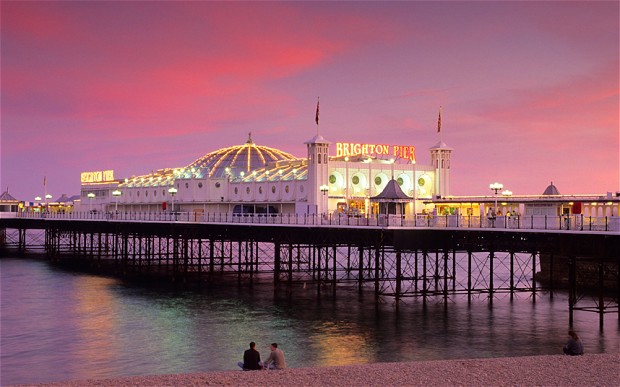
A city to watch in 2014.


Interesting news from the city of Brighton, where the UK’s only Green Party-controlled local council is planning to put the question of a significant council tax increase directly to the people who would have to pay it. At an estimated cost of £100,000, the council plans to hold a referendum to ask citizens to approve a 4.5% council tax increase which is expected to raise £2.5 million per year more than the assumed 2% increase.

Consulting the people directly is entirely the right thing to do, and is actually very much in line with Conservative party policy under the influence of Eric Pickles, the Communities Secretary. There is currently a threshold in place requiring local councils to hold a referendum to gain approval from constituents for any council tax increase of above 2%, but this has led to a rash of councils repeatedly skimming just beneath the 2% level year after year, continually cranking up the tax without having to gain the consent of the people. In fact, this has prompted some within the Conservative party to agitate for reducing the referendum threshold to increases in excess of 1.5%, a figure well below the current inflation rate.

Credit must be given to the Green Party for actually having the guts to stand behind their favoured spending plans and asking the local citizenry to sign off on them. I may vehemently degree with some of their specific goals or policies, but I will always respect a party that is willing to go directly to the electorate on an important issue over one that claims to speak for the people without having consulted them.

Of course, the referendum plan was announced with a predictable degree of sanctimony and victimhood from the Greens, as The Guardian reports:

Justifying the move, [Green Party council leader] Kitcat said: “The coalition’s cuts mean we cannot deliver the services we were elected to provide and which our consciences say we should provide. We have no choice but to seek the views of local people on funding these services through a tax increase.

“Westminster’s ideologically driven cuts to local councils are huge and relentless while demand for our services continues to grow. Vulnerable people who depend on our services are being threatened from Westminster like never before.

The Green Party leader, Natalie Bennett, ladles it on even thicker:

Bennett said: “As Greens we believe that decisions should be made closest to the people who are affected. Instead of letting Whitehall impose cuts on vulnerable people in Brighton and Hove, this announcement takes the decision to the people.

I do find it slightly ironic that the Green Party should take this opportunity to boast about their supposedly-favoured tactics of localism and direct democracy when it is quite plainly apparent that they only turned to the referendum idea out of desperation once all other avenues to fund their big-spending plans had failed to deliver.

Nonetheless, this is a broadly positive development, and it will be very interesting to see how the people of Brighton vote if the referendum does take place. A referendum would require the support or abstention of the Conservative or Labour parties, as the Greens have only minority control of the council chamber, and I would hope that both parties would gladly consent to letting the people have their say – though this is by no means certain.

Not for much longer, perhaps.


The denizens of Brighton are an interesting bunch in terms of their political leanings, having returned Caroline Lucas to Westminster as the only Green MP in Parliament, and so they can hardly be described as a bellwether city or constituency for gauging the national mood. But one thing is readily apparent: if the referendum takes place and it turns out that even left-wing Brighton isn’t willing to put up the money to fund high levels of public spending, then there will be precious little appetite to do so anywhere else.

Which would rather undermine all of the anti-austerity arguments so loudly proclaimed by the left since 2010, wouldn’t it?