Announcing The Leave Alliance

The Leave Alliance Launch

A campaign that Semi-Partisan Politics is proud to support

I have written a lot of uneducated bilge about the European Union in my time.

My natural instincts – supporting democracy, self-determination, the nation state and accountable government – were generally sound, but too often I lapsed into lazy confirmation bias and weak, borrowed rhetoric when arguing for Britain’s independence from Brussels.

I would still be churning out even more bilge today, were it not for the eureferendum.com site and the group of activist bloggers who are coalescing around Dr. Richard North and Flexcit, that rigorous, comprehensive plan for safely extracting Britain from European political union while minimising risk.

If this blog has gone somewhat quiet on the finer policy details of the Brexit question over the past year, sticking to the bigger picture, it is only because through slowly becoming familiar with this body of work, I have come to realise how much I have yet to learn and understand about the workings of the EU and the international regulatory environment – and how much I thought I understood that turned out to be completely wrong.

The upshot is this: this referendum should not be about David Cameron’s fraudulent “renegotiation” deal (even though it is yet more evidence of the EU’s inability to reform even under existential threat), any more than it should be about the arbitrary and misleading statistics about jobs saved or threatened, hospitals built or universities closed. All of these alarmist talking points can be fought to a draw on the 24-hour news channels by the SW1 talking head armies of the establishment Leave and Remain campaigns.

This referendum – this rare, great opportunity that we have been given – should be about our democracy. It should be about who governs Britain, how they govern Britain and how we exercise oversight over the people who make the key decisions affecting our lives. And one thing is certain: the more people learn about the true nature of the European Union – and the more they are encouraged to think like engaged citizens rather than fearful consumers – the more they come to realise that Brexit is an essential first step toward reclaiming our democracy.

That’s what The Leave Alliance is about. TLA is an alternative to the dumbed-down, uneducated major campaigns battling it out for lead designation in the referendum campaign, whose dismal and unforgivable failure to embrace a properly worked through plan for Brexit – and then promote it in the media – means that we are now fighting the referendum campaign with our hands tied behind our backs, David Cameron chuckling to himself all the while.

The Leave Alliance launches later today, in Westminster, and it will be a campaign that engaged citizens and thinking eurosceptics and Brexiteers across the country can actually be proud to support. It is a campaign which understands that Brexit is part of a process of much-needed democratic renewal, not a fixed destination in itself. And it is a campaign which will never condescend to the British people by reducing this great question of human governance and statecraft to a disingenuous war of competing statistics.

If you feel let down and embarrassed by the well-funded but utterly amateurish Leave campaigns, then The Leave Alliance offers you a home for this referendum campaign.

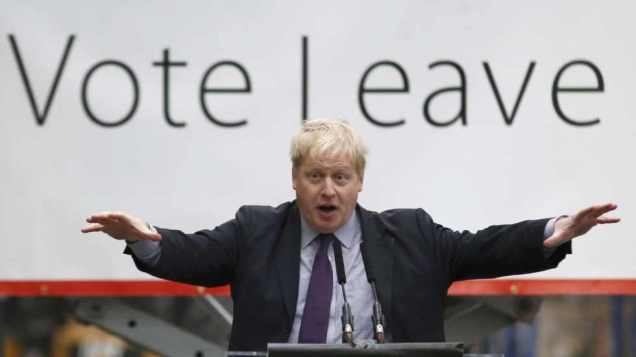
If you get angry when bumbling Johnny-Come-Latelys like Boris Johnson blunder onto the Brexit scene, stealing the limelight while making a complete hash of arguments which more intelligent eurosceptic voices have been making for years and even decades, then The Leave Alliance is for you.

And if you read Semi-Partisan Politics and generally find yourself agreeing with what is written here, then I ask you to follow my lead and abandon the mainstream Leave campaigns who are cheerfully leading us to defeat, and instead support The Leave Alliance, whose strong commitment to eurosceptic principles and intellectual rigour will campaign for Brexit – and to keep the flame of genuine democracy alive in Europe – for as long as it takes to achieve our cherished goal.

The Leave Alliance

Wednesday 16th March, 2.30PM

The Council Room

One Great George Street

London, SW1P 3AA

Donate here.

 

European Union - United Kingdom - Britain - Flags

Agree with this article? Violently disagree? Scroll down to leave a comment.

Follow Semi-Partisan Politics on TwitterFacebook and Medium.

Why The Real Elites Consistently Support Britain’s EU Membership

Boris Johnson - Vote Leave - European Union - EU Referendum

Professional and social elites are more likely to oppose Brexit for narrow personal reasons – which makes them bad citizens

James Delingpole writes in the Spectator that the real dividing line when predicting someone’s position on Brexit is where they fall on the posh / oik spectrum:

If you need to know how properly posh you are there’s a very simple test: are you pro- or anti-Brexit?

[..] So there I was at dinner the other evening with a delightful, erudite Old Etonian friend of mine. Let us call him ‘Kevin’ (not his real name). Kevin has an accent so deliciously plummy that if you could somehow tin it and sell it to the Chinese you’d become a billionaire. He is immensely cultured, civilised, wise and sensitive. I agree with him on everything, so naturally, when I asked him his views on Brexit and he launched into his eloquent diatribe on why he believed — and long had done — that the EU was the Abomination of Desolation, I listened in a state of near-ecstasy.

Kevin’s beautifully modulated speech went on for at least ten minutes. (There was hardly a shortage of material.) Then, suddenly, something weird happened. About 30 seconds before the end, Kevin shifted tack, and explained (or actually, hardly explained at all) that for all these reasons the only logical position was for Britain to remain in EU. Something to do with Europe being a lovely place and our having a moral duty to help it set the tone, I think.

And goes on to draw a interesting parallel with the Thatcher era:

What does all this tell us about snobbery and Tory politics? Quite a depressing bit, I’ve begun to realise. You can see much the same sort of thing going on in the Thatcher era. Who were her greatest loyalists, the ones most in tune with her radical programme? Why, they were grammar-school types with slightly suspect accents, such as Robin Harris and Norman Tebbit — not the plummy-voiced grandees such as Heseltine et al, who were the ones who eventually did for her.

This is also true, I think, of the upper social echelons’ attitude towards Nigel Farage. It’s not that they disagree with much of what he says: how could they, when he’s so refreshingly candid and reactionary and un-PC? But they’ve persuaded themselves that, like Ukip, he’s just a bit too spivvy and downmarket to deserve their open affiliation. This enables them to have their cake and eat it: privately enjoying his every home truth but never being tainted by that awkward, embarrassed feeling which tends to accompany frankly expressed views on matters like immigration.

Delingpole sees this as an elitism thing: the closer you are to the establishment or to the top of your field or profession, the more likely to are to have vested in the current  order of things and the more likely you are to sense Brexit (sometimes justifiably) as a threat to your current position.

I think that this probably holds true in all manner of fields, from education (How many university Vice Chancellors are brave enough to bite the hand that feeds them recycled British taxpayer money?) to the arts (for the same reason) to the world of business, which understandably cares a lot about economic stability and not so much about democracy.

But this blog maintains that one’s stance on the EU referendum is also determined by whether you consider yourself a citizen or a consumer first and foremost. As Delingpole’s anecdote makes clear, many of the European Union’s biggest advocates within the British establishment freely concede and attack its antidemocratic nature, but still refuse to countenance leaving the club. They are unable take this logical step because they are thinking with their wallets and their social reputation in mind, rather than the good of the country.

By contrast, someone at the sharp end of globalisation – who has experienced the negative aspects of free trade and free movement of people on their employment, living standards and public services far more than the person living in Mayfair – is more likely to vote on the kind of issues that a thinking citizen should vote on, because they are much more likely to be directly touched by those issues.

As this blog recently noted:

If you have grown up and prospered under the status quo, with Britain as a vassal state of a larger and ever-more tightly integrating political union, then it takes an extraordinary amount of curiosity, empathy or insight to come to any conclusion other than that the EU has been a resounding success on all counts. By contrast, if you are self-employed or work in a semi-skilled or unskilled job at the sharp end of globalisation, you are more likely to be negatively impacted not just by immigration, but by the inability of your vote to effect any kind of meaningful political change in Britain thanks to the cross-party pro-EU consensus.

[..] It is those who think primarily with their wallets, as consumers first and foremost, who are most likely to be susceptible to the Remain campaign’s Project Fear and scaremongering tactics about the hysterically hyped “costs” of leaving the European Union, while those who think as engaged citizens and global stakeholders who are most likely to question the European project.

That doesn’t mean that the Oik (in Delingpole’s parlance) is not also often voting for his or her self interest. They may well want to see Brexit as part of a broader package of counterproductice protectionist measures, which would inevitably do Britain more harm than good. But regardless of their personal motivation, they are more likely to discuss the issue of Brexit in terms of policy and of democracy. The oiks thus often act like a better, more engaged citizens than the elitists who lazily support the Remain camp to virtue-signal their distaste at UKIP while overlooking the democratic question.

As for myself, I enjoyed the delights of a state education, worked to get myself into Oxbridge, but then left Cambridge University and went to Warwick. I suppose all of that places me firmly in the “Oik” category, a position I shall hold with even more pride now that it is also a marker for principled euroscepticism.


European Union - United Kingdom - Britain - Flags

Agree with this article? Violently disagree? Scroll down to leave a comment.

Follow Semi-Partisan Politics on TwitterFacebook and Medium.

Jeremy Clarkson: Refreshingly Frank Federalist Or Craven Castrato?

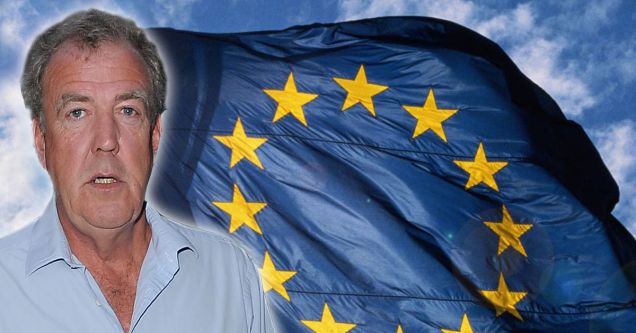
Jeremy Clarkson - EU Referendum - European Union

One Jeremy Clarkson column, two very different reactions

To say that Breitbart’s James Delingpole disagrees with me about Jeremy Clarkson’s column calling for Britain’s dissolution into a federal European state would be putting it mildly.

While I praised Clarkson for being one of the only people in the whole sorry Remain campaign to honestly and openly admit their love for the European Union, Delingpole accuses him of “chopping off his own balls”:

There are lots of piss-poor columnists out there who you can easily imagine churning out this kind of bilge. But Clarkson really isn’t one of them. For a start, he has forged his entire career on tell-it-like-it-is-outspokenness and political incorrectness (especially where uppity foreigners are concerned). Also, he’s not stupid. The reason his collected columns tend to go to the top of the bestseller lists is partly because they’re funny but partly because they’re true. He has a gift for boiling down the political concerns of our time into a punchy but chatty style, replete with colourful images, witty asides and broad jokes which make them accessible to everyone.

Here, though, he’s not doing any of that. There is no way – in the unlikely event that he could ever bring himself to reread those words – that Clarkson will ever be able to look at that column and go: “Yup. I really nailed it, there.” Because he patently hasn’t. This isn’t just a fail. It is, by some margin, the worst Jeremy Clarkson column ever. Or at least the worst of the many I have read and (invariably) admired.

In fact what strikes me most is that here is the very exemplar of the kind of column you write when your heart just isn’t in it, when you’re making an argument you simply don’t believe in.

[..] I’m not sure I’ll ever be able to look at Clarkson in the same way again, however good his Top Gear replacement series is, because all I’ll be thinking is: “You had a choice, Jeremy. Either to go to the wall for the cause you believe in. Or to sell your soul to something you don’t believe in just because you live near the Prime Minister in the Cotswolds, share the same circle of posho friends and want to curry favour with the smart set.”

By contrast, I remarked:

But what is surprising (and actually rather impressive) is the full-throated way in which Clarkson embraces his support of the EU.

Unlike nearly every leading politician and personality in the Remain camp, Clarkson does not attempt to flatter us or pretend that he “gets” our concerns about Brussels gradually usurping our democracy. Unlike the deceitful-yet-ingratiating Sajid Javid, Clarkson makes no promises to go back to ranting at Brussels the moment he has helped doom us to continued membership of the EU (though in Clarkson’s case, more ranting is all but guaranteed).

Jeremy Clarkson actually does something which almost nobody in the intellectually squalid, fear-based Remain campaign dares to do – he owns his pro-Europeanism and wears it as a badge of honour, rather than doing what so many Turncoat Tories and others have done, prancing around like the World’s Biggest Eurosceptic before meekly running to David Cameron’s heel and supporting Britain’s continued membership of the EU as soon as the prime minister snapped his fingers.

Delingpole is also adamant that Clarkson’s full-throated support of European federalism was part of an effort to ingratiate himself with the prime minister and his circle of friends, whereas I tend to be a bit more generous, believing simply that because they both came of age during a long period of British decline, Clarkson and David Cameron almost inevitably share the same defeatist, pessimistic view of Britain’s capabilities and prospects as an independent country:

Our prime minister and foreign secretary may hold our country, its history and present capabilities in astonishingly low esteem, but fortunately the same cannot be said for many of the people. Many of us correctly believe Britain to be one of the few truly indispensable nations on Earth, that our contributions to the arts, sciences, commerce and global security are almost unmatched, and that we could throw our weight around in the world accordingly, if only we cared to stand up for our own national interest once in awhile.

But such views are unheard of outside the Chipping Norton set, the middle class clerisy in general and the fawning circle of friends and admirers surrounding David Cameron (of whom Jeremy Clarkson is one). These people, many of whom came of age at the peak of 1970s declinism and economic doldrums, have at their core a deep pessimism and scepticism about the ability of Britain to survive and prosper as an independent actor on the world stage.

So deeply have they internalised this self-doubt and self-loathing that no matter how much evidence you show them to the contrary – the examples of Australia and New Zealand, say, somehow surviving in the world without being part of an Asia Pacific Union and sharing a common parliament and court – they bat it away without even stopping to think.

Regardless of his motivation, I still think that Jeremy Clarkson made a more honest case for Britain staying in the EU than nearly anyone else in the Remain camp, with their bogus scaremongering statistics and artfully disguised vested interests.

Whether that happens to be Clarkson’s own honestly expressed view, or if he was channelling the honest view of others (like our prime minister, who is too cowardly to talk frankly about his commitment to Brussels, or nearly any other subject), remains a dirty secret known only to Jezza himself.

And maybe Delingpole is right that the column reads as though Clarkson doesn’t have his heart in it. But still: what other high profile public figure has expressed their desire for Britain’s participation in a federal European state so strongly? The answer is none. Tumbleweeds.

And that alone makes Jeremy Clarkson’s column quite significant, if not personally brave.


British television presenter Clarkson returns to his home in west London

Agree with this article? Violently disagree? Scroll down to leave a comment.

Follow Semi-Partisan Politics on TwitterFacebook and Medium.

Sajid Javid: Stop Trying To Build Bridges With Eurosceptics – We Don’t Want You

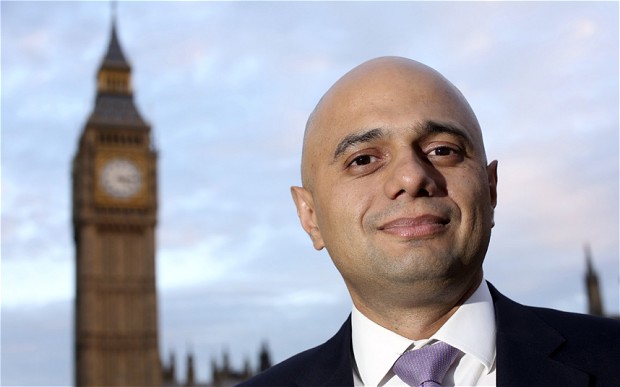
Sajid Javid - European Union - EU - Brexit - Remain campaign

The anti-EU movement has no further need of fawning, two-faced politicians who talk the eurosceptic talk for cheap applause but consistently vote and campaign for Britain’s continued participation in political union

Apparently, Sajid Javid is suffering from an acutely troubled conference after renouncing his much-vaunted euroscepticism and cuddling up to power by supporting David Cameron’s fear-based Remain campaign.

The Daily Mail reports:

Sajid Javid today admitted he wished David Cameron had got more from the EU and he was backing the Remain campaign even though his ‘heart’ was for Brexit.

The business secretary, whose endorsement was a relief for the Prime Minister after six other top ministers defected to Leave, insisted today he was still a ‘Brussels basher’.

Mr Javid gave his chilly assessment of the Prime Minister’s deal at the British Chambers of Commerce conference.

In his address, Mr Javid said he had finally come down on backing Remain because of the threat of uncertainty.

The Business Secretary said: ‘I have no time for closer political union and in many ways I am a Eurosceptic. I am still a Brussels basher and will remain so. I wish there was more in the deal’.

Let me say on behalf of all eurosceptics (I’m sure they won’t mind my presumption in this case) – Sajid Javid can take his Brussels bashing and shove it where the sun don’t shine.

The British people have no further need of oleaginous politicians who make eurosceptic noises in pursuit of cheap applause, but who then side time and again with the political establishment to preserve the anti-democratic status quo, with Britain kept as a vassal state of a relentlessly integration European political union.

Are we supposed to feel comforted and mollified that Sajid Javid has now promised that on 24 June, the day after his own efforts contribute toward a “Remain” vote in the EU referendum, he will once again join our ranks and stand up to criticise the democratic subversion underway in Brussels? Because that would be like a soldier who, on being rotated away from the front lines at the end of his tour of duty, promises his comrades that he will see them again soon, as soon as he is done fighting a stint for the enemy during his R&R break.

Javid is basically saying “Don’t mind the massive betrayal, old chap. I’ll be back soon, standing shoulder to shoulder with you and making all of the right sympathetic sounds, as soon as I’ve finished chucking these grenades into your trench from across No Man’s Land.”

The British eurosceptic movement has had enough false friends in its time – politicians who have been only too happy to embrace the cause when it helped them to win selection as a candidate or to squeak through a tough election campaign, but who have been found singularly wanting when it comes to defending British sovereignty and democracy with their votes and campaigning activities once safely elected.

Precisely why Sajid Javid made the decision to support his prime minister’s transparently fraudulent “deal” with the European Union rather than staying true to his oft-professed euroscepticism – whether it was pure career calculation or a genuine failure of courage and belief in his own country – is an ugly secret known only to Javid himself.

But one thing is clear: every last one of those calculating Conservative MPs who have made the fateful decision to sit out the fight to extricate Britain from the European Union must be pitilessly cleaved from the eurosceptic herd and never permitted to rejoin it.

They should be made to wear their latent europhilia as a badge of shame and dishonour for the remainder of their sorry political lives.


European Union - United Kingdom - Britain - Flags

Agree with this article? Violently disagree? Scroll down to leave a comment.

Follow Semi-Partisan Politics on TwitterFacebook and Medium.

The Bishop And The Brexit Debate

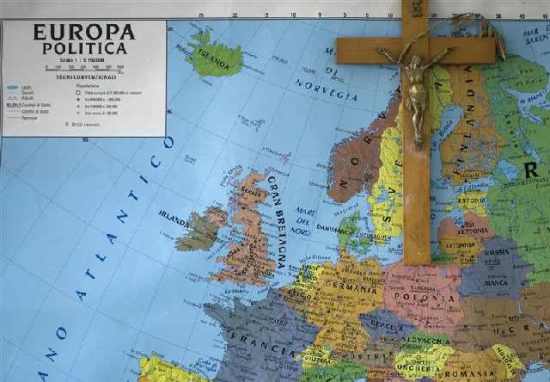
christianity-europe-eu-brexit-3.jpg

Apparently, Brexit constitutes a “nightmare scenario” for the Bishop of Guildford. No surprise, coming from an established church with such a dubious record on democracy

Should bishops in the Church of England (or indeed the leaders of any other religious denomination) be free to speak their minds on the subject of Brexit and in advising their flocks how to vote in the coming EU referendum?

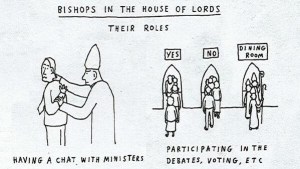
Of course they should. To suggest otherwise would be an unconscionable encroachment on religious liberty – the only exception being the intolerable Lords Spiritual whose anachronistic and unwelcome presence in the House of Lords makes Britain, like Iran, a technical theocracy.

But while non-political bishops have every right to express an opinion on Brexit, so we have the right to criticise their thinking on the subject, which tends to be woolly at best, and arrogant with a twist of elitism at worst.

King of the woolly thinkers is the Bishop of Guildford, who shared this recent gem on Twitter:

Adrian Hilton of Archbishop Cranmer dissects the Bishop of Guildford’s europhile ramblings over at Reimagining Europe:

So we read that the Brexit “nightmare” would be “very sad” because it would mark a return to “competing nationalisms” and “very dangerous times”. The EU has been “integral in delivering seven decades of peace and economic security”.We must resist the “widespread rise of populism” because “we are European” and “have nothing to fear or to lose if we remain so”. The Bishop of Leeds, Nick Baines, wants a ‘Third Way’, but that isn’t on the ballot paper. And the Bishop of Willesden, Pete Broadbent, aims directly for the Tories, but this isn’t a general election. As you see, it’s all impeccable political neutrality with rigorous episcopal impartiality.

The laity and other clergy will, of course, make up their own minds, but what manner of neutrality is it when CofE comms tells the media that the institution is neither for remaining nor leaving, while many in the House of Bishops preach the Gospel of Remain? Would a bishop ever tweet that his (or her) “nightmare” would be to wake up to a Corbyn premiership? What guilt does the prospect of voting for the Bishops’ (it probably is plural) Brexit “nightmare scenario” inculcate in the spiritually-discerning democratic intellect of the laity and subordinate clergy?

And here is the crux:

Some say we’d be poorer; others that the cost of holidays would rise; still others that our power stations would go dark and terrorism would increase. There is equal expert opinion to the contrary in every case, and it’s hardly four-horsemen-of-the-apocalypse stuff, is it? The matter of whether our national destiny is to be bound in perpetuity to an anti-democratic United States of Europe which is creeping, ratchet-like, toward continent-wide assimilation and uniformity cannot simply be distilled to short-term economic interests or security scaremongering.

I can understand Bishop Andrew’s desire to sustain a political union which is ostensibly based on sound Christian principles such as subsidiarity and solidarity. But, as Philip Booth has shown, the EU is antithetical to the very concept of localism, notwithstanding the letter of Maastricht. And I feel sure that the Greeks, Spanish, Italians and Portuguese might balk at assertions that the EU project is any longer concerned with fraternal solidarity, mutuality and social harmony.

This isn’t an organic social contract for diversity, liberty and limited state power, but a fabricated mechanism for the enforcement of national assimilation. When you’re locked – seemingly irrevocably – into a model of “economic governance” which hinders growth, destroys jobs, increases poverty, and leads mothers to abandon their children on the streets and fathers to commit suicide, I have to put to Bishop Andrew that his Brexit “nightmare scenario” would be welcomed by millions of Greeks as a dream of Grexit bliss.

The bishops’ willingness to swallow pro-EU talking points and then arrogantly sound off in public about how the EU has “kept the peace” and “delivered prosperity” is not just intellectually lazy. I would charge that it is a failure in their duty of pastoral care to all Christians in their flock, to accuse those who want Britain to leave the EU of trying to bring about a “nightmare scenario”.

Since when did believing in national democracy and sovereignty based at the level of a commonly understood demos represent a “nightmare” for the Church of England? Since when did the concept of self-determination (as opposed to slavishly following a pre-determined path toward unwanted European political integration set in motion decades ago) become unwelcome? And why is the Church willing to wring its hands and worry about human rights abuses and dictatorship abroad, but turn a blind eye when the rights of its own fellow citizens to determine the course of their own future is suppressed by Brussels?

At its root, the pro-European instincts of many bishops seem to rest in a desperate, stubborn insistence in seeing the world – and the European Union – as they would like it to be, rather than how it actually is. As Hilton suggests, the idea of the bad aspects of nationalism being eroded and replaced by shared European values of a vaguely left-wing bent of “subsidiarity and solidarity” is all well and good. But there is no European demos, and the relentless march toward further integration in the absence of a shared feeling of European-ness above national identity will only compound the simmering resentment.

The Church of England would clearly love nothing so much as to operate in a world where the nation state was consigned to the history books, and where we are primarily governed at a European level – no doubt as a stepping stone toward one world government. And they are entitled to that worldview, premature and perverse though it is.

But the Church and her bishops should at least show some embarrassment and contrition at the fact that by casting any concern for democracy aside and throwing their lot in with the European Union, they are helping to impose an elitist vision of a politically united Europe which more people vehemently oppose than have been scared and bullied by the Remain campaign into meekly supporting.

It is not the job of any Christian (least of all me) to judge another’s adherence to and practising of their faith, and so I will pass no comment on whether Andrew Watson’s gnawing fear that the British people might vote for self-government makes him a bad Christian.

But I will say without hesitation or apology that it does make him a bad citizen, a weak example of a community leader and an emblem of everything that is wrong with the established church’s continued role in the political life of our country.


Church of England - Church and State - Parliament - Lords Spiritual - Cartoon - 2

Bottom Image: Abbreviated cartoon by Dave Walker

Agree with this article? Violently disagree? Scroll down to leave a comment.

Follow Semi-Partisan Politics on TwitterFacebook and Medium.