Yanis Varoufakis And Owen Jones – The Failed Promise Of The Eurosceptic Left

This joint therapy session between Owen Jones and Yanis Varoufakis fails to dispel the cognitive dissonance created by their respective decisions to argue against Brexit despite being such vocal critics of the European Union

Less than a year ago, this blog was remarking on what a good time it was to be a eurosceptic in Britain.

Our longed-for referendum was finally on the way after the UKIP surge and David Cameron’s desperate concession to staunch the bleeding of his own MPs to Nigel Farage’s insurgent party. Meanwhile, the Left finally seemed to be rediscovering their long-misplaced euroscepticism after witnessing Greece’s treatment at the hands of the eurogroup and finally realising that post-democratic, supranational governance is not the shining utopia they had been so sanctimoniously claiming.

Back to the present day, and once again there are many reasons for thinking British eurosceptics to despair, and precious few reasons to hope. The Leave campaign is being conducted by an official group comprised primarily of B-list politicos who actually seem to think that a group of mostly right-wing politicians prancing around the country screeching that Brexit will Save Our NHS will be a) remotely believable, and b) a referendum-winning issue.

But perhaps most depressing of all is the fact that the awakening left-wing eurosceptic movement seems to have rolled over in bed and gone back to sleep.

This is most evident in Owen Jones, who last year seemed on the cusp of rediscovering the euroscepticism of Tony Benn, only to fall back into irrational support for the European Union as the Greek crisis receded and the EU referendum drew closer.

But we also see the same syndrome appear in people who have direct and harsh experience of the European Union’s antidemocratic ways, but who nonetheless come rallying to its aid – as though their limited imaginations simply cannot comprehend a world without the EU. The prime example here is that of Yanis Varoufakis, who should know better than almost anyone the degree to which Brussels is antidemocratic by design and utterly resistent to fundamental change.

And now, in a new YouTube video [see top] we have Owen Jones and Yanis Varoufakis together in a joint therapy session, perhaps to work through the immense cognitive dissonance that both must currently be feeling from spending 2015 railing against the EU, and 2016 telling us how it is our humanitarian duty to keep the rotten enterprise afloat.

Varoufakis’s view in a nutshell:

The Left should never lose sight of the history of the 1930s. After 1929, the Left failed to create the coalition with other democrats that was necessary to prevent the descent into the abyss of the 1930s.

Now, I see such an abyss opening up in front of our eyes in the centre of Europe today. And if it does, we are going to unleash very vulgar and brutal ultra right wing forces throughout Europe, and various xenophobic tendencies that will be turbocharged by the disintegration of the European Union.

Brexit would speed up the disintegration of the European Union and in the end the only beneficiaries will be those ultra-nationalists, xenophobes, racists everywhere, including in Britain.

In other words, Britain should sacrifice her own freedom and democracy because the rest of Europe is a perpetually backward powder-keg of barely suppressed “ultra right-wing” populism and resentments which will lead us back to war faster than you can say “Treaty of Versailles”, unless we dissolve our individual national identities into a common European body.

Note how Varoufakis says that Brexit would “speed up” the collapse of the EU, not that it would precipitate the collapse. That suggests that he strongly believes that the EU is doomed regardless, but still wants Britain to remain inside the burning building along with Greece to the bitter end. Quite why Britain should sacrifice our own democracy and future economic and even political stability in this way is never explained by Varoufakis or Owen Jones.

Note too how Varoufakis is keen to say that the only ones looking forward to Brexit are the foaming-at-the-mouth racist mobs which are apparently just waiting for their signal to wreak havoc on the streets of Britain. This is a variant on the claim that we should remain in the European Union because Vladimir Putin would apparently like nothing better than for us to leave. That’s certainly an interesting way to run a country – doing the precise opposite of what Vladimir Putin might want at every single decision point – but as a general rule one would have thought it was best to focus more on what is best for Britain rather than what is worst from the imagined perspective of some other world leader.

Then we get the same pigs-might-fly optimistic leftist vision for Europe that Owen Jones has also promoted, and which Jeremy Corbyn spoke of in his recent pro-EU speech at Senate House:

Our criterion should be a broad, pan-European, democratic movement for preventing the post-modern 1930s from hitting us and future generations.

[..] I feel it in my bones that to all of us we have a duty to band together across borders throughout Europe to prevent this decline, this degeneration into an ultra right wing cesspool of xenophobia, of deflation, of loss of jobs, and this is something we can only fight at the level of Europe. It cannot be fought at the level of Scotland, of Wales, of northern England.

This is an attempt, maybe Utopian, to say “Okay, forget that we are Greek, Scottish, English, German, Italian, let’s get together as European progressives and ask ourselves a very simple question: ‘how do we stop this decline?'”

So it’s not about democracy at all. It’s about leftists from across the European continent banding together to inflict their particular worldview on a reluctant continent. Varoufakis may want to use the European Union as a megaphone to amplify his neo-Marxist message and leftist policies, but he has no intention of his Brave New Europe being a democracy – at least, not if the majority of voters prefer more right wing, capitalist ideas.

Note that Varoufakis says that these right wing terrors (mostly existing only in his mind) cannot be fought at the home nation or English regional level. But he conspicuously fails to mention that they cannot be addressed at the UK level – because, presumably, he believes that they can. Which once again brings up the question of why Britain should remain part of the European Union when Varoufakis himself tacitly admits that Britain is not in need of Europe’s help.

Varoufakis goes on to make legitimate criticism of the lack of real democratic accountability and responsiveness within the member states themselves:

What is the enemy? The enemy is the contempt for democratic processes in our national capitals and in Brussels, because the contempt that the elite has in London for democracy is only reinforced by the contempt that Brussels has.

We make decisions in pure opacity. You have no idea what George Osborne says in Ecofin on behalf of you.

But while he keeps offering More Europe as a solution, at no point is it explained why each member state should not simply strive to become more democratic in their own way and in accordance with their own traditions, culture and history.

The British parliament’s oversight of the government’s handling of EU matters is abysmal at present, with ministers, diplomats and MEPs rarely being held to anything like proper account for the decisions that they make on our behalf in Brussels. That is something which could be changed with sufficient political will – ideally as part of a far more widely reaching constitutional convention, but as a lone issue if necessary. But this is change which must come from within – the EU is never going to start issuing directives instructing national parliaments to pay much closer scrutiny to their own government’s interaction with Brussels.

Ultimately, the problem with Varoufakis’s argument is that it basically amounts to a vain struggle to bring greater transparency to European institutions which nobody wanted in the first place. Live streaming meetings of European finance ministers (to use one of his examples) is all well and good, but it does not change the fact that the entire foundations of the EU were built without the expressed democratic consent of the people.

If your right to decide unilaterally what new car you want to buy is taken away and vested in a group including of 27 of your neighbours, your family is unlikely to be greatly mollified by being allowed to watch your joint deliberations on the internet as together you hash out a compromise. Because they reject the fundamental premise of the exercise, attempting to add a thin layer of democratic gloss over the top doesn’t make it any better.

But half way through the video, Varoufakis makes an important concession, with great emphasis, saying:

The retreat to the nation state is never going to benefit the Left. Never.

And there you have it – the real reason why even the EU’s strongest critics, like Yanis Varoufakis and Owen Jones, ultimately just can’t abandon their commitment to the European Union. Because the only realistic chance they see of imposing their left-wing policies on broadly centrist or centre-right populations is by doing it through the remote and unaccountable auspices of the EU.

The Left look around and see free markets accepted and delivering prosperity in nearly every country, including those who have sworn eternal opposition to capitalism. And despite the Corbynite takeover of the Labour Party in Britain, there is still no evidence of a groundswell of public longing for 1970s style statist economic policies to be brought out of mothballs. What chance, then, does the Left have to bring more of the economy under state control other than the extreme long shot of seizing control of Europe’s supranational layer of government on the back of the supposed European left-wing popular movement (DiEM25) talked up by Varoufakis and Jones?

As Varoufakis admits, “the retreat to the nation state is never going to benefit the Left”. The Left can only advance their cause by sidestepping nation states altogether, which means taking control of the EU, where national legislatures are bypassed and unpopular and even hated policies can be imposed on the peoples of Europe with very limited opportunity for effective resistance (see Greece). This may seem laughably unrealistic – and it is. But it is the Left’s only remaining hope, and so they cling stubbornly to their delusion even if it means betraying democracy and supporting the EU in its current form (and with its current policies) until the time comes for their popular revolution.

Meanwhile, the young Left have simply grown up with the European Union, do not see it as a threat or even a problem of any kind, and have been repeatedly told that opposition to the European project is synonymous with racism and ignorance – and so they support it unquestioningly. And this puts left-wing figureheads like Owen Jones and Yanis Varoufakis (and even Jeremy Corbyn) in a pickle, because there is only so far they can lead their flocks or step outside their side’s own Overton window before the people take fright at being made to think unthinkable, heretical thoughts.

This was not a problem for the late Tony Benn. Benn was able to trash talk the European Union and talk about democracy, and he was indulged much like a crazy but beloved uncle or grandfather. And that enabled Benn to make a compelling case against the European Union and for Brexit, drawing not on left-wing or right-wing political objectives but purely on his respect for democracy.

As this blog explained:

When asked his own thoughts about the European Union, Tony Benn did not do what most contemporary Labour Party personalities do, and talk about the virtues of undemocratically imposing more stringent social and employment laws on Britain (an irritatingly less social-democratic country than our continental friends). Because Tony Benn understood that the left-wing case against the European Union was about democracy, democracy and more democracy.

Tony Benn understood that some things are more important than whether Britain might happen to move in a slightly more left or right wing direction as a short and medium term consequence of Brexit. He understood that self-determination and democracy – particularly the ability for the citizenry to remove people from office – is the first and most important consideration in determining the democratic health of a country.

And Benn understood that living in a democracy where his own side would sometimes win and sometimes lose was far preferable to living in a dictatorship where his own preferred policies were implemented through coercion with no public redress.

Unfortunately for Corbyn, Jones and Varoufakis, they do not command the universal love and respect enjoyed by the late Tony Benn. They cannot make a case for Brexit to their followers based on democracy, because in truth their followers generally do not care about democracy – they care about getting their way, and imposing their values and policies on Britain whether the people want them or not. In other words, the Left’s most high-profile EU apologists are being led by their followers – and it shows in the paucity and half-heartedness of their arguments against Brexit.

And it is in this context that we should view this fifteen minute televised therapy session between Owen Jones and Yanis Varoufakis, two intelligent people who know deep down they are on the wrong side of democracy, and are desperate to find as many reasons as possible to soothe their burning consciences.

 

European Union - United Kingdom - Britain - Flags

Agree with this article? Violently disagree? Scroll down to leave a comment.

Follow Semi-Partisan Politics on TwitterFacebook and Medium.

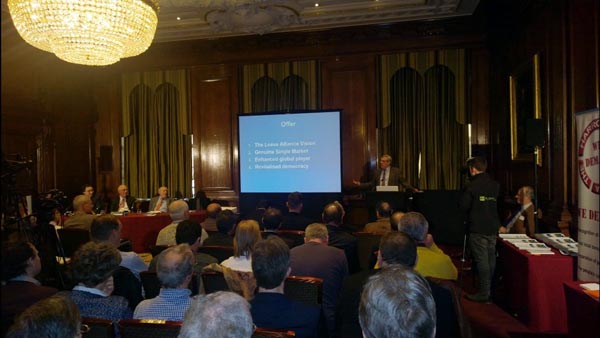
The Leave Alliance Grows In Support

The Leave Alliance Launch - TLA - 2

Brexit for grown-ups

Another passionate and articulate voice joins the ranks of The Leave Alliance, recognising that while UKIP may have helped get us the EU referendum, neither they nor the freshly-designated Vote Leave are in a position to do anything more than preach to the converted.

David Taylor writes:

So don’t listen to the formal leave campaigns you see on the TV news or read about in the newspapers. I’m talking about Leave.EU, Grassroots Out, Vote Leave, and of course UK Independence Party (UKIP). I used to be a UKIP member because I wanted a referendum, and now we’ve got one, they are doing more harm than good.

These groups want to take the EU marriage certificate and tear it up in front of the EU, in some sort of dramatic gesture, and then walk away and have a bonfire of regulations, and start from zero, with great bravado, to create a bespoke trade deal with various countries around the world, which would probably take 5-10 years (it has taken Switzerland 16 years and their position is good, but not ideal).

That’s all bollocks, obviously.

This is a referendum, not an election. We are only being asked whether we want to stay in the EU or leave the EU. Nothing more.

If we as a nation decide to leave, nobody gets elected, not Nigel Farage, not Boris Johnson, or anyone else. They won’t even get seconded to some transitional team to work on extricating ourselves from the EU. So don’t even listen to them.

It is the current government who would be tasked with the leave process and the end state. This means Whitehall (civil service) and the FCO (Foreign and Commonwealth Office).

So ask yourself: what process and end state would the current government choose?

I’ll tell you. They would choose to leave by Article 50 of the Lisbon Treaty (sorry to be an anorak), and they would choose to enter the EEA (European Economic Area) as a member of EFTA (European Free Trade Association), of which we were originally a member.

Why? Because that is the solution that most closely resembles the current membership of the EU that we already ‘enjoy’.

What this means is that we would still be a member of the Single Market, we would still pay into the EU budget (about 20% of what we do now, based on Norway), and most importantly, we would still sign up to freedom of movement of people, capital and goods.

It is this last point that is the reason why you have not heard the Norway Option being promoted. UKIP, the progenitor of the leave impetus, is all about immigration, so the Norway Option does not address their issue.

Pick a number, but there are about 30% of people who want to leave, 30% of people who want to stay, and 40% of people who are undecided.

The UKIP immigration concern has a plateau, which has already been reached, and will not win the referendum. The undecided middle listen to all the ridiculous messages from both ends and, when push comes to shove, will probably plump for the devil they know, even though that devil is not a status quo, because the EU is proceeding towards political integration and that’s unstoppable.

So the thing about EFTA / EEA is that it is not a big risk. There is no bonfire of regulations, no loss of access to the Single Market, and no change to freedom of movement. But we do regain our sovereignty and self-determination. That’s the only real change we are after.

It’s a stable, low-risk departure lounge, from which we can consider other matters later.

That’s what the undecided 40% of voters need to know. That’s what will actually happen if the government is charged with leaving the EU.

If you want to know more about my point of view, look for Leave HQ and search for The Leave Alliance.

It is always encouraging to witness others “seeing the light” and coming to support the only Brexit campaign group to possess an actual, robust blueprint for safely and securely leaving the EU while minimising economic uncertainty. And it is particularly pleasing when the new recruit is a long-time, valued reader of Semi-Partisan Politics.

David Taylor, like me, has been on a political journey to reach this point. Readers may recall that I reluctantly gave my vote to UKIP in the 2015 general election, in protest of a thoroughly un-conservative Conservative Party and the desire to reward what I saw as genuine political courage from Nigel Farage’s party in speaking up for a segment of the British public – and for certain ideals – which for too long had been high-handedly ignored by the entire political establishment.

Though I do not presume to speak for him, I believe that Taylor’s journey has followed a similar trajectory to mine, ultimately becoming disillusioned with UKIP’s self-defeating focus on immigration to the detriment of our prospects for winning the referendum, as well as the amateurish infighting which continues to hinder the party.

Such people should be welcomed into The Leave Alliance – despite our growing social media and online reach, it is still not easy for members of the general public to become aware that there is another, better eurosceptic game in town than that offered by the likes of Boris Johnson and Vote Leave.

Our national media holds the independent political blogosphere in something near contempt when they think about us at all, which makes it very difficult to cut through the noise and reach people with our message (it would be altogether impossible without the levelling effect of social media).

The British press will gushingly write up almost anything that BoJo does, but are seemingly incapable of acknowledging the incredible work and research undertaken by The Leave Alliance’s largely unpaid team of citizen bloggers, and so it is up to all of us to amplify the message until it can no longer be ignored.

With UKIP teetering on the brink of civil war, Vote Leave determined to run an amateurish campaign that insults the intelligence of voters and the EU referendum a mere two months away, the need for The Leave Alliance is greater than ever.

If you have strong doubts about Britain’s continued place in the European Union but feel alienated by the superficiality of Vote Leave and worried about the potential economic consequences of Brexit, know that there is an alternative campaign with a compelling, comprehensive plan for safely leaving the EU in a controlled manner.

This pamphlet outlines the basic details.

If you like what you see, make it a daily habit to read eureferendum.com and stay up to date with The Leave Alliance at leavehq.com.

Then come join us in the trenches.


European Union - United Kingdom - Britain - Flags

Agree with this article? Violently disagree? Scroll down to leave a comment.

Follow Semi-Partisan Politics on TwitterFacebook and Medium.

Jeremy Corbyn’s Europe Speech Was Cynical And Naive At The Same Time

Voting to stay in the EU in the hope that a left-wing movement might make the organisation simultaneously more socialist and democratic is like moving to North Korea in the expectation that a friendly word with Kim Jong Un will see the country immediately become a capitalist land of plenty

Yesterday, Jeremy Corbyn gave his much-heralded intervention in the EU referendum debate, which is worth analysing as perhaps the single biggest disappointment of Corbyn’s tenure as Labour Leader thus far.

In his speech at Senate House, we were treated to statements like this:

The Labour Party is overwhelmingly for staying in because we believe the European Union has brought: investment, jobs and protection for workers, consumers and the environment, and offers the best chance of meeting the challenges we face in the 21st century.

In fact, Britain’s bounce back from (Labour-inflicted) 1970s decline was due to the free-market policies of the Thatcher Conservative government. The limited extent to which our membership of the European Union helped bring jobs and investment to Britain are the very same reasons why Corbyn now dislikes the current EU – because it is “neoliberal”, market oriented and has awkward rules about state aid and nationalisation of industry.

By voluntarily placing Britain in the EU’s regulatory straightjacket at a time when we were most decidedly mad (with price and wage controls and vast nationalisation of industry) we were indeed prevented from inflicting more harm on ourselves. But Corbyn pines for all the edifices of state socialism which were worn down by Thatcherism and constrained by the EU.

Corbyn basically wants 1970s declining Britain, repeated at a European level. He may admire the social, employment and environmental regulation, but he will not be happy until member states are free to pursue strongly left-wing policies without interference or blocking from Brussels. And of course this is a hopeless fantasy, because the EU is travelling in a direction where member states are able to do fewer and fewer things autonomously in their own national interest, while the euro crisis demands more, not less, convergence.

Corbyn continues:

In the coming century, we face huge challenges, as a people, as a continent and as a global community.  How to deal with climate change. How to address the overweening power of global corporations and ensure they pay fair taxes. How to tackle cyber-crime and terrorism. How to ensure we trade fairly and protect jobs and pay in an era of globalisation. How to address the causes of the huge refugee movements across the world, and how we adapt to a world where people everywhere move more frequently to live, work and retire.

All these issues are serious and pressing, and self-evidently require international co-operation. Collective international action through the European Union is clearly going to be vital to meeting these challenges. Britain will be stronger if we co-operate with our neighbours in facing them together.

Not one of these issues is something which cannot be tackled by determined, well-executed inter-governmental co-operation between sovereign member states. There is nothing mysterious about climate change or terrorism or free trade which can only be solved if the countries of Europe dissolve themselves into a single supranational political entity which sits above them, its unelected leaders making decisions on their behalf.

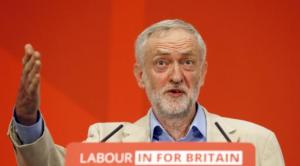
Jeremy Corbyn - Labour In For Britain - EU Referendum - Brexit

So what is the answer to the European Union’s problems if not recognising that it is a terminally flawed, anachronistic holdover from the early twentieth century, and pulling the eject lever before we impact with the ground?

Corbyn’s solution:

So Europe needs to change. But that change can only come from working with our allies in the EU. It’s perfectly possible to be critical and still be convinced we need to remain a member.

[..] I have listened closely to the views of trade unions, environmental groups, human rights organisations and of course to Labour Party members and supporters, and fellow MPs. They are overwhelmingly convinced that we can best make a positive difference by remaining in Europe.

Then they are all part of the same collective delusion. The European Union is not shy about its ultimate goal of ever-closer, not simply more perfect union. And the juggernaut has continued to trundle inexorably in the same integrationist direction for decades. What, exactly, gives them hope that a twinkly-eyed, bearded British socialist and his starry eyed chums like Greece’s Alexis Tsipras (who was pretty much castrated by the eurogroup on live television during last year’s euro crisis) are going to change the direction of travel?

Don’t expect an answer. Every EU apologist from the dawn of time has been ready with mealy-mouthed protestations that “of course the EU is flawed” and “of course we need to push for reform in Europe”, but there are two problems. One is that the European Union is not interested in their kind of reform, and the second is that the EU apologists lose all interest in actually agitating for reform after awhile. Running into a brick wall at full speeds begins to lose its appeal, after awhile.

Then we get to the meat of Corbyn’s speech:

When the last referendum was held in 1975, Europe was divided by the Cold War, and what later became the EU was a much smaller, purely market-driven arrangement. Over the years I have been critical of many decisions taken by the EU, and I remain critical of its shortcomings; from its lack of democratic accountability to the institutional pressure to deregulate or privatise public services.

Here’s the obligatory “I hate the Romans as much as anybody” part, which inevitably precedes a declaration that the EU has given us “the sanitation, the medicine, education, wine, public order, irrigation, roads, the fresh-water system, and public health“.

Except that what the EU does is not so much lavish spending on cash-strapped institutions being starved to death by the mean Tory government in Westminster. What it actually does is bribe citizens with their own money. In the case of a huge net contributor to the EU budget like Britain, that means sending our taxpayer money to Brussels where it goes through the bureaucratic machine, before a portion of those funds are redistributed to organisations and councils within Britain, to be spent in the way agreed with the EU.

Friargate - Coventry - EU Regional Development Fund - Bribery - Brexit

That so many academic, artistic and cultural leaders are so desperate for Britain to remain in the EU should indeed tell us something. It should tell us that they are either stupid for not realising that they are being bribed with their own money, or that they are very smart and cynically think that the EU’s anti-democratic nature is a great way to get taxpayer funding for things which are either so pointless or so much more at home in the private sector that the British public would never countenance spending the money.

One of the very few messages that Vote Leave actually gets right is the idea that if we leave the European Union, we can spend the money on our own priorities, as democratically chosen by the British people (rather than being agreed by dubious application processes to various EU grant-giving bodies). Of course, Vote Leave immediately go on to spoil it by confusing gross and net contributions and suggesting that we lavish all of the money unthinkingly on the NHS as a mass act of public virtue signalling. But their basic premise is right, not that Corbyn cares.

So what exactly are these never-gonna-happen reforms supposed to look like? Corbyn sets out his vision:

But we also need to make the case for reform in Europe – the reform David Cameron’s Government has no interest in, but plenty of others across Europe do.

That means democratic reform to make the EU more accountable to its people. Economic reform to end to self-defeating austerity and put jobs and sustainable growth at the centre of European policy, labour market reform to strengthen and extend workers’ rights in a real social Europe. And new rights for governments and elected authorities to support public enterprise and halt the pressure to privatise services.

So the case I’m making is for ‘Remain – and Reform’ in Europe.

Today is the Global Day of Action for Fast Food Rights. In the US workers are demanding $15 an hour, in the UK £10 now. Labour is an internationalist party and socialists have understood from the earliest days of the labour movement that workers need to make common cause across national borders.

Working together in Europe has led to significant gains for workers here in Britain and Labour is determined to deliver further progressive reform in 2020 the democratic Europe of social justice and workers’ rights that people throughout our continent want to see.

But real reform will mean making progressive alliances across the EU – something that the Conservatives will never do.

Ah, so “reform” actually just means lashings more socialism in Europe.

Anyone proposing a change to the workings of the EU based on a single political ideology is immediately doomed to fail, because they are by their own admission less interested in democracy, governance and international co-operation, and more interested in inflicting their own worldview and values on others. And so it is with Jeremy Corbyn’s vision of a left-wing Hands Across Europe movement.

Corbyn has no interest in working with conservative or centrist voices in Europe to create a better-functioning set of institutions and rules, because for him (and many on the left), policies and structure are inseparable. Corbyn doesn’t really care that the EU is antidemocratic – after all, right now he is grateful that the EU is undemocratically imposing on Britain various employment and social directives with which he agrees. Therefore his only interest is seeking out other like-minded people on the continent to grab as much power as possible, only then considering changes to the structure of the organisation to make it harder for conservatives to mount a counter-attack.

Jeremy Corbyn - Labour In For Britain - EU Referendum - Brexit - 2

And when it comes to partisan point-scoring against conservatives, Jeremy Corbyn’s extended diatribe against tax avoidance incidentally reveals the single biggest hypocrisy in his entire position on Europe.

Corbyn begins this section:

The most telling revelation about our Prime Minister has not been about his own tax affair, but that in 2013 he personally intervened with the European Commission President to undermine an EU drive to reveal the beneficiaries of offshore trusts, and even now, in the wake of the Panama Papers, he still won’t act.

And on six different occasions since the beginning of last year Conservative MEPs have voted down attempts to take action against tax dodging.

But then he dramatically overreaches:

Left to themselves, it is clear what the main Vote Leave vision is for Britain to be the safe haven of choice for the ill-gotten gains of every dodgy oligarch, dictator or rogue corporation.

They believe this tiny global elite is what matters, not the rest of us, who they dismiss as “low achievers”.

For any apologist or supporter of the EU to stand up in front of a room full of people and declare that it is those fighting for Brexit who are the elitists takes real cojones, and an inscrutable poker face. Because back in the real world, nothing epitomises the desire of a small political and financial elite to escape national democratic accountability for their actions more than the existence of the EU.

As Brendan O’Neill puts it so brilliantly in Spiked:

The EU is not, as its cheerleaders claim, a coming-together of European peoples. Rather, it represents the outsourcing of key parts of national political life to the unaccountable, unreachable realm of the European Commission and other Brussels-based bodies. It directly waters down our democratic clout through granting ever-greater authority to institutions like the EC and the European Court of Justice, whose edicts and rulings can be imposed on nations regardless of what national governments, far less national plebiscites, think of them. That is anti-democratic. End of. And it should be viewed as intolerable by anyone who considers himself progressive, and who recognises that every radical, inspiring leap forward in modern times – from the Levellers to the Chartists to the Suffragettes – has been about people wrestling from the authorities the right to choose who governs them; the right to political say-so.

The EU is a union not of peoples, but of elites. It has in recent decades become the sphere in which national elites, feeling ever more estranged from their national electorates, have effectively taken refuge. In pooling their national sovereignties into the EU, our national rulers absolve themselves of the responsibility to have tough, testy debates with us about various political and social matters, in favour of seeing such issues discussed and resolved by the commissioners and self-styled experts of this rarefied zone.

The EU is not any kind of internationalist or cosmopolitan project, as its supporters claim. Nor is it a conspiracy of French and German blaggards to do over decent Blighty, as its detractors insist. Rather, it is the institution that has grown from and been constantly fed by national elites’ own growing feeling of exhaustion with democracy – and with democracy’s engine: the demos – be it politicians who would rather an aloof court decided something they haven’t got the stomach to debate or advocacy campaigners who agitate for an EC regulation because nothing repulses them more than the idea of trying to win over the plebs of their own nations.

And O’Neill’s conclusion in the same piece could be aimed directly at those left-wing EU supporters who, like Corbyn, insist that we must stay locked in unwanted political union to protect our “rights”:

All those things that the Remain lobby claims will be better if we stay in the EU – workers’ rights, freedom of movement, anti-terror security measures – are things that should be discussed and decided by us. To say the EU does ‘good things’, even though it does them without any real democratic oversight, is to support a benevolent tyranny. A tyranny enacted not to crush us but to save us – the worst kind.

But of course Jeremy Corbyn (and much of the Left) do not trust us to make the “correct” decisions on these or any other issues, so they are more than happy for democratic control of these things to be outsourced to a supranational European level of government which is more amenable to their demands.

Britain Labour Party

So to summarise – Jeremy Corbyn supports Britain remaining in the European Union on the basis that the EU may one day magically reject capitalism and seek to become a socialist paradise. And yet no serious watcher of the EU or its member states believes that this is remote possibility, whatever Yanis Varoufakis and his Democracy in Europe Movement may say.

Therefore Jeremy Corbyn is willing to subject Britain to the ongoing uncertainty of remaining part of a relentlessly integrating supranational political union (not to mention the probability of a violent, uncontrolled Brexit further down the line when the EU either disintegrates or takes another major step toward federalisation) because he is holding out the flimsy hope that a ragtag assortment of socialist and communist groups across Europe will get together and take over the EU’s institutions, recasting Brussels in their own image.

Of all the grandiose claims from both official sides in this referendum campaign, how likely does this proposition seem to you?

Exactly. There is not a snowball’s chance in hell that any of the things that Jeremy Corbyn freely admits to finding most objectionable about the European Union will change any time soon. Deep down, Jeremy Corbyn knows this, and yet here he is, telling us about the wonderful, socialist-friendly EU which could soon be ours.

When Jeremy Corbyn won the Labour leadership contest and almost immediately recanted his long-held euroscepticism, this blog remarked:

There are lots of words you can use to describe the Labour Party’s fawning and uncritical “IN at all costs” attitude toward the European Union, but it is certainly not the “new politics” promised by Jeremy Corbyn.

And as Corbyn’s leadership of the Labour Party continues, it will be very interesting to observe where he chooses to make a stand in defence of his left-wing principles, and where else he is willing – or forced – to make concessions to the majority centrists of the parliamentary party.

On nearly every other issue – armed intervention in Syria, Trident nuclear weapons, you name it – Jeremy Corbyn has been more than willing to provoke rage and hysteria within his own party by treading a different path and rejecting a number of sacred New Labour shibboleths. But when it came to the European Union, Corbyn didn’t simply send out Hilary Benn to give the doe-eyed, europhile position. He swallowed his pride and did it himself.

One might call it a rather bold act of leadership by Corbyn, were it not also such a grotesque betrayal of his own beliefs on the subject of Europe.

Ultimately, Jeremy Corbyn wanting to stay in the European Union to bring about democratic socialist reform is like me wanting to go to North Korea to single-handedly convince Kim Jong Un to surrender power and help his country transition away from totalitarian dictatorship. The aim is certainly ambitious, maybe even noble, but the audience’s receptiveness to the message is decidedly limited. And both are equally doomed to failure.

The only difference is that as a private citizen, I am free to indulge in as many far-fetched daydreams as I like without consequence, whereas Jeremy Corbyn is leader of the Labour Party and the official Opposition.

When I waste my time and energies advocating for a futile cause, it harms nobody. When Jeremy Corbyn does the same, as he did at Senate House yesterday, he betrays not only his conscience but also the people who voted for Corbyn trusting him to speak his true mind and defend their interests.


European Union - United Kingdom - Britain - Flags

Top Image: International Business Times

Second Image: BT News

Third Image: Semi-Partisan Politics

Bottom Image: Huffington Post

Agree with this article? Violently disagree? Scroll down to leave a comment.

Follow Semi-Partisan Politics on TwitterFacebook and Medium.

The Liberal Case For ‘Leave’

EU Referendum - Brexit - Democracy

The European Union is an obsolete and rusting vessel – a dreadnought in an age of guided missile destroyers – holed beneath the waterline by the forces of globalisation

If you have not already done so, be sure to read Roland Smith’s excellent new article for the Adam Smith Institute, “The Liberal Case for Leave“.

Smith, a newly-minted Fellow of the ASI, begins with an excellent summary of the context in which Britain joined the EU in the first place – which also has the effect of showing what a vastly different country we are now than we were at the nadir of our post-war, pre-Thatcher decline:

Let’s bypass the line that says the UK electorate were sold the then EEC on a false premise. Instead let’s look at the circumstances in Britain around the time we joined the EEC and then agreed to stay as a result of the 1975 referendum.

Back then Britain was a country beset by nagging economic problems that were coming to a head: The constant stop/go policies of the post-war period that seemed to only inch us forward while the likes of Germany and Japan seemed to leap ahead; strikes; power cuts; rations even; union power; consensus politics; corporatism; and the 3-day week. Opinion favouring free markets was out on the political fringes.

On a longer view, Britain was a country in decline. Since World War II and particularly since the Suez crisis of 1956, Britain’s empire and its confidence had declined as it grappled with a new post-imperial future. The USA and the Soviet Union were the two blocs that now mattered in the world, each having their own large economic trading zone (the USA itself and Comecon).

Indeed, large and protected blocs seemed to be the future and the EEC was apparently forging a third bloc and third way between these two giants, albeit aligned to the USA.

Then there were the walls.

The most visible walls were the Berlin Wall and the Iron Curtain separating the Soviet Union from the West but there were also significant tariff “walls” between blocs, countries and trading areas. These walls not only demarcated different geographic areas, they reinforced the separateness of those areas, limited trade, and ultimately put a limit on economic progress. The tariff walls in particular defined economic blocs but also made the case for them, creating an impulse for relatively like-minded countries to club together to at least forge a level of economic freedom among themselves.

Smith rightly summarises the prevailing attitude of the time:

Being “for Europe” symbolically represented a future, outward-looking, cosmopolitan and internationalist mindset. It confirmed that you were part of the new jetset or had aspirations in that direction. It was about “getting on”.

Smith goes on to note that Britain joined the EEC just at the time when all of the old certainties which underpinned it began to show the first signs of corrosion – the decline and fall of the Soviet Union bringing an end to the necessity of regional super-blocs, and the decade of negotiations which led to the creation of the World Trade Organisation in 1995.

With the beginning of significant reductions in global tariffs and even the emergence of many new nations, the European Union – a protectionist customs union with explicit and long held aspirations for statehood – was already falling behind the times, as Smith describes:

Unseen and barely discussed in the 1990s, globalisation was beginning to eat into the logic of a political European Union at the very point it was striding towards statehood with a single euro currency.

Looking back, the EU was (and is) an old ideology in a hurry.

The event that was somewhat more attuned to freer globalised trading was the fanfare around the launch of the single market in 1992, except for the fact that it was and is tied to the EU’s political integrationist ambitions. But now, even the European single market is being rapidly eclipsed by the march of globalisation. A large and growing body of single market law is now made at global level and handed down to the EU which in turn hands it down to the member states.

The automotive industry’s standards are defined by the World Forum for the Harmonisation of Vehicle Regulations (known as WP.29) under ‘UNECE’ – a United Nations body. Food standards are defined by the ‘Codex Alimentarius’ established by the UN and the World Health Organisation. Modern labour regulations are defined by the ILO – the International Labour Organisation. Maritime regulations are defined by the International Maritime Organisation. Many energy-related regulations can be traced back to the global Kyoto accord on climate change and other international agreements.

Read the whole article. Roland Smith covers an extraordinary amount of ground in his essay, including more sense on immigration policy than you will ever hear from the official Leave and Remain campaigns.

While the EU’s furtive aspirations for statehood are misguided and abhorrent, many of the ways in which the European Union has developed were born not out of particular malice toward the sovereignty of its member states but merely as the result of being perpetually stuck in an increasingly irrelevant post-war mindset. Unlike many rent-a-copy diatribes against the EU, Smith captures this nuance well.

If we are to succeed against the odds in securing Brexit in this EU referendum, it will not be the alarmist cries about impending dictatorship or the abolition of the NHS which secure victory.

Reasonable, moderately engaged people – those with vague eurosceptic thoughts but who are minded to vote Remain because of the Fear, Uncertainty and Doubt kicked up by the government that those with vested interests in keeping things as they are – are most likely to be persuaded to Vote Leave if they are told that the EU is not necessarily the Great Satan, but rather a hopelessly outdated mid-century anachronism thrashing around and drowning in the sea of globalisation.

Given the choice, people will quickly vote with their feet when it comes to safely evacuating a foundering ship. Which is why the Remain camp are doing their utmost to portray the EU as a faithful and seaworthy vessel, albeit one in need of a lick of paint here and there.

This important article by Roland Smith – as well as outlining a bright and positive liberal vision for Brexit – also sounds a timely warning that RMS European Union has essentially been holed below the waterline by the iceberg of globalisation and is already steadily taking on water, regardless of the course it now chooses to steer.

And the fact that the lights still burn and the band plays cheerily on as the water laps ever higher around the deck is no reason for Britain to foresake the waiting lifeboat on offer.


European Union - United Kingdom - Britain - Flags

Agree with this article? Violently disagree? Scroll down to leave a comment.

Follow Semi-Partisan Politics on TwitterFacebook and Medium.

Black And Pro-Brexit

Dreda Say Mitchell - Brexit- Eurosceptic - European Union - EU Referendum

Could the Remain campaign’s arrogant assumption that they have the support of ethnic minority voters be their downfall?

While the Remain campaign may arrogantly assume that it has the support of all ethnic minority Britons in the coming EU referendum, this is absolutely not the case.

Author Dreda Say Mitchell “comes out” as a Brexiteer in the Guardian:

I share the view of leftwing politicians like my former MP, the late Peter Shore. The EU debate isn’t about bent bananas or migrants on the take; it’s about democracy. There doesn’t seem much point in electing MPs if their votes can be overridden by supranational institutions like the EU or tax-dodging corporations. Much of the apathy and cynicism towards politics is a result of people feeling that real power is somewhere else and not in the ballot box. I’ve seen the EU described as “post-democratic”. Some of us would prefer the real thing back.

Meanwhile, if it’s true that there are growing numbers of BAME voters down the golf club worrying about all these Polish plumbers, I’m taking the positives from that. It proves integration works – we’re becoming just like our white counterparts.

Mitchell makes exactly the same case for Brexit as many other principled eurosceptics – because whatever the cynical Remain camp may say, this referendum has absolutely nothing to do with race or identity politics, and everything to do with democracy.

Something to remember next time the rootless Remain campaign attempts to smear eurosceptics by latching on to the pitiful rantings of Brexit’s worst ambassadors.

Belatedly, some on the Remain side (particularly those on the Left) are starting to wake up to the fact that they take ethnic minority voters for granted at their peril in this referendum, and are scrambling to prepare exactly the kind of divisive, identity politics-based overtures to such voters that one has come to expect from the Left.

In February, Left Foot Forward noted:

The ‘in’ camp cannot stick its head in the sand while [UKIP immigration spokesman Steven] Woolfe and Nigel Farage talk about the Commonwealth at every available opportunity, in a direct appeal to BAME voters.

EU supporters need to engage directly instead of sticking rigidly to arguments about the benefits of the EU more generally.

[..] Aligning issues which resonate more with ethnically-diverse communities alongside the standard pro-Europe arguments makes common sense and will help remain campaigns to feature more in places like The Voice.

The fact that a whole side of the EU debate is being outfoxed by a single UKIP member with no track record of working in BAME communities is embarrassing to watch. It’s not like the ‘remain’ campaign weren’t alerted to the ethnic gap in their strategy before.

While Labour continue to digest the need to raise their game on racial diversity, having marginally slipped further back against the Tories on BAME votes at the last election, it is disappointing that a pro-EU campaign driven largely by progressives has not absorbed these lessons. There is still time.

Meanwhile, the Independent squeals indignantly about UKIP having the nerve to appeal to black voters (who of course should blindly and gratefully do whatever they are told by sanctimonious lefties who have “their best interests” at heart):

Putting the Brexit debate aside, Woolfe’s comments are problematic for a number of reasons. Ukip is not a party known for its concern for the wellbeing of Black people living in Britain, but rather its concern about Black people living in Britain. Indeed, to consider Ukip and racial progress in the same breath often feels like something of an oxymoron.

So to suddenly feign concern for the lives of Black Britons in an attempt to gain Black British support for the EU Out campaign seems both disingenuous and offensive.

[..] Absurdly, Ukip now expect Black Britain to be complicit in the stirring of such a climate of hate through simplistic scaremongering. However, while Woolfe continues to refer to ‘evidence’ that supposedly suggests Black Britons are opposed to EU membership, substantive research from the Runnymede trust finds that Black Britons are divided and largely ambivalent on the issue.

[..] Shifting xenophobic arguments from one oppressed group to another, however, isn’t exactly the inspiring narrative that Black communities are looking for when deciding which way to vote on a possible Brexit.

How dreadfully problematic.


European Union - United Kingdom - Britain - Flags

Top Image: BBC

Agree with this article? Violently disagree? Scroll down to leave a comment.

Follow Semi-Partisan Politics on TwitterFacebook and Medium.