On Brexit, Nigel Lawson Should Stick To Being A History Professor

Nigel Lawson - Brexit - EU Referendum

When it comes to the history of the EU, Nigel Lawson actually has his facts straight. It’s a shame he also feels the need to weigh in on the political and economic aspects of Brexit

When he isn’t single-handedly torpedoeing the thinking Brexiteer’s case for leaving the European Union with fatuous and cavalier pronouncements on the economic aspect – or wrongly whipping up fears that Brexit would mean border controls with Ireland – Nigel Lawson can sing quite a nice tune on the issue of democracy and the unabashedly federalist imperative of the EU.

From Lawson’s OpEd in yesterday’s Telegraph:

On the European mainland it has always been well understood that the whole purpose of European integration was political, and that economic integration was simply a means to a political end.

In Britain, and perhaps also in the US, that has been much less well understood, particularly within the business community, who sometimes find it hard to grasp that politics can trump economics.

The fact that the objective has always been political does not mean that it is in any way disreputable. Indeed, the most compelling original objective was highly commendable.

It was, bluntly, to eliminate the threat to Europe and the wider world from a recrudescence of German militarism, by placing the German tiger in a European cage.

Whether or not membership of the EU has had much to do with it, that objective has been achieved: there is no longer a threat from German militarism.

But in the background there has always been another political objective behind European economic integration, one which is now firmly in the foreground.

That is the creation of a federal European superstate, a United States of Europe. Despite the resonance of the phrase, not one of the conditions that contributed to making a success of the United States of America exists in the case of the EU.

But that is what the EU is all about. That is its sole raison d’être.

This is a condensed and fairly accurate restatement of the EU’s underlying purpose, more fully laid out in “The Great Deception” by Dr. Richard North and Christopher Booker – though this essential book makes the additional important point about just how much of the EU’s evolution has taken place by stealth, cloaked in deliberate secrecy.

Anyone still labouring under the illusion (or burying their heads in their sand to convince themselves) that the EU is nothing but a happy-go-lucky club of countries coming together voluntarily to “cooperate” and solve common difficulties together should read “The Great Deception” and let the scales fall from their eyes. For all his other faults, Lawson does at least have a firmer grasp of history than most starry-eyed EU apologists.

Does this OpEd make up for everything else that Lawson has unfortunately done to retard the case for Brexit? No. But it does show quite starkly the positive case for Brexit which the main Leave campaign is throwing away by refusing to commit to an anxiety-soothing EEA-based exit plan and then, once the public’s understandable economic concerns are neutralised, letting the case for democracy speak for itself.


European Union - United Kingdom - Britain - Flags

Top Image: The Irish News

Agree with this article? Violently disagree? Scroll down to leave a comment.

Follow Semi-Partisan Politics on TwitterFacebook and Medium.

The Financial Times Makes A Worryingly Stupid Cheerleader For The EU

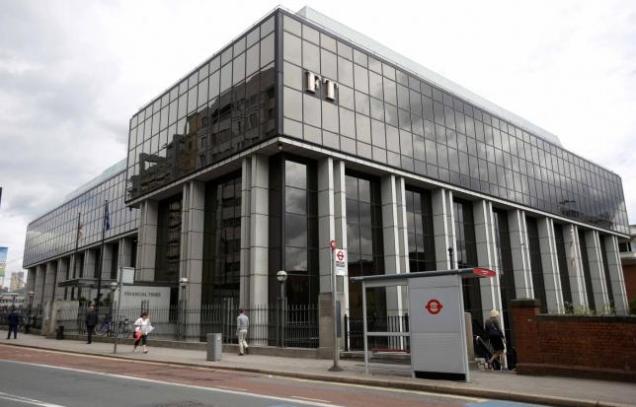
A company logo hangs on the headquarters of the Financial Times newspaper in London

The slavishly pro-EU Financial Times often displays a childlike level of understanding of how the European Union – and global regulation – actually works

Apparently the arguments for Brexit “do not add up”.

We have this from the most scrupulous and unbiased of sources, the Financial Times, so of course it must be true. Millions of Brexiteers, The Leave Alliance and little old me can pack up our things and go home, because Martin Wolf of the Financial Times has spoken.

Except that when Martin Wolf speaks on the topic of the European Union, he sounds like an idiot. This is his opening gambit:

If the UK voted to leave the EU, it would almost certainly be outside the arrangement organising the life of our neighbours and principal economic partners forever. Given this, the question is whether the option to leave should be exercised now. My answer is: absolutely not. To see why, let us examine popular arguments in favour of departure.

Oh dear. In his first sentence, Wolf inadvertently describes the overwhelming case for Brexit, before he can even launch in to his promised list of ten rebuttals. For he says that the EU is an organisation which seeks to “organis[e] the life of our neighbours and principal economic partners” – and indeed ourselves, since we are part of the union, too.

This is refreshingly honest, albeit unwittingly so. The EU does indeed seek to organise not only the lives of our neighbours and trading partners at the nation state level, but crucially (and most offensively) at the level of the private citizen too. Why? Because the EU does not see itself as some kind of a trading club. It sees itself as a government of Europe, sitting above national governments but gradually rendering them obsolete and irrelevant. The EU makes no secret of this fact – it is enshrined in the treaties, quotes from senior EU officials and even emblazoned on the wall of the European Parliament Visitors’ Centre, for those who care to look. It is only here in Britain where politicians and assorted EU apologists bury their heads in the sand and lie to themselves (and to us) about the real purpose of the European Union.

So Martin Wolf is quite correct – if Britain leaves the EU, we will absolutely be outside the arrangement which seeks to organise the lives of 500 million European citizens from every single member state. Power will be brought one step closer back to the individual citizen. And the fact that Martin Wolf and the Financial Times see this as a bad thing – that they visibly recoil from the idea that Britain should shed a superfluous layer of supranational government and seek to return power to the people – really tells you everything you need to know about whose side they are on. Hint: it is not the side of we the people.

The article then lurches from bad to worse, with a series of “rebuttals” of the Brexit case each one less supportable than the next. We are assured, for example, that a politically integrated eurozone is unlikely, despite the European Union doing everything but spell out in fireworks their intention to do exactly that.

Some of Wolf’s later points – particularly around immigration and trade agreements – are slightly more accurate. But this is only because he is creating straw man arguments to demolish, aided in his efforts by the hapless official Vote Leave campaign. The various spokespeople and figureheads of Vote Leave say enough stupid things between them to enable Martin Wolf to publish a ten point anti-Brexit rebuttal every day from now until polling day, but that is very different from Wolf managing to disprove or discredit the core arguments in favour of Brexit, most of which he pointedly skirts around.

Specifically, Martin Wolf never appears more out of his depth than when he attempts to show that there is no natural positive alternative to EU membership, and when he attempts to discredit the Norway (EFTA/EEA) option as an interim step. Thus we get utter bilge like this:

Seventh, it would be easy to agree on alternatives to EU membership. Yet those recommending leaving have no agreed position. There are three plausible alternatives: full departure with trade regulated by the World Trade Organisation, which would cost the UK its preferential market access to the EU; Swiss-style membership of a trade arrangement in goods, with bilateral deals in other areas, which is complex and would require the UK to retain free movement of people; and Norwegian-style membership of the European Economic Area, giving full access (except for having to abide by rules of origin in trade in goods) but would deprive the UK of a say on regulations. In all, the more sovereignty the UK wishes to regain, the less preferential access it retains. This trade-off cannot be fudged.

Enter Pete North, with a forensic and merciless dissection of Wolf’s position that genuinely make one wonder how it can be that North is the amateur blogger and Wolf the supposedly prestigious journalist.

North responds:

Wolf says that “There are three plausible alternatives”. This is where we are in straw man territory. He cites the WTO option which does not in any way address the multiple cooperation agreements or issues surrounding non-tariff barriers and in fact would likely cause asymmetric tariffs in the EU’s favour. If Wolf was a halfway credible analyst he would know that much. It’s a non-starter and would in fact case the very chaos that remainers have been talking up. So we are back to the age old question. Ignorance, dishonesty or both?

This means of exit is commonly associated with unilateral withdrawal, which no government intends to do nor would even consider it when faced with the practical ramifications. And so we can say with absolute certainty that we are looking at a negotiated exit.

With regard to the Swiss Option, comprising of membership of a trade arrangement in goods, with bilateral deals in other areas, Wolf is right to say it is “complex” and given that we have only two years under Article 50 to negotiate a settlement, we can safely assume that a bespoke deal is not on the cards. Talks may be extended but the tolerance for uncertainty will be short. Any UK government entering negotiations would rapidly be disabused of any fanciful notions of recreating the relationship from the ground up.

So actually, an off the shelf agreement based on the EEA is looking the most probable exit means and since it is the least disruptive for both parties and the most achievable, that is most likely what will be asked for and the only thing on offer. Having done a scoping exercise in advance of submitting our Article 50 notification, we can say with some confidence that a transitional deal could be arranged inside the mandated two years. To ensure it does not drag on, we will in all likelihood adopt most of the existing cooperation agreements as they are without opening them up fro scrutiny. We will swallow the lot. Wolf has it that the UK would have to retain free movement of people membership of the European Economic Area, which is true, but actually irrelevant.

At the end of negotiations what we end up with is more or less the same access to the single market and no real changes in the business environment. Cooperation agreements continue as before and nothing looks that much different on day one. This renders much of the speculation about Brexit entirely redundant. Wolf as much admits this.

Having taken Wolf to school on the fundamental about the most likely future model for UK-EU relations, North goes on to destroy Wolf’s fatuous but oft-repeated claim that an interim EEA/EFTA solution somehow means having no “say in regulations”:

In any area of regulation you care to look, the EU is a recipient of rules as much as anybody else. Its rules are subordinate to global standards and such standards from the basis of nearly all new EU technical regulation. Brexit not only gives us a right of opt out at the WTO/UNECE level, we would also enjoy EU consultation before any rules went as far as the EU parliament for what they laughingly call scrutiny. What that means is we will never again see the EU abusing its power to foist rules on us that we do not want.

Wolf is right however when he says that there are trade-offs. Asserting sovereignty in regulatory areas does have trade-offs. Because Norway has heavy protections on its own aquaculture and agriculture it is subject to tariffs. It remains that way because that is what Norway chooses to do. Their parliament examined the balance of issues and decided on a case by case basis whether the trade off was worth it. In more areas than one, Norway has concluded that sovereignty matters more. This would be that democracy thing. And the whole point of Brexit as it happens.

And while the regulatory regime doesn’t change that much, it does mean that we are free to change it where we deem change is appropriate. It categorically does not mean a huge administrative undertaking to establish a separate regulatory system. All it means is we can change it as and when we want to – and when we want regulatory reform, we have a direct line to the global bodies that make the rules rather than having the EU speak on our behalf. The clout we have in that regard in on the basis of what we bring to the table in terms of soft power and expertise which is considerable when you consider the UK’s many assets.

[..] The dinosaur hacks of the FT are fixated on “free trade deals”, many of which are not actually that useful to UK industry and we would benefit more from independent participation on global forums to remove technical barriers to trade. In that respect the traditional bilateral trade deal (or FTA as they insist on calling them) is obsolete. The future is the development of common regulatory frameworks that extend far beyond the confines of little Europe. Being independent of the EU ensures that we put the brake on the EU’s gold plating tendency while having first dibs in the global arena.

In so many ways, Brexit gives us the best of both worlds. The continuity of single market access along with trading agility, free association with global alliances and a functioning veto. All we get from the europhiles is that we can’t have our cake and eat it. It turns out we can eat the cake and ask for seconds if we so choose.

I cannot repeat this often enough: if you want sound analysis of the EU referendum question and an informed understanding what Brexit might look like, it is absolutely no good turning to the legacy media. They simply do not know what they are talking about because they have not invested the time to think through the issues clearly or to update their 1990s-era understanding of global trade and regulation. Worse still, they lack the humility to learn from those who have invested time and do know.

Martin Wolf airily tries to dismiss Brexit as a leap into the unknown, claiming that leaving the EU would entail moving toward one of three unpalatable future relationships, when it actually turns out that there is only one likely future model Brexit state given the political and economic constraints faced by both parties, and that one model preserves the single market access about which the FT and others rightly fret while extricating us from the unwanted political union.

Worse still, Wolf compounds his error by lazily asserting that this “cake and second helpings option” (as North puts it) would mean Britain having no say when it comes to shaping regulations, when in fact it is only by leaving the European Union that we are able to restore our voice at the real “top tables” where the rules are made.

We are now presented with a rather difficult set of possibilities. Either:

1. Martin Wolf and the Financial Times are so thoroughly incompetent and lacking in knowledge about one of the very subjects for which readers pay them for their expertise, or

2. Martin Wolf and the Financial Times do understand how global trade works and the true nature of the European Union, but deliberately keep this information from their own readers for some other sinister purpose (most likely because their corporate readership balks at the increased economic risk which inevitably accompanies any great enterprise worth undertaking – like Brexit)

Incompetence or malevolence. Pick your poison, but the Financial Times is undoubtedly guilty of at least one of these offences, if not both.


European Union - United Kingdom - Britain - Flags

Top Image: Reuters

Agree with this article? Violently disagree? Scroll down to leave a comment.

Follow Semi-Partisan Politics on TwitterFacebook and Medium.

If The Remain Campaign Succeed In Cheating Their Way To Victory, Their Joy Will Be Short Lived

EU Referendum - Divisive - Bitterness

There will be no kissing and making up on 24 June

Much like this blog, Pete North is angry at the conduct of this referendum campaign by the arrayed forces of Remain, and sees little point in hiding the fact:

We’ve had decades of their rule, decades of their orthodoxy and no means to challenge their political dominance. We’ve been watching and waiting for years. Watching as successive governments have ceded ever more power, ever more control and have insulated themselves from the wishes of the public. Well, now we’ve got our referendum. And now we see just how deeply the game is rigged.

So we’re angry to say the least. Angry at what has been done to us, done in our name, and angry that once again democracy is being trampled on to preserve the orthodoxy. And we do not take kindly to being lied to.

There’s an old saying that politics is between you, me and the swamp. Minorities on either side, playing games for the votes in the middle. But unlike classic politics, this is not a left vs right dispute. There are only those above the line and those below the line. Those who have the power and those who do not. In this estimation, the establishment holds all of the cards. It has always known a challenge to its legitimacy would one day come which is why it set out to bribe institutions in advance.

We Brexiteers on the other hand have what we have. An angry rabble with keyboards. And let’s face it, none of us are ever going on the front cover of Vogue. We’re a bunch of griping, moaning angry people who seem to hate just about everyone in politics and everything they do. We’re not helped by a pretty shoddy Leave campaign either, with some fairly odious spokesmen.

We are irredeemably spit. We all hate each other. I despise the Toryboys and I loathe Ukip. I hate all political tribalism. I’m not a joiner of clans. But there’s one thing that unites us all. All of us can articulate a better definition of democracy than any of those would would have us remain in the EU – and though we can’t seem to agree on coherent Brexit plan, we all know what democracy is, why we should have it and crucially why the EU is the absolute opposite of it.

And that’s why this referendum really settles nothing. The Remainers will play their little games, steal the referendum and carry on as before; feathering their own nests and consolidating their power. But we’re not going anywhere. We’re not giving up. And we are taking names. Us Brexiteers hold deep grudges. We are in it for the duration.

We will remember Cameron the fraud. We will remember Hague and Corbyn as turncoats. We will remember the frauds like Boris Johnson who used the cause for their own advancement. We will remember the parasites who had their fingers in the till. We will remember all those hacks and policy wonks who twisted the truth. We will not forget what was done here. And unlike 1975 – we have a full record of who said what. The internet never forgets.

And North’s blood-chilling conclusion:

In fact, we are going to be pure poison. If you thought the SNP were sore losers, you ain’t seen nothing. A remain vote will ensure domestic politics remains permanently toxic. While these part timers waft into to the Brexit debate with their tedious rhetoric about Brexiteers being little englanders and xenophobes, and venting their empty rhetoric of cooperation and internationalism, we have been here from the beginning. Will be here at the end.

You can stifle an idea, but you can’t kill one. Especially not that seemingly antiquated notion that the people should be able to refuse their government. The EU may be powerful but it is not stronger than the desire for democracy. And if it takes another generation to get what we want then that is what we will do. There is only one way this fight ends – Britain leaving the European Union. We will either do it amicably and by the book – or we will do it some other way. The general public may well go back into their political slumber, but we Brexiteers will be back – and in between, we are going to cause merry hell.

I should say that I agree with nearly everything in Pete’s piece – as always, his diagnosis of the flaws of the EU is spot-on, and his objections rooted not in shameless partisan positioning (like nearly every Remain supporter on the Left) but in a deep love and respect for democracy.

I can’t say that I look forward to the idea of being “pure poison”, or causing merry hell. But increasingly, I cannot see an alternative if, as is still likely, the Remain camp prevails on the back of a campaign based on sowing fear, uncertainty and doubt.

There are some political issues where I don’t get my way – in fact, as a libertarian / conservatarian living in Britain, it is pretty near all of them – where I am still happy to play the game according to the rules. I think personal taxes are too high, for example, as a result of decades of fiscal drag and Gordon Brown’s only partially-repealed spiteful hike. But I’m not going to take my toys and go home in protest, refusing to engage and participate in the democratic process because we don’t have a flatter tax system.

Likewise with the size of the state. This blog believes that government does far too much for far too many people – including many who are already self-sufficient and do not need government largesse, as well as many who could know self sufficiency if only they had the right short-term help and weren’t indefinitely coddled by the welfare state. But it is not the relatively unambitious and half-finished work of implementing Universal Credit which has enraged me against this supposedly conservative government.

On all manner of issues I’m happy to play for incremental progress, accept the victories as well as the losses for my side, and then move on to the next battle. But this is different. The European Union question is different.

The EU referendum is not about whether we want politics to be a little bit more left wing or a bit more right wing. It is not about tweaking tax policy, industrial policy, reforming benefits, or social issues. It is so much more fundamental than that, because whether or not Britain votes to remain in the EU says in a single gesture what kind of country we are, and what kind of country we want to be.

And the same thing applies at the personal level. I have never had a problem socialising and being friends with people from all across the political spectrum. Most of my social circle probably leans significantly to the Left, if anything, and while it leads to the occasional lively conversation there is always a full measure of respect. But – and I don’t take any great joy in writing this – I do not think I will be able to help thinking less of people who vote for Britain to remain in the EU.

Now, that doesn’t go for every Remain supporter. If I knew that someone is voting Remain because they truly believe in the European project, that they admit that political union is being brought about by stealth but that the ends justify the means, that they “feel” more European than British and want to forge a new combined European state, then I would profoundly disagree with them but I could respect that position. It is a positive (although distasteful to me) vision of Europe, and it is an honest one. I know several people who do take that position, and I am at my happiest when I am debating with them because I don’t feel like part of my soul is dying while I do it.

My problem is with those who either see supporting the European Union as some kind of necessary virtue-signalling act to be accepted in their social circle (oh, aren’t UKIP simply awful, darling?), and those who abrogate any notion of acting as an engaged and enlightened citizens with a responsibility to this country and to democracy, and so vote based solely on their wallets or other narrow personal interests. I will struggle to look upon such people in quite the same way after this referendum.

Maybe that is easy for me to say – I do not have a lot materially at stake in this referendum, financially or otherwise. My job is not dependent on EU funding, and the immediate interests of my family are not threatened by Brexit. All of these are mitigating factors – if my own salary and job security were directly or even indirectly contingent on staying in the EU, I concede that it would take a superhuman effort to overcome the instinct toward confirmation bias which would encourage me to seek out other facts and opinions supporting the Remain case.

But human beings are emotional creatures and the fact cannot be denied: I have a lot invested in this campaign, in terms of this blog and my other campaigning activities on the side. With such an early referendum and with the government doing everything short of stuffing ballot boxes with fake votes to assure a Remain vote, I remain pessimistic about our chances, though I fight to win. But if we lose, the behaviour and motivations of many of those agitating for Remain is such that I will be very angry for a very long time. And I will not be the only one.

(None of this should be taken as a Rebecca Roache-style, “unfriend all my Tory acquaintances on Facebook in a fit of moral grandstanding, virtue-signalling post-election leftist pique” piece of melodrama. But there will be a degree of real disappointment, if for no other reason than it will confirm that those who vote Remain and I clearly see the world in a profoundly, irreconcilably different way).

Britain should be ready for the wave of anger that is likely to break over our heads on 24 June. In the event of a Leave vote, expect a lot of short term hysterics from the virtue-signallers and special interests, most of which will die down once it becomes evident that Britain will be exiting to an EEA/EFTA holding position and maintaining single market access. But in the event of a Remain vote, given the underhanded way that the government has been fighting the referendum campaign, expect the SNP on steroids – a long, guerilla campaign of attrition directed against anyone and everyone who betrayed the Brexit cause.

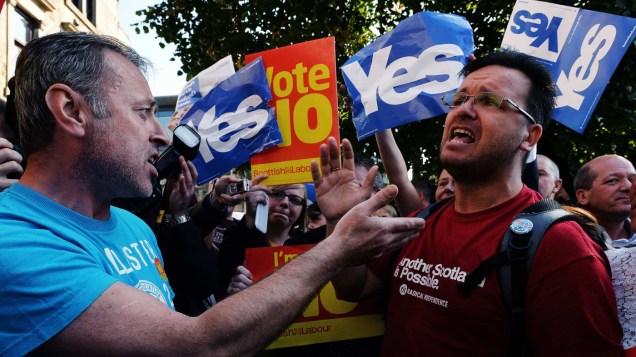
Chris Deerin painted a vivid and I believe accurate prediction of the future in a piece for CapX last year, comparing the likely fallout from the EU referendum to the aftermath of the 2014 Scottish independence referendum:

I have been bemused and fascinated by the number of English people telling me in recent weeks that “it won’t be like Scotland” – that this will be a more sedate affair, will inspire less passion, do less long-term damage. Well, perhaps. But, as we Scots say, ah hae ma doots.

What was most extraordinary about last year’s independence vote was the turnout: 84.5 per cent, the largest since the introduction of universal suffrage in the UK in 1918. Many of those voting were people who had never before even considered entering a polling station. What happened? There was certainly a long, noisy, impassioned campaign. There was global interest beyond anything we’d experienced before, but beyond this were two key factors that I believe drove this historic level of engagement.

The first was timing – the referendum came along after a decade in which every significant British institution had suffered either a scandal, a crisis of confidence or a loss of purpose, from Westminster to the media to the City to the military. The ties that bind had never been looser, respect for the status quo never lower.

Second, people were asked an existential question: who are you? This is not nothing. You will want to answer. You will want to answer on behalf of yourself and your family and your nation. Especially when you realise that the answer really matters – no safe seats to consider, no popular or unpopular incumbent MPs, no First Past The Post system ensuring only a few marginals get all the attention. Every individual counts. This is the big one, for keeps. So: in or out?

Deerin concludes:

Ultimately, we are about to ask the people of Britain an existential question: who are you? They will know that their voice counts this time, and that the consequences of the decision will be enormous and era-defining. They will think about themselves, their family and their country. They will get angry with the other side. Some very harsh words will be exchanged. Tempers will be lost and relationships fractured. And afterwards, whatever the outcome, the losers will be very sore, for a long time.

Not like Scotland? Don’t say you weren’t warned.

Like I say, I have no great desire to spend the next year walking around angry, holding nearly the entire political class in derision and many of my fellow citizens in open contempt. It does not warm my heart, in the same way that many left wing activists clearly revel in their anger and the righteousness of their cause, bleating about socialism and hating the Evil Tories.

But to my mind, there is a right way to vote in this referendum and a clearly, unambiguously wrong way to vote, and it is not hard to tell the difference between the two. The right way strikes a blow for democracy, self-determination and the normalcy of independence enjoyed by every single major country in the world outside Europe, while the wrong way would be to reward people who do not dare to advance their own positive argument for European political union, and so instead spend the bulk of their time pecking over the foibles, inconsistencies and other low-hanging fruit offered up by the hapless official Leave campaign.

In the event of defeat, then, the only question open to disappointed Brexiteers will be whether or not they use that anger and channel it toward some positive action to further the eurosceptic cause. This blog will do just that. Semi-Partisan Politics is in this for the long haul. Because as Pete North rightly says, you can stifle an idea like Brexit, but you cannot kill it.

I continue to fight this referendum campaign to win. But if we are fated to lose, I will not be going anywhere. If my generation is not to be the generation which restores democracy and self-governance to the United Kingdom then we can at least ensure that the flame of liberty is kept alive until it is time to try again – assuming that the doomed project does not implode under the weight of its own internal contradictions and the relentless pressure of global events, making the Brexit debate redundant.

And in the meantime, I and many others will make life as painfully difficult and unfulfilling as we can for all those in public life – particularly those in the Conservative Party – who come down on the wrong side of this referendum. That much I can promise.
 

European Union - United Kingdom - Britain - Flags

Top Image: CapX

Agree with this article? Violently disagree? Scroll down to leave a comment.

Follow Semi-Partisan Politics on TwitterFacebook and Medium.

Flexcit For Newbies – A Comprehensive Plan For Safely Leaving The EU

The Leave Alliance - Flexcit Workshop - EU Referendum - Brexit

There now follows a message from The Leave Alliance…

Richard North announces:

We’re all set up for the big day at the ROSL. The programme is all organised, with an opening address by Christopher Booker, the TED-style talk on Flexcit from me, and then Question Time.

The question-time is one of the key elements of the afternoon. Unlike the typical “talking head” presentation, you the audience are the stars. We’re looking for at least ten volunteers, each to ask a focused question, in a similar format. The questioner makes a short statement from the floor to introduce the subject, and then directs the question at the panel, comprising myself and Booker.

[..] Once we’ve chewed over the answer, the questioner gets a come-back, if they want it, and then we close on that issue and move to the next.  After editing, each becomes a YouTube clip, giving us a steady flow of material to post on the web.

Some of the topics to be addressed by the panel are as follows:

  • What will be the effect of Brexit on farming?
  • How will fishermen benefit from Brexit?
  • In view of the controversy over savings on contributions, how much do you think the UK will save?
  • Why isn’t Flexcit getting more (any) attention from the media?
  • Will expats be forced to return to the UK?
  • What guarantee can you give that the Efta/EEA option would not end up as the final step instead of the first?
  • What would happen if the UK failed to reach a trade agreement before leaving the EU?
  • Would the UK need to re-negotiate all its trade deals after Brexit?
  • Would the UK lose out by not being part of TTIP?
  • Will UK defence and security be damaged by Brexit?

Throughout the afternoon, we’ll have roving cameras, recording for vox pop contributions, with people responding to the simple question: “why do you want to leave the EU?” We’ll edit and collate the responses, which will make for another, and truly historic film clip.

I will be in attendance, representing Semi-Partisan Politics, for what promises to be a great event – and one which will answer many common questions about Flexcit.

The event will be held at the following time and place – do come along if you are able, I understand that tickets will be on sale on the door for £15 which is a small price well worth paying for an afternoon of education on the most important and existential question facing Britain today.


Princess Alexandra Hall

Royal Overseas League

Overseas House, Park Place, St James’s Street

London, SW1A 1LR

Saturday 23 April, 2pm – 6pm


The Leave Alliance - Flexcit

Agree with this article? Violently disagree? Scroll down to leave a comment.

Follow Semi-Partisan Politics on TwitterFacebook and Medium.

Who Can Now Respect David Cameron The Liar?

David Cameron - Gloucester - EU referendum - Protected Status - Farming

A visceral, unyielding, slow-burning anger

Then looking darkly at him swift-footed Achilleus answered: ‘Hector, argue me no arguments. I cannot forgive you. As there are no trustworthy oaths between men and lions, nor wolves and lambs have spirit that can be brought to agreement but forever hold feelings of hate for each other, so there can be no love between you and me, nor shall there be oaths betweens us, but one or the other must fall before then to glut with his blood Ares the god who fights under the shields’s guard.

– Homer, Iliad

The process by which I fell out with the current Conservative Party has occurred in several stages.

First, there was the initial astonishment that David Cameron could not muster a proper election victory against a Labour Party led by Gordon Brown, of all people. Then there was the frustration of the coalition years, when it was not always entirely clear how much Nick Clegg and the Liberal Democrats might be shouting down and diluting the conservative “better angels” of the Tories. And then during the 2015 general campaign there was the incredulity bordering on rage that no, in fact the LibDems if anything had been a restraining influence on the more despicably authoritarian Tory tendencies, and that Cameron envisioned the same dismal society built on the continual feeding and worship of our public services (and sainted NHS) as Ed Miliband’s rootless Labour Party.

But until now, my beef with the Conservative Party leadership (and supportive rank and file) has been ideological, not personal. I had accused the Tories of selling out ideologically and failing to boldly make a proper conservative case to the country, but I still saw it in terms of political calculation.

No more. The EU referendum has awakened a rage against the Conservative Party within me that I do not know how I will manage to suppress when it comes to local and national elections, even (especially?) if it means handing victory to their enemies. Why? Because on the single most important political decision this country has to make in a generation, they lie and cheat and tilt the balance, and do so with such smug, smarmy condescension and aristocratic entitlement that it beggars belief. From the prime minister on down, with too few honourable exceptions, the Cabinet and parliamentary party are comprised of craven careerists who are in the process of selling out their country – and democracy itself – either out of laziness, ignorance, greed or a toxic combination of all three.

Now, in other words, my problem with the Tories is personal.

Case in point, David Cameron’s attempt to sow more fear, uncertainty and doubt in the minds of the British electorate by peddling false myths about Brexit. It now appears that the prime minister is going around the country coming up with tailored apocalypse scenarios for different voters and demographics in every region of the country.

Writing in the Gloucester Citizen, David Cameron warns:

In the South West alone, more than 60,000 are employed in agriculture and more than 28,000 in food manufacturing, with the region having received around £371million in EU Common Agricultural Policy grants in 2014 supporting those jobs.

Between 2010 and 2014, the total income from farming across the South West increased by 49 per cent, to £666million, as farmers – along with all British businesses – reaped the benefits of access to the single European market of 500million people.

If we leave the EU and our farmers have to operate under World Trade Organisation rules, things would be very different.

They could be faced with annual tariffs of up to 40 per cent and huge additional costs – for example, £240million for beef and £90million for lamb.

Protected status enjoyed across Europe by our unique products, such as Gloucestershire cider, Single Gloucester cheese and traditionally-farmed Gloucester old spot pork, will be lost.

In other words, if you so much as think warmly about Brexit and regained British independence from the EU, the commercially protected status of locally produced foods will be not only threatened, but definitively lost.

This is a lie. I’m sorry, but there is no other word for it. This blog is slow to anger and slow to impugn the motives and character of politicians, preferring to go for their ideas. But when he writes these words in a local newspaper, the prime minister is lying to us.

Richard North wearily explains over at eureferendum.com:

As usual though, the fear tactic relies on half-truths and deception – and the ignorance of the media and politicians. And not least of these deceptions is the omission of rather crucial information: the scheme also applies to third countries.

Applicants from outside the EU can register their products with their national authorities, which then pass on the details to the EU, where they are then – after due process – recognised as protected process.

The system can be seen at work here, when in May 2011 four Chinese agricultural products received protected status in the EU, bringing the total to five, with another five being processed through the system.

In a reciprocal move, the Chinese authorities set in motion the recognition process for “ten celebrated European products”. These were: Grana Padano; Prosciutto di Parma; Roquefort; Pruneaux d’Agen/Pruneaux d’Agen mi-cuits; Priego de Cordóba; Sierra Mágina; Comté; White Stilton Cheese/Blue Stilton Cheese; Scottish Farmed Salmon and West Country Farmhouse Cheddar.

Thus to represent British products being at risk when we leave the EU is a plain, outright lie. And even if the Prime Minister doesn’t know he’s lying, some of the people briefing him must know the truth. There is almost certainly calculated deceit being perpetrated here.

So the prime minister is blatantly lying. He is suggesting that protected status for foodstuffs is contingent on EU membership when this is clearly not so. And he is appealing to the basest instincts of Gloucester farmers, producers and citizens, hoping that they will unthinkingly vote for what he tells them is their personal interest without thinking for themselves.

Completely unable and unwilling to articulate a positive vision for the European Union of which he is so desperate to keep Britain a part, David Cameron is reduced to peddling outright falsehoods, deceptions and lies in local newspapers as his grubby Remain organisation trawls for votes.

North goes on to give the wider context, painting (as always) a vivid and fascinating picture of a world of global regulation and harmonisation in which the UK is constrained from fully participating by having to operate through the filter of the European Union:

Furthermore, these reciprocal arrangements are only the tip of the iceberg of what is, in fact, a vast global scheme based around the World Intellectual Property Organization (WIPO), administering what are known as “geographical indications”.

The scheme relies on a network of treaties and agreements, starting with the Paris Convention adopted in 1883, the Madrid Agreement of 1967, the Lisbon Agreement of 1958 and the protocol to the Madrid Agreement concluded in 1989.

These tie into the 1995 WTO TRIPS Agreement (Trade-Related Aspects of Intellectual Property Rights), which enable the system to be extended globally. Part of the WTO Doha round, this agreement is opening the way for other trading nations to protect their own traditional products and brands, to the same level enjoyed under EU law.

Despite this, there are complaints The EU is using its coercive power and the UK outside its system could provide a vital corrective, helping other nations to develop their own systems.

All pertinent information which is lost as soon as our prime minister opens his mouth or takes out his pen and begins lying to us – and when the press fail to do their own due diligence, either parroting his scaremongering as unquestionable truth or doing the Fox News “fair and balanced” thing where they allow two deceitful idiots to yell half-baked untruths at each other for five minutes in place of objective reporting.

But exactly how much of this tawdry and manipulative behaviour are we supposed to accept from our prime minister, and still reunite as a big happy Conservative Party family afterwards, let alone as a nation?

I for one have reached my limit. I never renewed my Conservative Party membership when I returned from the United States in 2011 out of suspicion that things would go this way, but I still expended time and energy defending David Cameron and his ministers on this blog, which I now bitterly regret. And to this day I still believe that my natural home lies within the Conservative Party – albeit a more Thatcherite version, rather than David Cameron’s lame Ted Heath tribute act. So I will remain here, hanging around on the margins, waiting to see if the Tories one day rediscover their soul and become again the party which saved this country from decline and permanent irrelevance.

But this present betrayal will not be forgotten, and if I am ever in a position to cause David Cameron and his band of lying, manipulative fellow Remainers within the Conservative Party even the slightest annoyance, inconvenience or frustration I will do so with great relish and personal satisfaction.

David Cameron has made an enemy of me – but not only me, also the thousands and even millions of Conservative voters who found their prime minister fighting against them on the wrong side of this EU referendum campaign. This may not trouble Cameron now, while his opponents on the Left remain largely incoherent and disorganised. But this lack of effective and united opposition will not last forever, and at some point in the future David Cameron will be in need of allies and ideological defenders.

And on that day, the prime minister will come to realise his mistake in recklessly and brazenly encouraging open hostilities on his right flank.


European Union - United Kingdom - Britain - Flags

Top Image: Gloucester Citizen

Agree with this article? Violently disagree? Scroll down to leave a comment.

Follow Semi-Partisan Politics on TwitterFacebook and Medium.