Sajid Javid’s Perplexing Case For Britain To Remain In The EU

Sajid Javid - EU Referendum

Sajid Javid’s bizarre, fatalistic justification for backing Remain

When it comes to picking a side in the coming EU referendum, it is possible to categorise the many betrayals and disappointments dished up so far by the Conservative Party.

Some, like William Hague’s, are infuriating because of their misplaced priorities and fawning deference to power. Others, like that of Harlow MP Robert Halfon, are depressing because they fly in the face of long-avowed, ostentatious euroscepticism. But none are so perplexing as the screeching U-turn executed by Business Secretary Sajid Javid.

A barely coherent Javid took to the pages of the Daily Mail today with the most bizarre case for staying in Europe yet offered by a turncoat Tory – arguing that Britain would be much better off had we never joined the EU in the first place, but that now we are in the clutches of Brussels we have no choice but to allow ourselves to be slowly consumed and digested, like an unlucky insect caught in a Venus fly trap.

Javid begins by painting a rosy picture of the Britain we might now inhabit had we never joined the European Community back in 1973:

It’s clear now that the United Kingdom should never have joined the European Union. In many ways, it’s a failing project, an overblown bureaucracy in need of wide-ranging and urgent reform.

Had we never taken the fateful decision to sign up, the UK would still, of course, be a successful country with a strong economy.

We would be an independent trading nation like the US, Japan, or Canada.

Over the years, we would have developed trade agreements with the EU and with others, all without surrendering control over immigration or our economic independence.

You might think that this would lead quite naturally to a stirring call for Britain to reclaim all of these squandered benefits of independence. But Sajid Javid proceeds to wrong-foot us by continuing:

If this year’s referendum were a vote on whether to join in the first place, I wouldn’t hesitate to stand up and say Britain would be better off staying out.

But the question we’re faced with is not about what we should have done 43 years ago. It’s about what we should do now, in 2016.

That’s why, with a heavy heart and no enthusiasm, I shall be voting for the UK to remain a member of the European Union.

And so unfolds the most depressing, fatalistic argument in favour of staying in the European Union that you will likely hear this entire campaign. Apparently, had we made the right choice forty years ago we could now be living in the land of milk and honey, with endless prosperity and contentment for all. But we missed the boat, and because of that one supposedly irredeemable mistake, we are condemned to dwell forever in the arid desert of unwanted European political union.

Why? Because Sajid Javid is afraid of the potential short-term cost. Or rather, because he values democracy, sovereignty and national self-determination so little that the mere possibility of short term economic disadvantage is enough to make him turn a blind eye to the very real failings and even more anti-democratic future direction of the EU:

As I’ve said before, a vote to leave the EU is not something I’m afraid of. I’d embrace the opportunities such a move would create and I have no doubt that, after leaving, Britain would be able to secure trade agreements not just with the EU, but with many others too.

The great unanswerable question is how long that would all take – and at what short-term cost?

Take this logic and flip it around. Suppose it were possible that by becoming a fascist dictatorship for decade or so it would be possible for Britain to increase GDP by three per cent over and above current annual forecasts – by forcing the unemployed to build houses and weapons in exchange for benefits, riding roughshod over pesky planning regulations, and generally doing all of the autocratic things which democracy rightly prevents us from doing.

According to Sajid Javid’s logic, we should toss democracy aside and eagerly embrace strong-fisted dictatorship, just to reap the potential economic gain. Nothing else would matter – or at least, everything else would be secondary to the GDP question.

Javid continues:

The negotiations would end well for Britain, but we have no idea what the economic cost would be in the meantime – how much foreign investment would go elsewhere, how much domestic investment would be deferred or cancelled.

Even the most committed members of the ‘leave’ camp accept that there will inevitably be a short-term cost to leaving.

The question is whether it is balanced out by the long-term gains. It’s a very reasonable question – and I came incredibly close to answering ‘Yes, yes it is.’

Javid even admits here that “the negotiations would end well for Britain”. Ignoring the fact that a plausible plan for Brexit exists, which de-risks the entire process and eliminates much of the uncertainty, Javid is willing to throw away an eternity of democratic self-governance in exchange for what he himself believes to be just a couple of years of potentially increased economic security. This is an almost pathological level of risk-aversion.

Javid’s half-hearted apologia concludes:

My heart says we are better off out. My head says it’s too risky right now. For the past six years, I’ve been doing everything I can to repair the damage Labour did to our national economy.

I’m no europhile, but nor am I prepared to risk undoing all that work and casting aside all the sacrifices we asked of this country while the post-Brexit talks drag on and investor confidence wavers. Staying in the EU for now doesn’t have to mean accepting the status quo.

[..] For me, this referendum does not have to be a once-in-a-generation event. The fight for reform is not over and if Brussels fails to recognise that, I can see a time when walking away may be the right thing to do – but in a more benign global economic environment and under a UK Government that makes a credible case for leaving.

And so ends the most bizarre case for remaining in the EU you are ever likely to hear. Apparently we are now to make existential decisions about the future of our governance and democracy solely according to where we happen to be in the economic cycle. Want to restore sovereignty while the economy is booming? Go for it! But want to make a bid for freedom during a downturn – or even just a potential downturn? Sorry, GDP projections say no.

This atrocious argument for Remain encapsulates everything that this referendum should not be about. We are talking about the future governance and sovereignty of our country. If there was ever a time for us to think as fully engaged citizens with an eye on the future – and the ability of our children to exercise control over their destinies – then this is it. Now is certainly not the time to think and act like fearful, petty consumers, concerned only with the fatness of our wallets today while sparing no thought for the future of our democracy.

Yet this is exactly what Sajid Javid asks us to do. I agree with you, the EU is totally undemocratic and resistant to reform, he essentially tells us. But the pound might briefly dip against the euro if we leave, so screw securing democracy for tomorrow, vote for the status quo to guarantee an uninterrupted supply of cheap flat-screen TVs today!

What a pathetic, insular, insulting argument to make. How disgusting that the supposed rising star of the Conservative Party would thus attempt to appeal to the scared and avaricious consumer within us, rather than the enlightened and noble citizen.

Make a passionate case for a federal European state and I will respect you, even though I profoundly disagree.

Make a wobbly-lipped, pant-wetting case for clinging to the EU’s skirts out of sheer terror at the Big Bad World and I will roll my eyes at you and move on.

But if you dare treat me like some kind of mindless automaton who thinks only with tomorrow’s bank balance in mind – if you tell me that the EU sucks, but that I should vote to remain because to leave would cause a brief macroeconomic blip – then I will tell you to go direct to hell. And I will hold you in seething contempt for a very, very long time.

When the Continental Congress met in Philadelphia to discuss the portentous issue of separation from Britain in 1776, the committee chosen to draft the famous declaration was – astonishingly – not myopically obsessed with the impact of independence on GDP.

Thomas Jefferson understood, when he wrote “We hold these truths to be self-evident, that all men are created equal, that they are endowed by their Creator with certain unalienable Rights, that among these are Life, Liberty and the pursuit of Happiness”, that something far greater than 1777’s economic forecasts was at stake. That democracy itself was at stake.

Sadly, this democratic ideal – or indeed the concept of anything being more important than minimising the risk of disruption tomorrow, even when the status quo is crying out for disruption – is totally anathema to many of those who argue against Brexit today, including many supposed eurosceptics who should know better.

The Conservative Party has served up its share of gut-wrenching disappointments and betrayals in the build-up to this EU referendum. But none of them are proving quite so difficult to stomach as this steaming pile of nonsense from Sajid Javid.


Sajid Javid - EU Referendum - 2

Agree with this article? Violently disagree? Scroll down to leave a comment.

Follow Semi-Partisan Politics on TwitterFacebook and Medium.

Cameron’s EU Deal: An Establishment Stitch-up, But The Fight Goes On

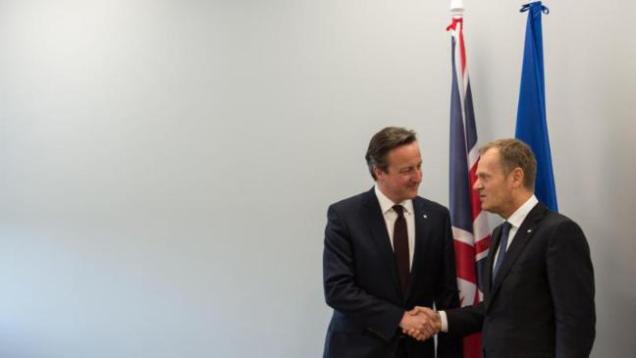
David Cameron - Donald Tusk - 3

What cause for hope?

I have refrained thus far from commenting on the outcome of David Cameron’s pitiful re-upholstering of the status quo when it comes to our membership of the European Union.

Suffice it to say – for now – that it does not feel tremendously good to live in a country where the prime minister is actively engaged in manoeuvres to hoodwink, short-change and circumvent the people he is supposed to represent.

Oh, of course Tony Blair or Gordon Brown would have done the same thing, fudging the debate, spinning non-existent concessions into giant victories and generally taking us for fools. But history gave David Cameron the torch of liberty to stub out, and so most of my anger remains directed at the man who prances around falsely calling himself a conservative.

But more than any one single betrayal, what is most disheartening for Brexiteers is the constant drip-drip of defections, compromises and unfriendly fire coming from within the supposedly eurosceptic segment of the Westminster elite. I never thought for a moment that David Cameron was anything other than a fully paid-up europhile and an eager servant of Brussels; his treachery stings my sense of honour and democratic sensibilities, but it was in no way surprising. I had factored the government and the media unfairly tilting the scales from the start – their antics do not wound.

What does hurt are the smaller, incessant letdowns inflicted on our side since David Cameron won his unexpected majority last May and offered the referendum through gritted teeth. What hurts are all of the members of the Conservative eurosceptic aristocracy – people like Theresa May, Boris Johnson, Michael Gove, some (though not all) of whom I once respected – whose professed commitment to British sovereignty and self-determination has mysteriously gone AWOL now that eurosceptic words must be matched with deeds.

What hurts are the other high-profile eurosceptics – including some, like Nigel Farage, without whose courage and tenacity we would not be having this referendum in the first place – who it turns out had barely given a thought to how Brexit might actually happen, how it should best take place and what a post-Brexit Britain might look like in one, two, five, ten and twenty years’ time. And what hurts is when these unexpectedly ignorant people spread false platitudes and easily-debunked talking points among their large online followings.

Our only hope is that the majority of Britons have not yet fully tuned in to the debate. While we in the bubble and the Twittersphere feel every ebb and flow of online sentiment, there are many, many more who have not been paying attention and whose first main newsflash of the year will have consisted of David Cameron receiving an all-round roasting for failing to stand his ground in his negotiations with the EU. This may yet work in our favour.

This leads me to perhaps the most simultaneously cathartic and infuriating article yet written about David Cameron’s underwhelming “new deal” with the EU, by Allister Heath in the Telegraph.

Heath begins well enough:

It is at times like these that even people of a conservative disposition begin to rage against our establishment. We are all used to stitch-ups from the political class, but the closing of ranks around the European question is breathtaking in its scope and scale.

In five months’ time, we will be asked to make a historic decision about who governs us, and how; the outcome could be of far greater importance than most general elections. The Prime Minister’s renegotiation has failed to nudge the dial by even one millimetre, and it’s likely that at least 40 per cent of the public, more than voted Tory in May, will end up backing Brexit. It’s therefore still conceivable, just, that a majority will vote to leave, sending shockwaves around the world. And yet these people – millions and millions of them, and by all accounts a majority of Tory voters – have been almost completely abandoned by an establishment which now refuses to represent their views.

How can that be right? And how can it be good for our political institutions for such a large proportion of the electorate to feel ignored or even despised by those supposedly elected to represent them?

Indeed. It is bitterly ironic that at a time when Britain’s left wing finally have in Jeremy Corbyn a leader who (regardless of his electoral viability) makes them excited to get out of bed in the morning, conservatives are landed with an arrogant centrist who believes in nothing and quite probably laughs at their expense every time he disappoints them by tacking further to the supposed middle. And this betrayal is evident nowhere more so than on the subject of Europe, where the Tory leadership only rediscovered their respect for eurosceptics when the rise of UKIP in 2014/2015 raised the prospect of mass defections.

It was not good when a near-unanimous political consensus refused to talk about immigration and reflect the genuine concerns and fears of the British people – and this craven refusal to have an honest discussion with the British people led in no small part to the rise of UKIP. Nobody really says it, but it is not good when there is a cross-party consensus in favour of preserving the NHS in aspic rather than asking anew how best to deliver healthcare in the twenty-first century. That kind of lazy self-satisfaction leads us to crow about the fact that Britain is the best place in the world to die, while failing to question why we are not the best country if you actually want to recover from illness or injury. And it is not good when a stultifying political consensus conspires to keep Britain inside the European Union at any expense.

Heath goes on to make the not unreasonable point that the British establishment’s relative pragmatism might in fact handle Brexit rather well, ensuring that Britain remained open and tolerant where a similar seismic event taking place in (say) France could have far worse ramifications:

The establishment is wrong about the EU, but it’s not wrong about everything. Its interests and beliefs, by and large, are pro-globalisation, supportive of property rights and of the rule of law; its power and determination has helped ensure that we have stuck with these broad principles regardless of who has been in power. By the standards even of much of the developed world, it is astonishingly uncorrupt. Its instincts are far superior to those of many other ruling elites: the French equivalent, for example, is far more detached from reality, immeasurably more statist and doesn’t really grasp market economics.

If Britain were to vote to leave the EU, our establishment would make sure that we remained an island of economic liberalism, at least relatively speaking, and a safe haven for capital and talent; by contrast, France would embrace hard-Left economics and protectionism were it to leave.

Brexit is thus far less risky than its opponents would have us believe. We would remain fully engaged in trade and the international economy, even if treaties would change. Our elite’s power, its ability to absorb political change and its adaptability would ensure that it soon turned a Leave vote to its advantage, just as it always makes the most of all periods of intense change.

Again, no real argument here. Self-serving as all elites are by definition, the British establishment is far less insular than many others.

But here is where Heath loses (and infuriates) me. Having condemned the arrogant behaviour of David Cameron and his rootless Conservative Party, and railed against the establishment stitch-up currently in progress, Heath concludes:

As soon as we were to vote Leave, the establishment would go into overdrive to regain control of the changed reality. A new deal with the EU would be cobbled together; we would be given some sort of associate membership, a much looser relationship that allowed the EU to pretend to the outside world that it wasn’t disintegrating. The electorate would buy it in a second referendum: having showed who is really in charge, its anger would have been satiated. The EU would have no choice: its negotiating position is far weaker than we generally realise.

In the same way that the House of Lords is still full of barons, even though most of the aristocrats have left, or that the Church of England remains our established church, despite having become largely irrelevant, our relationship with the EU would have changed radically yet everything would still look the same when it came to trade or travel. Some hardcore Eurosceptics would be angry, but it would be a very British compromise. If we vote to leave, against the wishes of the establishment, we can surely count on it to pick up the pieces and help make the new order work.

Having displayed such seemingly strong eurosceptic credentials throughout the piece, why does Heath then pivot to making a plug for “associate membership” to be formally agreed in a second referendum? Why reintroduce these two half-baked ideas from the past into the present discourse? Have we not comprehensively proven that associate membership of the EU is a misleading scam?

Where Allister Heath is absolutely correct, though, is when he describes the way in which senior figures from the establishment are “closing ranks” on the question of Europe, and when he highlights the sheer duplicity of those politicians who built comfortable little careers on the back of their professed euroscepticism only to embrace party conformity when it matters most.

I don’t see it ending well. And I think that David Cameron and the Conservative Party could come to regret the betrayal of their more eurosceptic party base even more than Nick Clegg must have regretted his famous pledge not to raise university tuition fees.

What David Cameron & co fail to realise is that the reason people “bang on” about Europe is because it is absolutely central now to our governance and what’s left of our democracy. An awful lot rides on the outcome of this EU referendum, and will have potentially profound consequences for how Britain and the world trade and co-operate in future. If we find this subject fascinating, it does not make us cranks and obsessives, as we are often sneeringly dismissed – rather, it makes us informed and conscientious citizens.

Pete North concurs:

If by now you don’t have a quietly burning loathing of the media, the political class and the polite society that rules the roost then you’re just not paying attention. If the fact that every corrupt corporate, every subsidy sucker, rent-seeker and grant chaser is now shilling for Brussels doesn’t offend you, then nothing will. Quite simply you are happy to be taken for a fool and used as a cash cow. So too are you content to be managed like cattle rather than considered as a sentient, participating citizen with hopes, dreams and ambitions.

If by now you are not seeing through the veneer of corporate and state propaganda like a pair of x-ray glasses from They Live then there is absolutely no hope for you at all. If by now you think the EU is a democracy and it responds to the wishes of the people of Europe then you’re on another planet. If you think these MEPs and policy wonks are in it for anybody but themselves, feathering their own nests, stroking their own egos and building their own delusional little empires, then you are quite, quite mad.

Conservative eurosceptics have a long memory, and will not soon forget this betrayal by David Cameron. Assuming that the combined forces of David Cameron’s bully pulpit, extensive Brussels funding of the Remain camp and the failure of Brexit supporters (thus far) to read and assimilate the only Brexit plan which stands up to rigorous scrutiny, Cameron remains on course to triumph in the referendum. But spurned local Conservative associations and individual party members will extract a heavy price.

Tory activists may either defect en masse to a reconstituted UKIP or simply stay home on polling day. And who could blame them, considering the way in which they have been treated by David Cameron? Not only could the Conservative Party end up splitting amid partisan rancour (caused by europhile Tory ministers and MPs being given license to campaign freely while those supporting Brexit are sorely constrained), a diminished Tory party could see a left-wing coalition of Labour and assorted socialist chums slip past them and back into power.

But right now, it still feels as though a piece of the puzzle is missing. Cameron’s “deal” appears far too weak, and my mind cannot help but speculate that there will be some long-ago decided but as-yet unannounced additional rabbit pulled from the hat to sweeten the deal, assuming that David Cameron is able to win unanimous support at the coming EU summit later this month.

The Brexit Door is of the same view:

So the deal has been announced and the press and other media outlets have had their first run at the news. It hasn’t been the overwhelmingly positive response that maybe Mr Tusk and Mr Cameron had been looking for.

That leads me to believe that there must be a rabbit somewhere, waiting to be pulled from the hat. Because it’s either that, or Cameron is going to ride roughshod over the Electoral Commission’s advice about the shape and timing of the process for both designation and the campaign itself and go for June 23. His primary motive would be to give the Leave campaign as little time as possible from designation to vote – because he knows that the fight for the ‘Leave’ designation is incredibly important and has been so far taking up a lot of our energies.

One thing is becoming clear to me – the pathway to victory in this referendum is terrifyingly narrow. And it will be won or lost depending on whether Brexiteers can leverage the fact that nearly everybody in the British political establishment has come out in support of staying in the European Union.

Yes, having a proper plan and strategy for Brexit is important. Flexcit is important. But with nearly every authoritative voice in Britain about to begin earnestly intoning the many benefits of Brussels, our most potent weapon may be the British people’s strong sense of fair play, and their likely discomfort at seeing the Leave campaign being outspent, outmanoeuvred, outgunned and shouted down. We have been weak and ineffectual enough thus far – so we may as well ham it up for the cameras and work to build the narrative that this referendum is in fact The Establishment vs The People.

We must turn our current weakness – and it is a great weakness indeed – into our strength. That is the only prospect for victory that I can see right now. That is the only light at the end of the tunnel.

Europe - EU Flag - Brexit - Eurosceptic - Fading Flag

Agree with this article? Violently disagree? Scroll down to leave a comment.

Follow Semi-Partisan Politics on TwitterFacebook and Medium.

Cameron’s Fear That EU Partners Will Reveal Truth About His “New Deal”

British People - EU Renegotiation - Referendum - Brexit

David Cameron is negotiating with the British people on behalf of the European Union, not the other way around

David Cameron’s entire “renegotiation” (in fact in has been no such thing, for there were never any demands made) has all been completely backwards, with the prime minister far more interested in huddling with fellow European ministers to work out what kind of a deal might be successfully snuck past the British people than conducting any kind of listening exercise with the British public to determine what key concerns and demands need to be taken to Brussels.

And we see yet more evidence of this in the Times’ Red Box briefing today, which reports on the understandable concern from the government that the meaningless superficiality of David Cameron’s “reform” will be inadvertently exposed by a fellow European leader or minister who makes the mistake of telling the truth:

British ministers are urging their European counterparts to talk up David Cameron’s renegotiation deal to persuade British voters that it is significant.

There are fears in the UK government that some foreign leaders, who have been irritated by Cameron’s demands, will be publicly dismissive of any deal agreed at next month’s European Council summit.

Senior British figures point to polling that shows that opinion on the EU is evenly split, but if voters think the prime minister has secured “major change” they will vote overwhelmingly to stay.

[..] The nightmare scenario is if a minister from Germany, France or Poland goes on the record to say Cameron’s changes are meaningless window dressing.

The piece goes on to quote polling which suggests that successfully presenting the output from the renegotiation as “major change” dramatically increases the probability of a “Remain” vote:

Asked to “imagine David Cameron has secured a small change in Britain’s relationship with the European Union, securing guarantees over some key issues that he said protected British interests, but without any major change in which policy areas the European Union has powers in”, 38 per cent wanted to leave and 37 would want to stay.

If Cameron “could not secure any change” and the referendum was held with the EU “as it is now”, 46 per cent would leave and only 32 per cent remain.

But if Cameron gets “major change” including “substantial changes to the rules Britain has to follow and British opt-outs from European Union rules in several different policy areas” the result is dramatically shifted

Some 50 per cent of people would then vote to remain, with only 23 per cent determined to leave.

None of this is in any way surprising, and as such it is not really “news” at all. Anybody with their head properly screwed on knows that the government is not conducting a serious renegotiation with the EU in good faith with their mandate from the British people, and that everything we are now witnessing is part of a co-ordinated public perceptions and expectations management effort from a prime minister and a government who made their minds up long ago.

But while this is hardly breaking news, it is still worth taking the time to pause, step back from the daily commotion of the Brexit debate, and marvel at the bigger picture.

The first duties of any elected government – of any prime minister – are to advance the national interest of the United Kingdom, and to fulfil the mandate on which they were elected in the first place. Feeling the pressure from UKIP midway through the last parliament, David Cameron chose to offer a referendum on Britain’s continued membership of the EU – against his better judgement, his personal pro-Europeanism and his (wrong but sincerely held) belief that Brexit would be against our national interest.

But since having been returned to power in May, the prime minister has not acted in good faith based on that mandate. In fact, he has been deliberately deceptive and manipulative, seeking to create and propagate the illusion that he is pounding tables in Brussels and fighting for our priorities in Europe, when he never even bothered to check what those priorities are, let alone insist on any specific concessions.

David Cameron and his loyalist cheerleaders prance around as though they have bravely confronted the EU with a specific list of demands designed to win back sovereignty and secure it forever, when all they did was write a wheedling, begging letter to Donald Tusk hesitantly suggesting a few topics of discussion – half of which were slapped down the same day.

This is how you end up with the risible scenario of George Osborne appearing on Newsnight yesterday to give an update on “renegotiations” which are not taking place, and declaring himself a eurosceptic despite the fact that he is currently engaged in nothing more than a joint marketing effort with our EU partners to hoodwink British voters into thinking that we have won some meaningful concessions:

If David Cameron, George Osborne and the more vacuous half of the Conservative Party can all describe themselves as “eurosceptic” and do so with a straight face, then we are all eurosceptics now. Everyone, from Martin Schulz, Jean-Claude Juncker, Kenneth Clarke and the entire sorry cast of Britain Stronger in Europe would qualify as a eurosceptic by this metric, because everybody concedes that the EU needs reform of one kind or another (even if that reform involves “more Europe”).

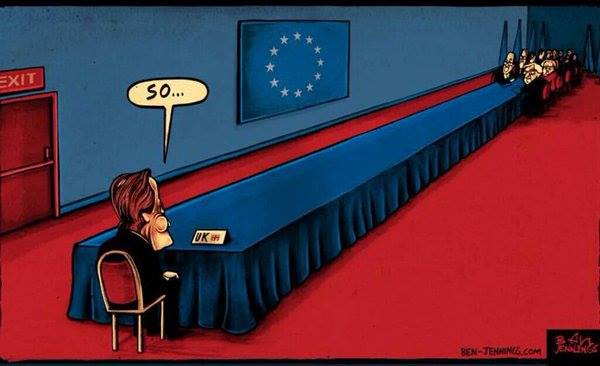
In fact, it is not an exaggeration to say that when it comes to this non-renegotiation, the British public are effectively sitting at one end of the long conference table while the British government schemes and confers with the rest of the European Union at the other end.

I know it is hopelessly idealistic of me, but I expect more from my elected government. And it is getting tremendously tiring waking up every day wondering what new schemes,devices and cunning plans the prime minister of this country intends on using to hoodwink and misdirect the people he supposedly serves into believing that he is in any way working on their behalf.

A greater man than David Cameron – if his devotion to the EU and fear of Brexit were similarly genuine – might have stood up and declared that because he believes EU membership to be strongly in our national interest, he couldn’t in good conscience put it to a popular vote or negotiate in an unbiased way on behalf of the United Kingdom. Yes, such a stance would have further fuelled the rise of UKIP, but at least I could respect the intellectual honesty and consistency.

But David Cameron did not do this. Rather than behaving with honour or principle, Cameron swanned around, pretending to share the public’s concerns about the European Union, and then – as soon as his re-election was secure and the UKIP threat neutralised – zipped across to Brussels to begin plotting with fellow EU heads of government and state as to how Britain’s pesky electorate could best be mollified, placated and distracted while the Brussels juggernaut rolls on unopposed.

And they wonder why there is a strong public perception of a self-serving European political elite who doggedly pursue their own interests in direct opposition to the will and interests of their national electorates!

There is only so much that one can take of duplicitous politicians who pretend to be eurosceptic and favour Brexit when stumping for votes or positive headlines, but whose every action contradicts this stance once in power. And I may have finally reached my limit.

If the EU’s form of parochial pseudo-internationalism really does represent the best future of human governance – and it really, really, really doesn’t – then politicians should come out and say so. They should own their love and admiration of the EU and their lack of faith in Britain, instead of hiding from these things and pretending to be eurosceptics.

I respect any politician of any stripe who has the courage of their convictions – who is able to articulate a sincerely held viewpoint without first running it by a focus group, and whose commitment to their causes runs deeper than exploiting them for electoral gain. That’s why I maintain a degree of respect for Jeremy Corbyn, despite sharing none of his socialist beliefs.

Jeremy Corbyn’s sincere-but-loopy socialism I can respect. The unabashed European federalists in Brussels I can respect, too. Though hardly any of them are democratically elected officials, at least they have the courage to hail their creation for what it is – an embryonic state in gestation.

But David Cameron and George Osborne – europhiles in stolen eurosceptic clothing, actively engaged in perpetrating a moral fraud on the British public – people like that I cannot respect, do not respect and will never respect.

Brexit - Flexcit - European Union

Top image: cartoon by Ben Jennings

Agree with this article? Violently disagree? Scroll down to leave a comment.

Follow Semi-Partisan Politics on TwitterFacebook and Medium.

Don’t Believe The Europhiles: There Is No Status Quo If We Vote To Remain

European Parliament

Anyone thinking of voting to Remain in the European Union through fear of the unknown must remember that the EU is on a journey of its own, and will look very different in ten, twenty and thirty years’ time


… The undiscovered Country, from whose bourn
No Traveller returns, Puzzles the will,
And makes us rather bear those ills we have,
Than fly to others that we know not of.

– Hamlet, Act III, Scene I


In a must-read piece, UK Unleashed invites us to imagine a near future in which Britain has made the mistake of voting to remain in the European Union in the coming referendum:

It’s 2030. Thirteen years previously, after a torrent of negative campaigning by the Remain side and having been mind-crippled by unparalleled EU funded FUD, the UK population voted to remain in a ‘reformed EU’. The fight was down to the wire and, yet again, pollsters were shown to be wide of the mark, yet surprisingly on message. But when the count came in, Remain won by a mere 2%.

This ‘significant majority’ was accepted as a mandate by the then Prime Minister David Cameron to take the the UK in to a new relationship with the EU. ‘The British Option’ as it was called, brought us to the outer ring in 2022 after it was ratified by the people of the UK in a second referendum. Although originally seen as a triumph against ‘ever closer union’, in 2030 there are now well established concerns. Whilst the likes of Norway (which continues to top the world ranking for prosperity) sit at the top tables of global bodies where the rules are hammered out, the UK are now further retracted and marginalised, neither taking a global position or one of prominence within the EU.

To compound matters, Montenegro, Serbia and Turkey have now all joined the ever growing federation, with Boznia Herzegovina and Kosovo also on the cusp of membership. Our margin of vote in the European Parliament and European Council are lower than ever and about to shrink yet again. In spite of complaints about the inability of any one member to stand up to the EU in any meaningful way, the committed europhiles, in thrall to their pay masters, repeat the mantra that we should be grateful to have the opportunity to ‘collaborate’. Our hands bound behind our backs, we’re unable to harness the power of the now maturing international markets, instead we remain chained to an ageing customs and political union in spite of the fact that EU exports have continued to decline year on year.

Unrealistic scaremongering? Hardly. Think of the organisation we joined back in 1973, and what a different beast it is today, both in size and competence. Then think of the current geopolitical crises and changes, and how they are already being used by the integrationists as a catalyst and excuse for further “essential reform”.

Only a fool could believe that the driving forces behind the EU think that their creation has reached a benign state of perfection, and that no further change is desirable. And only a fool could believe that the European Union’s response to the latest global challenges – from terrorism to climate change – will be anything other than “more Europe”.

This is a key point, because the chief argument of those who would keep Britain in the EU is the hysterical claim that leaving would be some terrible and unprecedented leap into the dark. Unable to wax lyrical about their beloved EU for fear of alienating vital swing voters – and because there is nothing remotely inspirational about the European Union – instead the europhiles hammer on relentlessly with the scaremongering notion that Brexit is scary while Britain’s future in the EU will be predictable, prosperous and permanently sunny.

Or as UK Unleashed memorably puts it:

I guess when you’re ensconced in the arms of the EU octopus and you’ve divested yourself of any sense of national identity, you’ll say what ever it takes to avoid being prised away. In their heads, these people probably don’t see themselves primarily as British, instead they’re EU nationals just waiting for the country to be hatched in the next treaty.

The europhiles are in absolutely no position to make such promises of security within the EU and destitution without. What little they know of the EU’s immediate future they cannot campaign on, because it would be repugnant to many British voters, and the rest is just as much a mystery to them as it is to everyone else. We simply do not know what future geopolitical challenges we will face, or precisely how they will be used by the arch-integrationists to continue the journey they began back in 1950.

All we can say with any degree of confidence is that the EU will look very different in 2050 than it looks today, and that the self-declared aspirations of many European national leaders and EU officials to pool even more sovereignty and undermine the nation state yet further will be in full fruition.

Dr. Richard North gives us a glimpse of what lies ahead:

Hidden in plain sight, as in various documents published in Europe including last September’s “State of the Union Address” by Commission President Jean-Claude Juncker, is the plan for a radical restructuring of the EU into two classes of member.

The 19 eurozone countries will move on to much closer political and economic union; while Britain and the rest become mere “associate members” (possibly also including countries outside the EU, such as Norway and Switzerland).

As Juncker explained, none of this is to be formally revealed until 2017, when the Commission issues a White Paper to trigger the laborious procedures now required for any new treaty. And these might not be concluded until 2025.

All of which completely transforms the game play. Mr Cameron can keep his original promise to hold a referendum in 2017, but only to ask the British people for permission to remain in the EU until the terms of the new treaty are clear. We will then have to hold a second referendum on whether we accept these terms.

Britain will then have the choice of belonging to the new inner core, the vanguard for the dissolution of the nation state, or membership of the outer rim of states, burdened with many of the same costs but with even less influence and fewer dubious benefits. That is what we can reasonably expect by voting to Remain – and if any EU supporter would care to argue otherwise, let them step forward and do so, presenting their own less dystopian vision of the future.

In reality, once the deceptive posturing of the Remain camp is stripped away, it is only the Leave campaign which gives the impression that they have given any thought at all to what life outside or inside the European Union might realistically look like for Britain beyond the next decade, or how such an exit from unwanted political union can be managed under a variety of scenarios.

And on this note it is extremely encouraging to see that Dr. Richard North, pre-eminent authority on the European Union and author of Flexcit (the best adaptive Brexit plan in existence), is partnering with Arron Banks and Leave.EU in a consultancy role to make Flexcit that group’s official exit plan.

This is great news, and means that one of the two largest Leave campaign groups (really the only one, since Vote Leave is teeming with people who don’t actually want to leave the European Union) actually has a robust, solid plan for Brexit. If Brexiteers learn about and support this excellent plan, we will be able to go into the referendum battle with the Remain camp’s best weapon – the false claim that Leave supporters have “no plan” for Brexit – broken in their hands.

The Remain camp’s whole fearmongering argument to persuade us to vote to stay in the European Union is that we are safer and more prosperous under our current arrangements, while Brexit would throw everything into flux, potentially create chaos and leave us worse off. Basically, their uninspiring campaign message is “better the devil you know than the devil you don’t.”

But that is not the choice before us in this referendum. The EU is changing, moving down a swift and pre-determined path to further integration for most member states with powerless irrelevance awaiting those other countries not wishing to join the core. There will be no “devil we know” to side with, but only devils we don’t. And of those, staying part of an ever-tightening political union for which most of us have no love or affinity is far more threatening a devil than having the faith and confidence that Britain can succeed as an independent country playing a full and unfiltered role on the world stage once again.

That’s the choice before us now. And since the Leave camp now has Flexcit on their side while the Remain camp has nothing but smears, scaremongering and a vision of the future they are too ashamed to articulate, the only devil to be avoided is the one which pledges fealty to Brussels.

Brexit - Flexcit - European Union

Agree with this article? Violently disagree? Scroll down to leave a comment.

Follow Semi-Partisan Politics on TwitterFacebook and Medium.

The Daily Toast: The Christian Case For Brexit, And Against The EU

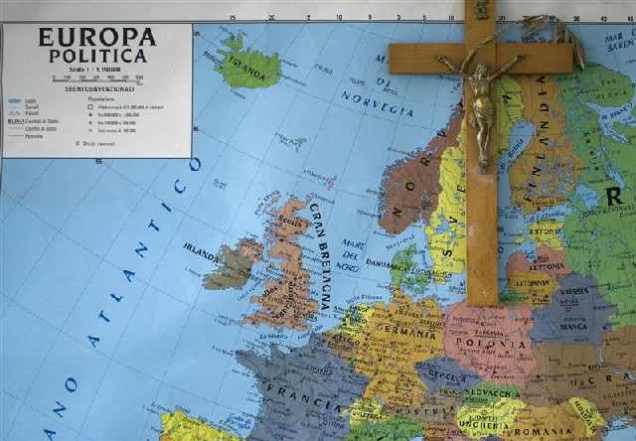
Christianity - Europe - EU - Brexit - 3

There’s nothing Christian – or in any way moral – about throwing away our hard-won democracy in the drooling pursuit of European political union

Adrian Hilton of the excellent Archbishop Cranmer blog has a very noteworthy piece in Reimagining Europe, making the rare (but very welcome) argument against the European Union from a Christian perspective.

Hilton writes:

Unlike many politicians and most bishops and other circulating elites, I don’t equate historic Europe with the political civic empire called the EU, and it seems that my desire for UK secession from this artificial construct makes me ‘un-Christian’.

How welcome these words are. The lazy but insidious notion that the continent of Europe and the political construct known as the European Union are one and the same thing is hugely damaging yet near-universally held. People worry about “leaving Europe” as if by leaving one particular (very expensive) geopolitical club, Britain would literally be levering herself away from the continent of Europe, walling ourselves off in Fortress Britain, when this is clearly not the case.

But the lazy belief that British membership of the European Union is somehow as logical and essential as our geographical location within the continent of Europe is widespread, and so it is unsurprising to see it mindlessly repeated by the Church of England.

The same goes for the risible idea that leaving the EU would be to cease any kind of friendship or cooperation with the other countries of Europe, another argument commonly deployed by europhiles, as Hilton recounts:

“So we stop working with our neighbours; finding common ground; influencing for good – not my idea of Christian,” [Lord Deben] tweeted to me a few weeks ago. Like Jeremy Corbyn, it seems, I’m locked into an otiose 1970s view of the world. Everything has changed, and I just haven’t realised that sovereign nations can no longer work effectively with their neighbours on matters such as trade, taxation and regulation: “Most big international decisions (are) made between EU and US,” Lord Deben asserted, before needling: “Why do you want Britain excluded?”

You see how the caricature goes? The EU is ‘top table’ (though it really isn’t, but that’s another blog post), and Christians who favour UK-EU secession become isolationist, xenophobic, un-(anti?)-Christian ‘little Englanders’. He didn’t say ‘fruitcakes, loonies and closet racists’, but he might as well have done. My ‘idea of Christian’ is self-evidently blinded by nationalistic bigotry and naively fomenting apocalypse. No matter how much you try to reason back with gracious statistics, humble facts and philosophical insights, the inference is clear and crushing: there is no place in the Church of the Enlightenment for those who identify with the narrow, sectarian parochialism of a national democratic polity. No informed, intelligent or discerning Christian could possibly be so spiritually witless or theologically illiterate as to advocate withdrawal from the EU.

But of course there is nothing Christian about allowing the United Kingdom – our flawed but essentially decent democracy – to be subsumed into an explicitly political supranational union which is the peculiar, flawed vision of founding fathers who – unlike their American predecessors – are largely unknown and unloved, because their elitist vision for technocratic governance so utterly fails to resonate in the hearts of Europe’s citizens.

Neither is there anything “moral” or Christian about divesting ourselves of judicial, legislative and executive sovereignty, only to slowly and stealthily transfer and pool those powers into an entity with which most of us feel absolutely no heartfelt love, affiliation or loyalty.

Or as Hilton so eloquently puts it:

I support the Leave campaign not because I desire economic isolation or social exclusion from the Continent, but to extricate the UK from the unaccountable elitist pursuit of unending politico-economic integration at the expense of democracy, accountability and liberty, which, to me, are perfectly sound biblical principles.

Ask a europhile how these principles are to be preserved in a European Union of relentless, unapologetic political integration and you will be met with a very long silence.

Ask a europhile how they plan to preserve democracy when they undermine the nation state at every turn, and give its powers to a supranational organisation which commands no feeling of affinity, and you will get tumbleweeds. Because they have no answer. Either they have not thought the issue through, or – far more frightening – they have thought about the ramifications for our democracy, but simply don’t care.

Hilton concludes:

We, the governed, ask ‘Who governs?’, and the answer is lost in a pathology of bureaucracy and unfathomable institutional structures which seem purposely designed to convey a façade of democracy while shielding the executive elite government from the inconvenience of elections. We are governed by a wealthy, supranational, technocratic oligarchy, and no popular vote can remove them or change the direction of policy. This might fulfil Lord Deben’s apprehension of righteous government, and I am sensible to the fellow-feelings of European humanity in its unanimous yearning to eradicate civil strife and internecine war. But all I see are disparate peoples desperate for the restoration of national identity against the failures of forced continental integration.

UKIP. Front National. The Danish People’s Party. Jobbik. The Freedom Party. Finns. All across Europe, eurosceptic parties – some mainstream, some more extreme and less pleasant – are flourishing because of a growing number of citizens who have had enough of enforced European political unity and remote government-by-technocrat, and who would much rather that meaningful power returned from Brussels to the level where they feel a sense of belonging – be that their region, province or country.

Too often – at least in Britain, with the media’s patronising and dismissive coverage of UKIP leading up to the European and general elections – we explain away these populist movements, or belittle their support base by suggesting that they are all economically left-behind losers or curtain-twitching village racists.

And it’s partly true, only not as an insult. If you are a well paid professional in rude financial health you can better afford to be a consumer rather than a thinking citizen. You can use your vote to signal your virtue (anyone but UKIP!) or advance your lazily thought out utopian daydreams, with little fear of the consequences. But those of our fellow citizens on the sharp edge of globalisation – those whose livelihoods are impacted by deindustrialisation, new technology, outsourcing and the information economy – tend to see things differently.

This doesn’t mean that we should adopt every nativist, protectionist policy that comes along – because barriers to trade are never the right answer. But it does mean that we should acknowledge that the eurosceptic parties of the Right and the Left are at least asking some important questions that the mainstream parties, trapped in their centrist consensus groupthink, have consistently failed to do.

And too often the Church has sided with the establishment, reflecting the voice of the political class and the prosperous middle class rather than the informed citizenry or the imperilled working class. Worse still, it has done so while shamelessly dressing itself in the robes of enlightened internationalism, progressivism and virtue.

If nothing else, it is encouraging to see that thanks to the likes of Adrian Hilton, they will no longer be allowed to do so unchallenged.

More semi-partisan commentary on Re-imagining Europe here and here.

Christianity - Europe - EU - Brexit

Agree with this article? Violently disagree? Scroll down to leave a comment.

Follow Semi-Partisan Politics on TwitterFacebook and Medium.