The normal model for distracting media attention away from your political party when negative stories start swamping the agenda goes something like this:
1. Party member says or does something offensive
2. The media picks up on the story and it becomes widely circulated
3. If the political party is small, the received wisdom is that the story is a symptom of the party’s immaturity and extremism. If the political party is large, the commentary will be that it is a sign of general malaise in the political system
4. Party leader comes out swinging, criticising the media for focusing on sensationalist, insubstantial nonsense rather than serious policy differences
When the big three party leaders (Cameron, Miliband, Clegg) attempt this move for the hundredth time, it sounds formulaic and insincere, an obvious attempt to wrench the media’s attention back to their scripted talking points. But somehow, when Nigel Farage adopts the same strategy, he actually appears convincing. And he had the need to do so yesterday at UKIP’s conference in Torquay, when he was inevitably asked to defend or renounce those members of his party who have strained or flat-out violated the boundaries of political correctness.
James Kirkup praised Farage’s approach in his Telegraph Evening Briefing:
Ukip’s virtues came to the fore when Mr Farage was talking about the curious and colourful views expressed by some of his party. Instead of doing what other politicians do and disowning the off-message stuff, Mr Farage embraces it and turns it into an attack on homogenised political class:
“We’re not career politicians, you’re absolutely right. Unlike [Nick] Clegg, Cameron Miliband, d’you know what? I actually had a job – I worked. And this is obviously fairly extraordinary in modern-day politics when almost everybody goes straight from Oxford University into a research office, they become Members of Parliament in their middle-to-late 20s and they’re all very PC and no one really says anything or stands up for their convictions, and with us you’ve got people from all walks of life. There are 34,000 paid-up members of the party and some people have views that are mildly eccentric. I would have thought that was just consistent with democracy.”
How refreshing it is to hear an honest answer from a political leader, and how sad that examples of this kind are so rare. As I wrote on this subject last year:
And so we have a whole generation of MPs from all parties – people like Chukka Umunna – who are basically airbrushed, well-groomed and telegenic candidates who never really lived in the real world before entering politics and who have no idea what they would do with their lives if they ever had to leave it … [We should not] be looking for the next bland, cookie-cutter candidate who has gone through the 7-step “become an MP by the age of 35″ programme. If a candidate’s life up until that point has been all about gaining political power, what chance is there that they will ever want to relinquish it and do anything else after their first term? Their second? Their third? Their fourth? Until retirement beckons?
Blaming the recent flooding in England on the government’s pro-gay marriage stance, or suggesting that the country has become something akin to a foreign land (as Farage regrettably went on to do later in the same appearance) are ludicrous. But there is something to be said for a big tent political party that doesn’t automatically excommunicate its members for going off-script.
The upcoming European elections will prove a good test of just how much the British electorate values this trait.
When the cornerstones of your argument are based on wishful thinking, whimsy and straight-up denial, they are quickly eroded in direct proportion to the level of attention and scrutiny they receive. And so it goes for Alex Salmond, his Scottish Nationalist Party and the rest of the pro-Scottish independence movement.
What started as a seemingly serious and passionate argument in favour of localism and self-determination has – with only the first stirrings of an intervention from serious business leaders and Westminster politicians – been revealed as an illogical and fundamentally unserious argument put forward by people who lacked either the courtesy or capacity to construct a real one.
Saltires, shortbread and scotch – an appealing combination but not a convincing basis for independence
Alan Cochrane, the Telegraph’s Scotland editor, sums it all up:
In the parallel universe inhabited by the First Minister of Scotland and his separatist supporters, their campaign to break up Britain is sailing towards victory. The reality, however, is somewhat different. On Sunday, José Manuel Barroso, the president of the European Commission, fired what was but the latest in a series of well-aimed torpedoes at the SNP’s attempt to win September’s referendum on Scottish independence.
And so it is, inside the SNP’s alternate reality. To look at Alex Salmond and the rest of the pro-independence group campaign, you would scarely notice that their argument has been comprehensively derailed or even encountered the slightest bit of turbulence. Aside from the now familiar petulant accusations of bullying or intimidation, they remain all smiles, convinced that the opposition of UK political parties to sharing the pound or of the EU to admitting an independent Scotland are minor obstacles that will quickly be overcome in the aftermath of a Yes vote.
Such is the power of denial.
Salmond’s second-in-command, Deputy First Minister Nicola Sturgeon, is no better. Her response to indications that the European Union would look very dimly on the membership application of an independent Scotland? The assertion that to deny membership to the Scots would be ‘un-European’ – as though the EU were some kind of principled organisation that always dutifully followed its founding documents and operating guidelines to the letter.
She insisted the EU would not deny Scotland its right to be members of the EU since this would run counter to the principle of national self-determination – a founding principle of the EU.
Her remarks came after all three parties at Westminster said they would not allow an independent Scotland to remain in a currency union with the rest of the UK and the European commission president José Manuel Barroso said it would be difficult, if not impossible, for Scotland to join the European Union.
In pressing their ever-weakening case for separation from the United Kingdom, the nationalists are very good at putting words into the mouths of others – of course business leaders would demand that the UK government allow Scotland to continue using the pound, of course the European Union would stop everything that it’s doing to expedite Scottish accession – but ultimately find themselves being contradicted or slapped down nearly every time when those people ultimately speak for themselves.
It would be unrealistic to expect this denial to dissipate in the near future. Though the Saltires, shortbread and scotch whiskey postcard image of an independent Scotland endlessly promoted by Alex Salmond is increasingly being exposed as a farce, a tour-de-force in wishful thinking, intoxicating beliefs such as this are long-held and self-reinforcing, and do not vanish in a puff of smoke at their first exposure to reality.
But it must be disheartening for the nationalists that in response to firm UK positions on sharing the pound and strengthening EU rhetoric on Scottish accession, all Alex Salmond has in response is bluster and outrage. As Cochrane rightly notes:
But just as Mr Salmond dismissed [George Osborne and the shadow chancellor] for indulging in “bluff, bluster and bullying” over sterling, the best the nationalists could come up with yesterday in response to the head of the EU was that he was being “preposterous”.
Sound bites of this nature have become the stock-in-trade of the SNP leader, with his speech in Aberdeen yesterday littered with well-worn smart-Alex phrases about how those opposed to him had been indulging in, variously, “a destructive campaign” and were “undermining the democratic process”, “dictating from on high” and indulging in “caricatures”.
We can only expect to see more and more of this as the independence debate lurches toward its September conclusion. If Alex Salmond is not willing to articulate his Plan B, a detailed plan for how a newly independent Scotland would sustain itself and relate to the rest of the UK, to Europe and to the world – and all evidence thus far suggests that he is not able to do so – then playing the victim card is really the only option left open to him.
A pivot towards the argument/caricature of the plucky pro-independence Scotsman being bullied and browbeaten by the forces of British imperialism and big business would be entirely understandable in the waning days of the campaign, when the SNP high command finally acknowledges that all hope is lost. But to see this take place so early in the campaign is quite shocking. The nationalists can talk for Britain (or rather, for Scotland), but now they seem to be lost for words.
There are 211 days until the referendum on Scottish independence, and already it sounds as though the Yes campaign is giving voters a sneak preview of their post-defeat blame game. This is worrying for the nationalists, but should gladden the hearts of everyone who values the strength and integrity of our United Kingdom.
The overhyped emotional appeal (to some) of Scottish independence is finally running smack into the wall of cold, hard reality and common sense. This is a good thing for those people who want to preserve our Union, not just because it is heartening to see the nationalist pipe dream suffering a setback, but because it has thrown two important arguments against Scottish independence into sharper focus.
The first of these is the fact that the pro-independence movement, led by Alex Salmond and the Scottish National Party, really haven’t fleshed out any detail as to how a newly independent Scotland would engage with the rest of the world. The very first issue that would be confronted by a future Scottish Foreign Secretary would be the question of how to normalise relations with the rest of the United Kingdom and the European Union, with whom the new nation would now share a land border.
Scotland historically leans further to the left than England, and as a very small country would almost certainly want to preserve membership of the EU. But it is now clear that this will almost certainly not happen, as The Guardian reports:
It would be “difficult, if not impossible” for an independent Scotland to become a member of the European Union, the European commission president, José Manuel Barroso, has said.
The statement will be seen as a blow to the hopes of the Scottish Nationalists who claim the country would join the EU in the event of a yes vote in September’s referendum.
Barroso told the Andrew Marr Show that member states seeking to prevent their own semi-autonomous regions from seceding would almost certainly block Scotland’s membership. He said Scotland would have to apply for EU membership in the usual way.
“It will be extremely difficult to get the approval of all the other member states to have a new member coming from one member state,” he said.
This is a good point. Various other European Union member states wrestle with problems relating to semi-autonomous regions of their own. Seeing Scotland secede from the United Kingdom and accede to the EU as a separate country would set an alarming precedent for them, and the only way to send a strong message to their own restive would-be breakaway regions would be to make an example of Scotland by leaving them in the wilderness and denying them membership.
The counterargument by the SNP – that Scotland’s case is very different to that of other newly-separated countries such as Kosovo, the recognition of which has been opposed by Spain – is correct, but irrelevant. Scotland is already a part of the European Union by virtue of being part of the UK. This means that the laws, customs and processes of Scotland are already in alignment with EU norms, which would make the harmonisation process much easier, if not nonexistent. Aside from agreeing Scottish monetary contributions to the EU and rearranging Scotland’s representation in the European Parliament, there are precious few complex steps toward membership that spring to mind. Scotland as an independent nation would instinctively be much more at home within the EU than is the United Kingdom. Precisely none of which would matter once Scotland’s membership is vetoed. Fantasy – meet reality.
Given this somewhat counterintuitive reality, and given the looming deadline of the independence referendum, it is no longer sufficient for Alex Salmond and the SNP to continue to publicly stick to Plan A and assume that the European Union would welcome an independent Scotland into its fold. The Scottish people deserve to hear the fallback plan, since that is the one most likely to become reality.
Is Plan B an individually negotiated free trade agreement with the EU? A series of bilateral treaties and trade agreements with other nations? Either way, New Scotland would likely quickly realise the pitfalls of being a minnow of a country negotiating with giants. The argument sometimes falsely leveled at the UK – that we are somehow a small country incapable of punching our weight and negotiating favourable terms with other countries – actually applies to Scotland quite strikingly.
Scotland would also wrestle with Small Country Syndrome in the matter of her currency, as it has now been made abundantly clear that there is no appetite within the main UK political parties to share the pound. The BBC reports:
[Chancellor of the Exchequer George] Osborne said: “The pound isn’t an asset to be divided up between two countries after a break-up like a CD collection.
“If Scotland walks away from the UK, it walks away from the UK pound.”
He went on: “There’s no legal reason why the rest of the UK would need to share its currency with Scotland.
“So when the Nationalists say the pound is as much ours as the rest of the UK’s, are they really saying that an independent Scotland could insist that taxpayers in a nation it had just voted to leave had to continue to back the currency of this new, foreign country?”
The SNP is desperately trying to spin this refusal as an act of bullying by Westminster, but that is not the case. It is true that the announcements from the three main parties – the Conservatives, Labour and the Liberal Democrats – were coordinated, but this was for purely party political tactical purposes, and the necessity to avoid muddying the debate through separate interventions in the debate.
George Osborne summarised the reasons against allowing an independent Scotland to continue to use the pound in his Edinburgh speech. By default, a national currency should remain with the remaining bulk of a fracturing country, and not the small breakaway entity – that much is self evident. So why then should the rump of the UK agree to continue sharing the pound?
The one sole advantage is quite important and quite obvious – the fact that it would be a nightmare to have two currencies operating on what is geographically a very small island. Those living on the land border would find it especially difficult and would be beset with new currency exchange transaction costs, as would all businesses trading both north and south of the border.
The disadvantages are not so immediately tangible, but they are many, and together they outweigh the sole advantage of sharing a currency (avoiding increased transaction costs). Since the Scottish electorate sits somewhat to the left of the English on the political spectrum, it is reasonable to expect that there would be quite radically divergent economic policies operating north and south of the border soon after independence. Certainly, the SNP would favour more government spending on virtually everything that moves, and higher taxes to help pay for it all.
Whether or not you think that such an economic policy would lead to greater economic growth and prosperity – and it won’t – it must be understood that hugely divergent fiscal and government spending policies cannot sit under a common monetary policy without causing tremendous strain. You need look no further than the comparative experiences of Greece and Germany within the eurozone for proof of this fact. If a future independent Scottish government wants to essentially pick up where Gordon Brown left off in Westminster, spending hand over fist without a care for the consequences, why should the 53 million people of England, the 3 million people of Wales and the 2 million people of Northern Ireland be on the hook as the ultimate guarantor for Holyrood’s spending spree?
It is not a case of bullying when George Osborne and his shadow counterparts refuse outright to entertain the idea of sharing the British pound with an independent Scotland. Rather, it is the only prudent and responsible decision that could be taken in protection of the best interests of the remainder of the United Kingdom.
Spending decisions made here by an independent Scotland should not be underwritten by the rest of the UK
It can be argued that both of these twin setbacks suffered by the Scottish nationalists – being denied the pound and being rebuffed by the EU – are unfair. They are certainly keen to make this argument, at every opportunity and to anybody who will listen. And they have a point. Having two currencies operating in the British Isles would be immensely awkward, and the costs to the UK of not sharing the pound with Scotland are not inconsiderable. Though the announcement made by the main Westminster parties is doubtless the correct decision, a detailed feasibility study weighing the potential risk and costs of a badly managed Scottish economy harming the remaining United Kingdom in a currency union scenario against the costs to the economy of the 5.25 million people at the top of the British Isles using a different currency would have given solid credibility to the statement.
The case of Scotland’s future EU membership can also be seen as unfair. All things being equal, it would probably be in the interests of both an independent Scotland and the EU for membership negotiations to be quick and painless, and so it is regrettable that the accession of an independent Scotland would likely be blocked by other member states. Regrettable but highly likely and easily predictable.
So in these two key aspects of the debate, the aspirations of the Scottish nationalists bump up against obstacles that can be seen as unfair. But sadly, that’s just life. It would be nice if countries like Spain would not veto an independent Scotland’s membership of the EU for domestic reasons, but they probably still would. And it would be nice (for Scotland) if the rejected rump of the United Kingdom would simply roll over and allow the seceded Scotland to continue sharing the currency of it’s southern neighbours, thus making them also share in the economic risks incurred by the socialist experiment north of the border. It might be nice, but it won’t (and we now know isn’t going to) happen.
Once the SNP’s bleating about unfairness dies down, the awkward silence will urgently demand to be filled with details of their Plan B. The SNP and the Yes to Independence crowd don’t like to talk about a Plan B because it involves grappling with the the United Kingdom and the world as they are, not as they would like them to be. But, hemmed in by George Osborne, Ed Balls, Danny Alexander and now José Manuel Barroso, they no longer have a choice in the matter.
So, Alex Salmond: What does your independent, non-EU aligned, non-sterling based Scotland look like? Paint us a word picture. More importantly, describe it in detail to the people of Scotland so that they can make an informed decision based on the facts, not on nationalist wishful thinking.
I like the commitment to giving the British people a say on our future membership of the European Union. I like the commitment to stripping away burdensome regulation from business. And I really like the libertarian streak which says (with the shameful and notable exception of opposing gay marriage) that you can do what you damn well like in your eating, drinking or recreational life without fearing either chastisement or prosecution by the government. But the recent scandals and dramas within UKIP are making me realise all over again that having a few really great core principles is simply not enough. Not for a political party with serious national electoral ambitions, at any rate.
In moment of great frustration with British politics and the day-to-day compromise of coalition government I have flirted with the idea of giving UKIP my vote. There are parts of the UKIP agenda – you’ll only find them on the UKIP website, the British media generally fails to report the serious stuff – that make perfect sense and which should appeal to anyone of a conservative-libertarian leaning. And in the past it has frustrated me that the focus on UKIP’s more sensible ideas has been continually taken away by the actions of some of UKIP’s more unhinged, out-of-the-mainstream supporters.
I continued to make this argument in good conscience throughout the Godfrey Bloom saga and then the David Silvester affair, because the first was a nonsense and the second was a nonentity. But not so this time.
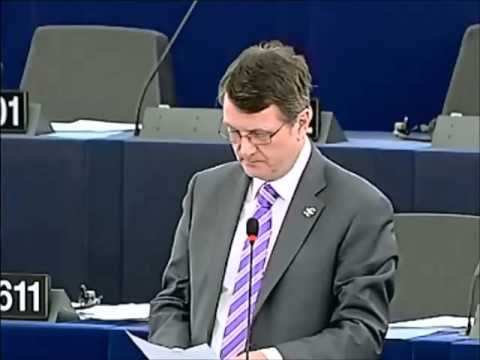
Gerard Batten is a serving MEP and a serious voice within his party – not a swivel eyed lunatic from the fringe. And so when he publicly advocates making Muslims effectively sign an oath of loyalty and nonviolence to prove their harmlessness to the state, this represents a very real problem for UKIP, damages their pro-liberty credentials and alienates many people (myself included) who were otherwise inclined to give them a fair hearing.
Gerard Batten, who represents London and is member of the party’s executive, told the Guardian on Tuesday that he stood by a “charter of Muslim understanding”, which he commissioned in 2006.
The document asks Muslims to sign a declaration rejecting violence and says parts of the Qur’an that promote “violent physical Jihad” should be regarded as “inapplicable, invalid and non-Islamic”.
Critics said his comments represent the “ugliest side of Ukip” and “overlap with the far-right”, in spite of the efforts of party leader Nigel Farage to create a disciplined election machine ahead of the European elections.
Asked on Tuesday about the charter, Batten told the Guardian he had written it with a friend, who is an Islamic scholar, and could not see why “any reasonable, normal person” would object to signing it.
One hardly needs to restate their horror and revulsion at all forms of violence and terrorism in the name of religion before condemning this politician’s attempt to take a redacting pen to the holy book of a faith not his own – but I shall do so anyway. We can abhor the violence, but that does not make it right to propose amendments to the religious texts of a faith that you do not yourself practice. Indeed, if Gerard Batten is to apply his editing skills to every major religious text touting a menu of violent and uncivilised punishments to be meted out to those who accidentally violate the etiquette of their ancient day, he will not only raise Muslim ire but also the outrage of other religions perhaps much closer to his own heart.
Seeing the “I have Muslim friends” card played as a defence by Godfrey Bloom is also quite depressing, and hardly mitigates the fact that he is basically advocating state interference in the workings of a religion, state interpretation of religious texts and state monitoring of compliance with religious teaching.
And in a final flourish, Batten also failed to repudiate his 2010 call for a ban on new mosques in Europe, apparently confirming the suspicions of many that UKIP is concerned about freedom of religion and freedom from religious persecution only when it can be used as an argument to allow certain Christians to continue discriminating against gay people.
The latest UKIP scandal has, naturally and rightly, drawn condemnation from across the political spectrum, with Conservative MP Robert Halfon (of the Jewish faith) describing Batten’s “Islamic code of conduct” as the first step toward making a persecuted people wear a visible gold star on their clothing:
Halfon, who is Jewish and has spoken out repeatedly against Islamic extremism, told the Guardian he considered Batten’s views “unbelievably sinister” and “frightening”.
He tweeted: “Big difference btwn lawful Muslims & extreme Islamists. UKIP MEP Batten’s statement a 1st step to wearing a Yellow Star.”
Sarah Ludford, a Liberal Democrat MEP for London, also criticised the comments, saying they “rip apart Ukip’s pretence” that it treats everybody equally.
“His offensive blanket stereotyping of Muslims speaks volumes about Ukip’s extremism and should warn voters that voting Ukip means associating with hatred and Islamophobia,” she said.
These shenanigans within UKIP must come to an immediate halt if the party is to staunch the bleeding and begin to repair its tarnished reputation. The existing media portrayal of the party as a club for closet racists, little-Englanders and swivel eyed loons is harmful enough without having senior MEPs throwing more fuel on the fire. The fact that some of the provocative statements in question were given in the year 2006 is no defence or mitigating factor here – all that means is that eight years have passed without a public apology and withdrawal of the remarks.
True to recent form, Nigel Farage has been slow to respond to this latest volley of bad publicity – and so, for the moment, Gerard Batten is left to twist in the wind. This, in itself, is unacceptable. This is a time for the leader to lead. Perhaps UKIP wants to be a party of unapologetic Islamophobia and a cheerleader for freedom of religion, but only when Christian freedoms are perceived as being threatened. And if so, that is their choice to make – free speech is still just about protected in this country, and UKIP are entitled to campaign on that platform. In turn, I would also then be freed from the desire to give them any further serious consideration and airtime on this blog, because I would exercise my right to avoid associating myself with such a party.
But if the UK Independence Party actually stands for personal liberty and does not wish to associate itself with religion-specific loyalty tests and bans on practicing Islam (because that is what withholding permission to build new mosques would ultimately mean), with fearmongering or with discriminatory policies, then Nigel Farage needs to speak up and show any recalcitrant members the door.
Newer, less established and experienced political parties eventually have to choose between their fiery, populist rhetoric and the need for sober policymaking; between courting any stray vote that can easily be won and accepting that the votes of some other people are fundamentally undesirable. The Liberal Democrats faced their reality-check on the topic of undergraduate tuition fees, and for better or worse they chose responsible government over delivering on their tuition fee cap bribe to their starry-eyed voters. It increasingly looks as though UKIP will have a dual reckoning – with their attitude to gay marriage on one hand and the decision to condone or condemn Islamophobia on the other.
If Mr. Farage could please make up his mind on these issues and convey the message to his troops, the rest of us will know whether to keep giving UKIP the time of day, or letting them jog on by.




 Semi-Partisan Politics