Labour’s EU ‘Remain’ Campaign Launches With Their Weakest Argument

Alan Johnson - Labour - In for Britain - EU Referendum - Brexit

Claims that Britain being in the EU “keeps us safe” are completely without basis. Nations are more than capable of co-operating on national security without dissolving into the same flawed political union

If the slavishly europhile “Remain” campaigns are putting their best feet forward and leading with their strongest arguments then perhaps there is hope for we eurosceptics after all.

Last month, the farcical launch of Britain Stronger in Europe was tarnished by the somewhat unwilling presence of Lord Stuart Rose as campaign chairman, and then rendered ridiculous by “youth ambassador” June Sarpong’s confused non-endorsement in the press.

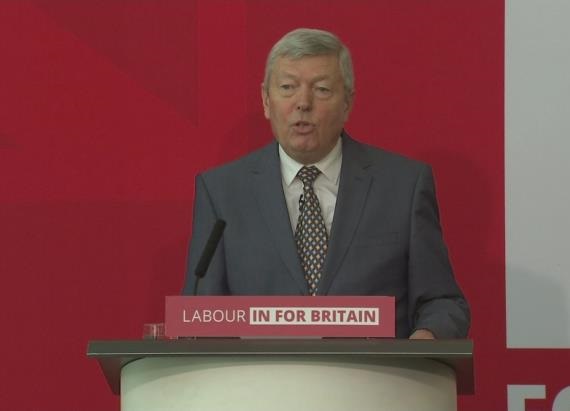
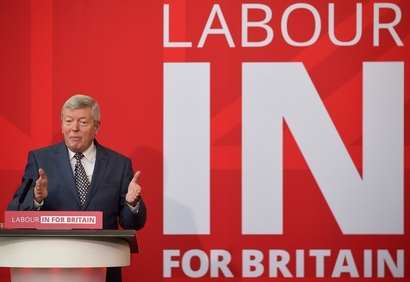
And now, with today’s launch of Labour In for Britain, the Labour Party’s own pro-EU campaign group, the europhiles decided to lead with the weakest of all their weak arguments – that leaving the EU would somehow be injurious to Britain’s national security. And they are quite willing to exploit the recent shocking terrorist attacks in Paris to do so.

Alan Johnson, chairman of the Labour In for Britain campaign, writes in the Mail:

We should be in no doubt that these are dangerous times. 

The tragic events in Paris, and the government’s recent confirmation that seven terror plots have been foiled in the UK in recent months, have underlined the threat that violent extremism poses to us here at home.

For some, the answer to this is to withdraw from Europe and to try to combat the threats we face on our own. 

So no positive vision, then. Just a lot of scaremongering followed by the reassurance that we can avoid being blown up in our favourite clubs and restaurants for the low, low price of the surrender of our democracy, sovereignty and right to self-determination.

Of course, Johnson never explains why leaving the explicitly political construct known as the EU would mean that Britain has to withdraw from Europe the continent, or Europe the home of our friends and allies. But then it is very much in his interest to conflate all of these things and falsely imply that leaving a political union means cutting ourselves off and standing alone in the world.

From a man who is constantly lauded as one of the Labour Party’s finest assets, a fundamentally decent man of irreproachable morals, this is really dirty and opportunistic stuff from Alan Johnson. Apparently there is no moratorium on using a mass killing for political gain when the people taking advantage of our shock and grief are do-gooder left wing types who think they know best for us.

Johnson continues:

Our campaign will focus on the economic security of British workers – the millions of British jobs that are linked to trade with Europe, and the employment rights that are enshrined in EU law. 

But we will also be laying out the ways in which Europe protects British citizens and keeps us safe.

First, working with our European partners provides us the best way to stop would-be terrorists entering Europe [..]

Second, thanks to the European Arrest Warrant, pushed through in 2004 under a Labour government, we are able to more effectively bring would-be terrorists to justice [..]

Finally, it should not be forgotten that Islamist terrorism is not the only threat we face. At a time of deep instability on Europe’s borders, Britain benefits from its ability respond collectively.

The Brexit campaign group Vote Leave are also pushing the security aspect quite hard, so it is unsurprising that the pro-EU groups want to cut them off by claiming that it is their position which will keep Britain safe. Unsurprising, but wrong.

And Johnson concludes:

By sharing intelligence, pooling resources and working together, European countries add value to each others’ efforts to keep the peace. A Brexit would leave us all more vulnerable.

Damningly, it is never explained why all of this co-operation is dependent on Britain remaining part of an ever-tightening political union with its own parliament and courts and government.

Alan Johnson never explains why our intelligence and security services rely on our EU membership every day to protect us from terrorist attacks. Because they don’t. This co-operation – and any other matters of vital national security – would go on regardless of our future relationship with the EU, because that’s how mature democracies work. Europe will not simply go off in a sulk and stop sharing intelligence with us simply because we decide that we no longer want to be just a star on the EU’s flag, because they need our military support and intelligence capabilities far more than we need theirs.

Don’t forget – Britain’s closest military ally and intelligence sharing partner is not any one of the European Union countries, but rather the United States. We host US air bases on our territory, we embed our own armed forces with theirs (and vice versa) on active operations and we buy and sell weapons and equipment to America. On the intelligence front, GCHQ and the NSA work together hand in glove – sometimes too closely, to the extent that they conducted mass surveillance without our knowledge – and are indispensable partners.

The closest of military allies and vital partners in global intelligence sharing – somehow the UK and US are able to maintain this partnership without a joint legislature handing down laws to Congress and Parliament, a judiciary sitting above our own respective Supreme Courts, or a shadow government running a large and expensive bureaucracy on our behalf.

And yet the europhiles will declare with a straight face that we desperately need this cumbersome, irrelevant and antidemocratic sideshow just to be able to ensure military and intelligence sharing co-operation with a country separated from us by just twenty miles English Channel. What nonsense.

So, Alan Johnson: why is it that Britain is able to maintain our closest and most strategic partnership in the world with the United States without ourselves becoming the 51st state, while a lesser degree of co-operation with the other countries of Europe is somehow impossible unless we dissolve ourselves into the same ever-tightening political union with them?

Truly, the security aspect is the weakest of all the pro-EU arguments, and yet it is the one with which Labour chose to lead. And the only possible calculus for doing so must have been the belief that people were still so shocked and traumatised by the recent terrorist attacks in Paris that they would be susceptible to scaremongering tactics which openly suggested that a vote against the European Union is a vote for more Paris-style attacks on our own city streets.

That tells you a lot about the intellectual weakness and desperation of pro-EU case and the “Remain” campaign as a whole. But it tells you even more about today’s grasping, manipulative and utterly shameless Labour Party.
Alan Johnson - In for Britain - EU Referendum - Brexit

Agree with this article? Violently disagree? Scroll down to leave a comment.

Follow Semi-Partisan Politics on TwitterFacebook and Medium.

The Daily Smackdown: Jeremy Corbyn’s Anti-Americanism

Instead of calling for a more “independent” foreign policy, Jeremy Corbyn should simply admit that he hates America and wants Britain to sever links with our closest ally

Jeremy Corbyn took to Facebook over the weekend to demand that Britain chart a new, more “independent” foreign policy.

This came off the back of a speech that Corbyn had wanted to deliver last week blasting Britain’s close alliance with America, but was forced to postpone because of the Paris terror attacks.

Corbyn finally gave the speech he was itching to give at the Labour Party’s South West Region conference in Bristol, where he said:

The third pillar of our vision for Britain is a different kind of foreign policy – based on a new and more independent relationship with the rest of the world. A relationship where war is a last resort.

For the past 14 years, Britain has been at the centre of a succession of disastrous wars that have brought devastation to large parts of the wider Middle East. They have increased, not diminished, the threats to our own national security.

Few would now seriously argue that Western interventions in Iraq and Libya did anything other than deplete our resources and further inflame the region. But Corbyn’s professed desire for a “more independent relationship with the rest of the world” is pure nonsense.

Jeremy Corbyn does not want Britain to pursue a more “independent” foreign policy. He is simply unhappy with our existing foreign policy and allegiances – where Britain recognises the many shared mutual interests we have with the Anglosphere and other Western powers, and seeks to build on those natural alliances which inevitably form where there is such a close fit of culture, history and legal systems.

If Jeremy Corbyn really wanted Britain to pursue a truly independent foreign policy, his first act as Labour leader would not have been to cravenly roll over and submit to the rabid europhiles within his party, who insisted that he follow their lead and slavishly promise to campaign for Britain to stay in the European Union come what may.

This decision is all the more surprising given Corbyn’s subsequent willingness to enrage his own backbenchers – and even his shadow cabinet – on almost every other question, from air strikes on Syria to hiring controversial and divisive staff and flip-flopping on George Osborne’s fiscal charter. Clearly Jeremy Corbyn is happy walk his own path on nearly every policy other than the pressing question of Britain’s future sovereignty.

How can Corbyn claim to want Britain to pursue an “independent” foreign policy when he has committed Britain to remaining in the EU and being part of the Common Foreign and Security Policy? How can Britain claim to be an independent diplomatic force when the EU’s High Representative for Foreign Affairs, Federica Mogherini, is more active and visible on the world stage than our own Foreign Secretary?

You can argue the rights and wrongs of whether Britain should pool so much of our diplomatic clout into a single European voice – over which we exert only 1/28th of the influence. But the one thing you absolutely cannot do with a straight face is to call the resulting foreign policy an independent one.

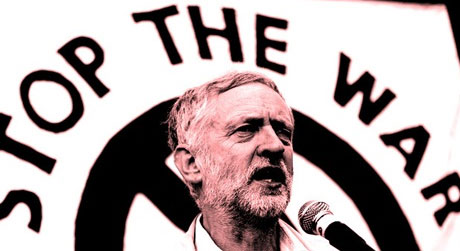
But of course Corbyn does not really want Britain to pursue a truly independent foreign policy. What he really means by this dog-whistle to Stop the War types and extremism sympathisers is that he wants Britain to specifically forsake the United States of America, and cease our friendship and co-operation with our closest ally in the world.

Jeremy Corbyn doesn’t look at the special relationship between Britain and America and see an unparalleled alliance which spilled blood and treasure in defence of democracy twice in the last century, and whose embrace of the free market has pointed the way for other nations around the world to achieve prosperity.

No, Jeremy Corbyn looks at the special relationship and sees Britain yoked against her will to the Great Satan – an awful, dystopian, capitalist war machine, economically and militarily subjugating the countries which Corbyn would much rather call his friends. He sees no good in the United States because his “friends” in Hamas, Stop the War and the far Left in general spend every waking hour ranting about just how evil and immoral America is.

Yet on Europe, Corbyn is firm: Britain should remain a member of this relentlessly tightening political union come what may – regardless of David Cameron’s cosmetic renegotiation, and regardless of the direction the EU is heading in the future. The Labour leader succumbs to the same negative, pessimistic view of Britain’s capabilities and international stature as the other europhiles, believing that Britain is too pathetic and ineffectual to do what Australia and Canada manage to do every day – engage with the world as an independent nation.

Jeremy Corbyn’s foreign policy simultaneously views Britain as being so weak and pathetic that our only pathway to influence on the world stage is to have the same sliver of influence over a common European Union foreign policy as tiny Malta or Slovenia, but also so potentially dangerous to the world that we must terminate the one alliance which has been the bedrock of our foreign policy since the second world war.

It is a risible, childlike worldview – one which would be funny if only a Corbyn premiership would not see Britain giving moral and tangible succour to some of the most odious regimes in the world.

Corbyn is right to point out our own moral failures in foreign policy, such as our close partnership with the brutal Saudi regime, working closely with that dictatorship in exchange for scraps of intelligence about the various terror plots that they are themselves funding and encouraging. But he undermines his own point by letting his actions and statements imply that there is any moral equivalence between regimes like Saudi Arabia and the United States.

Or as Nick Cohen put it in this week’s Spectator:

Corbyn, along with too much of ‘progressive opinion’, has a mistrust bordering on hatred for western powers. They do not just condemn the West for its crimes, which are frequent enough. They are ‘Occidentalists’, to use the jargon: people who see the West as the ‘root cause’ of all evil.

Their ideology is in turn genuinely rootless. They have no feeling for the best traditions of their country, and their commitments to the victims of foreign oppression are shallow and insincere. They rightly condemn western support for Saudi Arabia. But if the Saudis were to become the West’s enemy tomorrow, their opposition would vanish like dew in the morning sun.

Before concluding:

Jeremy Corbyn and the left he comes from cannot campaign for office by saying what they really think or they would horrify the bulk of the population. They say enough to keep their ‘base’ happy, and then dodge and twist when they speak to the rest of us. Far from being authentic, Jeremy Corbyn is one of the most dishonest politicians you will see in your lifetime.

If Jeremy Corbyn wants to be taken seriously as a straight-talking, honest politician he should admit that he has absolutely no desire for Britain to pursue an independent foreign policy – or an independent anything else, for that matter – and that all of this posturing is just his way of signalling to a certain audience that he disapproves of one country in particular.

Jeremy Corbyn: Anti-Austerity, Anti-America.

That’s a campaign slogan people might actually believe.

Jeremy Corbyn - Stop the War - Anti American

Further reading:

The anti man

The threat of Jeremy Corbyn’s radically anti-American agenda

Jeremy Corbyn isn’t anti-war. He’s just anti-West

Agree with this article? Violently disagree? Scroll down to leave a comment.

Follow Semi-Partisan Politics on TwitterFacebook and Medium.

The Daily Smackdown: Europhiles Cry About The “Brexit Bullies”

BSE - Britain Stronger in Europe - Crybabies

It is laughable for Britain Stronger in Europe to claim that the Prime Minister and the Confederation of British Industry were “threatened” by two teenage hecklers

The Britain Stronger in Europe campaign group sent this victimhood-wallowing missive to their supporters today:

We always knew UKIP and the Leave campaigns would try and pull the wool over people’s eyes – we didn’t know they’d try and threaten them.

But this week the Head of Vote Leave tweeted: “You think this is nasty you ain’t seen nuthin yet (sic).” Classy, hey?

It’s clear what type of campaign they’re going to run, Samuel – they can’t win the argument so they’re going to try to silence anyone who disagrees with them. We can’t let them win.

Sounds like something serious happened, right? Wrong.

The “threat” that so upset BSE was a couple of young Vote Leave activists who stood up in the middle of a speech the Prime Minister was giving to the CBI and started shouting “CBI, voice of Brussels!” over and over again.

While it’s a documented fact that the CBI grossly misrepresented a survey of their membership to falsely claim that a majority of British firms back staying in the EU, these two first-time hecklers were hardly political heavies sent to intimidate the opposition. In fact, they were pretty poor even by modern dumbed-down heckling standards – the prime minister came off looking simultaneously wittier and more serious by the time the Vote Leave duo were escorted from the hall.

Watch this video of the encounter, and judge for yourself who comes across as calmer and more intelligent:

Hilariously, BSE are now parading the incident to their supporters as evidence of some dastardly eurosceptic plot to threaten all those sweet, innocent europhiles.

And now failed Labour leadership candidate Chuka Umunna is getting in on the act too, writing in the Telegraph:

Rather than seeking to promote debate, however, the leave campaigns are now desperately trying to shut it down and muzzle those who take a different view. They are behaving like gangsters, trying to close down the debate with behaviour that has no place in public life.

In their repeated attacks on the Confederation of British Industry (CBI), trying to force the organisation’s hand and sit out of this debate, Vote Leave’s is making a concerted attempt to stifle the views of some of the country’s largest businesses. Protests outside the CBI conference, disrupting speeches, aggressive letters – these bully boy tactics are a sign they are losing the argument rather than embracing it.

Well excuse me, but I can’t find a violin small enough to play in mournful solidarity with the mighty CBI, let alone the Prime Minister of the United Kingdom – who has the bully pulpit of his high office and the entire machinery of government with which to campaign against Brexit. It is frankly ludicrous to suggest that eurosceptics possess the official, financial or physical muscle to drown out the europhile message in the way that BSE pretend.

But what we lack in a bully pulpit, we eurosceptics more than compensate for by the simple virtue of being right. Right on the facts, and on the right side of history, too.

The pro-EU campaigns will inevitably get away with a lot of lies and distortions during this referendum campaign, simply because it will not be possible for us Brexiteers to refute each and every single one of them. But one thing that BSE and other europhile campaigns absolutely must not be allowed to get away with is successfully portraying themselves as the plucky underdog, fighting an uphill struggle against the mighty forces of euroscepticism.

I don’t think that there is currently a great chance of that happening, but we should take care to slap down any attempts to portray the pro-EU juggernaut as some kind of rough-and-ready insurgency. Nothing could be further from the truth.

But I do hope that someone remembers Chuka Umunna’s impassioned defence of the CBI – and how he came out swinging in support of downtrodden multinational corporations in their battle to be heard over the little guy – the next time he runs for the Labour leadership.

EU Democracy - Brexit

Agree with this article? Violently disagree? Scroll down to leave a comment.

Follow Semi-Partisan Politics on TwitterFacebook and Medium.

The Daily Toast: To Win, Eurosceptics Must Show That The EU Is Outdated

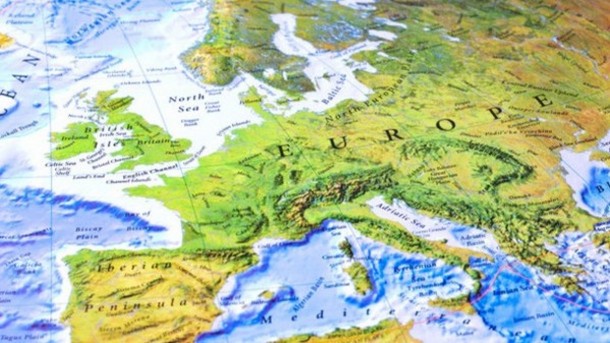
Old Europe Map

Another new initiative for Semi-Partisan Politics – counterpart to The Daily Smackdown (same basic idea, but reversed). Will focus on a different praiseworthy or perspective-changing article, argument or action each day

Allister Heath has a good piece in the Telegraph, where he observes that the europhiles may end up wrong-footing themselves in the coming referendum by buying into the lazy, two-dimensional caricature of eurosceptics as ornery traditionalists who are stuck in the past and afraid of the future.

Heath rightly points out that the europhiles dismiss or underestimate we Brexiteers at their peril, writing “it is always a fatal error to assume that your political opponents are evil or stupid”. I certainly hope that this rule holds true just as it did for Ed Miliband’s vacuous, virtue-signalling Labour Party at the general election.

The hopes of many a lefty were extinguished on May 7  when it emerged that the left-wing echo chamber on Twitter was in fact not representative of the country, and that people other than psychopaths and billionaires actually voted Tory in good conscience. So by all means, let them assume once again that anyone who doubts the inherent virtue of the European Union must be a grumpy retired colonel, a Mafeking stereotype from a run-down coastal town.

Heath writes, in praise of campaign group Vote Leave:

Vote Leave’s core argument is that the EU’s institutions remain stuck in the post-1945 era: an industrial and agricultural world dominated by a few rich nations and overshadowed by the Cold War. In those days, bureaucratic centralism was the fashionable answer; 60 years on, the EU’s creaking, lumbering structures cannot cope with change involving genetic engineering, cybercrime, driverless cars and digital manufacturing.

They are just as debilitated when it comes to addressing contemporary geopolitical risks, including the crisis in the Middle East, the rise of terrorist organisations such as Isil, or even negotiating bilateral trade deals with emerging economies. It is Europe that now has a protectionist mindset, pretending that its borders stop at the Mediterranean while looking on uselessly as Syria is engulfed in a humanitarian catastrophe.

Rather than advocating a retreat into splendid isolation – which is what pro-EU activists wrongly assume Eurosceptics believe – Vote Leave will be calling for increased and improved international cooperation to deal properly with the forces that are changing the world. This, it will argue persuasively, requires different institutions to those that exist today: structures that can tackle problems quickly and that allow decentralised cooperation between nations.

I have my grave doubts about Vote Leave, for reasons well summarised over at the blog Vote to Leave the EU. There are serious doubts as to whether Brexit is the true goal of that group’s leadership, or if they are simply agitating for an initial “no” vote to then strengthen Britain’s hand for a future, “serious” renegotiation with the aim of securing a slightly sweeter deal. But Heath’s broader point is a very good one.

What threadbare arguments could have been made for the European Union back in the 1950s when the world was indeed divided into distinct and competing supranational blocs have lost all of their potency in the twenty-first century multi-polar word. For too long, europhiles have been allowed to portray themselves as forward-looking and progressive. And some really do believe it to be true. But it is increasingly hard to believe that Britain’s national interest is best served when represented through the collective voice of twenty-seven other distinct countries, each with their own unique circumstances and agendas.

Heath continues:

The future will belong to shifting networks of nations, not to monolithic empires. Voters will have to be empowered and kept involved, rather than bypassed through undemocratic transnational democracies. The Inners, who for decades have claimed to represent modernity, are about to be wrong-footed by a campaign and arguments that they will find very difficult to respond to.

It is absolutely essential that this is the case, if we are to achieve the goal of Brexit. This cannot be a campaign focused on some chimerical, glorious past, and if it becomes such a campaign we will be ripped to shreds and lose our last, best hope of regaining national sovereignty.

That means we must focus on all of the things that Allister Heath talks about in his article – how an independent Britain will be free to pursue advantageous commercial and diplomatic deals in our own interest rather than holding one 28th of a say over the common European position, how Britain’s membership fee can be repurposed and reallocated to focus on our own priorities and incentives, and more. But that’s all long term.

We also need an immediate plan mapping out what British secession from the European Union actually looks like. It is imperative that the “Leave” campaign pushes such a plan, otherwise voters will (rightly) conclude that a vote to leave the EU is a leap into the unknown, and choose the stultifying status quo as the safer option.

At present, you would be forgiven for thinking that there is no such plan. Neither of the two main campaign groups spend any time talking about what Brexit might actually look like. Vote Leave certainly don’t mention one (quite probably because Brexit is not their end goal), while Leave.EU are more focussed on attacking the EU than promoting a positive vision of post-EU Britain.

But such a plan does exist. It’s called Flexcit, and if I keep banging on about it on this blog in the coming weeks and months it is only because I have come to realise that the referendum cannot be won without a clear and unambiguous plan for Brexit, and it is high time some of the “heavyweight” eurosceptics publicly adopted this plan or ventured one of their own.

Flexcit is a serious, pragmatic plan which outlines a step-by-step process for leaving the EU and rejoining the world. It doesn’t make undeliverable promises of free chocolate and rainbows for everyone, but it is comprehensive and rigorous, and does what it says on the tin. As I have already said, every serious eurosceptic and Brexit campaigner should read it and give it fair consideration.

Only then, with the referendum won and Britain taking her first steps in the world as a truly independent and sovereign nation once again, can we do as Allister Heath says and show the vanquished europhiles just how forward-looking and ambitious we Brexiteers are for our country.

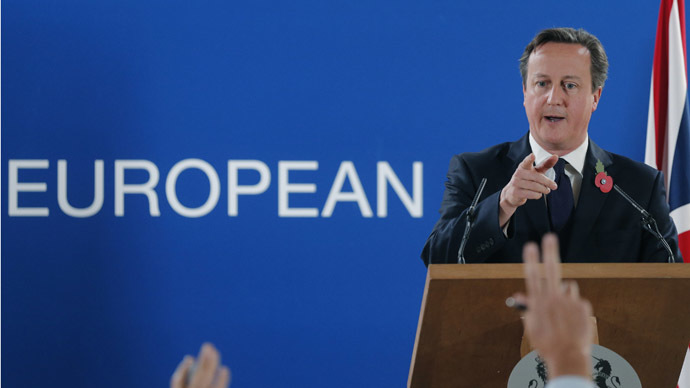
David Cameron - EU Referendum - Brexit - Human Rights Act

Further reading:

The British Model

Is the penny dropping about Vote Leave’s true intentions?

Agree with this article? Violently disagree? Scroll down to leave a comment.

Follow Semi-Partisan Politics on TwitterFacebook and Medium.

The Daily Smackdown: David Cameron’s Begging Letter To The EU

David Cameron - Donald Tusk - EU Renegotiation - Brexit - Referendum

The problem with the European Union cannot be solved through a renegotiation, because the renegotiation is just another symptom of the problem

If you hadn’t already worked out that David Cameron’s EU renegotiation is a sham, a PR exercise from a PR prime minister designed to make it look as though Britain is leading real change in Europe when in fact we are merely haggling over a few cosmetic and inconsequential concessions, then your remaining doubts should now be answered.

Yesterday, the government released the wheedling, subservient letter that David Cameron has written to Donald Tusk, president of the European Council, begging his permission to reclaim a few minor and superficial aspects of British sovereignty. The fact that half of the prime minister’s demands – such as the call for the European Union to respect the principle of subsidiarity – are things which the EU has long been committed to doing on paper, but shown zero interest in following in practice – gives zero hope that whatever Cameron takes home from Brussels will be honoured.

But Britain’s fundamental problem with the European Union cannot be solved through a renegotiation, because the renegotiation itself is just another symptom of the problem. For as long as any British prime minister must flatter and beg countries like Portugal or Malta and seek their permission before acting in our own national interest, we have no true sovereignty and the European Union will remain an unwanted, antidemocratic millstone around our necks.

No possible outcome of David Cameron’s EU renegotiation will come close to touching this fundamental issue, because the EU is determined to remain a supranational political union, sitting above national governments and gradually acquiring more and more of their power. That’s just a fact, and those europhiles still in denial need to stop deluding themselves that an organisation with its own parliament, executive and judiciary is somehow just there to promote love and understanding between the peoples of Europe, with no designs on our democracy. Such a view is childishly naive.

Even if Cameron’s plea for Britain to be somehow exempted from the Treaty of Rome commitment to ever-closer union is heard, this will simply relegate us to a form of “associate membership” which would leave us – as Leave HQ put it so succinctly – “out on the edges and still on the leash”.

And so we are left with a cosmetic list of demands based not on any attempt to reflect the concerns of the British people, but based instead on what limited concessions David Cameron thinks he might be able to cajole from his European friends. He is essentially starting at his desired outcome (Britain voting to “remain” in the EU) and then working backward, rather than starting with Britain’s national interest at the forefront of his mind, and then letting the chips fall where they may when it comes to the renegotiation.

The whole exercise is a sham, and I refuse to be a part of it. I will not report the ups and downs of the coming “renegotiation” effort, with the inevitable carefully choreographed table-banging rows between Britain and France or the back-and-forth with Poland on migrant benefits access, because the whole thing is a PR exercise designed to make it look like our Conservative In Name Only government are looking out for our national interest when in reality they are only looking for a way out of an unwanted political problem.

Or as my Conservatives for Liberty colleague Ben Kelly puts it in his must-read piece:

There are no negotiations because the outcome of this act of political theatre has been decided for some time, the great deception is already in play. Osborne and Cameron will go through the ridiculous charade of demanding “associate membership” and their EU colleagues will play along and agree to their “demands”.

They will then return declaring a great victory for Britain and ask the public to endorse it in the referendum and give them a mandate to create our “new deal” in a “reformed EU”, which may very well include promises of minor concessions of reduced contributions and some leeway on the “four demands”.

On the surface, this two tier structure will seem enticing, in reality not only will we retain all the major disadvantages we currently suffer – from our trade policy being an ‘exclusive policy of the EU’, to the union’s redundancy in a globalised world, to its essentially anti-democratic nature – but once the eurozone integrates further we will be truly isolated within the union as a second class member.

What matters most now is not whatever choreographed stunt George Osborne or David Cameron cook up every day to make it look like they are going to battle for Britain. What matters most is honing our arguments in favour of Brexit to reach out to the undecided middle. And this means coalescing around a viable plan for a phased British exit from the EU, one which reassures wavering voters that stepping away from the EU is a prudent move, and not a leap into the unknown.

That plan is called Flexcit – I have seen no others that come close to Flexcit’s level of detail and rigour. All eurosceptics, Brexiteers and “Leave” campaigners now have a duty to read it, improve it where possible and then either champion it or propose a better plan of their own.

EU Renegotiation - Brexit - European Union

Further Reading:

The biggest gamble of all is to stay in the EU

The Cameron Deception: “associate membership” of the EU

Mr. Cameron still can’t beat the Flexcit offer

The EU makes us self-absorbed and insular

Agree with this article? Violently disagree? Scroll down to leave a comment.

Follow Semi-Partisan Politics on TwitterFacebook and Medium.