–
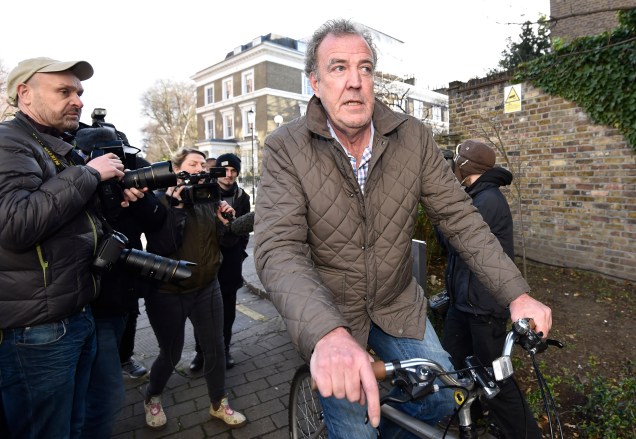
Unlike most people in the Remain campaign, at least Jeremy Clarkson has the courage and decency to admit that he doesn’t just tolerate the European Union but actually dreams of Britain being part of a federal European country
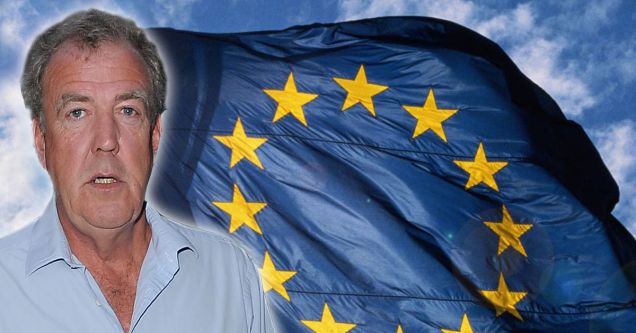
So that great producer-punching pseudo Man of the People, Jeremy Clarkson, has come out definitively in support of Britain remaining in the European Union – and not just the EU as it is now, but the EU as it yearns to become in the near future, a fully politically integrated federal European state.
No great surprise there – Clarkson has made pro-European rumblings before. But what is surprising (and actually rather impressive) is the full-throated way in which Clarkson embraces his support of the EU.
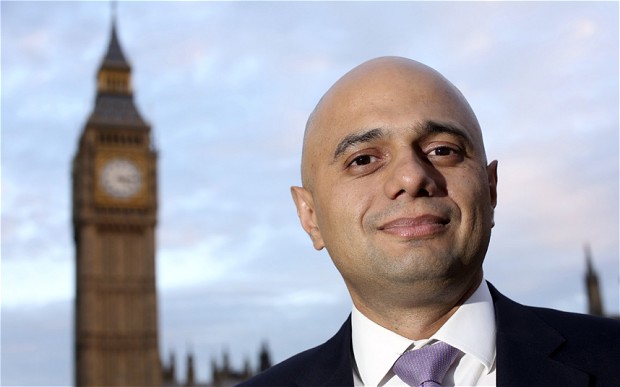
Unlike nearly every leading politician and personality in the Remain camp, Clarkson does not attempt to flatter us or pretend that he “gets” our concerns about Brussels gradually usurping our democracy. Unlike the deceitful-yet-ingratiating Sajid Javid, Clarkson makes no promises to go back to ranting at Brussels the moment he has helped doom us to continued membership of the EU (though in Clarkson’s case, more ranting is all but guaranteed).
Jeremy Clarkson actually does something which almost nobody in the intellectually squalid, fear-based Remain campaign dares to do – he owns his pro-Europeanism and wears it as a badge of honour, rather than doing what so many Turncoat Tories and others have done, prancing around like the World’s Biggest Eurosceptic before meekly running to David Cameron’s heel and supporting Britain’s continued membership of the EU as soon as the prime minister snapped his fingers.
Clarkson writes in the Sunday Times (+):
I suppose that now is as good a time as any to declare my hand. I’m with the man whose wife we fancy. I’m in.
When Mr Cameron was touring Europe recently, seeking a better deal for Britain by sucking up to the leaders of such places as Romania and Hungary, I watched on YouTube an MEP called Daniel Hannan make an anti-EU speech to a group of, I think, students. It was brilliant. One of the best speeches I’ve ever heard. And, I’ll admit, it made me question my beliefs. But despite his clever, reasoned and passionate plea for us to leave Europe, I’m still in. He talked sense, but a lot of this debate is about how we feel.
In 1973 my parents held a Common Market party. They’d lived through the war, and for them it seemed a good idea to form closer ties with our endlessly troublesome neighbours. For me, however, it was a chance to make flags out of coloured felt and to eat exotic foods such as sausage and pasta. I felt very European that night, and I still do.
Whether I’m sitting in a railway concourse in Brussels or pottering down the canals of southwestern France or hurtling along a motorway in Croatia, I feel way more at home than I do when I’m trying to get something to eat in Dallas or Sacramento. I love Europe, and to me that’s important.
I’m the first to acknowledge that so far the EU hasn’t really worked. We still don’t have standardised electrical sockets, and every member state is still out for itself, not the common good. This is the sort of thing that causes many people to think, “Well, let’s just leave and look after ourselves in future.”
In other words, Jeremy Clarkson is your garden variety Euro-federalist. He looks at the bureaucratic opacity of Brussels, the contempt in which the EU is held by many of its citizens and the fact that cultural and regulatory harmonisation has not been completed to produce a single cultural identity where we all identify as Europeans first and use the same electrical outlets, and concludes that the correct answer is “more Europe”.
Fair play to him. He’s completely wrong, and betrays an almost criminal contempt for the democracy and right to self-determination for which our ancestors fought, bled and died. He is the archetypal person who votes as a consumer – because a harmonised, federal Europe would be better for his wallet and his weekend jaunts to France – rather than as a thinking, engaged citizen. But at least he has the god damn balls to honestly state his position. Hardly anybody in our own elected House of Commons supporting the Remain campaign would dare to do the same.
But then it begins to come off the rails (or the test track). Clarkson continues:
Britain, on its own, has little influence on the world stage. I think we are all agreed on that. But Europe, if it were well run and had cohesive, well thought-out policies, would be a tremendous force for good. I think we are all agreed on that as well. So how do we turn Europe from the shambles it is now into the beacon of civilisation that it could be in the future?
Oh really? We are “all agreed” on that, are we?
Actually, no we are not agreed at all. Our prime minister and foreign secretary may hold our country, its history and present capabilities in astonishingly low esteem, but fortunately the same cannot be said for many of the people. Many of us correctly believe Britain to be one of the few truly indispensable nations on Earth, that our contributions to the arts, sciences, commerce and global security are almost unmatched, and that we could throw our weight around in the world accordingly, if only we cared to stand up for our own national interest once in awhile.
But such views are unheard of outside the Chipping Norton set, the middle class clerisy in general and the fawning circle of friends and admirers surrounding David Cameron (of whom Jeremy Clarkson is one). These people, many of whom came of age at the peak of 1970s declinism and economic doldrums, have at their core a deep pessimism and scepticism about the ability of Britain to survive and prosper as an independent actor on the world stage.
So deeply have they internalised this self-doubt and self-loathing that no matter how much evidence you show them to the contrary – the examples of Australia and New Zealand, say, somehow surviving in the world without being part of an Asia Pacific Union and sharing a common parliament and court – they bat it away without even stopping to think.
Clarkson then sums up:
Right. So let’s switch our attention. Let’s leave the “parish councillors” alone and concentrate our big guns on the real decision makers in Brussels. Let’s have hacks outside their houses all day long, waiting for one of them to do or say something wrong. Let’s make them accountable. Let’s turn them from “faceless bureaucrats” into household names.
That is the biggest problem with the EU right now. Nobody is really concentrating on its leaders. Nobody is saying: “Hang on a minute . . .” And this means they are running amok.
It’s why we need to stay in. So our famously attentive media can try to stop them. To make them pause before they move. To make the Continent work the way the Continent should — as a liberal, kind, balanced fulcrum in a mad world that could soon have Trump on one side and Putin on the other.
And here we have the classic pivot back to “the answer is more Europe!” Rather than looking at public attitudes toward the European Union which range from disengaged indifference to blind, seething rage, Clarkson concludes not that the experiment in political integration by stealth has failed, but rather that we should just come to terms with it and re-order our media and culture around the EU’s artificial construct.
Clarkson is actually saying that if only more journalists doorstopped Jean-Claude Juncker and Martin Schulz every morning with awkward questions about budgets and foreign policy, we would immediately begin to feel more vested in the EU project and finally become enthusiastic Europeans. It’s pure wishful thinking, of course, but then so is everything about the EU, an political organisation build on the the principle of “If you build it, they will come” (they being a European demos willing to be led by Brussels).
But though Clarkson is wrong on nearly every point, cavalier with our democracy to the point that it does not even merit a mention in his article and unabashedly in hoc to the establishment’s ingrained europhilia, still he somehow comes away as the most intellectually honest and respectable of all the high profile Remain supporters.
Unlike an oleaginous Turncoat Tory, Clarkson does not feel the need to butter us up with constant anecdotes about how he hates Brussels just as much as we do, honest. And unlike those bland Remainers on the Labour benches, he does not just mutter inanities about countries “working together”, as though intergovernmental co-operation were not possible without the umbrella of an undemocratic political union.
No, Jeremy Clarkson owns his position, and has the guts to tell us that not only should we learn to love the European Union as it is now, we should actively fight for further political integration:
But, actually, isn’t it better to stay in and try to make the damn thing work properly? To create a United States of Europe that functions as well as the United States of America? With one army and one currency and one unifying set of values?
At last, an honest argument from a Remain supporter – someone who is brave enough to stand up and say “actually, I feel more European than British, I think that the nation state is kind of passé anyway, I’m envious of the size and power of the United States and terrified by the sight of Russia; therefore, we should proceed full speed ahead with the creation of a European country”.
Again: I find Jeremy Clarkson’s argument utterly repellent and contemptuous of our hard-won democracy and liberty. But my God, it’s refreshing to hear from someone from the Remain camp who actually says what they really feel about the European Union.
David Cameron, Philip Hammond, Theresa May and other assorted peddlers of FUD (fear, uncertainty and doubt) – your turn next in the honesty corner.

–
Agree with this article? Violently disagree? Scroll down to leave a comment.
Follow Semi-Partisan Politics on Twitter, Facebook and Medium.






 Semi-Partisan Politics