Sajid Javid’s Perplexing Case For Britain To Remain In The EU

Sajid Javid - EU Referendum

Sajid Javid’s bizarre, fatalistic justification for backing Remain

When it comes to picking a side in the coming EU referendum, it is possible to categorise the many betrayals and disappointments dished up so far by the Conservative Party.

Some, like William Hague’s, are infuriating because of their misplaced priorities and fawning deference to power. Others, like that of Harlow MP Robert Halfon, are depressing because they fly in the face of long-avowed, ostentatious euroscepticism. But none are so perplexing as the screeching U-turn executed by Business Secretary Sajid Javid.

A barely coherent Javid took to the pages of the Daily Mail today with the most bizarre case for staying in Europe yet offered by a turncoat Tory – arguing that Britain would be much better off had we never joined the EU in the first place, but that now we are in the clutches of Brussels we have no choice but to allow ourselves to be slowly consumed and digested, like an unlucky insect caught in a Venus fly trap.

Javid begins by painting a rosy picture of the Britain we might now inhabit had we never joined the European Community back in 1973:

It’s clear now that the United Kingdom should never have joined the European Union. In many ways, it’s a failing project, an overblown bureaucracy in need of wide-ranging and urgent reform.

Had we never taken the fateful decision to sign up, the UK would still, of course, be a successful country with a strong economy.

We would be an independent trading nation like the US, Japan, or Canada.

Over the years, we would have developed trade agreements with the EU and with others, all without surrendering control over immigration or our economic independence.

You might think that this would lead quite naturally to a stirring call for Britain to reclaim all of these squandered benefits of independence. But Sajid Javid proceeds to wrong-foot us by continuing:

If this year’s referendum were a vote on whether to join in the first place, I wouldn’t hesitate to stand up and say Britain would be better off staying out.

But the question we’re faced with is not about what we should have done 43 years ago. It’s about what we should do now, in 2016.

That’s why, with a heavy heart and no enthusiasm, I shall be voting for the UK to remain a member of the European Union.

And so unfolds the most depressing, fatalistic argument in favour of staying in the European Union that you will likely hear this entire campaign. Apparently, had we made the right choice forty years ago we could now be living in the land of milk and honey, with endless prosperity and contentment for all. But we missed the boat, and because of that one supposedly irredeemable mistake, we are condemned to dwell forever in the arid desert of unwanted European political union.

Why? Because Sajid Javid is afraid of the potential short-term cost. Or rather, because he values democracy, sovereignty and national self-determination so little that the mere possibility of short term economic disadvantage is enough to make him turn a blind eye to the very real failings and even more anti-democratic future direction of the EU:

As I’ve said before, a vote to leave the EU is not something I’m afraid of. I’d embrace the opportunities such a move would create and I have no doubt that, after leaving, Britain would be able to secure trade agreements not just with the EU, but with many others too.

The great unanswerable question is how long that would all take – and at what short-term cost?

Take this logic and flip it around. Suppose it were possible that by becoming a fascist dictatorship for decade or so it would be possible for Britain to increase GDP by three per cent over and above current annual forecasts – by forcing the unemployed to build houses and weapons in exchange for benefits, riding roughshod over pesky planning regulations, and generally doing all of the autocratic things which democracy rightly prevents us from doing.

According to Sajid Javid’s logic, we should toss democracy aside and eagerly embrace strong-fisted dictatorship, just to reap the potential economic gain. Nothing else would matter – or at least, everything else would be secondary to the GDP question.

Javid continues:

The negotiations would end well for Britain, but we have no idea what the economic cost would be in the meantime – how much foreign investment would go elsewhere, how much domestic investment would be deferred or cancelled.

Even the most committed members of the ‘leave’ camp accept that there will inevitably be a short-term cost to leaving.

The question is whether it is balanced out by the long-term gains. It’s a very reasonable question – and I came incredibly close to answering ‘Yes, yes it is.’

Javid even admits here that “the negotiations would end well for Britain”. Ignoring the fact that a plausible plan for Brexit exists, which de-risks the entire process and eliminates much of the uncertainty, Javid is willing to throw away an eternity of democratic self-governance in exchange for what he himself believes to be just a couple of years of potentially increased economic security. This is an almost pathological level of risk-aversion.

Javid’s half-hearted apologia concludes:

My heart says we are better off out. My head says it’s too risky right now. For the past six years, I’ve been doing everything I can to repair the damage Labour did to our national economy.

I’m no europhile, but nor am I prepared to risk undoing all that work and casting aside all the sacrifices we asked of this country while the post-Brexit talks drag on and investor confidence wavers. Staying in the EU for now doesn’t have to mean accepting the status quo.

[..] For me, this referendum does not have to be a once-in-a-generation event. The fight for reform is not over and if Brussels fails to recognise that, I can see a time when walking away may be the right thing to do – but in a more benign global economic environment and under a UK Government that makes a credible case for leaving.

And so ends the most bizarre case for remaining in the EU you are ever likely to hear. Apparently we are now to make existential decisions about the future of our governance and democracy solely according to where we happen to be in the economic cycle. Want to restore sovereignty while the economy is booming? Go for it! But want to make a bid for freedom during a downturn – or even just a potential downturn? Sorry, GDP projections say no.

This atrocious argument for Remain encapsulates everything that this referendum should not be about. We are talking about the future governance and sovereignty of our country. If there was ever a time for us to think as fully engaged citizens with an eye on the future – and the ability of our children to exercise control over their destinies – then this is it. Now is certainly not the time to think and act like fearful, petty consumers, concerned only with the fatness of our wallets today while sparing no thought for the future of our democracy.

Yet this is exactly what Sajid Javid asks us to do. I agree with you, the EU is totally undemocratic and resistant to reform, he essentially tells us. But the pound might briefly dip against the euro if we leave, so screw securing democracy for tomorrow, vote for the status quo to guarantee an uninterrupted supply of cheap flat-screen TVs today!

What a pathetic, insular, insulting argument to make. How disgusting that the supposed rising star of the Conservative Party would thus attempt to appeal to the scared and avaricious consumer within us, rather than the enlightened and noble citizen.

Make a passionate case for a federal European state and I will respect you, even though I profoundly disagree.

Make a wobbly-lipped, pant-wetting case for clinging to the EU’s skirts out of sheer terror at the Big Bad World and I will roll my eyes at you and move on.

But if you dare treat me like some kind of mindless automaton who thinks only with tomorrow’s bank balance in mind – if you tell me that the EU sucks, but that I should vote to remain because to leave would cause a brief macroeconomic blip – then I will tell you to go direct to hell. And I will hold you in seething contempt for a very, very long time.

When the Continental Congress met in Philadelphia to discuss the portentous issue of separation from Britain in 1776, the committee chosen to draft the famous declaration was – astonishingly – not myopically obsessed with the impact of independence on GDP.

Thomas Jefferson understood, when he wrote “We hold these truths to be self-evident, that all men are created equal, that they are endowed by their Creator with certain unalienable Rights, that among these are Life, Liberty and the pursuit of Happiness”, that something far greater than 1777’s economic forecasts was at stake. That democracy itself was at stake.

Sadly, this democratic ideal – or indeed the concept of anything being more important than minimising the risk of disruption tomorrow, even when the status quo is crying out for disruption – is totally anathema to many of those who argue against Brexit today, including many supposed eurosceptics who should know better.

The Conservative Party has served up its share of gut-wrenching disappointments and betrayals in the build-up to this EU referendum. But none of them are proving quite so difficult to stomach as this steaming pile of nonsense from Sajid Javid.


Sajid Javid - EU Referendum - 2

Agree with this article? Violently disagree? Scroll down to leave a comment.

Follow Semi-Partisan Politics on TwitterFacebook and Medium.

The Media’s Unhealthy Boris Fixation

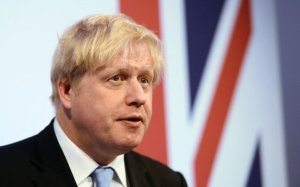
Boris Johnson - Vote Leave

We all know that Boris Johnson’s decision to “Vote Leave” is gratuitously unprincipled and self-serving. So let’s just stop talking about him – otherwise, we merely give his publicity machine the fuel it craves

Fraser Nelson gets to the heart of what really matters in the Brexit debate – how long it will take David Cameron to forgive Boris Johnson for his treachery:

Until now, David Cameron had been very lucky in his enemies: David Davis, Gordon Brown, Ed Miliband and then Jeremy Corbyn. But last night, the quality of his opposition in the EU referendum campaign rose rather substantially. He now finds himself arguing against not only against Michael Gove, the person he turns to when he’s short of killer lines, but against Boris Johnson, perhaps the single most popular figure in the Conservative Party.

[..] This is a gamble that could either leave Boris in the wilderness, or writing the next set of No 10 Christmas cards. Should David Cameron lose the referendum, he will probably have to resign as Prime Minister given how much of his personal authority is on the line. And who would succeed him? Not George Osborne, who urged the Prime Minister to hold an early vote. The leadership race will be decided by Conservative Party members, who are expected to back “out” by a margin of three-to-one.

[..] Already, there are signs of the Cameron operation closing ranks against Boris. No 10 has a semi-official vengeance policy: ministers with a long-standing opposition to the EU will be forgiven for backing “out”. The implication is that there will be no forgiveness for Boris, who has waited until now to declare his support for Brexit. “The last thing I wanted was to go against David Cameron,” said Boris yesterday. Quite true: what he wants is to come after him – and he is, as of last night, the bookmakers’ favourite to do just that.

This kind of breathless court gossip sometimes makes me despair of the Westminster media. There is a real, existential question before us right now – whether Britain should remain in the EU and follow its winding road toward political integration, or take a bold step toward independence and sovereignty. And a media class that did its job properly – speaking to the people rather than excitedly talking amongst themselves – would focus on the policy, not the personalities.

Does the Conservative Party leadership succession matter? Absolutely. Along with Tim Montgomerie, I have a significant ideological interest in who takes over from David Cameron and (hopefully) restores some radical conservative vision to the party of Margaret Thatcher. But there’s a time and a place.

Fraser Nelson at his best is a thoughtful and questioning conservative commentator – particularly when he focuses on social issues like welfare dependency. Were Nelson to fully engage his engine, we would likely all benefit from his considered addition to the EU referendum coverage. But as of Monday evening, everything Fraser Nelson has written thus far has focused on the tedious subject of Boris Johnson’s career.

I don’t need a poll to tell me that right now, people care more about the arguments for and against Brexit than they do the many fierce little psychodramas playing out between the Conservative Party leadership and Brexit-supporting Tory backbenchers, or between David Cameron and Alexander Boris de Pfeffel Johnson. But survey the mainstream media and you will find a lot more breathless leadership speculation than deep, forensic analysis of David Cameron’s fraudulent renegotiation, or the arguments for and against Brexit.

I’m sure that better stuff will follow. I hope it follows soon.


Boris Johnson - EU referendum

Agree with this article? Violently disagree? Scroll down to leave a comment.

Follow Semi-Partisan Politics on TwitterFacebook and Medium.

Cameron’s EU Deal – Reaction

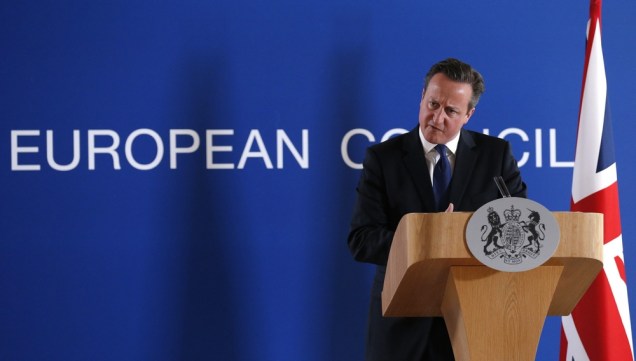
BELGIUM EU SUMMIT

Didn’t he do well?

As our victorious prime minister returns to London to chair the fateful cabinet meeting which will now likely set the wheels in motion for a June referendum, it’s worth taking a brief survey of how David Cameron’s deal – essentially an embossed, artfully decorated statement of the status quo – is being received.

The division between those who are angry or depressed and those who are buoyantly cheerful really tells you all that you need to know.

Toby Young bristles at being asked to greet the status quo like a shiny new present, but recognises that such a devoutly europhile prime minister could scarcely be expected to to any better:

The attempt to spin this deal as a great victory, which grants Britain a “special status” within the EU, is unlikely to win the Prime Minister many friends. On the contrary, it may end up alienating people who haven’t yet made up their minds who will feel they’re being taken for fools.

[..] Crucially, the EU leaders made it clear that there won’t be any further reforms, at least none that will mean a transfer of powers away from the centre. So Downing Street won’t be able to spin this agreement as the beginning of a reform process rather than the EU’s best and final offer.

Many of the “wins” Cameron boasted about in his speech were just assurances that the EU isn’t going to take away the protections for Britain already won by Margaret Thatcher and John Major. We won’t be forced to join the euro! Whoopee doo.

Tim Stanley channels his inner Tony Blair and declares Cameron’s pitiful outcome to be “weak, weak, weak”:

David Cameron’s deal with Europe is weak, weak, weak. It could never be anything but. Why? Partly because the Prime Minister is an inveterate Europhile.

He approached these negotiations from the stance of someone who ultimately wanted to stay in – and how could he negotiate from strength when everyone around the table knew that he was bluffing? More importantly, the idea that Britain can build for itself a “special status” within Europe is pure fantasy.

The EU cannot be decentralised; the UK cannot prosper on its fringes. The only real choice is between the status quo and Brexit.

[..] The Europeans made it clear from the outset that there would be no rewriting of the fundemantal principles. Rightly so: one country cannot determine the direction of travel for the entire continent. And if one country gets to pick and choose its own rate of integration into the new super state – why, everyone else will want to do the same.

So Cameron could never have been given substantial reforms because just putting them on the table would have jeopardised the grand European project. We have reached a point in the history of the EU when what Britain needs and what Europe wants are no longer compatible. The only logical thing left to do is to leave.

Paul Goodman compares David Cameron’s loftily declared original list of renegotiation objectives with the limp and shrunken prize he now holds in his hand – and he makes the choice facing Conservative MPs crystal clear:

Many Conservative MPs told their voters and Associations at the last election that Britain’s relationship with the EU cannot go on as it is.  They are fully entitled to say now that they have changed their minds.  That they have been persuaded that Britain’s future is brighter as an EU member state.  That they will swallow any misgivings they have about the deal, and back their Party leader – who, after all, is on some measures the most successful Conservative leader of modern times bar Margaret Thatcher.  That this is no time to campaign for a referendum result that would turn an election-winning Prime Minister out of office, and destroy the reforming work of the first majority Tory Government in over 20 years.

What they cannot say, if they have declared that Britain’s relationship with the EU must see real reform, is that this deal makes a difference.  And if they want to see such change, the lesson of this summit is that it isn’t on offer.  Which leaves only one option open to them, and to Party members of the same mind – to back Brexit.

Meanwhile, the Guardian is priming its core audience of nodding-dog virtue-signallers with key arguments to use against Brexiteers, and confirms what any thinking person knows – that the ultimate decision has nothing to do with David Cameron’s non-existent concessions from Brussels:

First of all, the details of the deal are not the crucial issue. Months ago, when David Cameron revealed his renegotiation agenda, it was already clear that this was not going to be a fundamental redefinition of Britain’s relationship with the EU. Nor would we suddenly find ourselves in “a reformed Europe”. On this, Eurosceptics are right: Cameron’s demands were less than he pumped them up to be, and inevitably, given that 27 other European countries had to be satisfied, what he achieved is even more modest. But it would be madness to let a decision about the economic and political future of Britain for decades ahead hinge on the detail of an“emergency brake” on in-work benefits for migrants.

New Europeans – that pressure group of proto-EU citizens waiting impatiently for the new  European that they crave to finally hatch – are happy too:

The Prime Minister has secured his so-called “emergency brake” on in-work benefits paid to mobile EU citizens coming to Britain. However, it will not be his hand that is on the brake, despite his announcement to the contrary.

The brake is in the hand of the Council.  The Council may be ready to pull the brake for the UK already – but it is still the Council’s hand on the brake. The European Parliament would need to pass the necessary legislation.  So the earliest the legislation could be in place is 2017.

The emergency brake will operate like the transitional arrangements – after 7 years it will drop away. In the meantime, very few people will be affected because mobile EU citizens rarely apply for in-work benefits in the first four years. There is very little evidence to show that EU citizens are claiming in-work benefits on arrival in Britain.

[..] The potential savings from David Cameron’s “clamp down” on other benefits for mobile EU citizens are trivial and petty in the context of the national accounts. They amount to about £30m on some estimates. This is less than what it costs to run the Royal Opera House.

And they are right – the main “headline concession” that David Cameron managed to secure from Brussels remains entirely in the hands of the EU rather than Britain, and would make absolutely zero tangible difference to anything whether it is ultimately pulled or not.

These people have no reason to lie. They are the people who were potentially most affected by any major changes that David Cameron might have negotiated, so their relief (bordering in crowing) is absolutely genuine – and utterly damning of Cameron’s claim to have fundamentally changed our relationship with the EU.

Back to Tim Stanley for another eloquent denunciation of this brazen establishment stitch-up:

There are a million reasons to hate politics: the groupthink of the establishment is one of them. Cowardice is another. It’s like being governed by jellyfish: spineless synchronised swimming in one terminal direction.

For years Tories have used the issue of Europe to win votes, promising us either serious reform or a campaign to leave.

But not only was David Cameron’s renegotiation effort a paper tiger (Francois Hollande: “Just because it lasted a long time doesn’t mean that much happened”) but now the Cabinet has largely decided to follow its leader and back the In campaign.

[..] The entire weight of the state, media and big business will fall behind a campaign saying that Europe is good for us even if, from a distance, it appears to be a giant ball of flame hurtling into an abyss of despair.

Against this confederacy of dunces stands a small number of politicians brave enough to risk friendships and careers to tell us the truth – that this deal is a sham, the EU is dying and Britain is better off out.

I myself have nothing to add at this time. Others have already encapsulated what I feel, and said it better than I could – most notably Dr. Richard North at eureferendum.com, who echoes my reference last night to Neville Chamberlain:

Mr Cameron may have in his mind’s eye the image of Prime Minister Neville Chamberlain returning from Munich in 1938, triumphantly waving his “piece of paper” at Heston Airport (where the M4 service station now stands), but at least Mr Chamberlain’s “deal” bought us critical time, allowing us to re-arm sufficiently against the Nazi menace.

But this piece of paper is nothing but a fraud – a pretence. This Prime Minister has brought nothing back, nothing of substance, and is now intent on using is as the basis for a referendum where he is intent on selling his snake-oil “special status”.

Yet, all the time, Mr Cameron’s efforts have been a sideshow besides the main event – the real renegotiation under way to transform the 19 members of the Eurozone into a single state. That is the EU real agenda not the stage-managed drama of the Prime Minister emerging blinking into the light and announcing he has secured our future for a generation.

Nor should we assume that the Brussels barons will treat us kindly if we vote to remain in the EU. They will brush aside future British protests, telling us that we have had our chance to do things our way and rejected it. Our prospects sitting uneasily on the margins of the emerging superstate will not be promising. Unloved, ignored and marginalised, we face an uncertain, even risky future, on the outskirts of the new European empire.

But I, and this blog, will have much to say as we now fight onward to the 23 June referendum date. And those politicians who built their jealously-guarded careers and reputations on what turns out to be paper-thin euroscepticism should expect no understanding and no mercy.

The divided Leave camp has been caught napping – Cameron is going to the country with a desultory deal, entirely based on the belief that we are so divided that we will not be able to mount an effective Remain campaign – and by publicly embracing people like George Galloway, it seems that some of us are determined to prove him correct.

If you haven’t been paying attention so far, or have only half tuned in, then now is the time to perk up and fulfil your duty as an engaged citizen. We have just four months to win our freedom from the European Union and, if we succeed, potentially spark a renaissance of real democracy through Europe.

BELGIUM-EU-BRITAIN-POLITICS

Agree with this article? Violently disagree? Scroll down to leave a comment.

Follow Semi-Partisan Politics on TwitterFacebook and Medium.

Deal Or No Deal?

Deal.

So, to summarise our prime minister’s magisterial achievement at the European Council summit in Brussels:

  • We won’t become part of something (a European superstate) which can only come about through a new treaty which Britain already has the right not to ratify, making this renegotiation “win” utterly superfluous
  • We have supposedly won a unique exemption from “ever closer union”, though curiously the treaty which firmly commits us to this goal will go unamended
  • We won’t join the euro – an obvious extension of the status quo which any British prime minister could have achieved simply by staying home in Downing Street and binge-watching Netflix
  • Same for Schengen and “open borders”
  • There will be new restrictions on migrant benefits, now apparently a burning issue yet something which wasn’t even on most people’s list of EU grievances until David Cameron suddenly started talking about it just prior to his European shuttle diplomacy

Peace for our time.

Britain - UK - European Union - Referendum - Brexit - Punishment Beating

Agree with this article? Violently disagree? Scroll down to leave a comment.

Follow Semi-Partisan Politics on TwitterFacebook and Medium.

The Daily Toast: Iain Dale Is Right, Boris Johnson The EU Agnostic Is No Leader

Boris Johnson - EU referendum

Any politician who has not yet stated their position on Brexit is politically calculating, not genuinely agnostic, and forfeits the right to call themselves a leader

Iain Dale makes the short and convincing case that Boris Johnson is a man of absolutely no conviction on the most important issue of the day, and that consequently he should not be looked up to as a potential Conservative Party leader or prime minister.

Dale writes in Conservative Home:

Potential prime ministers need to be leaders, not followers. The fact that we won’t find out until today which side of the EU argument Boris Johnson will fall down on says a lot. We all know that he’s not a genuine Eurosceptic, so for him to continue to flirt with the Leave campaign tells us much about his political calculation.

I still think he will ally himself to the Prime Minister in the end, but let’s assume he doesn’t. Does anyone believe that such a move would be fired by genuine political conviction? Of course not.

In such circumstances, he will have calculated that if he becomes the de facto public face of the Leave campaign and that Britain then votes for Brexit, David Cameron would have no alternative but to resign – and that he himself would become party leader by acclamation.

Such a calculation may be right. But it would make Frank Underwood and Francis Urquhart look like amateurs. Some people may think that wouldn’t be a bad thing. I think it would stink.

Meanwhile, the Independent breathlessly “war-games” all of the possible outcomes, focusing on the most important thing in this entire EU referendum debate – the consequences for Boris Johnson’s precious career:

It’s decision time for Boris. Having spent months – if not years – teasing David Cameron (and the rest of us) as to whether he is an ‘outer’ or an ‘inner’ the time is fast approaching when the Mayor of London and possible future Tory leader (and Prime Minister) will have to make up his mind which side he is going to back in the EU Referendum.

Boris calls for Brexit – but the country says we want to stay.

This would be the worst of all worlds for Johnson’s burning ambition. He would have staked his reputation on a ‘leave’ vote and been rejected by the voters. He would be punished by Cameron and left to languish on the backbenches. His electoral mystique would be shattered and his chances of succeeding Cameron would disappear. Johnson knows this – and that is why he is so reluctant to take such a big risk and nail his colours to Brexit.

No, the time for Boris Johnson to make up his mind is not “fast approaching”. That time is now a rapidly-shrinking dot in the rear-view mirror.

Boris Johnson apparently aspires to lead the country. Real leaders (not that we have seen one in awhile) set out their vision and inspire, persuade, cajole or threaten their followers to march on toward their chosen destination. They do not wait to see which direction the majority of their flock split before sprinting to the front of the column and pretending to have been leading them all along. They do not skulk quietly at the back, grinning and flirting with both sides of an existential debate and hedging their bets until the last possible moment.

For a biographer and self-professed admirer of Winston Churchill, Boris Johnson is almost singularly lacking in any of the key qualities of our great wartime leader. Winston Churchill endured many years in the political wilderness due to the unpopularity of his political beliefs – beliefs which he expressed loudly and eloquently, whether they were right or wrong, wildly popular or deeply unfashionable. Churchill did not hedge his bets by making ambivalent noises about Nazi Germany’s re-armament in the 1930s – he railed against Hitler and strongly opposed the policy of appeasement, at a time when many in the country preferred to bury their heads in the sand and avoid facing reality.

Boris Johnson, by contrast, puts his own career first, second and third. And if he does have strong feelings one way or another about Britain’s membership of the EU, they are firmly subordinate to his concern for his own personal advancement. Yet he gets a free pass from the media on account of his bumbling persona and the fact that he is endlessly quotable, even when (as is nearly always the case) he is actually saying absolutely nothing of any importance or lasting value.

We have had leaders who care primarily about their public image and personal career advancement before. We have one now. Boris Johnson would just take this trend to its logical conclusion: the pursuit and holding of power as the first and only objective, with any core principle liable to be cast aside if doing so will help to shore up the incoherent centrist coalition of a support base – support which may be a mile wide but only an inch deep, as Tim Montgomerie warned on his recent departure from the Conservative Party.

Richard North says it best when it comes to the media’s obsession with Boris Johnson’s conspicuous fence-sitting:

Having to contend with this obsession, I have advanced, is like being a policeman attending a multiple car pile-up while a passer-by attempts to talk to him about their pet hamster.

If and when Boris Johnson finds it within himself to act like a leader, we should reconsider giving him the time of day. But so long as he continues to act in such a nakedly self-serving and principle-free way, the media should stop reporting on Boris’s dithering and start holding to account those people who actually have the courage to publicly declare their positions.


EU Democracy - Brexit

Agree with this article? Violently disagree? Scroll down to leave a comment.

Follow Semi-Partisan Politics on TwitterFacebook and Medium.