What Comes After Britain?

What comes after Britain broken union flag

Those who are eager to undermine the nation state should explain how they intend to preserve democracy once it is gone

I’m on the losing side of history.

I still believe that the nation state is a force for good, and that it remains the best repository and defender of our most fundamental rights and liberties. But I’m in a dwindling minority, and others have different ideas. Most things to do with the nation state are either being replaced, deconstructed or just becoming passé. I get funny looks if I say wouldn’t it be nice if we brought back the national anthem before sporting and other events, or if I write anything about “British exceptionalism”.

I know that all of these things are fading into the past, and I can make my peace with that. But for those who call themselves “progressive” and heartily embrace conceptions and institutions such as today’s vast European Union or total, unmanaged multiculturalism*, I have a question: do you really know what you are letting yourselves – and all of us – in for?

At the moment almost all of our rights are vested in and guarded by the nation state. But the nation state is under attack on all fronts – unlimited immigration within the EU, free trade, global capital flows, multinational corporations. I broadly agree with some of these trends, I often like them in principle and even personally benefit from most of them; but they are all gradually undermining the nation state.

Continue reading

Britain Needs A Parliament Fit For the Twenty-First Century

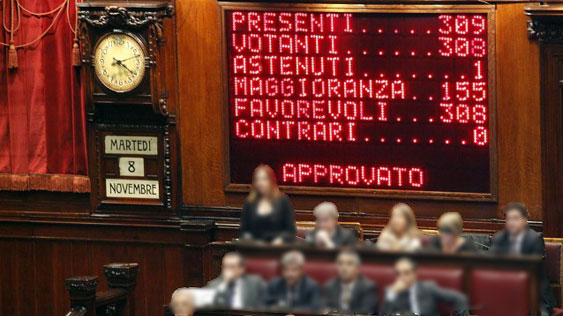
Parliament Electronic Voting 1


Economists and government officials rejoiced this holiday week as new figures revealed that the productivity of British workers, long a cause for concern, finally registered an improvement in the third quarter of the year. In fact, the 0.6 per cent increase in output per hour worked caused a welcome ripple of positive headlines and general satisfaction just as everything prepared to shut down for Christmas. But while the Bank of England takes succour from the fact that British workers are delivering more output per unit of time, can the British people say the same of their elected politicians? And how would we even go about measuring such a thing?

We know that the overall approval rating for Members of Parliament as a group hovers around the low twenties, but the general disdain in which politicians are held does not necessarily have any relation to how productive they are. We could attempt to determine productivity by measuring the number of debates attended and speeches made by MPs over the course of a year or a parliament, but this would fail to take into account the different jobs and roles performed by different MPs – though it would quite rightly expose former prime minister Gordon Brown as the political equivalent of the New York City union boss who spends most of the working day asleep at his desk.

Alternatively, we could try judging MP’s productivity according to the number of bills that they pass – but with fixed term parliaments a very new phenomena, backward comparisons would be almost impossible, not to mention the fact that stopping harmful legislation from reaching the statute books is often a far more valuable service to the country than busily legislating nonsense in pursuit of favourable headlines.

Continue reading

British Politics Has Become A Centrist, Ayn Rand-Style Dystopia

Westminster train 02


Readers of Atlas Shrugged will recall the Taggart Tunnel disaster, a seminal moment in Ayn Rand’s novel. The deadly train accident, an avoidable, man-made calamity, highlights the devastating but inevitable consequence of having too few people of moral fibre, wisdom and intelligence left in positions of power and authority.

For those unfamiliar: in the build-up to the disaster, the Taggart Railroad’s flagship transcontinental service breaks down while passing through Colorado, stranding a trainload of passengers in the mountains. Taggart Transcontinental’s best engineers and executives have long since deserted the company, resigning out of frustration with the endless bureaucratic meddling and the glorification of consensual mediocrity which has taken hold of corporate and political culture in the dying days of the United States. With no replacement diesel locomotives available and with nobody willing to take responsibility or speak truth to power, a self-important politician travelling on the train is able to bully reluctant and inexperienced railroad employees to use a coal-burning engine to pull the train through the long, airless mountain tunnel, resulting in the death by asphyxiation of everyone on board.

The grey characters of modern British politics are far less compelling than those in Ayn Rand’s dystopia, but alarming parallels are starting to appear between the groupthink and instinct for self-preservation shown by  the elite in Atlas Shrugged and the recent behaviour of the Westminster village as it faces the intertwined problems of unfinished constitutional reform, voter apathy, the relentless march of UKIP and an economic recovery that may as well not exist for the low-paid.

Continue reading

Get Out And Vote

Google European Elections 2014


To my British and European readers:

Whatever your political convictions may be, PLEASE make the effort to get out and vote today. People have given their lives in defence of our democratic right to choose our representation; the least we can do is take time to read up on the candidates/issues and make the trip down to the polling station.

Remember: those who can’t be bothered to get out and vote forfeit their right to complain about all things political until the next election.

For those who want to read a final Semi-Partisan analysis of the European election landscape before voting, click here.