A Portuguese Coup: How The EU Suppresses Democracy Without Trying

There may be no tanks on the streets, but only because that’s not the EU’s style. The European Union has now mastered the art of the bloodless, self-administered government coup

Television stations continue to broadcast. People continue to work, shop and go to school. In fact, life goes on as normal in nearly every way. But there is still a coup taking place in Portugal today.

At the beginning of October there was a general election in Portugal. The governing centre-right government led by prime minister Passos Coelho lost seventeen seats and their parliamentary majority, and though they remained the largest party they were unable to form a new government. After a few weeks of political horse-trading, the leader of the Socialist Party, Antonio Costa, forged a coalition deal with two other left-wing parties, the Left Bloc and the Communists. Together, they held a wafer-thin majority and could plausibly claim the right to govern.

But unfortunately, some of these left-wing parties held the Wrong Views. They were against the existing “austerity” terms of the bailout provided to Portugal by the European Union. Some of them – quick, fetch the smelling salts – were against the European Union entirely. And for holding these eurosceptic positions – views which were validated by the Portuguese electorate less than a month ago – they were prevented from forming a majority coalition government.

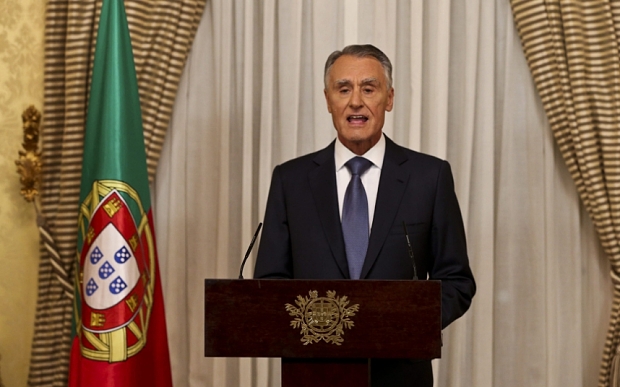
With these chilling words, the Portuguese president openly admitted that which has been an unspoken reality in Europe for some time – that democracy may exist, so long as it does not stand in the way of ever-closer European union:

Continue reading

The Only Thing Worse Than Prime Minister Jeremy Corbyn Would Be A Military Coup Removing Him

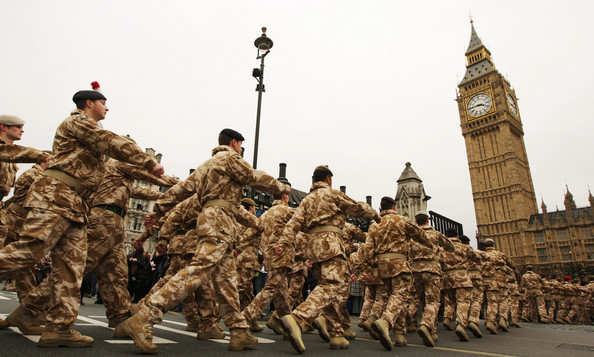
Troops Westminster Parliament

The Armed Forces deserve our strong support in the face of ongoing budget cuts and the depletion of their capabilities, but we must never tolerate the interference of arrogant generals in our democracy

Jeremy Corbyn’s socialist policies, well-intentioned though some of them are, would bring Britain to ruin so quickly that the damage would quickly become irreparable. But does that give military leaders the right to openly muse about destabilising a hypothetical Corbyn government, or launching their own Very British Coup?

Apparently so, according to comments made to the Sunday Times by a senior serving Army general, and widely reported in the press:

The senior serving general, speaking anonymously to the Sunday Times, said Mr Corbyn’s victory has been greeted with ‘wholesale dismay’ in the army.

He added: ‘There would be mass resignations at all levels and you would face the very real prospect of an event which would effectively be a mutiny.

‘Feelings are running very high within the armed forces. You would see a major break in convention with senior generals directly and publicly challenging Corbyn over vital important policy decisions such as Trident, pulling out of Nato and any plans to emasculate and shrink the size of the armed forces.

‘The Army just wouldn’t stand for it. The general staff would not allow a prime minister to jeopardise the security of this country and I think people would use whatever means possible, fair or foul to prevent that. You can’t put a maverick in charge of a country’s security.’

Continue reading

Why Can’t We Raise The Quality Of The Debate On Europe?

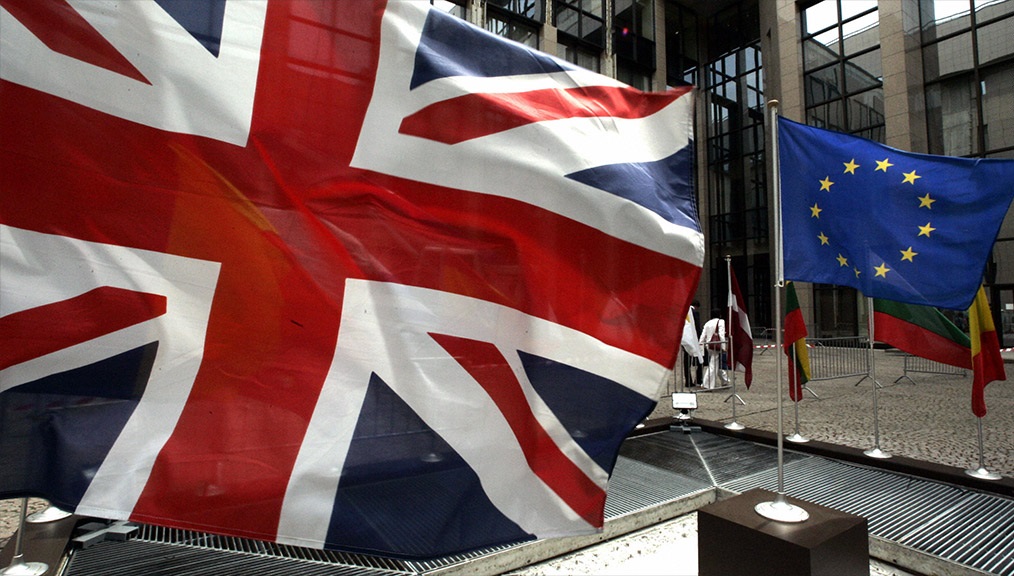
EU UK Britain Flags

The stakes could not be higher for our country, and yet the debate about Britain’s place in Europe takes place in a febrile atmosphere where blinkered partisanship and confected outrage on social media draws a larger audience than reasoned argument. No wonder we are incapable of disagreeing with honour when it comes to our place in the EU

Why can’t we disagree well on Europe?

That is the question posed by Justin Welby, Archbishop of Canterbury, in a thought-provoking intervention posted at Reimagining Europe, a new Church of England blog examining Britain’s place in Europe and the world from a Christian perspective.

In his piece ‘Learning to disagree well on Europe’, Welby writes:

People will say that we should not take the risk of leaving, others that it is less of a risk than staying. There will be talk of national sovereignty, of national confidence, of repatriation of laws, or being bound by European laws over which we have no control. The only certainty is that there will be much heat, probably slightly less light, but that it is a hugely important decision, with thoughtful and committed people, including Christians, on both sides.

But what about those in the UK for whom our membership, or withdrawal, from the Union, is not a major question, those for whom the needs and responsibilities of each day take precedence, and mention of political debates such as this leave them cold?

[..] How can we revitalise ideas such as sovereignty and subsidiarity – ideals formed out of Christian faith whose political dimensions capture their meaning only in part – and help encourage a clearly values-based approach to Britain’s future relationship with the EU; one that includes, but does not end with, economic and political perspectives?

All worthy questions. And in the spirit of making a constructive response, I would offer two main reasons that the quality of the debate has been – and is likely to remain – so desperately low.

First, the stakes of the debate are so high: we are not talking about tweaks to the tax code or welfare system which can be easily undone by a future administration, this decision will shape the future of our country, and the way in which the whole world responds to the challenges of globalisation. And secondly, the quality of our political discourse in general is driven by the internet and social media, democratising in their way but also a megaphone for those with the loudest and most outrageous opinions to seize control of the narrative.

Continue reading

Who Should Be Able To Vote In The EU Referendum?

UK British EU Flags - Brexit - European Union - Secession Referendum


It goes without saying that the loudest voices on the pro-European side are desperate for the coming EU referendum to be open to EU nationals currently living in Britain, as well as British citizens. From their selfish perspective, subverting our democracy in this way is a price well worth paying in order to inflict their desired outcome on the rest of us.

But now the europhiles are reaching for another rhetorical weapon in the fight: the fact that Britain, through a number of bizarre constitutional quirks and the pernicious rules of the EU, already allows select groups of favoured non-citizens the right to participate in our democracy.

Mihir Bose, writing in the Guardian, is already taking a gleeful victory lap on the subject, suggesting that eurosceptics are somehow being craven or ideologically inconsistent for objecting to the idea of EU citizens voting to keep Britain chained to Europe while not speaking out against these other cases of non-citizens receiving the franchise:

What [eurosceptics] neglect to mention is that even now you do not necessarily need to be a UK passport holder to vote in a general election. Indeed, for decades the UK has allowed citizens from other countries the right to select members of parliament, a right that even extends to citizens of three EU countries. They are part of a much larger group of 72 countries that includes all Commonwealth territories, British overseas territories and British crown dependencies. Fiji and Zimbabwe may be suspended from the Commonwealth but their citizens resident here have not lost their right to vote in UK elections. The three special EU countries are Ireland, Cyprus and Malta. They enjoy this privilege because while they may now be part of the EU, they once had an older allegiance to a much greater union: the British empire. The sun set on the empire long ago, but its legacy lives on.

What makes all this fascinating is that while Eurosceptics are happy to raise all sorts of scare stories about the EU, these other voters are an issue they are reluctant to discuss. Indeed, as far as the UK electoral franchise is concerned, this is now the great elephant in the room, as I was made well aware during the recent election. At one husting, I had the chance to raise this issue with three panellists from the main parties: Michael Gove for the Tories, Ivan Lewis for Labour and Baroness Kramer for the Lib Dems. Lewis disapproved of my even raising the issue. Baroness Kramer, who did not seem to know that non-citizens could vote, justified it on the grounds that this was a wonderful example of British eccentricity. Gove just said that he did not want to see any change in the franchise.

More fascinating was how Ukip reacted. Some weeks before the election, at a British Future event, Douglas Carswell, now the only Ukip member of parliament, made a very reasoned speech to show that Ukip was not an anti-immigrant party. But when I raised this issue, he made it clear that this was not a question Ukip would touch, remarking that the British system was so complex that to lift the carpet would mean all sorts of things would crawl out. How strange to hear this from a party whose leader, Nigel Farage, makes so much of the fact that he is prepared to go where no other politician dares.

Continue reading

Brendan O’Neill Is Right – Not Voting Can Be The Honourable Choice

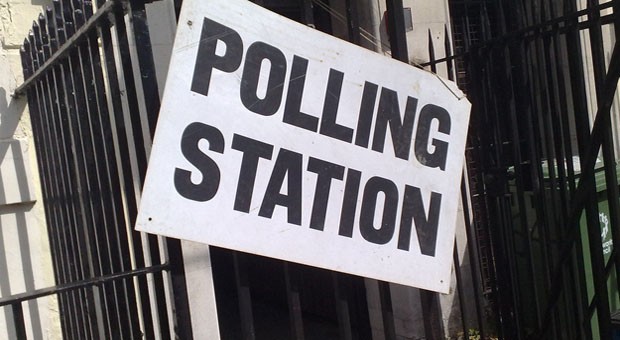
Polling Station - Voter Apathy - Voter Disengagement - General Election 2015


It speaks volumes about the dire state of our politics and our democracy that best thing yet written about the 2015 British general election campaign is not a stirring paean to any of the political parties – not even one of the populist insurgents – but an angry, snarling article which mocks the illusion of voter choice and actively discourages people from bothering to vote at all.

And no, it’s not another Russell Brand intervention – he of The Trews sold out spectacularly this week, urging his legions of fans to vote Labour and install Ed Miliband in 10 Downing Street because apparently “this bloke will listen to us”. As if.

The true standard bearer for the politically engaged but fiercely indifferent contemporary British voter is Spiked editor Brendan O’Neill, who lets rip against the stale centrism of British politics with a powerful piece in The Spectator entitled “I’m not voting on Thursday – but don’t you dare call me apathetic“.

Directly contradicting the endless conveyor belt of career politicians who have been telling us incessantly that this is the most important election for a generation (as was the last, and the one before that), O’Neill writes:

Well, I’m not voting on Thursday, and don’t you dare call me apathetic. It isn’t indolence of mind — ‘sluggishness, laziness, love of ease’ — that’s keeping me out of the voting booth. On the contrary, it is an agitation of mind, a love of difficulty, that’s making me withhold my vote.

I, like many others, want my politics hard, existential, frightening even, addressing the biggest questions facing humanity: freedom, progress, morality, war, the future. But all we’re being offered is a choice between managers, primarily of Britain’s economic decline. ‘Who will YOU trust to shave the public deficit?’

Continue reading