David Cameron’s Abominable Plan To Neuter The House of Lords

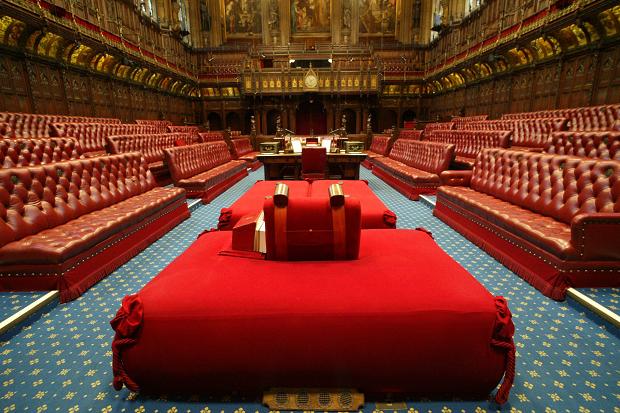
House of Lords reform - chamber

Britain’s unwritten constitution is not David Cameron’s plaything, or a convenient omission to be taken advantage of by opportunistic politicians who want to sidestep proper scrutiny

What do do when the British system of democracy fails to ensure a smooth and easy ride for each and every government bill or personal initiative of the prime minister?

Why, simply change the rules of the game, and meddle with the constitution so the only answer that anyone can give is an enthusiastic “yes!”.

This is essentially what David Cameron is now proposing to do, with some of the most nakedly autocratic changes to our legislature in recent memory.

The FT reports:

David Cameron has been secretly drawing up a plan to bypass an increasingly hostile anti-Tory majority in the House of Lords, which is threatening to wreak havoc with his legislative plans.

The UK prime minister will use the recent bust-up with the Lords on tax-credit reform as a chance to neuter the powers of the upper house.

Lord Strathclyde, the Tory grandee charged by Mr Cameron with reviewing the role of peers, is set to propose this month that the Lords should lose its veto over delegated or “secondary” legislation, such as the measure implementing tax-credit cuts.

Once that veto is removed, Mr Cameron is expected to step up his government’s increasing use of delegated legislation — also known as statutory instruments — to ram contentious measures through the upper house.

A typically arrogant move, as befits our current prime minister. But the worst comes in the form of this sneering, boastful threat from an unnamed senior Tory:

“If the House of Commons insisted, that would be it,” said one senior Tory.

“The House of Lords has to tread carefully,” he added. “If they don’t accept this proposal, we could stop them having any say at all on secondary legislation. That’s a big bazooka.”

In other words, the upper chamber of our national legislature should exist only to serve as an ermine-clad rubber stamp to the will of the prime minister. Sure, Cameron is happy to let the Lords poke around and pontificate on minor legislation of no real importance, just to give the appearance of a well-functioning and accountable system. But when it comes to the big ticket items involving finance, foreign or military affairs, the House of Lords should remain about as weak and toothless as its average, septuagenarian member.

In their outrage at being thwarted on tax credits and defied with regard to the voting age in the EU referendum, the government appears to have forgotten that scrutinising hasty legislation, thinking independently of the House of Commons and checking the “elected dictatorship” of the executive is exactly what an upper legislative chamber is supposed to do. If the composition of the upper house exactly mirrored that of the lower house, and voted in exactly the same way, there would be no point to its existence. This friction and tension between the two institutions forms one of the key checks and balances in our democracy – it is not something to be casually tossed aside whenever the government of the day finds its preferred pathway blocked.

There’s a dangerous chicken and egg dynamic at play when it comes to the House of Lords. The fact that the Lords are not democratically elected effectively gives cover to authoritarian governments who want to impose their will on the country unchecked. “None of these people were elected, while we just won the last general election”, governments can say. “Therefore we should be allowed to overrule or bypass the Lords in order to do the will of the people”.

But this also creates a powerful incentive to delay attempts to make the Lords more democratic, because to do so would add legitimacy to the body and make it much harder to steamroller ill-considered legislation past reasonable scrutiny and on to the statute books. The last attempt at positive House of Lords reform stalled early on during the coalition government of 2010-2015, after the Liberal Democrat initiative was blocked by a group of recalcitrant Tory MPs, and there will certainly be no further attempt now that the Conservatives govern alone.

It is certainly hard to argue that today’s House of Lords – made up of unelected grandees, failed MPs, influential party donors and the intolerable Lords Spiritual – should have the right to delay or veto government legislation. The current system is by definition undemocratic. But shamefully, David Cameron’s answer is not to make the House of Lords a powerful and democratically legitimate upper chamber, as he should, but rather to use the current state of the Lords as a convenient argument to help his government avoid much-needed scrutiny.

As this blog has been arguing for three years now, Britain urgently needs a full constitutional convention so that the weighty questions of how we govern ourselves and where power resides can be tackled, resolved and formalised in a document.

Equality for the four home nations in terms of devolved power. A fresh look at pushing power down to the lowest possible level, preferably the individual. Empowering cities, counties and regions (building on George Osborne’s Northern Powerhouse, but going much further). More elected mayors. Term limits for politicians and ministers. A pre-determined order of prime ministerial succession, so that the leader of our country is not chosen behind closed doors in the event that the unthinkable happens. House of Lords reform. House of Commons reform. Electronic voting in parliament to save vast amounts of valuable time. Perhaps splitting the executive from the legislature, so that MPs can concentrate on their jobs without being distracted by attempts to climb the greasy pole. All of these ideas and more should be on the table, with a view to fixing ancient democratic deficits while preserving all of the best of that which makes Britain great.

But what we have at the moment is piecemeal constitutional reform on demand – not with a view to promoting democracy or ensuring a well governed country, but simply in order to solve whatever problem happens to be confronting the government of the day. This is no way for politicians to govern, and it is no way to run a modern nation state.

Unfortunately, issues of governance and constitutional reform rarely bring people out onto the streets in protest, despite being of far more long term consequence to us all than relatively trifling matters like NHS junior doctors pay, HS2 or tax credits. But all concerned citizens should fight David Cameron’s latest lazy attempt at constitutional reform on the fly with every weapon at their disposal.

First we must stop the damage already being done. But that is not enough. It is not enough to stop David Cameron’s government from inflicting further vandalism on Britain’s constitution. The time has come to take a more holistic view of these matters, instead of the myopic, short-termist approach which thinks only in terms of immediate political advantage.

Serving MPs and ministers are obviously the last people who can be expected to give fair and impartial input to these decisions, though there is obviously a wealth of experience and knowledge held by current parliamentarians which must absolutely be harnessed. So we need to go directly to the people, however much the elites may recoil at the thought.

No more piecemeal reform. Britain doesn’t need any more opportunistic constitutional tricks. There may be little appetite for it – particularly when other current issues seem to loom larger, and when any discussion about who we are as a country provokes more awkward silences than expressions of patriotism – but we need real reform, through a full constitutional convention of the United Kingdom.

The longer we wait to drag Britain’s patchwork constitutional settlement half way to meeting the people, the less democratic – and more ungovernable – our country will become.

House of Lords reform 2

Agree with this article? Violently disagree? Scroll down to leave a comment.

Follow Semi-Partisan Politics on TwitterFacebook and Medium.

Arrogant MPs Want To Turn Political Debate Into Their Own Safe Space

Syria Vote - Trolling - Online Abuse - MPs - 3


Being heckled and pilloried by obnoxious online trolls is a regrettable part of the job description for any 21st century MP. But the right answer is to ignore the idiots and move on, not to impose draconian codes of conduct or prison sentences for insulting speech

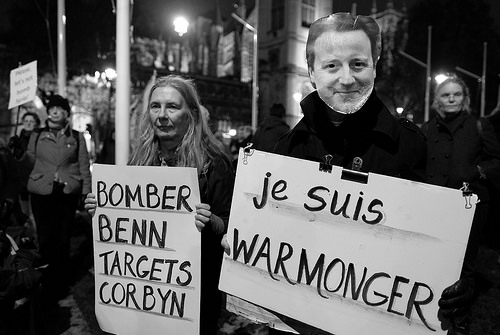
When Britain is in the midst of debating great issues of war and peace, it is frankly astounding that much of the media seems more concerned with the hurt feelings of Labour MPs threatened with deselection by angry constituents than the consequences of British military action in Syria.

In the aftermath of the Syria vote in parliament, I saw one newspaper headline in particular that represented such an unhinged piece of self-aggrandising hyperbole that it made me do a double-take:

Jeremy Corbyn has made us targets for jihadists - shadow cabinet - Syria vote - ISIS.jpg

Apparently, by failing to assume direct control of the hearts and minds of every single one of his supporters – and physically preventing them from blowing off steam in the aftermath of the Syria air strikes vote in Parliament – Jeremy Corbyn is personally responsible for endangering the lives of those MPs who voted with the government for military action:

Jeremy Corbyn has made his MPs targets for home-grown jihadists in the wake of the vote to back Syrian air strikes, a shadow cabinet minister has warned.

The accusation that MPs are being left open to revenge attacks came as a backbencher made a formal complaint to Labour’s chief whip over Mr Corbyn’s “despicable and deliberate” threats over the Syria vote which he said will lead to “personal violence” against MPs.

In the immediate aftermath of the vote, which saw 66 MPs defy Mr Corbyn to back David Cameron’s plans for military action, Labour Unity, a hard-left organisation linked to the party leader, released a “traitor list” of backbenchers who should be targeted for de-selection.

Mr Corbyn and his allies have been directly accused of “aiding and abetting” the intimidation of Labour MPs by leaking the names of MPs preparing to back the Government in recent days.

This is not a joke. A member of the Labour Party shadow cabinet – a fully grown adult with an important constitutional role to play in our democracy – serious believes that by expressing his scepticism about air strikes on Syria, Jeremy Corbyn has made dissenting MPs vulnerable to terrorist attack. They believed it strongly enough – or hated Corbyn enough – to give these quotes to a national newspaper.

First of all, Jeremy Corbyn needs to identify who this self-aggrandising crybaby is, and kick them so hard out of his shadow cabinet that they end up back in local government debating bin collections and street lighting. Such brazen disrespect of the leader is absolutely intolerable in a serious political party.

Jeremy Corbyn, of course, tolerates self-important asides from whiny, self-entitled members of his own shadow cabinet every single day, which suggests that he has the patience of a saint, whatever his many other flaws. But no leader should expect to be confronted with daily leaks and insubordination of this kind from their own shadow cabinet, particularly scurrilous juvenile fantasies that he is somehow endangering the lives of his colleagues simply by disagreeing with them.

This blog agrees with almost none of Jeremy Corbyn’s socialist platform, but this open defiance of the leader has to stop if the Labour Party ever hope to be taken seriously as a cohesive force in British politics. Right now, the only hope for the Labour centrists is that Corbyn proves himself to be so unelectable in the London mayoral, local and devolved assembly elections that real momentum builds for him to be replaced.

By constantly snarking and running to their media sources in the media every time Corbyn’s leadership style hurts their pwecious wittle feewings, Corbyn will be able to point to all of this insubordination later on, when he is on the ropes, and say that he is failing not due to a popular rejection of his policies but thanks to disloyalty from his own shadow cabinet. This is the last thing that the centrists should want, but in typical myopic fashion they are totally incapable of looking more than one step ahead.

Syria Vote - Trolling - Online Abuse - MPs

But it’s not just the fifth column within Jeremy Corbyn’s shadow cabinet who are at fault. An increasing number of MPs from all parties (but particularly Labour) are speaking out, claiming that robust and sometimes distasteful criticism of their political views and voting records is somehow tantamount to “bullying”.

This has now reached the point where even expressing the view that your MP is doing a bad job and should be deselected as their party’s candidate at the next general election is also being described as “bullying” by some self-entitled and wobbly-lipped MPs.

The BBC reports:

Ann Coffey, who has represented Stockport since 1992 was told: “Get behind the leader or kindly go.”

In response, she said she will “await the assassins to come out of the shadows”.

Assassins? What Ann Coffey is referring to is the great fear now stalking the Parliamentary Labour Party – deselection.

While the Metro reports on the party establishment’s hurt response:

Shadow home secretary Andy Burnham, who voted against air strikes, called on Mr Corbyn to show ‘no tolerance’ of abusive behaviour within the party and said a code of conduct was needed for members’ use of social media.

He was particularly disappointed with the treatment colleague Ann Coffey had received after voting for the strikes.

‘She has served Stockport, her constituents and our party for many years with distinction, and people need to have a look at themselves before they go around throwing threats at people like that,’ he told BBC2’s Victoria Derbyshire Show.

Whether Ann Coffey has served her constituents and her party well or not is beside the point – it is not for Andy Burnham, a fellow MP, to decide on behalf of Coffey’s constituents whether or not she should continue to be their Labour Party candidate, nor to shield her from public criticism.

Syria Vote - Trolling - Online Abuse - MPs - 2

This is a ludicrous state of affairs. MPs are grown adults, serious people who should be capable of participating in the rough and tumble of democratic debate without needing some higher authority to step in and moderate the debate to spare their delicate sensitivities.

Spiked’s Tom Slater agrees, writing:

Let’s get a few things straight. First of all, if you’re over 16 – let alone a prominent politician – you’ve got no right to claim you’re being bullied. Bullying is what happens in the playground. And most kids put up with far worse than a few nasty emails. It’s pathetic. Secondly, being called a ‘baby killer’ isn’t nice, but it’s not abuse or intimidation. It’s political critique – asinine, sixth-formerish, idiotic political critique, but it’s political critique nonetheless. And as for those who have claimed to have received death threats, they’re just not credible. Neil Coyle MP contacted the police, all because someone tweeted three knife emojis to him. Jesus wept.

[..] This is bad news for politics. The war on trolling, we were told, was all about protecting poor, vulnerable people from being hounded out of the public square. Now, 40-plus politicians are using the same language to protect themselves from criticism. In these strange political times, we need more conflict, more argument and, yes, more abuse-hurling. Politicians crying foul when someone disagrees with them – that’s what the ‘kinder, gentler’ politics looks like.

It is bad enough that our universities – supposedly places of intellectual rigour and ‘no holds barred’ debate – are turning into soft cornered safe spaces where delicate snowflake students insist on being protected from ever having to encounter a dissenting or provocative opinion. But apparently the disease has not been contained and has spilled over the borders of academia into the very heart of our democracy, the political sphere.

This is exceedingly dangerous. Angry, safe space-dwelling students are proving themselves more than capable of stifling debate, changing whole curricula and agitating for decent staff to be fired, despite having almost no formal power in the university hierarchy system. How much more damage, then, can elected MPs do to our already-weakened free speech rights when they are the ones setting the political agenda and making the laws that we must follow?

Enough is enough. Being told that one has blood on one’s hands because of a vote for military action may be jarring, unsettling and nasty. But MPs should be able to separate the wheat from the chaff, and engage with those constituents who engage with them respectfully, whilst either ignoring or belittling those who are rude or aggressive.

In fact, Labour MP Stella Creasy herself – usually leading the charge to criminalise Twitter abuse – inadvertently demonstrated how best to handle mean Twitter insults in the aftermath of the Syria vote when she responded to a member of the public who swore at her and called her a witch:

Syria Vote - Trolling - Online Abuse - MPs - Stella Creasy - Twitter - 2

Highlight the idiocy, publicly smack it down and move on. Or simply ignore the haters altogether. That’s all an MP has to do.

This should be the model which all MPs follow, all the time. Engage with the genuine constituents, especially when they are legitimately angry. Ignore those who are gratuitously mean, insulting or belligerent. But only report to the police those who make serious and credible threats of physical harm.

This is how anyone who has ever worked in a private sector customer service job would handle their interactions with the public every single day. Ask any London bus driver if they call the police every time they are demeaned, insulted or “bullied” while at work, and they would laugh in your face. When you work in a tough job like that, you grow a thick skin.

We should expect no less maturity (in the face of occasional public immaturity) from our elected representatives in Parliament.

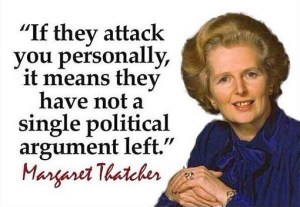
Margaret Thatcher - Internet Trolling

Agree with this article? Violently disagree? Scroll down to leave a comment.

Follow Semi-Partisan Politics on TwitterFacebook and Medium.

Budget And Autumn Statement Theatre Is No Way To Run Modern Britain

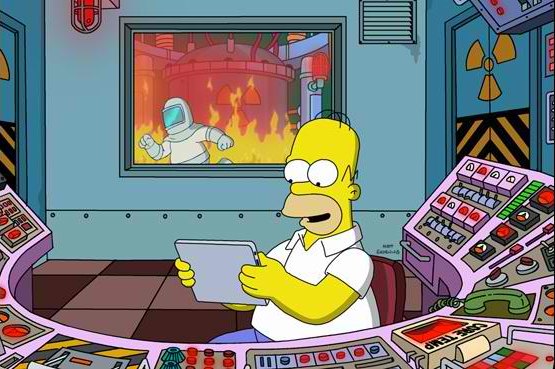
Homer Simpson - George Osborne - Budget - Annual Statement

The way British governments set budgets and tweak spending plans is a recipe for bad, short-termist decision making

Forget tax credits for a moment. Forget Right-To-Buy, stamp duty, beer duty and the tampon tax. MPs may still be debating George Osborne’s 2015 Autumn Statement, but step back for a moment and look at the broader picture.

Twice a year – once in the annual Budget and once in the Autumn Statement – the Chancellor of the Exchequer gets to his feet and delivers a refreshed set of economic policies in a big, set piece speech where he is essentially forced to favour tomorrow’s headlines over optimal long or even medium term decision making.

Nationally significant policies from every government ministry live or die by the concessions that their ministers are able to wrangle from a Chancellor who is forced by political reality to be more concerned with tomorrow’s Daily Mail headline than the state of our public finances in a year’s time.

Spending decisions are made based on economic forecasts which are sunnier than a warm day on Venus. Questionable political decisions are defended to the hilt, because to question them in light of new data would be to commit the gravest of self-inflicted political wounds, the U-turn. The government of the day rolls out a “smoke and mirrors” act worthy of David Blaine, and all to glam up the fact that they have slightly re-arranged the deckchairs on the Titanic.

And for what? To draw the public in to the political process? To high-mindedly arbitrate complex questions of economic policy? To astutely position Britain  vis-à-vis our global competitors, ensuring that our tax code, infrastructure and labour market are the most attractive in the world?

No. We do it just so that the government of the day – or a nimble opposition (remember those?) – can score political points. And, of course, because it is traditional.

Some traditions – like MPs not clapping in the Commons chamber – are antiquated and affected, but do little real damage. Others – like MPs having to leave the Commons chamber through a specific door in order to vote, rather than availing themselves of fast electronic voting technology – are an irritant, a brake on the smooth running of our legislature.

But some traditions belong in another category – things that do real, actual harm, not just to the running of our Parliament but to the political outcomes which we then have to live with every day. Some traditions actively harm our democracy.

I would submit that the Budget and Autumn State set-piece theatre events fall into this latter category. Politically astute chancellors (like George Osborne on a good day) may relish them because they provide an unparalleled opportunity to draw red lines and create traps for the opposition. The Westminster media may like the status quo, because if nothing else, these events can be moments of real political drama.

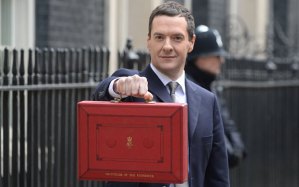
George Osborne - Chancellor of the Exchequer - Budget

But besides savvy chancellors and the established media, it is hard to tell who else benefits from the current system other than the cause of Big Government.

Having two occasions each year when an already-powerful chancellor like George Osborne in an already-centralised country like the United Kingdom gets to play with nearly all of the controls and levers which influence our economy – as though he were Homer Simpson at the controls of Springfield Nuclear Plant – only encourages meddling and tweaking of things that should properly be left to local government and individuals.

When you have direct, ultimate control over which families deserve help buying a house, which people should keep or lose their benefits or how much a person pays in sin taxes for their guilty pleasure, the temptation to use those powers is irresistible. And because of the ratchet effect, it is the easiest thing in the world to give away new perks to favoured interest groups, but nearly impossible to ever claw them back without being exposed to political attack. Even under this nominally conservative government, budgets and autumn statements have often been a one-way ticket to bigger government – or at least more activist state.

No system is perfect. One needs only look across the Atlantic ocean at the United States, with their unseemly debt ceiling fights and government shutdowns (oh, to have one here) to realise that you do not need a Westminster parliamentary-style system to sow budget chaos. But the flaws in our current system are obvious, and have been staring us in the face for years – yet nobody has proposed the slightest alteration, choosing instead to cheer when their side “wins” and whine when the other side is in power and sets a budget with which we disagree.

People did not elect a Conservative government only to have George Osborne sit at the control console of their lives, Homer Simpson-like, flicking switches and adjusting dials here and there in order to manipulate our mood so that we vote Tory again in 2020. If conservatism still means anything, it should mean a healthy scepticism of the state and its power to influence or police human behaviour.

Surely at some point our desire for smaller government and a smarter state has to outweigh our devotion to the dusty tradition of a man standing on the doorstep of his house, waving a red box around.

Autumn Statement - George Osborne - Conservative Government - Man at Control Panel

Agree with this article? Violently disagree? Scroll down to leave a comment.

Follow Semi-Partisan Politics on TwitterFacebook and Medium.

Time To Raise The Voting Age?

Safe Space Crybabies

Young people who cannot hear dissenting ideas without running to the authorities have no business voting at the ballot box

Since the generation of coddled students now going through university expect and demand to feel “comfortable” at all times, insisting that trigger warnings be slapped on anything which may challenge them – and retreating into strictly enforced “safe spaces” if that doesn’t work – perhaps the time has come to stop treating people in their late teens and early twenties like real adults.

After all, if today’s wobbly-lipped generation of Stepford Students need the authorities to ban controversial speakers, punish dissenting opinions and treat everybody as though they are either current or recovering victims of severe trauma, they are essentially already asking to be treated like children.

At least that’s the point made by Glenn Reynolds, a University of Tennessee law professor, in USA Today:

In 1971, the United States ratified the 26th Amendment, lowering the voting age from 21 to 18. In retrospect, that may have been a mistake.

The idea, in those Vietnam War years, was that 18-year-olds, being old enough to be drafted, to marry and to serve on juries, deserved a vote. It seemed plausible at the time, and I myself have argued that we should set the drinking age at 18 for the same reasons.

But now I’m starting to reconsider. To be a voter, one must be able to participate in adult political discussions. It’s necessary to be able to listen to opposing arguments and even — as I’m doing right here in this column — to change your mind in response to new evidence.

This evidence suggests that, whatever one might say about the 18-year-olds of 1971, the 18-year-olds of today aren’t up to that task. And even the 21-year-olds aren’t looking so good.

Reynolds goes on to cite the various examples of student and young adult infantilisation with which we have become depressingly familiar over the past year – calls to outlaw clapping and booing, tearful temper tantrums about dress codes, stifling ideas by labelling them ‘problematic’, the insistence on safe spaces and mandatory sexual consent workshops.

If people still look to external authorities to help them navigate daily life, mediate normal encounters and resolve commonplace disputes, we should probably keep them as far away from the ballot box as possible, argues Reynolds:

This isn’t the behavior of people who are capable of weighing opposing ideas, or of changing their minds when they are confronted with evidence that suggests that they are wrong. It’s the behavior of spoiled children.

[..] But children don’t vote. Those too fragile to handle different opinions are too fragile to participate in politics. So maybe we should raise the voting age to 25, an age at which, one fervently hopes, some degree of maturity will have set in. It’s bad enough to have to treat college students like children. But it’s intolerable to begoverned by spoiled children. People who can’t discuss Halloween costumes rationally don’t deserve to play a role in running a great nation.

It is ironic that at the same time there is a push to lower the voting age in the UK – the Lords recently voted to allow sixteen and seventeen-year-olds to vote in the coming Brexit referendum – people only slightly older and now at university, who already have the vote, are busy regressing back into emotional childhood.

This blog believes firmly in universal suffrage and a single, defined threshold of legal adulthood at the age of eighteen. But given the increasing number of campus incidents of precious snowflake students demanding that the authorities curtail their liberties for their own “safety” – and the fact that increasing age is the last, best hope of gaining wisdom – the idea of raising the voting age does start to feel awfully tempting.

Top Image: grrrgraphics.com

h/t Patrick West in Spiked

Agree with this article? Violently disagree? Scroll down to leave a comment.

Follow Semi-Partisan Politics on TwitterFacebook and Medium.

The “Remain” Campaign: Wrong On Economics, Cavalier With Democracy

EU Democracy - Brexit

The pro-EU lobby is wrong on the economic argument. But their lack of concern for democracy is far worse

Over the past week, a lot of scaremongering warnings and cautionary tales have been flung around by the “Remain” campaign, talking down Britain and painting the risible picture of the UK as a small, insignificant country that would be overwhelmed and destroyed if we tried to follow the examples of Norway, Switzerland, Singapore or any other country (all less powerful and consequential than ourselves) and re-engage with the world as an independent power.

We have seen the Prime Minister travel to Iceland and lie about the Norwegian option, misrepresenting facts and figures to make it seem as though Norway has to pay almost as much per capita for access to the Single Market as Britain, while having no influence over the rules. Both of these claims, of course, are false. Much of Norway’s contribution is voluntary and goes directly to the recent accession countries in eastern Europe, and are in no way a prerequisite for trading with the EU. And Norway has far more of a say over global rules because unlike EU member states, they retain their own, voting seat at the World Trade Organisation and other key global standard-setting forums.

We have seen Michael Froman, the US trade representative, seek to bully the British electorate with equally laughable claims that the United States would not be interested in pursuing a free trade deal with its strongest and closest ally in the event of Brexit. Again, this is pure nonsense – the US may prefer negotiating trade deals with large blocs, but so crucial is UK-US trade to both parties that a free trade agreement could be hammered out in minutes, were it absolutely necessary. Besides which, we need to learn to distinguish between what the US would like us to do and what is actually best for Britain.

And we have seen the CBI continue to misrepresent British business in general and its own membership, claiming that majority want the UK to stay in the EU based on highly selective  and manipulative sampling methods.

Continue reading