This Reckless Talk Of Brexit Is Making Whiny Young People Anxious

Team of creative people taking a break and using computer.

Staying in the EU and surrendering our democracy is a small price to pay to keep self-entitled millennials happy, because nothing is more important than generation Me Me Me

We of the millennial generation are fast acquiring a reputation as lazy, self-entitled whiners, endlessly complaining about how hard we have it – as though we are the first generation in history to come of age during economically uncertain times.

One might have thought that living in an age when each of us has a mini computer in our pocket which can tap the accumulated knowledge of the entire world – and when we don’t have to worry about, say, dying from tuberculosis – might make us momentarily grateful. But of course we are not, and now apparently the latest “injustice” being inflicted on the millennial generation – my generation – is the terrifying idea that Britain might vote to leave the European Union and seek to govern ourselves as an independent democracy once again.

Channelling this fear, Abi Wilkinson has written a nauseating piece in the Telegraph, explaining why the existential question of Brexit and Britain’s place in the world should be based entirely on the selfish desires and career insecurity of our generation.

Her piece – hilariously titled “Stubborn old people who want to leave the EU are condemning the rest to a lifetime of uncertainty” – is so patronisingly, finger-waggingly sanctimonious (and so readily swallows every talking point from Britain Stronger in Europe) that it makes anyone under the age of 35 seem completely insufferable, not to mention utterly wrong on the fundamentals.

Wilkinson opens:

When you consider that the risks of leaving the EU fall disproportionately on young people, it’s unsurprising that 18-29s are the group least likely to support the move. Almost three quarters of us say we’ll vote to remain, compared with just 37 per cent of over 60s. For many under-30s, worrying about employment has been a defining feature of our adult lives. Having come of age at the height of the financial crisis I know I’m certainly not keen to endure another similar economic downturn.

Of course becoming an adult and entering the workforce during a major recession is tough. Back in 2008 I had friends at Bear Stearns and Lehman Brothers who came home from work one day with all of their possessions in a cardboard box, and I narrowly escaped a redundancy round at my own company. Nobody wants economic uncertainty if it can be avoided, but at what point do infringements on democracy and the fundamental right to self-determination outweigh the hope of greater short term stability?

Wilkinson sees no such tradeoff at all – she is ready to jettison democracy at the first sign of trouble, throwing away our freedom even if it buys a measly 0.1% additional GDP growth. But the truth is that Brexit is possible while keeping disruption to a minimum by exiting to EFTA and EEA membership (the “soft landing” approach which would almost certainly be adopted by civil servants even if it is currently being furiously ignored by the mainstream Leave campaigns).

Abi Wilkinson might have known that there exists a comprehensive plan to achieve Brexit, extricating us from political union while minimising economic and other disruption. But like too many others of my generation, Wilkinson can’t be bothered to do her research, and so instead she swallows and regurgitates propaganda from the Remain campaign.

A man walks past various currency signs outside a brokerage in Tokyo

Wilkinson continues:

Already, young people are particularly likely to be in low-paid, precarious employment. Many are stuck working jobs well below their qualification level and struggle to secure the full-time hours they need to pay their rent and basic living costs. For anyone in this situation, the TUC’s warning that workers’ rights enshrined in EU law could come under attack following a Brexit vote is another serious worry.

At this point, Wilkinson’s politics become clear. She is one of those cookie-cutter lefties who love the European Union because they believe it acts as a social democratic bulwark against the Evil Tory policies which would otherwise ravage the nation. Or to put it another way, Abi Wilkinson doesn’t give a damn about the right of the British people to vote for the policies that they want for themselves. The population is too conservative for Wilkinson’s taste, and so we must have values and policies imposed upon us which we are not currently enlightened enough to vote for ourselves.

Abi Wilkinson is a great champion of democracy, you see.

But now it starts getting really offensive:

Less negatively, many people in their teens and 20s also appreciate the broader benefits of belonging to the European community. We’re more likely to travel abroad to work or study. Many of us have friends who were born in other countries so we’re less inclined to be wary of other cultures. We’re also much more likely to date someone who was born outside the UK.

In contrast, supporters of Brexit often seem to be motivated by a fear of the unknown. Older people are more likely to distrust migrants and to feel nostalgic for the comparatively homogenous UK of days gone by. Though there’s a sizeable retiree expat community residing in countries such as as Spain, over 60s are statistically likely to see the free movement of people as a threat rather than an opportunity.

Of course, for those who’ve already exited the labour market – or are planning to retire within the next few years – it’s much easier to focus on your gut instinct. If you’ve not got to worry about your employment prospects, the economic facts of the matter can be treated as a secondary concern. Young people have a reputation for being reckless, but in the EU referendum it’s older folk who will be playing fast and loose with the livelihoods of younger generations.

And continues:

As more countries have joined the EU, migration to the UK has gradually increased.

As a 20-something living in London, this isn’t something that worries me. I’m used to hearing a whole range of different languages and accents as I go about my daily life. It’s a mundane fact that many of my neighbours are relatively recent immigrants, not a cause for concern.

For someone who has lived in the same area for decades, however, I can see that it might be harder to adjust to changes in the local community. Still, it’s worth noting that UK-born people who live in relatively diverse neighbourhoods tend to feel more positively about migrants than those who don’t — suggesting that fear of immigration might be disproportionate to the reality.

Young people, open and tolerant; old people, suspicious and racist. Got it?

Note too how Wilkinson has pivoted, portraying young Remainers as the fearless go-getters off to pursue international careers and date hot Italians, while old people are now “[afraid] of the unknown”. She switches perspectives at several points throughout the piece, as though she cannot make up her mind whether young people are brave pioneers or snivelling victims (probably because it suits her purposes to be both at different times).

But worst of all is the suggestion that older people supporting Brexit are doing so not out of considered deliberation, but through “gut instinct”; that they are somehow not taking this seriously, and playing “fast and loose” with the livelihoods of the young.

Here, Wilkinson is seriously suggesting that the generation who have abandoned watching a nightly news bulletin in favour of Buzzfeed listicles pushed to their smartphone screens are the wise and discerning citizens, while those who actually have living memory of the European Union’s incremental power grabs are the ones making light of a critical geopolitical issue. The sheer gall of it is quite unbelievable.

Read the whole thing, if you can get to the end of Wilkinson’s sanctimonious lecture without wanting to punch your computer screen.
EU Referendum - Brexit - Democracy

The problem with Abi Wilkinson – and too many other members of Generation Me Me Me – is that they believe their right to an easy path through life trumps everyone else’s right to live in a representative democracy. As far as they are concerned, the fact that our own elected Westminster and devolved parliaments are increasingly sidelined by a supranational European entity is just the price we will have to pay for their ongoing contentment, because heaven forfend that the fuzzy career aspirations of some first year Gender Studies student are thwarted by a badly-timed outbreak of democracy.

In other words, too many millennials don’t know how to think or act as engaged citizens. Rather, they are capable only of behaving like selfish consumers, jealously guarding what they see as their special pot of privileges without the slightest care for the wider impact on the customs and institutions which together make up the fabric of our country, and which have often existed for decades or centuries before they were even born.

To this arrogant mindset, the older generations (like those strange grey haired people who gather round the Cenotaph every November wearing their silly medals for doing something or other in the past) don’t have a clue about what is best for Britain.

Apparently the generation which fought and bled and died to secure our freedom – whose contemporary Britain was reduced to rubble and rationing and deprivation in the 1940s when they were in the prime of life – is the selfish one, while their descendants (and I include myself) who sacrificed nothing but have mastered the Art of the Selfie somehow have a lot to teach our elders about responsible citizenship.

I’m sorry, but I’m not buying it, and I will not have it proclaimed in my name. Abi Wilkinson can speak for her very selfish self, but she should not presume to speak for the rest of her generation, or to demean the older generations so haughtily and glibly.

Some of us actually respect our elders. Some of us appreciate that coming of age when the building on the corner was a smoking crater from a German V2 rocket – rather than an artisan coffee shop with free WiFi – might possibly have imparted some wisdom and experience that we have not yet managed to acquire for ourselves.

Some of us weren’t born expecting all of the good things in life to be handed to us on a golden plate, or raised to be so rude that we write articles in the Telegraph essentially declaring “to hell with your democracy, give me a job in Madrid and cheap mobile roaming charges!”

Some of us are not so arrogant to assume that because we are “the future”, we are free to completely reshape society as we please, with no regard for the traditions and proven solutions of the past – you know, things like representative democracy, that old-fashioned concept where you actually get to vote out the people who make the key decisions if you disagree with them (try doing that in Wilkinson’s beloved EU).

Abi Wilkinson’s narcissistic, self-centred embrace of the Remain campaign makes me sick. It represents everything bad about the millennial generation, confirming every worst stereotype and instantly negating all of the better angels of our generation’s nature.

To those older Britons who wore the uniform, who fought for this country, who grew up in real deprivation in the early post-war years, who actually remember a time when Britain was a sovereign democracy and who are rightly incensed at being addressed as though you are stupid and greedy by a vapid, know-nothing millennial: please know that Abi Wilkinson does not speak for us all.


 

Hello I'm A Millennial

European Union - United Kingdom - Britain - Flags

Agree with this article? Violently disagree? Scroll down to leave a comment.

Follow Semi-Partisan Politics on TwitterFacebook and Medium.

At Least Jeremy Clarkson Is Honest About His Euro-Federalist Dreams

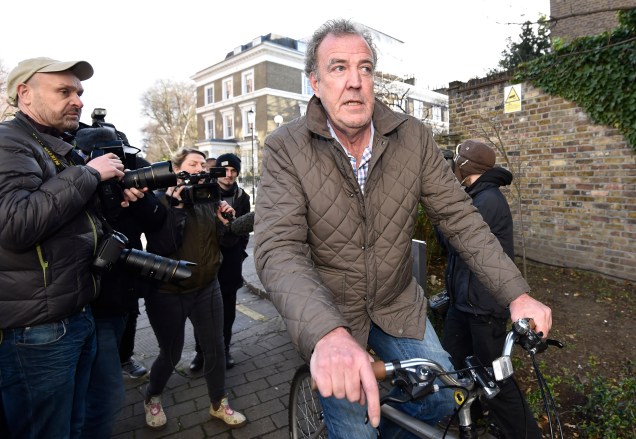
British television presenter Clarkson returns to his home in west London

Unlike most people in the Remain campaign, at least Jeremy Clarkson has the courage and decency to admit that he doesn’t just tolerate the European Union but actually dreams of Britain being part of a federal European country

So that great producer-punching pseudo Man of the People, Jeremy Clarkson, has come out definitively in support of Britain remaining in the European Union – and not just the EU as it is now, but the EU as it yearns to become in the near future, a fully politically integrated federal European state.

No great surprise there – Clarkson has made pro-European rumblings before. But what is surprising (and actually rather impressive) is the full-throated way in which Clarkson embraces his support of the EU.

Unlike nearly every leading politician and personality in the Remain camp, Clarkson does not attempt to flatter us or pretend that he “gets” our concerns about Brussels gradually usurping our democracy. Unlike the deceitful-yet-ingratiating Sajid Javid, Clarkson makes no promises to go back to ranting at Brussels the moment he has helped doom us to continued membership of the EU (though in Clarkson’s case, more ranting is all but guaranteed).

Jeremy Clarkson actually does something which almost nobody in the intellectually squalid, fear-based Remain campaign dares to do – he owns his pro-Europeanism and wears it as a badge of honour, rather than doing what so many Turncoat Tories and others have done, prancing around like the World’s Biggest Eurosceptic before meekly running to David Cameron’s heel and supporting Britain’s continued membership of the EU as soon as the prime minister snapped his fingers.

Clarkson writes in the Sunday Times (+):

I suppose that now is as good a time as any to declare my hand. I’m with the man whose wife we fancy. I’m in.

When Mr Cameron was touring Europe recently, seeking a better deal for Britain by sucking up to the leaders of such places as Romania and Hungary, I watched on YouTube an MEP called Daniel Hannan make an anti-EU speech to a group of, I think, students. It was brilliant. One of the best speeches I’ve ever heard. And, I’ll admit, it made me question my beliefs. But despite his clever, reasoned and passionate plea for us to leave Europe, I’m still in. He talked sense, but a lot of this debate is about how we feel.

In 1973 my parents held a Common Market party. They’d lived through the war, and for them it seemed a good idea to form closer ties with our endlessly troublesome neighbours. For me, however, it was a chance to make flags out of coloured felt and to eat exotic foods such as sausage and pasta. I felt very European that night, and I still do.

Whether I’m sitting in a railway concourse in Brussels or pottering down the canals of southwestern France or hurtling along a motorway in Croatia, I feel way more at home than I do when I’m trying to get something to eat in Dallas or Sacramento. I love Europe, and to me that’s important.

I’m the first to acknowledge that so far the EU hasn’t really worked. We still don’t have standardised electrical sockets, and every member state is still out for itself, not the common good. This is the sort of thing that causes many people to think, “Well, let’s just leave and look after ourselves in future.”

In other words, Jeremy Clarkson is your garden variety Euro-federalist. He looks at the bureaucratic opacity of Brussels, the contempt in which the EU is held by many of its citizens and the fact that cultural and regulatory harmonisation has not been completed to produce a single cultural identity where we all identify as Europeans first and use the same electrical outlets, and concludes that the correct answer is “more Europe”.

Fair play to him. He’s completely wrong, and betrays an almost criminal contempt for the democracy and right to self-determination for which our ancestors fought, bled and died. He is the archetypal person who votes as a consumer – because a harmonised, federal Europe would be better for his wallet and his weekend jaunts to France – rather than as a thinking, engaged citizen. But at least he has the god damn balls to honestly state his position. Hardly anybody in our own elected House of Commons supporting the Remain campaign would dare to do the same.

But then it begins to come off the rails (or the test track). Clarkson continues:

Britain, on its own, has little influence on the world stage. I think we are all agreed on that. But Europe, if it were well run and had cohesive, well thought-out policies, would be a tremendous force for good. I think we are all agreed on that as well. So how do we turn Europe from the shambles it is now into the beacon of civilisation that it could be in the future?

Oh really? We are “all agreed” on that, are we?

Actually, no we are not agreed at all. Our prime minister and foreign secretary may hold our country, its history and present capabilities in astonishingly low esteem, but fortunately the same cannot be said for many of the people. Many of us correctly believe Britain to be one of the few truly indispensable nations on Earth, that our contributions to the arts, sciences, commerce and global security are almost unmatched, and that we could throw our weight around in the world accordingly, if only we cared to stand up for our own national interest once in awhile.

But such views are unheard of outside the Chipping Norton set, the middle class clerisy in general and the fawning circle of friends and admirers surrounding David Cameron (of whom Jeremy Clarkson is one). These people, many of whom came of age at the peak of 1970s declinism and economic doldrums, have at their core a deep pessimism and scepticism about the ability of Britain to survive and prosper as an independent actor on the world stage.

So deeply have they internalised this self-doubt and self-loathing that no matter how much evidence you show them to the contrary – the examples of Australia and New Zealand, say, somehow surviving in the world without being part of an Asia Pacific Union and sharing a common parliament and court – they bat it away without even stopping to think.

Clarkson then sums up:

Right. So let’s switch our attention. Let’s leave the “parish councillors” alone and concentrate our big guns on the real decision makers in Brussels. Let’s have hacks outside their houses all day long, waiting for one of them to do or say something wrong. Let’s make them accountable. Let’s turn them from “faceless bureaucrats” into household names.

That is the biggest problem with the EU right now. Nobody is really concentrating on its leaders. Nobody is saying: “Hang on a minute . . .” And this means they are running amok.

It’s why we need to stay in. So our famously attentive media can try to stop them. To make them pause before they move. To make the Continent work the way the Continent should — as a liberal, kind, balanced fulcrum in a mad world that could soon have Trump on one side and Putin on the other.

And here we have the classic pivot back to “the answer is more Europe!” Rather than looking at public attitudes toward the European Union which range from disengaged indifference to blind, seething rage, Clarkson concludes not that the experiment in political integration by stealth has failed, but rather that we should just come to terms with it and re-order our media and culture around the EU’s artificial construct.

Clarkson is actually saying that if only more journalists doorstopped Jean-Claude Juncker and Martin Schulz every morning with awkward questions about budgets and foreign policy, we would immediately begin to feel more vested in the EU project and finally become enthusiastic Europeans. It’s pure wishful thinking, of course, but then so is everything about the EU, an political organisation build on the the principle of “If you build it, they will come” (they being a European demos willing to be led by Brussels).

But though Clarkson is wrong on nearly every point, cavalier with our democracy to the point that it does not even merit a mention in his article and unabashedly in hoc to the establishment’s ingrained europhilia, still he somehow comes away as the most intellectually honest and respectable of all the high profile Remain supporters.

Unlike an oleaginous Turncoat Tory, Clarkson does not feel the need to butter us up with constant anecdotes about how he hates Brussels just as much as we do, honest. And unlike those bland Remainers on the Labour benches, he does not just mutter inanities about countries “working together”, as though intergovernmental co-operation were not possible without the umbrella of an undemocratic political union.

No, Jeremy Clarkson owns his position, and has the guts to tell us that not only should we learn to love the European Union as it is now, we should actively fight for further political integration:

But, actually, isn’t it better to stay in and try to make the damn thing work properly? To create a United States of Europe that functions as well as the United States of America? With one army and one currency and one unifying set of values?

At last, an honest argument from a Remain supporter – someone who is brave enough to stand up and say “actually, I feel more European than British, I think that the nation state is kind of passé anyway, I’m envious of the size and power of the United States and terrified by the sight of Russia; therefore, we should proceed full speed ahead with the creation of a European country”.

Again: I find Jeremy Clarkson’s argument utterly repellent and contemptuous of our hard-won democracy and liberty. But my God, it’s refreshing to hear from someone from the Remain camp who actually says what they really feel about the European Union.

David Cameron, Philip Hammond, Theresa May and other assorted peddlers of FUD (fear, uncertainty and doubt) – your turn next in the honesty corner.


European Union - United Kingdom - Britain - Flags

Agree with this article? Violently disagree? Scroll down to leave a comment.

Follow Semi-Partisan Politics on TwitterFacebook and Medium.

Could Social Justice Warriors Hand Donald Trump The Election?

Social Justice Warriors for Trump!

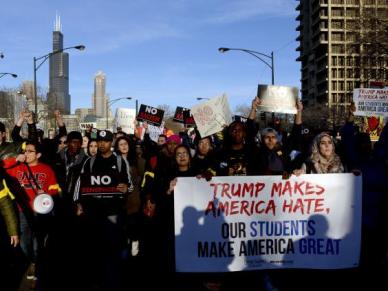
For those who insist that all of this concern over the resurgent authoritarianism and intolerance for free speech on our university campuses is a gross right-wing overreaction to harmless student activism, I present Donald Trump’s aborted rallies in Chicago and St. Louis yesterday.

Because this kind of mob rule – and the populist pro-Trump backlash which it will now inevitably generate – is the inevitable consequence of the on-campus infantilisation of students and their disregard for freedom of speech leaching out into wider society.

For context, from the unimpeachably impartial Guardian:

A Donald Trump rally in Chicago had to be called off on Friday evening amid scenes of violence and chaos unparalleled in the recent history of American political campaigning.

The scrapping of the Republican frontrunner’s appearance due to what his campaign cited as “safety concerns” led to uproar and fights inside the University of Illinois Chicago Pavilion and in the streets outside.

Scuffles broke out between Trump supporters, protesters and police, and a number of arrests were made, including of at least one reporter. As the mayhem took hold, Trump was reduced to complaining about the situation on the air, telling MSNBC: “It’s sad when you can’t have a rally. Whatever happened to freedom of speech?”

Having successfully forced the closure of the rally, the protesters were quick to gloat about how they had successfully halted the campaign rally of a man who (no matter how ignorant and odious some of his policies may be) is still a major presidential candidate whose ideas and pronouncements need to be heard and debated.

Not caring in the slightest that their actions served to suppress (and therefore fuel) bad ideas, the protesters celebrated their success:

Then it was announced that Trump wasn’t coming – and the arena erupted into chaos.

College students shouted “We shut it down” while loyal supporters of the Republican frontrunner shouted “We want Trump”.

Fights and scuffles broke out as protesters swapped blows with Trump supporters and activists eager to celebrate their apparent victory shouted “Bernie, Bernie” and “Si se puede” (“Yes we can”), while waving signs supporting the Democratic candidate Bernie Sanders.

To be clear, when all of the overwrought wailing about Donald Trump bringing Nazism back to America is set aside: what we witnessed yesterday was the first time in recent history when the campaign rally of a major presidential candidate had to be called off because of the threat of violence from protesters – people who believed that their fundamental disagreement with the candidate on policy and rhetoric gave them the right to prevent those ideas being expressed in public.

Rod Dreher’s analysis of the whole sorry situation is spot-on:

These left-wing demonstrators tried to shut down an American presidential candidate’s speech during the campaign — and they succeeded, through an implicit threat of violence. People who support Trump drove hours to hear him talk, and they were denied their constitutional rights by left-wing hotheads who believe that they are so righteous that they don’t have to observe basic civility. You come to a Trump rally and you start flipping people off? You should not be surprised if you get a sock in the face.

What happened tonight in Chicago is why we need Trump, as obnoxious as he is, to keep going. I am not a Trump supporter, and I reject much of his rhetoric. But he has a right to give a speech, even an obnoxious speech, without it being interrupted by demonstrators. All of us do. Trump is revealing how impossible it is to have a normal democracy with the activist left, who think their crying need for “safe spaces” gives them the right to silence their opponents.

No. This political correctness needs to be opposed, and it needs to be opposed with force. I don’t know why the police couldn’t handle this situation, but they had better be on it in the future, because many Americans will not stand for this. What those protesters have done tonight is create a lot more Trump voters out of people who are sick and tired of privileged leftists using thug tactics to silence their opponents.

Like Dreher, I do not agree with Donald Trump on most issues and have no wish to see him and his half-baked, reactionary political ideas catapulted to the White House. But also like Dreher, when I see the virtue-signalling More Moral Than Thou anti-Trump protesters gloating about how they shut down an exercise in democracy, it gets my hackles up and I inch ever closer to empathising with Trump supporters.

Dreher rightly goes on to insist that he would feel just the same were it right-wing protesters trying to shut down a Clinton or Sanders rally:

Protest all you want, but do it outside the venue, or silently inside. Do not silence the speaker, because if you do that, you legitimize your opponents trying to silence the speakers from your side. Thuggish, illiberal tactics like this from the left call forth the same kind of thing from the right. When right-wing white nationalist types show up and make trouble at Democratic rallies, or BLM rallies, and get them cancelled, on what grounds will you on the left have to complain?

For me, it’s all about the mob. I despise the mob. Any mob, which I define as a crowd that acts in force to silence people by intimidation or actual violence. We have seen over the past few months how left-wing mobs on college campuses have gotten away with outrageous things, because men and women in authority on those campuses lacked the guts to stand up for the liberal civic order.

[..] This has gone too far. When an American presidential candidate has to cancel his rally in a major city because protesters have made it too dangerous, we have a serious problem in this country. It’s infuriating. This is not America. Those disruptive protesters need to be made to understand that this is not how America works.

Is all of this enough to push Donald Trump over the finishing line in a presidential contest against Hillary Clinton or (less likely) Bernie Sanders? It remains unlikely – although in a political climate where Sanders is even competitive and Jeremy Corbyn leads the Labour Party in Britain, nobody can make cast-iron political predictions.

But at the same time, Dreher is right – those scenes from Chicago and St. Louis last night, beamed into millions American homes on the nightly news, will have created thousands more Trump supporters. Many existing Trump fans will be hardened in their resolve to vote for him, if only to give the preening liberal “fascists” a good kicking, while other wavering conservatives will be moved to take the plunge and come out as Trump supporters.

And this is why what is happening today in our schools and universities really does matter, and is not some fringe right-wing obsession.

Because these violent protests at Donald Trump rallies are what happens when a generation of young people – and looking at the protesters, the ones causing the most violence and disruption on the anti-Trump side are overwhelmingly young – are raised to believe that they have the right never to have to hear a contrary idea or an offensive opinion. This is what happens when young and impressionable minds are taught that if they do not like something, or it it hurts their feelings, that they are a “victim” and have the right to suppress the speech or behaviour to which they object by any means necessary.

Inside the sterilised bubble of campus life, these protesters would make loud and angry appeals to a higher authority (the university administration) to come crashing down on the person or people saying things that upset them. But in real life there is no Student Welfare Office or malleable university hierarchy to bend into submission. There are only other adults, to be intimidated with the threat of force.

Again: this blog has no time at all for Donald Trump. But you don’t need to support the man’s presidential bid to recognise that if the pre-emptive shutting down of his campaign rallies by political opponents continues, American democracy will suffer. Either it will feed into a persecution complex narrative which fires up Trump’s supporters and carries him to victory, or (far more likely) it will hobble his candidacy at the expense of creating massive resentment from his supporters, and merely burying his ideas rather than properly debating and discrediting them.

The inability of the Social Justice Warrior to think in public – to use their words rather than their fists, to debate using their minds rather than vandalise with their hands – means that the threat of violence is one of their only remaining weapons.

And now, together with the American Right – whose inability to neutralise Trump with a compelling mainstream conservative message is equally at fault – the virtue-signalling Left must shoulder their portion of the blame for actively fuelling the Donald Trump juggernaut.


Donald Trump - Chicago Rally - Protesters - Social Justice Warriors - SJWs

Agree with this article? Violently disagree? Scroll down to leave a comment.

Follow Semi-Partisan Politics on TwitterFacebook and Medium.

Brexit: How Much Democracy Would You Sacrifice To Reduce Uncertainty?

Brexit - European Union - Democracy - Uncertainty - 3

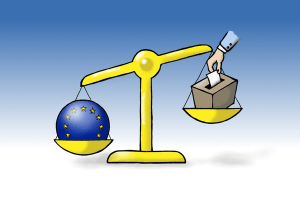
How much democracy would you give away in the hope of greater short term stability?

Our glorious leader has taken to the pages of the Sunday Telegraph today to offer his standard stump speech, talking down Britain’s prospects as an independent country.

Focusing exclusively on the (mostly) short term costs of Brexit whilst determinedly overlooking the costs of remaining in a relentlessly integrating political union, David Cameron warns:

A year ago, the Conservative election manifesto contained a clear commitment: security at every stage of your life. Britain is doing well. Our economy is growing; unemployment is falling to record lows.

We need to be absolutely sure, if we are to put all that at risk, that the future would be better for our country outside the EU than it is today.

There is no doubt in my mind that the only certainty of exit is uncertainty; that leaving Europe is fraught with risk. Risk to our economy, because the dislocation could put pressure on the pound, on interest rates and on growth. Risk to our cooperation on crime and security matters. And risk to our reputation as a strong country at the heart of the world’s most important institutions.

And in other utterly astounding and headline-worthy news, a group of finance ministers from the world’s leading economies released a statement yesterday, sombrely declaring that Britain leaving the European Union would represent an economic shock.

Or as the Telegraph tells it:

The global economy will suffer “a shock” if Britain votes to leave the European Union, the world’s 20 leading nations have warned.

In a joint statement, finance ministers from the G20 group of major economies unanimously agreed that the risk of “Brexit” posed dangers for international stability.

George Osborne, who is attending the meeting of central bankers and ministers in China, said the danger of a Leave vote on June 23 would represent one of the gravest threats of 2016.

In what will be seen as a coded attack on Boris Johnson, who is campaigning to leave, he added that the leaving the EU would not be “some amusing adventure” but a serious threat to Britain and the world.

Well, that’s it then. Quest for democracy and self-governance cancelled. Call off the referendum and put away all those naive thoughts of Brexit, because the world financial markets don’t like the idea very much, and what’s best for an American hedge fund manager automatically trumps your right to self determination.

Why, oh why do those awful eurosceptics and Brexiteers persist with their alarming and selfish calls for an end to undemocratic, unaccountable, supra-national government? Can’t they see that they are creating economic uncertainty? Won’t somebody please think of the children?

This, by the way, is the same George Osborne who insisted that “we rule nothing out” when it came to possibly campaigning for Britain to leave the EU, until the conclusion of the so-called renegotiation. This opens up the hilarious thesis that while the Chancellor of the Exchequer believes that Brexit would be unspeakably traumatic for Britain and for the world economy, he was nonetheless prepared to recommend that we quit the EU and flirt with so-called disaster, had Britain not secured that precious reminder that we are already under no obligation to adopt the euro (one of our renegotiation “victories”).

If George Osborne is so desperate to warn us that Brexit would not be an amusing adventure, why was he willing to publicly countenance Britain leaving the EU in the event that he and David Cameron failed to win their puny basket of concessions from Brussels? If Britain leaving the EU would inevitably be such a disruptive and traumatic event, why did they insist that nothing was off the table if they didn’t get what they wanted?

But put all of that to one side. The more fundamental question we have to ask ourselves is whether we are happy for every key decision about our civic life to be determined purely by economic forecasts. And not necessarily detailed or well researched forecasts at that, but rather by unverifiable assertions about fickle market sentiment – which inevitably prioritises the short term over the long term, and which can put a price on risk but not on democracy.

A man walks past various currency signs outside a brokerage in Tokyo
The EU apologists in the Remain camp will throw their hands up in mock horror at this statement, but it is true: some things – like democracy – are more important than money.

In fact, you can tell a lot by observing the times when EU apologists and left-wingers earnestly listen to the voice of big business and the far more frequent occasions when they demonise the “greedy” corporate world. To point out the naked confirmation bias at play here is hardly necessary.

As this blog commented some time ago, when HSBC was making dark murmurings about potentially upping sticks and leaving Britain in the event of Brexit:

Isn’t it funny how the voice of big business – usually the object of scorn and hatred from the left – suddenly becomes wise and sagacious when the short term interests of the large corporations happen to coincide with those of the Labour Party?

Labour have been hammering “the corporations” relentlessly since losing power in 2010, accusing them of immoral (if not illegal) behaviour for such transgressions such as not paying enough tax, not paying employees enough money, paying employees too much money and a host of other sins. In Labour’s eyes, the words of a bank executive were valued beneath junk bond status – until now, when suddenly they have become far-sighted and wise AAA-rated pronouncements, just because they have come out in support of Britain remaining in the EU.

The ability of the British people to determine their own future does not appear as a line item on any company’s balance sheet or P&L account, so of course large corporations – as represented by the minority of FTSE 100 chief executives who recently signed a letter arguing against Brexit – do not care whether the people in their home country live in a functional democracy.

Most businesses are just as happy to make money from operating in oppressive autocracies as it is in free democratic countries; nobody is investing in China out of admiration for that dictatorship’s record on human rights. And indeed it is not the job of corporations to make such value judgements, or to safeguard the constitutional frameworks that hold this or any other country together.

That job falls to our politicians, people who should be able to distinguish corporate self interest from the national interest. And who should be able to distinguish between serious macroeconomic upheavals based on a fundamentally worsening economic outlook and short-term macroeconomic shocks based on spooked markets and jittery investors.

Of course Brexit might cause shock waves and be disruptive in the short term. One of the largest and most influential countries in the world would be leaving the most prominent supra-national political union in the world, and it would be concerning if such an event took place without causing a ripple of attention. But potential economic uncertainty is not the point, and neither is it a sufficient reason to fearfully remain in the EU in perpetuity while overlooking the profound and irredeemably anti-democratic nature of the club.

In fact, one can go further and argue that it is the tremulous fear of uncertainty – and our apparent preference for technocratic risk-minimisation at every turn and in every aspect of our lives – which has sucked the ideological contrast out of our contemporary politics and done so much to encourage voter apathy.

Pete North picks up on this point in an excellent blog post, in which he argues that a little uncertainty might actually be a very welcome development:

This is why the EU sucks. We can have any government of any stripe so long as it performs within a set of predefined parameters and does as it is told. How very dull. In dispensing with democracy we have dispensed with politics and in place of politics we have civic administration where everything is merely about the allocation of resources. Where’s the big idea?

We have heard from every politician the same vague promises about returning power to the people and restoring localism, but we’ve heard it from ardent europhiles who do not see the inherent contradiction in their empty words.

By excluding the people from decision making we have killed off social innovation and enterprise, we have beaten the life out of our education system and where our health system works it is more through luck and the application of cash than actual managerial skill. It is little wonder that business looks overseas for skilled individuals in that our schools are micromanaged to the point of insanity, beating the vitality out of teachers so that children are neither engaged nor educated.

Put simply, there is no longer any uncertainty in politics. The corporates have got their own way. They keep saying if we leave the EU, it will cause uncertainty but that’s actually exactly what we need. We do need some uncertainty that causes to re-engage in politics and to learn more about civic participation and steer decision making. We need some political risk taking so that we can innovate. It might mean a lot improves and it might mean some things break down. But wouldn’t that be more tolerable than the interminable beigeness of modern, post-democracy Britain?

And ultimately, it comes down to that one question: what price does the Remain camp put on democracy?

If the EU is frustrating and imperfect (as all but the most starry-eyed europhiles concede) but leaving would simply be too great a risk, where then is the tipping point? At what point do the negative consequences of gradually but relentlessly losing control over the decisions which affect our lives outweigh a brief wobble in the FTSE 100 or a few sleepless nights for central bankers? And if we have not already reached this tipping point, those who argue for us to stay in the EU have a moral responsibility to tell us where they do draw the line.

Europhiles, particularly those on the political Left, love to portray themselves as progressive and enlightened warriors, fighting for freedom and security for the little guy. Well, here is a blazing example of them doing exactly the opposite in real life.

Given the choice in this referendum to stand up for the right of the poorest and most disadvantaged citizen to exert some limited measure of control over their government by campaigning for Brexit and repatriating sovereignty from Brussels, instead the EU apologists would condemn us to yet more political union with Europe. And all because to do otherwise would go against the wishes of finance ministers, central bankers and certain chief executives. Way to fight for the average citizen!

Risk and uncertainty are not dirty words. And while our prime minister seems to believe that we are a nation of frightened children who are terrified of making important decisions and who instinctively run away from the slightest risk, I choose to hope that there are still enough of us who realise that the EU’s anti-democratic status quo is not the best option for Britain’s future, that David Cameron’s sham renegotiation has done nothing to change that basic calculus, and that a brighter and more democratic future could await us if we dare to ignore the many vested interests and take bold action.

David Cameron went to the country at the general election last year offering a Big Government, nanny state “plan for every stage of your life”. He now asks us to trust that the future he has carefully planned out for us – one of sheltered irrelevance, tucked away in an anachronistic 1950s regional political union – is the best that modern Britain can hope for.

This referendum provides the opportunity for British citizens to show that we hold our country in much higher regard than does our own prime minister – and to help consign David Cameron, together with our EU membership, to the dustbin of political history.


EU Democracy - Brexit

Agree with this article? Violently disagree? Scroll down to leave a comment.

Follow Semi-Partisan Politics on TwitterFacebook and Medium.

Quote For The Day

Westminster - Big Ben - Parliament - Night

You might not be willing to devote the time and energy to understand how electricity actually works, or the mechanisms of your democracy, or the insights behind irrational decision making. More likely, you don’t want to expend the emotional labor to push through feeling dumb as you dig deep on your way to getting smart.

That’s always been an option. You can just use the tool without understanding it, copy the leader without realizing where she’s going, follow instructions without questioning them.

You can choose to be a cog in a machine you don’t understand.

If that’s working for you, no need to change it.

Seth Godin


With the EU referendum potentially only months away, it is incumbent on all of us to be informed citizens at this time, and not passive consumers or myopic public service users. We can think with our hearts and our wallets, but we must think with our heads first and foremost, and actually seek to understand the issues beyond the soundbites – no matter what side of the Brexit debate we think we are on.

This debate is about more than the bogus and unverifiable trade and investment statistics put out by the official campaigns on either side. It is about sovereignty, the continued relevance of the nation state as a key building block in world affairs, and the future of human governance itself. The choice we make – and the precedent we set in either validating or rejecting the EU model – may prove to be the most influential thing that the United Kingdom does on the world stage since Suez.

Do we reaffirm our commitment to the nation state as the best guarantor of our freedoms and liberties, or do we take a leap into the unknown by remaining in the EU and following it to its ultimate destination – a future of remote, supranational governance with all the trappings of democracy, but none of its spirit? That is the question before us.

It demands our full and serious attention as engaged citizens. We owe that much to our children, who will feel the benefit or suffer the consequences of the choice we make.

I explore these ideas in more detail in this piece from 2015, entitled “What comes after Britain?”

Cogs - Democracy

EU Referendum - Brexit - Democracy

Agree with this article? Violently disagree? Scroll down to leave a comment.

Follow Semi-Partisan Politics on TwitterFacebook and Medium.