What It Is Like To Be A Donald Trump Supporter On Campus

The New York Times (in a rare change of perspective) publishes a first-hand account of what it is like to be a moderate, unenthusiastic Trump voter at college.

K.N. Pineda writes:

The presidential election was the last thing on my mind on Nov. 8. I had essays to write and Italian vocabulary to learn. Sure, I kept New York Times and Wall Street Journal tabs open on my laptop, but I was uninterested in indulging in conversation about an election that most everyone could agree was a time bomb.

As a student at New York University and the daughter of a civil servant at the United States Department of State, I am familiar with political unrest and its potentially disastrous outcomes in the arms of ignorance and hysteria. I did not hold any particularly strong opinions about Donald Trump or Hillary Clinton. If I had voted, however, I would have picked Mr. Trump. I was focused on school. I had no idea that a few days later I would be dismissed as a “Trump supporter” and a person of “privilege” who “reflected an us versus them mind-set” in an essay by my college roommate in this publication — an essay that would go viral and change my life.

I did not feel that I should lie to my new college friends, especially at N.Y.U., where we are supposed to be open to hearing opposing views, able to discuss them and put any bias aside. I never tried to persuade my roommate to accept my side, my choice or my views. I even agreed with some of her opinions about Mr. Trump, who has said divisive things about Muslims and other minority groups. As an independent, my feelings toward the campaign were very mixed. I felt strongly that as a country we needed to focus on domestic issues, and for me, the Republicans were more prepared to do that.

My roommate has since apologized to me, but in the meantime I have felt the glare of her friends and been heckled on campus by other students. I have been labeled “racist,” “sexist” and “xenophobic” on Facebook. I have been called a “white without a conscious,” a “misogynist,” a “bigot” and a “barbarian” online by people all over the country.

This tale should make the allied anti-Trump forces stop and think firstly about how they are treating their own friends and neighbours, but more importantly about the image they are projecting to the wider country, and thus feeding into America’s future political discourse.

Presumably those most upset about Donald Trump’s election victory would quite like many of his supporters to vote for somebody else, maybe somebody from the Democratic Party, in four year’s time. They should stop and ask themselves whether this goal is more likely to be achieved by seeking genuine dialogue and understanding with people who voted differently, or by loudly and repeatedly accusing them of complicity in bringing fascism to America.

The enhanced cold-shoulder received by K.N. Pineda is also depressing given her own family background:

Here’s my story. My father is Hispanic. My extended family lives in Southern California and New Mexico. Many of my family members are not native English speakers. My maternal grandmother is an Italian immigrant who holds a green card. Her husband died after struggling with drug addiction and alcoholism; she had to work two jobs to make ends meet. My mother was raised by her stepfather, who is African-American and the only maternal grandfather I have known. He is a kind, devout man whom I love dearly. My family and friends come from all ethnicities, religions and sexual orientations.

Attending New York University was my dream. My dad grew up in a trailer home, and my mom was homeless for a period of time. My parents were the first in their families to graduate from college. They have struggled to provide the best for me and my brother. They have sacrificed financially and worked hard to give us a good life. I came to N.Y.U. partly on scholarship and am accruing debt to pay my tuition.

As minorities, my mother, father, grandparents and I have experienced racial hate. My skin may be light, but I understand discrimination. I may not know each person’s individual experience, but am able to empathize with others.

So not a dumb, ignorant redneck then (incidentally, one of the last groups of people that it is okay to openly mock and denigrate in polite society). Rather, Pineda has Hispanic heritage and so is expected to toe the line and adopt all of the political opinions now expected of that racial demographic by the Identity Politics Left, voting one’s own conscience is seen almost as a “betrayal” of one’s ethnic heritage. This is what the identity politics embraced by the American Left hath wrought, at a time when it otherwise ought to be subsiding – electoral segregation.

Pineda’s conclusion makes one wonder why it has fallen to a freshman college student to express these sentiments so eloquently, and exactly what the American media and commentariat think they are playing at with their own coverage:

I know the fear that the election has inflicted. I comprehend the hurt that people feel. We all have reasons for casting our votes. What I do not understand is hatred toward one another. Supporters of both parties have misunderstood and fueled hate out of reckless emotion and ignorance.

The answer is not to further the divide by labeling and dehumanizing one another. We should fight the “us versus them” mind-set. We have spent too much time in our own bubbles, and we need to begin a dialogue that will allow us to understand one another.

Blind fear and hatred are far more powerful than any candidate. How can we assume we know someone based on the color of their skin, their religion, or their political choices? Why should we be afraid to express our opinions? If we see one another not as a Clinton supporter or a Trump supporter, but as human, perhaps we can discover empathy in the troubled nation in which we exist.

The narrative should be one of inclusiveness, openness, respect and love. It is not only about making “America Great Again,” it is about making America home again.

I think it is fair to say that the New York Times could have found far more unpleasant and even harrowing tales of political persecution on campus had they searched, or possessed the political will to do so. Young conservatives were well used to public opprobrium and seeing their free speech rights constrained while left-wing identity politics activists were given the run of campus by craven university administrators long before the election. And Donald Trump’s surprise election victory has only enraged and emboldened these tormentors all the more.

The American Left, (sometimes justifiably) outraged on behalf of the various minority groups for whom they claim to speak, should bear in mind that in the rarefied surroundings of the college campus, they are very much in the majority – an oppressive majority, one might even say, to use the current social justice parlance.

And there is a notable, shameful irony in the way that many anti-Trump activists on the Left are so ostentatiously welcoming of every kind of difference and diversity, save diversity of political opinion.
 

pop-art-donald-trump-2

Support Semi-Partisan Politics with a one-time or recurring donation:

Agree with this article? Violently disagree? Scroll down to leave a comment.

Follow Semi-Partisan Politics on TwitterFacebook and Medium.

Problematising Boundary Review Is Just A Way Of Entrenching The Labour Party’s Structural Privilege

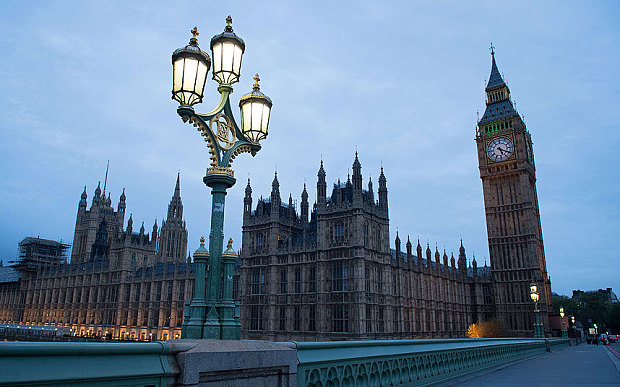
parliament-westminster

There are many obvious reasons for delaying or scrapping the upcoming constituency boundary review changes – but no good ones

See what I did with the headline there? Right-wingers can adopt the wheedling, victimhood-soaked language of the Cult of Social Justice and Identity Politics too, if we think it is going to advance our cause or smite our enemies.

Left Foot Forward editor Niamh Ní Mhaoileoin is in high dudgeon because the coming boundary review and shrinkage of the House of Commons from 650 seats to a slightly more manageable 600 MPs apparently means that too many of those who are left will be on the government payroll.

Ní Mhaoileoin writes:

The government’s plan to cut the size of parliament will increase the proportion of MPs on the government payroll, the Electoral Reform Society (ERS) has flagged.

According to new research, in a 600-seat Commons some 23 per cent of MPs would be on the government payroll, the highest proportion ever. The ERS warns that this could have ‘deeply worrying’ effects on parliamentary scrutiny and is calling for a cap on the number of payroll MPs.

‘This research shows we risk a crisis of scrutiny if the cut in MPs goes ahead without a corresponding cap on the number of payroll MPs,’ ERS chief executive Katie Ghose commented.

Having nearly a quarter of all MPs in the pocket of the PM is not a healthy situation for our democracy.

I think we can all agree that a body tasked with holding the executive to account which itself includes government ministers, parliamentary private secretaries and other hangers-on is always going to struggle to do an effective job – which is why many of us who think and care about constitutional issues all the time (as opposed to only when the system throws up a result we don’t like or disfavours our own preferred party) favour the total separation of the executive and the legislature.

Conservatives and progressives could potentially work together on reducing the size and cost of government while improving oversight by reducing the number of unnecessary junior ministers and official bag carriers, were it not for the leftist desire to have a government minister for everything under the sun, from Culture, Media and Sport to “Children, Young People and Families”. When your political philosophy expects and demands that the state be involved in every aspect of our lives, it inevitably necessitates a large cohort of ministers to do the meddling.

A cap on government payroll MPs would nonetheless be a reasonable (if typically British) compromise, but of course this is not what Ní Mhaoileoin really wants. And what Ní Mhaoileoin really wants is to maintain the current structural privilege currently enjoyed by the Labour Party. As Labour tends to perform best in urban seats, which themselves tend to be smaller and less populated than the suburban and rural constituencies where the Conservatives do well, the net effect for many years has been that it takes far fewer votes to elect a Labour MP than a Conservative MP.

Think of the gross anomaly whereby the SNP won 56 seats in Parliament at the 2015 general election with just 1.5 million votes, while UKIP won just a single seat despite winning 3.9 million votes. In the case of Labour and the Conservatives, the disparity is less pronounced – but it still exists. Boundary reform seeks to equalise constituency sizes, thus addressing the problem (though sadly not helping UKIP, who do not boast the SNP’s narrow geographic concentration of support). And this equalisation will enforce a basic fairness, the value of which makes it worth suffering through any negative side effects, particularly where these can reasonably be mitigated.

The concerns about the upcoming boundary review are well-rehearsed and rapidly becoming tedious. One might take them more seriously if those who raise the concerns showed any interest in solving or overcoming the issues that they raise rather than cynically using them as an excuse to halt something which – despite its inherent merit – is likely to be detrimental to the Labour Party’s electoral fortunes.

In short, this overwrought leftist concern about a toothless Parliament in the pocket of Theresa May is merely an attempt to problematise the issue of boundary reform, throwing a spanner in the works to prevent electoral disadvantage to Labour. Ní Mhaoileoin is doubtless in favour of reducing the size of the Commons as an abstrat theory, and if she were pressed through a hypothetical example would likely object to the current distribution of voters among seats which favours one party over another. But because the currently-favoured party in our system is Labour, and because Labour stands to lose out in relation to the Tories through this particular boundary review, Niamh feels compelled to oppose it.

But how to oppose something that is so self-evidently worthwhile and logical? The only way is to go grasping for every last flaw or possible technical hurdle in the review, inflating them out of all proportion and presenting each one as a show-stopper (or at least as justifiable grounds for interminable delay). As with the British Left’s general approach to Brexit, Ní Mhaoileoin is desperately problematising the boundary review, hoping to scupper it without ever having to reveal her true, grubby, anti-democratic reasons for doing so.

Smart politics? Maybe. The principled, moral, liberal thing to do? Absolutely not. Niamh Ní Mhaoileoin’s position is actually profoundly conservative – and not in a good way.

But apparently any behaviour, no matter how tawdry and self-serving, becomes noble and virtuous when it is performed in the service of the Labour Party.

boundary-commission-for-england

Top Image: Wikimedia Commons

Support Semi-Partisan Politics with a one-time or recurring donation:

Agree with this article? Violently disagree? Scroll down to leave a comment.

Follow Semi-Partisan Politics on TwitterFacebook and Medium.

Donald Trump Victory Reaction: Clutching At Normality In The Age of Trump

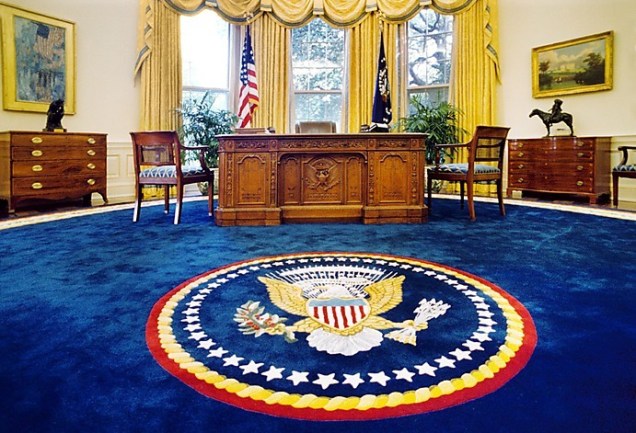
white-house-oval-office-carpet

Using positive reinforcement to steer Donald Trump in a better direction might just work, but only if we stop the blanket hysteria

It is fair to say that the New York Times – which, it always pleases me to remember, not so long ago showed such fawning deference to executive power that they forced their journalists to warp the English language, describing the same actions as “torture” when committed by swarthy foreigners but merely “enhanced interrogation” when conducted by Our Boys – has not taken well to the election of Donald Trump as 45th president of the United States.

But the preface to today’s Opinion Report from the Times, written by David Leonhardt, strikes the right tone and gives some sound advice:

If you opposed Donald Trump’s candidacy, it’s easy to be angry about almost everything he now says or does. When he does something outrageous — like appoint a promoter of racism to a top job — it confirms your fears. And when he does something reasonable — like say he wants to improve the lives of all Americans — it feels hypocritical.

Yet I would still urge people to welcome any step he takes toward democratic normalcy, including those that feel hypocritical.

Trump ran a campaign that was opposed in important respects to American democratic values — and he won. The question that now confronts us is whether our values will change or whether Trump will begin to change.

One of the main reasons that President Obama and Hillary Clinton have reacted to his victory as positively as they have is their desire to move the country back toward democratic normalcy. It’s the right instinct.

I think this is good advice. The endless catastrophisation of Donald Trump’s victory – extending well beyond those areas where we have good reason to fear a Trump presidency toward those where there are no suggestions he intends to make backward steps – is now in danger of doing real harm, not only to the reputations of some of Trump’s most hysterical critics (those who railed against Trump for not committing to accept the election result, and are themselves now refusing to accept the election result) but more importantly to Americans’ faith in their own democracy and electoral system.

During the press pool at their first White House meeting, one could sense the look on Donald Trump’s face that the realisation of what he has wrought is now finally starting to hit. The man who probably didn’t seriously believe he would be in this position, either on the day he announced his candidacy or the day before the election, is rapidly coming to terms with the vast amount of institutional and bureaucratic machinery which he must master, and which will inevitably constrain whatever plans made during the campaign he was serious about enacting.

The mere fact that President Obama spent 90 rather than 15 minutes in that initial meeting walking Donald Trump through the basics (oh to have been a fly on the wall during that American Government 101 session) and plans to hold many more such remedial governance classes with an apparently grateful Trump suggests that the president-elect is finally beginning to accept that there are many things he does not know, and many areas where his administration will need to be guided by the advice and precedent left by history.

And as a reader of this blog pointed out, Americans (and the world) have thrown themselves into a panic before about incoming Republican administrations – with similar accusations of naivety, ignorance and incompetence – only to later have to grudgingly concede that the resulting presidencies were quite good, even historic.

Now, to be clear: I have no such expectations of Donald Trump, who is a tiny fraction of the man that Ronald Reagan was, and certainly nowhere near as faithful a friend to conservatism or the cause of liberty. Real, visceral concern about Trump’s presidency is entirely warranted, especially where it can be eloquently articulated (as opposed to inchoate paranoia) and particularly where its expression closes off doors to some of the more obviously dangerous Trumpian flights of fancy. And of course public protest has an important place in expression opposition to the Trump agenda. But let’s spare the sackcloth and ashes, particularly those of us with public platforms either large or small.

If the goal (for everybody) is to survive the next four years intact and to make Donald Trump’s presidency a successful one for America in spite of the man himself, then we need to ask whether mass hysteria, Trump catastrophisation and total implacable opposition to everything the new administration tries to do is really the best approach, or whether it might be better to provide affirmation and support where Trump does something right combined with forceful dissent and opposition where he or his team stray from an acceptable path, in the hope of teaching the new president some boundaries.

It is quite clear to this blog which is the better option. Keep screaming that everything Trump now does is tantamount to fascism will be like crying “wolf!”, causing the president-elect himself to block out the just criticism along with the superficial, and his supporters to harden in their support for him. We saw just how well that approach worked during the election campaign. Let’s not now make the same mistake during the transition and on into the new administration.

Where Trump does the right thing – even if it means walking back on previous, extreme campaign positions – it wouldn’t hurt to try giving credit where credit is due, at least for a trial period. If we know anything of Donald Trump’s character, it is that while he will take any publicity, good or bad, he much prefers people to think well of him.

And while the Democratic Party and intra-GOP opposition take their time to get organised, Donald Trump’s desire to be admired and respected may turn out to be a very useful constraining factor on his behaviour on office.

Those of us with real concerns about Donald Trump’s presidency should not throw away that potentially vital lever of control in our haste to criticise absolutely everything about the incoming president.


donald-trump-presidential-election-victory-speech-2

Support Semi-Partisan Politics with a one-time or recurring donation:

Agree with this article? Violently disagree? Scroll down to leave a comment.

Follow Semi-Partisan Politics on TwitterFacebook and Medium.

Left-Wing Brexit Acceptance Award

madaleina-kay-european-union-brexit-cartoons-unicorns-and-leprachauns-2

Finally, a prominent left-wing voice that accepts the result of the EU referendum and does not drip with contempt for democracy and the people’s choice to leave the EU

In his latest piece for the Independent, John Rentoul gives us that rarest of things from the political Left – a gracious and measured acceptance of Brexit.

Right off the bat, Rentoul declares:

There are two common views among people who wanted to stay in the EU that I think are mistaken. One is that David Cameron made a foolish and unforgivable mistake in promising the referendum. The other is that the result was obtained by a campaign of lies.

My contentions are that Cameron was forced to promise a referendum by the very democratic pressure that produced the vote to Leave, and that the referendum was about as fair as the rough and tumble of democracy usually is.

And Rentoul is quite right, I think, to state that with the rise of UKIP, never-ending power grabs from an increasingly tone-deaf EU and the systematic crises (euro, migration) facing the union, a referendum was ultimately coming, one way or another, regardless of whatever David Cameron did:

Cameron knew that if he didn’t promise a referendum, his party would become even harder to manage and it would lose votes to Ukip. As it turned out, he had a choice between cutting his throat and slitting his wrist: he could lose the election in 2015 and be thrown out of office or he could lose the referendum a year later and be thrown out of office. Being a politician – that is to say, human – he chose to maximise his chance of winning in 2015 and hoped that winning in 2016 would take care of itself.

Rentoul accurately notes that euroscepticism is hardly a new phenomenon in Britain. While we may not have been asked our opinion on the matter since the 1975 referendum, there has always been a significant chunk of the population opposed to our EU membership, even before mass immigration from eastern Europe or the euro crisis  were factors:

It may be objected that polls did not find that the EU was a priority for voters, and that support for leaving became significant only after the 2008 banking crisis. But there has been a majority in the British public for leaving or for reducing the EU’s powers since 1996, according to the British Election Study (page 6), and immigration has been named as one of the three most important issues facing Britain since 2001, according to Ipsos MORI.

But even more encouraging (from a Brexiteer’s perspective) is Rentoul’s refusal to fall back on lazy Remainer self-delusions that the Leave campaign had a monopoly on lies and misinformation, and that it was this uniquely one-sided dishonesty which somehow tricked a gullible population and swung the referendum:

The second complaint by many Remainers is that the people voted to Leave on the basis of disinformation. There is an implication that journalists failed in their duty to fact-check the post-truth politics – a criticism that must sound familiar in America.

But I don’t think the argument holds up. One of the surprising things about the referendum was that we didn’t hear that much about Eurosceptic press barons dominating the debate. This may be because they didn’t. The media landscape in Britain has been utterly transformed by the internet – as I know well, working for the first national newspaper to go online-only.

If you look at the readership of British newspapers, print and online, not only does The Independent have more readers than The Sun – not many people know that – but the total readerships of newspapers advocating Leave and Remain were about the same (of the 13 weekday newspapers, the Mail, Telegraph, Express, Star and Sun advocated Leave, with 95m monthly readers; the Guardian, Mirror, Independent, Standard, Times, Daily Recordand Scotsman advocated Remain, with 97m monthly readers; the Metro had no position). There are other new news sources online, Buzzfeed and other rivals of The Independent that I won’t mention, but overall I think the media was fairly evenly balanced.

As Rentoul points out, the Evil Murdoch Press doesn’t have quite the vice-like grip over the minds of the British people as many a Corbynite (or even a New Labour centrist) likes to believe. People consume their news from a variety of sources, and exist in social media bubbles of all kinds – pro-EU as much as eurosceptic.

More:

All the same, there were claims made in the campaign that were – I prefer not to call them lies – not absolutely evidence-based. The most prominent was the claim by the Leave campaign that the UK sends £350m a week to the EU. We don’t. It’s about half that. The Leave people justified it by saying it would be £350m if we didn’t have the rebate negotiated by Margaret Thatcher in 1985. Their argument is that politicians will be tempted to negotiate the rebate away in future – Tony Blair, for example, allowed it to be diluted when new countries joined the EU in 2004.

Most journalists reported that it wasn’t true. The trouble is that saying, “It’s not £350m a week it’s £180m a week,” didn’t really help the Remainers. It drove them mad because the Leavers kept on using the £350m, and the Remainers kept saying it wasn’t true, drawing attention to it, and reminding voters that we send a sum of money too big to be understood to the EU every week.

Besides, the Remain campaign was putting out leaflets claiming that for every pound we put into the EU we got £10 back. I wouldn’t describe that as absolutely evidence-based either.

Many of us – this blog included – campaigned long and hard and angrily about Vote Leave’s disingenuous “£350 million for the NHS” pledge, pointing out that it was false and that it served as a greater propaganda tool for the Remain campaign with which to attack Brexiteers than as an argument for leaving the EU. But Rentoul is quite right – the true figure of c. £180 million is just as impactful, and quantitative scaremongering claims by the Remain campaign were no less manipulative and deceitful.

This blog has been busy handing out awards for grotesque Brexit catastrophisation with some relish, so it is only fair to acknowledge times when those from the political Left exceed the low expectations which have too often been set by politicians and the media class. Rentoul’s overall assessment is quite right – the EU referendum campaign was cacophonous and messy, but it was in no way tilted in favour of the underdog, insurgent Leave campaign, and would never have succeeded if it had not ignited already-latest anti-EU feelings among entire swathes of the British people.

So credit where credit is due: John Rentoul is one of vanishingly few prominent left-wing commentators to broadly accept the result of the EU referendum with no ifs, buts or asterisks. If only other left-wing politicians and commentators found it within themselves to do the same, their political movement might not now be facing unprecedented unpopularity and rejection by the British people.


European Union - United Kingdom - Britain - Flags

Support Semi-Partisan Politics with a one-time or recurring donation:

Agree with this article? Violently disagree? Scroll down to leave a comment.

Follow Semi-Partisan Politics on TwitterFacebook and Medium.

Donald Trump Victory Reaction: Matthew Parris Doesn’t Get It

matthew-parris-democracy-donald-trump-brexit-elitism-overton-window

Self-described elitists like Matthew Parris tolerate democracy only so long as they get to narrowly define the range of possible outcomes before the public are invited to have their say

The outcome of a democratic election in the greatest democracy on earth has caused Matthew Parris to lose faith in democracy itself. Go figure.

Self-confessed elitist Parris has a piece in The Spectator today in which he makes it clear just how very disappointed he is in We the People (now apparently downgraded in his estimation from being a “crowd” to a “mob”) following the EU referendum result in Britain and now the election of Donald Trump in America:

The election of Donald Trump as president of the United States may have signalled the death of the closest thing we have to a religion in politics. On both sides of the Atlantic, democracy risks being knocked from the high altar as an unmitigated and unquestioned good.

The man’s obviously a fool and a nasty fool too. The contest should have been a walkover for Hillary Clinton. But it wasn’t. What happened? Can we be sure any longer that democracy works? Is it really the reliable bulwark against political madness that we always supposed?

Without hesitation I plead guilty to the obvious charge: Trump supporters could level it at me, enthusiasts for Brexit do. Spanish enthusiasts for the left-wing populist party of protest, Podemos, and French supporters of Marine Le Pen would tell me the same and they’d be right. The reason I am beginning to question democracy is that it is producing results I profoundly dislike.

Already it should be clear that this is leading nowhere good. More:

But why now? When Richard Nixon was re-elected, did we who had preferred George McGovern despair of democracy? When British Conservative governments fell and socialist governments were elected, did Liberal or Tory democrats develop doubts about democracy itself? Why did we trust the people then, even though they had given the ‘wrong’ answer — but not now? What was it that people like me did believe, when we said we believed in democracy?

Someone urgently needs to introduce Matthew Parris to the concept of the Overton Window.

The reason nobody much cared when “conservative” British governments were voted out and replaced by “socialist” ones in the 50s, 60s and 70s is that they were actually all largely socialist anyway. Party labels at that time were more or less a nostalgic and almost entirely cosmetic sticker slapped on to differentiate two political parties which had both equally swallowed the dogmas of the post-war consensus and the supposed need for a planned, “mixed” economy (in reality an economy in which the government owned and ran vast swathes of industry, from mining, utilities, transport, telecoms and even restaurants and betting shops).

The reason that nobody in Britain “lost faith in democracy” when either shade of socialist Red got itself elected is because it hardly made a difference to their lives. The all-important (and foolish) decision to embrace rather than oppose socialism had been made in smoky back rooms by dusty, frightened old men (and some callow but zealous younger ones). Giving socialism the heave-ho was never on the ballot paper. The only question was whether one preferred Labour or the Conservatives to preside over our national decline.

overton-window-rachel-maddow-quote

When the Overton Window of a country’s politics – the range of political viewpoints considered mainstream, acceptable or permissible – is as desperately narrow as it was in Britain until Thatcher came and rescued us from self-inflicted socialist suicide, people like Matthew Parris would have no cause to lose faith in democracy because it continually serves up the kind of muddled, un-ambitious centre-leftism that they like (whether they admit it or not), and because elections therefore essentially do not matter.

The reason that Matthew Parris is now so upset, first with the Brexit vote in the EU referendum and now with Trump’s victory over Hillary Clinton in the US presidential election, is that both of these plebiscites actually mattered – because two markedly different potential outcomes were riding on the result. Or to put it even more bluntly: because the Overton Window has been expanded, and people like Matthew Parris are losing the ability to fix the policy outcome regardless of who wins an election.

The kind of “democracy” that Matthew Parris likes is one in which he and other people like him get together beforehand and decide the future direction of the country in advance, hashing out a deal between themselves before allowing the political parties to tinker around the edges and squabble over branding. Parris doesn’t trust the people to weigh up the important decisions themselves because he can barely tolerate most of the country, as he has himself previously admitted.

So spare a thought for poor Matthew Parris today. Soon Britain will be leaving the European Union, and the range of possible choices – on taxation, social matters, foreign policy, trade and more – over which the British government has greater or total autonomy will increase beyond the ideological guard rails currently imposed by our EU membership.

Worse, with the rise of Jeremy Corbyn, the British public have a real choice between Corbynite post-war consensus socialism and vaguely enthusiastic capitalism for the first time since 1983. And now, with the election of Donald Trump in America, the Overton Window of American politics has expanded so that the old (and often failed) consensus position on a whole range of issues is no longer the only choice available.

And Matthew Parris hates hates hates all of this. Because not-so-secretly, Matthew Parris hates most of us.


overton-window

pop-art-donald-trump-2

Support Semi-Partisan Politics with a one-time or recurring donation:

Agree with this article? Violently disagree? Scroll down to leave a comment.

Follow Semi-Partisan Politics on TwitterFacebook and Medium.