Bankers, Toffs and Tory Scum

SPS strike protest 2b


“Chav-bashing draws on a long, ignoble tradition of class hatred” – Owen Jones, Chavs: The Demonization Of The Working Class


Less than three weeks ago, fifty thousand people marched through central London almost entirely unnoticed. They came to protest the coalition government’s so-called “austerity” policies and to “demand the alternative”, but their message was lost in a fog of confusion about the undefined alternative they wanted to bring about. Was it the rose-tinted stroll back to the 1970s advocated by Owen Jones, or the peaceful, effortless and joyful revolution promised by Russell Brand? We still don’t know, because they still can’t decide.

Today, Britain observed what was hailed as the largest coordinated industrial action since the general strike of 1926 – but apart from some inconvenienced parents who had to endure the closure of their children’s schools, nobody seemed to notice that anything much was different. And what little serious press attention the strikes garnered was focused mainly on Ed Miliband’s untenable balancing act of supporting the strikers but deploring the strike, and the eyebrow-raising fact that the National Union of Teachers was legally permitted to use a 2012 vote by a fraction of its membership to hold a strike in 2014.

There is a lot of frustration on the British activist Left that they are not being listened to or taken seriously – by the public, the media, the Labour Party, anyone at all. But at some point soon, those people hawking conspiracy theories about a right-wing media cover-up or the dead hand of Ed Balls will have to turn the accusing gaze back in on themselves.

The Left has been shrieking about austerity for four years now, but have utterly failed to convince the electorate that they have a workable alternative. Indeed no alternative has been suggested – save for pumping pre-2010 (or even higher) levels of taxpayer money into the same unreformed government programmes, which is as patronising a suggestion as it is lazy. Worse still, the Left’s level of empathy or willingness to understand the viewpoints of others who do not agree with the “Down With Austerity” mantra is almost non-existent.

Big government apologists on the Left forever accuse the Conservative Party, UKIP and others on the right of stoking fears and indulging in emotional manipulation. Cases of grotesque welfare fraud are cherry-picked and non-representative, they insist, while questioning Britain’s immigration policy and relationship with the European Union is narrow minded at best, but more often a sign of shocking, premeditated race-baiting. But the left use these same techniques freely and often, and they do so in a way that hampers their ability to think of bold new policies to connect with middle Britain.

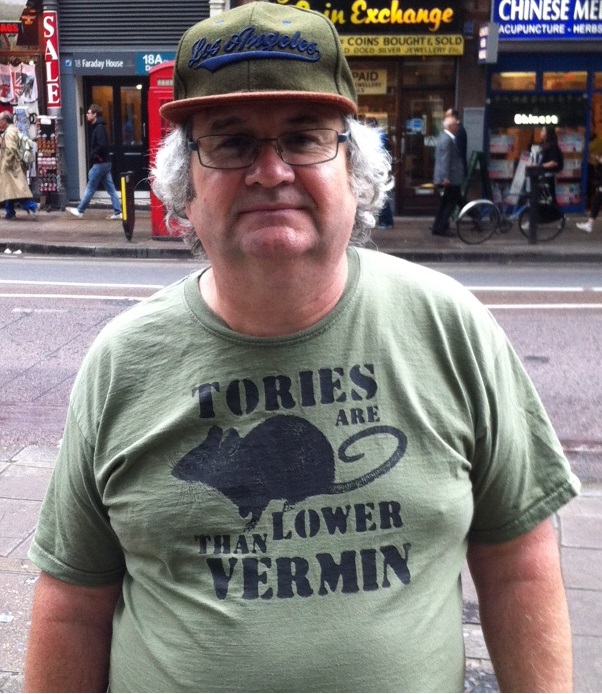
The bankers. David Cameron’s cabinet of millionaires. Billionaire non-doms. Tory scum. According to many on the Left, this motley crew of villains are not only deliberately rigging the system in their favour (arguably true), they actively delight in hurting the poor at every turn. Michael Gove is an arrogant bully and persecutor of teachers, Iain Duncan Smith is a virtual psychopath in his hounding of the destitute and David Cameron is the evil mastermind at the top, answerable only to Rupert Murdoch. It’s the age-old divide: those on the right think that Left-wingers are well-meaning but misguided, while those on the Left seem to sincerely believe that their right-wing opposites are actually evil.

The anti-Tory slogans and bitter invective have always had their place in Britain’s left-wing grass roots, but when this stubborn inability to empathise with or think like the other side starts to infect people who are supposedly the Labour movement’s greatest minds and political leaders, they have a real problem. The British Left, from Ed Miliband’s shadow cabinet on downwards, can’t seem to get past the mistaken notion – perhaps sincerely believed after so many years of constant, mindless repetition – that those on the right really do hate the poor and long to trample them underfoot.

But the anti-austerity protesters, the public sector strikers and their sympathisers on the Left are fighting a bitter battle against a straw man, a distorted vision of the real spectrum of right-wing thinking. While the British right generates ideas and (albeit limited by coalition) implements them in government, the Left rail against a cartoon foe of their own imagining, and almost completely fail to engage with the substance. Voters are able to discern this disconnect – the British left’s gradual conscious uncoupling from reality – which is one of the reasons why the Labour Party is making so little traction in what should be very fair political weather.

Attacking the usual left wing bogeymen – the bankers, toffs and Tory scum – is not an exciting, compelling pitch for an alternative to our present course. It’s the equivalent of a child’s temper tantrum. And whatever truth there is in the insults does not make up for the yawning chasm that exists where viable alternative left-wing policies should be.

In fact, such is the degree of hysteria and inability to comprehend the attitudes of others on the British Left, it is becoming comparable to the worst excesses of the Tea Party in America, where die-hard “patriots” can see no other motive for Barack Obama’s actions than the deliberate, treasonous undermining of the United States by a foreign-born, illegitimate president.

The hardcore US tea partiers have their hallucination of a Kenyan-born, Marxist stooge sent to make America collapse from within, while the British activist Left have their two-dimensional cartoon of the Bullingdon-bred, Eton-educated aristocrat who wants nothing less than the total dismantling of the social safety net and the subjugation of the poor in permanent poverty to be a source of cheap, expendable labour for his friends and benefactors in big business.

In America, the Republican Party tried to ride the Tea Party tiger, but ended up being eaten. The GOP is now completely beholden to its extremist base, and as a result is entirely unable to propose meaningful, workable legislation on anything from deficit reduction to healthcare to immigration reform. In Britain, the Labour Party is perilously close to suffering the same fate – willingly believing its own hyperbole about the callous Tories, and trying to convince itself (and us, the voters) that everything will be okay if only we start pumping more money into existing government programmes and taxing “the bankers” to pay for it all.

This is a depressing state of affairs on both sides of the Atlantic. To self-identify as a Republican in America today is increasingly akin to admitting that you are a reactionary, bigoted nincompoop, either beholden to corporate special interests or too stupid to realise that you are being manipulated by them. And unless something changes very soon, to self identify as a Labour supporter in Britain will proclaim to the world that you are a success-fearing simpleton who would rather see everyone dragged down to the same level of mediocrity than permit spectacular achievement at the expense of government-enforced equality of outcome.

The infinite monkey theorem states that a chimp sat in front of a typewriter will, given infinite time, at some point be bound to unthinkingly hit upon the long and complex sequence of keys that reproduces the complete works of William Shakespeare. By the same logic, if the British Left continue to hold strikes and mass rallies against austerity, probability dictates that eventually they will quite accidentally come up with a politically viable alternative to the coalition government’s spending plans. But unlike the monkeys, they and the Labour Party do not have infinite time.

The 2015 general election is less than ten months away.

Going Back To Battle For Thatcherism, 40 Years On

nights watch 1


In this week’s thrilling Game of Thrones season finale, there was a moment when the great wall separating the barbarian wastelands from the civilised world seemed sure to be breached. Disheartened and battle weary, the leader of the wall’s depleted guard crossed enemy lines to negotiate the terms of their surrender to the wildling force besieging them. There was no other way out – when suddenly a saviour rode into view, a king from the south with thousands of armed men galloping behind him.

Trade the fictional land of Westeros for the realpolitik of Westminster, and David Cameron’s Conservative Party are not in quite as bad a shape as the ragtag Night’s Watch army on the wall, holding back the tide of socialism but leaderless and in desperate need of rescue by stronger and more organised forces – at least not yet. But this is largely thanks to the Liberal Democrat implosion and Ed Miliband’s pioneering work in the field of political self-immolation.

Were it not for this hugely favourable climate, the Tories would certainly be on the ropes with less than a year to go until election day. That the conservatives are under siege is evidenced by the fact that they have all the unpopularity of a losing team despite having successfully achieved almost none of their policy goals such as eliminating the budget deficit, rolling back the state or pushing back against antidemocratic EU interference from Brussels.

For British conservatives, libertarians and classical liberals, the heroes riding to the rescue were decked out in workaday business attire rather than the resplendent suits of armour seen in Game of Thrones, but they were no less welcome a sight for that when they arrived at London’s Guildhall to participate in the first annual Margaret Thatcher Conference on Liberty, organised by the think tank Thatcher founded with Sir Keith Joseph 40 years ago.

British advocates of individual liberty and a small state have endured long years in the wilderness – the fading days of the Major government, thirteen years of gradual state encroachment under the benevolent grin of Tony Blair (then the angry fist of Gordon Brown), and four years of conservative-in-name-only meandering under David Cameron’s coalition with Nick Clegg. Aside from the misty-eyed retrospectives following Margaret Thatcher’s death, talk of personal freedom, liberty and unapologetic pride and optimism in Britain have been missing in action from mainstream political discourse, presumed dead.

Before you cry ‘hyperbole!’, think on it for a moment: The main political mantras of the period 2010 to 2014 have been “The Big Society”, “We’re all in this together” and “Paying their fair share” (fairness, of course, remaining conveniently and forever undefined). All are collectivist tropes designed to soothe and placate natural Labour voters, not the principled words of liberty befitting the heirs to Thatcher.

The Big Society was meant to serve as rear-guard cover as the Conservative-led coalition sought to stem the rise in government spending and enlist volunteer groups to pick up the slack, but its architects forgot that a sudden burst of civic-mindedness and philanthropy was unlikely to come to pass if the government did not reduce its ominous presence in everything else that we do.

“We’re all in this together” was always a phrase better left to the teenage cast of Disney’s “High School Musical”, because it sounds both patronising and wooden coming from the mouths of politicians like David Cameron and his Chancellor of the Exchequer. George Osborne & co. are quite clearly not suffering the effects of austerity in the same ruinous way as families who have been deliberately led down the road to government dependence through Labour tax credits and allowances, and stranded there to suffer in the great recession. Suggesting that we are all suffering equally has opened the door to ridicule and Labour’s inevitable counterattack of ‘class warfare!’ as they seek to distract attention from their awful record in office.

And the less said about “paying your fair share” the better; suffice it to note that we now live in a country where any reduction in benefits granted to an individual by the state is not only indignantly referred to by opponents as a ‘tax increase’, phrases such as ‘the bedroom tax’ are unquestioningly adopted by the media without the slightest hint of irony.

As this blog noted yesterday, these are not auspicious times for those Britons who believe in a smaller government and more power for the individual.

But this only made the words spoken and the ideas expressed at the Margaret Thatcher Conference on Liberty all the more heartening for those beleaguered souls who think Thatcher was right, and that we need to embrace rather than repudiate her vision of a modern, capitalist Britain.

From start to finish there were powerful speeches on important topics such as re-emphasising national sovereignty, promoting free markets, tax reform, foreign policy, immigration and defence. Sometimes the ideas discussed were almost startling because they clashed so violently with the centrist orthodoxy that now predominates.

Take the panels on economics and fiscal policy. With Art Laffer in attendance there was no pulling of punches as he restated his timeless keys to success for any national economy: “A low-rate, broad-based flat tax, spending restraint, sound money, free trade and sane, limited regulation”. It cannot go unnoticed that the Conservatives have ceded some of this ground to UKIP in the past few years, but while policies such as a flat tax may be something of a pipe dream, Laffer’s contribution to the debate could be what is needed to help the Tories rediscover their footing on tax policy.

Also looming large in the discussion was growing cosiness between big business and big government, be it through lobbying at the national and EU level (more than 15,000 lobbyists and counting, noted Conservative MEP Daniel Hannan) or direct collusion on matters such as government surveillance. Perhaps surprisingly, given the circumstances, the delegates still considered big government a bigger threat than big business by a margin of 79% to 21%. Art Laffer summed up this sentiment, saying “big or small business is irrelevant – what matters is efficiency and competency”.

The discussions on national sovereignty and the need to stand firm in support of the nation state as the best guarantor of individual liberty were particularly refreshing, as they stood in such stark contrast to the pessimism and declinism which inevitably colour the attitudes of the pro-Europeans and those who have lost the ability to distinguish between patriotism and nationalist xenophobia.

Daniel Hannan argued that the EU should become “a free trade area in the model of NAFTA”, a nice idea, but given the fact that the European project has taken on a life of its own with the EU’s own interests now superseding those of its member states, there was too little discussion of how best to effect a British exit. Indeed, when the time came to vote on whether the EU can realistically be reformed, attendees voted 43% yes (wishful thinking) but a solid 57% no.

One of the most concrete areas of policy development was on tax, with the launch at the conference of the very SEO-friendly #ThePolicy. This proposed tax reform calls for the total abolition of capital gains and corporation tax for small businesses, giving them a shot in the arm to expand and create more jobs. The negative impact on the Treasury would be offset by the falling welfare bill, together with increases in PAYE and National Insurance contributions from the newly employed. While the policy needs further analysis and costing, it seems a lot more solid than Labour’s various hare-brained schemes to achieve full employment by levying yet another one-time tax on ‘the bankers’.

Underpinning all of these conversations on the economy was the imperative to rescue the reputation of capitalism, which has been tarnished partly through its own fault but mostly by left wing saboteurs, crony capitalism and poor government regulation. Charles Moore, Margaret Thatcher’s biographer, posed the question: “How can capitalism work for people who don’t have capital?”. It is certainly the prevailing view, and has too often been the case, that capitalism has not worked well for too many people as implemented by their governments. Changing this negative impression of capitalism, and the element of truth behind it, will be key if the Conservatives are to rebuild the winning coalition of working and middle classes that Thatcher forged in 1979.

This discussion naturally led to the importance of preventing distortions in the market, and the observation that “gifts through the tax code and obscure regulatory benefits” are no less than corporate welfare, and should be discouraged in order to salvage capitalism’s reputation. And in another nod to the importance of semantics, it was reinforced that “libertarians, Thatcherites and other pro-capitalism sympathisers need to speak of being ‘pro-market’, not ‘pro-business’ in order to avoid being associated with harmful crony capitalism.”

There were several interesting debates on the media, with Guido Fawkes blogger Paul Staines and the National Review’s Jonah Goldberg hosting an interesting Google Hangout on the future of news media, the opportunities presented by online journalism and the disruptive impact on existing revenue models – a topic which could have been a day conference in itself. And it was perhaps unsurprising that 70% of delegates were against continued full state subsidisation of the BBC.

On national identity and culture (or what has become known here as the #BritishValues debate), former Australian prime minister John Howard attempted to reframe the argument, describing himself as a “multiracialist, not a multiculturalist”. In doing so, Howard explained that conservatives should be welcoming to immigrants regardless of their race and ethnicity, but hold everyone to the same standards of behaviour and observance of the law – a call to assimilate which many on the left are too timid to echo.

John Howard also had timely words of warning on winning elections, a topic where David Cameron could use advice from a someone with a track record. Howard warned: “The worst way to try to win office is to pretend you’re not too different from your opponents”.

Cameron is limited in what he can do in government by his Liberal Democrat coalition partners, but when the starting gun is fired on the 2015 general election campaign, this will no longer be the case. The Conservative Party – if they are willing and courageous enough to do so – will be able to clearly articulate their policies and present a radically different blueprint for Britain than that offered by Ed Miliband’s dystopian “One Nation” vision.

The centrist status quo was challenged on almost every issue, even if some topics (such as immigration, where delegates from North America and Europe found themselves talking at cross purposes for much of the time because of their differing experiences) were not convincingly resolved.

The only question remaining now the conference is over: Is today’s Conservative Party still receptive to what the small government free-marketeers have to say? Will the Tories reach out and take the help and advice being offered?

In Game of Thrones, those who guard the wall are a motley crew of misfits, idealists and outcasts. Anyone who has ever made the mistake of expressing support for conservatism or (heresy of heresies) admiration for Lady Thatcher at a Hampstead dinner party or northern England working men’s club could immediately identify with their plight.

But despite the prevailing atmosphere of scepticism, the happy warriors at the 2014 Margaret Thatcher Conference on Liberty did something important in defence of the realm the likes of which we have not seen on such a scale since their not-so-ancient order was founded by Sir Keith Joseph and Margaret Thatcher in 1974 – they came together and boldly, unapologetically proclaimed the principles of small government and individual empowerment that saved Britain once and can do so again.

By contrast, Ed Miliband addresses crowds of the Labour faithful (nobody else listens to him now) and – with a straight face – proclaims that his disproven, tired old formula of tax hikes and renationalisation represents “the new politics” that Britain so desperately needs, if only we realised.

Consequently, the 2015 general election could end up being a battle between two recycled political ideologies. And we will have a choice to make: Shall we choose the one that inevitably leads to the four-day working week, rolling blackouts, industrial unrest, punitive taxation, the brain drain, the politics of envy and ‘managed decline’, or the one that puts its trust in the people, liberating them to make Britain great again through their own efforts?

With the Margaret Thatcher Conference on Liberty, Thatcher’s peers, friends and successors made a surprisingly forceful show of strength on the side of freedom.

Britain And The Church Of England Must File For Divorce

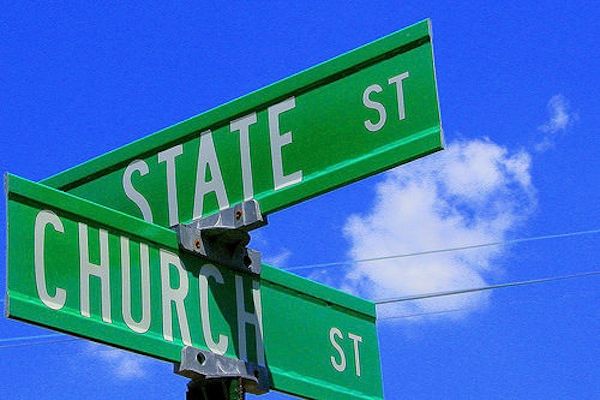
Church v State

One of the aspects of British life that this blog finds hardest to tolerate and justify – aside from our lack of a written constitution, the complete absence of checks on Parliamentary power, our deference to government authority and the eternally unrealistic expectations heaped upon the England football team – is the fact that in the year 2014, our supposedly liberal democracy maintains the absurdity that is an established church (and de facto national religion).

The notion that Britain is a Christian nation has been a laughable, if ubiquitous proposition for many years now. To arrive at the conclusion that the UK is a Christian land, one has to redefine Christianity not as a religion, a set of beliefs, teachings or practices, but rather as some woolly abstract incorporating cherry-picked elements of history, patriotism, nationalism, whiteness, tradition, middle class anxiety and fear of change. The rather more trustworthy indicators such as weekly church attendancechanging census data and the public’s knowledge of basic Christian tenets point stubbornly and persistently in the opposite direction.

David Cameron, always more comfortable on the woollier side of a debate, naturally favoured the abstract markers of Britain as a “Christian” nation when he made his recent intervention, a rare instance of a senior politician addressing matters of faith which also conveniently eclipsed the ongoing media coverage of his incompetent handling of the Maria Miller expenses scandal.

First comes Cameron’s woolliness:

In an article in the Church Times ahead of Easter Sunday, Mr Cameron acknowledged that he is a “bit vague” on the “more difficult parts of faith” but said he has “deep respect” for the national role of the Church.

He said: “I am a member of the Church of England, and, I suspect, a rather classic one: not that regular in attendance, and a bit vague on some of the more difficult parts of the faith.

And then the pivot toward the bold assertion that despite the fact that Cameron is a religious zealot by today’s standards, “vague faith” such as this on the part of a dwindling segment of the population can be extrapolated to mean broad national consent for the primacy of one religion and denomination over all others:

He said: “I believe we should be more confident about our status as a Christian country, more ambitious about expanding the role of faith-based organisations, and, frankly, more evangelical about a faith that compels us to get out there and make a difference to people’s lives.

But the emphasis really is on the word ‘dwindling’. The Rt Rev Graham James, Bishop of Norwich, inadvertently gives the game away when he seeks to explain what he claims are “heartening” church attendance figures:

These figures are a welcome reminder of the work and service undertaken by the Church of England annually – 1,000 couples married, 2,600 baptisms celebrated and over 3,000 funerals conducted every week of the year.

The fact that there were 400 more departures than additions to the ranks of the faithful in his diocese may have failed to set off alarm bells in the head of the Bishop of Norwich, but for the more numerate reader it does illustrate rather starkly the problem faced by the wider church.

Once it has been explained that 2,600 minus 3,000 equals a net loss of 400, the Rt Rev Graham James (and the Church of England as a whole) must concede the fact that a higher number of Christian funerals than baptisms represents a real and existential threat, or else they are essentially admitting that the sacraments of the church are no real way to measure the faith of the people, and that they therefore no longer matter. An admission of the latter seems unlikely.

The response of many – both to the decline in church attendance and in attempts to loosen the Church of England’s disproportionate grip on the levers of power – has been to rail against the damage of that destructive group known as the “militant atheists”, those shadowy PC paramilitaries who fight the War On Christmas and dare to suggest that claiming religious objection does not exempt a person from their contract of employment or license to do business. The Daily Mail leads the charge from this side:

The truth is that there is a new breed of militant atheists who are capable of being as unreasoning as the most bone-headed creationist. Their intolerance is a strange mirror reflection of the bigotry of religious extremists.

‘Intolerance’ here is given the broad definition of the perpetual victim, an insult hurled by those who suddenly find themselves losing their ability to impose their values and lifestyle choices on everyone else.

According to this school of thought, it is bone-headedly ignorant to see anything wrong in the fact that our Head of State has a constitutional duty to defend one faith above all others, or that twenty-six members of that one faith alone are entitled to sit in the upper house of the British Parliament and participate in our lawmaking.

Neither do the traditionalist defenders agree on when, if at all, Britain might no longer be considered a Christian country. Would it be when more people regularly attend another faith or denomination’s services? If so, that ship has already sailed and Britain should once again be pledging fealty to Rome and the Holy See. Or perhaps the moment of severance can be declared when a majority of people no longer agree with Church teaching on matters such as gay marriage or equality for women? But again, that moment has been passed. More likely, their answer would be “never”, simply because they will it to be so.

Parliament and the Church - divorce is needed to save both institutions
Parliament and the Church – divorce is needed to save both institutions


None of this means that Christianity has lost its place as the predominant religion in Britain – indeed, this is one thing clearly supported by the 2011 census data. It is certainly true that among people expressing a religious affiliation, the vast majority identify as Christians. But there is a huge gulf between acknowledging this fact and deciding that British laws and the British system of government itself should continue to be organised around and influenced by the teachings of a religion that most people only identify with on a nominal, cultural basis.

And it is on this this basis that the Deputy Prime Minister, Nick Clegg, joined the debate with a proposal to disestablish the Church of England, in order to prevent any more unnecessary harm coming either to that church or to the rest of us.

The Guardian reports:

Nick Clegg has said the church and state should be separated, a view he has expressed before but one that is likely to gain fresh currency after David Cameron described Britain as a Christian country.

Clegg, an atheist, said he would like to see the disestablishment of the Church of England, which would lead to the Queen’s removal as the head of the church.

“In the long run it would be better for the church and better for people of faith, and better for Anglicans, if the church and the state were over time to stand on their own two separate feet,” the deputy prime minister said on his LBC radio phone-in show. He said he did not think this would happen overnight.

Heads will surely explode at The Daily Mail, and the likes of Cristina Odone will stay up late into the night to pen angry rebuttals, but in fact here is a very sensible proposal that would help to keep the church out of some of the more hot-button political and social debates affecting the country as a whole, while going a few steps toward establishing a more sane, comprehensible constitution for the United Kingdom.

Indeed, many of the reasons given by apologists for why the UK is a Christian country are symptoms of an established church, not justifications for continuing to tolerate one – artefacts such as the Queen’s role as the head of the church, or the presence of the Lords Spiritual in the House of Lords, for example. But this is akin to claiming that an Egyptian mummy is a living, breathing human being – sure, the body parts are in the right place (just as the constitutional elements are in place for a British theocracy) but the heart does not beat, the blood does not flow and the brain does not think like a living person.

Nick Clegg goes on to claim that the Church of England would “thrive” if disestablishment were to occur, and this may well be the case. At present, the Church has to walk a tightrope with doctrine on one side and popular opinion on the other, making it appear weak and indecisive, and pleasing to no one. Unshackled from the state, however, the church could continue to discriminate against gays and women (or more hopefully recognise their equality) without dragging the rest of the country into the debate.

Naturally, David Cameron disagrees:

Mr Cameron said: “I think our arrangements work well in this country. We are a Christian country, we have an established church,” adding that disestablishment was “a long term Liberal idea but it is not a Conservative one.” 

This is conservatism of the bad kind, the reflexive hanging on to tradition not because the alternative is untried and the status quo works well, but simply out of a reluctance to rock the boat, upset the party base or start a real, informed debate. Cameron believes that the current constitutional arrangement “works well”, but take this with a pinch of salt – he also believes that parliamentary oversight of the security services works very well indeed, though it transpired that they were undertaking far more extensive and intrusive surveillance than the public had ever been aware of or given their consent.

The New Statesman naturally comes down on the side of disestablishment, and they come armed with the words of the most recent former Archbishop of Canterbury:

Religious believers who oppose such a move should look to the US, where faith has flourished alongside the country’s secular constitution. Indeed, in an interview with the New Statesman in 2008, the then Archbishop of Canterbury, Rowan Williams, (who went on to famously guest-edit the magazine) suggested that the church might benefit from such a move: “I can see that it’s by no means the end of the world if the establishment disappears. The strength of it is that the last vestiges of state sanction disappeared, so when you took a vote at the Welsh synod, it didn’t have to be nodded through by parliament afterwards. There is a certain integrity to that.”

What Rowan Williams delicately calls a “certain integrity” is actually just plain old democracy, properly executed, with each citizen having a voice and no powerful interests able to sway policy based on their own narrow interests. Both church and state can make decisions in their own interests without running to each other for contentious debate or rubber-stamp approval.

The British people, usually so quick to voice their distaste for money in politics and big donations from wealthy individuals, corporations or trades union, should ponder this simple fact: of all the business moguls, special interest groups and union barons jostling to influence British government policy in their favour, only one organisation is powerful enough to boast twenty-six loyal, paid representatives ready to do its bidding in the upper house of the British Parliament. Britain’s 100 biggest employers, ten largest unions and her wealthiest people combined do not have the lobbying and legislative clout of the Church of England, an organisation that commands a weekly attendance of just 1.8% of the UK’s population.

To say all of these things does not imply a hostility of any kind to religion and faith-based organisations, despite the misleading accusations of the traditionalists; regular readers will know that this blogger is a practicing (if somewhat Cameron-vague) Catholic. Indeed, disestablishment of the Church of England, combined with a loosening of the government’s hand on all matters of faith, can only benefit religious organisations, schools, charities and initiatives through the plurality that would immediately be created.

But even if disestablishment would cause difficulty or a degree of harm to the church, that alone is not a sufficient reason to preserve the status quo. It is not the business of government to pick winners and losers, to favour some more than others, and institutions (corporate or otherwise) who rely on state aid of any kind tend to fail regardless in the longer term.

Christianity – and the Church of England – have formed a huge part of who we are as a country, influencing our laws, culture, art and traditions. We should be very grateful for this – just ask anyone who suffers or whose life prospects are narrowed or extinguished under a modern day Muslim theocracy. But we should not be content merely to be better than Iran or Saudi Arabia – the time has come to do away with an established state church entirely.

In the year 2014, it is time to finally remove the theological shackles from the British constitution, and to take the state church off life support so it may live and breathe unaided. Committed Christians and Church of England members should have the confidence in their faith and institutions to accept, if not actively welcome, this change.

Maria Miller Resigns, But Justice Prevails Too Late

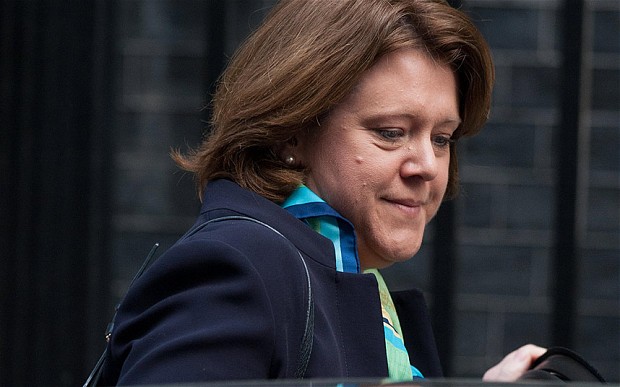
maria miller resignation

After resigning from the Cabinet, her hands finally pried away from her grip on office, Maria Miller actually did something quite rare and notable, which deserves recognition and adoption by other outgoing ministers under similar circumstances. The Telegraph reports:

Mrs Miller said on Wednesday night she was giving her £17,000 ministerial severance payment to a charity in her constituency.

Unlike a number of her colleagues, Maria Miller was not trying to make a fortune at the expense of taxpayers. Her breach of the rules was significant and certainly warranted this outcome (which could have been achieved at much less stress had Miller shown the humility to realise and atone for her errors earlier rather than clinging on for as long as she did), but donating her ministerial severance payment in this way was quite a noble act, one that she was by no means compelled to take.

Miller did not have to do this, especially when there was nothing left to salvage of her ministerial career. For Miller, it seems, it was not so much about the money as it was an ugly manifestation of that right-to-serve mentality and scorn for public disapprobation that still infects so much of the political class.

In truth, the particulars of Maria Miller’s excessive expense claims are quite mild compared to some of the more well publicised excesses of other departed politicians – employing relatives to do fake jobs, claiming rent paid to themselves, expensive furniture, third homes, premium home electronics and moat cleaning – but this is no defence.

Serving as a Member of Parliament and representing your constituents at Westminster is a privilege, not a right. And with that privilege comes the obligation to behave in a manner that is entirely above reproach in all areas related to the carrying out of those parliamentary duties. These obligations, and the commensurate scrutiny, should only increase if the MP is also a minister of state.

Serving in the people’s house is not just another career path where mistakes and transgressions should be overlooked in light of someone being a nice guy, or having had an impeccable record thus far, or having a family to feed. All other considerations are secondary to adherence to a strict code of behaviour and an unwavering following of the spirit – not just the letter – of the rules.

Maria Miller’s expenses intrigue was a remnant from the original expenses scandal, and as such theoretically could not have taken place under the news rules. This much is a far, if mealy-mouthed defence – one cannot retroactively try someone for committing an act that was not illegal at the time. But there, all sympathy for Miller must end. The former Culture Secretary was obstructive and threatening in tone and action, both to the parliamentary expenses commissioner and to the press who were seeking more information. Anything less than full co-operation with such an investigation is unpardonable. These actions alone warranted her resignation from the Cabinet.

Even now, however, it seems as though David Cameron is firmly stuck in denial that Maria Miller had to go and that is unequivocal support of her was wrong and hugely damaging to the public trust. The Telegraph reports:

At Prime Minister’s Questions, Mr Cameron defended his decision to support Mrs Miller. He said: “If people clear themselves of a serious offence, you let them get on with their job. That is actually the right thing to do.”

There was widespread public anger after the standards committee overruled Kathryn Hudson, the independent standards Commissioner, who called for Mrs Miller to repay more that £40,000.

Once again, David Cameron’s blind loyalty prevents him from correctly reading either his moral compass or the public mood, thus helping to reinforce everyone’s worst thoughts and convictions about the political class.

How long will it now take to undo this setback, to repair this damage that could have been almost entirely prevented with a swift and honourable resignation?

Maria Miller And The Government’s Contempt For The People

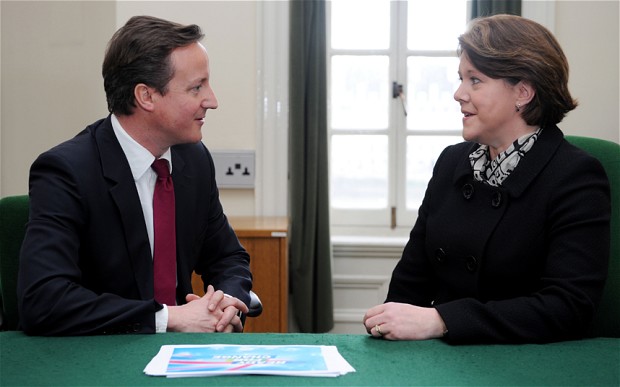
maria miller david cameron

According to the prime minister of the United Kingdom, it is both professionally and ethically acceptable for a Member of Parliament to use taxpayer money to house their parents and contribute toward the purchase of a property which is later sold having appreciated in value, the profits accruing to the lucky politician.

Furthermore, when questioned by the parliamentary expenses authority and by the media it is appropriate for an MP – in this case Maria Miller, the Culture Secretary – to obstuct, bully and harass those investigating the questionable expenses claims at every turn. There is nothing more to see here, the issue is closed and we should all stop fussing and just move on.

We know this because David Cameron tells us so.

The Telegraph summarises the tawdry scandal briefly enough to inform without entirely sapping the will to live:

[Culture Secretary Maria Miller] had to repay £5,800 in mortgage interest payments and also apologise for failing to cooperate with the parliamentary inquiry into her expenses. The Parliamentary Commissioner for Standards, Kathryn Hudson, had recommended that she pay back £44,000, an amount reduced by the MP-dominated Commons Committee on Standards.

But having housed her parents at the taxpayers’ expense, and made a capital gain in the process, Mrs Miller could be presented by the Tories’ opponents ahead of May’s European elections as the personification of alleged Westminster sleaze which so infuriates voters.

If any one image will come to symbolise this latest expenses scandal in British politics, it will be this – the picture of a haughty, self-entitled, unrepentant Maria Miller making her perfunctory, insincere and lightning-fast pseudo-apology to Parliament after having successfully reduced the amount which she was ordered to repay from the original £45,000 to an astonishingly low £4,500:

maria miller 1

Here, Maria Miller is flanked by a number of faces not commonly seen sitting on the back benches by virtue of their position – Health Secretary Jeremy Hunt and Chief Whip Sir George Young. This is no accident. They were ordered to sit with Miller to show the leadership’s determination to stand by the scandal-plagued politician no matter the public outcry.

The picture (from The Times) is essentially a freeze-frame image of Parliament once again conspiring to do right for themselves and act in the interests of the Old Boys (or, in this case, Girls) Club and against the interests of every single voter in the United Kingdom.

Iain Martin correctly surmises that the biggest beneficiary of this tawdry, self-inflicted crisis will be Nigel Farage and the UK Independence Party:

In such circumstances, the survival of the Culture Secretary is a dream for Ukip, as those Tory MPs observed. Having exploited the expenses system and made a sum most voters can only dream about, Miller then had her punishment watered down by a committee of MPs stuffed with the representatives of the mainstream parties. Farage can present Miller as a totem of all that he claims is wrong with the ruling elite.

Martin goes on to suggest that any benefit felt by UKIP would be the result of “scary populist politics”, which rather make one wonder whose side he is on – that of corrupt politicians or that of the people. But tactically speaking, he is quite right – the Maria Miller scandal can only redound to UKIP’s advantage because all of the other major British political parties are represented at Westminster and are consequently tainted by association.

Polly Toynbee, writing in The Guardian and no ideological soulmate of this blog, agrees that Cameron’s refusal to sack Miller – a case of misapplied loyalty at the worst possible time – will come back to haunt MPs from each and every political party and re-open the wounds from a parliamentary expenses scandal that had scarely been given time to heal since the original revelations:

The harm done to politics by the expenses scandal is felt by every MP in the blowback on the doorstep. Even the cleanest get the blame. Miller’s behaviour confirms the worst people think of politicians. How a £1.2m London property housing her husband, children and parents could be called a “second home” defeats most reasonable people. All those “second” bedrooms strike a wicked contrast with the bedroom tax. If her MP colleagues cutting a £45,000 payback to £5,800 was astounding, her 32-second stroppy teenager non-apology took the biscuit. Cameron should have sacked her that day, not for his government’s sake but to salvage a crumb of respect for the politician’s trade.

This really sums up the problem, a rather glaring one left conspicuously untackled since the expenses scandal blew up under the premiership of Gordon Brown – namely, the fact that the spirit of the rules governing expenses continue to be repeatedly violated and mocked, even if they are followed to the literal letter.

In the public mind, expenses exist to cover the necessary costs of performing a job, costs that can or should not be reasonably borne out of the employee’s own pocket. People tend to be reasonable and do not object to the idea of MPs being compensated for expenses incurred while conducting parliamentary or constituency business, just as they would never begrudge a business person legitimately claiming travel and accommodation costs when sent to visit a faraway client.

This blog advocates the introduction of a monitored charge card as the sole method of allowing MPs to pay for purchases to be expensed. Such a system – successfully deployed by many companies with vastly more employees than Westminster’s 650 serving MPs – would provide instant transparency and ease of auditing. In the twenty-first century, there is really no excuse for anything less.

Whenever talk of cracking down on expenses reaches a certain point, the counter-claim is often made that for our politics to work we must continue to attract the “brightest and best” talent to Westminster, and that frozen parliamentary salaries and stricter expenses policies will act as a grave disincentive. This is a self-serving and overblown threat, reliant on the assumption that the best statesmen and policymakers are motivated by cold hard cash. And while the 2015 general election will be the first to take place now that the new rules on expenses have bedded down, there seems little cause to worry that the next intake of MPs will be vastly different in composition to the bland automaton freshmen from 2010.

It is a popular conceit among MPs to believe that they are precious and irreplaceable altruists, but in reality there are many capable people willing and able to serve their country in parliament without also expecting the taxpayer to pick up the tab for their mortgage or second home as some kind of sick golden handshake deal-sweetener. Maria Miller belongs to a political generation that stubbornly refuses to acknowledge this new reality.

The longer that Miller’s petulant non-apology and the image of stony-faced Tory ministers supporting and flanking her on the backbenches remains forefront in the general consciousness, the more damage is done to what remains of public trust and engagement in the British political process.

It may be too late to claim any moral high ground for doing the right thing, but David Cameron needs to end the damage and guide the spirit of Maria Miller’s dying, unmourned political career towards the light.