The surveillance state did not prevent Madrid, the 7/7 London bombings, Ottawa, Charlie Hebdo or the 13 November Paris attacks. Ramping it up yet further will not guarantee our safety either – but giving the intelligence services and their media apologists everything that they want will undoubtedly erode our freedom and change our way of life for the worse
In the early hours of 14 November, in the immediate aftermath of the appalling and barbaric terrorist attacks in Paris, this blog wearily pointed out the well-worn sequence of events which would inevitably follow:
Day 0: Expressions of shock, sorrow, anger and solidarity
Day +1: Insistence that now is a time for mourning, not asking difficult questions about how or why the atrocities were committed
Day +1, later: The first difficult questions are asked, particularly of the government and security services
Day +2: The intelligence services dust off their wishlist of draconian new powers, and strongly hint that if only they already had these powers, the attack could have been avoided
Day +3: The official narrative is established – “we will defeat this terror by giving our intelligence services the tools they need, and making radical or hateful speech illegal”
So far, things are running like clockwork. We are certainly very good at the sorrow and solidarity phase of our response. Facebook timelines have been a sea of people updating their profile pictures to display the French tricolour (and, to a lesser extent, the inevitable virtue-signalling pedants inexplicably criticising them for doing so). Day +1 followed the normal pattern.
Day +2 is when we usually hear the first whispers of criticism about the intelligence services, when the identities of some of the attackers are revealed and it turns out that in many cases, they were operating under our noses undetected for some time. This is just starting to happen now – though it is being drowned out somewhat by criticism of Europe’s muddled borders and asylum policy, as it was reported that one of the attackers had a Syrian passport and entered Europe in Greece as a refugee.
And while it is slightly too early for the intelligence services themselves to come out and start agitating for new powers, this has not stopped some of their media cheerleaders from getting the ball rolling. We are officially still in that interregnum period after an attack when it is considered unseemly or inappropriate to have a real discussion about why the attacks happened, but there is an exception to this rule when it comes to demanding more surveillance powers for the state.
And climbing through this loophole today is Dan Hodges, writing before he thinks and letting his fear cloud any judgement or sense of proportion:
If we are serious in our expression of sympathy and solidarity, if we are serious about confronting those men who lined up the disabled patrons of the Bataclan and then gunned them down, then we must act. We must expand the same collective energy we utilise proclaiming “Je suis Paris” demanding concrete action. Or at least, not demanding inaction.
In the coming weeks the government’s surveillance bill will be passing through the Commons. If we truly believe in standing in solidarity with Paris, we must let it pass. We must demand it passes.
I’m surprised – I didn’t think we would see these calls for more unchecked government surveillance until the start of the new week. But hats off to Dan Hodges – by publicly freaking out in his newspaper column and calling for the Investigatory Powers Bill to be passed, he has opened the door for Theresa May, David Cameron and a parade of GCHQ ex-chiefs to hit the TV studios and make the same demands.
Of course, what Dan fails to do is explain how new government surveillance powers a) would have prevented the Paris attacks of 13 November, or b) might realistically prevent any such attack in future. And if you pushed him, I doubt that he could explain the scope of current surveillance laws in any detail, or describe the ways that the British security services currently do or do not make use of those powers.
Dan is (understandably) frightened following the Paris attacks. And when people are scared it is natural to demand more security, to insist that the authorities wrap us all in cotton wool, kill the Bad People, do anything to alleviate the gut-wrenching fear that next time it might be the concert hall that we attend, or our local neighbourhood restaurant in the line of fire. And that’s quite understandable from the perspective of a private individual, only concerned for their own immediate safety.
But coming from one of the most prominent, respected political commentators in the country, it is downright irresponsible. Everyone is entitled to have their own private freakout behind closed doors when civilisation is shaken – as Paris was – by Islamist barbarism. But what is unacceptable is taking to your keyboard whilst you are in that fearful state, and using your national profile to give the government carte blanche to do whatever it likes in the name of national security.
Clamouring for the government to pass the snooper’s charter (the Investigatory Powers Bill) is not a wise and considered response to the Paris attacks, and neither is it a moral one – particularly when you cannot point to a single measure in the bill which would have prevented the horrific carnage we witnessed on Friday.
Spiked magazine sums up the illiberal measures contained in the bill:
The draft of the bill, published last Wednesday, sets out new and draconian powers allowing the security services to monitor, access and store our online communications data: IT and comms companies would be required to store information on the websites we visit for up to 12 months, and release them to the state when required; intelligence agencies would be given legal authority to hack into communications and bulk-harvest metadata; and the ability of companies like Apple and Google to encrypt individuals’ messages – putting their content beyond the reach of themselves and the spooks – will be severely curtailed.
Home secretary Theresa May has been quick to talk down the measures. She insists that the data retrieved from your web history is no more than a ‘shopping list’ of the sites you visit, rather than individual pages – a fine and utterly meaningless distinction. And while there has been much talk of the ‘safeguards’ guaranteed by the IPB, with judicial commissioners required to approve requests for interception warrants and wire taps, these are little more than formalities. Judges will only be able to reject Home Office requests on the principles of judicial review; as backbench Tory MP David Davis pointed out, ‘This is not the judge checking the evidence, it is the judge checking that the correct procedure has been followed’.
If Dan Hodges had ‘smoking gun’ evidence that the eight Paris attackers and their network of accomplices made extensive use of unbreakable encryption to plan their crime, or that the intelligence services always suspected the attackers but were constrained by law from keeping them under closer surveillance, then he would have the beginnings of an argument.
But Hodges has no such evidence. Instead, he wants to use the deaths of scores of innocent people to empower the government to keep us all under surveillance, all the time. He makes no proposal as to how the security services might pick out the terrorist needles in this new haystack of intelligence were they to gain access to it, and no idea of the trade-offs between combing through the communications of the entire citizenry rather than focusing on known threats.
Worse still, he is so unconcerned with the potential consequences for privacy and freedom that he doesn’t even bother to address them in his article. And still Dan Hodges feels qualified to tell civil liberties defenders that they are wrong, and to clamour for more government intrusion in our lives.
Clamouring for Parliament to pass the snooper’s charter two days after a horrific terrorist attack in Paris isn’t brave or level-headed – it is a response borne of fear. When we are afraid, our time horizon shrinks to zero and we are concerned only with avoiding immediate danger. If we believe we are in imminent danger of being shot or blown up, we would likely hand over a great deal of our future freedom to avoid that fate. But this instinct – which may be essential for an animal in the wild – is entirely inappropriate for citizens living in a modern democracy.
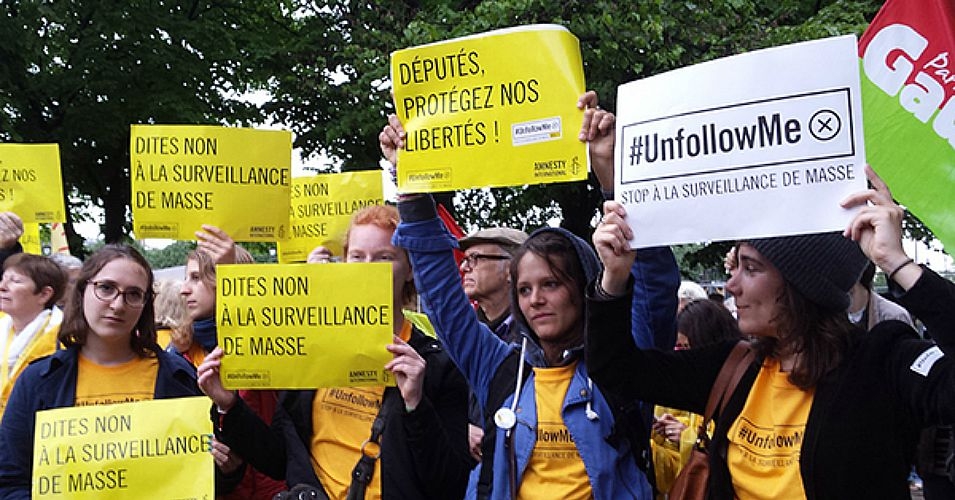
When making laws and empowering the machinery of state, we need to consider not just the threats of today and the people who will wield those powers today, but also what threats may exist tomorrow and who will wield those powers when David Cameron, Theresa May and Jeremy Corbyn are no more than names in a history book. We have a duty to our children and descendants to think about the type of country and world we want them to inhabit when we shape the laws of today.
Unfortunately, ramping up the surveillance state at the expense of the right to privacy and civil liberties fails both tests – it does not provide a convincing response to the threats of tomorrow, and it takes no account of who might try to wield those powers for their own ends in the future.
Terrorists are smart – when attacking the secure West, rarely do they try the same strategy twice. Thus, since 11 September 2001 we have gone from airplane hijackers armed with not much more than boxcutters to shoe bombs, liquid bombs and surface-to-air missiles. Our own intelligence services, to whom Dan Hodges wants to grant sweeping new powers, are usually one step behind. Thus, although the guardians of our safety were never smart enough to think of these risks before they were tried by terrorists, we are still constrained in the liquids we can take on airplanes, and have our shoes checked for explosives before we fly. In fact, modern airport security theatre as a whole reads like a “lessons learned” list of all the cock-ups and clangers of forty years of intelligence failures, with almost no discernible foresight or forward thinking.
So it will be with any new surveillance measures. Technology changes so rapidly that any law passed today will almost certainly be obsolete in a decade, while terrorists will immediately adapt and stop using monitored channels. Human ingenuity will always defeat the clunking fist of government, because it always does. So granting the government the power to monitor who we talk to, go through our emails and hack our smartphones will only infringe on the freedoms of the law-abiding; the terrorists will simply find new technologies or revert to tried-and-tested analogue techniques.
As for the leaders of tomorrow, the thought of a future Prime Minister Theresa May is frightening enough. But what is to say that in a couple of decades, if we do not properly grapple with the scourge of terrorism or in the wake of a future economic crisis, a far more extreme politician may come to power? And if they do, how glad they will be that our present government – cheered on by people like Dan Hodges – passed laws like the Investigatory Powers Bill, granting the state the tools and the legal cover to do as they please.
Again: having these fears and wanting government to provide safety is a perfectly understandable instinctive reaction to terrorist horror, coming from a private citizen. But government will happily assume new powers forever if they are freely offered up by the people, and so newspaper columnists should know better than to provide intellectual and emotional cover in the wake of an atrocity.
I admire Dan Hodges enormously as a writer and commentator on left-wing politics, but these latest irresponsible comments – invoking the image of massacred disabled concertgoers at a Paris theatre to cheerlead for the expansion of the surveillance state – cannot go unchallenged.
–
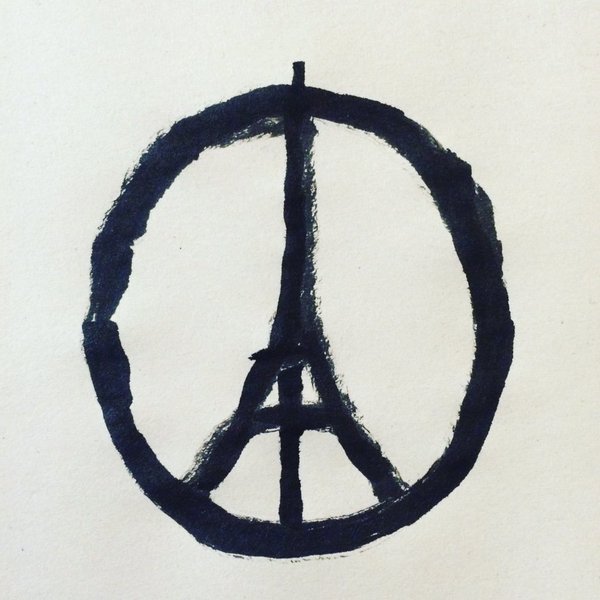
Bottom Image: Peace for Paris, by Jean Jullien
–
Agree with this article? Violently disagree? Scroll down to leave a comment.
Follow Semi-Partisan Politics on Twitter, Facebook and Medium.





 Semi-Partisan Politics