The Battle For British Conservatism: Seeking The New Generation At CPS

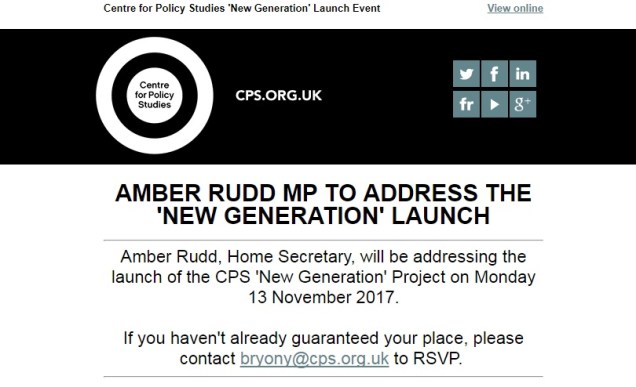
Centre for Policy Studies - CPS - New Generation project launch event

When it comes to breathing new life into the intellectually moribund Conservative Party, virtually any contribution is to be welcomed. But in this case, choosing Amber Rudd as the figurehead for the Centre for Policy Studies ‘New Generation’ project does not inspire great hope

Ever since George Freeman MP pitched a few tents in a Berkshire field and invited a select band of people to gather and plan the salvation of the Tory Party, there has been a steady trickle of other initiatives and articles musing on the same problem. Most of these people are catastrophically late to the party, having conspicuously failed to raise any red flags during the Cameron years (unlike this blog) or even during the beginning of Theresa May’s administration, but better late than never.

And while it may now be too late to save this government and prevent at least a short-term spell in Opposition, at least a few more people are finally starting to ask themselves what it actually means to call oneself a conservative in the year 2017, and what the modern Conservative Party should consequently look like and stand for.

Latest to climb aboard the bandwagon is the Centre for Policy studies, who a few weeks ago hosted the launch of Sir Oliver Letwin MP’s book musing on the same topic. Now, the CPS (founded by Keith Joseph and Margaret Thatcher) is launching an initiative of their own, entitled “New Generation”.

From the press release:

If we are to save Britain from a Corbyn government, the case for the market needs to be made once again. Not with empty slogans, but by developing concrete, practical, aspirational policies that make voters’ lives better.

Our flagship “New Generation” project will give a platform to the 2015 and 2017 cohorts of MPs, and other fresh voices, to make that case: to set out the policies that can make Britain a nation of opportunity and enterprise.

One gets the strong sense that this new project will stand or fall depending on how many (if any) additional “fresh voices” are actually invited to participate, and who those people are.

Inviting the most recent two intakes of Tory MPs to help shape the argument is not an altogether bad idea – these groups have tended to be slightly more libertarian-ish than the statist interventionists of yore, though even these new MPs tended to favour remaining in the EU. But given the inescapable reality that political advancement for backbench MPs depends to a significant extent on being seen to support and defend current government policy it is asking too much to lay all the responsibility at the feet of relatively new, junior MPs.

As this blog has repeatedly argued, real change must come from outside the Parliamentary Conservative Party. We all know how CCHQ love to centralise absolutely everything so as to ensure the consistency of the uninspiring, unambitious brand of Toryism for which they are famous, but this time an exception must be made and outside counsel sought. And if the party will not engage with other small-C conservatives through choice then the party must be hijacked and dragged kicking and screaming in a new, better direction, just as Margaret Thatcher and her intellectual blood bank did for the Tories in the late 1970s.

In short, any project serious about conservative revival in Britain needs to have at least a reasonably healthy disdain for those people currently piloting the country through its centrist malaise. And who better to emphasise the need for fresh, radical and unapologetically conservative thinking than…Amber Rudd?

If you are scratching your head wondering why Amber Rudd of all people has been given the honour of inaugurating this new CPS project, you are not alone. As Home Secretary, Rudd seems to be quietly competent in the same manner as her predecessor, the prime minister – that is, she largely manages to avoid dropping the ball, causing scandal or attracting any real scrutiny of her authoritarian instincts. But she most certainly does not have any kind of reputation as an original thinker or bringer of disruptive innovation.

And why would she? Amber Rudd, after all, is on record as having gone into politics more out of boredom and desire to add another accomplishment to her CV than through any burning desire to change Britain. She is the ultimate May-ite Cabinet member – a technocratic administrator, not a visionary. And while Rudd should be rightly commended for representing the Conservative Party in this year’s general election television debate while Theresa May lacked the courage to do so, her vision of conservatism was very much a defensive one, suggesting that right-wing policies are more unfortunate necessities than a positive choice for voters.

Now it is entirely possible that Amber Rudd will admit to some of these failings and exhort the CPS’s New Generation project to learn from the mistakes and missed opportunities of the government in which she serves. But it seems highly unlikely – Rudd’s own leadership aspirations are well known (being prime minister is, after all, the ultimate boasting point for one’s LinkedIn profile) and she is raising money in donations hand over fist. It hardly then seems likely that the Home Secretary will inaugurate this new initiative to save the Tory Party from itself by admitting that she is squarely part of the problem.

But you never know – perhaps there will be a sliver of introspection. For my sins, I will be attending the launch event on Monday 13 November and will raise some of these points if and when the opportunity allows.


Conservative Party Logo - Torch Liberty - Tree

Support Semi-Partisan Politics with a one-time or recurring donation:

Agree with this article? Violently disagree? Scroll down to leave a comment.

Follow Semi-Partisan Politics on TwitterFacebook and Medium.


The Battle For British Conservatism: Oliver Letwin, Hearts And Minds

Oliver Letwin acknowledges the fundamental challenge facing the Conservative Party, but in this case the devil lies not in the details but rather in the still-elusive big picture

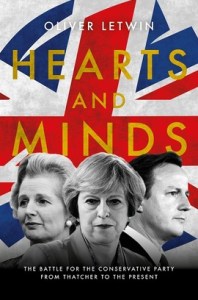
Well, here it is – the first crack in the dam, the first “what’s gone wrong with the Conservative Party and what can we do to fix it?” book to hit the shelves has just been  published by Sir Oliver Letwin MP. Entitled “Hearts and Minds: The Battle for the Conservative Party from Thatcher to the Present“, Letwin offers what will presumably be an insider’s take on when, where and how the Tories managed to lose their way.

(I have requested but not yet received a review copy – below are my reflections based on the book launch video recently uploaded to YouTube).

You can watch Letwin speak at the book launch, hosted by the Centre for Policy Studies, in the video above – and judge for yourself whether you think that Letwin is warm or cold when it comes to identifying the key issues and proposing a plausible way back for British conservatism.

I watched the video with fairly low expectations. Letwin is one of those Conservative politicians who traded for a long time on euroscepticism only to swing his support behind remaining in the EU for reasons which amount (as far as I can tell) to a failure of courage. He was devastated at the EU referendum result and tried to persuade David Cameron to remain in office in the immediate aftermath. And given that Cameron had glowing things to say about the book in his enthusiastic review, any account of past Conservative failures which pleases David Cameron (who presided over so many of them) must, to my mind, be pulling a fair few punches.

But I did not get that sense from Letwin’s speech. Admittedly Letwin kept it very high-level and deliberately eschewed talking about much of the content of the book. But he did echo themes which this blog has been shouting about for years when he said:

Between now and the middle of 2021 or so I think we have time on our hands, which we mustn’t misuse. And that actually means recapturing the intellectual initiative and not getting mired in administrative detail but going back to these fundamental principles and trying to show how they apply to the great issues of our age, in a modern medium and a way that feels relevant so that whoever is the leader as we go into that election – long after Theresa has taken us through Brexit – actually has something much better and bigger than just a set of policies dreamed up at the last moment for a manifesto. In the end, principles and ideas have to precede the practical policies and the selling of a message.

I agree with everything aside from the Tories having “time on [their] hands”. There is precious little time for a leisurely period of introspection on the part of people who generally speaking still will not admit to having done anything wrong (or at least admit only to tactical rather than ideological errors). The only thing which will likely save the Conservative Party in time for 2022 (barring another round of fratricidal blood-letting within the Labour Party) is if the Tories are taken over by a new force which is already at work re-establishing conservative principles and building policies from them while the dying husk of this present administration focuses on Brexit and tries not to drop the ball elsewhere.

Just as the Thatcherite insurgents took over the Conservative Party in the late 1970s, the Cameron clique captured the party in the mid 2000s and Jeremy Corbyn’s crew seized the Labour Party back from the centrists in 2015, any immediate Tory revival will only come about if a new group can get organised and push the old guard out of the way when Theresa May steps down or is deposed.

Letwin pretty much goes on to admit this, undermining his own initial optimism, when he says:

Of course I didn’t design things so I wouldn’t be in government now, I found myself rudely ejected from government, as I describe in the book. But actually, had I thought about these things more clearly I would have ejected myself because actually those poor people – my former colleagues, many of them great friends of mine – now find themselves imprisoned in the ghastly operation of trying to manage this country through Brexit, keep its finances in order, carry through all sorts of administrative actions which are very necessary but totally dull and fend off thousands of marauders and put out hundreds of forest fires, and therefore haven’t the remotest amount of time to think about these basic principles. That falls to the rest of us who are outside that machine and can actually do this thinking now, and that is our sort of duty.

The dreary job of managing the technocracy and steering the ship of state while being assailed from all sides is not conducive to bold, inspired policymaking, as Letwin acknowledges. That’s why radical, purposeful governments which command the kind of mandate required to push through their agenda rarely conjure themselves into existence while the party is still in power. This kind of introspection is usually prompted only by being in opposition with no expectation of returning to power unless something significant changes.

But on the positive side, because Theresa May is so singularly useless at picking out talent and surrounding herself with the brightest and best, several key conservative assets are currently languishing on the backbenches with nothing but time on their hands to work the issue – to commit to a real debate about what it means to be a conservative in 2017, and how to apply conservative solutions to 21st century challenges.

The likes of Kwasi Kwarteng, James Cleverly and George Freeman spring to mind, though there are doubtless some others. One does not necessarily have to agree with their every last public utterance or voting record, but these people at least look as though they may have some original ideas to contribute as well as personal career aspirations to advance. If Priti Patel could just get herself fired as International Development Secretary (a role in which her talents are wasted) then a potentially promising senior Tory would be freed up to join the revolution, too.

I shall read Letwin’s book with interest. The sense one got from the CPS book launch was of a group of rather self-satisfied veterans from Thatcher’s day, still dining out on the victories of an earlier era, who have not really had to formulate a new worldview or policy platform since the 1970s and are still unconvinced as to why they should do so now. Like ageing rock stars they go around belting out the old favourites to a dwindling band of nostalgic devotees while the rest of the world slowly moves on without them.

The accomplishments from the Thatcher years should be recognised and never diminished, but it is hard to imagine this Dad’s Army think tank saving the day for a second time, forty years later, without a significant injection of new blood (I don’t know enough about their newly appointed acting director Robert Colvile to know whether or not such a transfusion is likely).

And likewise, while Oliver Letwin’s book may well offer some diplomatically worded assessments of past Tory shortcomings, if he really does have the ideas needed to reinvigorate the Conservative Party one wonders why they were not flagged to Theresa May and Lynton Crosby before they ran one of the dreariest, most uninspiring general election campaigns in living memory.

Ever the optimist, though, I hope to be pleasantly surprised by what he has to say.


Oliver Letwin - Margaret Thatcher - Conservative Party

Oliver Letwin - Hearts and Minds

Support Semi-Partisan Politics with a one-time or recurring donation:

Agree with this article? Violently disagree? Scroll down to leave a comment.

Follow Semi-Partisan Politics on TwitterFacebook and Medium.


Conservatives Are Conceding The Battle Of Ideas Without A Fight

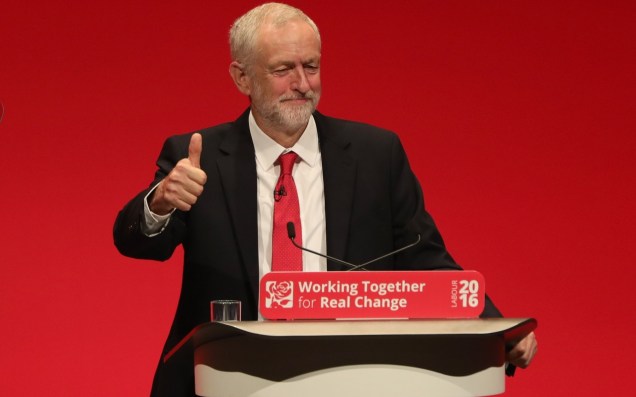
Jeremy Corbyn thumbs up

Jeremy Corbyn’s Labour Party is hard at work promoting their beguiling new left-wing vision for Britain while the Tories offer nothing but drudgery and incompetence

Every day now brings more ominous warning signs for the squabbling, directionless Tory government that the only people in Britain offering a clear, articulable vision for the country are those on the Corbynite hard-left wing of the Labour Party.

Four months after the general election, and all of the political energy and momentum is still on the Left. Jeremy Corbyn is more wily than he was in 2015, less prone to gaffes or accidentally handing his enemies the initiative. His centrist rivals have fallen into line, discredited and with no strong candidate to unite behind. Moreover, while most conservatives spent the summer licking their wounds far from the ideological field of battle, Momentum continued to organise and prepare for what they believe is one final push required topple the Tories and seize power.

And this newfound confidence is starting to creep into the rhetoric used by Labour politicians. Jon Trickett, Shadow Minister for the Cabinet Office, writes this week in LabourList:

There was a time after the second world war when government saw its central role as creating a socially just Britain where full employment, adequate housing for all and free education was the right of the many.

In that time, there was always more to achieve but the national sense of purpose was clear.

It was a time when jobs were secure and for the long term. Policy was designed to make communities feel secure, when the past was a bad place of mass unemployment, slum housing and no hope. But the future was full of promise, where strangers were welcomed into communities because no one felt their jobs were under threat.

And in the time, it was not acceptable that the growing wealth of the country was only distributed to the wealthiest.

A coherent set of progressive values aimed at building a social contract in which we had a sense of duty to the community, and the country agreed to stand behind those who could not care for themselves.

Note what Trickett is doing here. He is building a narrative, talking about the kind of country we once were and citing the great endeavours from our past in order to build a link with the present and generate enthusiasm for future Labour policies.

President Lyndon B. Johnson did something very similar (albeit at a much more sophisticated level) when introducing the Great Society initiative in 1964, not merely proposing a raft of random new socialist programmes but making them collectively seem almost inevitable by deliberately linking them with the American founding, history and national destiny:

The purpose of protecting the life of our Nation and preserving the liberty of our citizens is to pursue the happiness of our people. Our success in that pursuit is the test of our success as a Nation.

For a century we labored to settle and to subdue a continent. For half a century we called upon unbounded invention and untiring industry to create an order of plenty for all of our people.

The challenge of the next half century is whether we have the wisdom to use that wealth to enrich and elevate our national life, and to advance the quality of our American civilization.

Your imagination, your initiative, and your indignation will determine whether we build a society where progress is the servant of our needs, or a society where old values and new visions are buried under unbridled growth. For in your time we have the opportunity to move not only toward the rich society and the powerful society, but upward to the Great Society.

In fact, this is a simple device which even mediocre politicians and rhetoricians were once capable of using before technocratic centrism sucked the soul and energy out of politics. It is the exact opposite of anything written or spoken by a Conservative minister in Theresa May’s administration, because great political rhetoric can only exist when there are great ideas to be expressed or arguments to be won.

Trickett goes on to give a perfunctory but devastating indictment of the state of Britain under the Conservatives:

But now you would struggle to discover a shared sense of national purpose. You could describe a sense of anomie in Britain where a sense of common values, duty to others and co-operation for shared ends are, to one extent or another, lacking.

Too often: post-industrial communities have been abandoned; young people have less hope than ever before of acquiring a home at reasonable cost; education has become a commodity rather than a public good; where that which was common is frequently private or suffering from severe spending cuts; and, where the wealth of the most privileged is growing exponentially at the expense of the rest.

How do we explain this shift in the national culture?  Or rather, how do we account its disintegration and fracturing? Is this a uniquely British problem? And can we begin to rebuild a renewed socialist project based on 21st century.

At this point a five-alarm fire warning should be sounding in CCHQ and inside the head of every single Tory or small-C conservative in Britain, because Jon Trickett has just eloquently and concisely diagnosed the ailments of modern Britain – the fact that we are effectively drifting as a nation with no core unifying purpose or attachment to one another and a diminishing sense of obligation to our fellow citizens. In other words, Trickett has created an itch, a burning discomfort with the status quo, and now stands ready to offer voters the calamine lotion of Jeremy Corbyn’s socialist policies.

One does not have to agree that building “a renewed socialist project” is the answer. The point is that Trickett has clearly defined a problem and proposed a solution, all in the space of three short paragraphs. The Tories, meanwhile, are stuck defending a mediocre record with the huge distraction of Brexit, and seem to be loudly insisting that everything is great despite mounting evidence to the contrary (see Universal Credit). They have chosen to be cheerleaders for the status quo rather than agitators for change, even though the Conservative leadership election-that-wasn’t last year presented the perfect opportunity for unflinching self-assessment followed by an ideological reset.

That opportunity was squandered. And it has really come to something quite appalling when a Labour politician is responding to the priorities of this blog before the Tories pay proper attention. Jon Trickett is hardly known as Labour’s greatest thinker, but at least he understands that mandate-bestowing electoral victories are won on the back of selling the electorate an inspiring vision for the future.

Having a narrative is important. Good leaders and successful political movements understand this. The Attlee government alluded to by Jon Trickett certainly had a clear vision of the New Jerusalem they wanted to build out of the rubble of war. Margaret Thatcher had her urgent mission to save Britain from a failing post-war consensus and terminal national decline. Even David Cameron had his “Big Society”, an idea which might have been genuinely transformative if only it was bolstered with more thought and political courage.

In America, Franklin Delano Roosevelt had his “New Deal”. LBJ championed the “Great Society”. Ronald Reagan beguiled the nation with his promise of “Morning in America” after years of perceived stagnation under presidents Ford and Carter. And while President Obama’s soaring rhetoric often exceeded his relatively pedestrian governing agenda, his 2008 message of “hope and change” also strongly resonated with many Americans (including millions who deserted the Democrats to vote for Donald Trump in 2016 after no positive change appeared in their lives).

British politics has been stuck in such a dismal slump because for two decades an incredibly narrow, self-serving consensus was allowed to crowd out all other perspectives. And while this consensus served many people fairly well, its policy outcomes focused almost exclusively on funnelling material benefits (either wealth and career opportunities or literal welfare benefits) to certain specified groups of people rather than calling all of us together as a society united by a common bond, culture and purpose.

That approach has been found wanting. When the bipartisan political consensus (favouring EU membership, social liberalisation, globalism and corporatism) goes unchallenged it feels no need to respond to the concerns of those who do not benefit from existing policy. That is why for all the material progress seen in Britain we are still blighted by low productivity, family breakdown, divisions over immigration and a lack of any meaningful government response to the negative side-effects of automation, outsourcing and globalisation.

By electing Jeremy Corbyn as leader, some within the Labour Party recognised that continuing to stand up for a failing political consensus was no way to address these problems or win a decisive mandate for left-wing government. As incumbents, the Tories were left as the only major party championing the status quo, and rather than develop a radical, inspirational right-wing message of their own they continued to double down on bland, uninspiring centrism under Theresa May.

What makes it especially galling that the Left rather than the Right have recognised the need for a positive, bold new narrative is that it is the Left who are most in thrall to the Cult of Identity Politics which does so much to atomise society and make people see themselves as members of persecuted identity groups first and foremost rather than fellow citizens of a united country. Somehow, despite this increasingly prevalent mindset within their ranks, some on the Left still managed to recognise the need for a coherent, inspiring national message, a message with the potential to unite a broad swathe of society behind it (though whether it succeeds is another matter).

As John Prescott boasted earlier this year:

Finally, we’re talking about ideas and policies – not splits and personalities. Twenty years ago next month, Labour won an ­election landslide because we were united, trusted and had policies people could understand. When we lost in 2010, I felt we lost our way. We didn’t want to defend our record in government and by 2015 we accepted Tory austerity.

At least Labour is now ­developing clear red water between us and May. Not with soundbites and brickbats, but with popular policies.

Ideas and policies over splits and personalities.

Meanwhile, what do the Tories offer? False promises of being “strong and stable”, a moronic slogan which described an unattainable state of being rather than a clear direction for the country. More dull, technocratic drudgery in which eliminating the budget deficit (painstakingly slowly) is considered an aspiration worth putting in neon lights and making the focus of their government. Division and incompetence on Brexit, with the only optimistic Tory voices now belonging to free trade fantasists who want Britain to unilaterally lower barriers to trade and who think that crashing out of the EU and defaulting to WTO trade terms is a smart decision. Barely concealed leadership rivalries between a cast of identikit Cabinet ministers who seem to be competing with one another based on personality rather than different visions for the country.

Yet even now, the Conservative Party has no idea of the terminal danger it is in. Despite a few plucky efforts to re-inject some proper thinking and ideas into the party, the prime minister and her Cabinet offer no real ideological leadership whatsoever. Consumed by Brexit (and doing a pretty poor job at that) they seem to have abdicated any responsibility for using government to lead the country to a better place. Everything they do is reactive and cynical, like Theresa May’s university tuition fee freeze and Chancellor Philip Hammond’s age-based tax proposals, transparently cynical attempts to court the youth vote which are laughable in their inadequacy.

A couple of days ago I mused about whether the Conservatives can renew themselves ideologically and spiritually while still in office. This already slim prospect looks less and less likely by the day, both because senior people within the Tory Party seem to be too busy lurching from crisis to crisis to see the bigger picture and because all of the ideological energy and political momentum is on the Left right now.

And where there is new conservative thinking, it tends to counsel more, not less, accommodation with the Left. Some MPs, like Sam Gyimah, talk the right language of purpose and ambition but then disappointingly default to predictable, Left-leaning “compassionate conservative” solutions. And even these efforts at conservative renewal tend to focus more on what the government could and should do for us rather than what we collectively might accomplish together as a people. Time and again, the present Conservative Party capitulates to the Left and apologises for its own principles.

This is frustrating because conservatives should be able to come up with a far more inspirational, compelling message than the one they have been peddling. The Left’s entire focus is fixed firmly on inequality. Yet even die-hard Social Justice warriors would surely admit that equality is a hygiene factor, the absolute baseline for which society should aim (though they might then go on to disagree about whether equality or opportunity or outcome should be the goal).

Therefore, as eloquent as Jon Trickett’s words are – and as much as they should scare conservatives who are yet to join the ideological battle – equality remains insufficient as an organising principle for society or a shared national ambition. We need more concrete goals toward which we can all strive and move together, while in the background we are working hard to achieve a just society (however we choose to define it).

And luckily for conservatives, this is what the Left still does not get. Though they have woken up to the need to talk in terms of vision and ambition while the Tories are still lost at sea, the Left still sees achieving equality as the ultimate goal. One gets the distinct impression that many on the hard Left would not much care if we never really accomplished anything great as a country and even regressed somewhat in terms of material comfort and economic development, so long as society was flattened and the gap between rich and poor reduced. To listen to many a Labour speech, one almost pictures a country with a state-of-the-art NHS hospital on every street corner but a population so busy marvelling at their wonderful state of equality that they forget to go out and change the world.

So there remains an opportunity for conservatives to sneak in with an improved narrative and national ambition, one which aspires to something more than mere equality. Something which actually seeks to organise and harness the best of our energies and skills as we strive to make our country and the world better, not just more equal. Such a vision, carefully crafted and persuasively argued, would beat the Left’s narrow-minded focus on equality any day of the week.

So who will step up to the challenge and help develop a worthy conservative response to the re-energised Left? Because right now they are the ones fizzing with energy and ideas, while conservatism seems content to trudge wearily to its grave, quite possibly dragging the country along with it.


UPDATE – 17 October

Evgeny Pudovkin makes some good points over at Comment Central, specifically around how the Tories can potentially keep Theresa May in place as a “bad bank” repository for public dissatisfaction with the status quo while developing new ideas and new talent in parallel:

Some argue for replacing May with a fresh candidate who could offer the Tories a new vision. Yet May is still at Number 10 due to the very reason of her being a fulfiller and not a prophet. Her main role entails overseeing already introduced reforms – Iain Duncan Smith’s Universal Credit, George Osborne’s Northern Powerhouse, the house building programme and, indeed, Brexit. That doesn’t leave much time for blue-sky thinking, at least not until future relations with the EU are at least broadly defined. Just what exactly will toppling May achieve, apart from spawning new rivalries?

Any vision for post-Brexit Britain must be cultivated in parallel with May’s premiership. First of all, prospective candidates should establish a stronger presence on social media. The time when David Cameron could simply dismiss digital communication with his “Britain is not Twitter” jibe is over. As historian Niall Ferguson explained (here and here), the successes of both Donald Trump and the Leave campaign can be explained at least partially by their presence on social media. Secondly, the next leadership candidate might want to spend more time with the grassroots. Finally, a prospective challenger could create a new platform for developing policy. The Centre for Policy Studies served an important vehicle for Thatcher’s revolution, while Policy Exchange helped to inject a more coherent vision into Cameron’s project.

The dichotomy between May’s stable rule and the need to reinvigorate the Tory party is false. You can do both at the same time.

I agree in principle. Of course, this approach depends entirely on the public retaining patience with the Tories long enough for them to come through the other side of Brexit with an attractive new philosophy of government ready to go and an equally attractive leadership candidate to pick up the torch.

Right now, I struggle to see where the seeds of a new 21st century conservatism are germinating. Certainly the think tanks are nothing like the humming centres of creative energy that they were back when they propelled Margaret Thatcher to power with a copy of the Stepping Stones report in her pocket.

On paper, what Evgeny Pudovkin proposes makes perfect sense. In practice, I don’t see where the new ideas or the leadership talent are going to come from. I sincerely hope that this is due to my political myopia rather than a genuine dearth of new ideas within the British conservative movement, but I do not think it likely.

 

British Ambition - underground tube sign

Support Semi-Partisan Politics with a one-time or recurring donation:

Agree with this article? Violently disagree? Scroll down to leave a comment.

Follow Semi-Partisan Politics on TwitterFacebook and Medium.

In My Version Of The British Dream, Leaders Acted With Integrity

BRITAIN-POLITICS-EU-BREXIT

The World, Transformed

I saw this:

A traumatised and bedraggled family, still wearing the pyjamas in which they fled their smoke-filled flat in Grenfell Tower, were huddled together when the prime ministerial motorcade swept up outside the impromptu crisis centre and Theresa May strode through the open door accompanied by a single aide and minimal security, having dismissed police advice to maintain close-quarter protection at all times.

There were jeers, boos and some pointed profanity shouted in her direction as her entourage passed the crowd gathered outside, but the prime minister walked on unfazed and immediately approached the family, pointedly spurning the reception line of Kensington & Chelsea Borough Council officials assembled to greet her. The husband looked brittle, angry and ready to snap while his wife, in shock, stared blankly ahead.

But before either of them could speak, Theresa May knelt down and spoke to their two small young children. It was as awkward for those watching the scenes on television as it was to be there at the scene – the prime minister was not a natural empath at the best of times and as uncomfortable around children as she was in any other unscripted setting. But still she spoke quietly and reassuringly to the children while the cameras flashed, and produced some little toys from her bag before standing up to speak with the parents.

Again, it was awkward. The parents, still in shock, were monosyllabic and uncertain of what to say, but already some left-wing agitators gathered outside had decided that the inferno was the fault of the Conservatives and were chanting about the Evil Tories having blood on their hands. Over the muffled chants, however, the prime minister could be heard promising the family that they would be spending the next night together in a local hotel, and she would personally ensure that the Office of the Prime Minister, not anybody else, would secure them alternate local accommodation as soon as possible. As she went off to speak to other survivors, her aide followed behind, taking the details of each family and repeating the same assurances. Firefighters were still pumping jets of water onto the smouldering tower as the sun rose in the sky; the Mayor of London and Leader of the Opposition would not arrive for several hours yet.

As it became clear that Britain’s disaster preparedness and response plans were woefully outdated and inadequate, with poor coordination between the local council, emergency services and the Red Cross, Theresa May became a frequent fixture in the shadow of Grenfell Tower over the coming days. The hostility of the crowds became worse, if anything, and some of the survivors were understandably very angry, providing newspaper editors with choice quotes of criticism and TV news editors with more than one video of the prime minister being angrily dressed down by survivors.

But undeterred, the prime minister kept coming back. Though her security detail now maintained a more high-profile presence, the prime minister was frequently onsite, being briefed by response leaders and answering questions while her husband helped to coordinate donations and supplies. Once the immediate crisis was over, May gave a speech admitting that Britain’s disaster response plans were not fit for purpose, and pledging to create a new unified agency to take charge of Britain’s resilience against disasters both natural and man-made. Even many of her political enemies had to grudgingly admit that she had displayed real leadership in difficult circumstances.

This all happened shortly after the prime minister had finally imposed some order and discipline on her fractious Cabinet, pointing out to the Brexit Ultras that getting 100 percent of what they wanted on the back of 52 percent of the vote and an EU referendum question and campaign which deliberately avoided specifics was not reasonable.  Boris Johnson and several others had made their displeasure known and even sought to destabilise her position as leader, with Boris effectively drafting his own personal Brexit manifesto in the Telegraph. Theresa May’s response was swift and unforgiving, warning Boris Johnson and other rebels to fall in line or be sacked and personally denounced from the podium at 10 Downing Street. The next day Boris gave a contrite press conference in which he acknowledged May’s leadership and admitted that he was in fact not the sole custodian of Brexit, before being sent by the prime minister on a long diplomatic tour of South America.

There was still loud discontent in Parliament about the government’s Brexit stance, not helped by mischief-making and uncertainty from the Labour Party. But Theresa May made it clear in all of her speeches, press releases and PMQs appearances that Brexit is a process, not an event, and that the best way to abide by the verdict of the 52 percent while acknowledging the 48 percent was to seek continued participation in the single market in the short term by applying to rejoin EFTA and trading with EU countries through the EFTA-EEA agreement in the short to medium term. She acknowledged that this interim step out of the orbit of the EU would offer only limited and largely untested tools to manage the free movement of people, a sticking point for so many, but pointed out that through this mode of Brexit, any retaliatory measures taken by the EU in the face of democratically determined UK immigration restrictions would at least not then automatically impact the entirety of our trade with the EU.

But still there was discontent and rumours of plots. So Theresa May issued a public challenge from the garden of Downing Street, daring Labour to call a vote of no confidence in her government and plunge the country back into chaos, and to her disloyal Cabinet members to fall in line or prepare to hand their ministries over to Jeremy Corbyn’s government-in-waiting. This bold, conciliatory stance on Brexit paid off. The grumbling died down, and Theresa May went into the Tory Party conference in Manchester strengthened and respected, if still widely disliked by many.

And what a conference it was. Nobody had any great expectations for the Conservatives, particularly given the distrustful atmosphere in Cabinet and after Jeremy Corbyn cemented his iron rule of the Labour Party by delivering a triumphalist, ambitious left-wing credo. But for once in her political life, Theresa May surprised everyone. Freed from the pernicious influence of her old Red Tory brain trust, May showed a new willingness to listen to the Right of the party, on the condition that they applied their small government values to coming up with new solutions rather than simply reheating the old Thatcherite medicine of the 1980s.

Her conference speech, though marred by a prolonged coughing fit, a juvenile protester and the gradual collapse of part of the stage, was the complete opposite of her first outing in 2016. It was an acceptance that the dour, paternalistic, technocratic approach to government she had championed in her first year had inspired zero enthusiasm in the public, and that the Conservatives could not expect to win based on scaremongering about Venezuelan socialism or overwrought insults to Jeremy Corbyn.

The prime minister took responsibility for the awful 2017 general election campaign, pledging that henceforth the Conservatives would be a party of ideas, that the status quo was something unacceptable, not something to be preserved, and that only the Tories could be relied upon to preserve the best of tradition while orienting Britain to meet the challenges of this century. And the British media, showing a renewed dedication to serving the public interest by reporting seriously on policy over spectacle, gave the speech the hearing it deserved. Within two days, nobody remembered the prankster or the coughing fit.

But having set out these goals in her speech, Theresa May also made clear that she would not fight the next general election, but rather would step down at some point after the formal EU secession was complete to make way for new leadership. She did this knowing that it would ignite speculation about her likely successor, but maintained that neither the Conservative Party nor the country would benefit from a hasty leadership election – that potential Tory leaders needed time to think about their ambitions Britain as well as their career ambitions. By announcing this long-term intent, May enabled the Conservatives to finally begin a meaningful debate about what conservative government should look like in the 21st century. Ideas were debated, not policies floated, dissected, discarded or refined.

After a long period of questionable value added to British politics, the right-wing think tanks took on a new lease of life, finally becoming incubators of radical, civic-minded policy rather than mere enablers and cheerleaders for a very narrow agenda. The IEA, Centre for Policy Studies and Adam Smith Institute became among the most exciting places to work in Westminster, the mediocre-but-well-connected hires having been pushed out to make room for thinkers of real vision and expertise.

Because of this ideological renewal, when potential future Tory leaders did eventually start to manoeuvre for position they were forced to appeal to would-be supporters by convincing other MPs (and the general public) that they had the best ideas, as well as the courage and leadership skill to enact their agenda. No longer was it enough to appeal to the vanity or career aspirations of junior MPs with offers of advancement, or woo them over sushi and sandwiches.

And when Theresa May eventually stepped down as promised, one year before the next general election, her strategy paid off handsomely. In hindsight, her successor was a natural choice – someone with solid small government credentials but not an ideologue imprisoned by 30-year-old dogma. Someone able to talk up rather than down to the nation, unafraid to show a bit of poetry in their rhetoric but equally comfortable talking with voters at the local pub.

Theresa May’s successor came from a humble background and a history of community and philanthropic involvement, a walking refutation of leftist charges that conservatives are selfish, callous and born to privilege. But more than all that, the new prime minister was someone with a burning mission to improve Britain and a desire to help their fellow citizens help themselves. Someone who promised to inject some ambition and a sense of direction back into Britain. Someone whose conception of the journey ahead extended beyond the moment they stepped across the threshold of 10 Downing Street.

The 2022 general election would be a close-fought race, but at least the Tories now respected the threat posed by Corbynite Labour and stepped up their own efforts in response. The Conservatives had pulled off that most difficult of manoeuvres – a major ideological course correction whilst in government – but Jeremy Corbyn’s Labour Party were still riding high, level in the polls. For the new prime minister to truly cement their authority, a convincing general election result was needed to usher in an intake of new Tory MPs fully committed to the new project – and to sweep out a lot of dead wood from previous administrations (though Theresa May had graciously agreed to remain in Cabinet as Minister for Citizenship).

And there were some encouraging signs. While Jeremy Corbyn continued to attract support by offering free things to millennials, it appeared that Generation Z which followed them were more independent and receptive to a conservative message now that it was being delivered boldly and unapologetically. A nascent conservative youth movement was reborn. Campaign events were held in real public squares encouraging real public interaction rather than being clinical press photo opportunities with distant party activists brought in by bus. These campaign stops were used to discuss ideas, not transmit soundbites, and when the inevitable public heckles and hostile media questions occurred, the prime minister was fond of quoting John F. Kennedy, calling for people to ask not what their government can do for them, but what they can do for their country, and for their fellow citizens.

There was even a positive public and media response to the Conservatives’ new slogan and title of their 2022 election manifesto, which rejected the usual pandering platitudes and simply read: Dare Mighty Things.

It made me feel as though there is hope for our political class, for conservatism and for our country.

That is what I saw this week.

I should note – this part is true – that I saw much of this while slumped over, asleep at my desk after a long and tiring week. For an hour afterward, even knowing it was either a fantasy or a dream, I felt so . . . hopeful. Cheerful. Proud. I give it to you.


This article is inspired by the great Peggy Noonan, an homage to her recent Wall Street Journal Op-Ed re-imagining the Trump presidency in an alternate America where civic virtue is still valued. If I manage to become one tenth of the writer that Noonan is, all these years of blogging will not have been in vain.

Dare Mighty Things

Support Semi-Partisan Politics with a one-time or recurring donation:

Agree with this article? Violently disagree? Scroll down to leave a comment.

Follow Semi-Partisan Politics on TwitterFacebook and Medium.

Can The Conservative Party Change Course While Staying In Power?

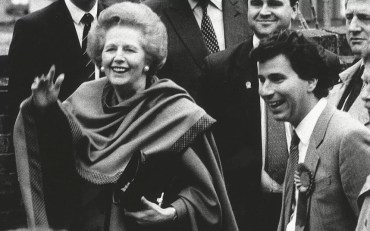
Margaret Thatcher election - 10 Downing Street - 1979

If the Conservative Party has a saviour-in-waiting, they are doing a great job of staying hidden from view

Blogger Effie Deans has some good thoughts here on how to revitalise the Conservative Party and give it the kind of purpose and sense of mission that might actually inspire people to vote Tory out of enthusiasm rather than fear of the alternative.

I don’t agree with every last letter of what she says, but we should all be able to stand behind the conclusion:

What we don’t need is someone who thinks the task is to limit the damage from Brexit. We need someone who realises that leaving the EU is a turning point that can improve life in Britain. We therefore above all else need a Brexiteer to lead the Conservative Party. We need someone who actually believes in free markets, lower taxes and smaller government rather than someone who thinks that price controls are a sensible idea because Ed Miliband gained a few percentage points when he suggested them. Don’t let’s try to steal Labour ideas, let’s come up with new Conservative ideas.

We don’t need a new leader yet, but start preparing for the time when we will need one. Find the brightest minds in the Conservative Party, give them the task of coming up with the new ideas that will break us free from the cosy establishment consensus. These must actually address the genuine worries that ordinary British people have about our country. Let no idea be forbidden. But above all else make sure we develop Conservative ideas for a new Conservative Party. When that is done find the best communicator, perhaps someone we’ve never heard of, to present these ideas. Then believing in what we stand for,  with ideas that we believe to be true and important let us take on Labour and win. That just might just give us a new turning point.

This chimes with everything I have been writing about the Conservative Party since 2013. Appeasement of the Left has gotten us absolutely nowhere. By cowering in the face of leftist moralising and making concession after concession to statist thinking, all that David Cameron and Theresa May have succeeded in doing is expanding the Overton Window of British politics further to the left.

The one area where I potentially disagree with Deans is that she believes that a conservative course correction is possible while the Tories are still in government, while I am becoming increasingly pessimistic about the prospect. Mid-term course corrections are hard enough to pull off at the best of times. Doing so in the midst of Brexit (and remember, Brexit is a process, not an event, even if we do formally leave the EU on schedule) and with no standout candidates is inviting failure.

And that’s why a fresh face for conservatism is so important, which Deans also acknowledges, to her credit:

When considering who should be the next Conservative leader it is crucial to think about ideas rather than people. Few people had heard of Tony Blair much before he was elected leader, the same was the case for David Cameron. What matters is not so much the person as what the person believes.

The major problem that the Conservative Party has faced since the election of David Cameron is that it has not had a leader who really believes in anything. Cameron was concerned mostly in how to get the Conservatives into power. He therefore did all he could to occupy the centre ground. He wanted in essence to become Tony Blair. The difference between these two is essentially trivial. Both are in reality social democrats. They believe in capitalism, but they think that its purpose is essentially to fund state spending. Neither views the goal of government is to become smaller and neither wish to lower the amount that the state spends.

Theresa May takes a similar view. Worse still despite the occasional stern face she completely lacks conviction. She just wants to manage Britain as well as possible while spending as much as possible on nice things. She didn’t even really have an opinion on the EU. She campaigned half-heartedly for Remain and then became a Brexiteer. It is because she doesn’t really believe in Conservatism that she comes up with mush and incoherence and thinks the solution to all problems is to drift to the Left and end up in the centre ground.

Yes, a thousand times yes. Nobody currently touted as a plausible immediate successor to Theresa May sets the heart racing with excitement or optimism for the future. Philip Hammond, Amber Rudd, Boris Johnson & co all suffer from exactly the same lack of conviction as Theresa May and David Cameron. Boris Johnson has slightly more charisma than the others (though this is more than outweighed by his other flaws), but none of them have shown any ability to make a clear, bold and positive case for conservatism. Moreover, they are all equally implicated in the unambitious centrism of the present government.

New blood is absolutely required, whether that is from the backbenches or junior ministerial ranks (Priti Patel? Kwasi Kwarteng? James Cleverly? Tom Tugendhat?) or form somebody not yet even in the parliamentary party. The latter is likely possible only if the Tories find themselves in opposition, though – a neophyte as Leader of the Opposition is just about tolerable; an inexperienced prime minister in challenging times is an immediate non-starter.

Despite the bitter complaining of the centrists, there is in fact nothing wrong with the entirely human desire for politicians and leaders to stand for more than the technocratic, managed decline. The challenge for the Conservative Party is to find a new message – and a messenger – to resonate with people who yearn to be inspired and called to a higher purpose than claiming entitlements form the government. And that messenger aspire to be something more than a dreary administrator of austerity, a British Comptroller of Public services.

Unlike Margaret Thatcher’s transformative premiership (cited approvingly by Effie Deans), however, an new incoming Conservative prime minister will have had no time to develop a new philosophy of government away from the heat of battle before assuming office. They will be plunged straight into the thick of things, and almost inevitably become a reactive rather than proactive leader through no fault of their own.

Margaret Thatcher had four years as Leader of the Opposition to think about her approach to government, and eventually entered Downing Street with a blueprint for national renewal in the form of the famous Stepping Stones report. Unless somebody has been doing some equally radical thinking away from the spotlight in our present decade, it is hard to see a new conservative leader coming to power with anything like as transformative an agenda ready to go – particularly as the challenges we face today, while very different to those of 1979, are every bit as serious.

Can this ideological and national renewal be attempted while the Tories are still in government, without giving Jeremy Corbyn’s Labour Party at least a brief (and potentially disastrous) spell in power? I fervently hope so.

But for the life of me, I don’t see how.


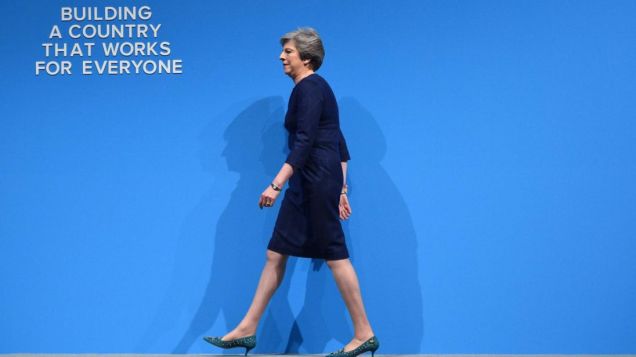
Theresa May

Support Semi-Partisan Politics with a one-time or recurring donation:

Agree with this article? Violently disagree? Scroll down to leave a comment.

Follow Semi-Partisan Politics on TwitterFacebook and Medium.