The Battle For British Conservatism: Oliver Letwin, Hearts And Minds

Oliver Letwin acknowledges the fundamental challenge facing the Conservative Party, but in this case the devil lies not in the details but rather in the still-elusive big picture

Well, here it is – the first crack in the dam, the first “what’s gone wrong with the Conservative Party and what can we do to fix it?” book to hit the shelves has just been  published by Sir Oliver Letwin MP. Entitled “Hearts and Minds: The Battle for the Conservative Party from Thatcher to the Present“, Letwin offers what will presumably be an insider’s take on when, where and how the Tories managed to lose their way.

(I have requested but not yet received a review copy – below are my reflections based on the book launch video recently uploaded to YouTube).

You can watch Letwin speak at the book launch, hosted by the Centre for Policy Studies, in the video above – and judge for yourself whether you think that Letwin is warm or cold when it comes to identifying the key issues and proposing a plausible way back for British conservatism.

I watched the video with fairly low expectations. Letwin is one of those Conservative politicians who traded for a long time on euroscepticism only to swing his support behind remaining in the EU for reasons which amount (as far as I can tell) to a failure of courage. He was devastated at the EU referendum result and tried to persuade David Cameron to remain in office in the immediate aftermath. And given that Cameron had glowing things to say about the book in his enthusiastic review, any account of past Conservative failures which pleases David Cameron (who presided over so many of them) must, to my mind, be pulling a fair few punches.

But I did not get that sense from Letwin’s speech. Admittedly Letwin kept it very high-level and deliberately eschewed talking about much of the content of the book. But he did echo themes which this blog has been shouting about for years when he said:

Between now and the middle of 2021 or so I think we have time on our hands, which we mustn’t misuse. And that actually means recapturing the intellectual initiative and not getting mired in administrative detail but going back to these fundamental principles and trying to show how they apply to the great issues of our age, in a modern medium and a way that feels relevant so that whoever is the leader as we go into that election – long after Theresa has taken us through Brexit – actually has something much better and bigger than just a set of policies dreamed up at the last moment for a manifesto. In the end, principles and ideas have to precede the practical policies and the selling of a message.

I agree with everything aside from the Tories having “time on [their] hands”. There is precious little time for a leisurely period of introspection on the part of people who generally speaking still will not admit to having done anything wrong (or at least admit only to tactical rather than ideological errors). The only thing which will likely save the Conservative Party in time for 2022 (barring another round of fratricidal blood-letting within the Labour Party) is if the Tories are taken over by a new force which is already at work re-establishing conservative principles and building policies from them while the dying husk of this present administration focuses on Brexit and tries not to drop the ball elsewhere.

Just as the Thatcherite insurgents took over the Conservative Party in the late 1970s, the Cameron clique captured the party in the mid 2000s and Jeremy Corbyn’s crew seized the Labour Party back from the centrists in 2015, any immediate Tory revival will only come about if a new group can get organised and push the old guard out of the way when Theresa May steps down or is deposed.

Letwin pretty much goes on to admit this, undermining his own initial optimism, when he says:

Of course I didn’t design things so I wouldn’t be in government now, I found myself rudely ejected from government, as I describe in the book. But actually, had I thought about these things more clearly I would have ejected myself because actually those poor people – my former colleagues, many of them great friends of mine – now find themselves imprisoned in the ghastly operation of trying to manage this country through Brexit, keep its finances in order, carry through all sorts of administrative actions which are very necessary but totally dull and fend off thousands of marauders and put out hundreds of forest fires, and therefore haven’t the remotest amount of time to think about these basic principles. That falls to the rest of us who are outside that machine and can actually do this thinking now, and that is our sort of duty.

The dreary job of managing the technocracy and steering the ship of state while being assailed from all sides is not conducive to bold, inspired policymaking, as Letwin acknowledges. That’s why radical, purposeful governments which command the kind of mandate required to push through their agenda rarely conjure themselves into existence while the party is still in power. This kind of introspection is usually prompted only by being in opposition with no expectation of returning to power unless something significant changes.

But on the positive side, because Theresa May is so singularly useless at picking out talent and surrounding herself with the brightest and best, several key conservative assets are currently languishing on the backbenches with nothing but time on their hands to work the issue – to commit to a real debate about what it means to be a conservative in 2017, and how to apply conservative solutions to 21st century challenges.

The likes of Kwasi Kwarteng, James Cleverly and George Freeman spring to mind, though there are doubtless some others. One does not necessarily have to agree with their every last public utterance or voting record, but these people at least look as though they may have some original ideas to contribute as well as personal career aspirations to advance. If Priti Patel could just get herself fired as International Development Secretary (a role in which her talents are wasted) then a potentially promising senior Tory would be freed up to join the revolution, too.

I shall read Letwin’s book with interest. The sense one got from the CPS book launch was of a group of rather self-satisfied veterans from Thatcher’s day, still dining out on the victories of an earlier era, who have not really had to formulate a new worldview or policy platform since the 1970s and are still unconvinced as to why they should do so now. Like ageing rock stars they go around belting out the old favourites to a dwindling band of nostalgic devotees while the rest of the world slowly moves on without them.

The accomplishments from the Thatcher years should be recognised and never diminished, but it is hard to imagine this Dad’s Army think tank saving the day for a second time, forty years later, without a significant injection of new blood (I don’t know enough about their newly appointed acting director Robert Colvile to know whether or not such a transfusion is likely).

And likewise, while Oliver Letwin’s book may well offer some diplomatically worded assessments of past Tory shortcomings, if he really does have the ideas needed to reinvigorate the Conservative Party one wonders why they were not flagged to Theresa May and Lynton Crosby before they ran one of the dreariest, most uninspiring general election campaigns in living memory.

Ever the optimist, though, I hope to be pleasantly surprised by what he has to say.
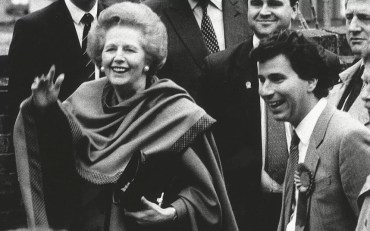
 

Oliver Letwin - Margaret Thatcher - Conservative Party

Oliver Letwin - Hearts and Minds

Support Semi-Partisan Politics with a one-time or recurring donation:

Agree with this article? Violently disagree? Scroll down to leave a comment.

Follow Semi-Partisan Politics on TwitterFacebook and Medium.


The Battle For British Conservatism: Book Progress Update

Atlantis Books shop Oia Santorini Greece

A tedious race against time

As I mentioned last month, I am in the slow, tortuous process of writing a book on the challenges and future of British conservatism, based partly on my writings on this blog and augmented where appropriate with new material.

It turns out that writing a book is quite hard. Who knew? And yet a whole host of verifiable idiots seem to effortlessly churn the things out one after another; but then I suppose many of them have collaborators, researchers or ghostwriters. By contrast, my humble little book (much like this blog) remains very much a side-hustle, and one which necessarily takes third place to work and another significant ongoing project (details TBC) for the time being.

Right now I have a 30-page outline in Google Documents which is being sporadically worked on as I slowly transform terse bullet points, links to my past articles and stream-of-consciousness paragraphs into the final text. I hope to self-publish on Amazon and iBooks (or whatever else those young whippersnappers use, with their loud music and Pac-Man video games) by early in the new year, closer to Christmas if things progress smoothly. Maybe I’ll tweet it out in a 5000-tweet thread or broadcast it on SnapChat, who knows?

I can’t help but notice, as I set to work, that much of the UK political media has finally woken up to the fact that there might be something ideologically dysfunctional within the Tory Party, hence the sudden proliferation of “OMG the Tories have lost their way!” articles in all the prestige media and main political websites. Well done guys, it only took four years for you to catch up (ten years if we count Peter Hitchens as the pace-setter, which we probably should).

Joking aside, this is somewhat frustrating as I know full well that ideas first expounded on this blog (which I know is sometimes read by mainstream UK political journalists even if they almost never deign to link to me or re-tweet my stuff) will soon be appearing in rival books which have the backing of actual publishers and real distribution networks. And in a few short months, a bunch of self-satisfied hacks who only a few months ago could still be found praising the dismal, centrist Tory party to the rafters will be smugly sitting in television studios pontificating on how they were the first to recognise that something was wrong in Toryland. “Where did the Tories go wrong?” will likely be early 2018’s version of “So, Brexit happened” in terms of topical political book sub-genres ravenously pounced upon by the Westminster elite.

Therefore I find myself in a bit of a race to market against these guys, not because I will be remotely competing with them for critical acclaim or market share (I’ll celebrate if I end up selling fifty of the darn things and anybody outside my social circle pays the blindest bit of attention) but purely because I want the personal and intellectual satisfaction of getting my long-held ideas and warnings in print before the prestige media elite saunter along to claim insights first published on this blog as personal, original revelations of their own. Obviously there is a quality/speed trade-off at work, and I don’t want to release any old rubbish prematurely. But I also really, really don’t want to see Fraser Nelson’s Comprehensive Explanation Of The Conservative Dilemma staring down at me from a shelf in Waterstone’s before I have gone on the record myself. That would be significantly sub-optimal.

So I continue to work away on this project in the background. You may have noticed a new series on the blog called “The Battle For British Conservatism” (first article here), some of which will undoubtedly feed into the book (and which will hopefully feature some more interesting guest contributions), but other blog updates may be slightly more sparse for awhile as my energies are diverted.

In the meantime, it would be tremendously helpful to me if readers not already signed up for email updates could do so by signing up right underneath the Facebook sidebar on the right (if you’re reading on a smartphone or tablet then it may be waaaay at the bottom of the page). I will be using the blog’s hitherto-untapped mailing list to keep everyone updated on the book and offer a discount for readers – not that it will cost more than a London pint anyway.

In the meantime, if anyone sees Owen Bennett, Isabel Hardman or Tim Stanley hunched over a MacBook in Starbucks writing something vaguely similar, please give me a heads-up so I can stock up on Red Bull and pull the required all-nighters to beat them to the finish line.

Cheers!

img_7050

Support Semi-Partisan Politics with a one-time or recurring donation:

Agree with this article? Violently disagree? Scroll down to leave a comment.

Follow Semi-Partisan Politics on TwitterFacebook and Medium.


The Battle For British Conservatism: Are The Tories The Enemy Within?

Theresa May - Downing Street - Conservative Party - Tories

What if the current Tory Party represents a dangerous, long-ascendant fifth column within British conservatism?

In a blistering attack on the party of Theresa May, Philip Hammond, David Cameron and George Osborne, Laura Perrins of The Conservative Woman declares that the Tories are now the “enemy within” and the single greatest threat to what remains of British conservatism.

Perrins’ dissatisfaction with the Conservative Party – like that of this blog and other malcontents of much longer pedigree such as Peter Hitchens – has clearly been building for some time, but finally reached boiling point when the Conservatives cooked up their  “presumed consent” scheme for organ donation, yet another policy which sounds fluffy and caring at first glance but which would effectively make one’s body the property of the state, merely on loan to you not from God or nature but from Her Majesty’s Government, to which it must be returned upon death unless one specifically requests an exemption.

Perrins thunders:

The last straw for me was the proposed ‘presumed consent’ organ donation scheme, more accurately described as the State organ appropriation scheme. This is small fry in the scheme of things but it sums up the whole rotten party. The concept that your body is yours, and remains yours and then under the control of your family after death, is so fundamental, so obvious, so visceral and so conservative that it should not need explaining.

Now Theresa May tells us that in fact your body belongs to the State, unless you have taken the time and trouble to tell the State otherwise. This is wrong in principle and in practice. I was on a radio show with a chap who was waiting for a kidney and he said that his surgeons told him there were not even the beds or doctors to take advantage of this scheme. So, the Conservatives are grabbing organs just, as usual, to look nice. See, neo-Statists.

I had a very similar reaction at the time, not because I am any less keen to see organ donation rates improve and waiting lists decrease, but because this way of going about it represents about as big a power grab by the state as it is possible to make:

https://twitter.com/SamHooper/status/915636056732655616

But this is just one of the many ways which the impostor party which bears the name “Conservative” has made a mockery of the principles they supposedly stand for, and Perrins goes on to recount the full litany at length.

Let’s face it, the Conservative party are neo-Statists and have done more damage to conservatism in this country than Labour ever could. The current leader of the party believes actual conservatism – small government, strong families and the free market – is nasty. She actually said this, yet we are all to go merrily along backing this wretched party no matter what, as we did in the last election – much to my regret.

This is the party that believes an energy gap is a good idea, and that continued government guarantee of tuition fees is sensible. The Tories are as ideologically wedded to the socialised health system that is the NHS as the Labour party is, all because they think they will look mean if they point out that in fact the Emperor has no clothes.

The Tories have interfered with the childcare market, causing the costs to rise year in, year out. They want more mothers in work, whether they want to be there or not. They lecture us on what to eat and drink; no detail of our life is beyond government note-taking. Now they have instructed GPs to ask what your sexuality is. This is Nanny turned Nurse Ratched.

The Conservatives love big government. There has been no reduction in quangos – they have quangos lobbying their own government, for goodness’ sake. They use the school system to try to solve every social problem: FGM, toothbrushing, sex education, pornography, drugs, healthy eating, on and on it goes. The national debt could hit £2trillion in the next ten years.

And so it goes on – Perrins inevitably touches on the march of the Cult of Social Justice and Identity Politics, noting that the Tories have bent over backwards at every turn to accommodate increasingly avant-garde and unproven leftist orthodoxies around gender and family life. And to each accusation there is little which can be said in defence.

Of course, there are exceptions, and I do not agree with all the charges laid by Perrins at the foot of the Conservative Party. I would certainly argue that some of the concessions to modernity made by the Tories are good and entirely necessary, particularly the opening up of the stabilising, enriching influence of civil marriage to same-sex couples. But even where one agrees with the thrust of Tory policymaking on social issues there can be little denying that the fears, objections and liberties of dissenting individuals and religious organisations have been trampled in the process.

So what to do, given that the present-day Tory Party is at best ambivalent and at worst hostile to many conservative values and priorities? Must we really shrug our shoulders, be grateful that we don’t have Prime Minister Jeremy Corbyn and put up with the dismal, directionless leadership we currently have?

Laura Perrins hints that maybe we do not have to put up with this Coke Zero Conservative government after all:

A Labour government would be grim, don’t get me wrong. But I wager that they won’t last long, they will split, and they will not get to do half the things they say they will do. They have already ditched the tuition fee promise and they are not even in power. In sum, they are not the long-term threat to this country.

I am inclined to agree. As I have written numerous times before, at present small-C conservatives have the worst of all worlds. We are nominally in power, yet virtually none of our values and priorities are being addressed by the government. We are continually assailed by the Left for supposedly being heartless, callous and cruel towards the generically “vulnerable”, yet the budget deficit persists, the national debt grows and the idea of real fiscal conservatism remains as remote as ever. We are accused of seeking to destroy the “beloved” socialist edifices of post-war Britain like the welfare state and Our Blessed NHS, yet Universal Credit rollout by 2022 is apparently the best we can do.

As I once wrote:

If I’m going to be accused of callously taking a jackhammer to the welfare state I at least want to see a little bit of rubble as my reward. But there is no rubble, only the stench of craven capitulation to the leftist forces of perpetual dependency.

So given the near-futile hope of meaningful conservative ideological renewal while in power, how much worse could a Corbyn premiership actually be? Here, I again agree with Perrins. While Jeremy Corbyn himself would probably love to take the country galloping off to a hard leftist destination, in practice he is constrained by the centrists within his party. And as we are all currently witnessing with the Brexit debate, establishment centrists have a way of grinding down objections and diluting any idealism in order to get the self-serving stability which they want for themselves.

While at present this centrist handbrake serves to stymie Brexit and torpedo any possibility of real small-government conservative reform, in the event of a Jeremy Corbyn premiership the same centrist blob would also serve as a drogue parachute, arresting any sudden leftist moves attempted by Labour and limiting the damage that such a government could inflict. Therefore, revoking all support for the current Tory government need not be calamitous. After all, when we already have a government which is willing to decimate the armed forces, firehose foreign aid at countries in a manner totally unaligned with our foreign policy goals, trample civil liberties and spend taxpayer money like a sailor on shore leave then how much worse could it possibly be?

What Perrins’ article does not do, however, is spend much time looking at what kind of party the Conservatives should become if only they can be retaken. And here there is a genuine tension, not between the kind of social conservatism presumably favourable to The Conservative Woman and craven submission to the identity politics cult, but between social conservatism and free markets.

This is a battle for the soul of British conservatism which has been suppressed for far too long. A new balance must be struck between social conservatism and free markets which addresses the key challenges of our time – globalisation, automation, migration, national identity, defending Western values and defeating Islamist terror – in a way which attracts and inspires voters. The Conservative Party’s current policy mix isn’t turning any heads, and is actively alienating most people under fifty years of age. Our sole saving grace is that Labour haven’t yet come up with a compelling solution either.

There remains an opportunity for conservatives to answer these critical questions and arrive at a new balancing of priorities which works for the country, though doing so while still in office is a tall order. But if we are to have any chance of success we must begin by acknowledging that the contemporary Conservative Party is not and has not been a friend of small-C conservatism for many years.


Conservative Party Logo - Torch Liberty - Tree

Support Semi-Partisan Politics with a one-time or recurring donation:

Agree with this article? Violently disagree? Scroll down to leave a comment.

Follow Semi-Partisan Politics on TwitterFacebook and Medium.

The Battle For British Conservatism: Stop Using Brexit As A Proxy War

img_0165 

With Theresa May and the Tories technically in office but barely in power, it is more important than ever for conservatives to have a no-holds-barred debate about what they really stand for and what vision for Britain they want the Conservative Party to advance. In addition to my own past and future ruminations on this subject, Semi-Partisan Politics will seek to include the best thinking and writing on the subject from elsewhere, beginning with this incisive contribution from blogger The Sparrow.

The Daily Mail reports that judges may prevent Britain deporting immigrants sleeping rough on the streets of London. A legal challenge is being brought against a Home Office policy which deports immigrants sleeping rough, on the basis that by failing to support themselves after moving to the UK their rights under freedom of movement are forfeit.

Leaving aside the merits of either side of that argument, the story is emblematic of a schism within conservatism. On one side sit social conservatives, who believe that tradition, established cultural norms and a sense of continuity with the past are of value. On the other, free marketeers believe that the greatest good can be achieved by permitting the market to develop solutions to people’s needs, with minimal government interference.

To illustrate, consider a social conservative and a free market conservative take on this story. The free marketeer might say: let them sleep rough – winter will drive them into rentals, the market will find a solution at a suitable price point for them, and in the meantime who am I to criticise someone seeking to reduce his overheads while getting started in a new country?

The social conservative, though, might say: no, that’s not how we do things in this country. It’s not the done thing to save money on housing by creating a tent city in Central London. Mass rough sleeping is squalid, threatening, unhealthy and potentially dangerous. If they cannot live as we live, then they should not be permitted to stay here fouling up the city for people who are doing the right thing.

The social conservative is willing to use the power of social and moral pressure, and if necessary the state, to enforce social norms some of which may run counter to the needs or pressures of the market. From the free-market conservative point of view, the social conservative risks impeding the fluidity of the market, restraining its marvellous problem-solving powers, and does so in the name of social values that may be arbitrary, often seem to have little basis in reason, and yet are clung to with a devotion quite at odds with the free market view of man as a rational actor.

Conversely, the free-market conservative may consider disrupting established social norms or ways of life to be a price worth paying for allowing market forces to flow and find equilibrium. From the social conservative point of view, this might be viewed as a kind of crass vandalism, that reduces all of life to its commercial or economic value and remains wilfully blind to those aspects of life that cannot readily be assigned a number.

For the most part, in party political terms, the natural home of both social conservatives and free marketeers has for some time been the Conservative Party. But these two types of conservative are at odds with one another, or at least not obviously in alignment, on most of the hot-button issues currently in play: from globalisation, immigration, multiculturalism and housebuilding to social questions such as gender issues and the rise of Islam. I am not seeing any sort of intra-conservative debate that recognises the existence of such an ideological fault line. (If I just need a better reading list, I would be grateful to anyone who can improve mine.)

For a number of years, these two kinds of conservatives have maintained a truce and semblance of unity based on the fact that both sides can agree – for different and sometimes contradictory reasons – that state spending should be restrained and ideally reduced. The remainder of Tory policies have been hashed out between the two sides as various kinds of compromise  – or, as in the case of Iain Duncan Smith at the DWP versus George Osborne at the Treasury, an increasingly bitter turf war. But trying to sweep it under the carpet is not good enough any more. When one of the few clear positive points of agreement is ‘government should spend less on stuff’ is it any wonder the Conservatives are so easily caricatured by the Left as heartless stealers of the meagre crumbs from the tables of the poor?

Besides, if Osborne vs Duncan Smith was a minor skirmish in the ongoing tussle between social and free market conservatism, the Brexit vote has triggered conservative ideological Armageddon. Conservatives from both sides of the schism wanted to leave the European Union for profoundly different reasons, and in the narratives of – say – Daniel Hannan and Andrea Leadsom you can see the two sides, both passionate and both in search of entirely different and in many ways mutually contradictory outcomes.

Enough of this fudge. The Conservatives need to have it out. One might ask the free market conservatives: how much social and cultural disruption is acceptable in the name of opening up markets? If (say) robotisation decimates employment across entire sectors, are we cool with that? And if so, and you still call yourself a conservative, what precisely do you consider yourself to be conserving?

To the social conservatives, one might ask: to what extent is it important and necessary to restrain markets in order to preserve social goods? Is it worth – for example – deploying protectionist measures to shore up industries that are part of the fabric of the country and culture, even if in doing so we actually damp down innovation and growth overall? Or: you may talk about clamping down on immigration, out of a concern that the native culture is at risk of being overwhelmed. But the Tories have always been for pragmatism over woolly idealism; how then can you call yourself a Tory when you are pushing for a poorer and less dynamic country, all in the name of something nebulous called ‘a way of life’?

What is worth conserving? Do we care about traditions? Does that extend to traditional social or moral views? How much social disruption is acceptable in the name of the markets? When it happens, who bears it, and is that distribution of social cost politically sustainable? Conservatives need to be having these arguments out in the open. And don’t give me that guff about preserving unity while in government. Backstabbing one another over Brexit and cribbing policy from Ed Miliband is not preserving unity.

Social and free market conservatives have rubbed along well enough for some time, mostly by horse-trading or ignoring one another. But Brexit has ended that: there’s suddenly just too much at stake. The ideological fudge has become a bitter paralysis, and it is actively harming the national interest.

So for the Tories the choice is stark. Carry on treating our departure from the EU as party political psychodrama or, y’know, actually debate the principles informing your vision. Air the differences that have been swept under the rug for so long. A good healthy argument might even result in some fresh ideas, and God knows the Tories could do with a few of those.

The Sparrow is a former left-winger who let the side down badly by voting for David Cameron and Brexit and is now politically on the lam. She blogs about identity politics and the crisis in contemporary political culture at sparrowsandnightingales.wordpress.com.

Conservative Party Logo - Torch Liberty - Tree

Support Semi-Partisan Politics with a one-time or recurring donation:

Agree with this article? Violently disagree? Scroll down to leave a comment.

Follow Semi-Partisan Politics on TwitterFacebook and Medium.

The Conservative Party Has Lost The Pulse Of The Nation

Laura Pidcock - Labour MP North West Durham - 2

Labour’s statist, redistributionist policies are as bad as ever, but unlike the Tories they increasingly have the pulse of the nation

Once again I find myself in the strange position of agreeing with a stridently left-wing MP in their criticism of this drifting Conservative government and the failing centrist consensus which it represents.

As Jon Trickett continues to curate LabourList for the week, North West Durham MP Laura Pidcock writes:

Those people who sit on the government benches, who speak very well and pronounce their excellence and their firm grasp of the system, probably do believe it was their hard work that got them there. I’m sure they believe that it was some unique brilliance that put them in a position of power, not their childhood classrooms with numbers in single figures; not their personal allowances whilst at university: not their ability to recover from failures, because of the large cushion they sit upon. Not everybody who is wealthy and privileged is like this, but it certainly – and evidently – it makes it harder for those that are to understand the reality of what is happening to ordinary people.

This is why you get a system like universal credit, like the bedroom tax, the rape clause, the sanction system, the work capability assessments and he hugely alienating disability benefits system. It is why there are fines and punishments associated with all aspect of working class life: parking, smoking, littering, debt payments, libraries, electricity meters. When I had a book that was overdue to return to the Commons Library, I did not receive a fine. Undoubtedly it was assumed that I was too busy, that I had better things to be doing. Do the same presumptions apply to 99 per cent of Britain? Of course, not. On the contrary, they seen are lazy, feckless and are perceived to be “cheating” the system for turning up minutes late to a benefits assessment. Then they are hit where they won’t recover: through their finances, and so the cycle continues.

Of course, Pidcock ultimately goes on to spoil it all with economically illiterate class envy and a programme based more on tearing down the privileged rather than giving greater opportunities to the underprivileged:

We must expose the absurdity of our current system, we should shine a light on the cosy, privileged networks which lock out our people, our communities and our class. We have to call out poverty pay for what it is: it is robbery from the real wealth creators.

This much at least is socialist piffle. Yes of course there are some exclusive, exclusionary networks that are unwelcoming to minorities and working class people, and this is reprehensible when it occurs. And yes, recruitment to the SpAdocracy and cadre of parliamentary researchers and advisers which acts as a recruitment pool of future MPs is often too narrowly targeted at people from the same homogeneous background. But as this blog discussed yesterday in the wake of the Oxford University diversity non-scandal, the real issue is a problem with the supply of qualified people from under-represented backgrounds, not a lack of demand for them.

Most institutions remotely connected with government are under huge pressure to improve their diversity ratios, and face constant political pressure and bad publicity when they fail to do so. The fact that insufficient progress has been made tells us that the pipeline of qualified (or interested) candidates remains restricted, not that willing and capable people are necessarily being turned away.

But strip away the leftist agenda and the rest of Pidcock’s criticism is spot-on. Of course there are honourable exceptions, but MPs sometimes manage to display a remarkable lack of empathy for the struggles of the squeezed middle. This manifests in a multitude of ways, and is by no means restricted to the Conservative Party.

The London-raised metro-left Labour MP parachuted into a safe Northern constituency but boasting a voting record more attuned to the priorities of Islington than Darlington is every bit as out of touch as the privately-educated Tory MP who cannot comprehend why a six-week gap between applying for Universal Credit and receiving a payment might be problematic. Or the Tory MP who is confused that a selfish housing policy which chronically restricts the supply of housing stock to benefit older homeowners simultaneously alienates younger voters. Or the rural Tory MP who devotes all their energy to supporting NIMBY causes and then wonders why each election leaves him with fewer and fewer colleagues from urban constituencies.

My concern is not that the Labour Party is suddenly coming up with compelling, inventive new solutions to the problems we face as a country. By and large, they are not. My concern is that Labour are at least correctly identifying some of those problems and speaking to them in a way which makes people think they care, while the Conservative Party steams on in the same dismal direction as before, bereft of vision or policy ideas and with an unfortunate tendency to loudly insist that everything is great when everybody can see otherwise.

My concern is that more than four months after a general election result which has seemingly prompted no change in strategy by Theresa May’s government, Labour MPs are starting to make more sense – and sound more like they live in the real world – than their Conservative counterparts.

And when that happens, it usually means that the out-of-touch party is heading for a spell on the Opposition benches.


Laura Pidcock - Speech

Support Semi-Partisan Politics with a one-time or recurring donation:

Agree with this article? Violently disagree? Scroll down to leave a comment.

Follow Semi-Partisan Politics on TwitterFacebook and Medium.