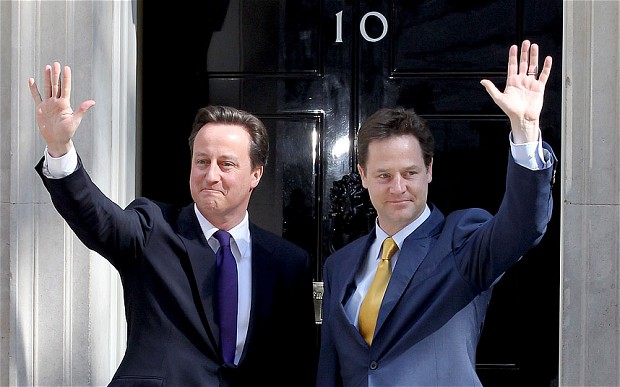
David Cameron’s Creepy, Technocratic Passion Was Better Kept Hidden

David Cameron - Passion - Bloody Lively - General Election 2015 - Conservatives


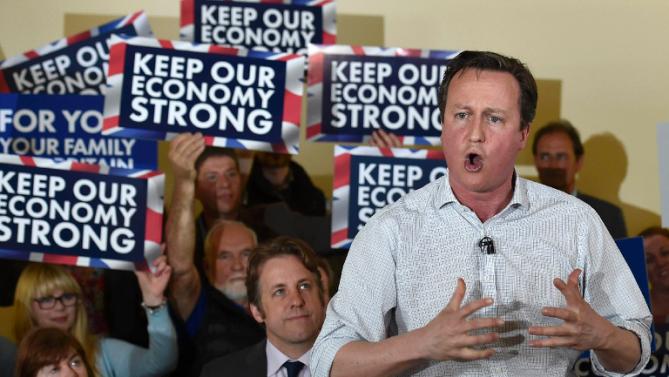
Conservative supporters can finally rest easy – apparently the Prime Minister has rediscovered his mojo, just in time to clinch the election next week. Or so say the national press, who all dutifully reported that David Cameron went through some kind of “dip” or “wobble” over the weekend, only to emerge with shirt sleeves rolled up looking as though he had chugged ten Red Bulls, oozing passion and energy from every pore.

The reality is a little different. What we actually saw was a fairly competent technocrat being told that droning on about a strong economy being the prerequisite for good public services was quite literally making voters fall asleep, and responding to this advice by delivering the exact same message ten pitches higher, at twice the volume and with more extravagant hand gestures.

From the ultra-loyal Telegraph:

The Prime Minister on Monday used a speech to reject claims that the Conservative campaign has lacked energy and passion.

He said that he is “pumped up” and has more desire to win this election than he did in 2010.

“If I’m getting lively about it, it’s because I feel bloody lively about it,” he said.

Insisting that he is “hungrier than five years ago”, he added: “I want this very badly. It’s not for me. It’s for people and the jobs in this country.”

You know we’re in for a mind-numbingly, spirit-sappingly uninspiring election campaign when patrician Dave Cameron tries to pump up support by declaring that he is “bloody lively”.

If anything, this awkward turn of phrase recalls Mitt Romney’s coining of the statement “I was a severely conservative Governor” during his last, ill-fated run for the US presidency. If Romney had been a zealous conservative he would never have had to say so, and he would have picked a more convincing word than “severe” when he did. Likewise, if David Cameron was really feeling bullish – and had anything to be bullish about – we would not need to be explicitly told.

Continue reading

General Election 2015: There Will Be No Passion Until We Rediscover Our National Ambition

David Cameron - Nick Clegg - Passion - General Election 2015


As the 2015 general election campaign grinds past the halfway point with none of the main party leaders doing or saying anything remotely interesting or inspiring – choosing only to shriek about the chaos and carnage that their opponents would do in government – people are starting to ask: where is the passion?

The Spectator’s Fraser Nelson and James Forsyth pick up on this supposed lack of “passion” in politics in their recent interview with David Cameron, conducted as the Prime Minister hurtles around Britain failing to electrify voters with talk of his Long Term Economic Plan and doomsday scenarios about a Labour-SNP government.

Interestingly, Cameron appears totally bemused that his coalition government’s technocratic, risk-averse management of the country from 2010-2015 has failed to win him legions of adoring fans:

The Prime Minister is aware of the criticism and finds it ‘frustrating’. ‘I feel I have worked my socks off for the last ten years to get to this point,’ he says. ‘I feel we are on the brink of something amazing in our country. If I don’t succeed on 7 May I will be furious more for my country — but furious for myself.’ He says this quietly, not crossly, as if he has been confronting his own political mortality. ‘We have done so much to get so far — I do not want to pull back now.’ And then, a promise to do better: ‘If I need to do more to communicate that I will.’

What he is trying to communicate in the final fortnight of the campaign is that Britain’s recovery has been extraordinary, but that it didn’t happen by accident. And that if people want the recovery to continue, they’ll have to vote Conservative. He is writing the speech he’ll give that day, with ‘jobs’ scribbled as the first bullet point. He has created them at a faster rate than any prime minister in history, which he puts down to tax cuts and welfare reform. So he is travelling to Yorkshire to sell ‘an extremely positive plan to transform the education of young people in our country, to keep going with this welfare revolution’.

He accepts that the revolutionary character of his government is not widely appreciated. ‘I think it is very undersold in many ways,’ he says. He doesn’t say by whom. He later refers to the government’s ‘quiet revolution: pro-work, pro-saving, pro-enterprise’.

Revolutionary character? The coalition government came into power promising an economic recovery and the elimination of Britain’s vast budget deficit. It achieved the former but failed spectacularly to eliminate the deficit, reducing it only by a third (now changed to a “half”, thanks to the disingenuous use of different metrics). The Labour Party would have likely done far worse, but this is beside the point – a stable economy should be a hygiene factor, the absolute base in terms of expectations of a “revolutionary” government.

Continue reading

Election 2015: Why Won’t David Cameron Talk More About Europe?

David Cameron - Conservative Party- Brexit - Britain and Europe - General Election 2015


We need to talk about Europe.

With Labour and the Tories deadlocked in the polls and Britain on course for a hung parliament, The Spectator asks an interesting question: in an effort to break the deadlock, why won’t David Cameron and the Conservative Party start “banging on about Europe”?

From The Speccie’s leading article:

It is hardly as if the issue of an in-out referendum has been neutralised. David Cameron, in committing himself to such a poll, seemed to be in a strong position over Ed Miliband, who has declined all pressure to follow suit. Cameron can justifiably say to anti-Europeans that a vote for him is the only way to ensure that the country has a chance to reject EU membership. For EU supporters, he is offering the chance to settle the matter of Britain’s membership for a generation to come. And for sceptics in the middle who want to be part of the EU, but a reformed one, he is promising renegotiation of Britain’s terms.

Ed Miliband’s position, by contrast, is simply one of denying the people a say on an issue which divides the country — on the basis that voters cannot be trusted with such questions. It is entirely believable, should Labour come to some sort of pact with the SNP after the election, that we will end up having two referendums on the subject of Scottish independence, with the EU question remaining unresolved. Even the pro-EU Greens want an in-out referendum on the — for them, unusually solid — grounds that the issue of Britain’s membership will be an issue until it is seen to have renewed democratic legitimacy.

The Spectator concludes:

David Cameron ought to be turning European turmoil to his electoral advantage. With Ukip at around 13 per cent, he would win a strong Conservative majority if only he could persuade a quarter of Ukip’s potential voters over to his side. Contrary to talk about the left being in advance, the conservative parties (the Tories plus Ukip) between them are registering a substantially bigger slice of the vote than in 2010.

But this is where the Spectator’s analysis falls down – the misplaced assumption that if only David Cameron talks more naturally about his personal beliefs and the Conservative Party’s official policy on the European Union, hordes of recently defected UKIP voters would return to the Tory fold.

People don’t generally support UKIP just because they want Britain to go through the democratic exercise of holding a referendum on our membership of the EU, letting the chips fall where they may. They support UKIP because of all Britain’s non-extremist political parties, Nigel Farage’s gang is the only one that unequivocally disagrees with remaining in the European Union under more or less any circumstances. Gaining popular consent may be great, but the goal is Brexit – and UKIP are the only party who are committed to that end.

From this perspective, David Cameron’s pitch to the electorate is little better than Ed Miliband’s – both say that they want to get the “best deal” for Britain in Europe (whatever that may be), but when push comes to shove, neither of them believe the EU to be a fundamentally flawed, undemocratic or threatening to British interests. If they did, we wouldn’t be talking about a referendum, Britain would secede tomorrow.

Why would UKIP’s growing ranks of supporters vote Conservative when they know that they will get a Prime Minister and government that may honour their promise to hold a referendum, but then in all likelihood campaign for Britain to remain part of the EU after the largely cosmetic “renegotiations” are complete? More to the point, why would a rational voter vote for wishy-washy feigned euroscepticism when there is another party (UKIP) and another leader (Nigel Farage) who still trusts the British people to have their say, but is actively committed to campaigning for Brexit?

UKIP supporters have generally made up their minds that the EU – with its growth-sapping regulation, control-freakish infringement on national sovereignty and persistent undermining of the nation state through common security and borders policies – is a bad thing. They may understand that the rest of the country needs a little more time to educate itself and arrive at the same conclusion, but they do not expect the party they vote for on 7 May to have to go through the same tortuous process. Ukippers want out, as soon as possible, because they believe that this would be best for the country – the clue comes in large letters on the front page of their manifesto, titled “Believe in Britain”.

So to answer the Spectator’s original question, there is a very good reason why David Cameron has not spent – and will not spend – more time in this election campaign “banging on about Europe”. True eurosceptics, especially the ones who have made the leap to UKIP, know that David Cameron’s offering of a referendum is a move intended only to placate his party’s right wing, not a promise borne of a personal desire to free Britain from the EU. Therefore, every day that David Cameron spends talking about Europe is another day he alienates the Europhiles and the politically indifferent, while winning back only a small fraction of the UKIP vote.

You can observe the deafening silence from the Conservative Party on Europe and admire David Cameron’s political radar and message discipline, or you can despair that the Prime Minister simply doesn’t see Britain’s emancipation from the European Union machine as a cause worth fighting and risking political office for. But either way, it’s no accident that the EU is the non-issue of the 2015 general election campaign.
George Osborne’s Lloyds Bank Share Sale Pledge Is Cynical And Short-Sighted

George Osborne - Lloyds Bank - Lloyds Banking Group Share Sale - General Election 2015


It isn’t always easy defending Conservative policies. While left wing parties have the luxury of flaunting their “compassionate” credentials with every unfunded pledge and extravagant promise to spend other people’s money, those on the right have the trickier task of explaining that a smaller, less interventionist state and a safety net reserved for those in real need is the only true path to a happier, more self sufficient population.

Visit any left-leaning website or listen to any left-wing activist speak, and it won’t take long before you hear a tirade against the “Evil Tories”, who in the minds of their accusers are not just wrong, but positively eager to hurt the poor and hound the vulnerable. Whether it’s on healthcare and the NHS, welfare reform, tax policy or public services, British conservatives always begin every argument ten points behind, having to battle against the widely-held assumption that conservative policies are motivated only by greed and a desire to protect the interests of those at the top.

Countering this false, pernicious narrative is hard enough at the best of times. And it really doesn’t help when patrician-sounding Conservative politicians like George Osborne announce the “sale” of partly nationalised Lloyds Bank to the public at a discounted price, a giveaway for the middle classes, the politically engaged and the financially literate at the expense of everyone else.

From George Osborne’s triumphalist announcement, published in the Telegraph:

Continue reading

Rootless Tories Prefer LibDems Over UKIP As Future Coalition Partners

Nigel Farage Nick Clegg UKIP LibDem Coalition


An interesting (and concerning) poll in Conservative Home this week reveals that more Conservative supporters would prefer David Cameron to enter into a future coalition with the Liberal Democrats (again) rather than UKIP.

Paul Goodman breaks down the detail:

  • Liberal Democrats73 per cent. This finding may be a proof that familiarity doesn’t necessarily breed contempt.  To some degree it reflects the fact that Tories have simply got used to working with the LibDems.  It is also a tribute, in its own way, to the staying power of the Coalition: I put my hand up to not having expected it to last all the way to the end.
  • UKIP49 per cent.  Some members will see UKIP as a natural partner for the Party.  Others won’t, but will believe that differences can be fudged.  Others still, as with the Liberal Democrats, will feel that coalition is a price worth paying to keep a Conservative-led administration in office: in some cases, respondents will have selected both options.

What does it say about the modern Conservative Party and the mindset of its supporters, that they would prefer to enter into coalition with a party that is rabidly pro-EU and in favour of an ever-expanding public sector funded through ever-increasing tax bills on the successful, rather than UKIP, the party which (just about) believes in smaller government, lower and flatter taxes, personal responsibility, a stronger military and secession from the European Union?

The answer, of course, it that it says nothing good at all.

The fact is that some Conservatives have quite enjoyed having Nick Clegg and the Liberal Democrats as bedfellows for the past five years – the coalition has helped the wet Tories to cover their left flank, giving the party a plausible excuse for making little progress on shrinking the size of the state and zero progress on reclaiming power and sovereignty back from the EU.

But if the current course of the 2015 general election campaign tells us anything, it is that the bland centrism that characterises the modern Labour and Conservative parties is increasingly unattractive to voters. True, the smaller parties are seeing some shrinkage in their support as polling day nears, but we remain on course to see the largest ever number and percentage of national votes cast for parties outside the big three.

Whether left or right wing, people are finally getting tired of seeing their core convictions (be it trade union solidarity and income redistribution on the left, or personal liberty and small government on the right) bartered away in pursuit of ineffectual policies calculated to cause minimal offence to anyone.

Yes, the Tories still have work to do in order to detoxify their brand. But the answer is not for them to dress up in Labour Party clothing and bang on endlessly about the importance of public services and “our NHS”. Such an approach will never work – it has been tested to destruction by David Cameron and George Osborne, and has convinced no one.

To move to the left is to sidestep the issue and avoid the hard work detoxifying conservatism in Britain, when what is needed most is patient explanation and passionate promotion of the idea that small government and less state (and EU) interference in our lives would be something to celebrate, not to fear.

Here is an interesting – and different – way to frame the question to Tory activists and the Conservative Party leadership. Rather than simply asking whether they would prefer the devil they know or the devil they don’t when choosing a future coalition partner, let’s ask which of these UKIP policies and ideas have suddenly become so offensive to the modern Conservative Party that they would sooner jump back into bed with Nick Clegg than with Nigel Farage:

Sadly we already know many of their answers, and they give us very little hope for the immediate future of British conservatism.