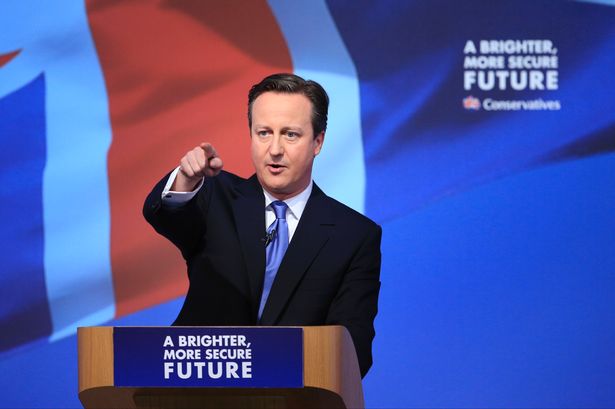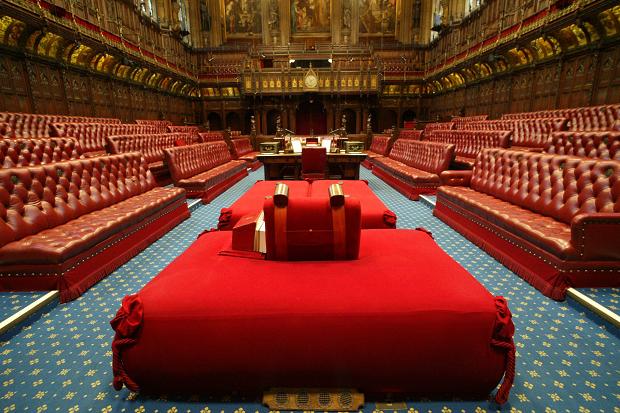
David Cameron’s Abominable Plan To Neuter The House of Lords

House of Lords reform - chamber

Britain’s unwritten constitution is not David Cameron’s plaything, or a convenient omission to be taken advantage of by opportunistic politicians who want to sidestep proper scrutiny

What do do when the British system of democracy fails to ensure a smooth and easy ride for each and every government bill or personal initiative of the prime minister?

Why, simply change the rules of the game, and meddle with the constitution so the only answer that anyone can give is an enthusiastic “yes!”.

This is essentially what David Cameron is now proposing to do, with some of the most nakedly autocratic changes to our legislature in recent memory.

The FT reports:

David Cameron has been secretly drawing up a plan to bypass an increasingly hostile anti-Tory majority in the House of Lords, which is threatening to wreak havoc with his legislative plans.

The UK prime minister will use the recent bust-up with the Lords on tax-credit reform as a chance to neuter the powers of the upper house.

Lord Strathclyde, the Tory grandee charged by Mr Cameron with reviewing the role of peers, is set to propose this month that the Lords should lose its veto over delegated or “secondary” legislation, such as the measure implementing tax-credit cuts.

Once that veto is removed, Mr Cameron is expected to step up his government’s increasing use of delegated legislation — also known as statutory instruments — to ram contentious measures through the upper house.

A typically arrogant move, as befits our current prime minister. But the worst comes in the form of this sneering, boastful threat from an unnamed senior Tory:

“If the House of Commons insisted, that would be it,” said one senior Tory.

“The House of Lords has to tread carefully,” he added. “If they don’t accept this proposal, we could stop them having any say at all on secondary legislation. That’s a big bazooka.”

In other words, the upper chamber of our national legislature should exist only to serve as an ermine-clad rubber stamp to the will of the prime minister. Sure, Cameron is happy to let the Lords poke around and pontificate on minor legislation of no real importance, just to give the appearance of a well-functioning and accountable system. But when it comes to the big ticket items involving finance, foreign or military affairs, the House of Lords should remain about as weak and toothless as its average, septuagenarian member.

In their outrage at being thwarted on tax credits and defied with regard to the voting age in the EU referendum, the government appears to have forgotten that scrutinising hasty legislation, thinking independently of the House of Commons and checking the “elected dictatorship” of the executive is exactly what an upper legislative chamber is supposed to do. If the composition of the upper house exactly mirrored that of the lower house, and voted in exactly the same way, there would be no point to its existence. This friction and tension between the two institutions forms one of the key checks and balances in our democracy – it is not something to be casually tossed aside whenever the government of the day finds its preferred pathway blocked.

There’s a dangerous chicken and egg dynamic at play when it comes to the House of Lords. The fact that the Lords are not democratically elected effectively gives cover to authoritarian governments who want to impose their will on the country unchecked. “None of these people were elected, while we just won the last general election”, governments can say. “Therefore we should be allowed to overrule or bypass the Lords in order to do the will of the people”.

But this also creates a powerful incentive to delay attempts to make the Lords more democratic, because to do so would add legitimacy to the body and make it much harder to steamroller ill-considered legislation past reasonable scrutiny and on to the statute books. The last attempt at positive House of Lords reform stalled early on during the coalition government of 2010-2015, after the Liberal Democrat initiative was blocked by a group of recalcitrant Tory MPs, and there will certainly be no further attempt now that the Conservatives govern alone.

It is certainly hard to argue that today’s House of Lords – made up of unelected grandees, failed MPs, influential party donors and the intolerable Lords Spiritual – should have the right to delay or veto government legislation. The current system is by definition undemocratic. But shamefully, David Cameron’s answer is not to make the House of Lords a powerful and democratically legitimate upper chamber, as he should, but rather to use the current state of the Lords as a convenient argument to help his government avoid much-needed scrutiny.

As this blog has been arguing for three years now, Britain urgently needs a full constitutional convention so that the weighty questions of how we govern ourselves and where power resides can be tackled, resolved and formalised in a document.

Equality for the four home nations in terms of devolved power. A fresh look at pushing power down to the lowest possible level, preferably the individual. Empowering cities, counties and regions (building on George Osborne’s Northern Powerhouse, but going much further). More elected mayors. Term limits for politicians and ministers. A pre-determined order of prime ministerial succession, so that the leader of our country is not chosen behind closed doors in the event that the unthinkable happens. House of Lords reform. House of Commons reform. Electronic voting in parliament to save vast amounts of valuable time. Perhaps splitting the executive from the legislature, so that MPs can concentrate on their jobs without being distracted by attempts to climb the greasy pole. All of these ideas and more should be on the table, with a view to fixing ancient democratic deficits while preserving all of the best of that which makes Britain great.

But what we have at the moment is piecemeal constitutional reform on demand – not with a view to promoting democracy or ensuring a well governed country, but simply in order to solve whatever problem happens to be confronting the government of the day. This is no way for politicians to govern, and it is no way to run a modern nation state.

Unfortunately, issues of governance and constitutional reform rarely bring people out onto the streets in protest, despite being of far more long term consequence to us all than relatively trifling matters like NHS junior doctors pay, HS2 or tax credits. But all concerned citizens should fight David Cameron’s latest lazy attempt at constitutional reform on the fly with every weapon at their disposal.

First we must stop the damage already being done. But that is not enough. It is not enough to stop David Cameron’s government from inflicting further vandalism on Britain’s constitution. The time has come to take a more holistic view of these matters, instead of the myopic, short-termist approach which thinks only in terms of immediate political advantage.

Serving MPs and ministers are obviously the last people who can be expected to give fair and impartial input to these decisions, though there is obviously a wealth of experience and knowledge held by current parliamentarians which must absolutely be harnessed. So we need to go directly to the people, however much the elites may recoil at the thought.

No more piecemeal reform. Britain doesn’t need any more opportunistic constitutional tricks. There may be little appetite for it – particularly when other current issues seem to loom larger, and when any discussion about who we are as a country provokes more awkward silences than expressions of patriotism – but we need real reform, through a full constitutional convention of the United Kingdom.

The longer we wait to drag Britain’s patchwork constitutional settlement half way to meeting the people, the less democratic – and more ungovernable – our country will become.

House of Lords reform 2

Agree with this article? Violently disagree? Scroll down to leave a comment.

Follow Semi-Partisan Politics on TwitterFacebook and Medium.

What Does The Conservative Party Stand For In The Era Of Jeremy Corbyn?

David Cameron - What Do The Conservatives Tories Stand For In The Age Of Jeremy Corbyn

With Jeremy Corbyn’s Labour Party consumed by infighting and discredited with the public, David Cameron’s Conservative government could do almost anything it desires. So why is it treading water?

What does the Conservative Party stand for in the era of Jeremy Corbyn?

What do the Tories stand for when they are barely opposed in Parliament, and consequently have virtual carte blanche to do anything they please?

The answer, apparently, is not much of anything. And it’s good to see that more people on the Right are finally starting to get impatient with the lack of conservative conviction flowing from Number 10 Downing Street.

Janet Daley gets straight to the point in her latest Telegraph column, asking what is the point of the Tories if they refuse to radically shrink the size of the state:

It is fairly clear what use the Tories have decided to make of the current lack of opposition. They will become not just the accepted party of government but the only political party that anybody would ever need. Instead of putting forward a specific, identifiable view of what government should be and how it should relate to the people, which they can offer up for debate, they will occupy all the ground, cover all the bases, be everywhere on the political spectrum at once. They will incorporate centre-Left and centre-Right, and make economic intervention live alongside the free market. They will even, as Mr Osborne did in his Autumn Statement, filch the language of enforced equality (“social justice”).

In short, if Labour is not fit to carry on a debate, then the Tories will scrap the idea of debate altogether. They will be all things to all men: the all-purpose, all-embracing, totally inclusive permanent party of government. This new single-party monopoly will incorporate every popular measure, however inconsistent or contradictory, into its amorphous programme. By the time Labour is ready to engage in election-winning argument, there will be nothing to argue about.

Instead of being emboldened by the lack of serious opposition and seeing it as a once-in-a-generation opportunity to do necessary radical things, the Tories have decided to play it for short-term political advantage. The real problems will not be addressed. They will just be fudged – and bought off with fistfuls of money.

The depressing truth is that the Tories in government have made a decision to solidify their grip on power by effectively ceasing to be a small-C conservative party at all, instead rebranding themselves as the only sane choice when the alternative is the Corbyn/McDonnell socialist double act.

This worrying lack of ideological commitment has been reinforced over and over, whether it’s the Autumn Statement that sounded more like a Gordon Brown-style moneybomb than a fiscally conservative blueprint for government, or David Cameron’s triumphal party conference speech – which even the Independent thought was shockingly centrist.

But not everybody sees it like this. Iain Martin, writing in CapX, sees opportunity in the fact that the Conservatives now essentially govern unopposed:

Corbyn’s leadership does gift the British Conservatives an historic opportunity. Not one of those “they might they win the next general election” opportunities, but the chance to capitalise on Labour’s existential crisis and create a broad-based coalition of interests that dominates the coming decades and turns the UK into an even more dynamic, market-based, technologically advanced, prosperous society.

No. The government can either lead Britain kicking and screaming towards a more dynamic, free and market-based future, or it can create a broad-based coalition of special interests, each with their own collection of whiny, selfish demands and veto rights over national policy. But it cannot do both.

Radical policies of the kind needed to cure Britain’s productivity gap and vastly improve our competitiveness are not borne out of consensual, hand-holding workshops where all of the public service unions and taxpayer funded charities lounge around together brainstorming new ways to extort taxpayer money. Nor are bold policies borne out of the ingratiating desire to please everybody all the time, and never come face to face with a critical newspaper headline.

The radical conservative/libertarian policies that this country needs in order to roll back the state – and empower the people to shape their own destiny rather than remaining vassals of the state or passive consumers of public services – will not be divined by drawing a line half way between the David Cameron and Ed Miliband election manifestos of 2015 and splitting the difference.

When Margaret Thatcher came to power in 1979 she knew that there could be no appeasement with the dismal establishment belief that the best Britain could then hope for was a smoother, more orderly century of national decline than we witnessed during the Winter of Discontent. She knew that Britain needed harsh medicine if things were to be turned around and the patient saved. That didn’t mean that Thatcher rode to battle against every pillar of the post-war consensus simultaneously – nationalised companies and the NHS remained even after her premiership – but it did mean that she was not terrified of being seen as an ideological, even polarising figure. She stood for something.

What do David Cameron and George Osborne stand for, besides keeping the Conservative Party in power and (hopefully) executing a smooth transition from Dave to George by 2020? What kind of Britain do they want to preserve, protect or change? It is almost impossible to tell, because the key decisions – as with the Autumn Statement – are always so depressingly tactical and reactive, not strategic. I was not yet born when Margaret Thatcher became prime minister, but I could describe in some detail her evolving political philosophy and accomplishments in government. By contrast, David Cameron came to power when my political engagement was very high indeed, and yet I would struggle to fill two paragraphs outlining Cameron’s ideology or aims for this country.

Even the few hints of a long-term strategy from the Conservatives – making us more secure, or paying down the national debt – only serve to highlight how far the government is falling short of these goals. The surveillance state continues to expand while the root causes of the extremist Islamist threat are barely discussed, much less tackled; the Chancellor burbles on about fixing the roof while the sun is shining, and yet the deficit is far from eliminated and the national debt continues to increase every single day.

David Cameron - Centrist

But it does not have to be this way. The Conservative Party leadership may be depressingly void of ambition and tainted with the first blush of scandal, but there are green shoots of a future conservative renaissance visible within the party.

Last week I attended a Westminster lobby event held by Conservatives for Liberty, the right-libertarian campaign group for whom I am proud to write. During the course of the evening, we were addressed by five Conservative MPs, each of whom was able to make a far more convincing case for individual liberty in ten minutes than David Cameron has made for the entirety of his premiership.

Chris Philp described himself as a “proud Thatcherite” and dared to make reference to both “The Road To Serfdom” by Hayek and “On Liberty” by John Stuart Mill.

Lucy Allan, the antithesis of a career politician, said “my view is that a real conservative is definitely a libertarian”, and proceeded to speak out against mass surveillance and the rise of authoritarianism in the name of national security.

The irrepressible James Cleverly warned against paternalistic government and the excesses of the public health lobby, saying “I don’t want to live in a world where personal choice is codified. We have a word for that, and that word is fascism”.

John Redwood made a point that the Treasury sorely needs to hear, lamenting that too many MPs “forget they are there to represent taxpayers as well as beneficiaries of state largesse” and describing the state’s overbearing presence in all aspects of life as “a wooden public monopoly that guarantees maximum inconvenience and maximum cost”.

And David Nuttal vowed that he would continue to work tirelessly “to stop the relentless march of the nanny state” and the “massive industry” which supports it.

Of these excellent speakers, Chris Philp, James Cleverly and Lucy Allan (if she stays in politics beyond 2020) are all potential leadership material for the future, particularly in a world where the official opposition is virtually non-existent and the country is crying out for a new, clear sense of direction. Any one of these rising stars have the inspiration and charisma to one day lead the party in a new, more transformational direction.

With the Parliamentary Labour Party seemingly intent on self-administering a near mortal wound with their relentless sniping and bitter briefing against Jeremy Corbyn, a bold new Conservative leader committed to the principles of liberty and a small state (the antithesis of George Osborne, who doesn’t even pay lip service to these ideals) could re-shape the Right and promote a better, more inspiring form of conservatism than the current “Blairism when there’s no money left” status quo.

The fact that David Cameron and George Osborne are watching the slow implosion of the Labour Party and conjuring up plans to woo Ed Miliband voters – rather than capitalise on this once-in-a-century opportunity to execute a real conservative agenda unopposed – reveals their worrying lack of confidence in core conservative principles and values. If the Prime Minister and Chancellor really believed in reducing the tax burden, reforming welfare, building up our armed forces, shrinking the state, promoting localism and devolving decision-making to the lowest level possible (with the individual as the default option), they could do so. They could be building a new, conservative Britain right here, right now. Virtually unopposed.

But Cameron and Osborne are doing no such thing. They simper and equivocate, and talk about fixing the roof and paying down the debt while doing no such thing, and still they attract endless negative headlines for inflicting an austerity which exists primarily in the minds of permanently outraged Guardian readers.

If Britain is not a transformed country in 2020 – with a smaller state, more dynamic private sector and greater presence on the world stage – there will be absolutely nobody to blame other than the party holding the keys to government. The party with the word “conservative” in their name. The Tories will have been in power for ten years and have nearly nothing to show for it, save some weak protestations about having fixed Labour’s prior mismanagement of the economy.

That’s not the kind of party I want to be associated with. That’s not the party I campaigned to elect in 2010, back when it seemed possible that a new Conservative administration might aspire to being something more than a moderate improvement on Gordon Brown.

The Conservatives have a choice. Presented with the golden opportunity of Jeremy Corbyn’s leadership of the Labour Party, the Tories can seize the chance to transform themselves into the party of Allan, Philp or Cleverly. Or they can continue to be the equivocating, triangulating party of Cameron and Osborne.

Yes, of course there’s no point having bold new conservative ideas unless you can stay in power to make those ideas a reality, as the Cameron/Osborne apologists would no doubt respond. But neither is there any point winning and holding power unless you actually have ideas worth implementing.

The Conservatives have the power. And thanks to the Labour Party, they are under no immediate threat of losing that power, no matter what they do in office. So where are the big ideas?

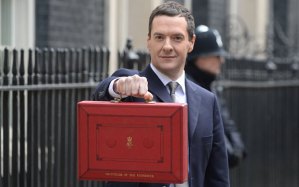
George Osborne - Chancellor of the Exchequer - Budget

Agree with this article? Violently disagree? Scroll down to leave a comment.

Follow Semi-Partisan Politics on TwitterFacebook and Medium.

Imagine Britain Without The NHS

NHS Worship - London Olympic Games 1

It’s easy if you try

Imagine a Britain without the NHS.

A Britain where the state did not directly employ or contract nearly every doctor and nurse in the entire country.

A Britain where the government did not decide which cutting edge treatments would be offered to the public, and which ones were simply too expensive.

A Britain where citizens were not reliant on the state for the physical delivery of nearly all their healthcare needs.

A Britain where healthcare was unconstrained by politically influenced national targets.

A Britain where angry, jealous talk of “postcode lotteries” did not act as a brake on excellence or a requirement for dull, uniform mediocrity.

A Britain where every hospital superbug or missed A&E waiting target did not automatically become the prime minister’s overriding personal concern, freeing them up to actually be a world leader.

A Britain where we are able to have a rational, level-headed discussion about healthcare, and what kind of system would achieve the best outcomes for the most people at an acceptable cost.

A Britain where we understood that healthcare need not be a choice between the NHS and the infamous US system.

A Britain where we were able to take inspiration from the best aspects of different healthcare systems around the world in reforming our own.

A Britain where criticism of the NHS was not treated like blasphemy, with the offenders shamed on social media and their political careers curtailed.

A Britain where we gave nearly as much respect, honour and resources to our armed forces and veterans as we do to the NHS.

A Britain where we did not reflexively worship a giant, mid-century bureaucracy as our secular national religion.

A Britain which thought enough of itself to realise that there is far more that marks us out as a powerful, great and indispensable nation than our anachronistic 1940s healthcare system.

A Britain where lean, efficient public services existed to serve the people, rather than we the people existing only to serve our insatiable, rapacious public services.

A Britain where saying “the NHS served us ably for many decades after the war, but now it is time to look again at how we provide healthcare to our fellow citizens” was not a shocking, unacceptable statement.

Imagine a Britain where the link between politics and healthcare was broken and the NHS monopoly split up, meaning that things like the coming national strike of junior doctors could never happen.

Just imagine what could happen – all that we could accomplish – if only we were able to have a calm, rational conversation about healthcare in modern Britain.


National Health Service - NHS Leaflet - 1948

Further reading:

Our deadly obsession with the NHS

A Haidtian take on ‘NHS worship’

Worshipping the NHS costs lives

Britain’s cult-like worshop of the NHS must end

To save the NHS, let’s stop worshipping it like a god

Support Semi-Partisan Politics with a one-time or recurring donation:

Agree with this article? Violently disagree? Scroll down to leave a comment.

Follow Semi-Partisan Politics on TwitterFacebook and Medium.

Tracey Crouch, Tax Credits And The Unravelling Of The Left Wing Mind

Tracey Crouch MP

When even Tracey Crouch’s sympathetic  words on tax credits provoke left-wing fury, there is no hope for real welfare reform in Britain. And no hope for the Labour Party, either

Had Conservative Sports Minister Tracey Crouch known about the outrage that would be whipped up by her interview in The Spectator before she gave it, she would quite possibly have chosen to go without the glowing portrait by Isabel Hardman in order to avoid the deluge of left-wing bile which immediately followed.

Unfortunately for Crouch, there is no telling which harmless phrase or action will send the modern British Left into a full-on social media jihad, and so she has had to spend the better part of today apologising for offending the Poor and Vulnerable.

Here is the part of Crouch’s Spectator interview with Isabel Hardman that caused so much left-wing outrage:

But given Crouch knows what it means to struggle to make ends meet, isn’t she worried about the cuts to tax credits that will hit families not unlike the one she grew up in? She’s happy to defend these controversial reforms that have agitated so many of her colleagues. ‘I think it’s about communication,’ she says, adding:

‘We will be discussing this, and I’m sure that DWP are looking at all of these issues, in great detail but I think at the end of the day one of the kindest things that we can do is try to help people to support themselves and work around their finances: some of my most heartbreaking cases are those that come to me saying that they are struggling and then you go through with them their expenditure and income – I’m not generalising at all, I’m talking about some very individual cases – and actually they just haven’t realised some of the savings that they need to make themselves, you know it can be… things like paid subscriptions to TVs and you just sit there and you think you have to sometimes go without if you are going to have people make ends meet.’

Fairly innocuous stuff, no? Just look at all of the caveats, provisos and exemptions in Crouch’s words:

“I’m not generalising at all”

“I’m talking about individual cases”

“Some of my most heartbreaking cases”

“One of the kindest things we can do”

There’s no reasonable way that you can read Tracey Crouch’s words and come away thinking that here is some callous, unfeeling elitist who thinks that people are poor through their own fault. There just isn’t. Tracey Crouch is hardly some monacle-squinting, golden pocketwatch-twirling Monopoly man, looking down on the working poor from a lofty aristocratic perch and finding them wanting.

And yet that’s exactly how her interview is being spun by the perpetually outraged Left. The Daily Mail provides a good sampling of the preening, self-righteous virtue signalling which followed Crouch’s interview. First Labour pile on:

Shadow Treasury minister Rebecca Long-Bailey said: ‘Another day and yet more evidence of out of touch Tory MPs insulting working people in low pay in what has been a further torturous week for George Osborne on tax credits.

‘It’s outrageous for a serving minister to claim that working families simply need to ‘go without’ in order to make ends meet. Losing £1,300 a year isn’t about cutting back on luxuries, it’s about families being able to pay the bills.’ 

And then come the Lib Dems, twisting the knife:

Liberal Democrat president Sal Brinton said: ‘This is hypocrisy at its worst. For a Tracey Crouch, someone on a ministerial salary, to turn around to the people who are going to be hit by her Government’s heartless cuts to tax credits and tell them it’s now their fault for not budgeting properly shows just how utterly out of touch the Tories are.’

I re-emphasize: Tracey Crouch was talking specifically about poor budgeting decisions made by certain individual constituents, emphasising multiple times that she was not generalising from the examples that she gave. And yet still we are treated to this hand-wringing mock horror from the Left, as though the Sports Minister had called for all tax credit recipients to be sent to the workhouse.

When the entitlement culture runs so deep that a government minister who grew up relatively poor cannot give true personal testimony about the importance of budgeting, or cite real-life examples of those struggling on low incomes who had not considered every option for reducing their outgoings, what hope can there possibly be for meaningful welfare reform?

What chance can there ever be of lifting people out of the benefit trap, into entry level employment and then onward and upward in self-sustaining careers when as honest and humble an MP as Tracey Crouch cannot even make a factual statement about her constituent cases without being vilified by left-wing activists?

Unfortunately, the reality of modern Britain is that too many people work hard in very low-paying jobs which are only financially viable when topped up by government tax credits. Gordon Brown can splutter and roar all he likes about the supposed virtues of his benefits brainchild, but the cold hard reality is that tax credits promote a form of welfare dependency.

Yes, it’s more noble form of dependency because the recipient is working – often very hard – for their low wages. But dependency means coming to rely on something day-to-day in order to maintain a certain standard of living. People rage against the Evil Tories for daring to consider tax credit changes in their effort to restore fiscal sanity to Britain, but have no words of condemnation for the moralising New Labour government who made millions more people dependent on welfare in the first place.

When I grew up poor in Essex, we didn’t have a Sky TV subscription. We didn’t even have a colour television until I reached secondary school in the 1990s – I watched Neighbours and Newsround in black and white. These things were not the essentials of life, much as I would have loved them, and so we went without.

Fast forward to 2015 and a Netflix subscription is no more necessary now than an expensive Sky subscription was in the early nineties. So why, exactly, was Tracey Crouch wrong to call attention to cases where those on low incomes had not considered cutting down on unnecessary expenditure?

As Julia Hartley-Brewer notes in the Telegraph:

In reality, the only people who are out of touch with how ordinary people live are Labour MPs like Rebecca Long-Bailey, who appear to think that Sky TV is some kind of inalienable human right to be funded out of taxpayers’ hard-earned cash.

Everyone has to make choices about what they can and can’t afford to spend their money on. Tracey Crouch was simply pointing out what every ordinary family in Britain knows: you have to cut your cloth according to your means.

But you can’t say that any more, according to the Left. To acknowledge the basic economic truth that poor people cannot purchase unlimited luxury goods is grossly offensive – not to the millions of low paid people who already strive to live within their means, but rather to those who do not, and the Labour politicians who cheer for their “right” to never have to collide with fiscal reality.

The government’s approach to tax credits is flawed, and considering other areas of continued state profligacy (universal pensioner benefits, for example) there is no great reason why tax credit recipients must swallow such a harsh dose of George Osborne’s fiscal medicine upfront while others slip by unchallenged. And Labour might have a realistic chance at forcing an important, beneficial concession from the Chancellor on this topic, if only they could stop the bickering and infighting long enough to organise themselves.

But when Labour MPs charge mindlessly into battle against the Conservatives (especially a self made Tory Minister like Tracey Crouch) in defence of the Universal Human Right to subscription TV, of all stupid things, they make no serious point, they win no new allies, and they help precisely no one.

But then that’s the Labour Party and the modern British Left in a nutshell. Noisily hating the Tories and whining about fairness but not doing, saying, thinking or proposing a damn thing to hold the current government to account or make anyone’s lives permanently better.

Tracey Crouch - Sports Minister

Agree with this article? Violently disagree? Scroll down to leave a comment.

Follow Semi-Partisan Politics on TwitterFacebook and Medium.

The Glib And Oily Art Of David Cameron’s Superficial EU Renegotiation

David Cameron’s EU renegotiation is less a firm-handed assertion of Britain’s national interest, and more a collusion with fellow EU leaders to dupe the electorate into believing that real reform is possible

The fact that David Cameron’s key demands and red lines for the EU renegotiation now underway are wilfully vague and almost comically detached from the concerns of British voters is hardly news. But this depressing truth is hammered home even more forcefully today with the leaking of the prime minister’s four-point plan to win concessions from Brussels.

From the Telegraph:

Cabinet sources have told the Telegraph they are confident they can find a way to keep Britain inside the EU with better terms of membership. Their plan involves:

  • Forcing Brussels to make “an explicit statement” that Britain will be kept out of any move towards a European superstate. This will require an exemption for the UK from the EU’s founding principle of “ever closer union”.
  • An “explicit statement” that the euro is not the official currency of the EU, making clear that Europe is a “multi-currency” union. Ministers want this declaration in order to protect the status of the pound sterling as a legitimate currency that will always exist.
  • A new “red card” system to bring power back from Brussels to Britain. This would give groups of national parliaments the power to stop unwanted directives being handed down and to scrap existing EU laws.
  • A new structure for the EU itself. The block of 28 nations must be reorganised to prevent the nine countries that are not in the eurozone being dominated by the 19 member states that are, with particular protections for the City of London.

Of these, only one point (the final one) comes anywhere close to defending Britain’s national interest and reflecting the concerns of the electorate. Of the others, the first two points are completely irrelevant, while the third is guaranteed to meet stiff resistance from other EU leaders and will likely require so many other concessions from the government that securing it would be the ultimate Pyrrhic victory.

Continue reading