Virtue Signalling Celebrities – Silly. Virtue Signalling Government – Dangerous

Benedict Cumberbatch - Virtue Signalling - Syria - Refugees

When celebrities indulge in open virtue-signalling and Something Must Be Done-ery, it is irritating but ultimately harmless. But now political leaders and governments are doing the same thing, and it is deadly serious

Tony Parsons – who only last year bravely admitted to being “Tory Scum” – has a great new piece in GQ magazine, blasting the prevalence of virtue-signalling behaviour among the celebrity and political class.

After ridiculing certain actors and celebrities, whose Something Must Be Done-ery and hand-wringing at the existence of the Evil Tories is misguided but ultimately harmless, Parsons goes on to warn that it is much less funny when political leaders and entire governments are engaging in the same virtue signalling exercise.

His conclusion is worth quoting at length:

All this smug, self-satisfied, shockingly empty posturing would be merely laughable if it was confined to a few pompous luvvies who make clods of themselves every time they say a line that isn’t written by someone far smarter than them. But the desire to demonstrate moral purity now extends its cloying reach all the way to Downing Street, where even pink-faced Tory boys strain to prove their liberal credentials.

Many civilised nations such as Australia, Canada, France, Japan and Ireland have vastly reduced their foreign aid budgets after reaching the conclusion that shovelling billions to the developing world does nothing but encourage corruption, erode democracy and throw away taxpayers’ hard-earned money like a sailor on shore leave.

But in our own country the commitment to spend 0.7% of gross national income on foreign aid has been enshrined in law. The UK spent more than £12 billion on foreign aid last year, at a time when almost every other area of public spending was being slashed. Only the NHS and foreign aid were spared George Osborne’s cuts.

How can this be? How can a new private plane for a developing world despot be more important than the police, or the armed forces, or benefits for the disabled? How can it be rational, or even sane, for a country to care more about flood defences in Congo than it does about flood defences in Carlisle?

Because it doesn’t really matter if that £12bn a year in foreign aid itself is effective. It is not about feeding hungry mouths. Foreign aid is purely about demonstrating impeccable liberal goodness. Cameron’s Conservatives need to demonstrate that they are kind, decent and virtuous, need to show that they bought “Do They Know It’s Christmas” when they were at Eton and Westminster. Our foreign aid budget – millions of it shipped to nations where the British are despised – is meant to be conclusive evidence that the Tories care.

Virtue signalling begins and ends in the developing world. So Benedict Cumberbatch can’t give a thought to a small German town like Sumte (population 102) that finds its infrastructure collapsing under the burden of giving a home to 750 migrants. Sherlock can only prove his liberal goodness by fretting about Syrian refugees.

There is a debate to be had – and it is the debate of our age – about how we manage our moral obligation to our own people with our humanitarian impulse to help the world. But you will never hear that difficult subject broached among the virtue signallers who scream their pious certainties and wag their censorious fingers at the wicked Tories – which is bitterly ironic as David Cameron is the biggest virtue signaller of them all.

This blog dissents from the suggestion that the bulk of the foreign aid budget should not have been returned to taxpayers but merely reallocated to an unreformed NHS and welfare state, but the main thrust of Parsons’ argument – that we are essentially spending nearly one percent of our GDP not to do good but rather to look good – is devastatingly accurate.

And since those who disagree with the Conservative government are already determined not to see it as merely politically misguided but as a sociopathic millionaire’s club actively seeking to hurt the poor, there is little point in continuing to ringfence international aid spending as part of a PR exercise which has already failed.

Virtue signalling when practised by lame comedians and other assorted commentators angling for a cheap laugh is tiresome but essentially harmless. But when our elected government signals its virtue with taxpayer money and national policy, it can be the difference between life and death.

Which is why David Cameron and George Osborne should focus on sound policymaking and (just for a change) conservative principle, leaving the compassionate handwringing to the more-than-capable Sherlock Holmes and Dr. Watson.


Postscript: None of this is to say that this blog does not sometimes agree with the causes fleetingly taken up by celebrities, even Benedict Cumberbatch.


Benedict Cumberbatch - This Is What A Feminist Looks Like - Virtue Signalling

Top Image: ITV

Agree with this article? Violently disagree? Scroll down to leave a comment.

Follow Semi-Partisan Politics on TwitterFacebook and Medium.

If The Conservative Government Is Truly Evil, Where’s The Left Wing Revolution?

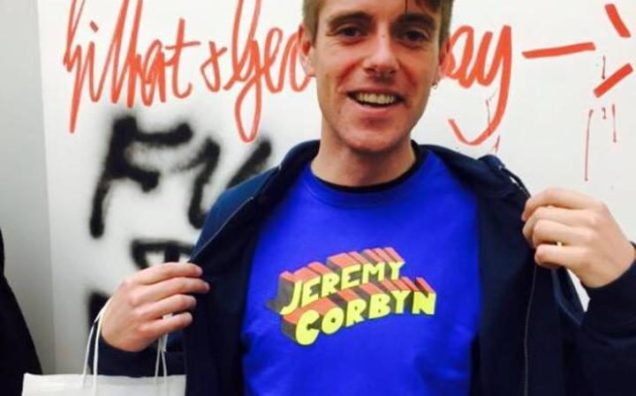
Jeremy Corbyn - Hipster - Middle Class Left Wing

Virtue-signalling, vacuous middle class leftists are all talk and no action

According to many a Corbyn-cheering, well-heeled leftist, modern Britain resembles an unjust, “neoliberal” dystopia in which the Evil Tories and their Evil Banker friends leech off the real producers and heroes in our society (usually people who are net recipients of government spending, curiously recast as the being most virtuous of all).

To this mindset, George Osborne is not simply wrong on the economics, he is engaging in a deliberate war of attrition against the poor, and Iain Duncan Smith’s abortive efforts to reform the welfare state were part of a Nazi-inspired eugenics programme to kill off the sick and disabled.

All of which begs the question – if David Cameron’s centrist, soul-sappingly unimaginative Conservative government really is evil incarnate, why do its many opponents content themselves with mere polite protest and ineffectual rants on social media?

If I believed for a moment that the state was engaged in a deliberate extermination of its weakest and most vulnerable citizens, I hope to think that I would have the moral clarity and fortitude to either take up arms against the government or to work for its downfall using every skill and talent at my disposal. And yet those who actually do believe that the Tories are “evil” can usually be found clad in skinny jeans and non-prescription hipster glasses, waging “resistance” via their (capitalism-produced) smartphones while sipping a hand-crafted flat white.

My Conservatives for Liberty colleague Martin Bailey sums up this moral hypocrisy perfectly in a piece entitled “The impotence of the middle-class Left”.

Bailey writes:

If I thought that the world was controlled by a secret ‘Neo-Liberal’ elite that oversaw government and mass media across the globe, I would do something about it. Take up arms, man a barricade, refuse to comply. If I genuinely believed that democracy was a sham and we were all willing drones to corporate bosses, I wouldn’t stand for it.

So what do they do? They sit in comfort and plenty streaming idle profanities across Twitter and Starbucks. They can’t even find an independent coffee shop in which to plan the revolution. Anonymous abuse of anyone on social media who dares to question their orthodoxy is about as rebellious as a wet fart in an empty train carriage. Che would be turning in his grave.

The EU referendum is a perfect example of stupefying left wing impotence, with thousands of social justice warriors happy to forget the glaring absence of democracy and willing to accept the biggest corporatist cartel in history, all for the fear that someone they know may or may not lose their job. I guess the revolution will have to wait, eh Comrade?

Read the whole piece, it is a highly entertaining takedown of the Left’s hypocrisy and wilful misunderstanding of capitalism.

And to my mind, there are only two explanations for the gulf between the Virtue Signalling Left’s angry talk and their lack of action commensurate with the inhuman Evil Tory threat that they constantly decry.

Option 1 – The left-wing outrage at the present Conservative (often in name only) government is completely fake, in which case the failure of its opponents to take concrete action makes perfect sense – after all, they are only invoking the memory of the Holocaust as a cynical political ploy to demonise their opponents and paint them as heartless and deliberately cruel.

Option 2 – Their outrage is genuine and they honestly believe that conservatives have blood on their hands, but they are also too cowardly to risk their own relatively privileged and comfortable lives by coming to the aid of the supposedly oppressed. In other words, the middle class Left are happy to parade their hatred of the Evil Tory Scum on social media and to friends, but would continue to let society’s most vulnerable people suffer and die before than risking their coveted London homes, worldly possessions and personal liberty by backing up their fighting words with real action.

Manipulative cynics or moral cowards. The only question remaining is which reflects worse on the virtue-signalling middle class Left?


Postscript: I happen to believe that most middle class leftists fall into Option 1. It’s trendy to moan about how beastly the Evil Tories are being, and posting a few IDS-as-Hitler memes on the internet is a good way to quickly signal to other bovine minded people that you are one of the “good guys”.

But that’s not to say that there are not also a number of credulous cowards out there – that is, people who genuinely believe the anti-Tory effluence which pours from their mouths and keyboards, but are too darn selfish to risk anything of theirs by physically attempting to stop the genocide that they believe is underway.


More Left Wing Hate Watch here.


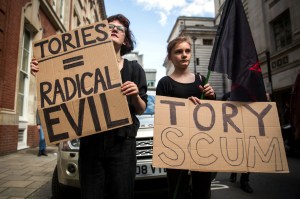
Bankers Toffs And Tory Scum - General Election 2015 - London Protests - Downing Street

Agree with this article? Violently disagree? Scroll down to leave a comment.

Follow Semi-Partisan Politics on TwitterFacebook and Medium.

What Might A Post-Osborne Conservative Party Actually Look Like?

Britain Election

George Osborne has political enemies. But are they also ideological opponents?

What hope is there that the Conservative Party might realistically follow a different intellectual and ideological path after the Age of Cameron and Osborne?

While there have been precious few public signs of senior cabinet or backbench, leadership-calibre Conservative MPs willing to make a public stand for a smaller state and greater individual liberty, perhaps we should be encouraged by the fact that many Tory MPs apparently hold such a low opinion of George Osborne, the navigator largely responsible for the party’s current centrist course.

James Kirkup has been surveying attitudes to the Chancellor within the parliamentary party:

How much trouble is Mr Osborne in? Put it this way: Tory MPs who a few months ago were so wary of his power over their future that they flinched at the mention of his name are now speculating about whether he will keep his job.

By way of evidence, here are some things Conservatives have said to me about the Chancellor in recent days. Two of the quotes below come from serving members of the government. One is from someone who holds a senior office in the Tory hierarchy. One is a backbench MP who could easily have a prominent place in Cabinet in a year or two.

1. “No chance. None. Zero. Never going to happen. Dead. Deader than dead.”

2. “He has been found out. He doesn’t believe in anything and no one likes him. It was useful for people to support him when he was on the way up, but no one will stick with him on the way down.”

3. “The thing about George is that a lot of people think he’s a bit arrogant and rude, but that’s because they don’t really know him.

“Well I’ve worked with him pretty closely for several years now and so I know that the truth is that in person he’s actually much worse than that.”

Kirkup goes on to chart a path back out of the wilderness for Osborne, which is of far less interest to this blog, which ardently hopes that the Chancellor and his “New Labour Continued” strategy perish in the desert.

But there is no point looking forward to the departure of Cameron and Osborne unless there is a reasonable prospect of them being replaced by other, better alternatives – future leaders whose conservatism does not retreat at the first sight of negative headlines, and who know when the pain of public opposition is worth the gains (i.e. not in pursuit of a paltry £4bn of savings from Personal Independence Payments for disabled welfare claimants).

Back in November of last year, this blog pointed out that winning power only to implement Tony Blair’s unrealised fourth term of office was a waste of a Conservative administration, and that those who campaigned and voted Tory deserved better:

The fact that David Cameron and George Osborne are watching the slow implosion of the Labour Party and conjuring up plans to woo Ed Miliband voters – rather than capitalise on this once-in-a-century opportunity to execute a real conservative agenda unopposed – reveals their worrying lack of confidence in core conservative principles and values. If the Prime Minister and Chancellor really believed in reducing the tax burden, reforming welfare, building up our armed forces, shrinking the state, promoting localism and devolving decision-making to the lowest level possible (with the individual as the default option), they could do so. They could be building a new, conservative Britain right here, right now. Virtually unopposed.

But Cameron and Osborne are doing no such thing. They simper and equivocate, and talk about fixing the roof and paying down the debt while doing no such thing, and still they attract endless negative headlines for inflicting an austerity which exists primarily in the minds of permanently outraged Guardian readers.

If Britain is not a transformed country in 2020 – with a smaller state, more dynamic private sector and greater presence on the world stage – there will be absolutely nobody to blame other than the party holding the keys to government. The party with the word “conservative” in their name. The Tories will have been in power for ten years and have nearly nothing to show for it, save some weak protestations about having fixed Labour’s prior mismanagement of the economy.

That’s not the kind of party I want to be associated with. That’s not the party I campaigned to elect in 2010, back when it seemed possible that a new Conservative administration might aspire to being something more than a moderate improvement on Gordon Brown.

In other words, in order to make an exciting potential future leadership candidate, the Conservative MPs rolling their eyes as the Chancellor of the Exchequer self destructs (or uses up another of his nine political lives) must not simply dislike George Osborne – and there is increasing evidence that his support is a mile wide but an inch deep – but actually have an entirely different vision for the party.

That rules out all of the most obvious successors (Theresa May, Nicky Morgan, Philip Hammond, Michael Fallon, Jeremy Hunt) as well as those one-time Bright Young Things who have recently proven their unreliability by failing to come out in support of Brexit (Sajid Javid, Stephen Crabb, Matt Hancock, Rob Halfon).

Unfortunately, that mostly leaves a pool of potential candidates who are probably too new to Parliament to mount a credible leadership bid by 2020, or citizen politician types who have already publicly disavowed any future leadership ambitions. This blog took a warm liking to Chris Philp (if only he can be cured of his europhilia), David Nuttall (with some specific policy reservations) and James Cleverly when these MPs recently addressed a Conservatives for Liberty lobby event, and also Lucy Allan – though the latter’s social media exploits and alleged behaviour towards her staff raise some worrying temperamental questions.

Kwasi Kwarteng is also a sound conservative, advocating a return to a contributory welfare state as well as being an excellent author. Dominic Raab is very bright, and strong on individual liberty and meritocracy.

None are what you might consider to be household names at present. In some cases, that may have the potential to change by 2020, depending on what happens and whether any of these candidates are promoted into the cabinet as the Conservative Party approaches the end of David Cameron’s term.

But the green shoots of a British Conservative revival do exist. They are small and fragile at present, and no matter who is leading Labour in 2020, Cameron’s successor will have to contend with Tory Fatigue after ten years back in government, making the urge to tack to the centre even harder to resist than it is already.

Which is all the more reason why this blog believes it is now imperative to identify, support and champion those future leadership prospects who fit the profile of an heir to Thatcher rather than another disappointing, Cameron-style Ted Heath tribute act.


Conservative Party Logo - Torch Liberty - Tree

Agree with this article? Violently disagree? Scroll down to leave a comment.

Follow Semi-Partisan Politics on TwitterFacebook and Medium.

What Conservative Government? – Part 4, Iain Duncan Smith Resignation

Iain Duncan Smith - IDS - Resignation

How many more ideologically principled, Thatcher-style conservatives can David Cameron’s centrist political machine afford to alienate?

There is a telling line in James Kirkup’s excellent, fair assessment of the full context behind Iain Duncan Smith’s resignation:

The Prime Minister has already done things that will underpin his eventual legacy: winning the Scottish independence referendum and the general election.

Kirkup probably meant this as praise, but in reality it is the most damning indictment of the current conservative government imaginable – far worse than anything that Iain Duncan Smith said in his resignation letter.

Because it is quite true – some of the greatest accomplishments of David Cameron and his core team of loyalists since 2010 are avoiding having the country disintegrate on their watch, and managing to win a second general election against a historically weak Labour leader pursuing a transparently flawed strategy. If the bar for success in British government has truly been set so low then we are in real trouble.

But David Cameron is not a visionary leader. He came to power in 2010 promising to get Britain through difficult economic times, and was re-elected in 2015 promising to be a reasonably competent Comptroller of Public Services. And to be fair to the man, he never really promised to be a great statesman or a formidable world leader.

Being a doggedly centrist technocrat is all well and good, but eventually people quite rightly start to ask what your government is for, besides acquiring the reins of power and then keeping hold of them for as long as possible. David Cameron’s best answer – the main headline from the Conservative Party’s 2015 general election manifesto – was that we should vote Tory because they have a “plan for every stage of your life“.

Nobody within the Conservative Party seemed to care that this sounded alarmingly socialist and suggestive of the Nanny State – people craved security above freedom, it was believed, and so that’s what would be promised and delivered. More of the status quo, whether the status quo worked well or not.

In other words, as this blog has long been saying and my Conservatives for Liberty colleague Paul Nizinskyj has now eloquently written, David Cameron’s role model is far more the steady pair of hands in tough times rather than the visionary, bloody minded reformer – more Ted Heath than Margaret Thatcher.

I won’t lie: my first reaction on hearing the news that Iain Duncan Smith – who together with Michael Gove is one of the few Conservative heavyweights left with any discernible core conviction – had finally snapped and told George Osborne exactly what to do to himself was “great – anything to make the smug little cretin sweat”.

Because George Osborne is David Cameron with less charisma. And since David Cameron has almost no charisma of his own, that puts George Osborne well into negative territory. Given the fact that his blunders (the Omnishambles Budget, tax credits, PIPs) have done as much to colour the political landscape as his “victories”, I also find his reputation as a master political strategist to be hugely overinflated.

If running to the political centre by jettisoning core conservative principle by adopting left-of-Labour policies like a £9 minimum wage counts as political genius then sure – anybody who can successfully cross-dress as a politician from a different party to pick off some extra votes is a master strategist. But it makes George Osborne a lousy conservative.

Not everything in Osborne’s budget was wrong. Should the thresholds for tax brackets move upwards with inflation? Ideally yes, they should do so every year to neutralise the effect of fiscal drag. But to package measures such as this with reductions in the Personal Independence Payments to hundreds of thousands of disabled people is frankly idiotic.

In some ways, this is emblematic of the ridiculous nature of the Budget spectacle, a choreographed event which encourages the Chancellor of the Exchequer to play god with other minister’s departments, either stealing their flagship ideas (as with academies) or otherwise presenting them out of context. But it also speaks to this government’s utter failure to enact a bold, coherent and unapologetically conservative agenda.

Janet Daley sums it up perfectly:

Mr Osborne’s reputation as a tactical political genius has gone south too. Maybe that’s been the problem all along: his understanding of politics was all about tactics – about messaging and grids, presentational gloss and re-branding – and had nothing to do with fundamental, irreconcilable principle. I am prepared to guess that he quite literally does not understand politicians who are prepared to risk everything for an idea, a conviction: a personal moral mission.

He thinks that they are bloody-minded and naive, with no comprehension of the modern science of winning elections. But that, it seems, is not what the people believe: they are beginning to think that their leaders should stand for something, should have a fundamental sense of what they are in politics for. It’s what they call “authenticity”, and it could turn out to be more of a winner than all the clever marketing techniques in the world. Imagine that.

I understood what Michael Gove was trying to accomplish at Education. And I get what Iain Duncan Smith was wrestling with at the Department for Work and Pensions, and admire his semi-successful efforts to get people into work, and to make that work pay more than dependency on the state. Unlike many others who write sanctimoniously but ignorantly about the issue, I have witnessed the welfare state up close, and seen exactly what our “compassionate” system is capable of doing to people when the dead-eyed state machine is responsible for their lives.

I get all of that. But I have no idea what David Cameron is trying to accomplish as prime minister, or what George Osborne thinks he is doing at the Treasury. Because it certainly isn’t paying down Britain’s debts, as they both like to claim. Nor is it guarding Britain’s sovereignty and place in the world – Cameron has gutted Defence, and is in the process of tricking the British people into voting to remain in what he falsely claims to be a “reformed” European Union.

Neither Cameron or Osborne are motivated by the desire to roll back the state and make the British people more free – their heavy-handed government is all for ever-greater restrictions on both ancient and recent hard-won civil liberties, and is seemingly anxious to sacrifice what freedom we have left upon the altar of “national security”.

There is almost nothing about shrinking the state and expanding personal liberty in this government. But there are lots of policies – cutting state spending on the poorest and weakest in society while continuing to lavish stage largesse on wealthy older people (through non-means tested benefits and the lack of a housing supply policy to benefit the young) – which play right into Labour’s hands, making the Tories (and those who support them) look like nothing more than selfish, grubby opportunists, lining the pockets of the already wealthy while others suffer.

In short, I don’t know what this Conservative government is for, besides trying to stay in power and preventing Labour from stealing it. And apart from the work he was doing in his own department, I suspect that Iain Duncan Smith didn’t know either, no matter how much obligatory praise he heaped on Cameron in his resignation letter.

So I cannot do anything but endorse Iain Duncan Smith’s decision to quit. The final straw was no doubt Downing Street’s insistence that Duncan Smith come out all guns blazing in defence of the welfare cuts in the Budget, while simultaneously planning to walk back the proposals themselves – making IDS look like the crazed ideologue and Cameron / Osborne as the calm voices of reason. Who would want to stick around to be treated in that way?

And if Iain Duncan Smith’s resignation destabilises the government – so what? We currently have a nominally conservative prime minister who is busily enacting Tony Blair’s fourth term of office. We effectively already have a Labour prime minister – or a New Labour one, at least.

Maybe an improbable defeat to Jeremy Corbyn’s Labour Party – or a good scare, at least – is the shock the Tories need to dig deep and find a real conservative leader.


Postscript: Iain Duncan Smith’s full resignation letter – which this blog believes was far too generous and courteous – is shown below.

I am incredibly proud of the welfare reforms that the government has delivered over the last five years. Those reforms have helped to generate record rates of employment and in particular a substantial reduction in workless households.

As you know, the advancement of social justice was my driving reason for becoming part of your ministerial team and I continue to be grateful to you for giving me the opportunity to serve. You have appointed good colleagues to my department who I have enjoyed working with. It has been a particular privilege to work with excellent civil servants and the outstanding Lord Freud and other ministers including my present team, throughout all of my time at the Department of Work and Pensions.

I truly believe that we have made changes that will greatly improve the life chances of the most disadvantaged people in this country and increase their opportunities to thrive. A nation’s commitment to the least advantaged should include the provision of a generous safety-net but it should also include incentive structures and practical assistance programmes to help them live independently of the state. Together, we’ve made enormous strides towards building a system of social security that gets the balance right between state help and self help.

Throughout these years, because of the perilous public finances we inherited from the last Labour administration, difficult cuts have been necessary. I have found some of these cuts easier to justify than others but aware of the economic situation and determined to be a team player I have accepted their necessity.

You are aware that I believe the cuts would have been even fairer to younger families and people of working age if we had been willing to reduce some of the benefits given to better-off pensioners but I have attempted to work within the constraints that you and the chancellor set.

I have for some time and rather reluctantly come to believe that the latest changes to benefits to the disabled and the context in which they’ve been made are a compromise too far. While they are defensible in narrow terms, given the continuing deficit, they are not defensible in the way they were placed within a Budget that benefits higher earning taxpayers. They should have instead been part of a wider process to engage others in finding the best way to better focus resources on those most in need.

I am unable to watch passively whilst certain policies are enacted in order to meet the fiscal self imposed restraints that I believe are more and more perceived as distinctly political rather than in the national economic interest.

Too often my team and I have been pressured in the immediate run up to a budget or fiscal event to deliver yet more reductions to the working age benefit bill. There has been too much emphasis on money saving exercises and not enough awareness from the Treasury, in particular, that the government’s vision of a new welfare-to-work system could not be repeatedly salami-sliced.

It is therefore with enormous regret that I have decided to resign. You should be very proud of what this government has done on deficit reduction, corporate competitiveness, education reforms and devolution of power. I hope as the government goes forward you can look again, however, at the balance of the cuts you have insisted upon and wonder if enough has been done to ensure “we are all in this together”.
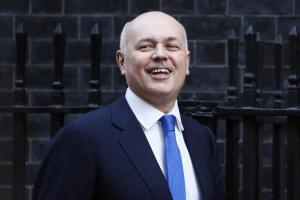
 

Iain Duncan Smith

Agree with this article? Violently disagree? Scroll down to leave a comment.

Follow Semi-Partisan Politics on TwitterFacebook and Medium.


Sajid Javid: Stop Trying To Build Bridges With Eurosceptics – We Don’t Want You

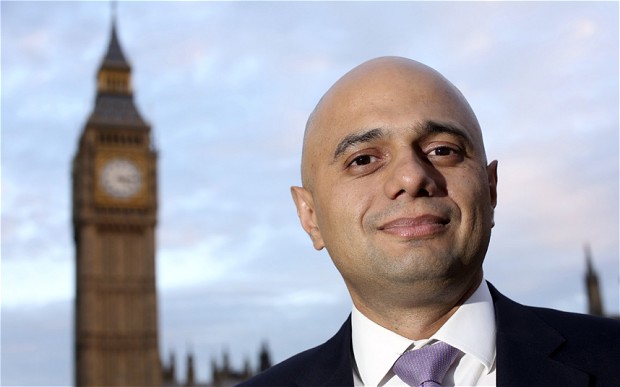
Sajid Javid - European Union - EU - Brexit - Remain campaign

The anti-EU movement has no further need of fawning, two-faced politicians who talk the eurosceptic talk for cheap applause but consistently vote and campaign for Britain’s continued participation in political union

Apparently, Sajid Javid is suffering from an acutely troubled conference after renouncing his much-vaunted euroscepticism and cuddling up to power by supporting David Cameron’s fear-based Remain campaign.

The Daily Mail reports:

Sajid Javid today admitted he wished David Cameron had got more from the EU and he was backing the Remain campaign even though his ‘heart’ was for Brexit.

The business secretary, whose endorsement was a relief for the Prime Minister after six other top ministers defected to Leave, insisted today he was still a ‘Brussels basher’.

Mr Javid gave his chilly assessment of the Prime Minister’s deal at the British Chambers of Commerce conference.

In his address, Mr Javid said he had finally come down on backing Remain because of the threat of uncertainty.

The Business Secretary said: ‘I have no time for closer political union and in many ways I am a Eurosceptic. I am still a Brussels basher and will remain so. I wish there was more in the deal’.

Let me say on behalf of all eurosceptics (I’m sure they won’t mind my presumption in this case) – Sajid Javid can take his Brussels bashing and shove it where the sun don’t shine.

The British people have no further need of oleaginous politicians who make eurosceptic noises in pursuit of cheap applause, but who then side time and again with the political establishment to preserve the anti-democratic status quo, with Britain kept as a vassal state of a relentlessly integration European political union.

Are we supposed to feel comforted and mollified that Sajid Javid has now promised that on 24 June, the day after his own efforts contribute toward a “Remain” vote in the EU referendum, he will once again join our ranks and stand up to criticise the democratic subversion underway in Brussels? Because that would be like a soldier who, on being rotated away from the front lines at the end of his tour of duty, promises his comrades that he will see them again soon, as soon as he is done fighting a stint for the enemy during his R&R break.

Javid is basically saying “Don’t mind the massive betrayal, old chap. I’ll be back soon, standing shoulder to shoulder with you and making all of the right sympathetic sounds, as soon as I’ve finished chucking these grenades into your trench from across No Man’s Land.”

The British eurosceptic movement has had enough false friends in its time – politicians who have been only too happy to embrace the cause when it helped them to win selection as a candidate or to squeak through a tough election campaign, but who have been found singularly wanting when it comes to defending British sovereignty and democracy with their votes and campaigning activities once safely elected.

Precisely why Sajid Javid made the decision to support his prime minister’s transparently fraudulent “deal” with the European Union rather than staying true to his oft-professed euroscepticism – whether it was pure career calculation or a genuine failure of courage and belief in his own country – is an ugly secret known only to Javid himself.

But one thing is clear: every last one of those calculating Conservative MPs who have made the fateful decision to sit out the fight to extricate Britain from the European Union must be pitilessly cleaved from the eurosceptic herd and never permitted to rejoin it.

They should be made to wear their latent europhilia as a badge of shame and dishonour for the remainder of their sorry political lives.


European Union - United Kingdom - Britain - Flags

Agree with this article? Violently disagree? Scroll down to leave a comment.

Follow Semi-Partisan Politics on TwitterFacebook and Medium.